Ruminations

Blog dedicated primarily to randomly selected news items; comments reflecting personal perceptions

Saturday, May 24, 2025

Adaptive Deep Brain Stimulating, a Promising Therapy for Parkinson's Disease

"Five years later, I'm taking only one pill a day, whereas I used to take five or six."
"It's not a cure or miracle, but it's definitely a game changer in the sense of feeling better day-to-day."
"The tremor's gone, dyskinesia is gone, and I don't have that brain fog that I used to have when I was taking so many meds." 
Professor Keith Krehbiel, political scientist, Parkinson's patient

"For some patients, especially people who have more severe symptoms, standard DBS that is always on at one constant setting doesn't give them enough benefit. The needs of the brain change depending on their activity level, such as when they're awake versus asleep, and particularly according to their medication cycle."
"One way to develop this kind of algorithm is to first do some studies of brain signals in known conditions. Then you can train an artificial intelligence algorithm on this known data, so that the AI program learns what combinations of brain signals are associated with different states."
Professor Philip Starr, neurological surgery, University of California, San Francisco
 
"Imagine you're in a crowd, and there's a hum of conversation, but you can easily hear yourself talk -- that's the normal broadband neural activity situation."
"But with oscillopathy, it's as if you're in a protest march where everybody's chanting the same thing, and  you can't hear yourself speak."
Dr. Helen Bronte-Stewart, professor of neurology and neurological sciences, Stanford School of Medicine 
https://assets.medpagetoday.net/media/images/114xxx/114357.jpg
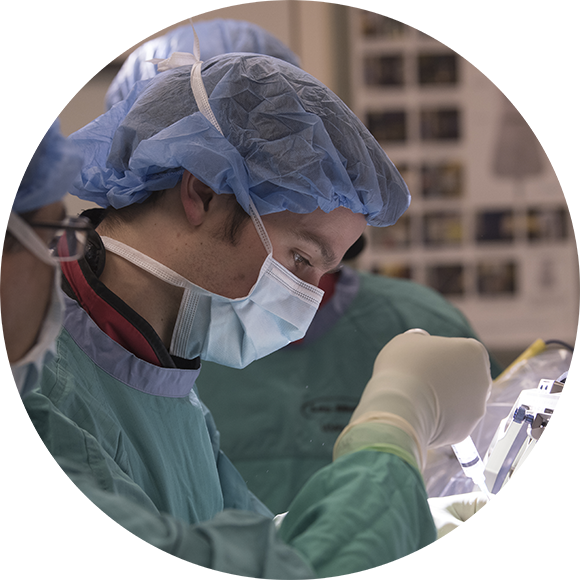
Five years ago Keith Krehbiel, along with others volunteered to take part in an innovative non-pharmacological treatment for Parkinson's disease; Adaptive deep brain stimulation whose purpose is to enhance deep brain stimulation -- an existing treatment for the condition -- but with the addition of artificial intelligence. Their most debilitating motor symptoms has been virtually eliminated with the emerging therapy, their quality of life considerably improved.
 
At the same time they have been enabled with the use of the therapy to reduce their medication intake and with it, they have experienced a decrease in corresponding negative side-effects. The scientists probing the Adaptive deep brain stimulation therapy with the intention of improving its effects hope that it will in time help other Parkinson's patients aside from their test subjects.  

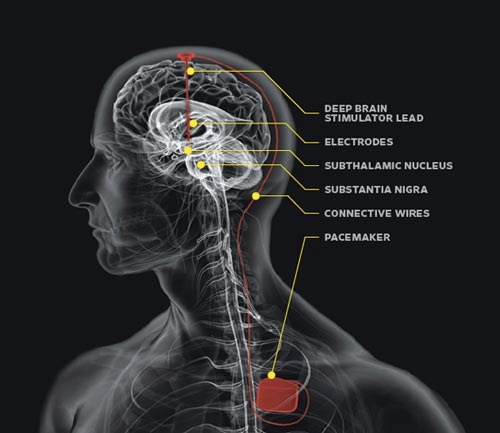
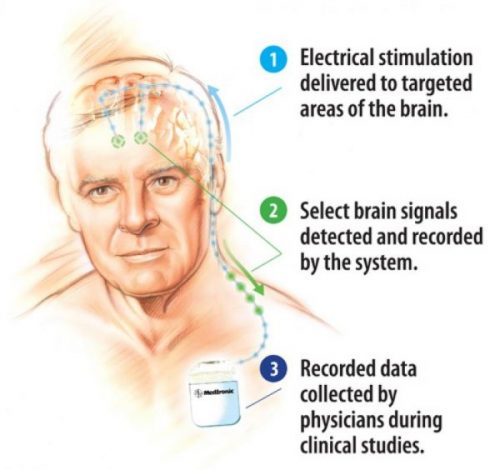
DBS (Deep Brain Stimulation) has been in use since 1997 as an established surgical therapy for the treatment of symptoms of Parkinson's. A device similar to a heart pacemaker is implanted in the brain with DBS, to deliver electrical pulses. Conventional DBS is regarded as a one-size-fits-all approach to ameliorating the devastating effects of Parkinson's. Adaptive DBS on the other hand, personalizes therapy based on brain activity in real time for patients, with the help of AI. 
https://lsom.uthscsa.edu/neurosurgery/wp-content/uploads/sites/140/2017/10/dbs_brain.jpg
The brain, like the heart, produces patterns of electrical activity produced by neurons; in other words, normal rhythms. Epilepsy and schizophrenia are medical conditions associated with abnormal brain rhythms, with a similarity to cardiac arrhythmias. Neurons become overly synchronized in Parkinson'sin what is recognized as oscillopathy, with its potential of interfering with the normal transfer of information, and lead to symptoms like tremors and stiffness.
 
Parkinson's medications and DBS dampen oscillopathy in the brain. Steady electrical pulses from DBS help to pace the neuronal firing in a manner overriding hyper-synchronization of oscillopathy, restoring brain rhythms to normal. Conventional DBS delivers electrical stimulation at a constant -- "always on" -- setting where periods of under-stimulation and over-stimulation can occur, that result in slowness of movement, or dyskinesias (respectively).
 
On the other hand, Adaptive DBS detects real-time neural signals and automatically adjusts stimulation in response to oscillopathy or other biomarkers. An algorithm delivering the right amplitude or 'dose' of stimulation when it is needed in an adaptive manner, to provide a more stable therapeutic experience for patients is achieved with Adaptive DBS when AI modelling is used to develop an algorithm. 
 
Adaptive DBS is associated with greater motor symptom control, fewer side-effects, and lower electrical energy delivered in comparison to conventional DBS, as has been demonstrated through early studies. In 2024, Professor Starr and colleagues conducted a pilot study of four participants with Parkinson's to discover that Adaptive DBS improved motor symptoms and quality of life, far in excess of what conventional DBS delivers. 
https://www.houstonphysicianshospital.com/wp-content/uploads/2020/04/2.2.1.Medtronic_DBStherapy-e1588741387657.jpg
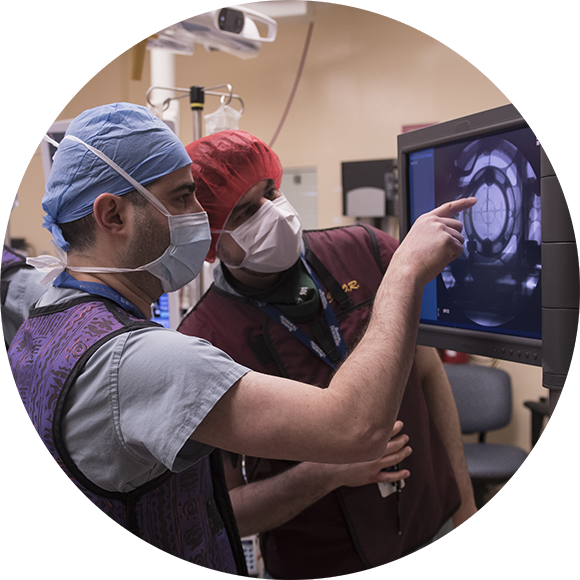
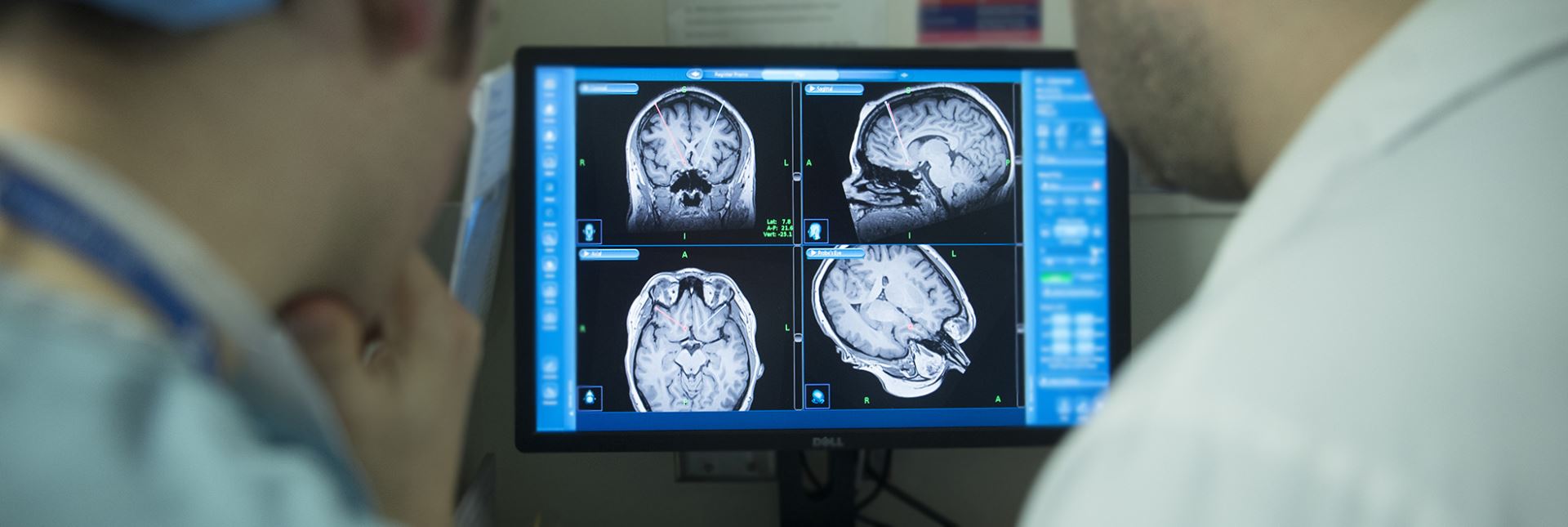
The Starr team of scientists personalized algorithms for each of their study patients, bringing them into the clinic and measuring their brain rhythms, on or off levodopa, a Parkinson's medication used to increase levels of dopamine. 68 patients with Parkinson's were included in the ADAPT-PD clinical trials, (leading to the FDA approval), which included Krehbiel, with a previously implanted conventional DBS system. Dr. Bronte-Stewart and colleagues provided the patients with Adaptive DBS and the participants were sent home for 30 days.
 
Full results of the study not yet published, preliminary data reveals no serious adverse device events, and 98 percent of participants decided to remain on Adaptive DBS, in long-term followup. The therapy is not meant for everyone with Parkinson's. A good response to dopaminergic medications such as levodopa is a requisite, while patients considered for the therapy should not be too advanced in Parkinson's.
 
Andrew O'Keefe, a researcher and neurosurgical trainee at King's College London and colleagues are experimenting with stimulating various areas of the brain with directional electrodes to stimulate forward or backward; targeting and precisely controlling stimulation has the potential to improve DBS effectiveness. He hopes to optimize not only when, but where to deliver therapy, according to which biomarkers are involved, highlighting the complexity involved.
"It's like the hardest Sudoku problem you've ever tried to solve in three dimensions. It's insoluble for a human."
"But for an AI program, that's like grist to its mill. AI is incredibly good at sorting those complicated problems out."
Dr. Andrew O'Keefe
https://neurologicalsurgery.in/wp-content/uploads/2025/01/DBS-surgery-1-min.jpg

Labels: , , ,

Monday, October 18, 2021

Depression Distraction

"I couldn't stop crying. The thought that consumed me the entire way on that road was just driving my car into the marshland so I can drown."
"Within a few weeks, the suicidal thoughts just disappeared."
"[I am now] seeing things that are beautiful in the world, and when I was in the depths of depresions, all I saw was what was ugly."
Sarah, 38, (last name withheld), California
 
"One person's depression might look very different from another person's depression."
Dr.Katherine Scangos, assistant professor of psychiatry, U.C.S.F.
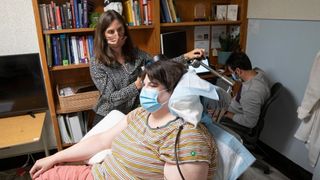
Sarah, a patient in a clinical trial, at an appointment with Katherine Scangos, MD, PhD, at UCSF’s Langley Porter Psychiatric Institute
Dr. Katherine Scangos of UCSF sits with Sarah, the first patient to receive a new type of brain stimulation treatment for depression. (Image credit: Maurice Ramirez; UCSF 2021)

Sarah was put through the wringer in a sense in a desperate attempt to find a therapy or a drug that would help manage her bouts of deep depression; treatments, medications, hospital day program, electroconvulsive therapy, transcranial magnetic stimulation. Nothing worked for her. But it's not just her experience in actual fact; close to a third of the 230 million people living with depression worldwide echo her experience of persistent symptoms despite searching out a working solution. 

And then something new came her way through researchers at the University of California, San Francisco when a battery-powered matchbook-sized device was implanted in Sarah's brain, and calibrated to detect neural activity patterns occurring when she is becoming depressed. Her "pacemaker for the brain" responds by delivering pulses of electrical stimulation meant to pause the depression.

What Sarah and the UCSF researchers have embarked on is a personalized technique with a treatment known as deep brain stimulation; its purpose, to treat depression. The researchers make it clear that additional research is required before it is fully understood how effective this approach may be and to be able to gauge which patients would benefit from it. Parkinson's disease along with several other disorders use deep brain stimulation as a treatment.

The U.S. regulators have not approved the treatment for depression since results have been inconsistent, including two trials brought to a halt when it was realized that the technique appeared to have no benefits to patients making it superior to a placebo. What is different about the technique personalized for this test subject is the individualized locations targeted leading to patterns of electrical activity in people's brains. 

The "one size fits all" application -- as Dr.Darin Dougherty, director of neurotherapeutics at Massachusetts General Hospital -- was unsuccessful, he pointed out from his perspective of having been involved in one of the cancelled trials. Typically, deep brain stimulation is delivered continuously, while the device planted in Sarah's brain supplies a six-second burst when depression-linked brain activity becomes assertive. Dr.Dougherty explained that the stimulation is meant to disrupt or shift the neural activity, producing a healthier pattern easing symptoms of depression.

Along with the implant, continuation of psychiatric medications has not entirely succeeded in eliminating depression-causing activity, but in the same token Sarah now can manage her illness in an improved atmosphere; asserting her personal agency for routine decision-making where previously uncertainty assailed her. 

Standard treatments for depression sees some 30 percent of those afflicted unresponsive, or the side effects are intolerable to them. Deep brain stimulation, although promising, has a  high cost attached to it, making it unavailable to many depression sufferers since it comes with a cost of thousands of dollars and the surgical implantation can carry infection risks,
 
"Our job now is really o figure out what it is that identifies who needs this kind of involvement", explained Dr. Helen Mayberg of the Icahn School of Medicine, New York City. The number of times a day over a period of a year that Sarah's device detects depression-linked activity, delivering stimulation, has decreased somewhat. Sarah is unable to feel the finely tuned stimulation but believes she can detect its occurrence since she develops "emotional distance" that keeps negative feelings "compartmentalized". 

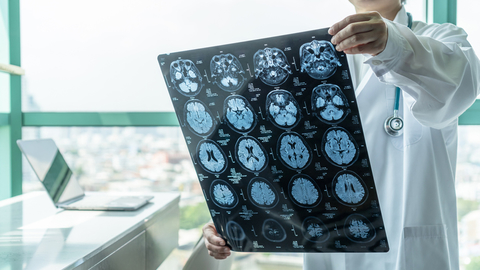
A neurologist reviews brain scans
A small device implanted in the brain of a patient with severe, treatment-resistant depression was trained to issue electrical pulses to areas of the brain linked to the condition. The effects of the neurostimulation kicked in almost immediately, according to a new study from UCSF Health. (Getty Images/Chinnapong)

Labels: , , ,

Tuesday, February 04, 2020

Physician, Heal Thyself

"It's restored me to life. I was on a path where I was not going to live much longer."
"I never felt drunk and don't think I appeared drunk. That was part of the problem. I could consume a lot without falling down. I didn't get angry and throw things and that kind of stuff."
"Your whole head shakes with the drilling, and it's noisy. But it only lasts a short time [deep brain stimulation]."
Dr.Frank Plummer, microbiologist, 'high-functioning alcoholic'
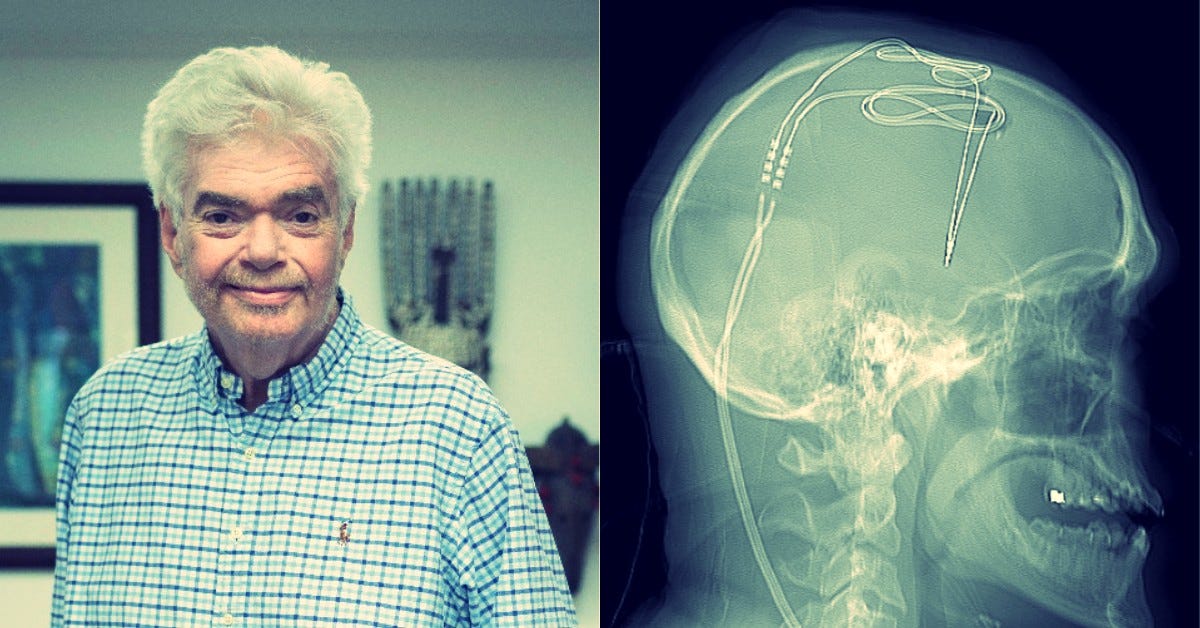
Left: Frank Plummer. Photo: Kevin Van Paassen, Sunnybrook Health Sciences Centre. Right: An X-ray of Gerod Buckhalter’s brain, where scientists have placed a deep brain stimulation device. Credit: West Virginia University Rockefeller Neuroscience Institute

"I'm not sure if it [DBS: deep brain stimulation] will ever be in widespread use. It's for patients who are treatment-resistant and who are able to undergo surgery."
"It's still an invasive procedure."
"The idea is that if we can stimulate this part of the brain, disrupt the activity in the [brain’s reward] circuit and essentially reset it, we may have a good chance of having an influence and impact on some of these behaviours” involved in alcohol-use disorder."
"It’s among the most stigmatized illnesses there are." 
"We view it as no different from Parkinson’s disease or Huntington’s disease or tremor, or any of these motor-circuit conditions. … These are circuit-based disorders of the brain."
Dr.Nir Lipsman, Sunnybrook Research Institute of Health Sciences, Toronto
Dr. Nir Lipsman
Dr. Nir Lipsman (left) In December 2018, researchers at Sunnybrook were the first in North America to begin a clinical trial investigating the use of deep brain stimulation (DBS) for the treatment of alcohol use disorder (AUD).

DBS, explains Dr. Lipsman, acts as a "pacemaker for the brain". It administers small electric shocks to the nucleus accumbens every few seconds. Its purpose is to kick-start the "reward centre" of the brain. According to Dr. Lipsman, a person's brain chemistry can be rewired after years of drug or alcohol addiction, to the point that neuron signals fail to zap through the brain as they normally would. A kind of faulty wiring in the area of the brain responsible for pleasure and reward.

Healthy, normal types of pleasure stimuli, from dancing, listening to music, laughing with friends, or playing with your children no longer provides the same "reward" as such activities in a fully normal and pleasurable life once did. The lack of which is what drives addicts to rely on drugs or alcohol for their rewards.

Frank Plummer, 67, was one of six patients who volunteered and whose personal cases fit the models required to take part in a six-patient study on the potential efficacy of deep brain stimulation to treat alcoholism. DBS is a neurosurgical procedure where electrodes are drilled into the brain directly to "re-wire" that indispensable organ's signal circuits.

Various mental illnesses and drug addiction had been treated previously with DBS. The procedure was in common usage for neurodegenerative disorders such as Parkinson's. This was the first study with alcoholics. And Dr.Plummer is seen as the first person in the world to successfully undergo the treatment.

The use of DBS appears as a last-choice effort to help people when every other form of treatment seen as conventional fails to help. Dr. Plummer, formerly the scientific director of Canada's National Microbiology Laboratory, had tried one-on-one therapy and Alcoholics Anonymous, but nothing seemed to work for him. In the 1980s and 1980s, he was living in Kenya, lending himself and his medical-research expertise in the effort to stem the AIDS outbreak.

Several of his colleagues died from AIDS and when severe stresses began to take their emotional toll  he turned to alcohol for comfort. The result was that he began drinking at least four tumblers of whisky each evening to control his nerves and the depression he was under. From there he graduated to full-blown alcoholism. It took until 2012 -- 12 years following his return to Canada -- when he was diagnosed with cirrhosis and end-stage liver disease, to realize he was an alcoholic.

A successful liver transplant followed in 2014, and he began to slip back into drinking whisky again, when he heard of the DBS trial at Sunnybrook Research Institute, and he signed up to become one of six patients in the proposed study. After experiencing the surgery involved, he described feeling nothing as doctors first made an incision across his skull and then drilled two holes into his brain, each "the size of a 25-cent Canadian piece".

Jo Kennelly places a device beside Frank Plummer’s shoulder that turns his deep brain stimulation on and off on Dec 10 2019.  Fred Lum
This neurosurgical procedure where electrodes are drilled directly into the brain represented a world-first experiment. Dr.Plummer recalls the operation as "pretty innocuous". Awake for the duration, but feeling nothing, as a result of the local anaesthetic that had been administered, where his head was placed into a metal halo to ensure he was kept immobile during the procedure. Now, he no longer feels the need for alcohol and has weaned himself from his whisky habit.

Researchers looking for a clearer idea of whether the benefits of DBS are real, and not merely a placebo effect, plan to test DBS in a larger study to compare results of alcoholic patients receiving the procedure, with a control group receiving "dud" electrodes, not emitting any electric signals. The procedure is fairly costly; each implant between $15,00 and $25,000, with an additional $15,000 to $20,000 for the battery, requiring replacement every three to four years.
"By directly targeting dysfunctional ‘wiring’ in the brain, the hope is to influence these circuits to a healthier state. "
"In Frank’s case, we saw significant improvements in mood and alcohol consumption. The nucleus accumbens is not only an addiction-related area of the brain but also involved in mood, anxiety and depression."
"Helping to relieve symptoms may have helped play a role in his progress."
Dr. Benjamin Davidson, study co-investigator, surgical resident, Sunnybrook


Postscript: "Plummer, 67, was in Kenya, where he was a keynote speaker at the annual meeting of the University of Nairobi's collaborative centre for research and training in HIV/AIDS/STIs."
"Dr. Larry Gelmon, who helped set up that meeting, said Plummer collapsed and was taken to hospital in Nairobi, where he was pronounced dead on arrival."
"No confirmed cause of death has yet been released."
CBC announcement, February 5, 2020

Labels: , , ,

Friday, January 03, 2020

Deep Brain Stimulation Experiment for Alcoholism/Alcohol Use Disorder, Sunnybrook Health Sciences Centre

"[My concern after deep brain stimulation for alcohol use disorder] was whether or not my hair would grow back."
"A family history of liver disease plus alcohol was my undoing."
"I maybe [now] have two or three drinks if I do drink. And I can stop."
"I think in some ways it [drinking to wind down tension] also helped me, relaxing me enough to the point where I could think, and contemplate. [But after leaving the National Microbiology Lab in Winnipeg things] got really bad. It [alcohol consumption] got to be the main focus of my life." 
Frank Plummer, former scientific director, National Microbiology Laboratory, Canada
Frank's story
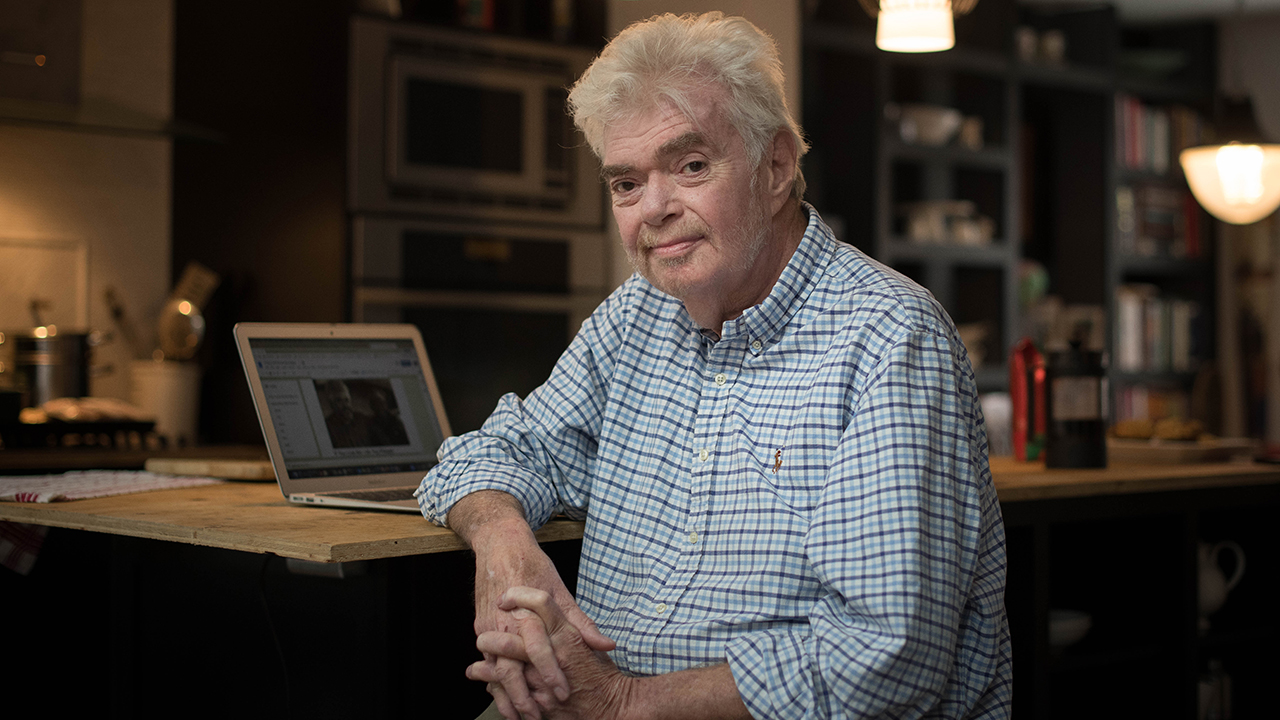
Dr.Frank Plummer

"People seem prepared to accept more risk for alcohol consumption than they do for other risky activity."
Report, Centre for Addiction and Mental Health

"It was normal [in the '70s] to go for a drink every lunchtime, and then go out for a drink after work."
"Today, when you go to an off-licence it's hard to find a wine that's only got 12 percent."
"Quite a lot of people use it [alcohol] for anxiety, actually -- it's one way of getting rid of their anxiety."
"I had one subject who said, 'I've drunk every day for ten years. I'm terrified of stopping'."
"[They -- study volunteers] were desperate to go back to drink [feeling socially isolated]. Some of them felt like they were pariahs at dinner parties because they were the only ones who weren't drinking or were sober."
"For many people, stopping can be quite liberating."
Dr.Kevin Moore, consultant hepatologist, University College London/Royal Free Hospital

"Alcohol is known to trigger the endorphin system, and the social consumption of alcohol may thus have the same effect as the many other social activities, such as laughter, singing and dancing, that we use as a means of servicing and reinforcing social bonds."
"[The idea that a brief] detox [can] refresh [the liver and lead to other health benefits is] clearly untrue, since the durability of the observed biological effects remains to be established."
Dr.Moore and colleagues, study, BMJ Open
Associated with an increased risk of stroke and heart disease, alcohol consumption is no trifling matter. It has also been linked to cancer development in the digestive tract, naso-pharynx, liver, rectum and breast; classified as a Class 1 carcinogen by the International Agency for Research on Cancer; it is known to promote cancer in humans. The American Public Health Association and other groups would like to see cancer-warning labels on beer, wine and liquor based on their contention that few people know of these connections.

According to a recently released study, alcohol accounts for more productivity time losses in Canada than does any other substance. Close to 15,000 deaths annually in Canada are attributable to alcohol, according to a recent policy paper from the Centre for Addiction and Mental Health. A greater number of Canadians (77,000) are hospitalized for alcohol-related illnesses or injury than for heart attacks. In Ontario, forty percent of people drink more alcohol than they themselves think is safe. Canadians consume ten litres of pure alcohol per capita annually; 3.6 litres more than the world average.

In December's issue of the Canadian Journal of Public Health a study estimates total cost of lost workplace productivity as a result of premature death, long-term disability, 'preseneeism' and absenteeism resulting from substance use was in the neighbourhood of close to $16 billion back in 2014. As pointed out by Dr. Nir Lipsman, director of Sunnybrook's Harquail Centre for Neuromodulation, "There's the accessibility of it, the social acceptance nature of it."


At one time in the not-so-distant past, people consumed more alcoholic drinks, but back then the drinks hadn't the alcohol content they do at present. A pub pint decades ago contained three percent alcohol whereas the average alcohol content in today's craft beer products comes closer to six percent. "Today, when you go to an off-licence it's hard to find a wine that's only got 12 percent " alcohol content where once it was bottled at 10 or 11 percent.

In the  United Kingdom, there has been a downward revision of weekly drink guideline limits. Public health encourages "non-dependent drinkers" to view short-term abstinence as a method of control. Dr. Moore and other researchers recruited 94 moderate-heavy drinkers to take part in a study, representative of the 25 percent of the population tending to drink above recommended guidelines. A month of abstinence saw volunteers with significant improvements in insulin resistance, in blood pressure and in body weight.

As well, two cancer-related growth factors, both thought a requirement in encouraging the growth of tumours to have been decreased in circulating concentrations. The result of which was that those people on return to drinking tended not to consume as much alcohol as previously, citing their appreciation of how much better their sleep patterns had become, let alone their ability to focus and the improvement in their concentration capacity.

On the plus side for drinking are the social benefits of modest alcohol consumption, with one study finding social drinkers have a greater circle of friends and are able to forge deeper bonds with those friends. Alcohol tends to enhance psychological well being. What drove Dr. Plummer to drink was the pressures inherent in operating a research group in Nairobi during the AIDs epidemic, followed by a 400-person national microbiology lab in Winnipeg. He found his condition so alarming that a more "robust" medical solution seemed an appropriate choice to combat his growing alcohol dependence.


He looked into deep brain stimulation, akin to a peacemaker for the brain. A battery is implanted in the chest wall under the collarbone, attached to which is an electrode in the brain to target dysfunctional wiring in the nucleus accumbens; nerve cells involved in pleasure and motivation. Dr. Plummer decided to engage himself in a trial that would address disordered brain circuitry. Head fixed in a halo apparatus, under local freezing, surgeons incised into his scalp.

"It wasn't painful, just not pleasant", he said describing the process. The noise and vibration "was like putting your home hand drill up to your head." Deep brain stimulation for alcohol use disorder remains experimental, being tested on just six patients at Sunnybrook Science Centre in Toronto. Following a day or two in hospital post-procedure, people typically return home while the optimal electrical dose formula for each individual is sought through a period trial and error that can take weeks and months. And the electrical stimulation is always in play.

The surgery carries small but real risks, including bleeding, swelling, infection and implant failure; not meant for social drinkers or those responsive to conventional medical and rehabilitation treatment, but for those who are treatment resistant. Alcohol, as a result of Dr. Plummer's successful surgical therapy, no longer interests him. He is busy "just enjoying life for the first time in a very long time. My life is full of lots of other things than alcohol. I hope that sharing my story will help destigmatize the conversation about alcohol use disorder, as well as improve the science and understanding around it."
Clinicians view a monitor with a brain scan
"Despite advances in AUD [alcohol use disorder] interventions in the last half century, we have a long way to go in developing direct-to-brain treatments that make a significant impact on outcomes." "We are so grateful to Frank and other study participants. We hope that our DBS [deep brain stimulation] study will advance our understanding of AUD and other addiction disorders as we work towards developing innovative treatment options for patients with these challenging and disabling conditions."
Dr. Nir Lipsman, director, Sunnybrook’s Harquail Centre for Neuromodulation

"By directly targeting dysfunctional ‘wiring’ in the brain, the hope is to influence these circuits to a healthier state."
"In Frank’s case, we saw significant improvements in mood and alcohol consumption. The nucleus accumbens is not only an addiction-related area of the brain but also involved in mood, anxiety and depression. Helping to relieve symptoms may have helped play a role in his progress."
Dr. Benjamin Davidson, study co-investigator and surgical resident, Sunnybrook

Labels: , , , ,

 
()() Follow @rheytah Tweet