Curfew-Shocking People in Quebec
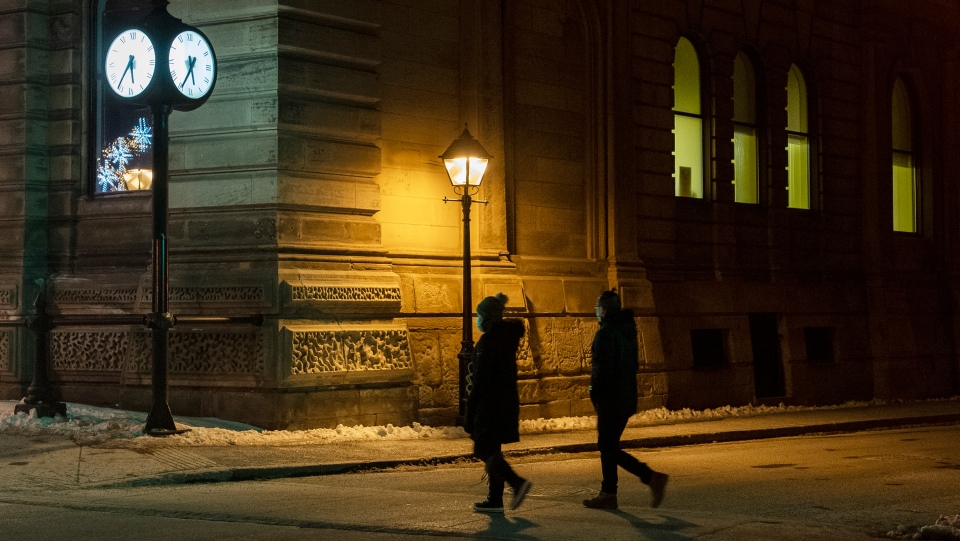 |
| People wear face masks as they walk along a street prior to a curfew in Montreal, Saturday, January 9, 2021, as the COVID-19 pandemic continues in Canada and around the world. The Quebec government has imposed a curfew to help stop the spread of COVID-19 starting at 8 p.m until 5 a.m. THE CANADIAN PRESS/Graham Hughes |
"I'm not sure that's going to be feasible [people in Quebec emulating Italians during the springtime COVID quarantine, singing from balconies] during the cold winter nights in Quebec.""[Placing people under curfew so they're unable to leave their homes lacking an acceptable reason fails to create a sense of solidarity, the] all in this together [spirit].""OK, we've just got to get through this four weeks, assuming the lockdown is not extended [people tend to think].""The rationale is that when people disregard social distancing, they do it at night. So, you lock everyone down. Of course, you're still putting people in closed spaces It just happens to be their own homes.""This thing has lasted so long. People were expecting and hoping in 2021 things would open up.""If we're going to have a curfew there needs to be in place, and visibly in place, mental health resources to help people get through this period.""Most people will be resilient. We're not going to like it. We're gonna feel stressed out and irritable and perhaps depressed, but most people will bounce back."Steven Taylor, Clinical Psychologist, professor, Department of Psychiatry, University of British Columbia
 |
| CTV News |
Quebecers may feel they see a glimmer of light at the end of this latest tunnel with yet another door slammed against their freedom of movement when Quebec Premier Francois Legault announced "We're talking here about saving lives and we're talking about saving our health-care system", as he announced new emergency measures to take effect in Quebec from Saturday, 9th of January, among them a 8:00 pm to 5:00 am curfew. A curfew meant to be strictly enforced; only those with acceptable reasons to be out will be spared fines of up to $6,000.
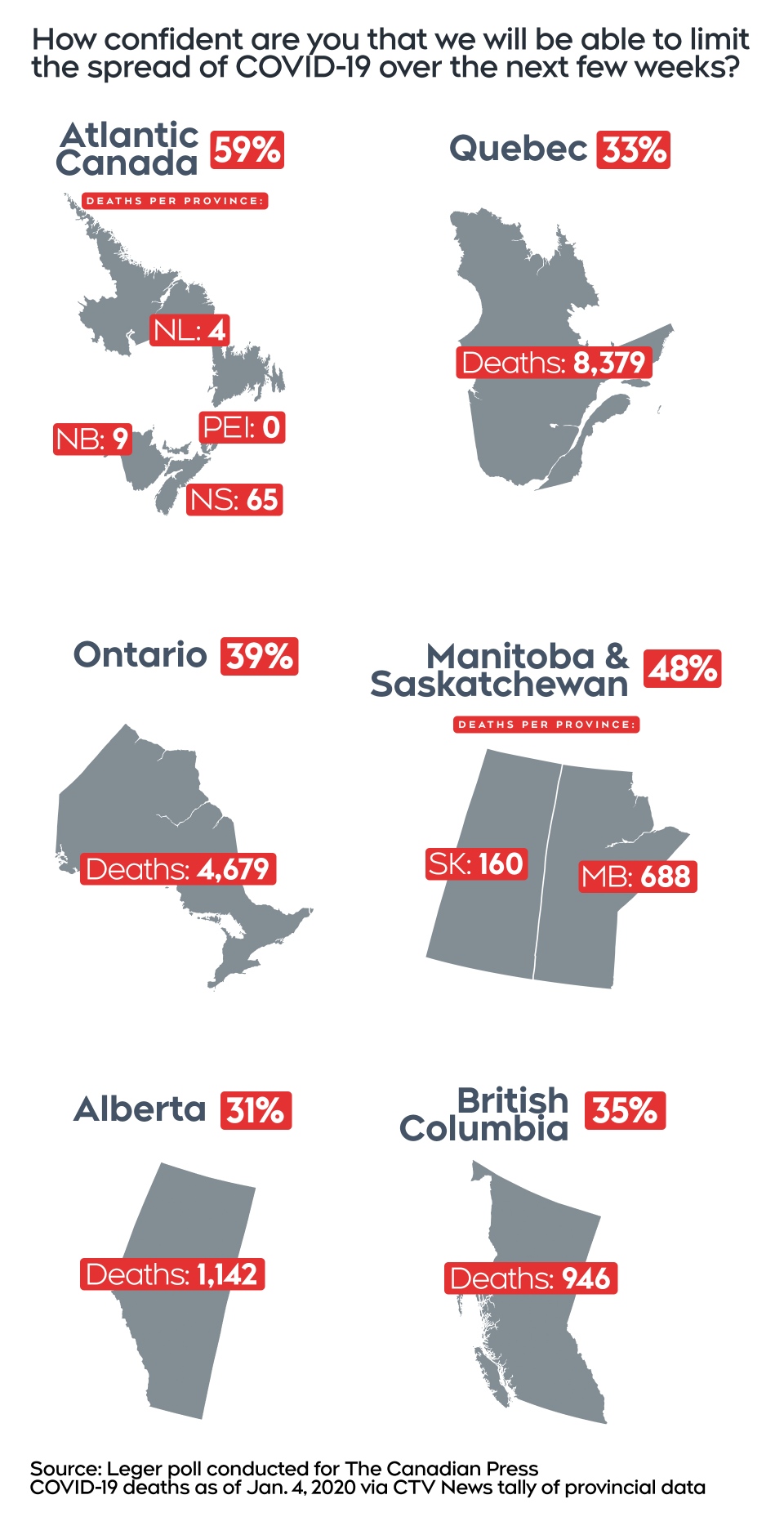
This news for Quebecers represents the first in the country to impose a curfew, but Quebec, after all, has experienced the most deaths due to COVID within its population of any other province or territory. True, 80 percent of those deaths have taken place within long-term care residences, and the curfew obviously doesn't impact on them, so it isn't surprising a bit of consternation may arise from the situation of locking everyone down at night. And according to mental health experts, the newly imposed curfew represents another stress level upon people already suffering the effects of ongoing lockdowns.
The rationale for the curfew appears to elude the mental health experts. COVID-19 saturating the province is the driving force behind such moves of desperation, when governments don't know what else they can do to convince their populations to take the ongoing and growing prevalence of infections seriously enough to deter them from breaking the health rules meant to protect the greater population. Residents will still be permitted outside excursions for emergencies and "humanitarian reasons", including walking the family dog, picking up teenagers from work, or filling prescriptions at a pharmacy.
Those people whose employment leads to working shifts will be excepted but in general everyone is expected to remain in their homes in the evening, and to commit to staying there until the morning light. Any who venture out lacking a sanctioned (or valid) reason to be out and about during the curfew hours risk hefty fines of between $1,000 and $6,000. Desperate means, the government insists are a requirement if they are to hope to be able to stop the minority of people who insist on ignoring COVID rules.
Civil liberty concerns are becoming visible: "What's crucial is how the curfew is enforced", stated Michael Bryant, executive director of the Canadian Civil Liberties Association. To the present, Quebec's enforcement during COVID lockdowns has tended to be on the "overzealous" side, disproportionately impacting racialized communities and the homeless in an atmosphere prevailing where residents are encouraged to carry proof they have a valid reason to explain their outside presence at night.
 |
Ar the very least, 8.6 million Quebecers can anticipate the curfew expiration of February 8. As far as some are concerned in the face of a clear public health priority all else is superseded in importance, that the psychological harms of distancing and curfews are less important than the potential physical harms visited by the virus. "Given the rapid spread of the virus, distancing may turn out to be more important in saving lives than vaccines", according to professor emeritus Dr.Allan Frances at Duke University.
Dr.Thombs, who as a senior investigator at the Lady David Institute of Medical Research at the Jewish General Hospital, is leading a review of how COVID and pandemic policies affect the human psyche feels the restrictions are already impacting people in various ways. Studies indicate that young adults are deeply affected where social interactions with others are being aborted leading to loneliness. This, in the face of confirmed cases accelerating as never before with Canada seeing an increase of 100,000 cases in just over two weeks.
There is a lack of compelling data proving that curfews work. Setting up controlled studies is difficult, explained Dr.Taylor, author of The Psychology of Pandemics: Preparing for the Next Global Outbreak of Infectious Disease. The effort of balancing the containment of infection as opposed to concern over people's mental well being is top of the agenda. A rise in anxiety, depression, substance abuse and domestic violence has already been recognized, and additional instances of all those stressors will be emphasized in Quebec under its enhanced lockdown.
The more curfews you introduce people to and the longer they remain in force, the more oppressive and stressful the situation is for everyone involved, since humans are gregarious social animals, and estranging us from all social interactions that have meaning in our lives and create enjoyment impacts moods and with bleak moods comes irrationality.

"Whenever you do these kinds of things, you want to pick your battles, pick your target, help people understand what you're trying to accomplish and lay out what that is.""It's not clear to me at least what shutting down at eight o'clock is going to do.""We always cope with stressors when they're shorter than longer, and when we have as much information as possible about what's going to be involved. What happens after 8? There is a real risk that it will make things more difficult for busy people who can't get their errands done, such as those working and caring for young children.""Normal development really relies on socialization at that point in their lives [young people]. Other people are being hammered financially and don't know if they can support their families.""...It does seem like people are really slipping and aren't being particularly cognizant about following [public health] principles.""I don't know that shocking people without a clear purpose of what the shock is trying to stop works. What are they targeting here? What are the main sources of transmission? What are they trying to cut down.?"Brett Thombs, professor, faculty of medicine, McGill University
Labels: Civil Liberties, Curfew, Lockdown, Quebec, Rising COVID Cases
posted by Pieface @ 8:59 PM
0 comments



/cloudfront-us-east-1.images.arcpublishing.com/tgam/I5XI4NLBWZIT7AFNOFLPLJE66Y.jpg)