Blog dedicated primarily to randomly selected news items; comments reflecting personal perceptions
Saturday, May 14, 2022
The Shining Example, North Korea Tarnished with COVID
"The North Korean leadership likely felt that acknowledging an outbreak in a timely manner -- and showing the public that the leadership was responding quickly -- was necessary for effectively controlling the situation and seeking the people's co-operation in the regime's stepped-up quarantine efforts."
Rachel Minyoung Lee, non-resident fellow, 38 North Program, Stimson Center
"Look how difficult it is in Shanghai, for them to stop Omicron -- and
that's throwing absolutely everything they can think of at the epidemic,
at the outbreak."
"In North Korea I think it's going to be very tough to stop this. I'd be very, very worried at this point."
Professor Ben Cowling, epidemiologist, University of Hong Kong.
"They
really only have one option. They've got to find a way to bring in
vaccines and to rapidly vaccinate the population."
"The world is willing and ready to help North Korea, but they have to be willing to invite that help."
Peter Hotez, vaccine expert, US National School of Tropical Medicine, Baylor
College of Medicine.
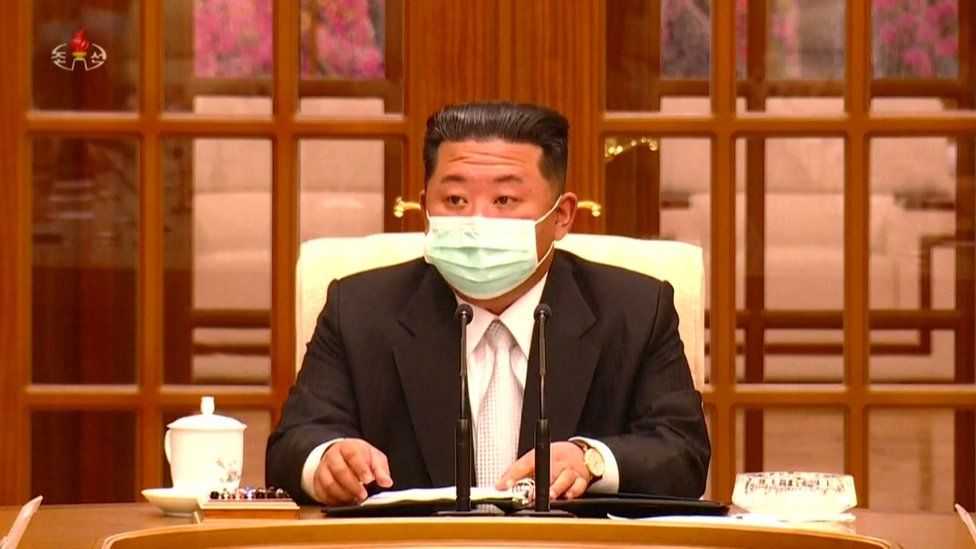
Kim Jong-un has not been seen wearing a face mask on television since the pandemic began KCTV/AP
In the 1990s North Korea suffered a famine estimated to have caused the death of up to 3.5 million North Koreans over a period of years. The poor in North Korea suffer from malnutrition which has conditioned them to stunted growth. This huge segment of the population is health-compromised in a country whose leader refused to entertain the thought of importing vaccines, yet boasted that his country was free of COVID-19, which has struck everywhere else in the world.
Kim Jong Un has just announced his country's first coronavirus case and he is no longer gloating at his status of an exceptional leader who miraculously kept the pandemic at bay. This, even though the commander of U.S. Forces Korea stated in July of 2020 that the virus had been reported both in China and Russia as outbreaks were seen to occur near their borders with North Korea.
Finally, at a time when 520 million cases have been reported globally, COVID appears to have knocked at North Korea's door. In one of the most repressive systems on Earth where political prisons abound for citizens who fail to toe the government line or have the temerity to question its leader's dictates, Kim Jong Un has ordered lockdowns in all of the country's cities.
Recently there were several large-scale gatherings in the country as well as a military parade held a month ago where tens of thousands of maskless soldiers marched in the presence of maskless masses, following the example of their maskless leader. Airports in the country have been closed during the pandemic but the regime reopened a rail link with China in the new year. Black-market traders crossing the border can't be discounted.

There are concerns Covid could worsen an already dire food situation AFP
It was, boasted Kim, evidence of his nation's superiority in evading the entry of COVID-19 to the country. Sacrifices made to further isolate North Korea in a depressed, sanctioned economy succeeded in maintaining a coveted COVID-free population. Now that conceit has been shattered. Now, because North Korea refused all foreign vaccines, its 26 million people are vulnerable to strains of the virus.
This is a country whose health-care system is fragile and under-funded. Kim has poured his nation's treasury into designing and building facilities for nuclear and missiles development for security purposes against the designs of his nation's enemies who plan, he claims, to destroy the country. Investment in agriculture and manufacturing to buoy the economy and feed its citizenry is an afterthought.
Should a widespread outbreak occur in Pyongyang where about one in ten North Koreans live, it has the potential to gravely impact a large proportion of the population. The city's lockdown spurred panic in its population, with people desperate to stock up, leading to long lines for public transport. Their leader, however, retains his confidence that under his unerring leadership, the country will soon shake off the virus.
North Korea will return to its former state as a "shining success" where the borders were sealed and North Korean athletes were kept from competing at two Olympics. Even cold-blooded murder was not beyond the pale in protecting the country from contracting the virus. North Korean troops shot, killed and burned the body of a South Korean government employee who had the misfortune to drift too near a nautical border.
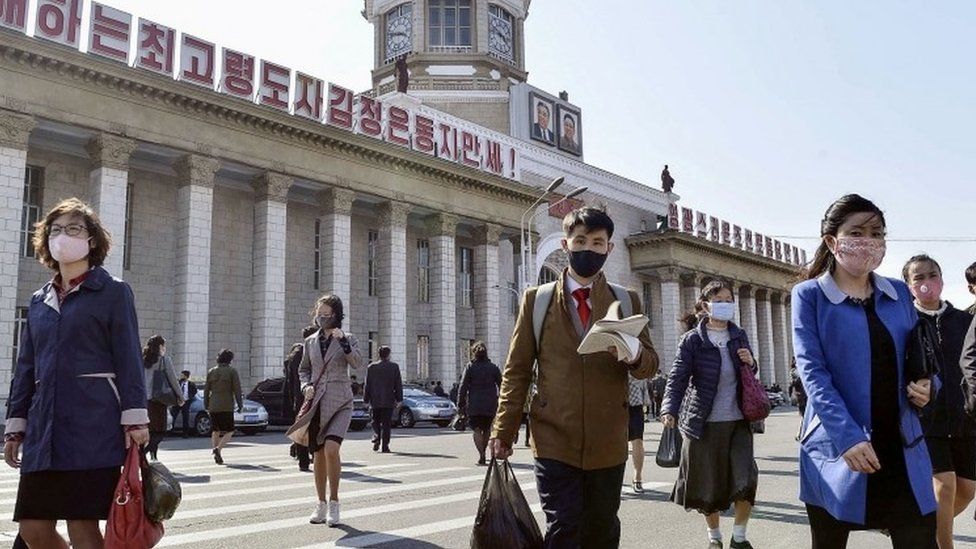
The scene in the capital Pyongyang - much of the country is inaccessible to foreign visitors Reuters
"Until Omicron, I actually thought a COVID-zero approach could be plausible. [But] it's just so insidious, it can just spread so quickly."
"I feel it's kind of like a losing battle. You could do it for a week or two ... then it's going to come back again."
"I just don't know how China will be able o avoid what happened in Hong Kong, write large."
"If everyone stays home, the outbreak will get snuffed out. But ... even if Shanghai can snuff out this particular outbreak, there's going to be more introduction of it, because it's circulating everywhere else in the world."
Dr.Jeff Kwong, public-health professor, University of Toronto
"What happens to your pet if you test positive remains an unsettling grey area with no clear solution."
"Horror stories circulate online about pets being left behind and one was recently killed with a shovel by a person in a haz-mat suit."
CNN journalist David Culver, Shanghai
One clip shows a policeman in a hazmat suit removing a protester from the scene BBC
CNN journalist Culver, as a resident of Shanghai, has his own very personal fears aside from his writing about regular morning marches of neighbourhood residents to designated areas where they are tested by health officials wearing haz-mat suits. Should they test positive they are immediately sequestered, not permitted to return home and must go into isolation. If they have pets at home the pets are confiscated and put to death. David Culver has nightmares of testing positive, worried about abandoning his dog, as he would be forced into quarantine.
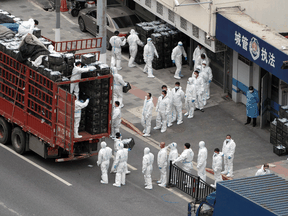
Shanghai's 25-million residents have been cooped into lockdown for weeks, unable to leave their homes except for COVID testing, and living with food shortages caused by the enforced total lockdown. A lockdown originally meant to last a few days, but that has been ongoing now for weeks with no indication how long it may last, as long as COVID-positive cases continue to present and authorities continue to react with draconian methods of isolation. The situation led to people shouting in desperation from open windows in their apartments and from balconies.
People wearing personal protective equipment
transfer food supplies and necessities for local residents during a
COVID-19 lockdown in Shanghai, April 5, 2022.Photo by AFP via Getty Images
The protests spurred officials to seek a solution to the angry social protests, including media posts in a country not known to tolerate dissent. The solution? Drones, circulating in neighbourhoods with very specific messages: "Please comply with COVID restrictions. Control your soul's thirst for freedom. Do not open your windows and sing", the female voice instructs.
Children separated from their parents when found to be COVID-positive. This is a reflection of China's COVID-zero policy meant to completely eradicate, not merely control SARS-CoV-2. The virus is not responding positively to that goal, however, and the method finds no wide public acceptance. Chinese health authorities who subscribe to the COVID-zero manoeuvres insisting on complete lockdown to effectively beat virus transmission, appear not to have reckoned with the high transmissibility of the Omicron strain.
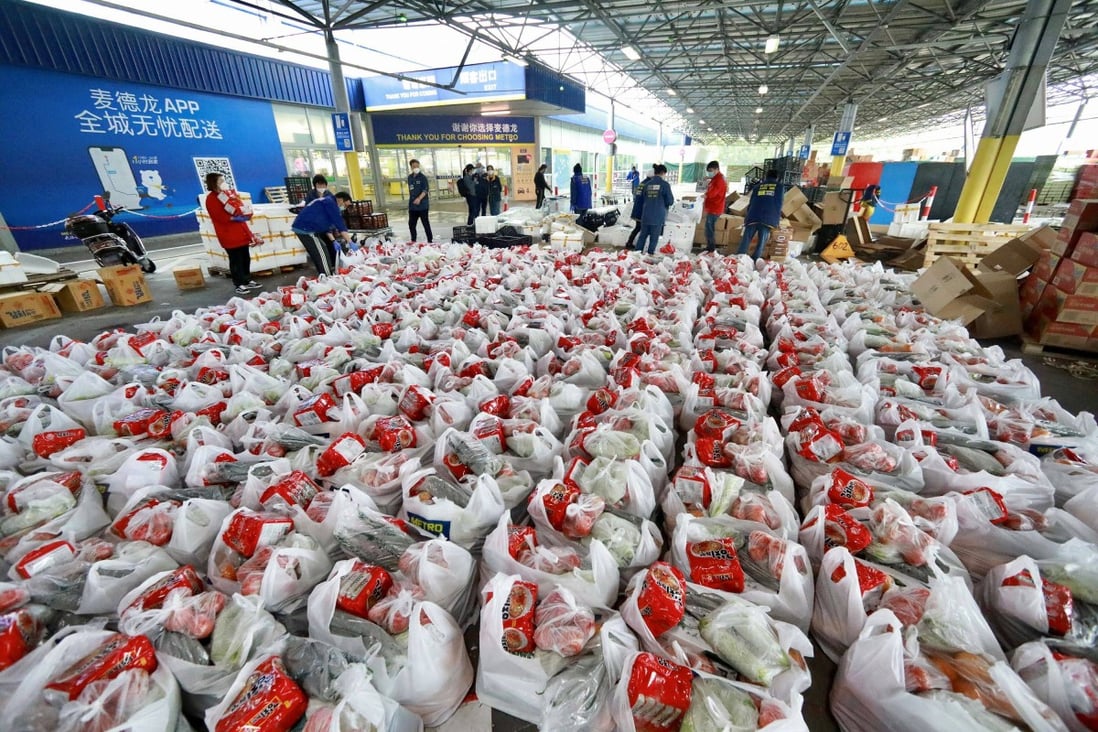
Staff members organize mass food orders from locked down Shanghai residents. Photo: Reuters
"Judging from how this pandemic is being handled by different leaderships and systems ... [we can] clearly see who has done better", China's President Xi Jinping has boasted in the past. And it did realize a good measure of success with pop-up cases here and there and swift responses in fragmented areas, quickly contained. Until Omicron arrived and infections began reaching into the stratosphere, as much as 15,000 daily of late. Beijing's firm orders for Shanghai's total lockdown reflected its wish to avoid the disaster in Hong Kong.
Hong Kong's own COVID-zero achievements were blown to smithereens when three million people were infected and mass deaths occurred. In both areas low vaccination rates among people aged 80 and over and lack of access to mRNA vaccines seem partly to blame. That the most vulnerable age group in the populations have not been vaccinated seems like an an avoidable Achilles heel that should not have gone unaddressed. China's home-grown vaccines have a relatively low efficacy rate; somewhere around 50% and less, compared to the mRNA vaccines.
Locked into their homes the population has been unable to work, attend school, shop, attend medical appointments. The government plan to supply people with food deliveries has overburdened commercial delivery services, the result of which has been that a great many people face starvation, deprived of food access. Clearly, China's approach to stifling the virus that originated in Wuhan, China and went on speedily to infect the global population, has been nothing to celebrate as a success.
Workers
in protective suits disinfect an old residential area under lockdown
amid the COVID-19 pandemic, in Shanghai on April 15.ALY SONG/Reuters
"Many of us are very anxious. I spoke to friends, and many of them can't sleep at night."
"This concerns our very survival."
Nicole Tsai, Marketing manager, Shanghai
"When I returned to China [after living in the U.S. for several years], I thought Shanghai was a relatively free city."
"But when I read the news online about children needing to be separated from their parents for quarantine, I find it very hard to understand."
"I'm worried to test positive [for COVID], not so much about the virus itself but about all the trouble that it will bring."
Ngo (surname withheld), IT specialist, mother of 3-year-old
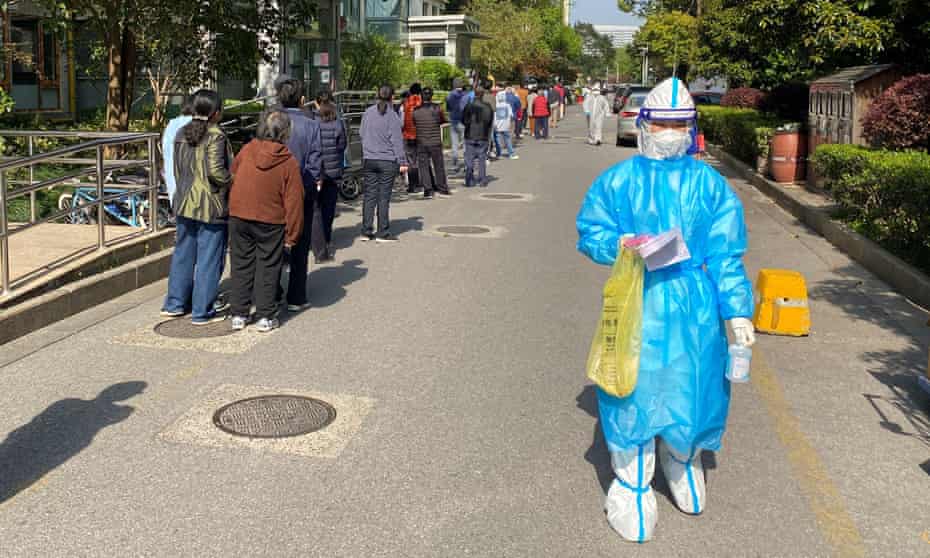
A medical worker in a protective suit walks past people queuing to take a nucleic acid test in a residential area. Photograph: David Stanway/Reuters
Ngo has reason to be fearful, and to want to avoid contracting COVID, living in Shanghai, a city of 25 million people, shut down for weeks in a concerted effort to 'control' the virus. Authorities in Shanghai have taken to separating families from their children if they've been confirmed with COVID. The plight of dog-loving dog owners is much the same.
When dog owners are sent into quarantine, testing positive for COVID, their dogs are 'culled'. Last week the city burst into outrage when a video of a corgi bludgeoned to death took place in the city street. Similar starkly unforgiving incidents take place all across China. This at a time when dog owners are unable to walk their dogs for weeks on end, the fear is should they contract COVID it would be a death knell for a beloved pet.
The Shanghai government, when it first instituted a citywide lockdown made it clear it would last for four days. No one was permitted to question that time-frame; anyone who spread rumours that this would be a longer lockdown was threatened with punishment. People went out to stock up for food to last them a week. That four days passed and so did a week and another week. It became clear the lockdown would remain, and people ran out of food.
Apartment dwellers were shown on video screaming out their windows and from balconies in frustration and fear and hunger when a video went into circulation to emphasize the plight of the population. "I'm going to die because of the lockdown, not the infection", one resident of the city posted on China's version of Twitter, Weibo. While the government organized food deliveries through community volunteers, hundreds posted online of their days without food.
Videos appeared of the city residents fighting over bags of produce at food distribution areas set up in residential compounds. Nicole Tsai remarked on spending over four hours every day on delivery apps in the hope of finding a window where food might be available to order for delivery. Entering the third week of lockdown there was an announcement that government would ease restrictions in some areas.
Food scarcity in China Photograph AFP
The new plan by Shanghai officials would be a grouping of residential units into three risk categories to enable "appropriate activity" in neighbourhoods with no positive cases through a two-week stretch. A Shanghai city official explained the city was to be divided into 7,624 areas to remain sealed off, and 2,460 would become subjected to "controls" following a week of no new infections. After two weeks without a positive case, 7,565 "prevention areas" would be opened.
In the "prevention areas" people would be permitted to move throughout their neighbourhoods, practising social distancing. Should new infections arise, the areas would be sealed again. "The zones have been divided into government officials' zone, rich people's zone and poor people's zone" clarified one Weibo user.
A record 25,173 cases were reported Monday bringing the total number to over 200,000 since March 1st. The current outbreak constitutes the largest COVID crisis to arise since the first emergence of the virus in the city of Wuhan where the virus originated, in December of 2019. The most curious statistics is that rise in case numbers aside, there have been no reported deaths, and one serious illness only has surfaced.
VCG
The solution, however is more permanent in that if a pet owner tests positive their pet is in line for elimination. Last week the city viewed with outrage a video of a corgi bludgeoned to death on t he streets after the dog's owners had been sent into quarantine at a government-operated centre. Across China, this is the fate of pets whose owners are diagnosed with COVID.
"While the majority of G20 countries are exiting pandemic-related lockdowns, China appears to be stuck with its old tool box of zero tolerance and draconian measures to fight COVID."
"In addition to the strain on business, the population seems less willing to put up with lockdowns, as more and more erratic local policies erode citizens' confidence in their local administrations."
Jon Wuttke, president, European Union Chamber of Commerce in China
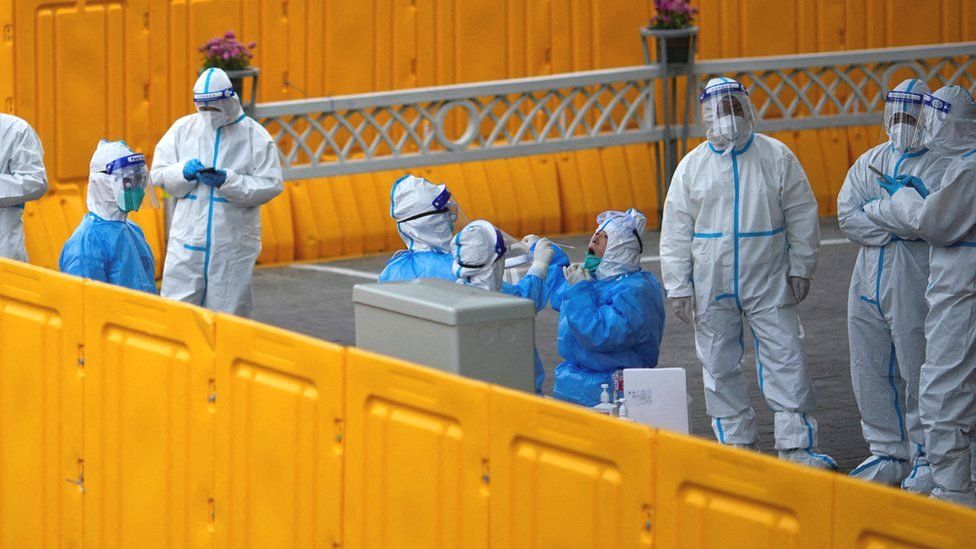
Tests take place behind the barriers of a makeshift Covid centre in Shanghai earlier this week Reuters
Shanghai, China's financial engine with its 26-million-srong population has never encountered a need previously for a mass COVID lockdown. Three days ago authorities ruled there would be no shut down of the city in reflection of its huge economic importance to the Chinese economy. Instead the focus was on more targeted solutions, to seal off residential towers and manufacturing plants where outbreaks had been occurring.
Until Wu Fan. one of a panel of expert COVID advisers, informed a city briefing of recent mass testing that discovered 'large scale' infections throughout the entire city. "Containing the large scale outbreak in our city is very important because, once infected people are put under control, we have blocked transmission", he explained.
Chinese authorities believe in the efficacy of large-scale responses to even relatively small breakouts of COVID and its variants. Where its zero-COVID policy has fairly well shut off its borders for the past two years from outside 'influences. The introduction of more infectious variants such as Omicron has led some to question the strategy of mass testing, lockdowns and reliance on domestic vaccine development.
Now, in lock-step with China's COVID-aversive reactions, the financial hub of Shanghai went into lockdown Monday with the determined purpose of quelching its COVID-19 problem. The sudden decision was announced on Sunday by local authorities; the city was to be divided in half, with mass testing, closure of businesses and confining millions of people to their homes to take place first in one half of the city, then the other, as the first half reopens.
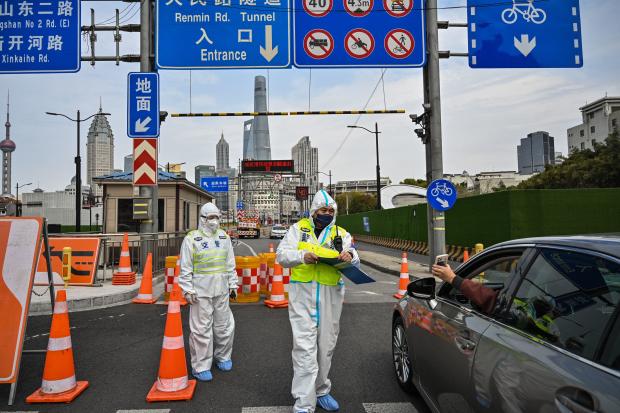
Police control access to a tunnel leading to
the locked-down Pudong district of Shanghai, amid efforts to stop the
spread of COVID-19 in China's financial capital, March 28, 2022.HECTOR RETAMAL/AFP/Getty
This reaction to the discovery of widespread infections must seem puzzling to the 26 million people in the city, given that the epidemic has been largely asymptomatic. The lockdown and its implications arriving when most nations in the West have moved on to abandoning COVID lockdowns and restrictions to move toward an acceptance of the virus's existence.
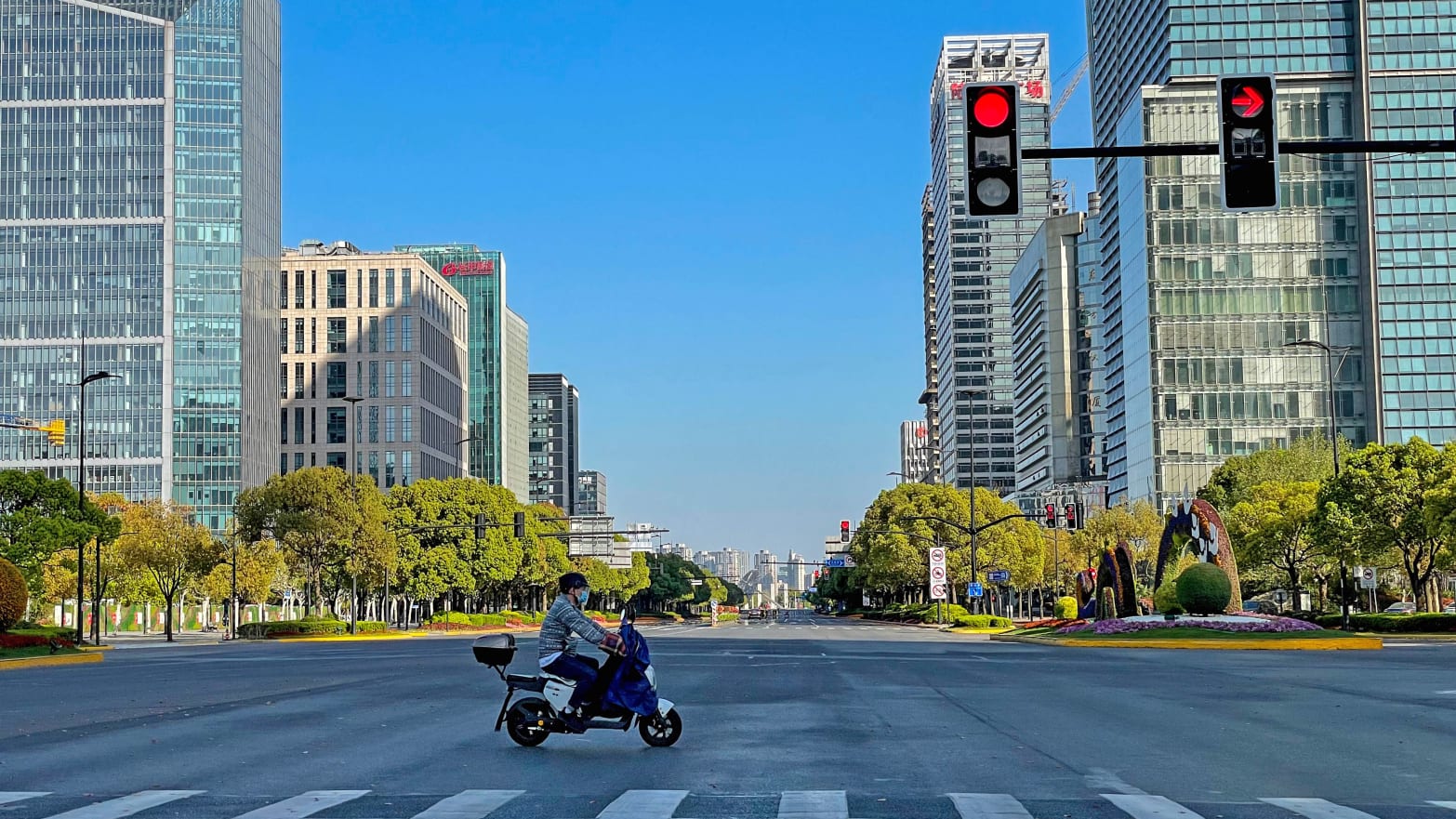
Shanghai authorities Monday locked down areas east of the Huangpu River, an area where its financial district and industrial parks are located. The four-day lockdown shifts to the second half of the city in the west then, for another four days. During which time testing is to be conducted on residents barred from leaving their homes.
Public transport is suspended and private cars forbidden from the roads. tunnels and bridges linking the two halves of the city have been closed off; roads leading out of Shanhai have been blocked. A negative COVID test is required for anyone wishing to leave in an emergency. Residents of the city responded to the orders in a panic of stocking up on food and related supplies to the point where supermarket shelves were emptied.
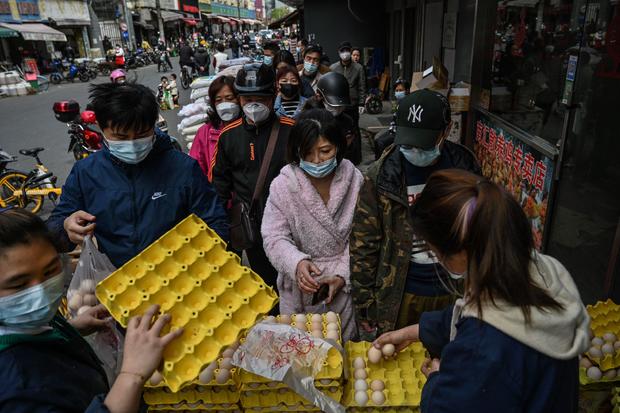
Shanghai residents line up to buy eggs from
a vendor next to a market in Yangpu district, in Shanghai, China, as
the city is shut down in two staggered phases to limit the spread of
COVID-19, March 28, 2022.HECTOR RETAMAL/AFP/Getty
Staff of financial institutions were instructed on short notice to return to offices before the lockdown and to expect to sleep over nightly until the lockdown is lifted. Linked foreign businesses have viewed the situation from the outside with concern. In Hong Kong, over a million cases of COVID erupted in the city that had been largely free of the virus in the past two years.
The highest number of cases recorded anywhere in the world surfaced in Hong Kong in early March where close to 900 cases per 100,000 residents was tabulated. Deaths of close to 300 daily surged earlier in the month in Hong Kong. Reflective of low vaccination rates among the elderly. China's home-grown vaccines, as it happens, have a low efficacy rate.
Medical staff walk in front of barriers of an area under lockdown in Shanghai on Friday. (Aly Song/Reuters)
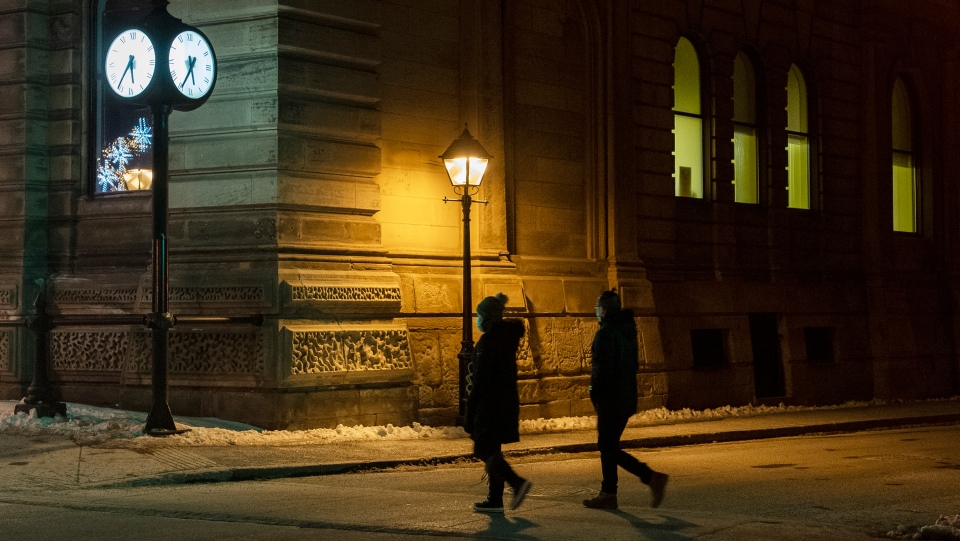
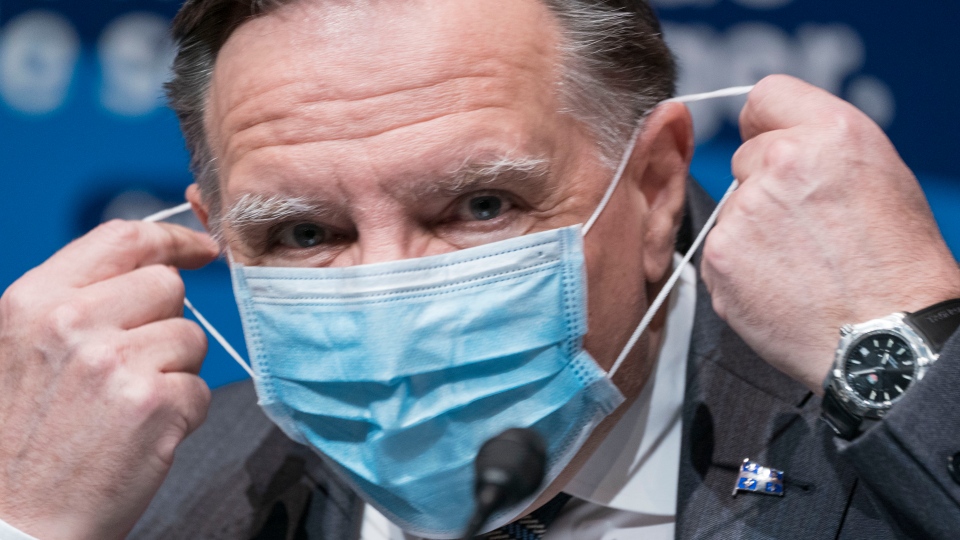
People wear face masks as they walk along a street prior to a curfew in
Montreal, Saturday, January 9, 2021, as the COVID-19 pandemic continues
in Canada and around the world. The Quebec government has imposed a
curfew to help stop the spread of COVID-19 starting at 8 p.m until 5
a.m. THE CANADIAN PRESS/Graham Hughes
"I'm not sure that's going to be feasible [people in Quebec emulating Italians during the springtime COVID quarantine, singing from balconies] during the cold winter nights in Quebec."
"[Placing people under curfew so they're unable to leave their homes lacking an acceptable reason fails to create a sense of solidarity, the] all in this together [spirit]."
"OK, we've just got to get through this four weeks, assuming the lockdown is not extended [people tend to think]."
"The rationale is that when people disregard social distancing, they do it at night. So, you lock everyone down. Of course, you're still putting people in closed spaces It just happens to be their own homes."
"This thing has lasted so long. People were expecting and hoping in 2021 things would open up."
"If we're going to have a curfew there needs to be in place, and visibly in place, mental health resources to help people get through this period."
"Most people will be resilient. We're not going to like it. We're gonna feel stressed out and irritable and perhaps depressed, but most people will bounce back."
Steven Taylor, Clinical Psychologist, professor, Department of Psychiatry, University of British Columbia
CTV News
Quebecers may feel they see a glimmer of light at the end of this latest tunnel with yet another door slammed against their freedom of movement when Quebec Premier Francois Legault announced "We're talking here about saving lives and we're talking about saving our health-care system", as he announced new emergency measures to take effect in Quebec from Saturday, 9th of January, among them a 8:00 pm to 5:00 am curfew. A curfew meant to be strictly enforced; only those with acceptable reasons to be out will be spared fines of up to $6,000.
This news for Quebecers represents the first in the country to impose a curfew, but Quebec, after all, has experienced the most deaths due to COVID within its population of any other province or territory. True, 80 percent of those deaths have taken place within long-term care residences, and the curfew obviously doesn't impact on them, so it isn't surprising a bit of consternation may arise from the situation of locking everyone down at night. And according to mental health experts, the newly imposed curfew represents another stress level upon people already suffering the effects of ongoing lockdowns.
The rationale for the curfew appears to elude the mental health experts. COVID-19 saturating the province is the driving force behind such moves of desperation, when governments don't know what else they can do to convince their populations to take the ongoing and growing prevalence of infections seriously enough to deter them from breaking the health rules meant to protect the greater population. Residents will still be permitted outside excursions for emergencies and "humanitarian reasons", including walking the family dog, picking up teenagers from work, or filling prescriptions at a pharmacy.
Those people whose employment leads to working shifts will be excepted but in general everyone is expected to remain in their homes in the evening, and to commit to staying there until the morning light. Any who venture out lacking a sanctioned (or valid) reason to be out and about during the curfew hours risk hefty fines of between $1,000 and $6,000. Desperate means, the government insists are a requirement if they are to hope to be able to stop the minority of people who insist on ignoring COVID rules.
Civil liberty concerns are becoming visible: "What's crucial is how the curfew is enforced", stated Michael Bryant, executive director of the Canadian Civil Liberties Association. To the present, Quebec's enforcement during COVID lockdowns has tended to be on the "overzealous" side, disproportionately impacting racialized communities and the homeless in an atmosphere prevailing where residents are encouraged to carry proof they have a valid reason to explain their outside presence at night.
Urgences-santé paramedics transport a patient to the COVID-19 unit of Notre-Dame Hospital on Wednesday, Dec. 30, 2020.Photo by Allen McInnis /Montreal Gazette
Ar the very least, 8.6 million Quebecers can anticipate the curfew expiration of February 8. As far as some are concerned in the face of a clear public health priority all else is superseded in importance, that the psychological harms of distancing and curfews are less important than the potential physical harms visited by the virus. "Given the rapid spread of the virus, distancing may turn out to be more important in saving lives than vaccines", according to professor emeritus Dr.Allan Frances at Duke University.
Dr.Thombs, who as a senior investigator at the Lady David Institute of Medical Research at the Jewish General Hospital, is leading a review of how COVID and pandemic policies affect the human psyche feels the restrictions are already impacting people in various ways. Studies indicate that young adults are deeply affected where social interactions with others are being aborted leading to loneliness. This, in the face of confirmed cases accelerating as never before with Canada seeing an increase of 100,000 cases in just over two weeks.
There is a lack of compelling data proving that curfews work. Setting up controlled studies is difficult, explained Dr.Taylor, author of The Psychology of Pandemics: Preparing for the Next Global Outbreak of Infectious Disease. The effort of balancing the containment of infection as opposed to concern over people's mental well being is top of the agenda. A rise in anxiety, depression, substance abuse and domestic violence has already been recognized, and additional instances of all those stressors will be emphasized in Quebec under its enhanced lockdown.
The more curfews you introduce people to and the longer they remain in force, the more oppressive and stressful the situation is for everyone involved, since humans are gregarious social animals, and estranging us from all social interactions that have meaning in our lives and create enjoyment impacts moods and with bleak moods comes irrationality.
"Whenever you do these kinds of things,
you want to pick your battles, pick your target, help people understand
what you're trying to accomplish and lay out what that is."
"It's not clear to me at least what shutting down at eight o'clock is going to do."
"We
always cope with stressors when they're shorter than longer, and when
we have as much information as possible about what's going to be
involved. What happens after 8? There is a real risk that it will make
things more difficult for busy people who can't get their errands done,
such as those working and caring for young children."
"Normal
development really relies on socialization at that point in their lives
[young people]. Other people are being hammered financially and don't
know if they can support their families."
"...It
does seem like people are really slipping and aren't being
particularly cognizant about following [public health] principles."
"I
don't know that shocking people without a clear purpose of what the
shock is trying to stop works. What are they targeting here? What are
the main sources of transmission? What are they trying to cut down.?"
Brett Thombs, professor, faculty of medicine, McGill University
"We are obliged to provide a type of shock treatment so that people reduce their visits."
"Police officers will be there to make sure everybody respects the rules." "We have had the battle of our lives and unfortunately the battle is not over."
Quebec Premier Francois Legault
"Our hospitals are on the verge of a breaking point."
"[The] partial measures [in place] have had] no effect on the increasing trend of cases."
Roxane Burges Da Silva, professor, public health, Universite de Montreal
"We are going to truly surpass our capacity in the next two to three weeks if we don't do something."
"Ramping up testing of asymptomatic individuals in congregate settings whether it is in schools or the workplace should have been done. Period. Full stop."
"The biggest worry is, eventually, if we don't do anything, we'll get to the point where it's going to be the decision where we have two patients, one ventilator and someone has to decide."
"[In December Legault closed all] non essential [retail stores extending the winter break for elementary and high school students. But while those measures slowed the spread of the virus, they failed to] render the curve flat."
Dr.Donald Sheppard, chair, microbiology and immunology department, McGill University
After a rise in COVID-19 cases, Quebec is instituting the strictest measures since the spring. (Graham Hughes/The Canadian Press)
Quebec was the worst-hit COVID-19-caseload in the country initially when the SARS-CoV-2 virus entered Canada last year in March and it remains so to the present time. The initial entry just happened to coincide with the academic spring break and in Quebec that break takes place a week before it does elsewhere, in other provinces. Although there was concerned anticipation over a spreading coronavirus with dreadful news coming out first from China, then Italy and Spain as they attempted to cope with the vicious spread, Quebecers took their usual spring break trips abroad.
And the inevitable happened, as they brought back with them virulent strains of COVID-19 that quickly spread in the community, and Montreal in particular became an object lesson in the need to take stringent measures swiftly and if at all possible, proactively. A week later spring break time arrived in other provinces and recommendations were to curtail travel. Governments did what they could to alert and advise, to issue warnings and instructions to their populations while there were pockets of resistance particularly from religious communities that helped further the spread; inadvertently but inevitably.
Spring and summer were quieter periods with some relief in the numbers of new COVID cases and a relaxation of rules. But then came Thanksgiving, Christmas and New Year's. A population that felt it had withheld itself from traditional visits with family and friends had problems contemplating separation on these important family holidays and resolve faltered. Surveys of Canadians related that an unsurprisingly large proportion of families took a calculated risk and returned to visiting one another. With the weeks following each of the holidays seeing another upward spike in cases.
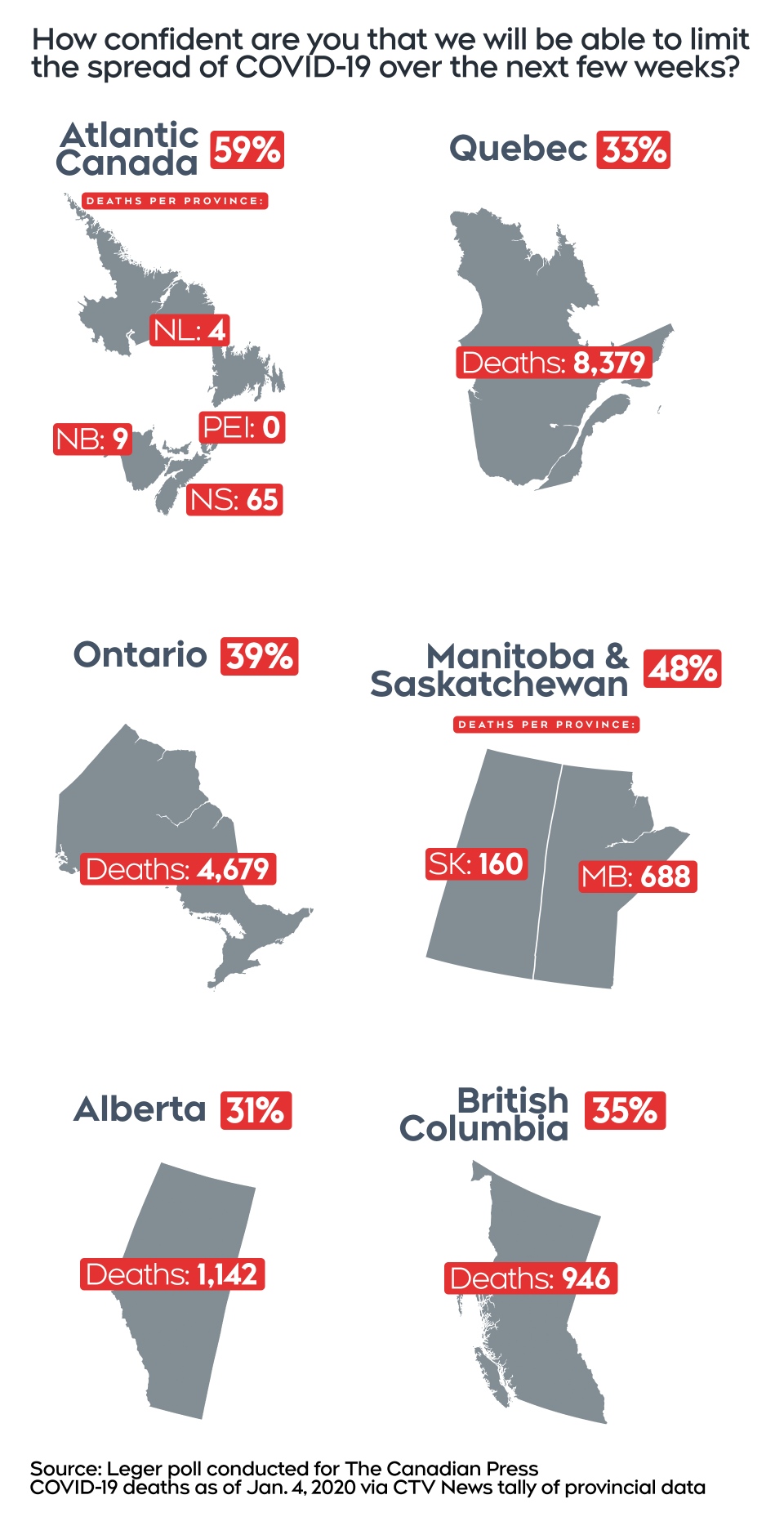
The latest survey, the Leger/Association for Canadian Studies poll found that 48 percent of all those surveyed visited with people outside their households, while 52 percent of respondents said they had not. But it is clear from the survey that close to half of all Canadians visited with family or friends over the winter holiday period, and case numbers, already steep in this second COVID wave, began to skyrocket and still does not fully reflect the apex of the rise. The largest percentages provincially of those visiting during the holidays were those in Quebec and Ontario.
Quebec now becomes the first province to impose draconian measures in determined hopes of curbing the dynamic spread of the novel coronavirus. Premier Legault, during a news conference stressed that schools, retail stores and other businesses have been closed since December, and yet COVID-19 infections simply continued to rise. Transmission, he pointed out, largely traceable to private gatherings. Henceforth and until February 8 all non-essential businesses ordered to close in December are to remain closed until February.
There is also a curfew and anyone who thinks of wandering about on the street after 8:00 p.m. for no acceptable reason will be subject to fines between $1,000 and $6,000, substantial enough to make anyone think twice about challenging the curfew. On January 11 primary schools are to reopen and high schools will follow a week later. Mid-week, Quebec reported 2,641 new cases for that day alone, along with 47 additional deaths from COVID.
According to the provincial health department, hospitalizations had leaped by 76 to 1,393, the largest number of patients since last May, with 202 people in intensive care. Dr. Sheppard spoke of the province's health-care system under severe strain with surgeries and cancer screenings put off, while intensive care units are filling up. He spoke of breast cancer patients presenting with larger tumours than before the pandemic, the result of late diagnoses.
Quebec's government-mandated health care think tank, the INESS Institute, warned that hospitals in the Montreal area are certain to run out of dedicated coronavirus beds within three weeks. It has been since October that much of Quebec has been under partial lockdown with bars, restaurant dining rooms, gyms and entertainment venues closed. All "non-essential" retail stores were closed in December and the winter break for students was extended.
Dr.Borges Da Silva feels the curfew is sensible since it will force people to consider whether it is worthwhile before they make arrangements to go out and have a beer with a friend. As far as she is concerned, illicit gatherings over the holidays have made a major impact on the spread of COVID-19 in the province. No one is under any illusions that there will not be push-back from the public over the curfew, however.
"Fires are burning in so many different areas and and right now is the time to get those under control."
"Hospitals are being forced to make the difficult decision to cancel elective surgeries and procedures in areas of the country, and health care workers everywhere are exhausted."
Dr.Theresa Tam, chief public health officer, Canada
"The impact on our hospitals would be absolutely devastating. As premier I can't accept that and I won't accept that."
"These adjustments are necessary to respond to the latest evidence and we may need to make further adjustments."
"You have already sacrificed so much, but we need to be clear about what is at stake. We are staring down the barrel of another lockdown."
Ontario Premier Doug Ford
People wear face masks as they attend an outdoor event in Montreal,
Sunday, as the COVID-19 pandemic continues in Canada and around the
world. Public health experts are urging governments to take decisive
action to reduce social contacts. (Graham Hughes/The Canadian Press)
Canada's premiers fear they may be staring helplessly into an abyss. Alberta's premier, facing the stark reality of an economic disaster resulting from a multitude of causes, not the least of which is the financial wreckage on top of the human sacrifices to the ravages of a new coronavirus that has brought Canada's historically wealthiest and most productive province to a standstill, has taken steps to tighten already-existing restrictions. In Manitoba, tighter rules have been brought in, in hopes of controlling a pandemic that has of late made huge strides in striking down the vulnerable.
Canada appears to be headed toward case figures up to ten thousand daily by December, according to informed predictions. It has been weeks on end with cases steadily rising in most parts of the country. Over 282,000 people have now been diagnosed with COVID-19 and a devastating average of 55 people die daily from the SARS-CoV-2 virus causing COVID. On Thursday alone, close to 5,000 cases were diagnosed, and deaths numbered 83 countrywide.
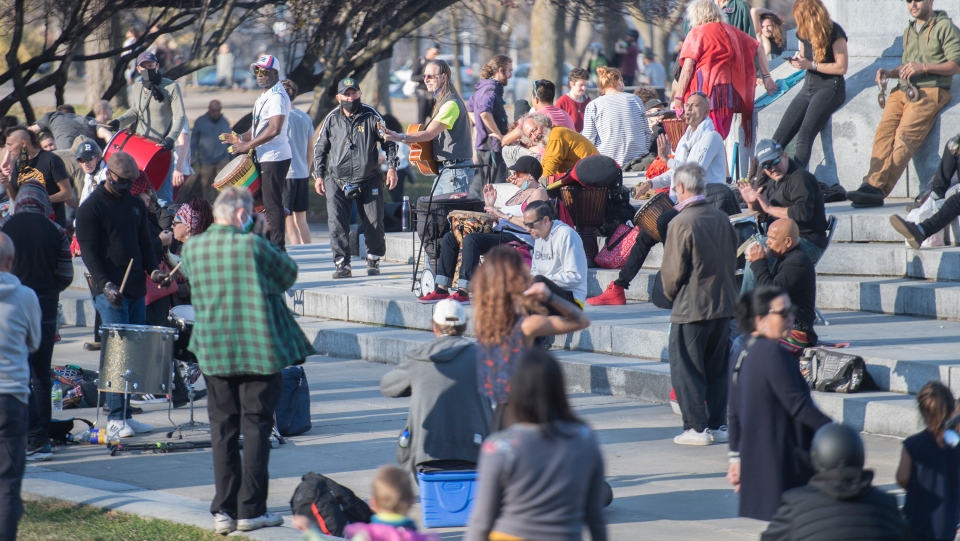
People play music as they gather at the Tam Tams festival on a warm fall
day in Montreal, Sunday, November 8, 2020, as the COVID-19 pandemic
continues in Canada and around the world. THE CANADIAN PRESS/Graham
Hughes
Canada's chief public health officer has warned that the current pace of new cases is steering Canada toward 10,000 cases each day by early December, a situation that will strain health care resources already under stress in struggling with the latest surge. Long-term care homes are once again being hit particularly hard. The drain on provincial treasuries has been deep and hard and the provinces have now called on the federal government to pay permanently for a greater share of health care costs.
Ontario, Canada's most populous province, along with Quebec, has seen the lion's share of the countrywide cases. Quebec is now considering temporarily shutting down schools to get a hold on its spiralling caseload.The Greater Toronto region has now entered the "red zone", the highest level of restrictions, reflecting a greater number of cases detected. These are restrictions severeo6 limiting indoor dining and gyms, closing movie theatres and other entertainment spaces. Only a full and total lockdown represents a more restrictive move in a last-ditch effort to counter the prevailing crisis in case growth.
On Thursday Modelling Ontario released figures indicating the government could be seeing totals of 6,500 cases daily several weeks forward, with the potential to overwhelm the province's critical-care bed capacity. Ontario's premier pleaded with people to modify behaviour -- for themselves and for the wider community -- but in any event he is prepared to enact further, more drastic legislation toward complete shutdown should the situation not begin to modify on a downward track.
Dr. Michael Gardam (Craig Chivers/CBC)
"To date, we're not moving fast enough to get ahead of this. I think we're being lulled into a
false sense of security because of the low numbers of hospitalizations
and deaths [relative to earlier in the pandemic]. But they will come in
the next six weeks or so."
"I think that appealing to people's better natures — that, hey,
you should be careful and you should make sure you limit your contacts
— I don't think that that's going to work, to be perfectly frank."
"I think we're going to have to be a lot more forceful."
"I would argue that we need to be very cautious, like we were
back in March, in order to weather the storm from all the increased
contacts that we've had."
"[Right now], people are playing fast and loose with bubbles all over the place. We're all going to have to pay the price because our kids are in school now. So what are we giving up?"
"If
you want to keep the restaurants open and bars, maybe you have to give
up your private gatherings. Because if you just increase in
every dimension, if you increase the number of contacts that you have,
this is going to go to hell real quick."
Dr. Michael Gardam, infectious disease physician,
Women's College Hospital, Toronto
Argentina, and the Consequences of Prolonged COVID-19 Lockdown
"When the quarantine came, I had to close my business completely. There came a time when I owed seven months of rent, six months of electricity, six months of gas, and union and accounting fees."
"It's a desperate situation because we're very much in debt and we're going to have to work a lot and wait a long time to catch up, and since we don't know what's going to happen next, it's a terrible uncertainty, which has affected me disproportionately in terms of my state of mind."
Daniel Aponte, bar owner, Lanus, Greater Buenos Aires
"When compulsory isolation is prolonged, chronic stress begins, which is linked to anxiety disorders, depression and addictions."
"These symptoms also generate sleep problems and various physical ailments."
Patricio Cristobal Rey, head, teaching and research division, mental health department, Buenos Aires University
"This whole situation has given me an arrhythmia and I have to use a Holter [portable heart monitor] to control it."
"I also have trouble sleeping, because I have trouble breathing due to this problem."
Candela Robledo, 20, Buenos Aires
"Having more than 200 days without pleasant stimuli, such as social meetings, trips or outings, affected my motivation ... even more so knowing that the economic situation in my context is terrifying."
"I have lost my appetite. I eat only once a day, not because I don't have enough food, but because I don't want to eat."
Azul Weimann, 3rd year of study, nutritional sciences
"My son has just turned 15 and although he is a very good student and always communicates with his classmates, lately he does not have the same enthusiasm."
"He is also afraid that his father or I will go out to work. Last week we started going to work for a few hours and he sent me a message saying that he missed me. So we decided not to leave him alone and to go to work one day each, although he doesn't like that either because he's afraid we'll get sick."
Gabriela Vianco, resident, Buenos Aires
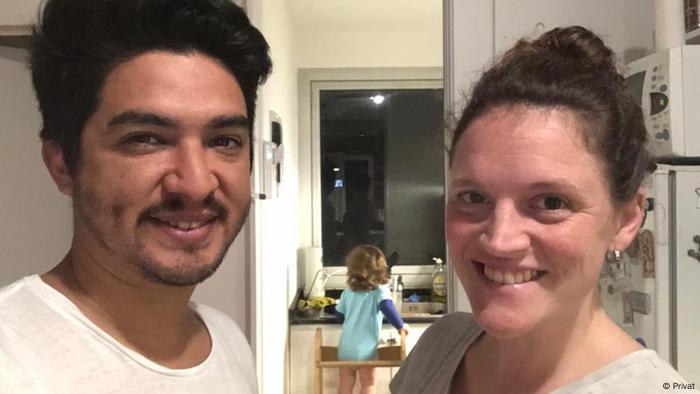
Buenos Aires residents Ezequiel Fuentes and Mariana Rimondino say their young son has spent a third of his life in lockdown
Buenos Aires, the capital city of Argentina along with its metropolitan region represents home to 40 percent of the entire country's population. Argentina is a country with the highest number of psychologists in practise worldwide. Despite which few people these days of lockdown in the country are able to access treatment. Psychologists state that there are many people unable to obtain needed treatment and given the fact that the nation has enacted the most strict of lockdown rules for such a prolonged period once there is an easing and the country opens, the cost to the population's mental health will be difficult to tackle, outranking the economic situation in urgency.
It has been over 200 days that Buenos Aires citizens have been in lockdown, reflecting one of the world's most enduring quarantines. This, despite the fact that the country has recently become the fifth in the world to log one million confirmed cases of COVID-19. At the beginning there was a ten-day general national quarantine, decreed by government on March 20. That situation was extended by weeks, and eventually by months. Restrictions were eventually lifted for some parts of the country, but not in Buenos Aires which has undergone seven months of lockdown.
It is the country's small business owners who are suffering the economic consequences of the prolonged restrictions most. Of the 600,000 small businesses that existed prior to the lockdown, a July report by the Argentine Chamber of Commerce and Services, has reported that over 42,000 of that total had closed permanently. Over 20 percent of the population works as informally employed and while companies are prohibited officially from laying off workers as a result of COVID-19, when the businesses close down their employees -- hundreds of thousands -- are left without employment.
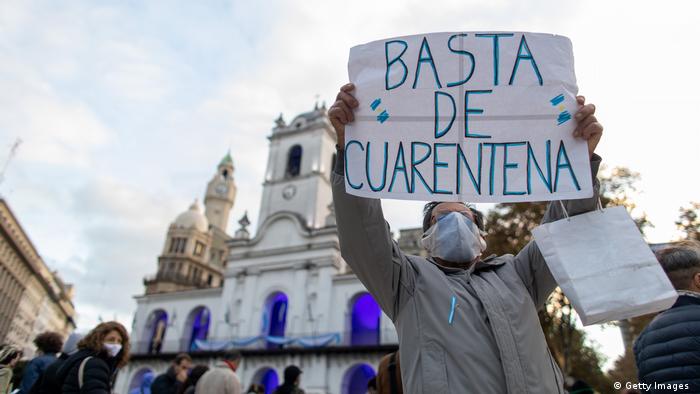
The people of Buenos Aires are hardly proud of having struggled through
the world's longest lockdown — protests against further measures are
growing
Buenos Aires University's psychology observatory reported on the results of a study that depression among the population has increased fivefold, with three of four Argentines burdened with problems sleeping, and one in two having suspended daily activities in hopes of preserving their health. Socializing has remained strictly limited to outdoor public spaces; jogging permitted only at certain times of the day, despite that the quarantine was slightly eased in September. Leaving residents to speak of the numbing effect brought by such isolation.
In the large metropolitan Buenos Aires area, children aged under 15 only may embark on shopping expeditions with their parents, while in the city proper, governed independently, restrictions are less strict, permitting parents to get out with their children twice weekly for a limited period as well as on weekends. Contact with classmates and teachers has been non-existent for over half a year.
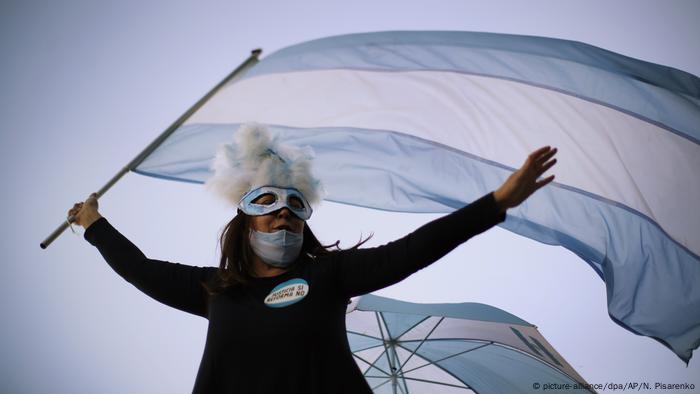
A protest in Buenos Aries against lockdown measures.
COVID-19 Responsible for One Positive Outcome : Global Sound Reduction : "Anthropause"
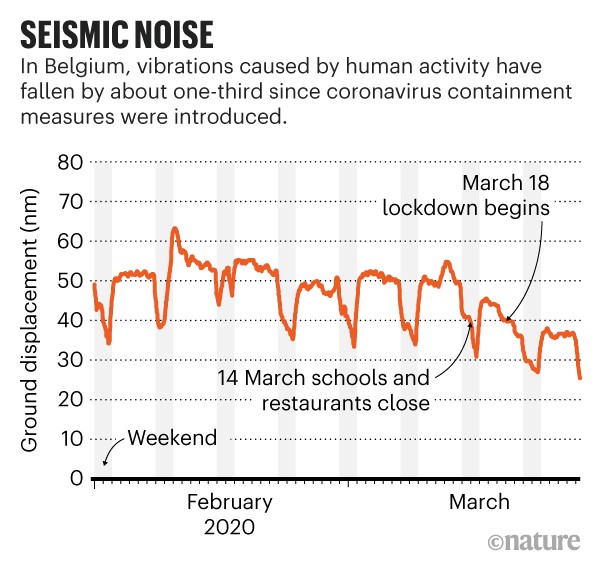
"We could actually see a very sharp cutoff starting in China and Italy and then everywhere else as the pandemic spread and the policies and the lockdown spread." "There is a different amount of background noise to start with. But if you look at the percentage decrease, people in Vancouver stayed at home much faster." "We're getting a much better understanding of what these human-generated wave shapes are, which is going to make it easier in the future to be able to filter them back out again." Mika McKinnon, study co-author. Geophysicist, adjunct professor, department of earth, ocean and atmospheric sciences, University of British Columbia
"We have a pod going by and sometimes you just hear a single whale vocalizing and sometimes they're all chatting at the same time." "We don't necessarily know how to interpret that." Richard Dewey, associate director of science, Ocean Networks Canada, University of Victoria
Abstract
Human
activity causes vibrations that propagate into the ground as
high-frequency seismic waves. Measures to mitigate the COVID-19 pandemic
caused widespread changes in human activity, leading to a months-long
reduction in seismic noise of up to 50%. The 2020 seismic noise quiet
period is the longest and most prominent global anthropogenic seismic
noise reduction on record. While the reduction is strongest at surface
seismometers in populated areas, this seismic quiescence extends for
many kilometers radially and hundreds of meters in depth. This provides
an opportunity to detect subtle signals from subsurface seismic sources
that would have been concealed in noisier times and to benchmark sources
of anthropogenic noise. A strong correlation between seismic noise and
independent measurements of human mobility suggests that seismology
provides an absolute, real-time estimate of population dynamics.
As the pandemic wears on, study authors say data from the quiet period
will help scientists detect more earthquakes and better differentiate
between human-caused and natural seismic noises. (The Associated Press)
Published in the journal Science, a study undertaken by an international team of researchers made use of seismic station data from 117 countries in determining that COVID-19 restrictions has resulted over the period of March to April, particularly in urban areas, by a fifty percent noise reduction representing vibrations generated through human activity. One of the study's authors pointed out the quiet period has been named the "anthropause", caused by the curtailing of traffic, planes, cruise hips, conventions, concerts and sports games.
Silence was palpable its quiet level seen reflected in data sourced from an abandoned mine shaft deemed to represent one of the quietest places on Earth, an abandoned mine shaft in Germany. Noise levels plummeted when the province of British Columbia closed schools, then bars, restaurants and other social establishments, according to a seismic station located in Vancouver. Seismic sound dropped later and returned earlier in Seattle, explained Ms.McKinnon.
It is anticipated that data from this quiet period will be of assistance to scientists, enabling them to detect a greater number of earthquakes and to improve methods of differentiating between natural seismic sounds and those caused by human activity. While the latest data may not help in predicting if and when earthquakes will occur, scientists will be able to acquire a deeper insight into the seismology of the planet and its volcanic activity.
The data does perform a useful function in demonstrating that human activity is having far less of an impact on noise levels around the world; not by choice but through the circumstantial effect of coping with a global pandemic, in practising practical avoidance of infection. The noise reduction is having its impact on Earth's oceans, explained Richard Dewey, the pandemic bringing the opportunity for marine acoustic researchers to study the ocean free of noise pollution from massive tankers and cruise ships, whale watching and commercial fishing vessels.
The recovery of endangered southern resident killer whales -- also known as orcas -- will be enhanced by a quieter ocean. Returning each year to the Salish Sea around southern Vancouver Island, the whales are in serious decline, resulting from the hazards they face in an ocean environment complicated with man-made noise confusing to the whales, and presenting a morbid danger of collisions between whales and ships.
It is generally agreed among ocean specialists that whales could communicate with each other, navigate and assess their environment and acquire food more efficiently and effectively should the ocean be quieter. Researchers are set to examine data from before, during and after the current quiet period to determine whether distinctions between the meaning, frequency and density of the orcas' calls can be interpreted.
Residents of Brussels have been told to stay at home, leaving the city’s streets empty. Credit: Jonathan Raa/NurPhoto via Getty
Anders Tegnell, Public Health Agency Sweden. (Pontus Lundahl/TT FILE via
AP)
"I'm looking forward to a more serious evaluation of our work than has been made so far. There is no way of knowing how this ends." "Maybe [a stricter lockdown would have been preferential], I don't know. But you have to consider whether there are other tools that work just as well." "In the same way that all drugs have side effects, measures against a pandemic also have negative effects. At an authority like ours [in Sweden], which works with a broad spectrum of public-health issues, it is natural to take these aspects into account [the avoidable cost of lockdowns]." Anders Tegnell, Swedish State epidemiologist
"Sweden's policy is unusual in that it took a much less stringent approach to preventing transmission, but interestingly it implemented those measures at a very early stage in the pandemic, before large amounts of community spread had occurred." "Sweden's approach may be sustainable in ways other countries have not proven to be. It should be noted that lockdowns are a response to an imminent surge into health care, with the goal of stopping as many transmission chains as quickly as possible." "The full accounting will only be possible after the pandemic." "[In Sweden, it is] bluntly not clear how the vulnerable are expected to be protected. Once you get a very large outbreak in one age group, it becomes more difficult to protect others." "Sweden's approach has been widely misrepresented as doing nothing. It's not. Given a starting point in which it has been decided an outbreak is inevitable, the question becomes how to mitigate it and preserve health care, and the earlier on in the outbreak you take action to slow transmission, the less intense that action needs to be -- initially." "Sweden's strategy, in that sense, has been smarter than those countries that encouraged transmission until shutdowns became necessary. However, it has come at a great cost in terms of mortality in vulnerable groups ... It also needs to be flexible and responsive; if a surge is building, you need to be able to detect it and know what you will do to avert it." "As for the overall outcome. Time will tell." William Hanage, associate professor of epidemiology, Harvard School of Public Health, Boston
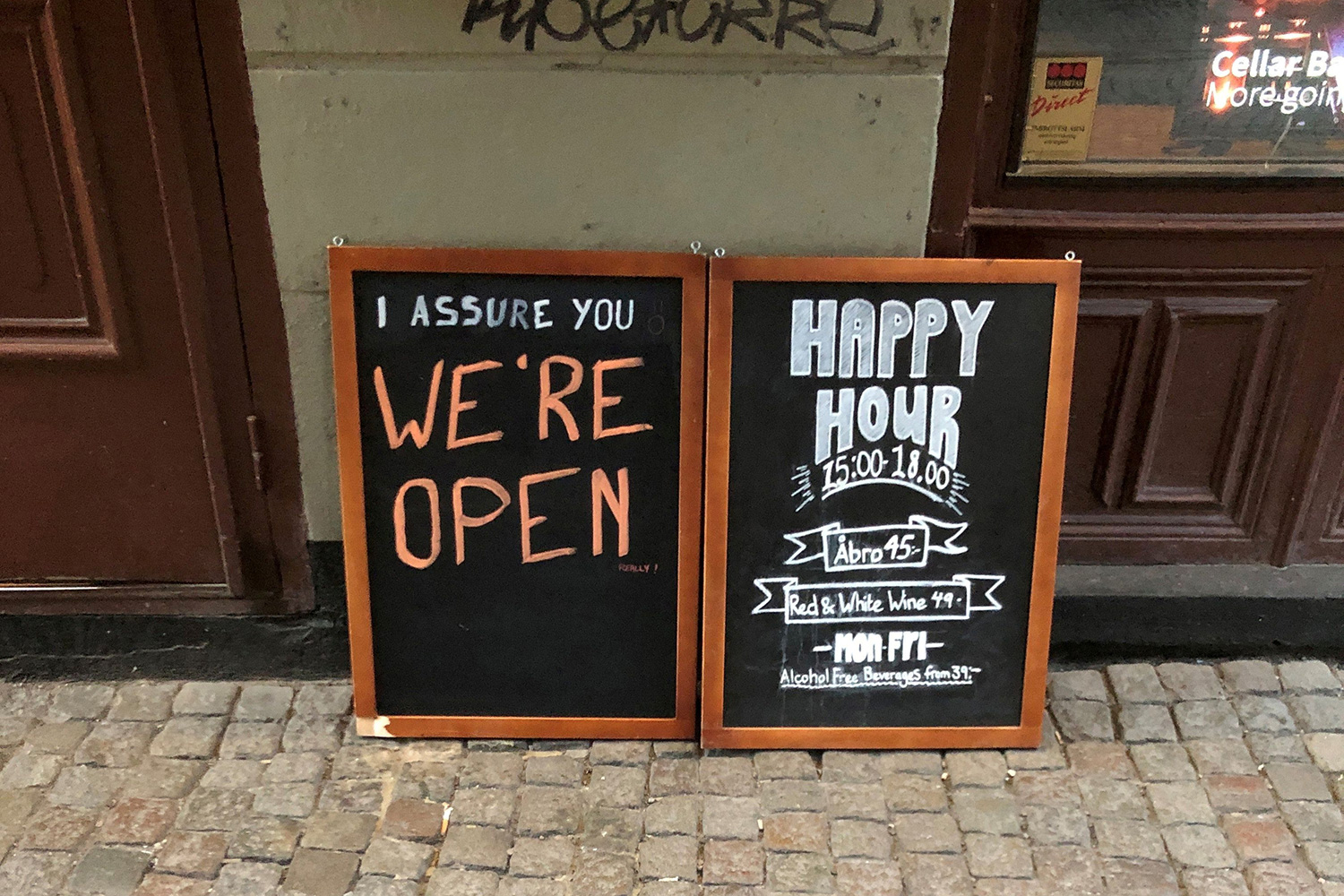
Sign outside a pub in Stockholm, Sweden.
REUTERS/Colm Fulton
Several weeks ago -- shaken by the number of deaths overall suffered in Sweden resulting from the SARS-CoV-2 virus leading to COVID-2, Sweden's state epidemiologist whose decision not to lock down the country, but to rely on the good sense of the Swedish population to take recognized self-distancing steps, persuaded the government to go counter to the measures undertaken by its neighbours and most of the rest of the world, of locking down their economies -- declared himself semi-remorseful, uncertain that he had reached the right decision.
Those lockdowns brought absolute havoc to societies whose health system was unprepared and who feared the breakdown of their medical-hospital personnel ability to cope with a flood of serious respiratory syndrome cases requiring emergency treatment. That decision led to mass unemployment as business activity was frozen and economies went into a deep dive. And while people perished from the dire effects of the disease, those countries were able to control the situation, balancing lives saved against a ruined economy.
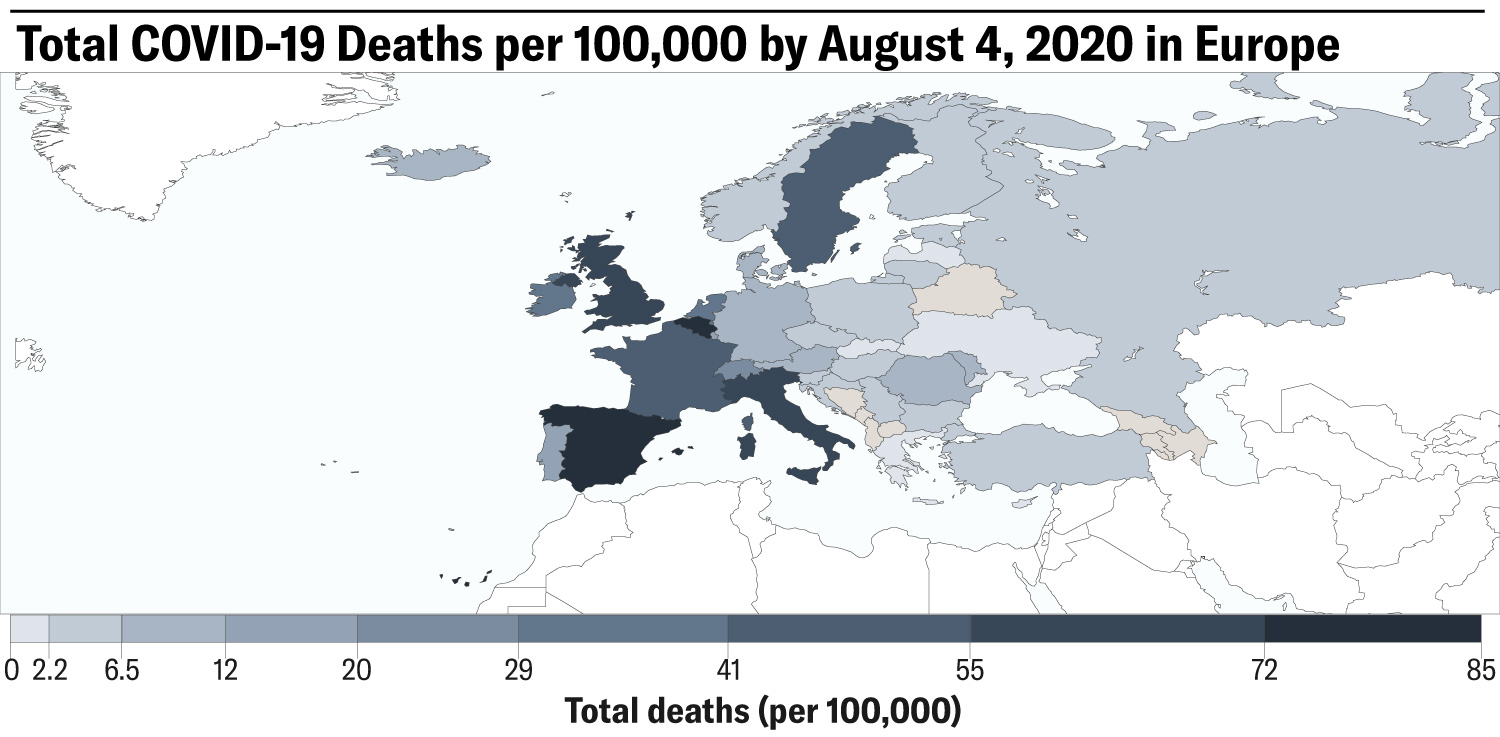
Sweden has now been excluded for the time being from the European Union's recently declared safe-travel lists, a penalty exercised resulting from his decision to advise his government against a lockdown in Sweden. Which brought that country the distinction of having one of the world's highest mortality rates for COVID-19. Dr.Tegnell appears now to have reversed himself on his statement of uncertainty, expressing a new opinion that he likely did, after all, make the right decision for Sweden.
Skane University Hospital, Lund, Sweden.
TT News Agency Johan Nilsson via REUTERS
He has convinced himself that all other nations reached a self-destructive decision in deciding for lockdown. The world, he now argues, has passed only the first of many stages of dealing with COVID-19; there is certain to emerge further, ongoing outbreaks, perhaps with mutating strains more highly infectious than the original. By maintaining normal life rhythms, choosing to believe that people are capable of behaving rationally and self-protectively, with concerns for the welfare of their communities, he is convinced Sweden embarked on the correct course of action.
He also feels vindicated that the WHO, which had originally been critical of the Swedish decision, naming Sweden on a list of 11 European countries where "accelerated transmission has led to very significant resurgence that, if left unchecked, will push health system to the brink", has now decided to proclaim that contagion rates in Sweden are "stable", linking the high case numbers to a testing increase.
"There are several very positive trends in Sweden, notably, a continued decrease in new cases presenting with severe disease, a gradual decrease in patients admitted into intensive care since April, and continued decreasing numbers of new COVID-19 deaths." "Sweden has involved the community in the response, and has been able to keep transmission to levels that can be managed by the Swedish health system." World Health Organization
There was a high cost associated with the Swedish approach, however. Its death toll per 100,000 population represents five times that of neighbouring Denmark. The Danes imposed a strict lockdown in mid-March that has since been wound back, following the virus being brought under control. In Sweden, nursing homes saw a death rate that has been brutal, and at least one criminal investigation has resulted from that misfortune.
Now, Dr. Tegnell has backtracked his earlier mea culpa, declaring himself uncertain whether in hindsight he would have chosen to impose a stricter lockdown. Strict lockdowns, he feels, may have the effect of seeming to contain the virus temporarily, but the virus would return and that wouldn't have been prevented. Lockdown has its absolute deficits, and he lists among them, domestic abuse, loneliness and mass unemployment.
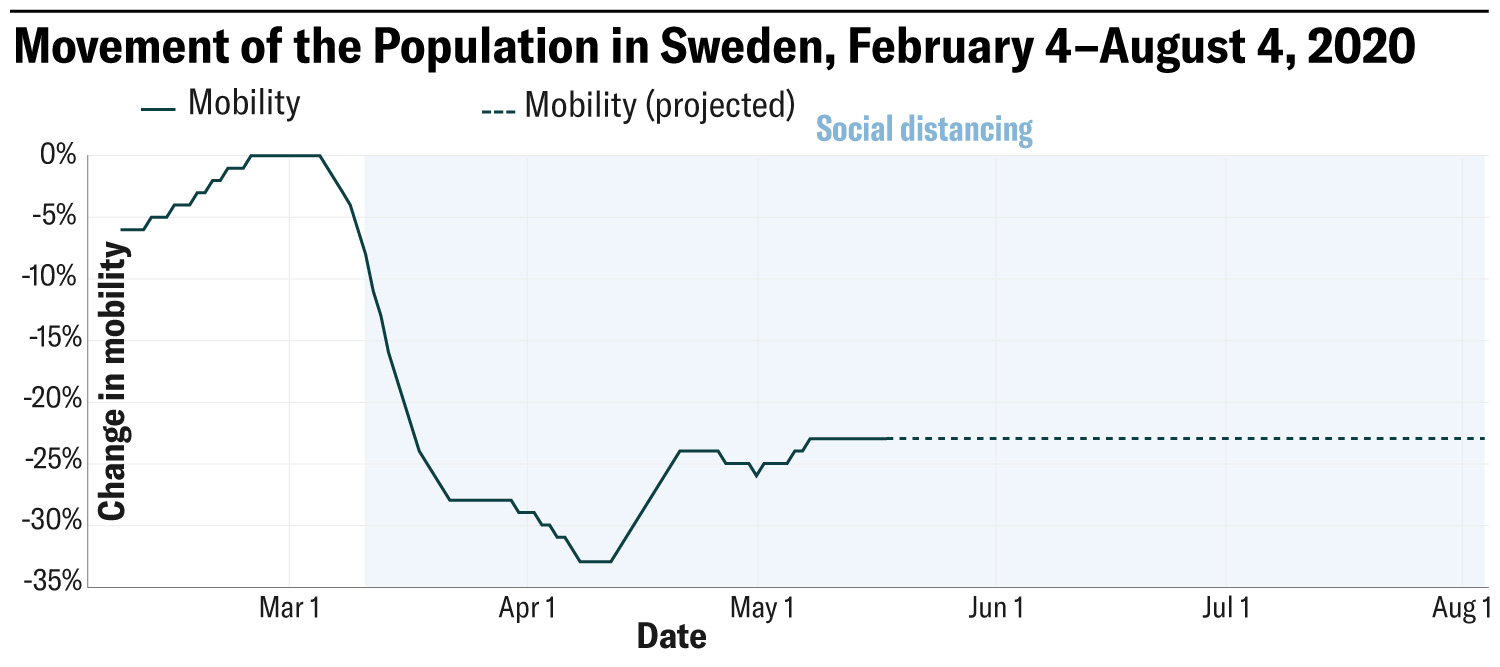
In response to government guidelines on social distancing, Sweden's
mobility dropped 33 percent in April—not as dramatic as neighboring
countries. View latest: https://covid19.healthdata.org/sweden.
IHME