Ruminations

Blog dedicated primarily to randomly selected news items; comments reflecting personal perceptions

Tuesday, February 08, 2022

Omicron, at Variance with Expectations

"No one wants to imagine what the scenario would have looked like if Omicron was at the beginning of the pandemic, just ripping through the population."
"We probably would have seen mass deaths, we probably would have seen long-term care facilities get destroyed."
"Three doses of vaccine in someone as medically frail as an 80-year-old, a mild illness can still take that person over the edge."
Dr.Zain Chaglia, infectious-disease professor, McMaster University 

"It's got so many mutations in the business part of the sticky protein that starts the infection -- that spike protein -- that the antibodies couldn't see it."
"So it was sort of ducking around our immunity."
Earl Brown, virologist, professor emeritus, University of Ottawa
A person lying on a bed checks the reading on a digital thermometer. A table with a bowl of oranges and various medications is in the background.
 
It seemed so mysteriously anomalous, so unexpected and bewildering, that a new strain of COVID-19, recognized as far more infectious, when it was first discovered in South Africa, and seemingly much less dangerous, would still be responsible as the sinister agent of a growing number of coronavirus-inspired deaths. After all, if the infection was less serious what might explain an explosion in death numbers? Bearing in mind that a vast number of Canadians have now been double-vaccinated against     COVID. And among the elderly the greater majority have received a third, booster-shot.

Yet the numbers of people in Canada dying as a result of having been infected by COVID-19, matches at the very least the first lethal wave of the coronavirus when it spiked in 2020 sweeping through a country that had no immunity to SARS-CoV-2. Yet a week ago the single-day death toll stood at 164. Who among those susceptible to the worst effects of the virus, might be succumbing to it? Given the presence of effective vaccines along with available useful treatments.

It is among the elderly that deaths occur largely, representing COVID's primary victims from its original emergence to the present time; that much has not changed at all. The contagious Omicron variant causes far greater numbers of infections than had previous waves done; the virus is still fatal for some, though the reality is that the rate of death among vaccinated Canadians is much lower than it had been thr0ughout previous surges.

However, the current state of the pandemic would have proven far more lethal in the absence of vaccines, along with immunity brought on as a result of past infections. Vaccines remain a powerful defence against serious illness even though they are not as effective in staving off Omicron infection as they had been with Delta. To the present, COVID has dispatched over 34,000 Canadians to an early death; about three-fold fewer per capita than in the United States, and two-and-a-half times lower than the United Kingdom. Seven times higher than the death toll seen in South Korea.

The daily death count rose and then rose again to 191 during the first COVID wave, according to Oxford University's Our World in Data. 82 percent of Canadians age five and older are fully vaccinated, while 37 percent have had three doses; higher rates seen in the most vulnerable age groups. Cases rose close to 60,000 daily recently representing over five times the highest volume seen during previous surges. Numbers that may be  higher since PCR-testing programs have been overwhelmed and no longer accept urgent requests for tests other than those in a specific category.

It is the greater spread of this Omicron variant that would have translated to much larger numbers of dead had people not been vaccinated. It is the sheer volume of infections resulting from Omicron's greater infectability that accounts for significant numbers of people dying; old and frail people who mount weaker immune responses to infection in general. Added to the fact that vaccines are less effective in the elderly.

Some treatments that had been effective in treating previous variants have been seen to fail against Omicron. Along with the fact that many of the promising monoclonal antibody drugs -- synthetic antibodies designed to fight particular viruses -- have proven to be far less effective against Omicron.

A long line of people wait to be tested for Covid-19 in New York City on December 22. With the rise of the omicron variant of the virus, testing to identify cases early has become more critical.
Spencer Platt/Getty Images

Labels: , , , , ,

Saturday, January 23, 2021

Patience, People, Patience

"This review is being done through a rolling submission, where data is submitted by the manufacturer and reviewed by Health Canada as it becomes available." 
"Additional data to support the quality, safety and efficacy of the vaccine are needed before a decision can be made."
Eric Morrisette, spokesperson, Health Canada

"There is a large AstraZeneca study that's ongoing in the United States, and we still are expecting to get some information from that study that's almost 40,000 participants."
"We're working very closely with our international partners, but there's still some questions to be sorted through before we make a final decision."
Dr.Supriya Sherma, chief medical adviser, Health Canada

"Health Canada is doing the right thing by clearly taking their time to evaluate the vaccine. They've got it right. There should be no external pressure and no political interference."
"That study [by AstraZeneca] was actually conducted in a very sloppy manner, and reported in a very sloppy manner."
"These vaccines will only work if people take it and if people don't have trust in the product, they're not going to take the vaccine."
"Even if we don't get access to AstraZeneca, and even if we hypothetically don't get access to Johnson & Johnson, we'll have enough vaccine between Moderna and Pfizer to vaccinate all of Canada."
Dr.Isaac Bogoch, infectious disease physician, member Ontario Vaccine Task Force
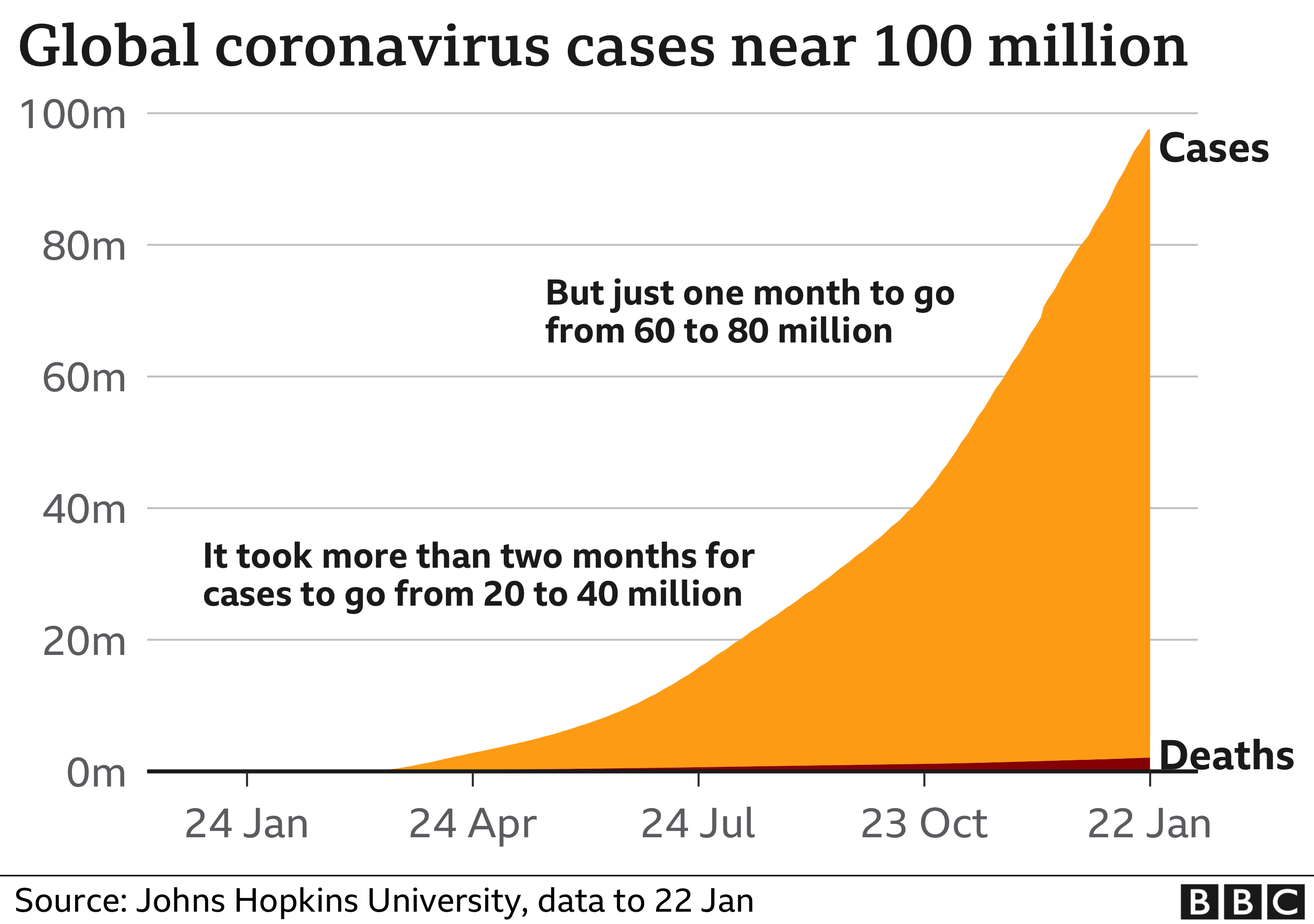
Area chart showing global cases. Updated 22 Jan 
 
Have patience, all will be well. Eventually, orders that the Canadian federal government placed with various promising sources to enable the provinces to vaccinate all Canadians willing to receive the inoculations, will come to pass. Of course, there's that little irritating matter of people dying in the meanwhile,awaiting that relief, but that's evidently another story altogether. On the positive side, the vaccines developed, tested and approved contested the theory that under normal circumstances such a process takes years to come to fruition.

On the negative side, the very speed with which brilliant scientists were able to knit together new biotechnologies to produce effective and safe vaccines is troubling to many who find it difficult to credit that pharmaceutical companies were able to pull off a feat of this magnitude safely and effectively. So apart from the anxiety perturbing the public, and the mental strain involved in what seems to be an interminable wait for rescue from the nightmare of the novel coronavirus, we come back to its victims, countless lives lost, countless others whose lives will be forever changed.

Oh, wait, not 'countless' at all. For in very fact, up to the moment the world is poorer by 2,130,293 million deaths, with 99,321,020 million global infections. As for Canada, it is not among the countries whose infection and death toll have been stupendously incalculable. It's just that -- let's see -- every case is another burden on the health care system, and each death is a tragedy. Canada's statistics stand at 742,531 infections and 18,994 deaths to the present time. Relatively minor in comparison to the numbers reflecting cases and deaths in the United States just across the border with its 25,566,789 million infections and 427,636 deaths.

Canada is largely dependent for the time being on two U.S.-based pharmaceutical companies, Pfizer, linked with its German partner and Moderna, both of which represent the only two vaccine producers whose product has been approved by Health Canada. Yet at this stage in the inoculation process both products are in short supply, with Pfizer advising a complication in one of its facilities impairing production and now AstraZeneca too, recently approved for use in Britain and India has stated that its production has run into difficulties.

Health Canada has no firm timeline for a decision to be made for either AstraZeneca or Johnson & Johnson, both of whose vaccine products are being evaluated. The latter has provided Health Canada with safety data up to the present but has nothing yet to report on efficacy despite a large clinical trial underway and results expected to be released within weeks. Its one-dose vaccine, if proven to be both safe and effective will simplify the storage, distribution and vaccination process considerably.

As for AstraZeneca, its product developed with Oxford University has more relaxed storage requirements than Pfizer-BioNTech's vaccine and its production can be accommodated in more facilities around the world; India in fact produces a huge output of the AstraZeneca vaccine under a different name, and is using it internally, as well as making it available elsewhere to benefit its neighbours. AstraZeneca estimates it has the potential to produce three billion dozes of its vaccine.

The fly in its ointment as a vaccine success is the questionable results that came out of a clinical trial late in 2020, with a dosing error where a number of participants received two full doses while others were given a half-dose combined with a full dose. The vaccine was shown to be 70 percent effective in preventing people from developing COVID, but a second trial was started due to the error, to gather additional data.
 
According to Steven Kerfoot, associate professor of immunology at Western University, the problem with AstraZeneca's trial was its incomplete state: "And so the expectation from Canada's understanding is that they want to see a complete trial with efficacy and safety data built in. These [manufacturing issues and trial errors] are all things that happen with all drugs. And none of it, you can think of as unexpected".
 
"We like to think of all medicine as being medicine for us individually, but vaccines are really best thought of as medicines for the population as a whole", he explained. While Pfizer and Moderna's candidates were over 90 percent effective in preventing people from becoming ill from the virus, should the new vaccines prove even 70 percent effective, they will provide a high level of protection within any population, he stressed.
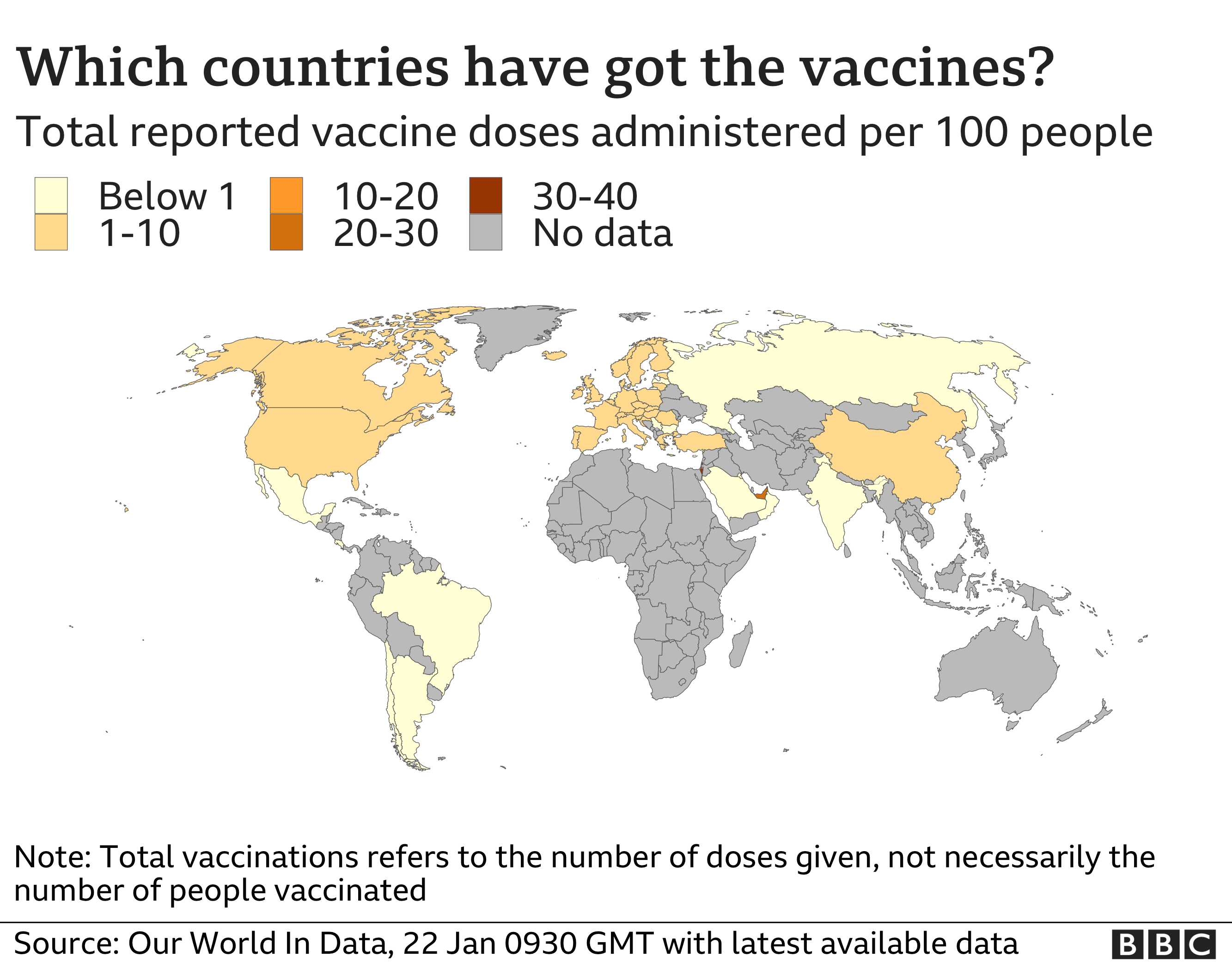
Map shows doses administered per 100 people. Updated 22 Jan. 


Labels: , , ,

Thursday, January 07, 2021

In Quebec It's the Enormous Death Toll

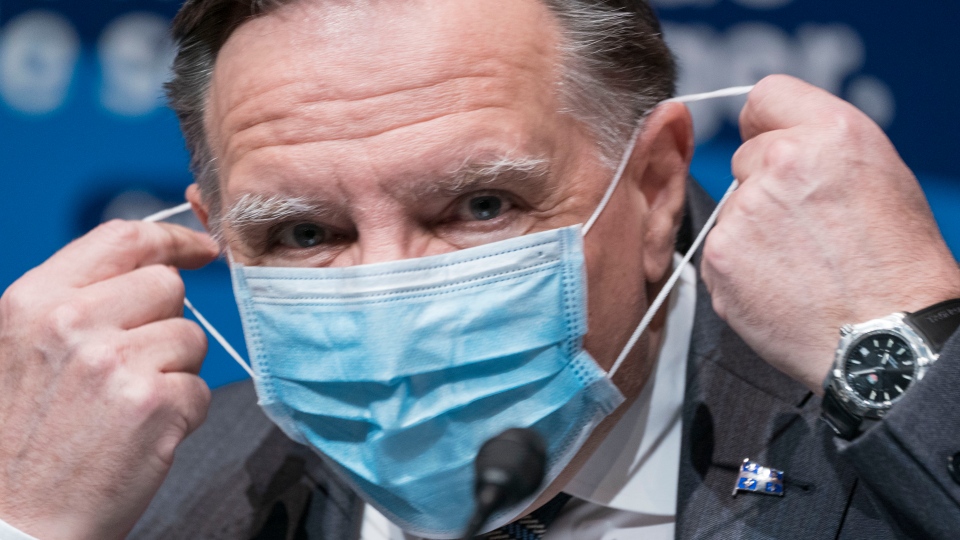
Quebec Premier Francois Legault
Quebec Premier Francois Legault CP/Paul Chiasson
"We are obliged to provide a type of shock treatment so that people reduce their visits."
"Police officers will be there to make sure everybody respects the rules."
"We have had the battle of our lives and unfortunately the battle is not over."
 

Quebec Premier Francois Legault
 
 "Our hospitals are on the verge of a breaking point."
"[The] partial measures [in place] have had] no effect on the increasing trend of cases."
Roxane Burges Da Silva, professor, public health, Universite de Montreal
"We are going to truly surpass our capacity in the next two to three weeks if we don't do something."
"Ramping up testing of asymptomatic individuals in congregate settings whether it is in schools or the workplace should have been done. Period. Full stop."
"The biggest worry is, eventually, if we don't do anything, we'll get to the point where it's going to be the decision where we have two patients, one ventilator and someone has to decide."
"[In December Legault closed all] non essential [retail stores extending the winter break for elementary and high school students. But while those measures slowed the spread of the virus, they failed to] render the curve flat."
Dr.Donald Sheppard, chair, microbiology and immunology department, McGill University
After a rise in COVID-19 cases, Quebec is instituting the strictest measures since the spring. (Graham Hughes/The Canadian Press)

Quebec was the worst-hit COVID-19-caseload in the country initially when the SARS-CoV-2 virus entered Canada last year in March and it remains so to the present time. The initial entry just happened to coincide with the academic spring break and in Quebec that break takes place a week before it does elsewhere, in other provinces. Although there was concerned anticipation over a spreading coronavirus with dreadful news coming out first from China, then Italy and Spain as they attempted to cope with the vicious spread, Quebecers took their usual spring break trips abroad.

And the inevitable happened, as they brought back with them virulent strains of COVID-19 that quickly spread in the community, and Montreal in particular became an object lesson in the need to take stringent measures swiftly and if at all possible, proactively. A week later spring break time arrived in other provinces and recommendations were to curtail travel. Governments did what they could to alert and advise, to issue warnings and instructions to their populations while there were pockets of resistance particularly from religious communities that helped further the spread; inadvertently but inevitably. 

Spring and summer were quieter periods with some relief in the numbers of new COVID cases and a relaxation of rules. But then came Thanksgiving, Christmas and New Year's. A population that felt it had withheld itself from traditional visits with family and friends had problems contemplating separation on these important family holidays and resolve faltered. Surveys of Canadians related that an unsurprisingly large proportion of families took a calculated risk and returned to visiting one another. With the weeks following each of the holidays seeing another upward spike in cases.


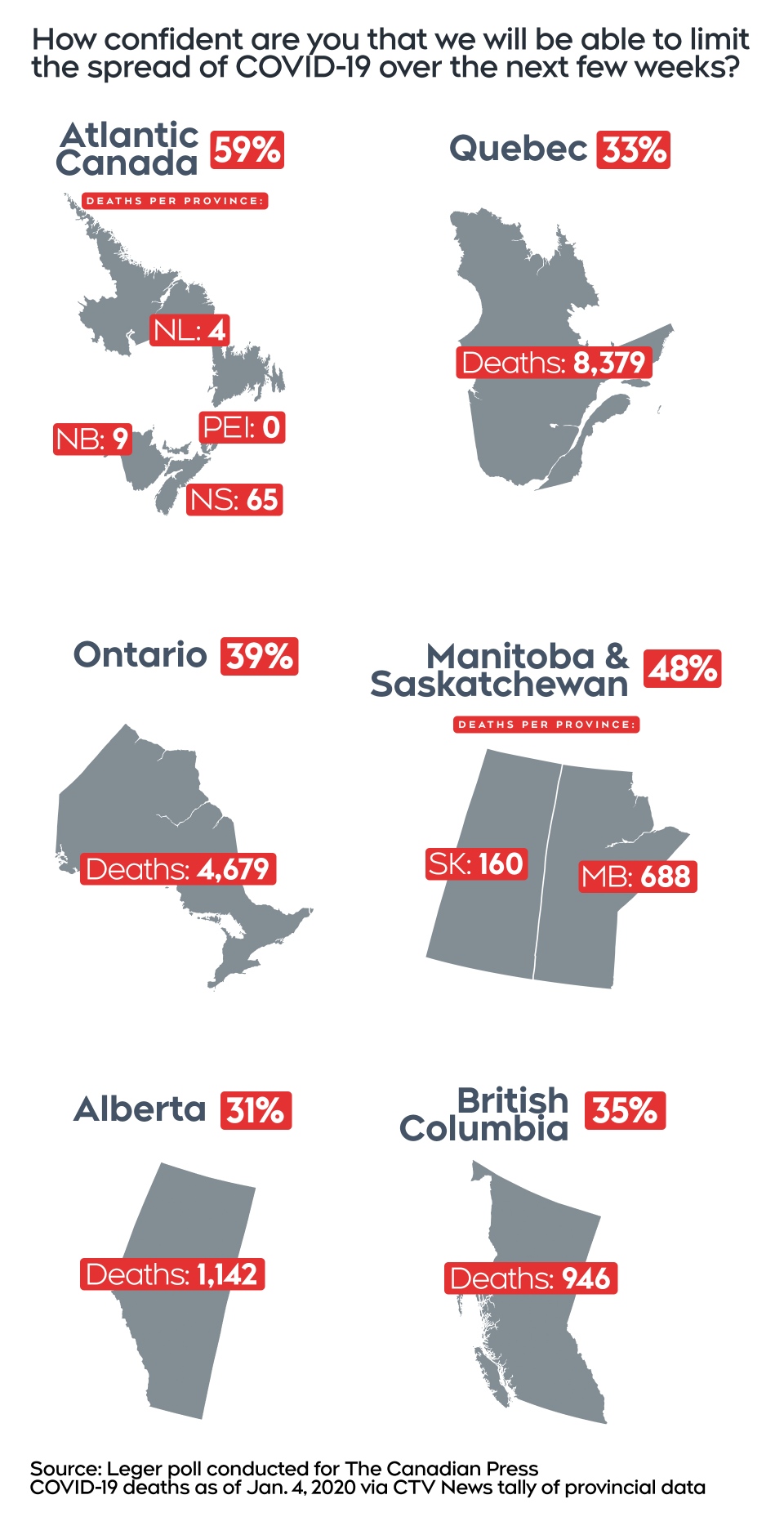
The latest survey, the Leger/Association for Canadian Studies poll found that 48 percent of all those surveyed visited with people outside their households, while 52 percent of respondents said they had not. But it is clear from the survey that close to half of all Canadians visited with family or friends over the winter holiday period, and case numbers, already steep in this second COVID wave, began to skyrocket and still does not fully reflect the apex of the rise. The largest percentages provincially of those visiting during the holidays were those in Quebec and Ontario.

Quebec now becomes the first province to impose draconian measures in determined hopes of curbing the dynamic spread of the novel coronavirus. Premier Legault, during a news conference stressed that schools, retail stores and other businesses have been closed since December, and yet COVID-19 infections simply continued to rise. Transmission, he pointed out, largely traceable to private gatherings. Henceforth and until February 8 all non-essential businesses ordered to close in December are to remain closed until February.

There is also a curfew and anyone who thinks of wandering about on the street after 8:00 p.m. for no acceptable reason will be subject to fines between $1,000 and $6,000, substantial enough to make anyone think twice about challenging the curfew. On January 11 primary schools are to reopen and high schools will follow a week later. Mid-week, Quebec reported 2,641 new cases for that day alone, along with 47 additional deaths from COVID.

According to the provincial health department, hospitalizations had leaped by 76 to 1,393, the largest number of patients since last May, with 202 people in intensive care. Dr. Sheppard spoke of the province's health-care system under severe strain with surgeries and cancer screenings put off, while intensive care units are filling up. He spoke of breast cancer patients presenting with larger tumours than before the pandemic, the result of late diagnoses. 

Quebec's government-mandated health care think tank, the INESS Institute, warned that hospitals in the Montreal area are certain to run out of dedicated coronavirus beds within three weeks. It has been since October that much of Quebec has been under partial lockdown with bars, restaurant dining rooms, gyms and entertainment venues closed. All "non-essential" retail stores were closed in December and the winter break for students was extended.

Dr.Borges Da Silva feels the curfew is sensible since it will force people to consider whether it is worthwhile before they make arrangements to go out and have a beer with a friend. As far as she is concerned, illicit gatherings over the holidays have made a major impact on the spread of COVID-19 in the province. No one is under any illusions that there will not be push-back from the public over the curfew, however.

COVID-19 poll

Labels: , , , ,

Saturday, July 04, 2020

Waiting on Time To Tell

Sweden's state epidemiologist Anders Tegnell
Anders Tegnell, Public Health Agency Sweden. (Pontus Lundahl/TT FILE via AP)
"I'm looking forward to a more serious evaluation of our work than has been made so far. There is no way of knowing how this ends."
"Maybe [a stricter lockdown would have been preferential], I don't know. But you have to consider whether there are other tools that work just as well."
"In the same way that all drugs have side effects, measures against a pandemic also have negative effects. At an authority like ours [in Sweden], which works with a broad spectrum of public-health issues, it is natural to take these aspects into account [the avoidable cost of lockdowns]."
Anders Tegnell, Swedish State epidemiologist
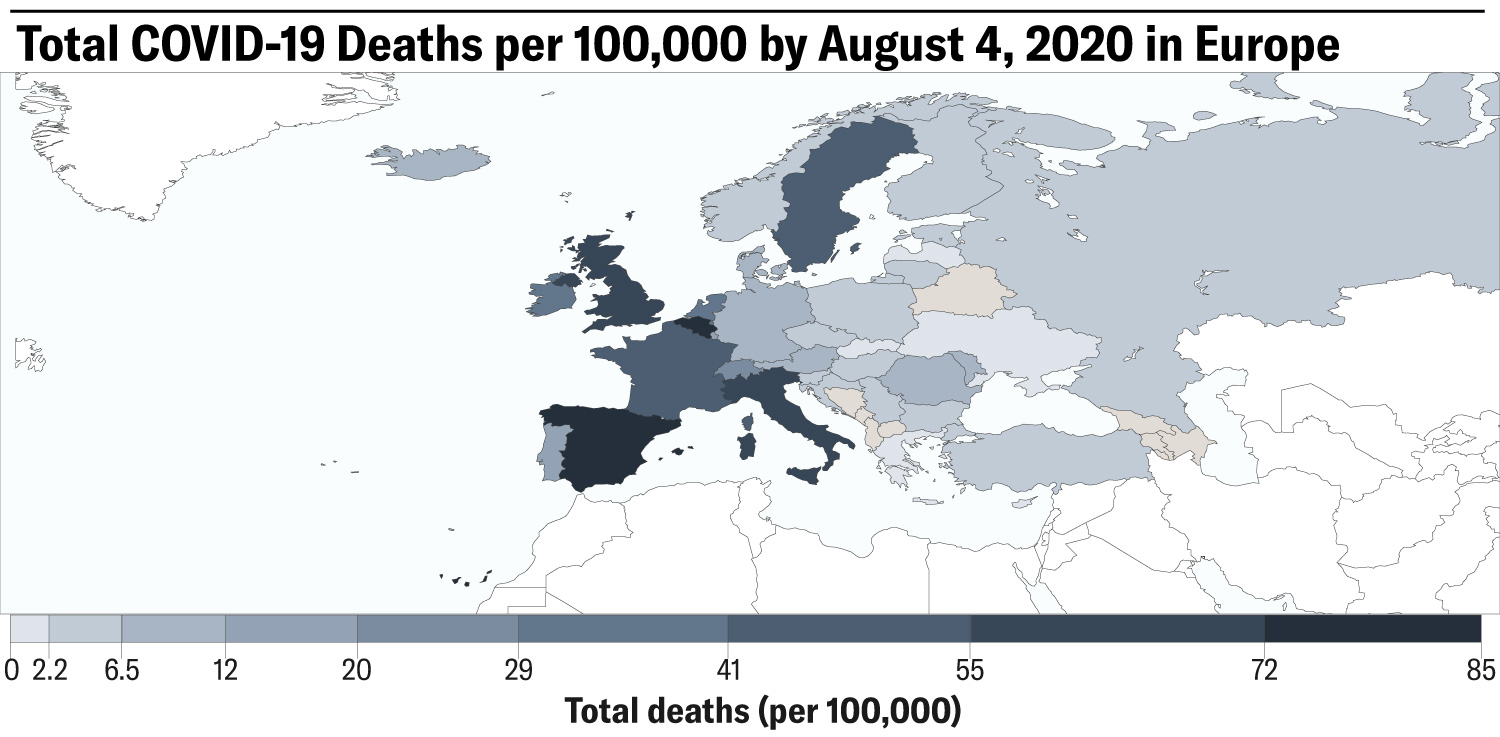
Figure shows the Total COVID-19 deaths per 100,000 by August 4, 2020 in Europe

"Sweden's policy is unusual in that it took a much less stringent approach to preventing transmission, but interestingly it implemented those measures at a very early stage in the pandemic, before large amounts of community spread had occurred."
"Sweden's approach may be sustainable in ways other countries have not proven to be. It should be noted that lockdowns are a response to an imminent surge into health care, with the goal of stopping as many transmission chains as quickly as possible."
"The full accounting will only be possible after the pandemic."
"[In Sweden, it is] bluntly not clear how the vulnerable are expected to be protected. Once you get a very large outbreak in one age group, it becomes more difficult to protect others."
"Sweden's approach has been widely misrepresented as doing nothing. It's not. Given a starting point in which it has been decided an outbreak is inevitable, the question becomes how to mitigate it and preserve health care, and the earlier on in the outbreak you take action to slow transmission, the less intense that action needs to be -- initially."
"Sweden's strategy, in that sense, has been smarter than those countries that encouraged transmission until shutdowns became necessary. However, it has come at a great cost in terms of mortality in vulnerable groups ... It also needs to be flexible and responsive; if a surge is building, you need to be able to detect it and know what you will do to avert it."
"As for the overall outcome. Time will tell."
William Hanage, associate professor of epidemiology, Harvard School of Public Health, Boston
The photo shows a chalk sign in front of a bar that reads, "We're Open."
Sign outside a pub in Stockholm, Sweden.  REUTERS/Colm Fulton
Several weeks ago -- shaken by the number of deaths overall suffered in Sweden resulting from the SARS-CoV-2 virus leading to COVID-2, Sweden's state epidemiologist whose decision not to lock down the country, but to rely on the good sense of the Swedish population to take recognized self-distancing steps, persuaded the government to go counter to the measures undertaken by its neighbours and most of the rest of the world, of locking down their economies -- declared himself semi-remorseful, uncertain that he had reached the right decision.

Those lockdowns brought absolute havoc to societies whose health system was unprepared and who feared the breakdown of their medical-hospital personnel ability to cope with a flood of serious respiratory syndrome cases requiring emergency treatment. That decision led to  mass unemployment as business activity was frozen and economies went into a deep dive. And while people perished from the dire effects of the disease, those countries were able to control the situation, balancing lives saved against a ruined economy.

Sweden has now been excluded for the time being from the European Union's recently declared safe-travel lists, a penalty exercised resulting from his decision to advise his government against a lockdown in Sweden. Which brought that country the distinction of having one of the world's highest mortality rates for COVID-19. Dr.Tegnell appears now to have reversed himself on his statement of uncertainty, expressing a new opinion that he likely did, after all, make the right decision for Sweden.

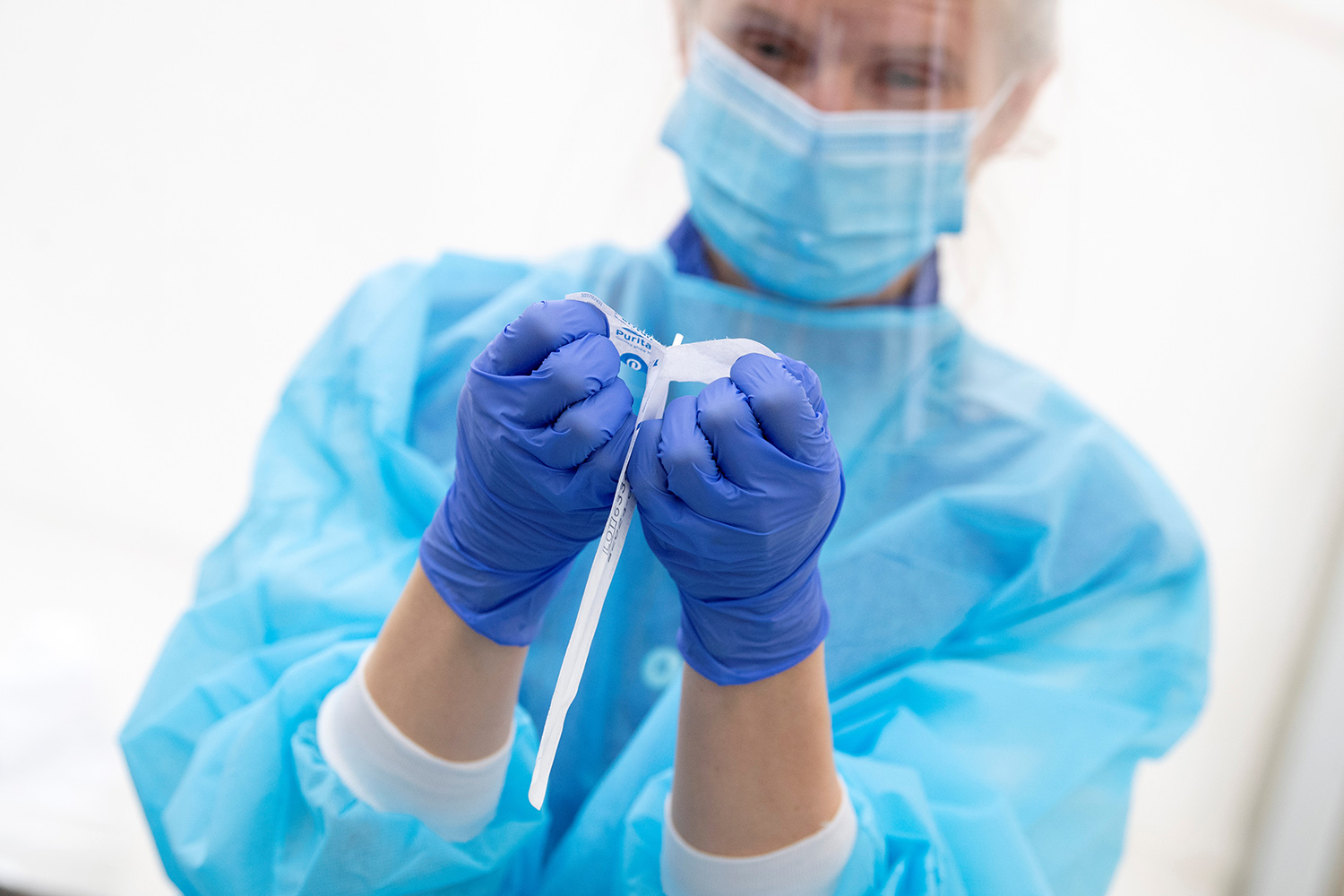
The photo shows a health worker in blue protective gear opening a sterile package.
 Skane University Hospital, Lund, Sweden. TT News Agency Johan Nilsson via REUTERS

He has convinced himself that all other nations reached a self-destructive decision in deciding for lockdown. The world, he now argues, has passed only the first of many stages of dealing with COVID-19; there is certain to emerge further, ongoing outbreaks, perhaps with mutating strains more highly infectious than the original. By maintaining normal life rhythms, choosing to believe that people are capable of behaving rationally and self-protectively, with concerns for the welfare of their communities, he is convinced Sweden embarked on the correct course of action.

He also feels vindicated that the WHO, which had originally been critical of the Swedish decision,  naming Sweden on a list of 11 European countries where "accelerated transmission has led to very significant resurgence that, if left unchecked, will push health system to the brink", has now decided to proclaim that contagion rates in Sweden are "stable", linking the high case numbers to a testing increase.

The photo shows a large number of people sitting close together in an outdoor eating area.

"There are several very positive trends in Sweden, notably, a continued decrease in new cases presenting with severe disease, a gradual decrease in patients admitted into intensive care since April, and continued decreasing numbers of new COVID-19 deaths."
"Sweden has involved the community in the response, and has been able to keep transmission to levels that can be managed by the Swedish health system."
World Health Organization

There was a high cost associated with the Swedish approach, however. Its death toll per 100,000 population represents five times that of neighbouring Denmark. The Danes imposed a strict lockdown in mid-March that has since been wound back, following the virus being brought under control. In Sweden, nursing homes saw a death rate that has been brutal, and at least one criminal investigation has resulted from that misfortune.

Now, Dr. Tegnell has backtracked his earlier mea culpa, declaring himself uncertain whether in hindsight he would have chosen to impose a stricter lockdown. Strict lockdowns, he feels, may have the effect of seeming to contain the virus temporarily, but the virus would return and that wouldn't have been prevented. Lockdown has its absolute deficits, and he lists among them, domestic abuse, loneliness and mass  unemployment.

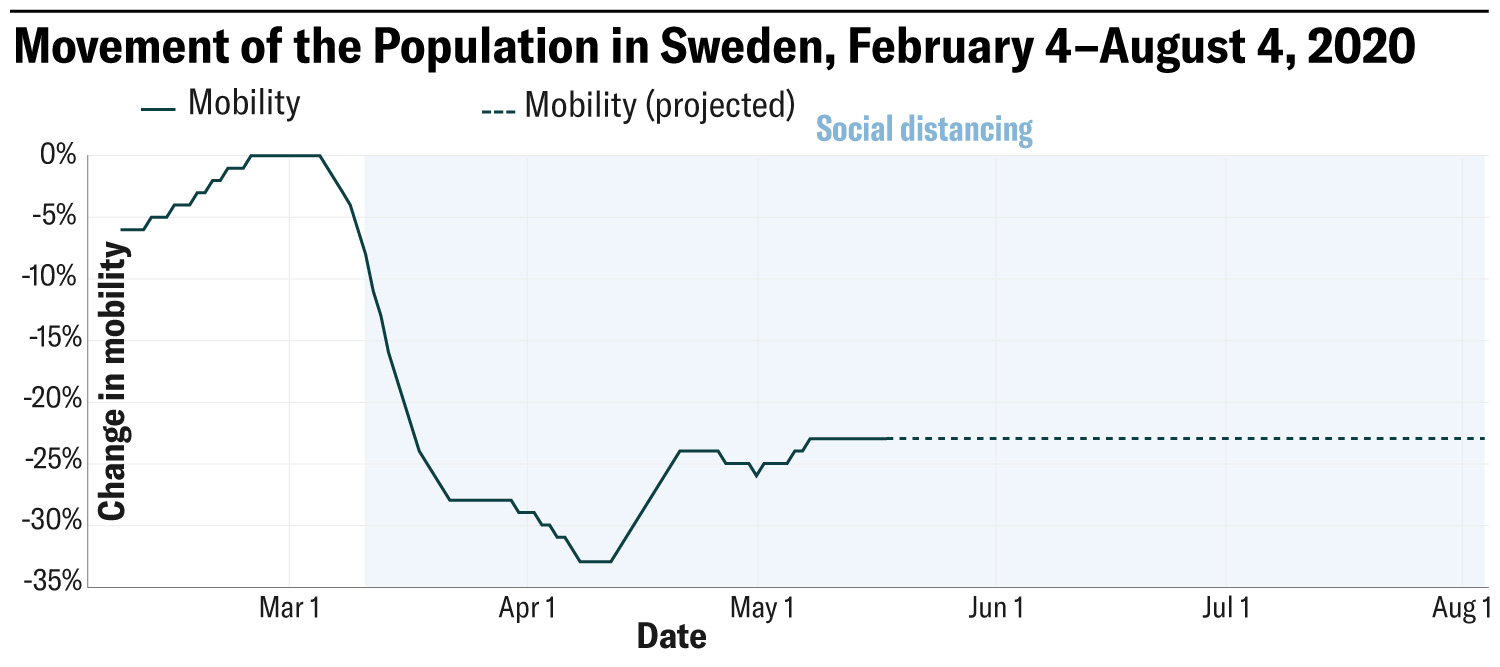
Figure shows the Movement of the population in Sweden, February 4 – August 4, 2020
In response to government guidelines on social distancing, Sweden's mobility dropped 33 percent in April—not as dramatic as neighboring countries. View latest: https://covid19.healthdata.org/sweden. IHME

Labels: , , , ,

Wednesday, January 08, 2020

Australian Bushfire Toll on Koalas

"They're in shock, they're stressed, they've never seen humans or been in a car before."
"We anaesthetize them, then cut away the dead skin, bathe them, treat them with cream, gauze and bandages."
"We had to euthanize him [one koala]. He was brought in from a drought area last week, his organs were so badly damaged. It was very sad ... you try so hard to save them."
"We can't always relocate them ... a change in diet may kill them."
"We don't find bodies [in a search through scorched bush]. The fire was so intense that all that was left was ash."
If they have burned off their claws and they don't grow back properly, they can't climb and they can't live in the wild."
Sue Ashton, spokesperson, Port Macquarie Koala Hospital, Australia

"All the animals that have survived not only have no place to go back to, they don't have food sources left."
"In a fire, the insects get wiped out too, the smaller animals who eat ants and other insects won't have food. Possums and gliders, if there are any left -- most of them have been killed -- they eat leaves and fruit, which have all been destroyed."
Dr.Valentina Mella, Port Macquarie Koala Hospital
Australia’s wildfire crisis is taking a heavy toll on the animals and their habitat
Australia’s wildfire crisis is taking a heavy toll on the animals and their habitat Credit: EPA

Several days ago ecologists from the University of Sydney released an estimated total for the number of animals that have died as a result of the wildfires ravishing Australia; an unbelievable 480-million altogether. According to veterinarian Dr. Melia, the extent of the wildfires in Australia will lave long-term consequences not only for koalas, whose very specific diet has been disastrously impacted, but many other animals, as well.

As for the koalas, the animal hospital specializing in koala rescue and rehabilitation, believe fully two thirds of the local koala population around Port Macquarie perished in the fires that swept the area six weeks earlier. Desperate for food and water, the koalas facing an uncertain reality totally new to them in its virulent, wide-sweeping impact, venture out of the burned bush that was their home, to cross roads and go into back gardens, placing themselves in danger, risking death by traffic or being attacked by peoples' dogs.

There are now 75 koalas in care at the Port Macquarie hospital. The blazes that destroyed 8.4-million hectares of bushland in Australia left an estimated 40 percent of the country's 80,000 endangered koalas dead. Around 390 kilometres' distant, north of Sydney, the hospital has taken in an unaccustomed number of koala patients, resulting from the heavy toll the wildfire crisis has taken on the habitat of the marsupials.

Australia has suffered severe drought for several years of late. That, leading to extremely tinder-dry conditions, along with record high temperatures have seen wildfires ravaging the country since summer's start. Koalas have been brought into the hospital by exhausted firefighters, by homeowners fleeing the fires, and by passing evacuees spotting the little animals collapsed at the side of the road.

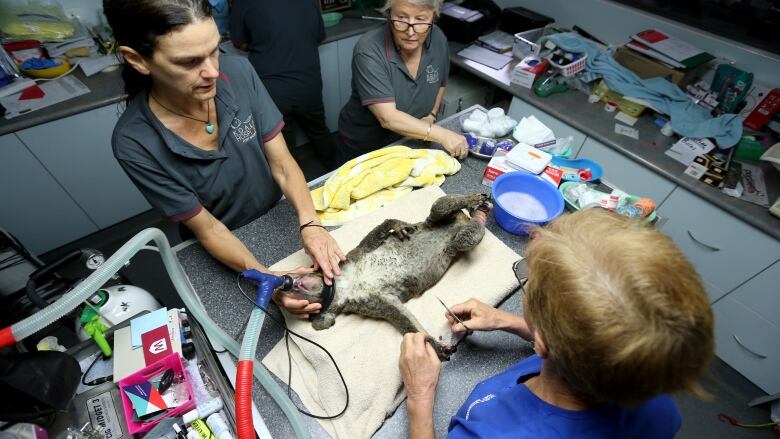
Four veterinarians are assigned to treat each of the rescued koalas, at the hospital. One person for each paw, and a fifth to monitor heartbeat and breathing as the teams work around the clock in an effort to treat each new arrival as expeditiously as possible. Following surgery, staff change bandages, re-dress wounds regularly, and treat burns to sensitive noses and ears. There are fourteen intensive care units, and they're always full.

One koala discovered at the side of a major highway had burnt arms, nose and ears. A man stopped his car, held up traffic, then rescued the koala, now on its way back to health. The animal's paws were "like charcoal" when it was brought to the hospital. Routinely, hospital staff keep a record of the GPS co-ordinates to identify where the koalas are found. When the six to nine months of recovery is over, under normal circumstances they are released back to the wild, in the area from which they came.

All that is changed now; there is nothing 'normal' about the situation faced in Australia with the deaths of almost a half-billion animals as a result of an unstoppable wildfire situation. Responders now are advised to kill orphaned joeys immediately, reflecting the lack of availability of long-term care. In the hospital, one koala sits with its joey, in her arms, evacuated from Hawkesbury before the fires struck.

They're fed a diet of pureed pumpkin and corn during their five weeks of intensive one-on-one care, leading to recovery. Koalas eat only particular types of eucalyptus leaves, meaning that koalas from different areas require a diet of leaves typical of the area from which they come, and many of those areas have been burned beyond redemption.

Australia, one of the driest places on the globe, is no stranger to bushfires. This summer's wildfires, however, are seen as unprecedented in their ferocity and their spread. They began earlier in the season and have spread far more widely than ever before. There are 25 Australians dead as a result of the wildfires, and thousands of homes have been destroyed. Fires in New South Wales are predicted over the next few days to join those burning in Victoria, forming a 'mega blaze'.

Hospital personnel at the Port Macquarrie hospital are contemplating something fairly new to their experience; that with habitat so critically destroyed, there is an uncertain future before the injured koalas, who may have to become permanent wards remaining residents of the hospital.

Rebecca Turner, left, Sheila Bailey and Cheyne Flanagan treat a koala named Sharni from Crowdy Bay National Park for burns at the Port Macquarie Koala Hospital in Australia on Nov. 29, 2019. Flanagan says koala bears are coming to the hospital traumatized and dehydrated as a result of the worst wildfire season in Australia's history. (Nathan Edwards/Getty Images)

Labels: , , , , , ,

 
()() Follow @rheytah Tweet