Blog dedicated primarily to randomly selected news items; comments reflecting personal perceptions
Sunday, August 25, 2024
"Safe" Injection Sites?
"Here are the so-called experts in the [federal] government telling us the best thing for us to do is to hand out high-powered pharmaceutical opioids to the drug addicts, that are two to five times more powerful than the drugs they get on the street."
"Make it pure pharmaceutical grade and somehow this is better?"
"There's nothing compassionate about leaving somebody intermittently homeless in minus -40 weather, speedballing methamphetamine with fentanyl, and saying that we're just going to let that person sort this out because it's about free choice."
"You can't build a system out of thin air. It is a huge culture shift. Even the creation of Recovery Alberta -- it's in the name, 'recovery' -- we're changing the way we're thinking about mental health and addiction from its fundamental assumptions for the past 25 years."
Alberta Mental Health and Addiction Minister, Dan Williams
"Our first priority must always be protecting our communities, especially when it comes to the most innocent and vulnerable."
"People are not going to die. They are going to get access to services. I do not call watching people inject an illicit drug, health care in the province of Ontario."
"We need to do better and we can do better."
Ontario Health Minister Sylvia Jones
The supervised drug consumption site run by Somerset West Community
Health Centre in Ottawa will be forced to shut down in March. It may
apply to become one of the province's new 'HART hubs,' part of the
Ontario government's shift away from harm reduction. (Sam Konnert/CBC)
Ontario is now moving toward 'doing better' by heeding the cries of residents who decry the operation of 'safe injection sites' in neighbourhoods that have been affected by rising crime reflecting these operations and in particular the placement of many of these sites in close proximity to schools. There is also the considerable dysfunction of their presence attracting illicit drug dealers to the area of the sites to conduct business. And then, the undeniable reality of site 'clients' trading their 'free drugs' on the street for more potent drugs to give them a desired high, thus increasing the availability of drugs on the street.
Supervised consumption sites situated within 200 metres of schools and childcare centres are now being closed down by the Ontario government. This shift in policy will see ten of 17 supervised consumption sites cross-province being shut down. The health minister explained that parents concerned for the safety of their children around these consumption sites has motivated the government to finally act. Citing the increase by 146 percent of violent crime near one particular site.
Not unexpectedtly this announcement took consumption and treatment services personnel by outraged surprise. It took them little time to respond with the warning that the move would inevitably lead to greater numbers of deaths by overdose. Alongside the closure of these sites the government announced prohibition of any new supervised consumption sites from opening, let alone further participation in federal funding for safer supply initiatives.
A twin announcement of a $378-million investment in 19 new homelessness and addiction recovery treatment hubs to provide primary care; mental health services; addiction care support; social services and employment support; shelter and transition beds; supportive housing; and other supplies and services, including naloxone, failed to impress critics of the wholesale government 'safe supply' restructuring initiative.
"We are gravely concerned that the decision to defund and close consumption and treatment services will have devastating consequences for our community."
"Our services save lives by providing a safe space. That is what consumption and treatment services were designed to do, to reverse overdoses and prevent deaths and connect people to the services they need. Consumption and treatment services are a cornerstone of harm reduction."
Suzanne Obiorah, executive director, Somerset West Community Health Centre, Ottawa
"The announced steps mean unsafe communities, more deaths, overwhelmed emergency services and spiking health-care costs, and leave nurses wondering who the government is trying to serve."
Doris Grinspun, head, Registered Nurses Association of Ontario
The answer to that is quite simply; the government serves all. The placement of the 'harm reduction sites' that are scheduled to close, has been harmful to the communities they are contained in. Violent crime has risen exponentially, so has property damage and theft, drug paraphernalia litters the streets, and fears for the welfare of area children abound. Proximity to schools sees drug users verbally abusing schoolchildren. Inveterate drug users also threaten nearby residents with physical harm. These people too are deserving of the government's concerns.
The Province of Alberta is addressing very similar issues and has dedicated its health system to addressing the issue of mental health, homelessness and drug addiction in a more thoughtful manner. Their Canadian Centre of Recovery Excellence will research best practices, analyze data and ensure that evidence-based recommendations for "recovery-oriented systems of care" are undertaken. Their online portal tracks EMS responses, emergency room visits, overdose reversals and deaths.
And nor is this new direction confined to these two provinces alone; the Quebec government has decided to meet demands of the residents of Montreal where a housing project catering to unhoused people with addiction or mental health issues located across from an elementary school, including a supervised drug-use site has locals and parents fed up with its presence. Open drug use and aggressive behaviour are but two of the issues involved at Maison Benoit Labre.
Maison Benoît Labre provides services for people experiencing homelessness in the Saint-Henri neighbourhood. (Christinne Muschi/The Canadian Press)
"We are very close to the breaking point due to the excessive number of asylum seekers arriving in Quebec month after month. The situation has become unsustainable."
"Asylum seekers have trouble find a place to live, which contributes to accentuating the housing crisis. Many end up in homeless shelters, which are overflowing."
"The possibility of entering Canada from Mexico without a visa certainly explains part of the influx of asylum seekers."
"The airports, particularly in Toronto and Montreal, are becoming sieves and it is time to act."
Quebec Premier Francois Legault
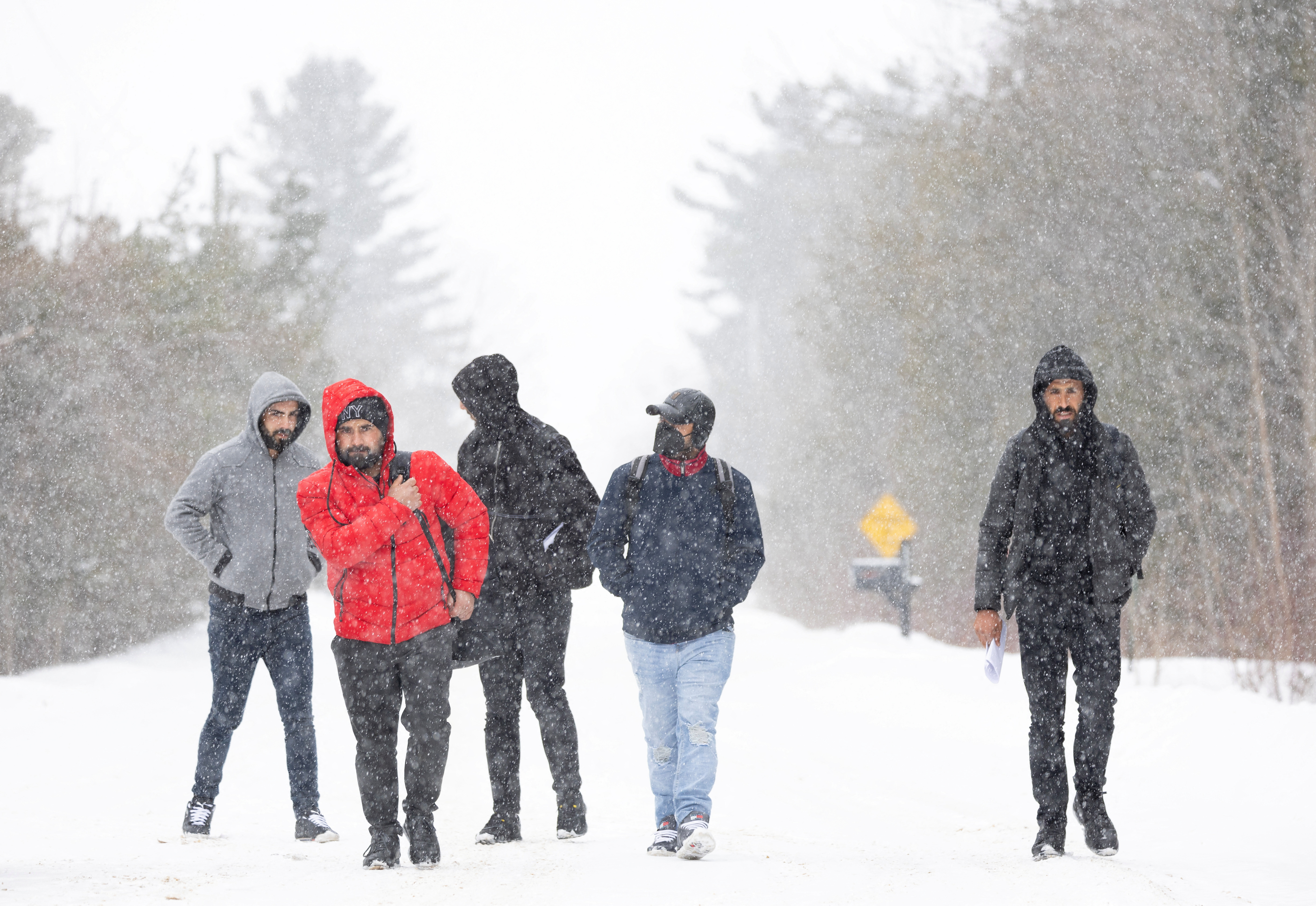
RCMP officers unveil a new sign at Roxham Road. (Carlos Osorio/Reuters)
The Liberal government of Justin Trudeau has much to account for; its laissez-faire attitude toward illegal entry into Canada has come home to roost. The acute housing shortage that Canada and Canadians have encountered, with the younger demographic marrying and preparing to raise a family experiencing the rude awakening of recognition that the normal trajectory of young adults moving into an era of their own where they expect to buy a home to get on with their lives with the same kind of comfortable predictability as their parents is no longer possible.
People get off a bus at a gas station to take a taxi to cross into Canada at Roxham Road on March 25. (Carlos Osorio/Reuters)
There is general agreement among financial houses, economists and the broader public that recognizes the influx of people as a result of immigration, refugee intake, student study visas, work visas and illegal migrant arrivals have stretched Canada's resources -- not just housing, but medical and hospitalization, and other levels of social services, including emergency housing of the unhoused and homeless -- beyond its capacity to absorb any more.
The federal government, it has been revealed, introduced a million newcomers to Canada through refugee intake, immigration, student visas, work permits and migrants in the last year alone. And it has stated it has no intention to cut down on absorbing new waves of people into Canada's population. Canada has always welcomed newcomers, but never on this scale; among G7 countries Canada absorbs far more people than its nearest contemporaries. Canada sees it as a competitive story; as populations are failing to reproduce themselves and becoming older, the economy suffers with not enough people to fill employment needs.
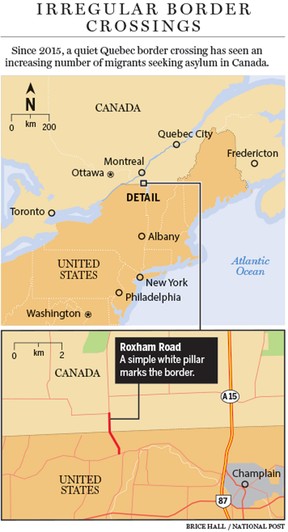
Quebec's premier has now formally requested that the Trudeau government cut back on its embrace of asylum seekers. In 2022, he pointed out, Quebec absorbed more asylum seekers than the rest of the country combined through the unofficial Roxham Road crossing point south of Montreal. COVID slowed the influx. "However, t he arrivals have continued to increase at airports. The number of people arriving on a visitor visa and applying for asylum is also increasing significantly", he wrote.
In the first 11 months of 2023 close to 60,000 new asylum seekers registered in Quebec, which has placed the province in a position of "very significant pressure" on services. Asylum seekers awaiting work permits, stressed the premier, receive financial assistance from Quebec. Some 43,200 asylum seekers received $33 million in aid last October. Mexican nationals represent a growing proportion of asylum seekers arriving, among those from the Middle East, Africa and Central America.
Legault's recommendation is that the federal government take serious action to tighten its policies of granting visas. As well the "equitable" distribution of asylum seekers across Canada should be an issue to be studied, possibly by busing them to other provinces. As well, he expects the federal government to reimburse Quebec for the $470 million it has cost the province on taking in asylum seekers in 2021 and 2022, and formalize reimbursement for subsequent years.
People wait at a gas station to take a taxi to cross into Canada at
Roxham Road, an illegal crossing point from New York State to Quebec, in
Plattsburgh, N.Y. (Carlos Osorio/Reuters)
"This case calls into question the rights of the patient, the doctor's obligations toward the patient to whom he provides services and care, and the doctor-patient relationship."
"If the patient believes that their gender identity does not correspond to the sex appearing on their birth certificate, they can request that they be designated by the identity they express."
"The medical encounter must then take place while respecting this identity of gender, whether or not the patient has undergone any medical treatment or surgical intervention in connection with this identity."
College des medecins du Quebec, disciplinary board
Dr. Raymond Briere, a Montreal family practitioner has been disciplined by his province's medical board for an infraction of the medical code's extended new rules and regulations. The disciplinary board lists one count of failure to behave irreproachably toward a patient, along with another count; failure to ensure medical follow-up of a patient. He was penalized with a three-month suspension on the first count, and two months for the second, but imposed concurrently, he will serve a three-month suspension for his lapse in medical ethics.
A physician since 1980, Dr. Briere had experience working in remote areas of Quebec before his return to Montreal. He earned a specialist certificate in family medicine in 2010. His patient for whom he has been penalized for providing inadequate care, has been treated by him since 2018. That patient sprung a surprise on her doctor in 2022, identifying herself as a trans male, asking her doctor for a testosterone prescription and informing Dr. Briere of changes in her pronouns.
The MD responded by informing the patient he had never before prescribed hormones to anyone wanting to "transform into a gentleman", bringing up his concerns relating to the hormone leading to aggressive behaviour and character alterations, which the patient classified as merely a stereotype. As the consultation progressed the two began arguing, the patient reminding her doctor of the change to a trans man, the doctor responding she was still "genetically female".
Leading to the patient once again instructing the doctor she is a trans man, her doctor repeating she is "genetically female", noting "That is in your brain", a delusional belief of being a man. Dr. Briere remarked he had nothing to learn from "une patiente", speaking in the female form which the patient corrected, using the male form leading the doctor to respond: "A [female] patient until this day, you were a woman, dear madam".
When the meeting ended the doctor suggested a more experienced colleague in hormone therapy could be an option for his patient, yet refused to make a formal referral, informing the patient that he would himself no longer treat the woman as her family physician. "Recorded on her cell our conversation which is illegal. Absolute breaking of confidence", Dr. Briere wrote in the patient's file.
The risk of recidivism on count 1 was 'moderate', noted the college's disciplinary board, given that Dr. Briere had no intention of taking courses on cognitive bias or patients' rights; while the risk of recurrence was judged on count 2 to be 'low'; that the doctor was unlikely to fail in future to provide follow-up support for a patient leaving his care.
"We're now no longer dealing with an exceptional treatment, but a treatment that is very frequent." "[Quebec is on track to complete the year with 7% of all deaths recorded as doctor-assisted] That's more than anywhere else in the world: 4.5 times more than Switzerland, three times more than Belgium, more than the Netherlands. It's two times more than Ontario."
"We see, more and more, that the cases receiving medical aid in dying are approaching the limits of the law. It's no longer just terminal cancer, there are all kinds of illnesses -- and that's very good, but it requires a lot of rigour from doctors to ensure they stay within the limits of the law."
"Medical aid in dying is not there to replace natural death."
"It's very easy to go from palliative care to medical aid in dying."
Dr. Michael Bureau, head, Commission sur les soins de fin de vie
Quebec is at the global forefront of medical aid in dying, with a higher
proportion of people choosing the procedure in the province than
anywhere else on earth. (Radio-Canada)
The enactment of a federal law permitting end-of-life medical assistance in committing suicide was an issue receiving mixed results in Canada. Some felt it was timely and needed, that when people deeply felt it was time for them to leave life due to extenuating medical conditions causing unendurable pain the humane thing for any caring society to do was to help these souls expedite themselves to freedom from pain, at their choice.
Others raised concerns that once this setting aside of the prohibition against assisted suicide became law, there would be an inevitable loosening of guidelines, opening this new social service to an even greater number of people not facing end-of-life issues. Indeed, there have been 'updates' to the original legislation, loosening some of the strictures against assisted suicide being used indiscriminately by the medical profession and society in general.
Medical Assistance in Dying (MAID) as it is practised in Canada now, has resulted in Canada overtaking all other developed countries that permit assistance in accomplishing suicide, surpassing them in numbers and in the looseness of those whose medical conditions and even social status fails the original categories of permissible suicide assistance. Scheduled for the future is the acceptance of requests from people suffering mental illness. And later still, adolescents considered mature enough to make that decision for themselves.
Now, the head of the independent body monitoring assisted suicide in Quebec has publicly stated his concerns that doctor-assisted deaths -- that the original legislation made clear were to be viewed as a last resort -- when all else fails, has fallen by the wayside. MAID, it appears, is no longer viewed as an exceptional procedure to be undertaken on behalf of people suffering unbearably, and approaching the end of their lives.
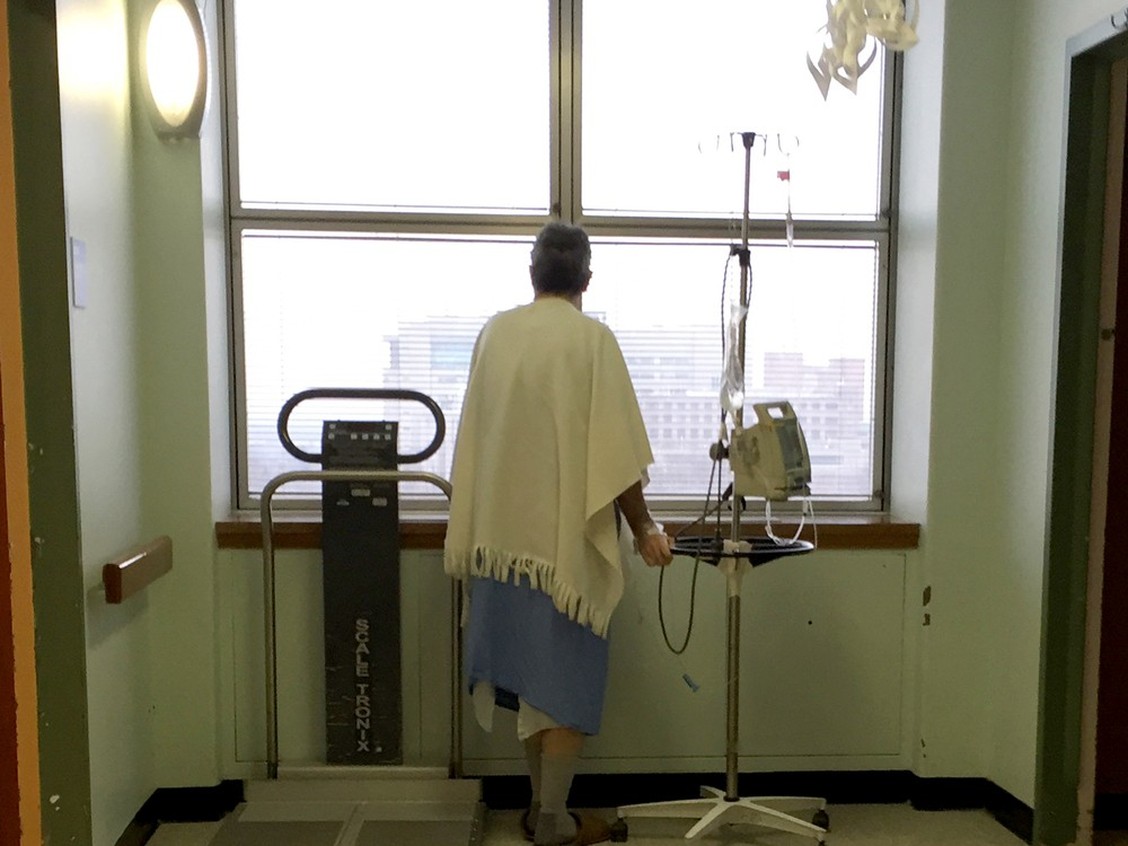
A patient looks out a window at the palliative care unit at St Mary's Hospital Centre in Montreal Photo by Phil Carpenter /Montreal Gazette
The commission that Dr. Bureau heads, earlier in the month forwarded a reminder memorandum to the province's medical practitioners, that it is only those patients with a serious, incurable disease, suffering and who have experienced an irreversible decline in their condition, who are deemed to be eligible to receive MAID. The procedure must be approved independently by two doctors; there should be no 'shopping' for a favourable second opinion.
He has noted, he stated, an increase in the occurrence of cases violating Quebec's end-of-life legislation. In the previous annual report, covering a period between spring of 2021 and spring 2022, 15 of 3,663 doctor-assisted deaths in Quebec failed to respect the letter of the law. Problematic cases included the administering of MAID to an individual with an expired provincial health insurance card; rather than continue to rely on provincial health coverage that had expired, the patient chose death.
Patients in another six cases were found not admissible for the procedure, while in another three cases, patients were in a condition of health that led to their inability to give consent. These are cases reported to the provincial college of physicians, College des medecins du Quebec. An emailed response had the college confirming that none of the 15 cases were referred to its internal disciplinary tribunal; additional negligence. Not was data available whether disciplinary measures may have been taken toward doctors violating MAID rules.
A concern was expressed by Dr. Bureau that doctors find themselves in awkward situations with elderly patients, ready to die, but whose health problems are not sufficiently serious to qualify them for MAID. Doctor-assisted deaths, according to Health Canada's most recent annual report on the subject, accounted for 3.3 percent in 2021 of deaths in Canada. Quebec had the highest rate of MAID deaths country-wide, their number was 4.7 percent that year, and numbers have steadily continued to rise.
"[Some people may find it] shocking [to see migrants put up in hotels, but it's] certainly better than seeing them in the streets." "Maybe there is a middle ground between the hotel and the street. But what is the middle ground? Putting them up in community housing that's already sorely lacking?"
"I find that those who say Canada is 'rolling out the red carpet' for migrants are going too far."
"I get the impression that it's extremely lucrative for certain people -- like for the buses and taxis in Plattsburgh that travel to Roxham Road. [I look on it as a form of] human trafficking."
Mayor Estelle Muzzi, St-Bernard-de-Lacolle, Quebec
"Every time there's a bus that arrives, there's somebody going to Roxham."
"Sometimes I pick up one person, sometimes it's five. They sometimes come in by bus for free from New York City because the mayor paid for everything. But once people get here, they got no goddamn money. So sometimes I take them for free."
"I grew up in poverty, I'm sensitive to it. I understand these people's desire to try anything and pay everything in the hope of a better life."
Tom, taxi driver, Plattsburgh, N.Y. Greyhound terminal
A family of five enters Canada from the U.S. at Roxham Road. Photo by Dave Sidaway / Montreal Gazette
The buses arrive, from New York City where authorities there persuade migrants who have been bused by authorities in Texas and elsewhere on the border with Mexico, to New York City to relieve the strain on their own cities, to agree to travel a little further on NYC's dime, to take refuge in Canada, where they would be welcomed with open arms. They could always cite Prime Minister Justin Trudeau's offhand invitation for refugees to consider coming to Canada which would welcome them with open arms.
Refugees who crossed the U.S.-Canada border at Lacolle on Feb. 23, were processed and were moved by bus to their next stop.Photo by Dave Sidaway /Montreal Gazette
But that was before the unstoppable influx of migrants, and he was reacting to then-President Trump's crackdown on migrants flooding the U.S.-Mexico border, just to show how sanctimoniously superior \he was compared to Trump. Now, after years of tens of thousands making their illegal way across the border from the U.S. into Canada, the provincial premiers are becoming beyond annoyed and expressing their opinion of the strain on social welfare resources that they've been forced to deal with.
"To those fleeing persecution, terror & war, Canadians will welcome you", invited Mr. Trudeau, and since then 100,000 migrants have crossed into Canada. Quebec no longer absorbs the migrants since it began complaining that too much strain was placed on its social support and healthcare system. Redistribution of asylum claimants from Roxham Road has taken place, to cities in Ontario: Ottawa, Niagara Falls, Toronto, Cornwall, and others.
Zulema Diaz (R) and Maryangel Diaz, two Latino women who crossed
from the U.S. border to Roxham Road in Quebec, order coffee at a hotel,
in Niagara Falls, Ontario, Canada March 7, 2023. REUTERS/Carlos Osorio
People escaping poverty and crime in Haiti and Central America, violence and persecution in the Middle East, lack of opportunities in Africa, don't realize that there are people living in poverty in Canada with shrinking incomes and a huge rise in the cost of living. Medical/hospitalization services, welfare, assisted housing, are all stretched to their limits. Canada is a land of opportunity for some, but by no means all its indigenous and immigrant population.
Now, a fee of $50 or $70US will pay for a trip from the bus station to the closest, easiest illegal crossing -- Roxham Road -- from New York to Quebec where migrants carry their belongings and illegally walk across the border to Canada preparing to make an asylum claim. They are intercepted by the RCMP explaining that they've passed a legitimate border crossing. There, if they present themselves, they will be turned back reflecting a border agreement with the U.S. that neither will accept a claimant who originated from the other side, considered a 'safe haven'.
Asylum seekers, who state they are from Turkey, walk down Roxham Road to
cross into Canada from the U.S. in Champlain, New York, U.S., February
28, 2023. REUTERS/Christinne Muschi
Once the RCMP officers hear the words ''refugee claim', the migrants are escorted to a central receiving area from which they will be transported to hotels. They will be fed and sheltered at government expense. Immigration, Refugees and Citizenship Canada spent $136 million on 'temporary accommodation in the last 2-1/2 years for asylum claimants entering through Roxham Road for meals, accommodation, transportation and security and another $551.5 million to provinces and municipalities.
If the government agency determines the migrants are eligible for an asylum claim, they are provided access to 'social assistance, education, health services, emergency housing and legal aid' as they await the IRCC's determination on their case, a process that can take years, reflecting significant backlogs. Backlogs encompassing people going through legal channels in the immigration system who find themselves waiting longer as a result of the illegal migrants' claims.
According to RCMP agents, a growing number of migrants have been arriving by way of Florida where they fly into the U.S., pay to take a minibus for the long drive north to Roxham Road. The bus route to Plattsburgh is a five-hour drive from New York City, It has become a booming route since New York City began giving out free bus tickets to migrants who agree to relocate elsewhere, including those wanting to cross into Canada.
"We hover between three and four patients in the ICU with Omicron. Those who are recovered but still in the ICU are from the Delta wave."
David Jacobs, chair, Ontario Specialists Association, radiologist, Humber River Hospital, Toronto
"Due to the transmissibility of Omicron, the absolute number of hospitalizations and impact on the health-care system is likely to be significant, despite possible reduced severity."
Public Health Ontario
"There is a rise in hospitalization [including ICU] due to the Omicron surge, but this is nowhere near what we would have seen with similar numbers of Delta."
Isaac Bogoch, infectious disease specialist, University of Toronto
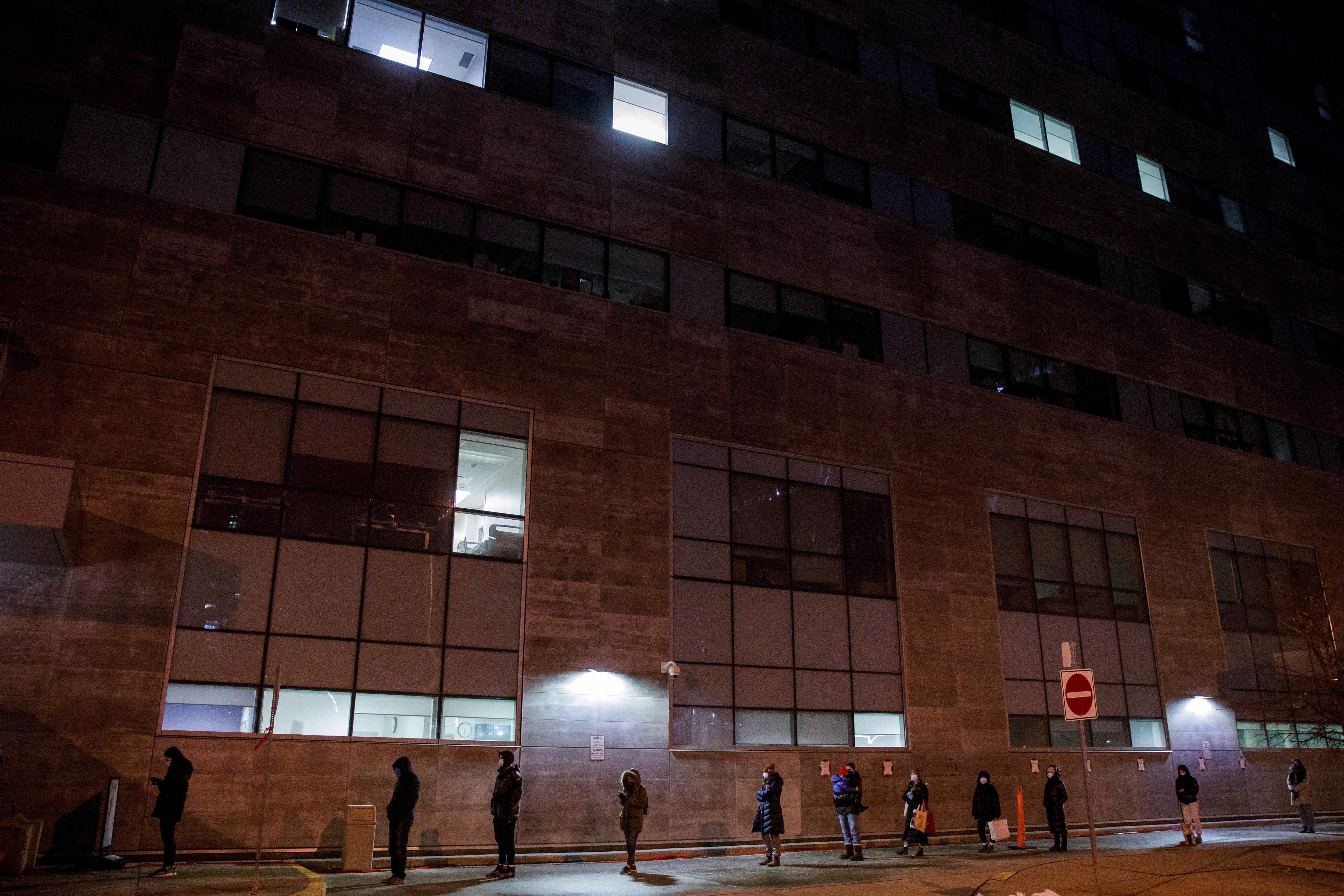
People queue up for their COVID-19 PCR test at Women's College Hospital,
as the latest Omicron variant emerges as a threat, in Toronto, Ontario,
Canada December 22, 2021. REUTERS/Cole Burston
A growing slate of epidemiological data indicating Omicron as a variant which is more infectious than its predecessors, but yet far less likely to severely injure much less kill the people it infects, is being reflected in the Canadian experience. Scottish data published prior to Christmas found numbers similar to those in Ontario, relating to shrinking hospitalization rates: "Omicron is associated with a two-third reduction in the risk of COVID-19 hospitalization when compared to Delta", read their report.
This week a study out of South Africa -- known as the initial country to identify Omicron and alert the world community -- discovered only 4.9 percent of COVID-19 cases were ending up in hospital in comparison to a 13.7 percent hospitalization rate experienced during the previous Delta wave.
Initial reports of the Omicron variant painted a picture of uncertainty, of dark fear that the mutated virus's insatiable appetite for infecting greater numbers of people, would result in unprecedented death and destruction. That early results with numbers indicating a milder virus in circulation has seen a great sigh of relief exhaled, tempered with a wait-and-see attitude.
Over the holidays, British Columbia had 100 people admitted to hospital during a period of up to 50,000 new cases being verified. Similar results are being seen in Ontario where a new Public Health Ontario study found Omicron to be 54 percent less likely to result in death or hospitalization than previous COVID variants. "Omicron appears to be the first dominant variant to demonstrate a decline in disease severity", the report read.
Earlier waves saw hospitals so badly hit they were left with little option but to send away up to 100 patients weekly for treatment at outside facilities. Dr.Jacobs, a radiologist at Toronto's Humber River Hospital, reported the Omicron wave was largely defined by COVID-19 patients appearing at the emergency room with coughs and sore throats, minus severe pulmonary complications seen in previous waves.
As an example, he described performing X-rays of just four suspected COVID-related pneumonias, compared to up to 60 during the most recent wave of Delta patients. Severe cases, found Dr. Jacobs, seemed reserved fairly exclusively within the unvaccinated population; an impression supported by province-level data. The rate of unvaccinated Ontarians admitted to intensive care reflecting COVID onset was over 20 times higher than for people with at least two doses of vaccine.
While those impressions are hugely reassuring the ghost at the back of the health community's mind is Omicron's capacity to overwhelm the health-care system where even an exceptionally mild virus, should too many people become infected at once, can send ICUs into crisis. However, thus far the Canadian experience appears to exhibit what epidemiologists refer to as a 'de-coupling'; where in previous waves a rise in confirmed cases seemed a harbinger of deaths and hospitalizations to come, this time cases have been 'decoupling' from those serious indicators, whereby the infections spike hugely without yielding surges of severe illness.
Of 76,992 active cases, 726 were in hospital in Ontario mid-week, last. The last record high for active cases in the province was 42,917 in April, with 2,335 in hospital; half the cases, three times the hospitalization. Quebec, which is experiencing its third-highest number of COVID-19 hospitalizations since the beginning of the pandemic appears as the Canadian epicentre of the Omicron wave; in a rate of new cases at least four times higher than has yet been seen.
It took 2,000 new cases per day in Quebec a year earlier to plunge the province into full-fledged hospitalization crisis with 1,500 beds occupied by COVID-19 patients at its height. Quebec at the present time has just 939 hospital beds occupied by COVID patients despite a daily rate of new cases far higher than 2,000 for the past two weeks where cases stood at a soaring 14,000 per day.
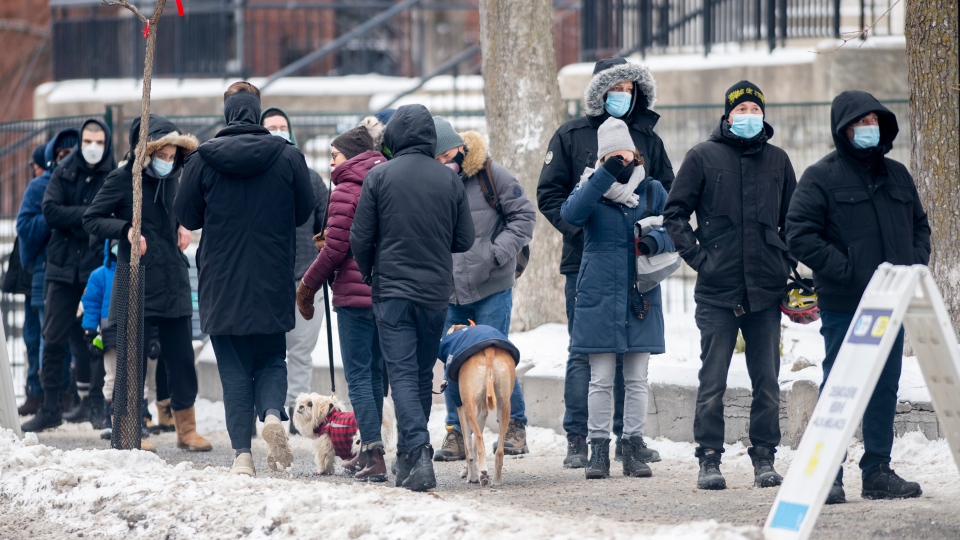
People wait in line at a COVID-19 testing and vaccination site in
Montreal, Wednesday, December 29, 2021, as the COVID-19 pandemic
continues in Canada. THE CANADIAN PRESS/Graham Hughes
"[The rodent studies show that Omicron] could be non-severe in the
right context. [However the results should be taken with a
grain a salt, given that these studies don’t focus on humans.]"
"[There's] some encouraging data at both the epidemiological and now in
the rodent models that suggest Omicron could have the potential to
cause disease less severe than Delta, for example. But it's not the same
thing as saying that it's benign."
Dr. Donald Vinh, infectious disease specialist, McGill University, Montreal
Ample Blame to Share on a Wide Scale of Forfeited Responsibility
"There were probably some who died of dehydration. [Efforts of personnel unable to help since they] didn't have time [to do more for the residents]."
"[Personnel shortages resulted in neglect of basic hygiene for residents]."
Occupation therapist, witness, coroner's inquest
"I'm tired of hearing people say, 'That wasn't my job'."
Coroner Géhane Kamel, Montreal
"Some [care workers] were absent because they were scared, some because they had symptoms."
"They [dementia patients] walk hand in hand. They sleep in people’s beds. And if we try to
stop them, you set off behavioural problems like you wouldn’t believe."
"You can’t restrain them. You can’t tie them up."
"It was one of the hardest decisions I had to take with Maude. So we left them there. What it meant is that we were
condemning them. Not easy for a manager."
"Most of the 21 contracted
COVID-19 but more survived than in other units in the nursing
home. It might have been because their wandering kept them in
better shape than other seniors who were confined to their rooms during
their crisis and slowly declined."
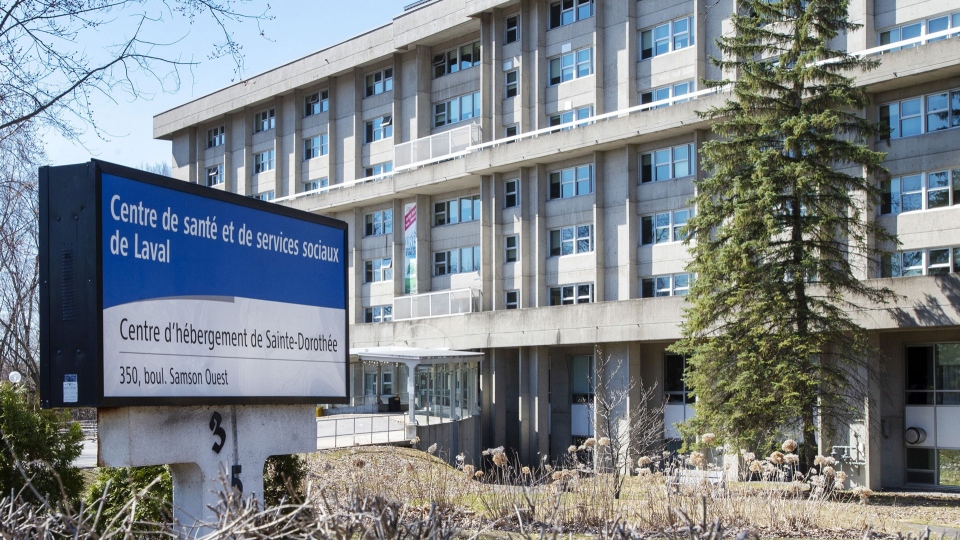
Marie-France Jobin, Supervisor, Sainte-Dorothée, Laval long-term care home
The deaths in CHSLDs in the first wave of the pandemic prompted many questions about how the facilities are run. (Ryan Remiorz/The Canadian Press)
The horribly dismal number of residents of long-term care homes in Canada struck with COVID-19 outbreaks, chronically short of personal care support workers, and unschooled in how to react to the presence of a highly contagious virus, the need to segregate the ill in places where there were multiple occupants of a single room, and instances where patients with dementia had a tendency to wander, led to an unsupportable number of deaths. In the Saint-Dorothee residence alone, one hundred and eight people died in last year's first wave.
The coroner's inquest is an attempt to understand more fully the level of dysfunction and incompetence that led to this disastrous outcome. Most of the witnesses by court order have had their identities protected through a publication ban, presumably leaving them free to speak without fear of retribution. About two-thirds of the facility's employees had logged off sick at the time. The remainder of the employees obviously attempted to do as much as they could, and that cannot have resulted in meeting the most basic needs of the residents.
The therapist who was giving evidence spoke of staff shortages which prevented employees from adequately caring for the seniors, along with the other vulnerable patients living in the home. Many of the residents were barely hydrated and had been given little to eat before they died. One of the residents had developed bedsores, left for hours in incontinence briefs, crying out to be changed. When one of the residents was finally given a bath, she wept in gratitude.
A funeral home worker removes a body from the Verdun CHSLD
seniors residence Wednesday April 15, 2020 in Montreal. At the CHSLD
Sainte-Dorothée, bodies were left exposed for hours because funeral
homes were overwhelmed. (Ryan Remiorz/The Canadian Press)
In desperation, patients were restrained as preventive measures to ensure they were unable to move around freely. One patient with dementia insisted on trying to use the telephone "I had to attach him to his chair because he wanted to talk to his wife", the witness explained. An admission rife with matter for speculation; little wonder a patient whose most basic, routine requirements were being neglected attempted in a desperate cry for help to speak to his wife who would become inconveniently involved questioning staff why her husband's needs were neglected.
Left in their rooms, no exercise or physical therapy on offer affected patients' ability to walk, the therapist testified. She had volunteered to assist at the long-term care home, receiving no training. She had been witness to a director at the home breaking down in front of staff members, screaming and crying in sheer frustration. A second witness, a dietitian, described the institute as a "ship without a captain", so disorganized it might take days for the kitchen staff to be made aware that a patient had died before meals were no longer sent up to the room.
Another patient attendant testified that there had been no direction for the workers who had been left to their own devices on a floor of 34 patients. Among them some had a tendency to wander from their rooms. The night co-ordinator remained in her office advising she had no time to help, during this time.
Two assistant directors at the Laval health authority previously testified that staff at the home were tested for COVID-19 in early April 2020. According to the patient attendant "nobody was aware that there had been testing". The outcome of the situation in the number of deaths at six long-term care homes and one seniors' residence in the province are all under investigation in coroner Gehane Kamel's mandate.
The Centre d'hebergement Sainte-Dorothee is seen Tuesday, April 7, 2020 in Laval, Quebec. THE CANADIAN PRESS/Ryan Remiorz
People wear face masks as they walk along a street prior to a curfew in
Montreal, Saturday, January 9, 2021, as the COVID-19 pandemic continues
in Canada and around the world. The Quebec government has imposed a
curfew to help stop the spread of COVID-19 starting at 8 p.m until 5
a.m. THE CANADIAN PRESS/Graham Hughes
"I'm not sure that's going to be feasible [people in Quebec emulating Italians during the springtime COVID quarantine, singing from balconies] during the cold winter nights in Quebec."
"[Placing people under curfew so they're unable to leave their homes lacking an acceptable reason fails to create a sense of solidarity, the] all in this together [spirit]."
"OK, we've just got to get through this four weeks, assuming the lockdown is not extended [people tend to think]."
"The rationale is that when people disregard social distancing, they do it at night. So, you lock everyone down. Of course, you're still putting people in closed spaces It just happens to be their own homes."
"This thing has lasted so long. People were expecting and hoping in 2021 things would open up."
"If we're going to have a curfew there needs to be in place, and visibly in place, mental health resources to help people get through this period."
"Most people will be resilient. We're not going to like it. We're gonna feel stressed out and irritable and perhaps depressed, but most people will bounce back."
Steven Taylor, Clinical Psychologist, professor, Department of Psychiatry, University of British Columbia
CTV News
Quebecers may feel they see a glimmer of light at the end of this latest tunnel with yet another door slammed against their freedom of movement when Quebec Premier Francois Legault announced "We're talking here about saving lives and we're talking about saving our health-care system", as he announced new emergency measures to take effect in Quebec from Saturday, 9th of January, among them a 8:00 pm to 5:00 am curfew. A curfew meant to be strictly enforced; only those with acceptable reasons to be out will be spared fines of up to $6,000.
This news for Quebecers represents the first in the country to impose a curfew, but Quebec, after all, has experienced the most deaths due to COVID within its population of any other province or territory. True, 80 percent of those deaths have taken place within long-term care residences, and the curfew obviously doesn't impact on them, so it isn't surprising a bit of consternation may arise from the situation of locking everyone down at night. And according to mental health experts, the newly imposed curfew represents another stress level upon people already suffering the effects of ongoing lockdowns.
The rationale for the curfew appears to elude the mental health experts. COVID-19 saturating the province is the driving force behind such moves of desperation, when governments don't know what else they can do to convince their populations to take the ongoing and growing prevalence of infections seriously enough to deter them from breaking the health rules meant to protect the greater population. Residents will still be permitted outside excursions for emergencies and "humanitarian reasons", including walking the family dog, picking up teenagers from work, or filling prescriptions at a pharmacy.
Those people whose employment leads to working shifts will be excepted but in general everyone is expected to remain in their homes in the evening, and to commit to staying there until the morning light. Any who venture out lacking a sanctioned (or valid) reason to be out and about during the curfew hours risk hefty fines of between $1,000 and $6,000. Desperate means, the government insists are a requirement if they are to hope to be able to stop the minority of people who insist on ignoring COVID rules.
Civil liberty concerns are becoming visible: "What's crucial is how the curfew is enforced", stated Michael Bryant, executive director of the Canadian Civil Liberties Association. To the present, Quebec's enforcement during COVID lockdowns has tended to be on the "overzealous" side, disproportionately impacting racialized communities and the homeless in an atmosphere prevailing where residents are encouraged to carry proof they have a valid reason to explain their outside presence at night.
Urgences-santé paramedics transport a patient to the COVID-19 unit of Notre-Dame Hospital on Wednesday, Dec. 30, 2020.Photo by Allen McInnis /Montreal Gazette
Ar the very least, 8.6 million Quebecers can anticipate the curfew expiration of February 8. As far as some are concerned in the face of a clear public health priority all else is superseded in importance, that the psychological harms of distancing and curfews are less important than the potential physical harms visited by the virus. "Given the rapid spread of the virus, distancing may turn out to be more important in saving lives than vaccines", according to professor emeritus Dr.Allan Frances at Duke University.
Dr.Thombs, who as a senior investigator at the Lady David Institute of Medical Research at the Jewish General Hospital, is leading a review of how COVID and pandemic policies affect the human psyche feels the restrictions are already impacting people in various ways. Studies indicate that young adults are deeply affected where social interactions with others are being aborted leading to loneliness. This, in the face of confirmed cases accelerating as never before with Canada seeing an increase of 100,000 cases in just over two weeks.
There is a lack of compelling data proving that curfews work. Setting up controlled studies is difficult, explained Dr.Taylor, author of The Psychology of Pandemics: Preparing for the Next Global Outbreak of Infectious Disease. The effort of balancing the containment of infection as opposed to concern over people's mental well being is top of the agenda. A rise in anxiety, depression, substance abuse and domestic violence has already been recognized, and additional instances of all those stressors will be emphasized in Quebec under its enhanced lockdown.
The more curfews you introduce people to and the longer they remain in force, the more oppressive and stressful the situation is for everyone involved, since humans are gregarious social animals, and estranging us from all social interactions that have meaning in our lives and create enjoyment impacts moods and with bleak moods comes irrationality.
"Whenever you do these kinds of things,
you want to pick your battles, pick your target, help people understand
what you're trying to accomplish and lay out what that is."
"It's not clear to me at least what shutting down at eight o'clock is going to do."
"We
always cope with stressors when they're shorter than longer, and when
we have as much information as possible about what's going to be
involved. What happens after 8? There is a real risk that it will make
things more difficult for busy people who can't get their errands done,
such as those working and caring for young children."
"Normal
development really relies on socialization at that point in their lives
[young people]. Other people are being hammered financially and don't
know if they can support their families."
"...It
does seem like people are really slipping and aren't being
particularly cognizant about following [public health] principles."
"I
don't know that shocking people without a clear purpose of what the
shock is trying to stop works. What are they targeting here? What are
the main sources of transmission? What are they trying to cut down.?"
Brett Thombs, professor, faculty of medicine, McGill University
"We are obliged to provide a type of shock treatment so that people reduce their visits."
"Police officers will be there to make sure everybody respects the rules." "We have had the battle of our lives and unfortunately the battle is not over."
Quebec Premier Francois Legault
"Our hospitals are on the verge of a breaking point."
"[The] partial measures [in place] have had] no effect on the increasing trend of cases."
Roxane Burges Da Silva, professor, public health, Universite de Montreal
"We are going to truly surpass our capacity in the next two to three weeks if we don't do something."
"Ramping up testing of asymptomatic individuals in congregate settings whether it is in schools or the workplace should have been done. Period. Full stop."
"The biggest worry is, eventually, if we don't do anything, we'll get to the point where it's going to be the decision where we have two patients, one ventilator and someone has to decide."
"[In December Legault closed all] non essential [retail stores extending the winter break for elementary and high school students. But while those measures slowed the spread of the virus, they failed to] render the curve flat."
Dr.Donald Sheppard, chair, microbiology and immunology department, McGill University
After a rise in COVID-19 cases, Quebec is instituting the strictest measures since the spring. (Graham Hughes/The Canadian Press)
Quebec was the worst-hit COVID-19-caseload in the country initially when the SARS-CoV-2 virus entered Canada last year in March and it remains so to the present time. The initial entry just happened to coincide with the academic spring break and in Quebec that break takes place a week before it does elsewhere, in other provinces. Although there was concerned anticipation over a spreading coronavirus with dreadful news coming out first from China, then Italy and Spain as they attempted to cope with the vicious spread, Quebecers took their usual spring break trips abroad.
And the inevitable happened, as they brought back with them virulent strains of COVID-19 that quickly spread in the community, and Montreal in particular became an object lesson in the need to take stringent measures swiftly and if at all possible, proactively. A week later spring break time arrived in other provinces and recommendations were to curtail travel. Governments did what they could to alert and advise, to issue warnings and instructions to their populations while there were pockets of resistance particularly from religious communities that helped further the spread; inadvertently but inevitably.
Spring and summer were quieter periods with some relief in the numbers of new COVID cases and a relaxation of rules. But then came Thanksgiving, Christmas and New Year's. A population that felt it had withheld itself from traditional visits with family and friends had problems contemplating separation on these important family holidays and resolve faltered. Surveys of Canadians related that an unsurprisingly large proportion of families took a calculated risk and returned to visiting one another. With the weeks following each of the holidays seeing another upward spike in cases.
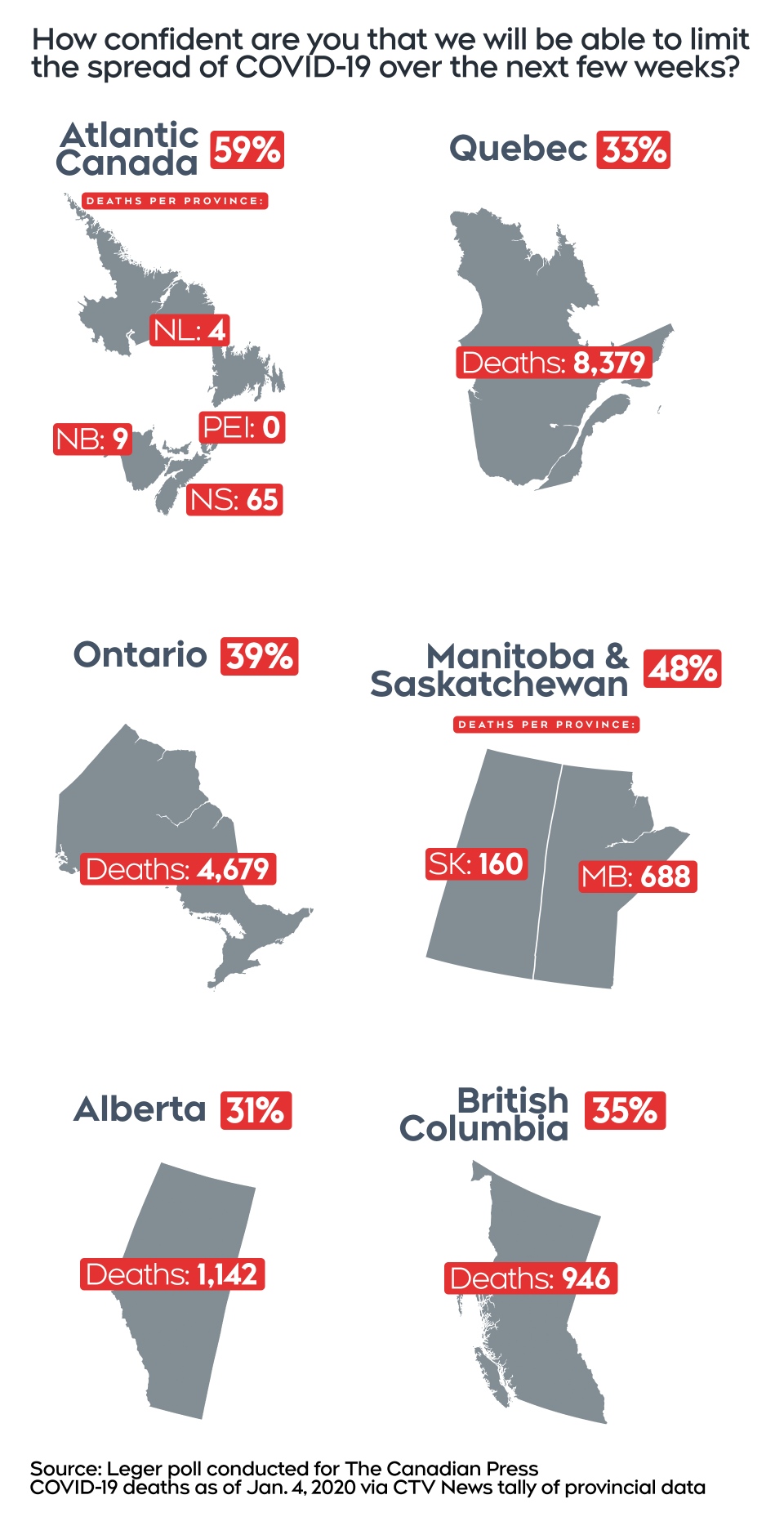
The latest survey, the Leger/Association for Canadian Studies poll found that 48 percent of all those surveyed visited with people outside their households, while 52 percent of respondents said they had not. But it is clear from the survey that close to half of all Canadians visited with family or friends over the winter holiday period, and case numbers, already steep in this second COVID wave, began to skyrocket and still does not fully reflect the apex of the rise. The largest percentages provincially of those visiting during the holidays were those in Quebec and Ontario.
Quebec now becomes the first province to impose draconian measures in determined hopes of curbing the dynamic spread of the novel coronavirus. Premier Legault, during a news conference stressed that schools, retail stores and other businesses have been closed since December, and yet COVID-19 infections simply continued to rise. Transmission, he pointed out, largely traceable to private gatherings. Henceforth and until February 8 all non-essential businesses ordered to close in December are to remain closed until February.
There is also a curfew and anyone who thinks of wandering about on the street after 8:00 p.m. for no acceptable reason will be subject to fines between $1,000 and $6,000, substantial enough to make anyone think twice about challenging the curfew. On January 11 primary schools are to reopen and high schools will follow a week later. Mid-week, Quebec reported 2,641 new cases for that day alone, along with 47 additional deaths from COVID.
According to the provincial health department, hospitalizations had leaped by 76 to 1,393, the largest number of patients since last May, with 202 people in intensive care. Dr. Sheppard spoke of the province's health-care system under severe strain with surgeries and cancer screenings put off, while intensive care units are filling up. He spoke of breast cancer patients presenting with larger tumours than before the pandemic, the result of late diagnoses.
Quebec's government-mandated health care think tank, the INESS Institute, warned that hospitals in the Montreal area are certain to run out of dedicated coronavirus beds within three weeks. It has been since October that much of Quebec has been under partial lockdown with bars, restaurant dining rooms, gyms and entertainment venues closed. All "non-essential" retail stores were closed in December and the winter break for students was extended.
Dr.Borges Da Silva feels the curfew is sensible since it will force people to consider whether it is worthwhile before they make arrangements to go out and have a beer with a friend. As far as she is concerned, illicit gatherings over the holidays have made a major impact on the spread of COVID-19 in the province. No one is under any illusions that there will not be push-back from the public over the curfew, however.
The Tragedy of Canada's COVID Long-Term Care and Retirement Homes
"[Residents were gasping for air, their oxygen level had plummeted, they clearly had COVID-19 and were dying] and no one was there to provide the proper care, or look after them."
"I'll just be very open with you. It's still something I think about every day. It haunts me. I wish I could have done more."
"If we think back to those early days in February and March, what we were all worried about was a scenario like Italy and New York. A lot of the focus was on protecting acute care -- acute care hospitals, making sure we had enough ventilators. Some of those fears are coming back, and rightfully so. But we also have to do all we can to protect long-term care."
"These homes are not on separate islands."
"We know from the first wave it was health workers who unknowingly spread the virus."
Dr.Amit Arya, palliative care doctor, University of Toronto, McMaster University
"It's unsurprising to me, sadly, that we're having outbreaks in long-term care homes."
"[...The second wave began around the beginning of September] And since that time we've continued to accumulate two to three long-term care homes a day that are going into outbreak. Because who works in long-term care homes? They're people who don't live in long-term care homes. They come from the community where the transmission is high, and they are going to become infected themselves by living in the community and unknowingly import the virus [into care homes]."
"What happened in the spring was truly a humanitarian crisis. If we do not create emergency response plans that include things like this, the same level of catastrophe will happen again."
Dr.Nathan Stall, geriatrician, Sinai Health System, University Health Network, Toronto
Toronto’s Seven Oaks long-term care home, which was hit hard by a
COVID-19 outbreak affecting residents and staff, is pictured on April 9.
Deaths in long-term care represented more than 70 per cent of all
COVID-19 deaths in Quebec, Ontario and Alberta. (Evan Tsuyoshi Mitsui/CBC)
What happened in the spring is what Dr.Amit Arya, who was part of a long-term rapid action response team dispatched into homes when they were in desperate straits came face to face with: residents ill, unprepared care workers, insufficient PPE, not enough workers to look after the most basic needs of the ill, the elderly, the infirm who went unattended, unfed, unwashed, thoroughly neglected, all too many of whom ended up dying. When the rapid action response teams entered those homes they sometimes found residents dead in their beds.
With a second wave of COVID-19 hitting provinces like Ontario, Quebec and Alberta in particular, Dr.Arya has horrible visions of similar scenes becoming a reality once again. In the spring when case numbers at homes and deaths were revealed to a horrified public, governments vowed to protect the vulnerable with new legislation, new hiring, new regulations. That was then, this is now. COVID is shifting from high case numbers in the young age 20 to 39 group that revealed itself over the summer to an increasing number of cases in older people.
Dr.Theresa Tam, chief public health officer of Canada has warned of a growing number of outbreaks in long-term care: "While these outbreaks involve a smaller number of cases than in April and May, we know that spread in these facilities often leads to death". Over 9,100 Canadians died in the spring, and outbreaks in long-term care and retirement homes represented fully 75 percent of all such deaths in the country.
Active outbreaks have been identified more latterly in 58 long-term care homes in Ontario alone, and in the past month 40 COVID-19 deaths. The Red Cross has been dispatched into seven homes in the Ottawa area to aid: "assess and stabilize the situation", in the words of federal Public Safety Minister Bill Blair. At the Millwoods Shepherd's Care Centre in Edmonton, 53 residents and 27 staff have tested positive, while seven residents have died.
Quebec, New Brunswick, British Columbia and Alberta have all reported outbreaks in their long-term care homes. An interim report from Ontario's patient ombudsman reflected reports of COVID positive staff forced to attend their work stations with staffing shortages making it beyond difficult to provide even the most basic care -- yet again, in a reflection of the spring situation. According to medical experts, Ontario and Quebec reduced the curve in the spring, containing community spread, while isolating the infection in understaffed, ill-prepared, long-term care homes.
Over 840 outbreaks took place at that time, the situation becoming so dire that members of the Canadian military were asked to attend nursing homes where they discovered residents were unwashed, dehydrated and occasionally, dead. Dozens of studies and advocates had given fair warning for decades of just such a once-in-a-lifetime pandemic, but to no avail. No governments anywhere were prepared for the eventual arrival of a global pandemic, all were taken by surprise when the SARS-CoV-2 virus causing COVID-19 made its appearance, bolting out of China.
British Columbia stands out for its foresight where a system of full-time work was promoted with standardized wages and sick leave for health workers limited to a single home. At the second week of September Ontario reported 1,827 resident deaths from COVID-19 in long-term care homes, in comparison to 156 deaths in B.C. homes where multiple-resident shared rooms were uncommon, but not in Ontario where shared rooms are standard.
Countries that implemented additional long-term care
precautions at the same time as standard stay-at-home orders had fewer
long-term care infections and deaths, says Tracy Johnson, CIHI's
director of health systems analysis and emerging issues. (Evan Mitsui/CBC)
"I think minimizing right now is a real mistake. People are not wanting to believe that this is a thing, because I think they don't want to return to the state we were living in earlier in the year. That's a dangerous path to take."
"The threshold for what we consider high on percent-positivity probably should be considered different now than it was in the spring."
Dr.Lynora Saxinger, University of Alberta
"We are still screening asymptomatic people, but these are people we have a reason to believe were exposed, and that seems to capture most of the cases."
"So we have to always be reacting to what is coming and not necessarily what's happening today."
Dr.Craig Jenne, infectious diseases researcher, University of Calgary
"There's been a definite increase in the number of people who are infected. It isn't just because they're testing more."
"That's kind of the tip of the iceberg [hospitalizations creeping into triple digits]. It ... tells you there's way more community transmission than you might expect." Dr.Ameeta Singh, infectious diseases specialist, Royal Alexandra Hospital / University of Alberta
"[There is a host of] very clear, accelerating trends
[in places like Toronto, Peel and Ottawa. Ontario is now imposing
stricter measures in those regions to clamp down on the situation, as a
record 939 new cases were recorded Friday]."
"The curve continues to increase in terms of its steepness."
"[The province is seeing] a dramatic growth in the percent of tests that are positive."
"In worst-case scenarios, it crosses other thresholds that lead to the reduction of access to hospital care."
"It's there in that older population [the increased positivity rate] where the consequences for
health and the consequences for the health system are most severe."
Dr. Adalsteinn Brown, adviser to Ontario government
"There's not a
perfect, single metric that's going to give you a perfect sense of
what's happening in terms of transmission." "We certainly shouldn't be looking at the reported case numbers alone. They've become very difficult to interpret."
"The challenge with all of these is you can't really look at them
in isolation. But I think the signal we're seeing right
now in terms of increases in hospitalizations and people being admitted
to ICUs really are indicators that cases are increasing in the
community."
"So basically, [it means] you're at a point where you are going to
be struggling to understand and identify where people are getting
infected."
Ashleigh Tuite, epidemiologist, University of Toronto's Dalla Lana School of Public Health
Ontario instituted measures like shutting down indoor dining in some
areas of the province Friday in an effort to curb the spread of
COVID-19. (Evan Mitsui/CBC)
A recent surge in COVID-19 cases surpassing a spike that occurred last spring, warns infectious disease specialists, must not be given short shrift as representing a mere byproduct of increased testing. Data publicly posted in Alberta, British Columbia, Ontario and Quebec over the week ending April 21 for that specific single week, and another ending October 6 meant to obtain a sense of just how the two case surges compare was compiled by the Canadian Press. The results do not inspire confidence.
In Alberta daily cases are now two percent higher in the most recent period in comparison to the week in April, while Ontario's were 13 percent higher, Quebec's 14 percent higher and cases in British Columbia were more than tripled the mid-to-low, double-digit numbers experienced in that province in April. As an early leader in increased testing Alberta took close to four times as many swabs during the week of October than in the April week, while B.C.'s daily testing grew eightfold, Ontario and Quebec performed roughly 4.5 times as many weekly swabs in the fall week as compared to the spring.
The positivity rate representing the percentage of tests coming back positive, in all four provinces dropped markedly between spring and fall surges. Quebec averaged some 6,300 daily tests and 930 new cases in April with a positivity rate during that period of about 15 percent. More recently in October as Quebec coped with five consecutive days of new cases in quadruple digits, its positivity rate sat at about four percent.
In Ontario, dealing with a large backlog of swabs awaiting analyzing, the province posted an official daily positivity rate of two percent for October 7, reduced from the roughly six percent range it had posted in mid-April. The positivity rate in Alberta dropped to one percent from close to five percent, and B.C.'s fell to 1.3 percent from four percent. Yet experts indicate that the lower positivity rates are no cause for comfort. They point out that early testing was largely limited to people with specific symptoms and those who came into close contact with them.
Test now tend to service a much broader portion of the population, many with mild symptoms or asymptomatic cases. Testing among people with no suspected exposure or symptoms in Alberta over the summer unearthed very few new cases, pointed out infectious diseases researcher Dr. Crag Jenne, at the University of Calgary. Testing has since been tightened to those at higher risk, or with upcoming travel, by the province. Yet, pointed out Dr.Jenne, today's results reflect viral transmission of ten to 14 days earlier.
Trends in hospitalization are seen as a lagging indicator eyed with concern by experts. For example, in Ontario, hospitalization began creeping into the triple digits roughly two weeks earlier. The percentage of people testing positive grows in a "very sharp way", according to Dr.Brown, against the backdrop of "relatively strong" testing numbers. According to provincial data released Friday, some regions in Ontario are far above the three percent positivity rate, recognized as an international benchmark reflecting a serious problem.
People wait in long lineups for a COVID-19 test at a
drive-thru testing centre in Toronto on Sept. 28. The province has since
moved to an appointment-only testing model, though a testing backlog
remains. (Evan Mitsui/CBC)