Health Benefits for Elderly Exercisers
"Participants in the control group did not receive supervised exercise, yet exercised at relatively high levels throughout the five years.""The central implication is that either shorter-duration vigorous physical activity or longer-duration moderate physical activity or a combination of the two, that amount to the same amount of work each week, will have the same favourable health outcomes with vigorous physical activity being the time-efficient alternative."Norwegian researchers

Results from a study led by a team of researchers in Norway have ascertained that exercise for older adults leads to better health outcomes along with an increase in longevity. Just in case there are still people in the elder demographic who believe that exerting themselves physically to exercise their bodies and clear their minds is out of the question for the silver-haired who are more likely to believe and practise that old adage that quiet, and prolonged restful poses represent the formula to a long and tranquil life.
The researchers set out to compare three distinct exercise routines on a group of age 70 to 77 Norwegians whom they divided into three groups. 780 people were enlisted in the control group which was asked to adopt the national guidelines for physical activity of 30 minutes of moderate-intensity exercise preferably every day of the week. The second group comprised of 387 participants used two days of the 30-minute workouts for 50 continuous minutes of exercise, done at an intensive equivalent to 70 percent of their maximum heart rate.
And the third group of 400 people was also tasked with using two days weekly of the 30-minute workouts' the routine then constituted of four high-intensity intervals of four minutes performed at 90 percent of their maximum heart rate. All three groups whose average age was 72.8, saw fitness and health data compiled at the beginning of the study and collected again at intervals of one, three and five years follow-ups afterward.
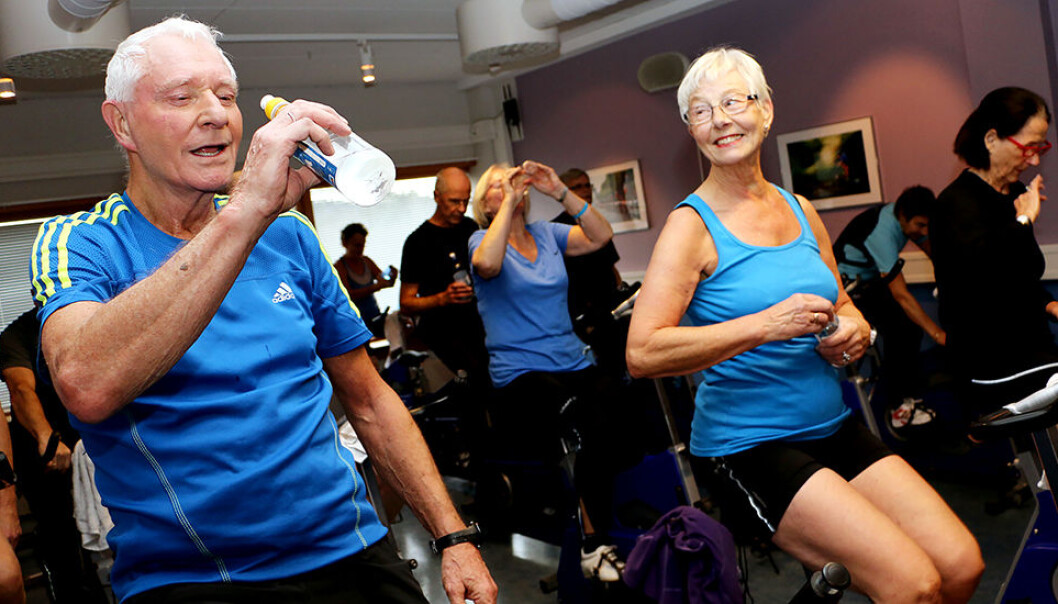 |
| Researchers now know more about the types of exercise that older adults tend to prefer and the factors that increase the risk of dropping out of an exercise program. (Photo: Andrea Hegdahl Tiltnes, NTNU) |
The two non-control groups met regularly with exercise professionals to have supervised workouts designed to make certain that participants exercised in the appropriate training scenario with intensity measured by heart rate monitors and ratings of exertion collected. Self-reporting was the mode of analyzing adherence to the exercise routine; anyone who participated in less than 50 percent of the workouts was considered non-compliant. When the study was finalized, two physicians analyzed medical data relating to all three groups, (inclusive of deaths), while which exercise routine was linked with each group was withheld from the physicians.
It was anticipated by the researchers that the two groups exceeding the national recommendations for physical activity would result in added boosts of longevity, yet it was found that no differences resulted in the analysis in the mortality rate between those who followed the 30-minute conventional routine and those who did not. A slight boost in longevity among the high-intensity interval group when compared to the exercisers who performed 50 minutes of continuous moderate-intensity exercise was, however, noted.
Researchers suspected that the outcome related to the overall good health of the study subjects. 80 percent of the subjects reported a medium or high levels of physical activity at the study initiation, suggesting that exercise routines undertaken individually already contributed to their overall health and longevity. 47 percent of the exercisers performing the high-intensity interval training remained faithful to the end of the study in comparison to the 69 percent of controls who maintained their routine for the full five years.
Peak oxygen uptake represented an unexpected finding; a measure of cardiovascular fitness showed no age-related decline over the course of the study; good news for older exercisers since a decline in peak oxygen uptake typifies the age group involved and is associated with an increased risk of premature death and coronary heart disease. The conclusion is that there is a number of options for older adults anxious to reap health benefits that physical activity offers.
For active older adults, judging the effectiveness of a workout by its length or intensity is not particularly good practice.
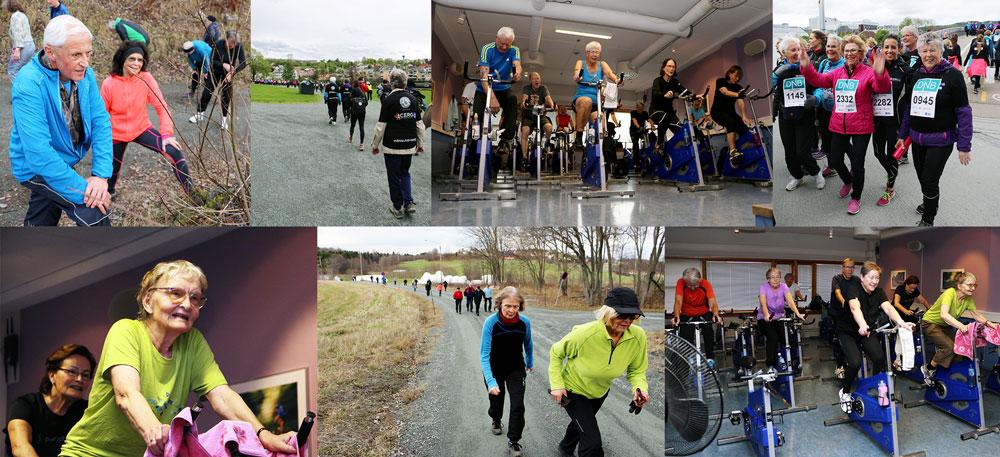
"First of all, I have to say that exercise in general seems to be good for the health of the elderly. And our study results show that on top of that, training regularly at high intensity has an extra positive effect.""Among most 70-77-year-olds in Norway, 90% will survive the next five years. In the Generation 100 study, more than 95% of the 1500 participants survived!""Both physical and mental quality of life were better in the high-intensity group after five years than in the other two groups. High-intensity interval training also had the greatest positive effect on fitness.""In the interval training group, 3% of the participants had died after five years. The percentage was 6% in the moderate group. The difference is not statistically significant, but the trend is so clear that we believe the results give good reason to recommend high-intensity training for the elderly.""One challenge in interpreting our results has been that the participants in the control group trained more than we envisioned in advance. One in five people in this group trained regularly at high intensity and ended up, on average, doing more high-intensity training than the participants in the moderate group.""You could say that this is a disadvantage, as far as the research goes. But it may tell us that an annual fitness and health check is all that's needed to motivate older people to become more physically active. In that case, it's really good news."Dorthe Stensvold, professor, Cardiac Exercise Research Group (CERG), Norwegian University of Science and Technology (NTNU)
Labels: Elderly Demographic, Exercise Routines, Fitness Training, Norway, Research
posted by Pieface @ 7:09 PM
0 comments