Ruminations

Blog dedicated primarily to randomly selected news items; comments reflecting personal perceptions

Tuesday, August 18, 2020

Obesity and COVID-19 Morbidity

"Although this study examines a variety of factors that may be associated with risk of death from COVID-19, our main objective in this paper was to understand risk related to obesity, and obesity-associated chronic conditions in our health care system."                                                                                                                "Our findings suggest that it is not race or ethnicity alone that increases risk of death, but rather other correlated factors, including access to health care, comorbidities, and obesity, that also play an important role."                                   Lead researcher, Sara Y. Tartof, PhD, MPH,  Kaiser Permanente Southern California Department of Research & Evaluation

Getty Images

"By viewing the risk posed by obesity through the prism of COVID-19, this study advances the characterization of obesity as a disease that demands a public health and clinical response similar to that for diabetes or heart disease." "One pandemic is expanding our understanding of another, and we hope this work not only provides physicians and patients a better grasp of the risk obesity poses in the setting of COVID19, but also to overall health."  Senior author, Sameer B. Murali, MD, an internal medicine physician at Kaiser Permanente Fontana Medical Center

A new study on obesity and COVID-19 has been published in the peer-reviewed journal Annals of Internal Medicine. A team of researchers from Kaiser Permanente responsible for the paper, used data from the health-care body's insured patients to derive the results of their study from the health characteristics of 6,916 patients who had contracted the SARS-CoV-2 virus that causes COVID-19 in the period between when the epidemic struck the U.S. in March and the beginning of May.

The goal was to determine whether and how greatly obesity had an effect on the risk of dying from COVID complications. The Kaiser Permanente model verified that obesity is a dominant driver and an independent risk factor for mortality caused by COVID-19, factoring out hypertension. Issues such as sex, age, race, smoking status, heart failure, history of myocardial infarction, socioeconomic status, vascular disease, asthma and diabetes were all taken into account.

When all was accounted for, obesity stood out as uniquely dangerous in COVID-19. Risks linked to overweight and COVID were seen to increase morbidity by 81 percent higher as compared to people within normal weight parameters in COVID infection. Excess risk rose for those with a BMI in the 35 to 39 kg/sq.m range at 16 percent; a BMI of 39 equal to 288 pounds weight for someone six feet tall.

BMI in the range of 40 to 44 raises risk to 168 percent, and 45-plus BMI rises to 318 percent risk. Cardiologist David Kass of John Hopkins was invited to write an accompanying editorial by the journal; to envision how obesity affects mortality risk in COVID-19. Dr.Kass made the observation that obese individuals are endowed with weaker immune systems and poor endotheliums (cellular layer on the interior surface of blood vessels). Their breathing is impaired at night or while in a prone position.

A more elevated "docking" protein results from fatty tissue, which the COVID viruses makes use of to break into cells, according to Dr.Kass, conceivably permitting fat to "serve as a viral refuge and replication site, prolonging virus shedding."

Medical workers prepared to transport the body of a patient who died of Covid-19 at the United Memorial Medical Center in Houston.
  Credit...Go Nakamura/Getty Images

  • Patients who were severely obese had nearly 3 times the risk of death and those who were extremely obese had over 4 times the risk of death from COVID-19 compared to those of normal weight.
  • Severely and extremely obese people who were 60 years old and younger had a substantially higher risk of death than severely obese people over age 60.
  • Severely and extremely obese men had a very high risk of death, while women had no increased risk of death associated with obesity. searchers were able to control for a variety of risks previously reported in the literature and did not detect increased risk of death from COVID-19 associated with Black or Latinx race/ethnicity alone.

Labels: , , ,

Saturday, April 25, 2020

The Elderly Health-Vulnerable : Deprived of a Decade of Life by COVID-19

"We need to be honest with people and tell them regardless of what decisions are made that there are going to be people dying who sadly might not have otherwise died."
"We looked at how long people with those 11 different [serious chronic health conditions] conditions, and in different combinations of those conditions would be expected to live. Then we basically subtracted one from the other."
"So, from Wales, we could find out that an 80-year-old person who had high blood pressure and diabetes, but who didn't have kidney disease, might be expected to live seven years. That means an 80-year-old with COVID-9 who had that same set of conditions had lost seven years of life."
"Nobody is suggesting they [people under age 50 with COVID] only had a short time to live."
"[Most people] lost considerably more than the 'one-to-two' years suggested by some commentators."
"But as countries move to re-open] this is one-half of a balancing judgement that needs to be made. It's not an easy decision. Undoubtedly there are people who are having worse outcomes following things like heart attacks and strokes as a consequence of the fact they're frightened to go to hospital [for fear of contracting COVID]."
"We need to do a similar exercise for these indirect effects of COVID-19 in order to make sensible decisions."
Dr.David McAllister, University of Glasgow, Scotland
People Are Losing An Average of 13 Years Of Their Lives Due To The Coronavirus Pandemic
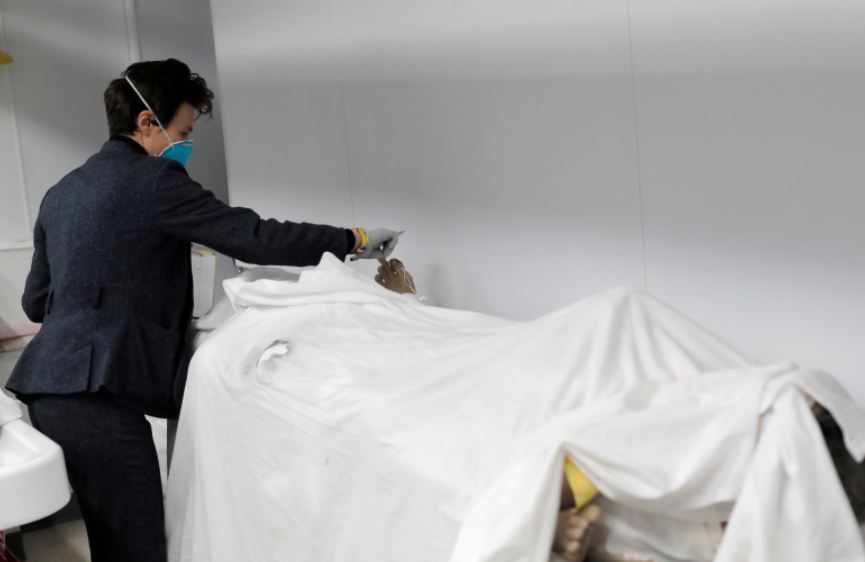
(Photo : Reuters Connect) The Wider Image: Dealing with the dead: the female undertakers of Harlem

Most onlookers, those in the fields of science or medicine, or among the general population, assume that the disproportionate deaths attributed to the dire effects of the novel coronavirus on the elderly do not deprive them of many years of their lives. It is assumed that they would, under normal circumstances, perhaps live another year or two before succumbing to the effects of their advanced age coupled with chronic health conditions they are burdened with.

Which motivated Dr.David McAllister, a consultant in public health medicine at Public Health Scotland and some of his colleagues to measure the estimated number of years of life actually lost as a result of the health-destructive effects of COVID-19. Their research led them to conclude through analysis, that on average men lose 13 years of their lives, and for women that loss is 11 years. Bearing in mind that COVID appears to devastate more men than women.

Death from COVID-19 results in over ten years of life lost per person, Scottish researchers say
Death from COVID-19 results in over ten years of life lost per person

While accounting for high blood pressure, diabetes and other common chronic conditions typical of elderly people dying of the pandemic virus, deprivation of more than a decade of life of those who died of the effects of COVID-19 resulted per person, analogous to the loss of years of life \ from heart disease. Globally there have been 192,125 confirmed deaths from the coronavirus, according to Johns Hopkins University, taking into account severe COVID-19 is the cause of acute respiratory failure.

The research paper was published in Wellcome Open Research. The researchers made use of published data from 6,801 deaths in Italy, studying what proportion of victims had one or more of 11 common chronic conditions; heart failure, stroke, hypertension, diabetes and chronic obstructive pulmonary disease among them. Use was also made of World Health Organization life tables and health-care data from Wales.

The focus was mostly on deaths in the 50-plus age demographic since so few deaths occurred in people younger, and additionally comments on scant years of life lost at advanced age and health condition fail to arise with the deaths of younger people. YLL (estimated years of life lost) turned out to be more than a decade of deaths in the elderly and health-impaired from COVID-19 deaths. Of confirmed cases worldwide, roughly one-third (38 percent) are identified in people aged 60 and older.

Medical staff applaud as a woman greets her mother (C), who was healed from the coronavirus (COVID-19) after having spend more than a month in a coma, upon her discharge from the hospital in the city of Ariana near the capital Tunis on April 24, 2020. FETHI BELAID/AFP via Getty Images

Labels: , , ,

 
()() Follow @rheytah Tweet