Ruminations

Blog dedicated primarily to randomly selected news items; comments reflecting personal perceptions

Saturday, August 27, 2022

Witness to Genocide

"My family tried to decide what to do, to join the speedily retreating Russian troops and leave behind the property, the savings, the old furniture and keepsakes, the old books collected by my grandfather, the Torah which was in the  house for more than 150 years when my ancestors came from Germany."
"My family, meanwhile, was forced to go into the backyard and dig a pit. They were buried alive. An SS officer commanded the operation while the  youths of our neighbourhood threw children into the pit."
"[The occupation of Czechoslovakia by the Soviet Union was] the most obscene decision of the Soviet leaderships in its post-war history, comparable only with the invasion of Afghanistan [statement predating the Russian invasion of Ukraine]."
Ilya Gerol, Born Riga, Latvia November 1940 - Died Montreal, Canada, August 2022
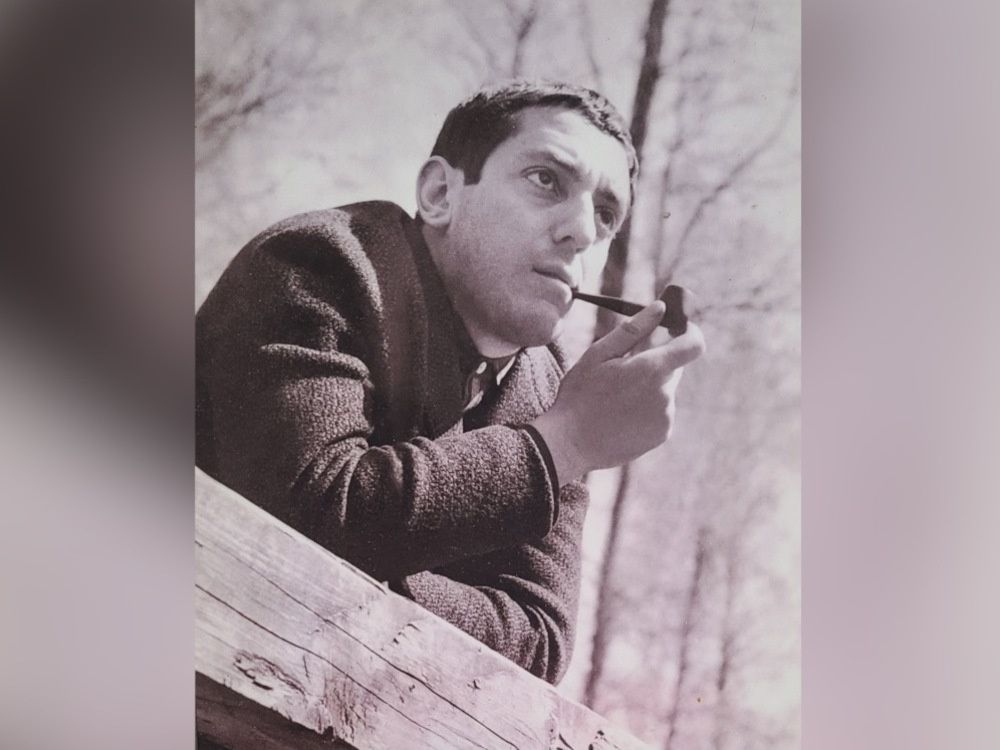
 
Ilya Gerol's family was prosperous, citizens of Riga, Latvia, but originally from Germany. Just before he was born the Soviet Red Army invaded and occupied Latvia. But then, while he was in his infancy, Operation Barbarossa was launched by Nazi Germany when its leadership decided to dissolve the Soviet Union's membership in the Axis Alliance and to invade Russia in June of 1941. 

When the Nazis were approaching the outskirts of Riga with mobile SS death squads, Einsatsgruppen joined by by Latvian auxiliaries shooting thousands of the city's Jewish population, his large extended family, disbelieving the underground news of Jewish slaughter taking place, held emergency discussions among themselves, trying to decide what they should do. In the end, because they believed they would come to no harm, they remained.

Ilya Gerol's mother believed otherwise, fearing for her life and that of her infant. Her trust in the cultured civil Germany that her larger family grasped at, was absent in her opinion. She took her child and rushed into the street where they were picked up by retreating Russians driving a truck. Only later would she learn that her entire extended family, deciding to remain where they felt they would be spared, were all murdered.

The manipulators: Inside the Soviet media: Gerol, Ilya: 9780773722002:  Textbooks: Amazon Canada
Having survived the war, Gerol studied at the University of Moscow and joined the Red Army Reserve. He was active in 1968 when the Soviet Union invaded Czechoslovakia. He set aside his private reservations and remained in Russia, becoming a journalist and by age 25 was chief editor for the Atlantica radio station in Russia. He became senior editor at the Russian language newspaper Sovetskaia Molodezh (Soviet Youth) and published two books on leaders of the Young Communist League.

As a journalist in the Soviet Union he prospered but could honour no principles he held dear: "There is only one condition; do not write what you have seen, write what we ask you to write", he later recalled. Eventually he published articles reflecting the reality in the U.S.S.R.; assaults on minority rights and personal freedoms, leading to his expulsion from the League of Journalists of the U.S.S.R.

Because his wife's father was a senior judge who intervened on his behalf, he was spared prison or forced exile. In 1979 he was allowed to leave the country. First to Vienna, then to Rome where he worked as a translator with the Canadian Embassy. There, he applied for refugee status in Canada, arriving in Vancouver a year later at age 39, fluent in English. 

He found work eventually as a journalist in Ottawa becoming a globe-trotting foreign affairs analyst with a number of significant interviews under his byline with leading world figures such as Israeli Prime Minister Yitzhak Shamir, Poland's Lech Walesa, Soviet dissident Andrei Sakharov and Austrian President Kurt Waldheim (former WWII member of the Nazi Youth, and later Secretary General of the UN from 1972 to 1981).

Labels: , , , , , ,

Tuesday, May 21, 2019

Boundaries To Be Transcended

"The gender reassignment is a big chapter in Jan’s life story, but it’s not the whole life story."
"[James Morris was far from being a rebel]; Jan’s upbringing was at the very heart of the British establishment, first at Oxford, then going into the Times, working in the Arab News Agency in Cairo, working as a spy in Palestine and Italy during the second World War."
"And succeeding so tremendously in all of those."
"I mean, you have to be a very good musician to be a choirboy at Oxford, to be in the intelligence service in the British army, to be the one journalist at the Times to go up Mount Everest."
John O’Rourke, Dublin-born film-maker

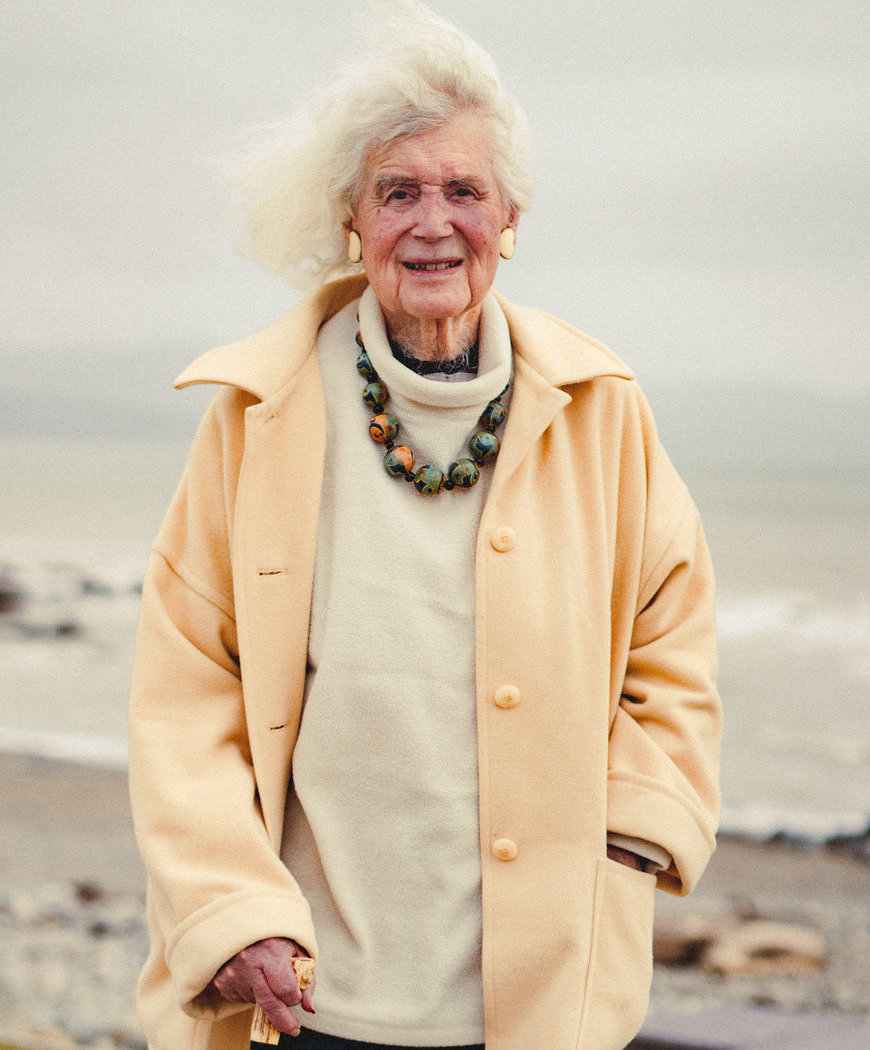
The man who was journalist, soldier, adventurer, author is now semi-infirm at 92 years of age, getting about with the help of a cane. His/her home is in Criccieth, Wales. Known as an essayist, historian, the man who before it became fashionable and acceptable in polite circles to transition from male to female, was a British celebrity, an accomplished man of many parts. One of his legendary
roles was as the chronicler of the world's first ascent of its tallest mountain.

James Humphrey Morris, born in 1926 in Somerset, England had been a choral scholar at Christ Church Oxford, that in itself remarkable. During the closing years of World War II, James Morris served in the 9th Queen's Royal Lancers. When he was 23, he married Elizabeth Tuckniss and together they had five children, four whom they raised to adulthood while Mr. Morris worked for The Times of London as a journalist.

He was given the prestigiously improbable assignment by the Times of acquiring an exclusive story in 1953, focusing on the-then 'impossible' ascent of the Himalayas' Mount Everest, an account that brought his name to world recognition, just as the feat of ascending to the top of Everest made Sir Edmund Hilary's and Tenzing Norgay's were made synonymous with one of the world's greatest adventure in an exploit defying human endurance.
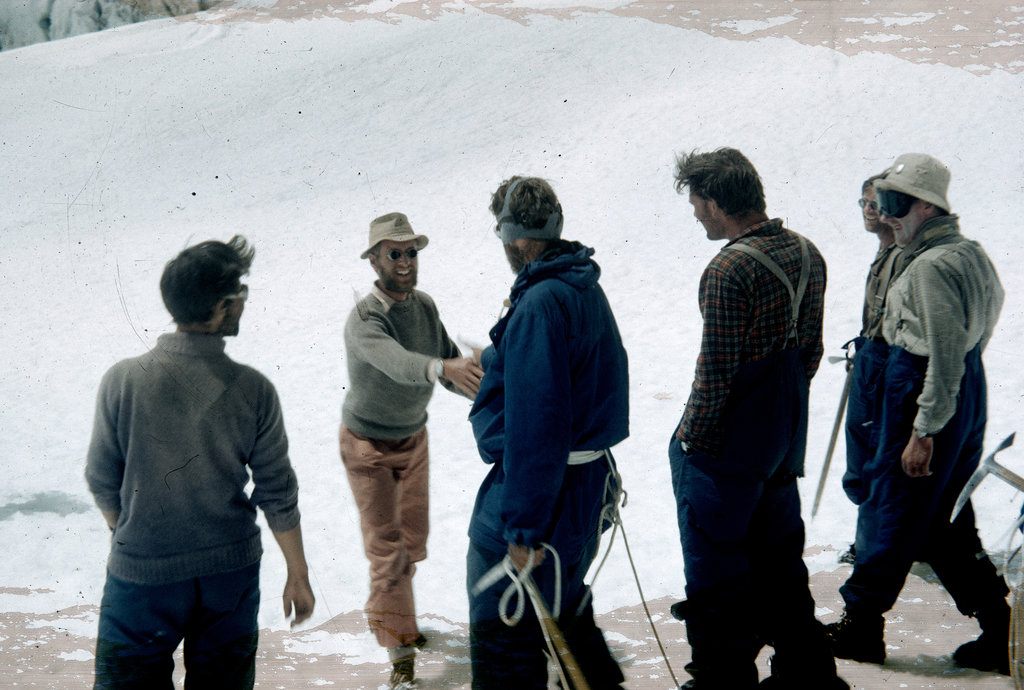
Jan Morris - Surviving Member of the 1953 Everest Expedition
As a journalist, Morris was embedded with Edmund Hillary's Everest team in 1953. "It altered my life so much. Now I'm the only surviving member of the expedition, and I miss them all," said Morris, pictured congratulating Hillary after the ascent. Credit: George Lowe/Royal Geographical Society, via Getty Images
"I was three or perhaps four years old when I realized that I had been born into the wrong body, and should really be a girl" wrote Jan Morris in her memoir titled "Conundrum" which detailed the personal struggle to reconcile mind and body; the mind that persisted in thinking female as opposed to the body so clearly defined by biology as male. When, in 1972, James Morris transitioned through a surgical reassignment to female, he hadn't many fans but did not lack critics.

His steadfast fan, however, appeared to be the person with whom he had lived for so many years as man to her wifely role. From whom it appears, he never kept secret his female side. She must have understood his feelings of dislocation of a soul who felt trapped within a body that failed to match the mind that regarded it as a flagrant error in nature's judgement. Even while he consummated his role as a biological male, he floundered mentally, convinced of his female persona.

Elizabeth, who had been James's close companion never ceased being that; post re-assignment they separated, then later re-married. They lived together in perfect harmony, both post-1972 as females; their 70 years together cementing their lifelong relationship as consanguinity never could. As a young couple they settled for life in Wales where Elizabeth became the consummate housewife and James a journalistic gadabout. Now aged 92, as Jan Morris, age has settled her into a housebound role more than a traveller's.

"To me gender is not physical at all, but is altogether insubstantial. It is soul, perhaps; it is talent, it is taste, it is environment, it is how one feels, it is light and shade, it is inner music, it is a spring in one's step or an exchange of glances."
"It is more truly life and love than any combination of genitals, ovaries and hormones."

Jan Morris - Surviving Member of the 1953 Everest Expedition
Tom Jamieson for The New York Times


Labels: , , ,

 
()() Follow @rheytah Tweet