Ruminations

Blog dedicated primarily to randomly selected news items; comments reflecting personal perceptions

Saturday, November 15, 2025

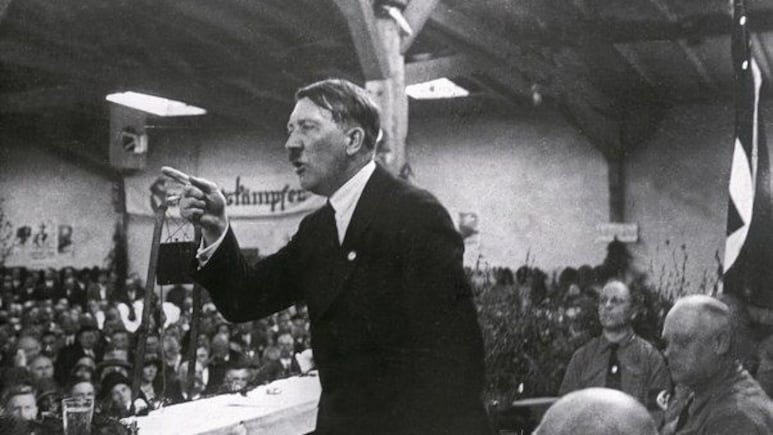
Hitler's DNA : Blueprint of a Dictator

"[The testing found a] high likelihood [that Hitler had Kallmann Syndrome and] very high [scores --  the top one percent -- for a predisposition to autism, schizophrenia and bipolar disorder."
"Analysis of the DNA debunks this myth [of Jewish ancestry] by showing that the Y chromosome data matches the DNA of Hitler's male line relative."
"If he had Jewish ancestry [ through an outside relationship], that match wouldn't be there."
Blink Films production company 
 
"No one has ever really been able to explain why Hitler was so uncomfortable around women throughout his life, or why he probably never entered into intimate relations with women."
"But now we know that he had Kallmann Syndrome, this could be the answer we've been looking for."
"The discovery of Kallmann syndrome is, for me, personally, as a historian and as somebody who has spent more than 20 years researching the Nazis, a major finding."
"Hitler clearly goes very much against this [his having urged patriotic Germans to have children] in not having any kind of family, in not having children, in not being married."
"He quite effectively cultivates the image of a man devoted entirely to the fatherland. Our discovery strongly suggests that it may have been only a convenient cover for his Kallmann Syndrome [and despite his relationship with Eva Braun]." 
Alex Kay, historian, University of Potsdam 
 Did Adolf Hitler Really Have A Micropenis? Rare Genetic Disorder Kallmann Syndrome Explained
 

Symptoms of Kallmann Syndrome

Symptoms usually become obvious in the teenage years because puberty doesn't start as expected. Common signs include:

In males:

  • Delayed or absent puberty
  • Very little facial or body hair
  • Small testicles or penis (micropenis may be present from birth)
  • Undescended testicles
https://images.immediate.co.uk/production/volatile/sites/7/2018/01/Hitler-and-Eva-Braun-2-9751449.jpg?quality=90&webp=true&resize=800,534
Adolf Hitler and  his mistress Eva Braun  /  Archives, Getty Images
 
Researchers and documentary producers revealed several days ago, the interesting news of current research results following on DNA testing of the blood of the fascist Nazi dictator, Adolf Hitler. An international team of scientists and  historians collaborated on this research and appear to confirm historical suspicions with respect to the man's sexual development. A new documentary, Hitler's DNA :Blueprint of a Dictator, is based on those findings, soon to be broadcasted.

Researchers had obtained a sample of Hitler's blood that had spilled over on his suicide onto a sofa he was seated on before shooting himself in his underground bunker. A piece of material from that sofa was made available for the DNA research, and from it, the scientists were satisfied that they had identified a relatively rare genetic miscarriage, which though incidental to his manic psychopathy -- which was itself beyond complex -- was still an interesting piece to the puzzle of this netherworld monster.
The research team were at pains to point out, was that the condition itself was entirely divorced from Hitler's virulent racism, much less his penchant for war-mongering. Possibly, there might have been a connection to his fascination with the perfect Nordic specimen, his elevation of humanity in the model of the Aryan master race, as a kind of psychological compensation for his rather less than perfect personal genetic typology. 
 
There is also the possibility of his interior subconscious rage at his presumed condition leading him to direct that people of inferior, 'subhuman' (those who were physically or mentally challenged) status be liquidated. A category he ascribed to Jews as well as those whose conditions were verifiably not up to his exacting standards. 
 
Absurdly, Hitler declared the Japanese to be honourary Aryans (unlike those of Indo-Iranian genetic stock who are actually Aryans), as members of the Fascist Axis. But unlike Fascist Germany, Japan had no quarrel with the Jews that Hitler targeted for extinction, and went out of their way to save many Jews desperate to escape the burgeoning charnel house of Europe; Japan obliged by sending thousands to Japanese-occupied China for haven with visas issued by Consul Chiune Sugihara
https://cdn.theatlantic.com/thumbor/WWhpF07MEPsYVw84taMJB5y0I9w=/1200x868/media/img/photo/2011/10/world-war-ii-the-holocaust/w05_30419013/original.jpg
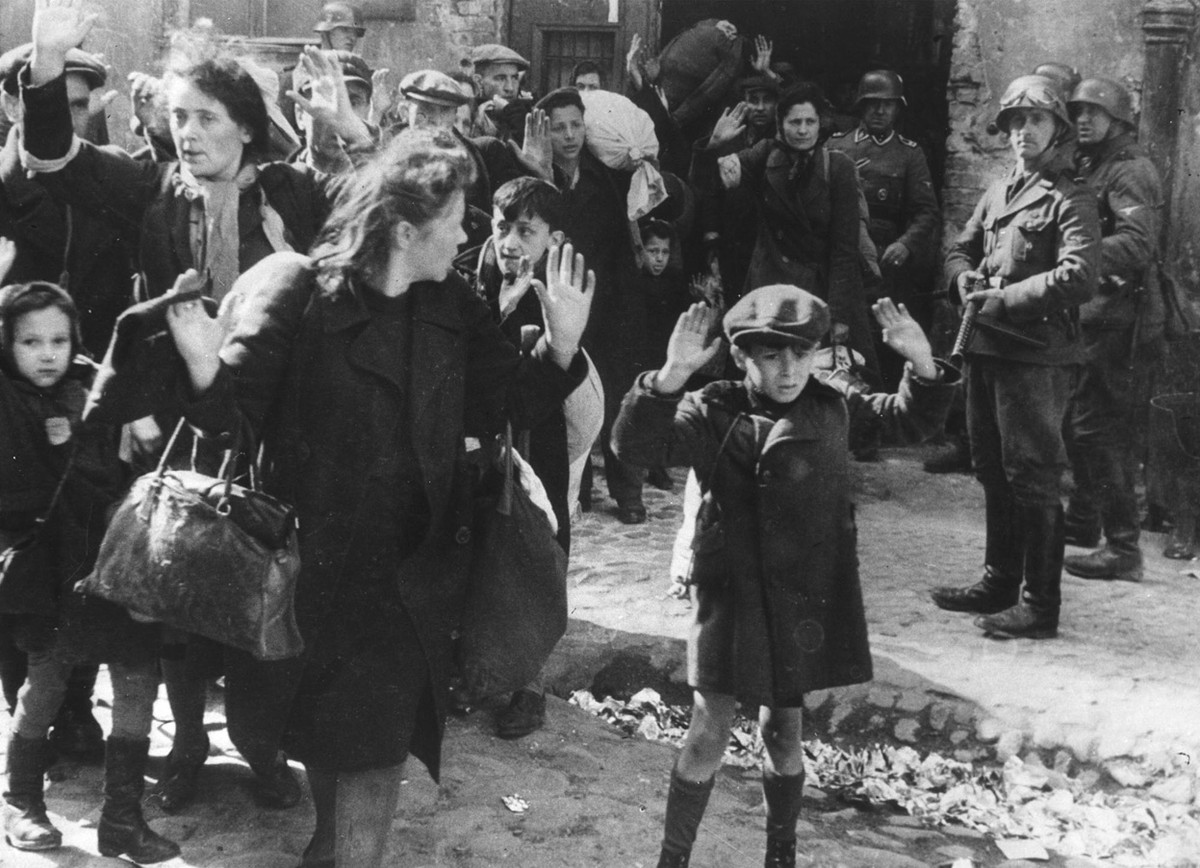
A group of Jews, including a small boy, is escorted from the Warsaw Ghetto by German soldiers in this April 19, 1943 photo. The picture formed part of a report from SS Gen. Stroop to his Commanding Officer, and was introduced as evidence to the War Crimes trials in Nuremberg in 1945  AP Photo
 
World War II saw the deaths of over 50 million people. Among that 50 million, six million Jews who were systematically murdered in an historical atrocity of vast proportions directed by Hitler personally, and finding support throughout Germany and much of Europe, when German occupation and complicit local nationals worked in harmony to rid the world of the pestilence of Jewish existence. Roma, Gays, political dissidents and the mentally and physically handicapped were also scheduled for eradication by the Third Reich.
 
As geneticist Turi King who had identified the remains of medieval king Richard III pointed out, Hitler's genetic blueprint placed him in a category of people who were frequently sent to the gas chambers, though not quite with the same dedicated eagerness as was reserved for the eradication of Europe's Jews. 
 
https://media.cnn.com/api/v1/images/stellar/prod/04-dr-alex-j-kay-and-prof-turi-king-with-dna-credit-blink-films.jpg?c=original&q=w_860,c_fill/f_webp
"This is also not just a documentary but an academic paper."
"We are at great, great pain not to stigmatize people with these conditions, because, you know … it’s incredibly rare that people with these conditions go on to commit violent acts."
"And the other thing is that Hitler did not act alone, he had hundreds and thousands of people who helped him."
"They’re not all going to have the same genetic makeup as him. His genetics is just a small, small puzzle piece."  
Turi King, professor, University of Bath, United Kingdom 
  

Labels: , , , , ,

Sunday, January 08, 2023

Netherlands Treasure Hunt

"We don't know for sure if the treasure existed. But the institute did a lot of checks and found the story reliable."
"But they never found it and if it existed, the treasure might very well have been dug up already."
Dutch National Archives spokeswoman Anne-Marieke Samson
 
"I see groups of people with metal detectors everywhere."
"Like a lot of people, the news about the treasure made me go look for myself."
"The chance of the treasure still being here after 70 years is very small I think, but I want to give it a try."
Jan Henzen, 57, Dutch citizen
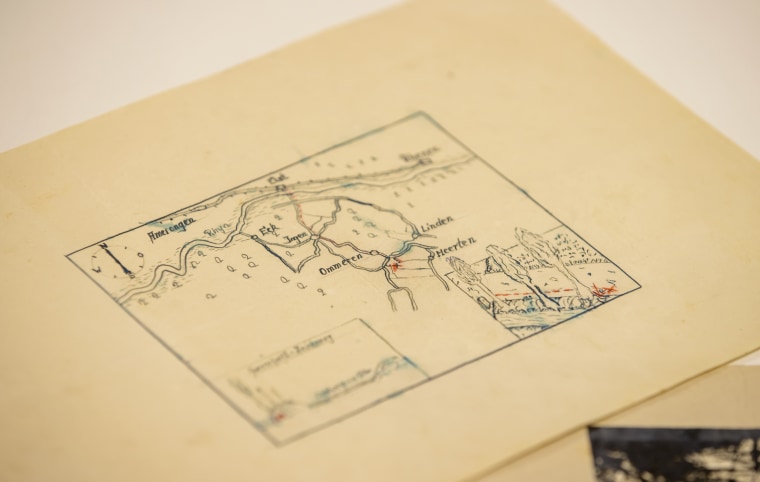
A map shows possible Nazi treasure in Ommeren, Netherlands.
A map shows possible Nazi treasure in Ommeren, Netherlands.Hollandse Hoogte / Shutterstock
The Dutch National Archive released a map for public scrutiny that was stored in its archival collection since immediately following World War II, when a German soldier was relieved of its possession. Immediately post-war, the Dutch institution was assigned the task of tracing German capital in the Netherlands, finally freed from Nazi occupation in 1945.
 
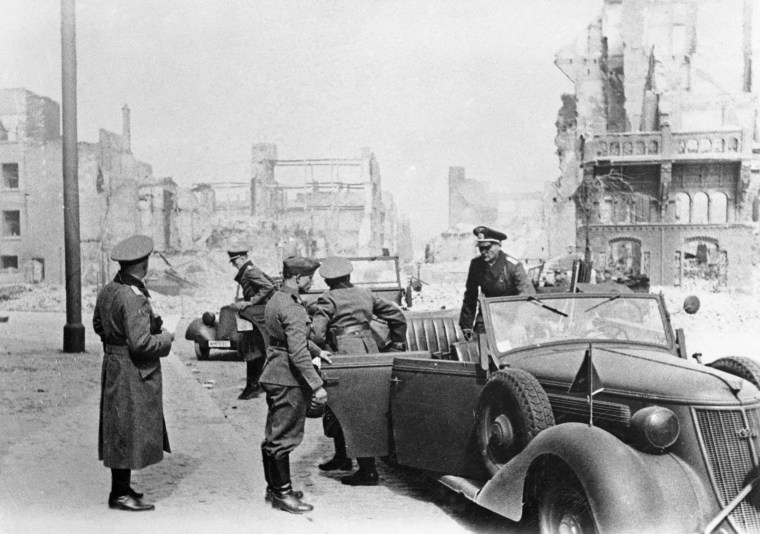
German officers leave their car to inspect the ruins of the Alstadt quarter of Rotterdam, Netherlands, in 1940.
German officers leave their car to inspect the ruins of the Alstadt quarter of Rotterdam, Netherlands, in 1940. Most of the city burned after aerial bombardment.  Bettmann Archive
Its possession obviously intrigued those in charge of the Archival collection where the map was held in a research file. When the maximum period of withholding the map from public scrutiny had passed this week, it could no longer be held in confidential confinement. The treasure's existence had been rumoured but was never fully confirmed. And though the institute sought on various occasions to find the treasure, three attempts had failed by 1947.

Now,  with the map's release, amateur treasure-hunters have fanned out in numbers armed with metal detectors and shovels wandering through fields around rural Ommeren in the country's east. According to the Archive, the map was believed to indicate where Nazi soldiers buried four large boxes containing diamonds, rubies, gold, silver and jewellery -- all of which had been looted following an explosion at the Arnhem branch of the Rotterdamsche bank when it was bombed in August 1944.
 
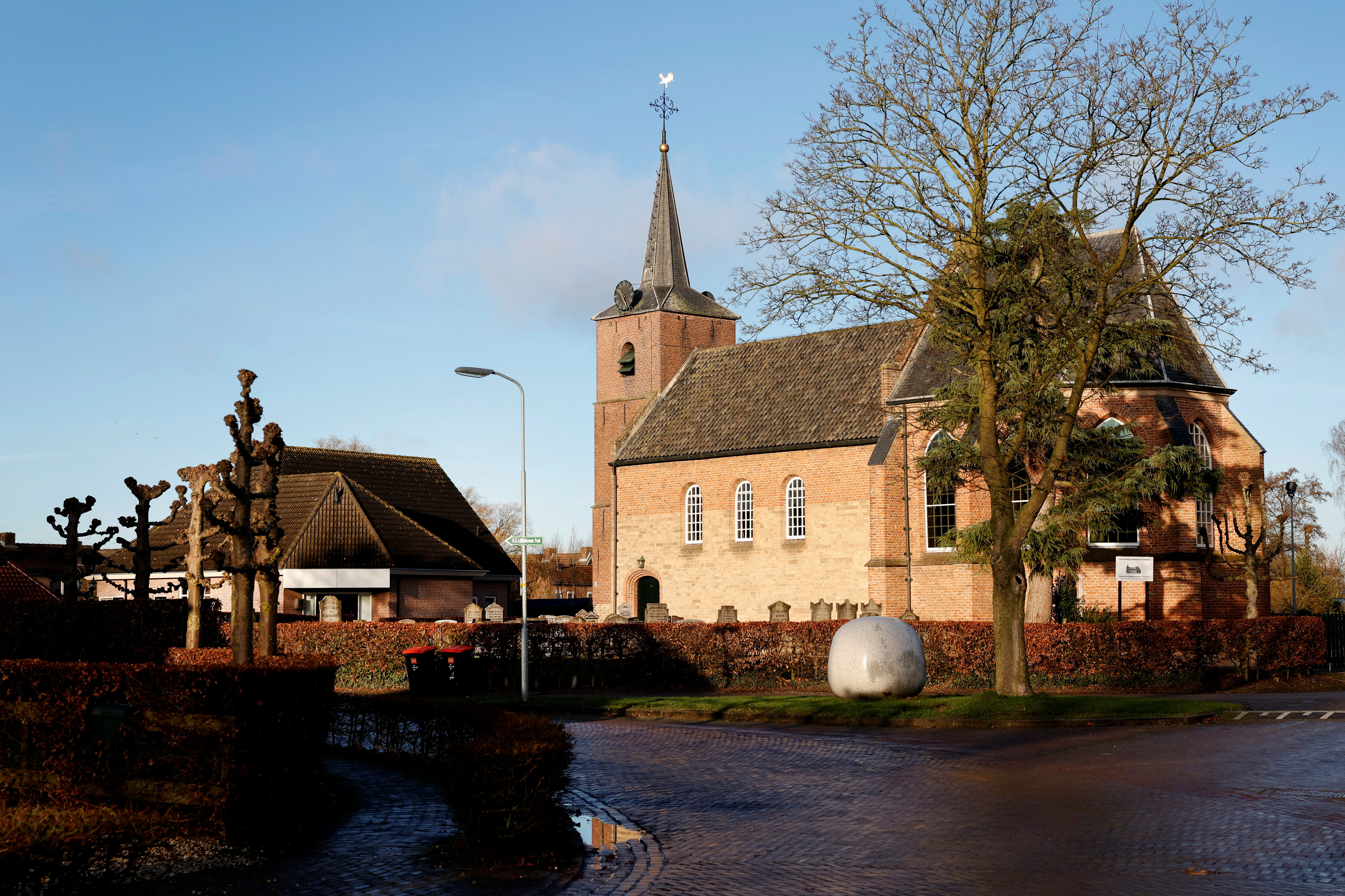
A general view of a street in the Dutch village of Ommeren
A general view of a street in the Dutch village of Ommeren, Netherlands January 6, 2023. REUTERS/Piroschka van de Wouw
 
Chances are remote that anything at all will be discovered, but that hasn't stopped those who set out determined that if anyone would discover the whereabouts of the treasure, why shouldn't it be they themselves? The town's former mayor is now in charge of a foundation with ownership of the lands in question. He had seen people converge on the land from all over the Netherlands.

And there is this: There were obsequious Dutch Nazi collaborators throughout the country, eager to please the occupiers whose ideology was one they connected with personally. Many of these collaborators were well known personalities in banking and the arts, high in the social strata of the day. With the defeat of Nazi Germany by the Allied Forces and the end of the occupation, Netherlands' police and security of the resistance forces searched out the collaborators and enacted the rough justice of a firing squad to the cheers of onlookers.

Some of these collaborators were tracked down, investigated and put on trial and some mounted a vigorous and sometimes successful defense. It is entirely likely that those who escaped punishment or even those who paid the price for their betrayal to the enemy forces had insider knowledge and had already taken possession of the looted, hidden treasure.
 
Old postcard of people watching German soldiers walking on a road in Holland in 1945 that was captioned ‘Departure of the Herrenvolk [master race]’
A Dutch postcard of German soldiers leaving the Netherlands after surrender in May 1945 whose caption reads: ‘Departure of the Herrenvolk [master race]’. Photograph: Culture Club/Getty
 
But hope springs eternal in the human imagination, and though the groups digging feverishly through unyielding soil for treasure now will eventually thin out as days go by and nothing will be exposed, others will remain, determined to find what may or may not still be buried in the hope that their lives will be enriched by a bounteous discovery with an unsavoury past. 
"A map with a row of three trees and a red cross marking a spot where a treasure should be hidden sparks the imagination."
"Anyone who finds anything will have to report it to us, so we'll see."
"But I wouldn't expect it to be easy."
Former Ommeren mayor Klaas Tammes

Labels: , , , , ,

Saturday, August 27, 2022

Witness to Genocide

"My family tried to decide what to do, to join the speedily retreating Russian troops and leave behind the property, the savings, the old furniture and keepsakes, the old books collected by my grandfather, the Torah which was in the  house for more than 150 years when my ancestors came from Germany."
"My family, meanwhile, was forced to go into the backyard and dig a pit. They were buried alive. An SS officer commanded the operation while the  youths of our neighbourhood threw children into the pit."
"[The occupation of Czechoslovakia by the Soviet Union was] the most obscene decision of the Soviet leaderships in its post-war history, comparable only with the invasion of Afghanistan [statement predating the Russian invasion of Ukraine]."
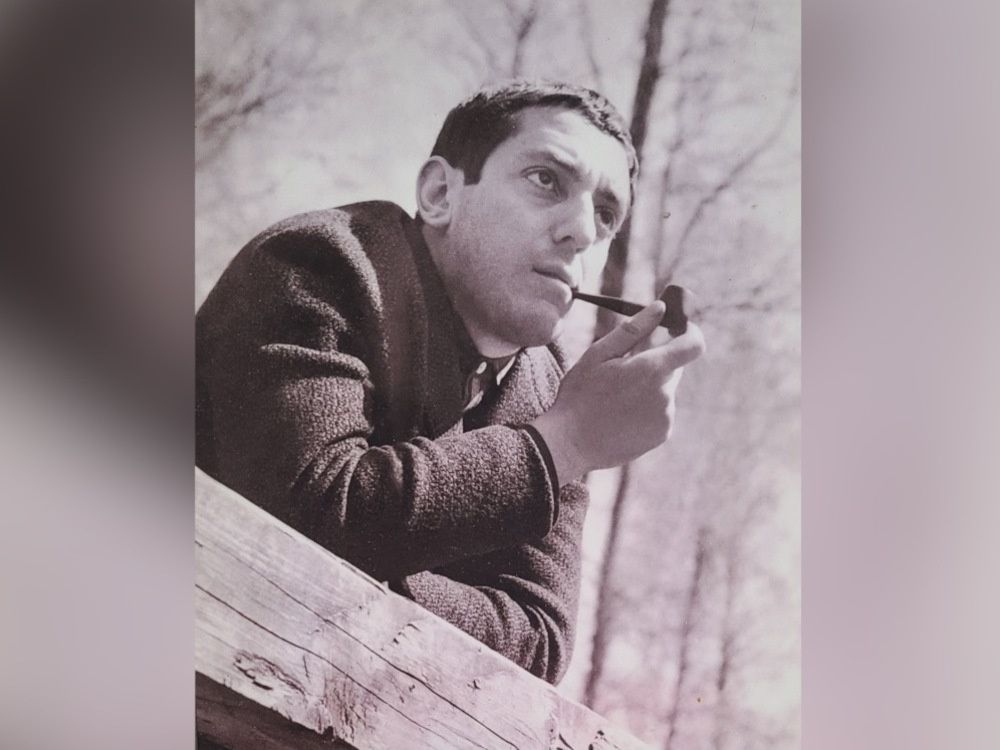
Ilya Gerol, Born Riga, Latvia November 1940 - Died Montreal, Canada, August 2022
 
Ilya Gerol's family was prosperous, citizens of Riga, Latvia, but originally from Germany. Just before he was born the Soviet Red Army invaded and occupied Latvia. But then, while he was in his infancy, Operation Barbarossa was launched by Nazi Germany when its leadership decided to dissolve the Soviet Union's membership in the Axis Alliance and to invade Russia in June of 1941. 

When the Nazis were approaching the outskirts of Riga with mobile SS death squads, Einsatsgruppen joined by by Latvian auxiliaries shooting thousands of the city's Jewish population, his large extended family, disbelieving the underground news of Jewish slaughter taking place, held emergency discussions among themselves, trying to decide what they should do. In the end, because they believed they would come to no harm, they remained.

Ilya Gerol's mother believed otherwise, fearing for her life and that of her infant. Her trust in the cultured civil Germany that her larger family grasped at, was absent in her opinion. She took her child and rushed into the street where they were picked up by retreating Russians driving a truck. Only later would she learn that her entire extended family, deciding to remain where they felt they would be spared, were all murdered.

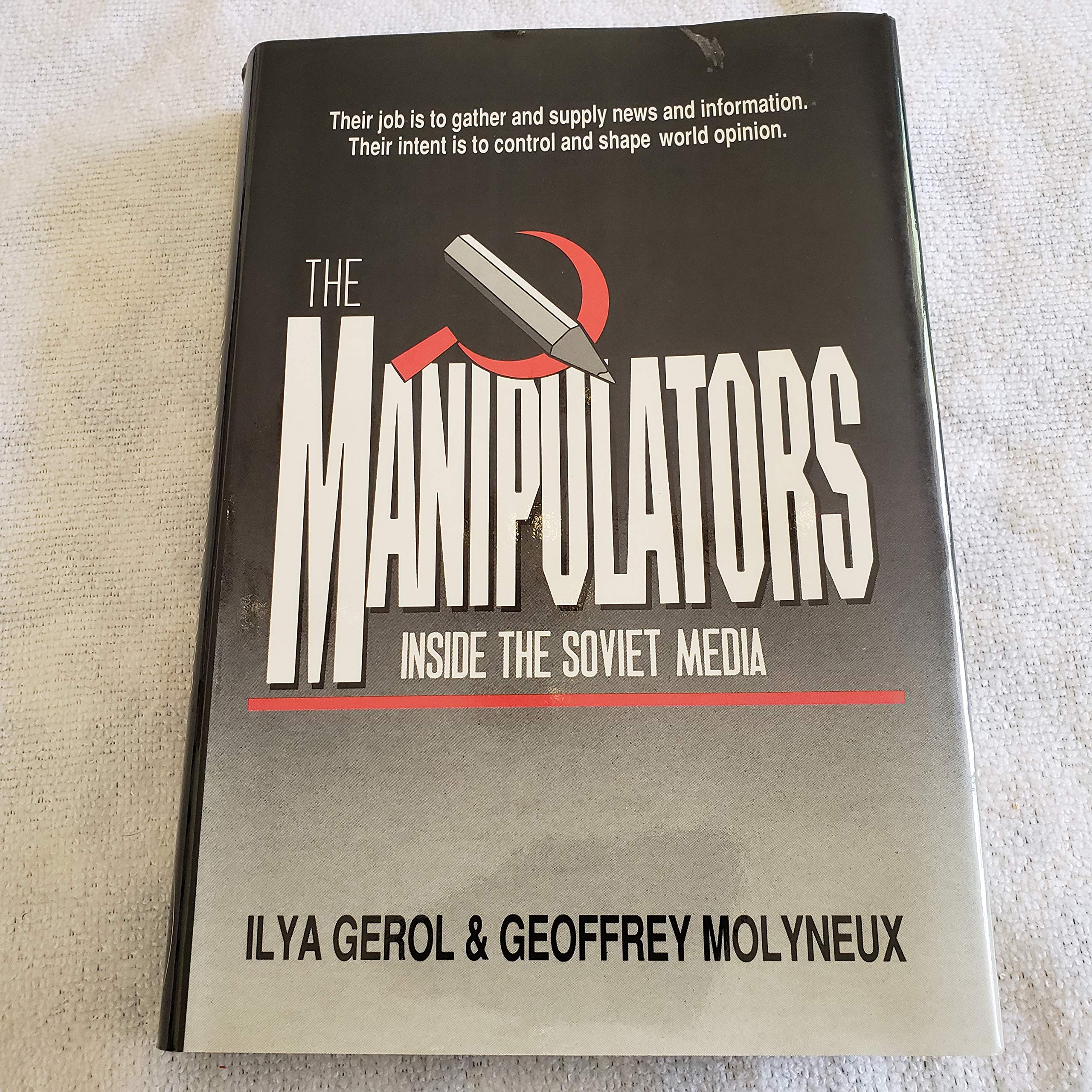
The manipulators: Inside the Soviet media: Gerol, Ilya: 9780773722002:  Textbooks: Amazon Canada
Having survived the war, Gerol studied at the University of Moscow and joined the Red Army Reserve. He was active in 1968 when the Soviet Union invaded Czechoslovakia. He set aside his private reservations and remained in Russia, becoming a journalist and by age 25 was chief editor for the Atlantica radio station in Russia. He became senior editor at the Russian language newspaper Sovetskaia Molodezh (Soviet Youth) and published two books on leaders of the Young Communist League.

As a journalist in the Soviet Union he prospered but could honour no principles he held dear: "There is only one condition; do not write what you have seen, write what we ask you to write", he later recalled. Eventually he published articles reflecting the reality in the U.S.S.R.; assaults on minority rights and personal freedoms, leading to his expulsion from the League of Journalists of the U.S.S.R.

Because his wife's father was a senior judge who intervened on his behalf, he was spared prison or forced exile. In 1979 he was allowed to leave the country. First to Vienna, then to Rome where he worked as a translator with the Canadian Embassy. There, he applied for refugee status in Canada, arriving in Vancouver a year later at age 39, fluent in English. 

He found work eventually as a journalist in Ottawa becoming a globe-trotting foreign affairs analyst with a number of significant interviews under his byline with leading world figures such as Israeli Prime Minister Yitzhak Shamir, Poland's Lech Walesa, Soviet dissident Andrei Sakharov and Austrian President Kurt Waldheim (former WWII member of the Nazi Youth, and later Secretary General of the UN from 1972 to 1981).

Labels: , , , , , ,

Wednesday, December 05, 2018

Code Talker

"I said, 'Dad, what's all this about you being a code talker?' He said, 'Can't say nothing. Top secret'."
"I said 'C'mon, I just heard it on CKON'!"
"Dad would say, 'He's full of s---, [actor John Wayne: 'Don't shoot till you see the whites of their eyes'] We'd just hear a twig snap and everyone would open fire'."
"We [aboriginal children] went to Catholic schools, and they beat it [original language] out of us. When we were four or five years old, we spoke Indian. Then we went to school and we could no longer speak it."
"They used our language [during the war], then they took it from us."
Raymond Oakes, resident of Akwesasne, Quebec
Louis Levi Oakes, a Mohawk veteran from Akwesasne, was honoured by the Assembly of First Nations for his contributions as an Indigenous code talker during the Second World War. (CPAC)

Code talkers, a coterie of North American Indians who were recruited during war-time by the U.S. military, to use their native languages to convey coded messages, were instructed firmly that they must never speak to anyone of their top-secret role in combating the enemy. During the First World War the U.S. used Native American code talkers for the first time. At that time most of those recruited were Choctaw Indians using tribal language to transmit orders and other vital communications over telephone lines.

Then in 1940 the U.S. military began their recruitment of Comanches, Choctaws, Hopis, Cherokees, Mohawks and others to this top secret communications program. Why use native speakers to convey orders? Because, according to tests undertaken by the U.S. marines, code talkers were faster and easier in practise than were encryption machines. The U.S. Marine Corps began their own communications program in 1941, recruiting Navajo from the U.S. Southwest, acquiring the services of over 400 Navajo code talkers to serve exclusively with the Marines.

Neither the Japanese nor the German military communications experts were ever able to break the code, those tribal languages where messages were translated into 'code', which is to say whatever native language of the tribe members who were a functional part of the communications group for the U.S. military. Some messages made use of tribal words representing letters, numbers or other specific code words. And while the Germans and the Japanese undertook studying Native American languages, Navajo stymied them completely.

Canada began its own recruitment of code talkers. A Metis from Saskatchewan was one of a few fluent Cree speakers serving Canada during the Second World War. He was assigned to the U.S. Eighth Air Force to transmit radio messages in Cree. In Canada the code talking program was declassified in 1963, and in the United States, five years later. Levi Oakes, 96, was loathe to speak of his role as a code talker even when he was legally free to do so. Born in Akwesasne, he joined the U.S. army at 18 to serve in the Philippines, New Guinea and the South Pacific.

Akwesasne produced 17 code talkers who spoke Mohawk, among the 33 tribal languages spoken by code talkers. Levi was honourably discharged from the military in 1946 and began work as an iron worker in Buffalo and for the New York state highway department. Awarded the American Silver Star for courage during the war, in 2015 he and other Mohawk code talkers received the Congressional Silver Medal. He is the last surviving Second World War Mohawk code talker.

This week 96-year-old Levi Oakes was honoured at a special chiefs assembly of the Assembly of First Nations in Ottawa. Later on that same day he was recognized by Members of Parliament in the House of Commons.


"He's an example of someone who laid it all on the line and used his language to ensure that we all live in peace and ensured Allied victory.""In Canada, we've done a pretty poor job of acknowledging our Indigenous veterans. If you compare to our American allies they seem to do a much better symbolic job of acknowledging them. The use of code talking during the war saved lives and a shared Allied victory. For me, that's super important."
Marc Miller, parliamentary secretary, minister of Crown-Indigenous Relations

Louis Levi Oakes enlisted in the United States Army at the age of 18. He served for six years, including as a code talker in South Pacific theatres during the Second World War. (Saint Regis Mohawk Tribe)


Labels: , ,

 
()() Follow @rheytah Tweet