Ruminations

Blog dedicated primarily to randomly selected news items; comments reflecting personal perceptions

Monday, December 19, 2022

Diet, Calories, Weight Gain, Research

"The calorie counts on food labels today are all wrong."
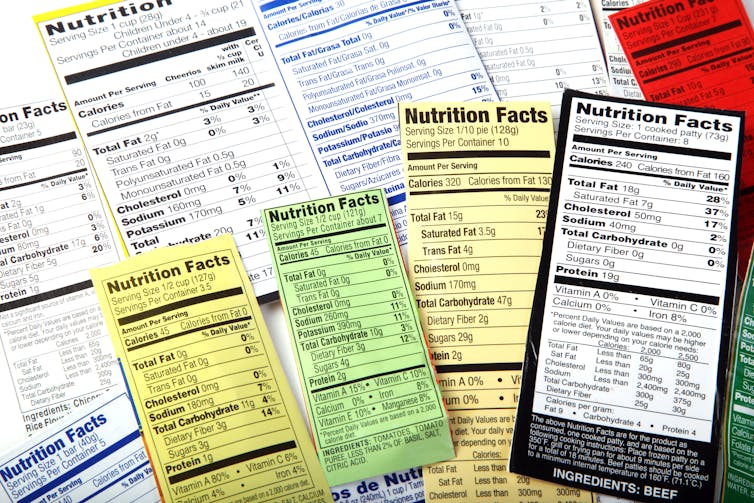
"More than 120 years on, these 'Atwater factors' are still the basis for how calorie counts on all food packaging are derived."
"Humans, however, are not bomb calorimeters. We are only able to extract a proportion of the calories locked up in any given food ... protein actually has a caloric availability of 70 percent, meaning for every 100 calories of protein that makes it into the bloodstream, we are only ever able to use 70 calories."
"By comparison, fat has a caloric availability of 98 percent. As for carbs, it depends on whether we are talking about complex [90 percent available], or refined [95 percent available]."
Giles Yeo, molecular geneticist, Cambridge University
 
"We can't blame our metabolism for the weight we gain in middle age."
"The calories we burn each day are incredibly stable all through adulthood, from our 20s up until we hit about 60."
Herman Pontzer, author, Burn: The Misunderstood Science of Metabolism
https://images.theconversation.com/files/438740/original/file-20211221-27-qlzv07.jpg?ixlib=rb-1.1.0&rect=0%2C1018%2C4438%2C2215&q=45&auto=format&w=1356&h=668&fit=crop
 
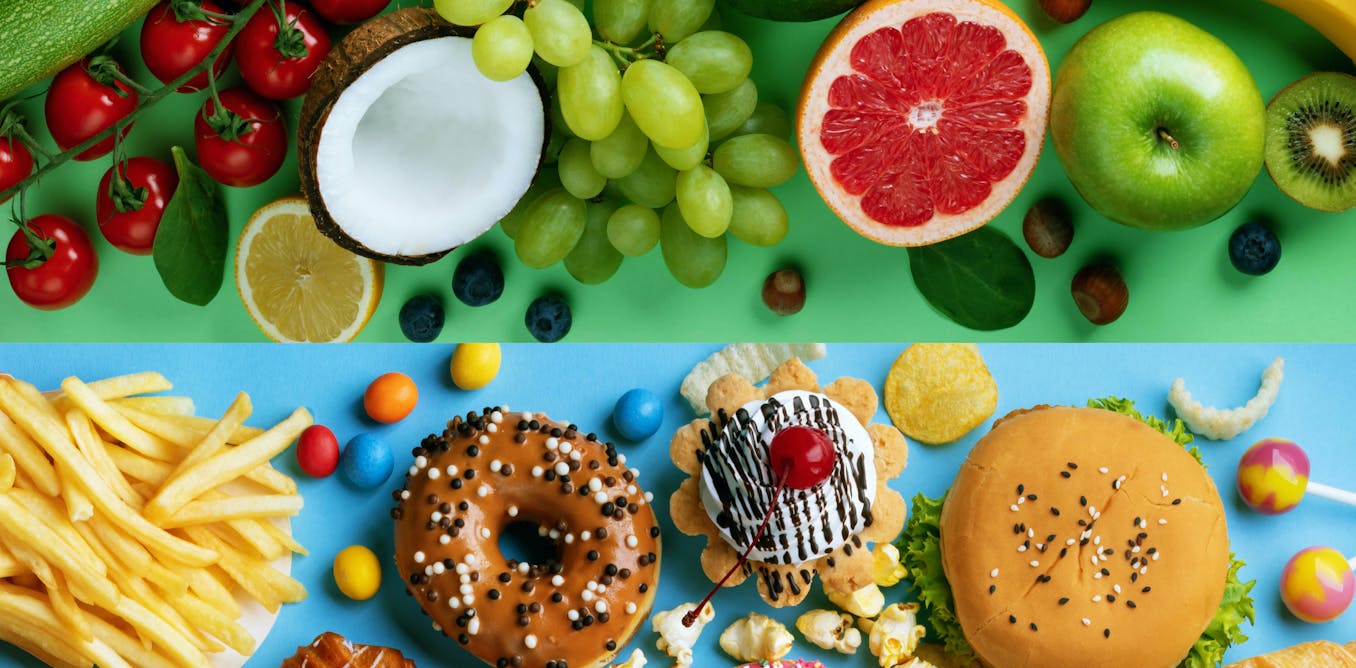
Calories represent the basic units of measurement indicating the amount of energy in food. 2,500 calorie-intake daily suffices the average adult male, while 2,000 a day represents what the average woman should consume for good health. In theory, most people believe that a piece of chocolate cake with 500 calories is exchangeable with a 500-calorie helping of chicken on the dinner plate. Sounds reasonable, a calorie is a calorie, after all. 

Researchers at the University of Toronto last year reached a conclusion through their studies that 20 percent of calories in almonds tend to remain unavailable to our bodies leaving principle investigator John Sievenpiper to declare, "a calorie labelled may not be a calorie absorbed". In the late 1880s Wilbur Atwater, an American chemist, studied the effect of food on the human body. He measured the combustion heat of feces with use of a "bomb calorimeter".

And even though his findings, taking it for granted that a calorie is a calorie irrespective of the source has been in general agreement ever since, more current research concludes otherwise. And although it is now accepted that calories from various foods impact on us differently, the food industry is complacent with its comfortable love affair with treating all calories as having an equal impact on the human digestive system and the ability of the body to fully absorb all the calories in any given food product.

A research team at Duke University published a paper last year that debunked the theory that advancing age creates weight gain, that the human body metabolizes its food intake differently, slows down considerably as the body ages. The researchers studied the average daily calories burned by 6,400 people from newborns to age 95 going about their daily lives. From age 60s onward metabolism does slow but at a negligible rate of .07 percent annually.
Macronutrient Heat of combustion Percent available Available energy
Protein5.65 calories/gram92%4.0 calories/gram
Fat9.40 calories/gram95%8.9 calories/gram
Carbohydrate4.1 calories/gram97%4.0 calories/gram
 
The largest ongoing scientific nutrition study of its kind led by an international team of scientists in 2019, including researchers from King's College London, concluded that individual responses to similar foods are unique to the individual. Measuring how blood levels markers; sugar, insulin and fat; change in response to specific meals the researchers measured and tracked data on activity, sleep, hunger and gut bacteria in thousands of study participants.

Results revealed a wide variation in blood responses to the same meals; personal differences in metabolism caused by factors like gut microbiome and exercise are equally important to health and waistbands as the nutritional composition of the foods we eat. "It depends on who you are, of course, and it is not 50/50 exactly, but both aspects play a substantial role", explained Dr. Yeo.

"The time of day at which people ate the bulk of their calories made no difference at all to their weight loss or metabolism", Alexandra Johnstone, professor of appetite research at University of Aberdeen stated. Published in the journal Cell Metabolism, a study looked at the time of day people ate and whether it had any impact on metabolism. "What  consumers assume is that when something's labelled low-fat, it will be low calorie, but that's often not the case. Just because it's low fat doesn't mean it's low calorie, that food product will need to contain other macronutients".

 
view from above of plates on a table where people are eating
Food provides more than calories. Ridofranz/iStock via Getty Images
A survey published in the British Journal of Health Psychology in July revealed  the results of a study where six thousand young adults were questioned about their self esteem and body-mass index. Three eating styles were compared by the researches; intuitive (eating when you feel hungry), emotional (or 'eating your feelings'), and restrained (restricting calories to lose or maintain weight). Those who ate intuitively as it turned out, tended to have higher self esteem, along with a lower weight.
"The problem with 'weight-control strategies', or dieting, is that they typically require you to ignore your physical cues of hunger and anxiety."
"This isn't a good long-term strategy. Those cues are there for a reason -- to keep you alive!"
"This doesn't mean that people should just eat anything at any time or all the time. But being hungry is miserable and not sustainable."
Dr.Charlotte Markey, Rutgers University, New Jersey
In 2005 Australian researchers suggested dietary protein might represent a key to the obesity epidemic. Witu less than 14 percent protein in a diet, one tends to consume more calories in the form of fat and carbs to make up for a protein deficit. If more protein is eaten, it follows that less fat and carbs (leading to fewer calories) are consumed.

And then there is the bugbear of addictive, highly processed food. Such food tends to be low in fibre and protein, explaining in part why they can contribute to weight gain. In the final analysis, a balanced diet is the best assurance of remaining healthy and avoiding hunger pangs.
Nutrition Facts panels from multiple food packages
Nutrition Facts food labels contain much more than just calorie counts – for good reason. Imagesbybarbara/E+ via Getty Images

Labels: , , , , , , ,

Friday, October 11, 2019

Humanity's Primordial Brain

"We now have great clarity that obesity is a chronic and complex, progressive, primarily genetically conferred, centred-in-the-brain, environmentally-influenced, real medical condition."
"If you take people who are the same weight and they have the same metabolic rate and  you put everyone on [a] diet, people will lose weight unequally, based on their genetics."
"[While some people gain fat from consuming excess calories], other people, their body responds by burning more, by increasing their metabolic rate and taking anything extra and putting it into muscle."
"Not only is obesity real, but treatments exist. That should be the messaging to someone with obesity."
Dr.David Macklin, medical director, high-risk pregnancy weight management program, Mount Sinai Hospital, Toronto

"In this part of the world, for most people, we don't have famine anymore, we have only a feast."
"If calories in are higher than calories out, weight will go up."
Dr.Sue Pedersen, C-ENDO Diabetes and Endocrinology Clinic, Calgary 
Humankind has evolved over millions of years to collect and store excess calories as fat to keep early humans from starving whenever food was scarce    Postmedia Network illustration

Humans have inherited many genes that evolved over timeless millions of years that instruct our brain in a feast-and-famine protocol for survival. The brain instructs and we turn our autonomic mind to collecting and storing as many calories as can be found in the form of fat from any foods available. When humans were faced with the inevitable cycles of seasonal-related food scarcity that ;ed to storing fat to avoid starvation until food could once again be accessed in plentiful amounts, the cycle of storing fat would begin anew seasonally to enable overcoming those times of food scarcity.

That very basic of all survival mechanisms, to gain weight in excess of need in preparation for an inevitable future of temporarily dim food prospects is an ancient survival inheritance that continues to inform humanity's basic survival instincts. It is a mechanism that is more robust in some people than in others, largely attributable to genetic inheritance. What was once an indispensable mechanism for survival has now become a survival liability.

For those in a population who happen to be more "genetically vulnerable" to reactively obeying the brain's instructions to eat to excess, the outcome is obesity, leading to the onset of health-destroying, longevity-shortening diseases. The brain responds to the hunger hormone ghrelin so that in those with a genetic predisposition to obesity, the intestines have a tendency to release smaller proportions of the hormones linked to satiety.

scientist looking at brain scans
MRI scans used to examine the brains of people living with obesity
Simply put, some people being less prone to burning fat, the heavier they become, the harder it is to convince the body to lose excess weight -- for nature has programmed them to hold on to that fat for leaner times ahead. Except that we no longer live in hunter-gatherer times, but in an era where food of all kinds is readily available and it would be to our advantage to relinquish the fat-storing impetus we are endowed with, to enable us to face leaner times when those leaner times will never again arrive.

That fundamental drive to consume food, known by psychologists as "wanting" is a driving force that defies our ability to control. Whether one is unable to control that fundamental urge to eat lodged deep in our psyches, or whether one can manage to control it, is heritable. Trillions of bacteria colonize our intestines following birth and evolve as we mature, reflecting what we eat and where we happen to live and what we are exposed to. The production of vitamins, our digestion and our immune system are impacted by these gut bacteria.

Evidence exists that those living with obesity have gut flora that differs from those who are not obese. It may just be that microbiota, along with our genes, reduce the expression of gut satiety hormones that 'tell' us we have consumed sufficient food and require no more; signals that people who become obese miss because of their specific microbiota as well as their genetic inheritance. Leaving scientists to continue exploring how gut bacteria interact with our brain and our intestines.

Researchers are also aware that some antidepressants and anti-psychotics of a later generation -- prescribed in great numbers in Canada -- may somehow have a hand in rapid and dramatic weight gain seen throughout North America. Montreal researchers concluded that following 24 months of treatment, mean weight of children for whom antipsychotics were prescribed for ADHD and other problems linked to behaviour, increased by 12.8 kg.

Image result for obesity, genetics

Human Obesity Linked to Genetic Variants in Receptor Coactivator


Antipsychotics are known to be able to trigger "hedonic hyperphagia"; the drugs leading to excess food intake for pleasure's sake alone, not in response to hunger pangs. People taking any of the dozen most commonly prescribed antidepressants were found to have an increased risk of weight gain that persisted for up to five years of follow-up, according to a study published in the British Medical Journal, last year. Depression itself is capable of causing weight gain; people may consume more food in an effort to improve mood.

Artificial sweeteners and other chemicals found in food may react as well with taste receptors or gut bacteria, to stimulate additional food intake, hypothesizes Dr. Pedersen. Then again, studies of recent vintage point to the theory that the sheer textural and sensory properties of ultra-processed foods entice us to eat more of them, more quickly. Which could also be attributable simply to the amount of fat, sugar and salt they contain, pleasing to our palates and triggering that ancient call to consume unreservedly.


Labels: , , , , ,

Monday, September 30, 2019

Why? Your Gut Microbiome!

"We had this concern that it would be difficult to recruit people[for an endocrinological study] because there's a certain yucki factor with having to take a poop pill."
"But we had an overwhelming number of volunteers [respond to an invitation to take part in the study]."
"It would be great if there was a treatment that could come out of this research [Canadian study in fecal transplants]."
"But I don't think we're going to find some magic portion that will be able to cure obesity in the absence of any other intervention."
Dr. Elaine Yu, endocrinologist, Massachusetts General Hospital, Boston
Credit: S. Bradbrook / Springer Nature Limited

Dr.Yu evidently -- as anyone might -- underestimated the public's interest in why it is that some people tend to a lean conformation while others become obese. Popularly, people nod wisely and speak of the functioning high metabolism some are gifted with, enabling them to eat what they wish without gaining excess weight. So when she advertised for volunteers and was inundated with responses several years ago by members of the public eager to take part in her experimental study she was surprised.

There have been recently revealed clues that microbiota, the trillions of microbes that inhabit the gut, play a role in weight gain and metabolic disease. Scientists now explore whether changes in metabolism and body weight can be manipulated with the aid of fecal microbiota transplants (F.M.T.), where gut bacteria from lean donors are transferred to the guts of obese patients. And while the process shows some promise, research thus far has concluded with mixed results.

There are those experts who feel that irrespective of what biological interventions can be contrived  such as fecal transplants, the much simpler to advise, but difficult to convince patients of the need to alter lifestyle by changing diet and activity level to purposefully see positive weight and health impacts will always be superior in functionality and outcome. Those two issues; diet and exercise, can work wonders to prevent obesity and Type 2 (formerly adult-onset) diabetes.

On the other hand, some scientists subscribe to the belief that it is possible to discover bacteria whose purpose is to protect against metabolic disease. That the microbiomes of obese and lean people differ has been known by scientists for some time. Less microbial diversity is recognized as leading to obesity, insulin resistance and fatty liver disease. When obese mice have their microbiota transplanted into lean mice the formerly lean mice gain weight.

A bacterial infection, Clostridium difficile, was proven to be effectively treated with fecal transplants to deal with the bacterial infection occurring when antibiotics destroy healthy gut bacteria. There is one telling case of a lean woman receiving an F.M.T. from her overweight daughter to treat C. diff, and she swiftly gained 15 kilograms. Although intuition linked the daughter's F.M.T. to the mother's weight gain, her doctors would not commit to crediting it with that effect.

In 2012, researchers in the Netherlands demonstrated that transferring a lean donor's microbiota to obese men with metabolic syndrome succeeded in increases in insulin sensitivity and microbial diversity following six weeks of treatment. In Dr. Yu's study, the 24 obese individuals with insulin resistance whom she recruited were divided into two teams, half of whom took capsules of stool from lean donors weekly, while the other half received a placebo.

Subjects receiving the F.M.T. after 12 weeks had microbiota resembling that of the donors, but no improvement was seen in metabolic health. In the Canadian study, the effects of fecal transplants on people with fatty liver disease was examined with the authors concluding that the treatment led to changes in the guts of the recipients, producing the effect of a less "leaky" gut membrane.

Researchers have discovered the immune system can directly alter populations of certain bacteria in the gut that affect how dietary fats are absorbed

There is a hypothesis to explain how an abnormal microbiome could contribute to metabolic disease and weight gain through damaging the gut barrier keeping toxins and pathogens from crossing into the bloodstream. Once those toxins and pathogens enter the bloodstream, they are able to set off inflammation contributing to insulin resistance, cardiovascular disease and autoimmune conditions, according to the lead author of the study, Dr.Michael Silverman.


Labels: , , ,

 
()() Follow @rheytah Tweet