Ruminations

Blog dedicated primarily to randomly selected news items; comments reflecting personal perceptions

Monday, December 19, 2022

Diet, Calories, Weight Gain, Research

"The calorie counts on food labels today are all wrong."
"More than 120 years on, these 'Atwater factors' are still the basis for how calorie counts on all food packaging are derived."
"Humans, however, are not bomb calorimeters. We are only able to extract a proportion of the calories locked up in any given food ... protein actually has a caloric availability of 70 percent, meaning for every 100 calories of protein that makes it into the bloodstream, we are only ever able to use 70 calories."
"By comparison, fat has a caloric availability of 98 percent. As for carbs, it depends on whether we are talking about complex [90 percent available], or refined [95 percent available]."
Giles Yeo, molecular geneticist, Cambridge University
 
"We can't blame our metabolism for the weight we gain in middle age."
"The calories we burn each day are incredibly stable all through adulthood, from our 20s up until we hit about 60."
Herman Pontzer, author, Burn: The Misunderstood Science of Metabolism
https://images.theconversation.com/files/438740/original/file-20211221-27-qlzv07.jpg?ixlib=rb-1.1.0&rect=0%2C1018%2C4438%2C2215&q=45&auto=format&w=1356&h=668&fit=crop
 
Calories represent the basic units of measurement indicating the amount of energy in food. 2,500 calorie-intake daily suffices the average adult male, while 2,000 a day represents what the average woman should consume for good health. In theory, most people believe that a piece of chocolate cake with 500 calories is exchangeable with a 500-calorie helping of chicken on the dinner plate. Sounds reasonable, a calorie is a calorie, after all. 

Researchers at the University of Toronto last year reached a conclusion through their studies that 20 percent of calories in almonds tend to remain unavailable to our bodies leaving principle investigator John Sievenpiper to declare, "a calorie labelled may not be a calorie absorbed". In the late 1880s Wilbur Atwater, an American chemist, studied the effect of food on the human body. He measured the combustion heat of feces with use of a "bomb calorimeter".

And even though his findings, taking it for granted that a calorie is a calorie irrespective of the source has been in general agreement ever since, more current research concludes otherwise. And although it is now accepted that calories from various foods impact on us differently, the food industry is complacent with its comfortable love affair with treating all calories as having an equal impact on the human digestive system and the ability of the body to fully absorb all the calories in any given food product.

A research team at Duke University published a paper last year that debunked the theory that advancing age creates weight gain, that the human body metabolizes its food intake differently, slows down considerably as the body ages. The researchers studied the average daily calories burned by 6,400 people from newborns to age 95 going about their daily lives. From age 60s onward metabolism does slow but at a negligible rate of .07 percent annually.
Macronutrient Heat of combustion Percent available Available energy
Protein5.65 calories/gram92%4.0 calories/gram
Fat9.40 calories/gram95%8.9 calories/gram
Carbohydrate4.1 calories/gram97%4.0 calories/gram
 
The largest ongoing scientific nutrition study of its kind led by an international team of scientists in 2019, including researchers from King's College London, concluded that individual responses to similar foods are unique to the individual. Measuring how blood levels markers; sugar, insulin and fat; change in response to specific meals the researchers measured and tracked data on activity, sleep, hunger and gut bacteria in thousands of study participants.

Results revealed a wide variation in blood responses to the same meals; personal differences in metabolism caused by factors like gut microbiome and exercise are equally important to health and waistbands as the nutritional composition of the foods we eat. "It depends on who you are, of course, and it is not 50/50 exactly, but both aspects play a substantial role", explained Dr. Yeo.

"The time of day at which people ate the bulk of their calories made no difference at all to their weight loss or metabolism", Alexandra Johnstone, professor of appetite research at University of Aberdeen stated. Published in the journal Cell Metabolism, a study looked at the time of day people ate and whether it had any impact on metabolism. "What  consumers assume is that when something's labelled low-fat, it will be low calorie, but that's often not the case. Just because it's low fat doesn't mean it's low calorie, that food product will need to contain other macronutients".

 
view from above of plates on a table where people are eating
Food provides more than calories. Ridofranz/iStock via Getty Images
A survey published in the British Journal of Health Psychology in July revealed  the results of a study where six thousand young adults were questioned about their self esteem and body-mass index. Three eating styles were compared by the researches; intuitive (eating when you feel hungry), emotional (or 'eating your feelings'), and restrained (restricting calories to lose or maintain weight). Those who ate intuitively as it turned out, tended to have higher self esteem, along with a lower weight.
"The problem with 'weight-control strategies', or dieting, is that they typically require you to ignore your physical cues of hunger and anxiety."
"This isn't a good long-term strategy. Those cues are there for a reason -- to keep you alive!"
"This doesn't mean that people should just eat anything at any time or all the time. But being hungry is miserable and not sustainable."
Dr.Charlotte Markey, Rutgers University, New Jersey
In 2005 Australian researchers suggested dietary protein might represent a key to the obesity epidemic. Witu less than 14 percent protein in a diet, one tends to consume more calories in the form of fat and carbs to make up for a protein deficit. If more protein is eaten, it follows that less fat and carbs (leading to fewer calories) are consumed.

And then there is the bugbear of addictive, highly processed food. Such food tends to be low in fibre and protein, explaining in part why they can contribute to weight gain. In the final analysis, a balanced diet is the best assurance of remaining healthy and avoiding hunger pangs.
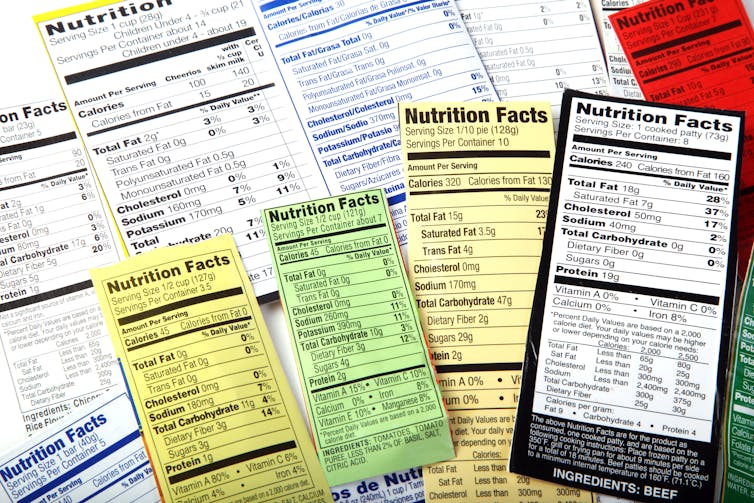
Nutrition Facts panels from multiple food packages
Nutrition Facts food labels contain much more than just calorie counts – for good reason. Imagesbybarbara/E+ via Getty Images

Labels: , , , , , , ,

Saturday, July 18, 2020

JUST Settling for Less Nutrition

"The mission of the company is to try to build a healthier food system as fast as we possibly can. And we're going to do that by focusing on building technology and bringing products to people."
"But much more important than anything that we're doing are individual consumers in their everyday lives, in their own families deciding that they want to be a part of creating a healthier food system too."
"It's that shift, it's that drive, it's that leadership that is going to change this world. And I'm just really proud that we get to bring [our products] to Canadian consumers."
Josh Tetrick, co-founder, CEO, JUST Plant Egg
VegNews.JustPlantEggCanada

"[The most significant difference between the JUST Plant Egg and a poultry egg] is the absence of essential nutrients including vitamin B12, selenium, vitamin A, vitamin D, choline and two antioxidants -- lutein and zeaxanthin -- all of which reside primarily in the egg yolk."
Amanda Li, registered dietitian, Toronto
The mission statement of the JUST Plant Egg as repeated above, is clearly commercialization-oriented, an opportunity to grow yet another alternative food source to deliver protein, and present itself as an improvement over standard old stand-bys such as animal product-type poultry eggs, while delivering a message of environmental responsibility and virtuous superiority. Just -- another highly processed food product, presenting yet another choice for conscientious consumers, setting aside the emotionally charged purple prose of marketing environmental consciousness.

A presentation by food company Eat JUST, Inc., based where else? in Silicon Valley, where its 'folded scramble', labelled JUST Egg in the United States, introduced to the U.S. food market there several months ago, destined to be known as JUST Plant Egg when it reaches stores in Canada. It will be widely sold, in over 100 Walmart stores across Canada, in Whole Foods Market locations, available for the recommended retail price of $6.99, which will buy a four-pack in the freezer section.

This is a precooked product, meant to be reheated in a toaster, a microwave, oven or stovetop frying pan. Not exactly what is meant by 'whole food' in the sense that it is not quite as nature produced it, but rather, processed as nature might never have imagined it. The product can be used to prepare scrambled eggs for breakfast, in sandwiches, wraps burritos, stir-fries, grain bowls and fried rice.

The JUST Plant Egg is pre-cooked and designed to be reheated in a toaster, microwave, oven or in a frying pan on the stovetop.
The JUST Plant Egg is pre-cooked . Eat JUST, Inc.

The plant-based egg, which contains turmeric for its yolk-similar colouration, is favourably comparable to a standard egg in protein content. And while a hen's egg contains six or seven grams of protein, the JUST Plant Egg has a standard seven grams, cholesterol-free, with 100 calories, in comparison to a hen's 80, with seven grams of fat (0.5g saturated fat) as opposed to a conventional egg's five grams (1.5g saturated).

Basically, the Plant Egg is comprised largely of mung bean protein, is a non-GMO product, with all natural flavours. A new survey examining dietary preferences in the last six months suggests that vegetarians, vegans and pescatarians in Canada are increasing in number. "Canada may have more than 600K vegans now", (out of a total population count of 37.59 million), according to Sylvain Charlebois, senior director, Agri-Food Analytics Lab, Dalhousie University. "47.1 percent of Canadians would consider alternative sources of protein", the lab found, in a survey.

 Eat JUST, Inc. is launching its folded plant-based egg in Canada this fall.

Labels: , , , ,

Wednesday, October 31, 2018

Dieting Conscientiously

"It  appears that Canadians are still somewhat attached  to meat consumption generally speaking. But more and more Canadians are reconsidering their relationship with animal-based protein."
"[Men with less education more likely to agree] I am a big fan of meat in general. Eating meat is a manly thing, let's face it. It's always been portrayed as a manly thing to do."
"[Overall] If you earn more, if you are a woman, if you are more educated, you are less likely to be attached to meat. [As such, society is experiencing] the womanization of protein consumption."
"Last week in my MBA class I had Sobeys CEO [and president] Michael Medline and seven of his top executives. Three of them were women. The influence of women in the industry is becoming more and more apparent."
Sylvain Charlebois, professor, food distribution and policy, Dalhousie University, Halifax
Three-quarters of Canadians surveyed strongly or somewhat agree that, €œas humans, it is natural to eat meat.€ Getty Images

"The younger generation is not so interested in the health but the humanitarian approach to the way we're feeding ourselves."
"You don't mind a cow in the green field with the blue sky above and the tree and the sun -- what every kindergarten kid draws."
"But when you come to a mechanized abattoir, that's not such fun. There's no blue sky, no happy, prancing [cattle]. And I think that's a big grassroots change among the young."
"No one has said ‘eat more beef and grow strong’, which is what they said in the 1930s. No one is saying that anymore."
Dr. David Jenkins, nutrition scientist, University of Toronto
A new survey has just released its results on Canadians' attitudes toward meat consumption in the daily diet of the nation. Once taken for granted that at least one meal of the day would be built around meat as the main course with a few vegetables thrown in for colour and the grudging nod at good health choices, Canadians appear increasingly to turn their faces away from constant meat meals seeking out protein substitutes instead. Vegetables may be shown by science to indicate pain when they're harvested, but it is the suffering of the animal kingdom in service to the appetite of humans that has convinced more people increasingly, to forgo meat, either in part or totally.

The survey points out that 6.4 million Canadians have undertaken personal restrictions in their diet or have taken the initiative to eliminate meat entirely from their meals. A third of the population has future plans to do likewise. Three-quarters of those surveyed strongly or somewhat agreed that "as humans, it is natural to eat meat"; furthermore, that the consumption of meat represents "a natural and balanced diet". The principal investigator, Sylvain Charlebois, notes the traditional Canadian attachment to animal protein, but notes also that the tradition is beginning to give way.

Early in the year, Health Canada which is preparing to bring out the latest edition of its food guide this coming month, had urged a generalized move to a "high proportion" of plant-based foods on the dinner plate, abstaining from excluding animal-based protein entirely. The new food guide, however is expected to take leave from its omnivore position in its "guiding principles", leaning more toward veganism. A move that will puzzle and even infuriate many, while giving a modicum of satisfaction to many others in what is seen as a cultural "protein war" situation.

In the preliminary version encouragement is given to replacing foods containing mostly saturated fat with foods known to contain unsaturated fats (nuts, seeds, avocados); leaving dairy and red meat, the primary sources of saturated fat, behind. Canada is not alone in its move toward replacing animal protein with protein from plant sources. But until the release of the new food guide by Health Canada it isn't known just how much the dairy and ranch industries will be affected, though they have been busy with push-back in anticipation of a reduction in choice of their products.

Researchers attached to the study surveyed 1,027 adults in September over a three-day period, with the involvement of principals at the University of Guelph. Close to half of those surveyed claimed they consume meat or meat-containing products daily, while 40 percent said once or twice weekly suffices their meat consumption need. Another two percent labelled themselves vegetarians, and one percent vegans (no animal-based products), while another one percent claimed lacto-ovo vegetarian status (no animal flesh; eggs and milk permitted).

Fifty-one percent stated their willingness to consider reducing meat in their diet at some future date. Women, perhaps predictably, were most likelier than men to agree that in their opinion meat can be replaced with other protein sources. As it is, Canadians have reduced meat intake since 2004 to the point where in Canada today, consumption levels match those of Mediterranean countries "places where diets are widely recognized as being amongst the healthiest worldwide", noted Marie-France Mackinnon of the Canadian Meat Council.
Among the survey’s other findings:
• 63 per cent of vegans are under age 38 (millennials and Gen Ys);
• 42 per cent of “flexitarians” (flexible vegetarianism, with the odd serving of meat) are boomers;
• Younger and more educated are less likely to love meat;
• Few consider insects an appealing alternative to meat, although Atlantic Canadians and Quebecers seem more open to eating bugs.

Image result for the womanization of protein consumption
Loma Linda University, Vegetarian Food Pyramid

Labels: , , , , , ,

Friday, October 12, 2018

So, You're Thinking, Yogurt: Healthy Protein Source...?

"Items labelled 'organic' are often thought of as the 'healthiest' option, but they may be an unrecognized source of added sugars in many peoples' diets."
"A lot of people don't actually realize how much added or free sugars are in yogurt. If you're watching your weight, sugar is sugar, no matter what."
"Parents need to realize that all yogurt is not exactly the same, and it's the natural yogurts which are healthier."
"People do look at organic products and think they're better for them -- if you ask consumers, their responses are that they think they are healthier."
Bernadette Moore, professor of obesity studies, University of Leeds' School of Food Science and Nutrition

"This is 'concerning', given the rise in childhood obesity and the prevalence of tooth decay among young children."
"While yogurt may be less of a concern than soft drinks and fruit juices, the chief sources of free sugars in both children and adults' diets, what is worrisome is that yogurt, as a perceived 'healthy food', may be an unrecognized source of free and added sugars in the diet."
Researchers' published paper
For a standard 6-ounce container of Yoplait yogurt (strawberry), one plus four-fifths of another equals 33 grams of sugar.
A standard 6 oz serving of Yoplait yogurt and one plus four-fifths of another equals 33 grams of sugar

According to the British National Health Service, over half an adult's recommended daily sugar intake -- 30 grams -- could be consumed by the unsuspecting in a single cup of yogurt, packed with more sugar than a cola drink. Published in the British Medical Journal, a recent study indicates that many supermarket yogurts generally considered by the consuming public to represent a "healthy" choice contains "well above" the recommended limit of sugar.

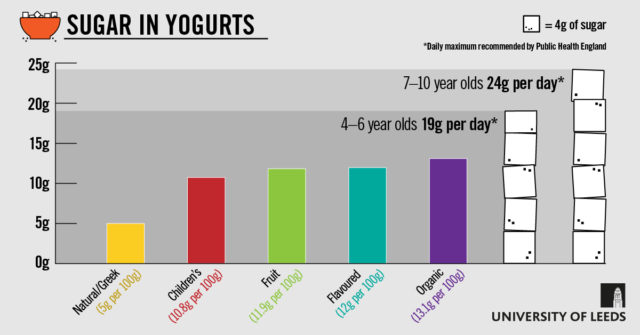
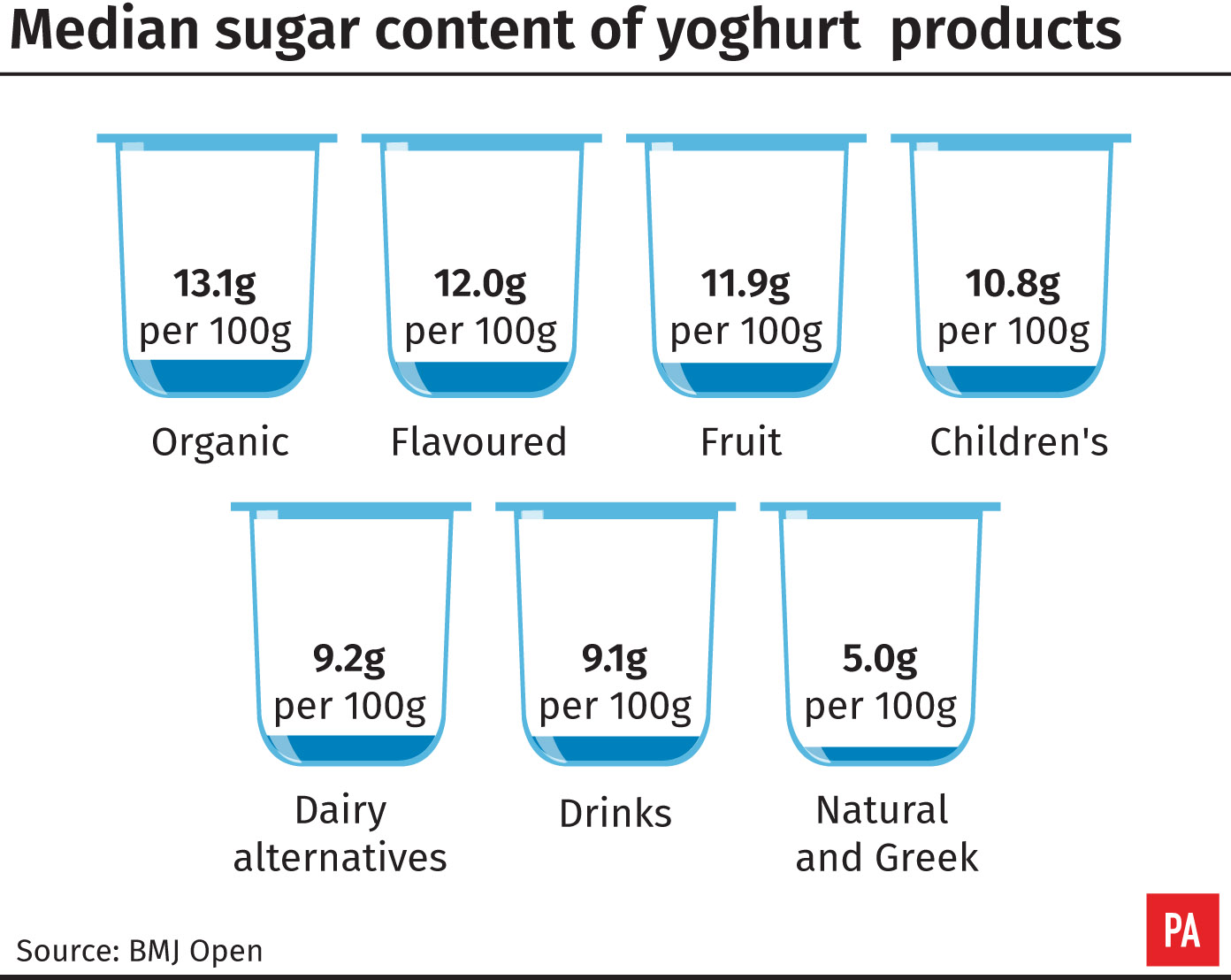
An analysis of some 900 yogurts ordinarily sold at grocery stories enabled researchers to conclude that organic varieties and products specifically designed to appeal to children to be packed into their lunch boxes, are most often the most sugar-laden of products. Researchers discovered that organic yogurts contained an average of 13.1 grams per 100 grams of total sugars while children's varieties held 10.8 grams, sweeter than 100 mL of Coca-Cola.

A study found that organic yoghurts had an average sugar content of 13.1g per 100g
A study found that organic yoghurts had an average sugar content of 13.1g per 100g     JOE RAEDLE/GETTY IMAGES

For the study analysis, yogurt samples were divided into eight groups comprised of children's, dairy alternatives (soy for example), desserts, drinks, flavoured, fruit, natural/Greek and organic. Under EU regulations a product to be labelled low in sugar must adhere to five grams of total sugars per 100 grams, and a mere two of 101 children's products were proven to be low in sugar.

For children aged four to six, the daily sugar threshold should be no more than 19 grams (as found in 5 cubes of sugar), and for those children between ages seven to ten, no more than 24 grams (similar to six sugar cubes) for optimum diet health, according to the National Health Service. Several major brands "contain the equivalent of almost five sugar cubes", according to Public Health Liverpool's analysis.

Consuming one yogurt cup representing a snack could present as an entire day's-worth of sugar. Fewer than nine percent of the samples analyzed passed as low sugar products. Natural (plain) yogurts and Greek-style were the exception to the high-sugar load. They are higher in protein and commensurately lower in carbohydrates with the least amount of sugar contained, at five grams per 100 grams (most of the sugar was naturally-occurring lactose).


Labels: , , , , ,

Monday, December 26, 2016

What's For Dinner?

"It's an experiment."
"No one can tell you the long-term effects [of supplementing/replacing natural protein food sources with protein powders], and that's what worries me as a physician."
Dr. John E. Swartzberg, chairman, editorial board, University of California Berkeley Wellness Letter

"One of the benefits and concerns about high protein intake, especially animal protein, is that it tends to make cells multiply faster."
"That's good in early life, when you're a growing child. But in later life, this is one of the fundamental processes that increase the risk of cancer."
Dr. Walter Willett, chairman, department of nutrition, Harvard T.H. Chan School of Public Health

"The body only digests and absorbs a certain amount of protein at every meal."
"Nothing beats real food. With many supplements, you just don't know exactly what you're getting."
Jim White, registered dietitian

What's in your protein drink

Here are the average amounts of metals we found in three servings of these protein drinks. The maximum limits for them in dietary supplements proposed by the U.S. Pharmacopeia are: arsenic (inorganic), 15 micrograms (µg) per day; cadmium, 5 µg; lead, 10 µg; mercury, 15 µg. Amounts at or exceeding those limits are in bold. Experts said three servings a day is common.
Product (powder unless otherwise indicated) Amount in 3 servings Protein (g/3 servings) Test results
      Arsenic (µg/3 servings) Cadimum (µg/3 servings) Lead (µg/3 servings) Mercury (µg/3 servings)
 
BSN Core Series Lean Dessert Protein Shake Chocolate Fudge Pudding 105 g 63 3.3 3.7 2.5 0.3*
BSN Core Series Syntha-6 Ultra Chocolate MilkShake 132 g 66 4.2 2.6 5.4 1.1
Designer Whey 100% Whey Protein Chocolate 78g 54 3.9 1.6 2.4 0.9
EAS Myoplex Original Rich Dark Chocolate Shake (liquid) 1,500 mL 126 16.9 5.1* - -
GNC Lean Shake Chocolate 144 g 27 7.0 3.9 4.9 -
GNC Pro Performance AMP Amplified Wheybolic Extreme 60 Chocolate 237 g 180 5.4 2.5 2.5 -
Jillian Michaels Natural Whey Protein Vanilla Cream Shake 81g 45 1.9 - 1.2 -
Muscle Milk Chocolate 210 g 96 12.2 5.6 13.5 0.7*
Muscle Milk Nutritional Shake Chocolate (liquid) 990 mL 66 14.3 - 6.8 -
Muscle Milk Vanilla Crème 210 g 96 11.2 2.0 12.2 -
MuscleTech Nitro-Tech Hardcore Pro-Series Vanilla MilkShake 96 g 75 1.2 - 0.4* 0.9
Optimum Nutrition Gold Standard 100% Whey Extreme Milk Chocolate 96 g 72 2.5 1.7 1.0 0.2*
Optimum Nutrition Platinum Hydro Whey Velocity Vanilla 117 g 90 1.5 - - -
Six Star Muscle Professional Strength Whey Protein French Vanilla Cream 117 g 78 2.3 - - -
Solgar Whey to Go Whey Protein Powder Natural Vanilla Bean 60 g 48 0.6* - - -
 
Clarification: (-) Element was not measurable in all samples tested.

*In some samples of this product, this metal was below measurable levels and could be as low as zero. For those products, the average was calculated using zero as the value for samples in which metal could not be measured by the analytical method used.  

logo

According to Dr. Stuart M. Phillips, professor of kinesiology at McMaster University in Hamilton, Ontario, "There is a distinction between what is absolutely minimally required and a more optimal intake level". In which case, he recommends that adults consume 30 to 50 grams of protein with every daily meal to address the very real issue of aging which leads to the loss of muscle mass.

As for using protein supplements such as an array of protein products, their users should be aware that consumer groups have issued alerts regarding contaminated substances found in them through laboratory testing. Sixteen protein powders tested for the substances included revealed, along with similar drinks, that arsenic, lead, cadmium and mercury were discovered to be present in some of those products.

As far as Dr. White is concerned, the best course of responsible decision-making about how to fuel the human body is to eat whole foods. Doctors are concerned about the potential long-term effects of a high protein diet where studies indicate that protein-rich diets, while seen to be promoting weight loss and preserving lean muscle in the process, do not preserve muscle mass over the long term.

Moreover, while eating excess protein does aid in tamping down hunger while avoiding carbohydrates, large population studies point to an association between high protein intake and a heightened risk of acquiring diabetes. Add to that the fact that doctors also caution that habitual high-protein consumption can also lead to kidney damage for those unaware that they harbour the propensity for kidney disease. Strain on the kidneys for those with diabetes accelerates the process of eventual kidney failure.

Flavoured protein powers have seen a surge in popularity by people interested in enhancing health by picking up the flavour-of-the-day diets that publicity geared to the bottom line for the producers claim lead the way to better health and physical conditioning. When, in fact, nothing could be further from the truth. Doled by the scoopful for smoothies, the ease and convenience of believing that one is pampering one's body positively generates enthusiasm for the product.


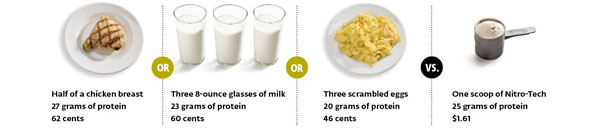
In the process, people end up consuming protein amounts exceeding health recommendations. Where a protein drink can be comprised of almost as much protein as a 225-gram steak, and snack bars can have the equivalent of greater macronutrient content than a three-egg omelet, people are deluding themselves into believing they are adopting a healthy diet.

What doctors and nutritionists know and consumers may not, is that protein powders and supplements derive from animal products like whey and casein (byproducts of cheese manufacturing) or from plants such as soy, rice, pea or hemp with no scientifically rigorous studies to inform whether too much protein is being absorbed, let alone what constitutes too much protein for the body to absorb and benefit from.

Protein is indispensable in the human diet for amino acids that our bodies are unable to synthesize on their own. Protein provides the building blocks required for the production and maintenance of muscle, bone, skin and other body tissues along with vital hormones and enzymes. The average female requires 46 grams of protein consumed daily, and males 56 grams of protein on a daily basis.

Consuming moderate amounts of protein-rich foods like meat, fish, dairy products, beans, nuts each day more than suffices to ensure that we obtain the protein required to keep us healthy, with an emphasis on whole foods and moderate intake. A serving of Greek yogurt provides about 20 grams of protein, while 40 grams of protein is made available with the consumption of 125 grams of ground chicken.

Labels: , ,

 
()() Follow @rheytah Tweet