Ruminations

Blog dedicated primarily to randomly selected news items; comments reflecting personal perceptions

Saturday, June 27, 2026

Venezuela's Quake Rescues: "It's all Improvisation"

"There is no planning, it's all improvisation."
"This is a state that is lacking in security services to deal with this type of emergency."
"Our firefighters and first responders don't have the proper equipment." 
Vicente Villarroel, a former federal lawmaker from the city of La Guaira 
 
"With everything that has happened to Venezuela in the past few years, we thought that nothing worse could happen."
"But what has happened is a real catastrophe, a tragedy."
Javier, Barquisimeto 
 
"What motivates me to become part of this movement is the empathy I feel for all Venezuelans who have lost their homes, their families, their will to live because they have been left with nothing."
"I think, as Venezuelans, more than ever, we are united for different reasons."
"Many of us have families in the impacted zones, others do it from a desire to help, but in the end it's all the same objective."
Raquel Mercedes Contreras Manrique, president, student centre, University of Los Andes, San Cristobal  
https://i.cbc.ca/ais/847e09fc-3be2-4971-99e7-ba5590c3af35,1782524245139/full/max/0/default.jpg?im=Crop%2Crect%3D%280%2C711%2C1179%2C1443%29%3BResize%3D796
Raquel Mercedes Contreras Manrique, president of the student centre at the University of Los Andes in San Cristobal, packs donated supplies on Friday. (Submitted by Raquel Mercedes Contreras Manrique)
 
 A day ago, shortly after Venezuela was hit with two, back-to-back earthquakes President Delcy Rodriguez announced that at least 164 deaths and 971 injured had resulted at that point of reckoning. The U.S. Geological Survey which had pegged the temblors at 7.2-magnitude and 7.5 magnitude following, warned that "high casualties and damage are probable". The death count from the earthquakes has risen a day later, to 1,400 -- and counting. Two aftershocks were recorded; one of 4.5- and the other 4.4-magnitude, close to Caracas, the country's capital.
 
On the Richter scale, a 7.5-magnitude quake is almost twice as powerful as one at 7.2 magnitude. When they struck, one after the other, it took altogether 30 seconds that the ground wobbled after 6:00 p.m. on Wednesday. Glass from nearby windows fell to shatter on streets below. Los Palos Grandes, a seismic area of eastern Caracas was hit directly. Three buildings on one block, one of 13-storeys in height, collapsed. A state of emergency was declared. 
 
U.S. President Donald Trump wrote: "I have instructed all agencies of our government to get ready to move quickly. We will be there for our new and great friends. Early reports are not good." Emergency rescue teams have arrived from Venezuela's regional neighbours, El Salvador, Ecuador, Brazil and Chile, and other seasoned teams, including one from Israel and the much-storied and well-experienced White Helmets from Syria were also dispatched to do what they know best; rescuing those still alive in hazardous life conditions. 
 
https://i.cbc.ca/ais/1245454f-40ca-45dd-91ae-b7c7a150afdb,1782521318064/full/max/0/default.jpg?im=Crop%2Crect%3D%280%2C0%2C5472%2C3648%29%3BResize%3D796
Venezuelans have rallied to support their fellow citizens, some travelling hundreds of kilometres to join relief efforts. (Susy Peña/CBC)
 
The boundary between the Caribbean and South American tectonic plates is where the sequence occurred when two giant sections of the Earth's crust slid sideways past each other along a fault. That action released the massive energy that caused the quakes. A figure of 4,300 injured people was released, but is certain to rise as rescue operations continue. The number of those missing is also growing, while first responders and volunteers desperately search for survivors. Over 200 people are still trapped in the rubble with Venezuelans in a "race against time" to rescue them, amidst ongoing aftershocks.
 
The number of buildings that collapsed: 250 in all. Dozens of apartment buildings in La Guaira were shaken to the  ground. In many areas of the state heavy machinery is scarce; volunteers were forced to make use of whatever tools they could locate in hopes of carving through the collapsed concrete rubble. It was almost a full day that passed before government responders arrived to help dig through debris.
 
The main health facility, Jose Maria Vargas Hospital, saw injured people lying on thin mattresses outside on the ground of the hospital premises. Its emergency department was swamped with people presenting with all manner of injuries. Some of the patients held their IV drips aloft on their own. Across the country Venezuelans crowdsourced websites and social media in search of missing family members. Over 42,000 names with photos and descriptions were listed on one website alone. 
 
While first responders and volunteers worked amidst the collapsed buildings interspersed with rubble, family members waited in high suspense, for outcomes. The Altamira neighborhood of Caracas was one such venue. A rescue team searched the rubble, unable to use the equipment at hand because the electric generator wasn't responding. For that team even basic tools like hammers were not available. The government, in economic crisis, lacks the capacity to respond to such disasters.
 
https://i.cbc.ca/ais/db878755-391b-4d6a-8d36-8244abeac56d,1782586163538/full/max/0/default.jpg?im=Crop%2Crect%3D%280%2C0%2C5472%2C3648%29%3BResize%3D796
A building rocked by two earthquakes is seen Friday in the beachfront neighbourhood Playa Grande in Catia la Mar, a city in the Venezuelan state of La Guaira. (Susy Peña/CBC)


Labels: , , , , , ,

Friday, September 28, 2018

The Aching Vacuum

"[It's not a specific dream, but] mostly the comfort of his presence, seeing  him, hearing his voice -- just a feeling that he is with me. [Dreaming, there is a brief reprieve from] the constant aching void that I feel for him every waking minute."
"...I didn't want to be that helicopter parent, the overprotective mother."
"It's such a backward and such a corrupt country [Peru]."
"At the cemetery [for her father's funeral, late August], I scooped up a shovel full of earth and dropped it on the coffin -- and said, 'Oh, my God, this is my goal'. It hit  me like a ton of bricks: I'm  trying to bring my son home in a coffin. But it's not even that; it's that I have to know what happened."
"Because I brought them [son and daughter] up alone and because he was the older one, he was my friend. Jesse was not just my son, but he was my best friend. We took ski  trips out west alone together annually, loved spending time together, and we talked about everything."
"We were closer than the usual mother-son relationship -- even through his teens. He was an enormous emotional support to me, and a huge part of my life."
"Every single time I go back [to Peru] with hope anew -- and I am disappointed. But I have to keep going. I can't finish it until I have an ending."
Alisa Clamen, 53, Montreal
Alisa Clamen at home in Côte-St-Luc. "Jesse was not just my son, but he was my best friend." John Mahoney / Montreal Gazette

"We built a psychology profile of Jesse to figure out what he considered and what he did not consider and to figure out how he made his decisions."
"Either he was carried out of the area [Santa Cruz Trail, Peru], or hidden very carefully."
"[Alisa Clamen is] one of the strongest people [I've ever encountered in such missing persons cases.] She is very strong, very rational and she is making every effort."
"Though it takes time, we believe we will reach a solution."
Magnus International Search & Rescue CEO Guy Atzmon

"To find him now is a matter of intelligence to point you in the right direction to look. It means very deep work, getting into small villages, local people."
"...My heart is with the mother. That's what is driving me, to try to raise the mystery out of those mountains."
"We would like to provide some peace for her soul."
Hilik Magnus, founder, Magnus International Search & Rescue
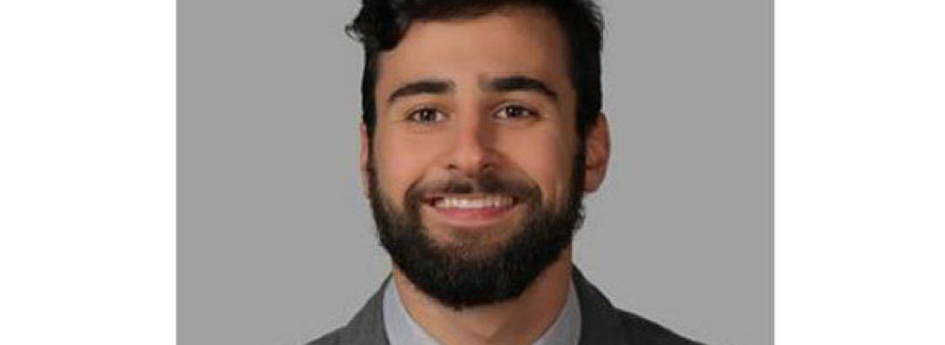
Jesse Galganov
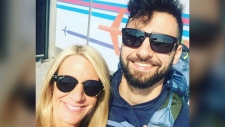
Jesse Galganov, 22, (right) is seen with his mother Alisa Clamen in this undated photo. (CP24)

He was 22 years old, a young man of adventurous spirit, about to begin medical school in Philadelphia, come July. Before then, he planned to satisfy his sense of adventure on a solo trip to South America and Asia, an eight-month travel venture. His mother drove him to the airport so he could board a flight for Peru. That was a year ago. On the 28th of September Jesse texted his mother, informing her he'd be out of touch for four days while he hiked the Santa Cruz trail along the world's highest tropical mountain range.

October 2 arrived and Jesse's mother felt certainthat her son must have set out on a longer trail. By the following week she contacted the Canadian embassy to be informed that a police report was required to alert Interpol. On October 17, the single mother of two young adults, a practising lawyer, set out herself for Peru. From her experience while there, she gained the indelible impression that authorities were not all that interested in tracking her son's whereabouts. Not did she get much help elsewhere.

She found a lack of security and organization. Registration trail logs were missing or incomplete; technology companies and service providers refused to release details of last use of Jesse's electronic devices. She quickly organized searches both by local teams and through an elite Israeli-based search-and-rescue group with equipment and advanced technology inclusive of underwater robots and drones, in the search and investigation. So far all that activity has come in at a cool $2 million. Helped by community support, fundraising, and mortgaging her home, she carried on.

She no longer hopes to find her son alive, but she desperately wants to know what happened to him, and if at all possible, to discover where his body is, and to bring it home to Canada. She has been long divorced; her daughter was one year old at the time, Jesse two. She is no longer capable of practising her profession as she once did; concentration eludes her. She now lives a fairly secluded life, unwilling to socialize, seeing none but close friends and family. "I don't have the desire or energy for anything else", she points out, understandably.

She is no longer "in step" with the world at large. She goes out of her way to avoid running into people she knows: "They don't know what to say. I hate putting them in that position." She continues to pay her son's cellphone invoices: "I can't bring myself to stop", and until recently maintained his car lease. People admire her strength and perseverance. "What's the alternative? I can fall apart and just stay in bed -- or I can try to function. If I don't continue the search for Jesse, who else will?"

The Magnus crew analyzed Jesse's trek, the environment in which he found himself, how he managed to forge ahead with his plans. They contacted close to 200 other travellers from around the world they managed to identify through Facebook photos, "to build the full picture of who Jesse met, whom he spoke to". Two hikers who had shared the same campsite with Jesse on September 30 for example. They discovered that on October 1, Jesse had enquired of a group of Czech tourists where he might find water. After that there was no sign of him.

There are those who feel Jesse may have been assailed with altitude sickness causing him to wander off trail where he succumbed to the elements. Possibly, someone might have come across his body, robbed him and moved him to a remote location by donkey or horse, or even thrown his body into a body of water nearby. Not content to allow others to do the searching Alisa Clamen spent four months in the past year in Peru, 21 nights of which were spent on the Santa Cruz trail, willing herself to view what her son encountered, to walk in his footsteps.

The trail, she found, is difficult to navigate, dangerous, poorly marked with ample hazards aside from altitude sickness. There are mud fields, jagged rock fragments (scree) and slippery rock sheets to negotiate. In July she went along with a local guide-company owner she trusts and his team on a glacier search on the trail, encountering a 50-cm snowfall that impeded progress on their search. A canine team trained to sniff out human remains failed to work due to the difficulty of the terrain.

Alisa Clamen yearns, and needs her son Jesse, alive or dead, to return home to her, so her soul can be at rest just as his will be put to rest.

Jesse Galganov Fund

Missing Children's Network Canada

Labels: , , , , ,

 
()() Follow @rheytah Tweet