Ruminations

Blog dedicated primarily to randomly selected news items; comments reflecting personal perceptions

Friday, August 05, 2022

Monkeypox Transmission

"Monkeypox is not HIV infection and won't have its consequences. It is self-limiting and, once infected, antibodies produced will likely prevent reinfection."
"It is not nearly as great a risk as COVID-19, with an ever-mutating virus that escapes the constraint of vaccination and has infected more than one billion people."
"It is however, yet another serious worldwide health concern that can further disrupt lives, the ability to work and further stress our crumbling health-care system. We have done too little too late to greatly dampen spread ."
"We now need to urgently vaccinate as many at-risk individuals as possible, act responsibly to avoid exposure, increase our testing capacity and pray that the disease burden will be manageable for our already overwhelmed health-care system."
Dr. Harry Rakowski, academic cardiologist and commentator, Toronto
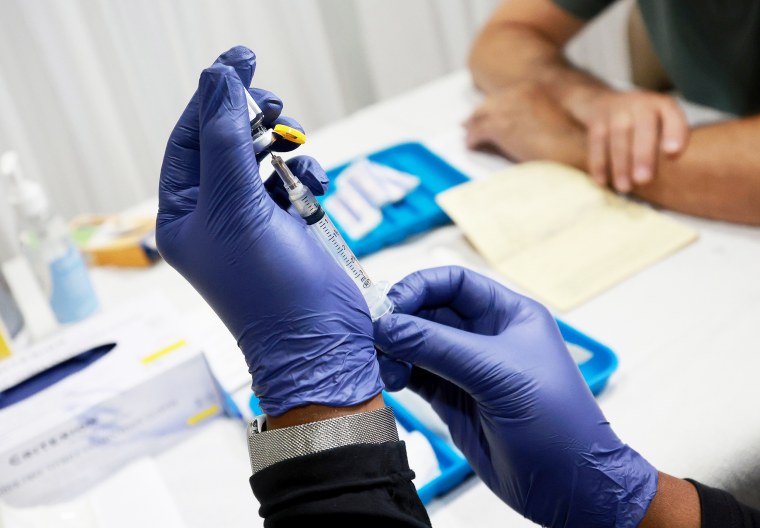
A healthcare worker prepares to administer a monkeypox vaccine
A healthcare worker prepares to administer a monkeypox vaccine at the Pride Center in Wilton Manors, Fla., on July 12, 2022. Joe Raedle / Getty Images file

Monkeypox was known as a virus endemic to Africa at a low level of disease transmission. Until it was reported in Europe in mid-May with outbreaks in three countries where its appearance was linked to large social events where gay men have sex with multiple partners. This, according to a global study published recently in the New England Journal of Medicine.
 
On July 28 the Centers for Disease Control and Prevention in the United States reported on its website 21,000 cases in 75 countries where never before had a case of Monkeypox been seen. Globally, cases are rising now by roughly a thousand every day, a number certain to be an underestimate of the true burden of disease, reflecting a common enough phenomenon of under-reporting.
 
The vast proportion of cases -- about 99 percent -- occur in men typically who engage in sex with other men. The first case of Monkeypox was reported July 1 in Canada. By the time July 28 rolled around, 745 cases had been identified. The disease is spread through close physical contact with someone who is infected through sexual activity, mucous membrane transfer, or contact with fabrics such as clothing or bedsheets which were infected through use.
 
Although Monkeypox is basically a sexually transmitted disease, it can infect anyone at any age through skin contact with people who are infected or through the use of items the virus was transferred to, with use. How long the virus can remain viable on fabrics or surfaces is yet to be determined. It takes one to two weeks following exposure before the infected individual may develop fever and flu-like symptoms; headache, muscle aches and swollen lymph nodes.
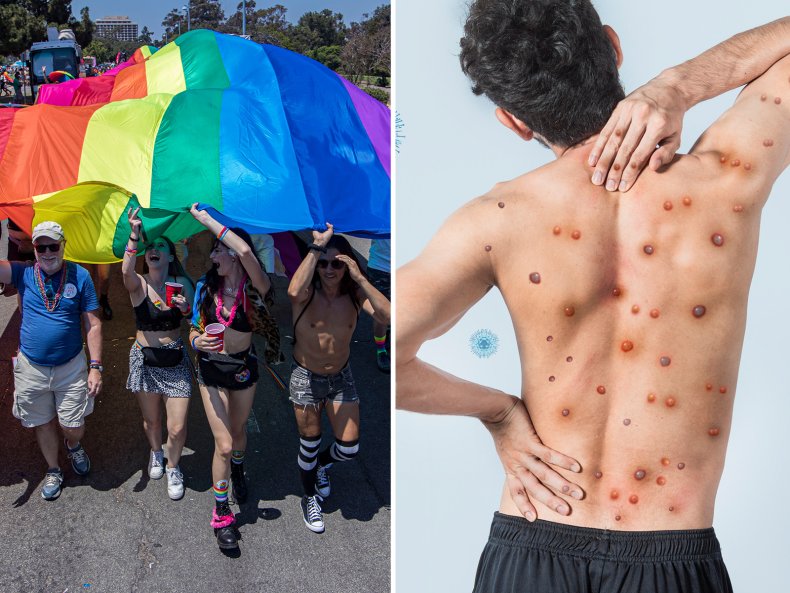
 
Monkeypox
In this combination image, participants carry a large Pride Flag at 2022 San Diego Pride Parade on July 16, 2022 in San Diego, California and right a stock image representing Monkeypox iStock / Getty Images
A pox-like rash then develops, characterized by pus-filled bumps (Pustules) that may resemble pimples or blisters. The disease is extremely uncomfortable for the sufferer, but few deaths result. The disease is known to be riskier for young children, pregnant women and older people. There are two vaccines approved by the FDA to be used in prevention.
 
The older of the two is available in large supply, originally developed for smallpox. The negative side of the ACAM vaccine is its significant side-effects which make it unsuitable for people with HIV; its use is not recommended for those with other immune diseases such as eczema or heart disease. The newer vaccine is available only in small supply.
 
A troubling aspect of the virus and its victimization of gay men with many sex partners being vulnerable to the disease is that venues that plan and stage events with high levels of sexual activity to the present -- Monkeypox spread aside -- decline to cancel those events. 
 
A line of people waiting for monkeypox vaccinations outside the Chelsea Sexual Health Clinic in Manhattan on Thursday.
   Credit...Hiram Durán for The New York Times

Labels: , , , , ,

Sunday, July 24, 2022

Global Monkeypox: MPXV

Public Health Agency of Canada
"Many ... well-intentioned officials appear fearful of saying something homophobic."
"LGBTQ organizers have ample practice with informing their communities about a possible health threat and championing safe-sex practices."
"Public-health officials should activate these resources rather than tiptoeing around the issue."
Jim Downs, professor, historical study of infectious diseases, Gettysburg College
 
Back around 1985, when a terrifyingly mysterious new disease was appearing in gay-centric areas of New York and elsewhere around the United States, it wasn't uncommon to read or hear of dismissive comments that gays brought this dreadful malady on themselves. The immune systems of homosexual men completely broke down with acquired immunity-deficient syndrome. No one knew what to do, how it could be avoided, much less treated, The disease took its dread course and people died horrible deaths, but the straight majority felt fairly complacent, and from pulpits sermons thundered that the supreme one above was punishing gays.
 
Fast forward to 2022 and no one but the most die-hard homophobic-committed will break a sneer over just desserts at the sudden appearance globally of yet another disease linked to sex acts shared between men with other men. The saving grace, is that this new disease is relatively mild in comparison to HIV-AIDS. With monkeypox suddenly taking centre-stage, nudging SARS-CoV-2 out of the way temporarily, the development of another gay-sex punishment is being  handled by public health somewhat differently.

No one wants to overtly call attention to the fact that the vast majority of those contracting monkeypox are males. And they are males of a specific group. Society at present is well and truly chastened, a far cry from when 'gay' was just another epithet to be tossed off in contempt against a swath of society that kept a low profile in avoidance of the backlash that was usually forthcoming at mention of gay sex, a bull's red flag for straight men who thought mocking and demeaning their gay brothers was fun.

The New England Journal of Medicine recently published the results of their study of the surprise outbreak of monkeypox outside of Africa, where the disease, while endemic, is still relatively unusual. It can have devastating effects on pregnant women and young children if infected. Yet another 'invasive species' from one corner of the world to another. The large study used a sample of 528 cases on four continents. Of the total, 13 percent saw hospitalization, the majority suffering "no serious complications", and no deaths.

For starters, HIV/AIDS was initially occurring exclusively within the gay population. Before eventually spreading to women and straight men, albeit not in overwhelming numbers. As with AIDS, monkeypox has been seen to afflict 98 percent men of the 528 cases studied. Furthermore 95 percent of the cases, according to the study, were transmitted sexually. In the first news coming out of clinics worldwide, those statistics were verified by diagnosis and observation.

Leaving government agencies and health authorities with a dilemma; how to transmit the information to the public clearly and honestly without risking a backlash against the gay community? The fear was that frank admissions of the disease's spread through same-sex physical intimacy would engender and "fuel hate" and risk spurring "unintended consequences".

The disease continues to spread, and to be treated. Its symptoms are not particularly worrisome. And it now has a global presence. The World Health Organization identifies monkeypox as a specific problem for gay men, advising that audience "for gay, bisexual and other men who have sex with men", mincing no words in addressing the concerned audience. 

A letter was issued a month ago, co-signed by 29 medical experts recommending to the WHO that the word 'monkeypox' brings undue attention to Africa where it has a historical presence. First identified in monkeys, the disease crossed the species barrier in Africa. Which explains why photographs used by Western media so often depict African men whose skin shows monkeypox's effects.

New, replacement names for monkeypox to reduce the possibility of identifying the disease with a specific world region now that it has become a global health phenomenon are being considered. Such as MPXV-1, MPXV-2 or MPXV-a, as descriptives of the type. "MPXV", an acronym for monkeypox, too clever by half.
 
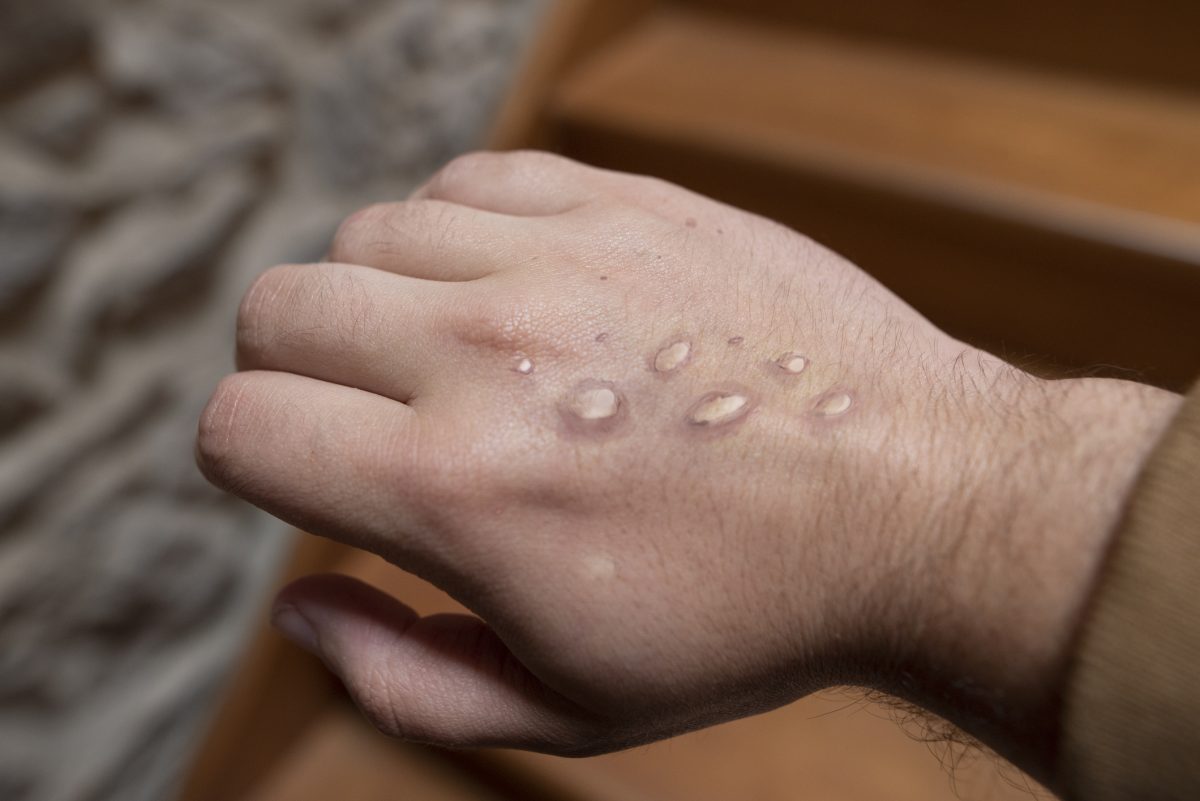
Rash on human hand depicting a Monkeypox infection
"The symptoms of monkeypox virus are milder than, but similar to those of smallpox. One key difference is that monkeypox causes swollen lymph nodes (lymphadenopathy) while smallpox does not. The swelling can occur in many different locations on the body, or be localized, including lymph nodes of the neck and armpit. The incubation period (time from infection to onset of symptoms) for monkeypox is usually 7−14 days but can range from 5−21 days. In addition to swollen lymph nodes, early signs and symptoms may include fever, headache, muscle aches, exhaustion, backache, and chills. A rash develops on the body within 1 to 3 days (sometimes longer) after the appearance of fever, usually first on the face, then spreading to other parts of the body. The lesions progresses through the stages of macules, papules, vesicles, pustules, and finally scabs before falling off."
National Collaborating Centre for Infectious Diseases, Public Health Agency of Canada

Labels: , , , ,

Thursday, May 26, 2022

The Genesis of a Zoonotic Enigma

"Scientists use a chimpanzee adenovirus as a vector -- a way to get instructions for making virus-fighting antigens into the body."
"It should be noted that chimpanzees are not monkeys."
Meedan Health Desk

"It is wholly different from monkeypox [the Astra Zeneca vaccine using a chimpanzee adenovirus vector] and there is no possibility whatsoever that the two are linked."
"The virus used in the AZ vaccine is an adenovirus that has been mutated to prevent it [from] growing in human cells."
"All the vector does is carry the vaccine component into human cells, it does not establish any sort of infection itself."
Ian Jones, professor of virology, University of Reading

"We know monkeypox can spread when there is close contact with the lesions of someone who is infected, and it looks like sexual contact has now amplified that transmission."
Dr.David Heymann, former head, WHO emergencies department

"By nature, sexual activity involves intimate contact, which one would expect to increase the likelihood of transmission, whatever a person's sexual orientation and irrespective of the mode of transmission."
Mike Skinner, virologist, Imperial College London
Health experts say that although recent outbreaks of monkeypox are a cause for concern, they urge people not to panic, saying the virus is nothing like COVID-19.

The most recently reported virus causing consternation in the health communities where monkeypox has been laboratory-confirmed -- where to the present most such cases are generally confined to Africa where it is endemic -- has presented as a mystery where it has turned up in Europe and North America. The virus typically causes fever, chills, rash and face or genital lesions, also appearing on the hands of affected people. No one outside Africa has yet died as a result of contracting monkeypox which has tended to clear up in several weeks' time.

The hundred or so cases that have turned up in North America and Europe are being closely monitored, the possible source examined by public health authorities. But the public has not been idle itself in raising their versions of its origins through wild speculation of just how it was that a virus confined to two areas on one continent has suddenly begun appearing worldwide. There are the claims that a COVID virus making use of a mutated chimpanzee adenovirus is responsible.

That misinformation has been repeated by a number of individuals in positions of authority, like the British MP who on May20 posted on Twitter: "Who is surprised that after millions of people have been injected with genetically modified chimp virus, there is now an outbreak of monkeypox?" That single Twitter post has been retweeted two thousand times with over six thousand 'likes'. Word gets around, particularly controversially unsound words.
 
 
Chinese social media users are being directed toward speculation that the source of monkeypox infections is a deliberate move on the part of the United States. Taken in its malicious interpretation to have resulted from the skepticism voiced by the Trump administration when a new and deadly virus arose in Wuhan, China to go on at speed to infect the entire world. When interest zeroed in on the proximity of the Wuhan Institute of Virology which was thought to have inadvertently released the SARS-CoV-2 virus while experimentation was taking place in the biologically secure research facility.

Beijing saw an opportunity to turn the screws on the U.S. in smarting umbrage over criticism that was aimed at it over its critical lack of warning to the world at large when it began coping with a mysterious new virus. The popular Chinese social media site Weibo has preached to the convinced that the source was deliberately designed; "a plan by the U.S. to leak bioengineered monkeypox virus". At the time that the COVID pandemic was first sweeping the world, Beijing claimed the U.S. had engineered the virus at a military base.

The unprecedented outbreak of monkeypox outside its usual Africa preserve, led a leading adviser to the World Health Organization to describe the outbreak as "a random event" whose cause appeared to be sexual activities at two recent raves that took place in Spain and Belgium. In central and western Africa people typically become infected through contact with wild rodents and primates; a zoonotic infection where animal viruses leap the species barrier to infect humans.

It is now official that most of the known cases seen in Europe have been the result of men having sex with men even though theoretically anyone can be infected through close contact with an infected person. Whose clothing or bedsheets can spread the infection. In fact, scientists still remain uncertain over whether the virus is spread through sex or by close physical contact in general.
"The likelihood of further spread of the virus through close contact, for example during sexual activities among persons with multiple sexual partners, is considered to be high."
Andrea Ammon, control director, European Centre for Disease Prevention


Labels: , ,

Friday, May 20, 2022

Exotic Viruses Leaving Home

"We do not have to panic. It [Monkeypox] is not something you can acquire in a grocery store or on public transportation."
"We have to do a complete investigation to understand all the links in the chain." 
"What we are worried about is prolonged close contact, and it could happen in any kind of setting."
Dr.Mylene Drouin, Montreal director of Public health

"I am a little concerned that we are hearing about a lot of it [Monkeypox being discovered in countries around the world] here and there in other countries."
Earl Brown, virologist, University of Ottawa
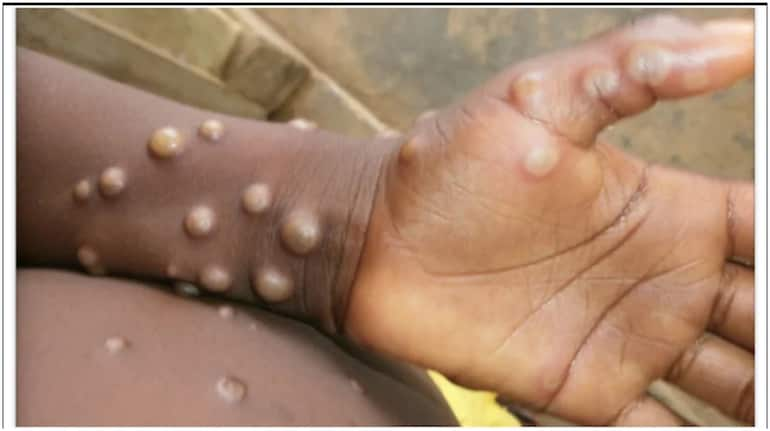
Child with lesions from monkeypox, courtesy CDC archive

Suddenly a new virus raises its unappealing head as it travels the world from its home in Central and West Africa. Monkeypox was first identified in 1958 and has fairly well remained in place where it was first discovered to have emerged. The virus appears to be a cousin, so to speak, of smallpox. Now, just recently, cases of Monkeypox have been seen in Belgium, France, Germany, Italy,the Netherlands, Portugal, Spain, Sweden, the United Kingdom, the United States, Canada and Australia. It has travelled far and it is travelling fairly quickly.

Clusters are being picked up here and there, and in Montreal, public health officials were confirmed to be looking into 17 possible cases. Not good news; on the other hand, the medical community is urging the public not to be too concerned. Medical authorities across Canada are now alert to cases that include certain identifying characteristics: fever, headache, muscle aches and exhaustion, all symptoms common to a whole host of other conditions. None of which, however, bear the symptoms of a distinctive rash and painful lesions appearing often on the palms of hands.

The cases suspected of being Monkeypox, but awaiting verification have been occurring among men between the ages of 30 and 55. And they are men further characterized as those who have sex with other men, explained Dr.Drouin. Some of these cases have been seen with oral and genital lesions, but none yet confirmed through laboratory testing, and nor do they represent severe cases. While they are linked to sex networks, being detected in clinics treating sexually transmitted diseases, health officials deny that Monkeypox is transmitted sexually.

It is spread through close contact and droplets. No connection has been established between the SARS-CoV-2 pandemic and the newly revealed spread of Monkeypox. In Africa where the virus' presence is more common, it is rodents that act as reservoirs. Monkeypox re-emerged in Nigeria in 2017, after over 40  years with no reported cases. Over 450 reported cases have erupted since then; eight thought to have been exported internationally.
"This is the first time in modern human history where we have so many people who have never been exposed to a pox virus and have never been vaccinated against smallpox."
"Perhaps what the teaching point of this is, the public is going to have to become scientifically and more microbiologically literate in understanding that with climate change, with very rapid international travel, with ignoring basic health recommendations, we will see one kind of outbreak after another."
Dr. Gregory Poland, head, Mayo Clinic's Vaccine Research Group
Monkeypox often starts with flu-like symptoms before causing a chickenpox-like rash on the face and body.

Monkeypox often starts with flu-like symptoms before causing a chickenpox-like rash on the face and body.

Health authorities have been alerted to an unusual number of cases internationally reported in recent weeks leading to questions of whether human-to-human transmission has undergone a change. Whether viral illness is different than it has been in the past; whether its proximity to the COVID pandemic may be a factor in its presence. A suspicion that perhaps the presence of COVID has increased susceptibility in some people transmitting it to other victims.

In the United Kingdom a program has been initiated to vaccinate close contacts of cases, along with health workers, with smallpox vaccine.Two known strains of Monkeypox have been identified; the Congo strain, with a ten percent case fatality and the West African strain, with a one percent case fatality rate. A sobering statistic. The less virulent strain is being seen in the international outbreak. 

According to Ottawa virologist Earl Brown, there is a likelihood that people immunized against smallpox would have a level of protection against Monkeypox. Before the 1970s, smallpox vaccine was regularly administered to schoolchildren in Canada, until smallpox was eradicated in 1981.
"Monkeypox is in the same family of virus as smallpox, but it should not be confused with smallpox in levels of alarm."
"With smallpox, 10% to 30% of people can die. With this strain of Monkeypox that is circulating right now, that death rate in Africa is 1% or less."
Dr. Gregory Poland, head, Mayo Clinic's Vaccine Research Group

Labels: , , ,

 
()() Follow @rheytah Tweet