Ruminations

Blog dedicated primarily to randomly selected news items; comments reflecting personal perceptions

Monday, July 27, 2026

Mea Culpa

"It suggests that we don't know how to reliably control these models or get them to do what we want."
"These models understood that OpenAI did not want them to break out of their sandbox and hack another company. But they did it anyway."
"[In OpenAI's case, it looks like the model escaped] before it even had a plan of what to do with internet access."
"[A model chasing] freedom [is almost predictable at this point -- it lets the system pursue its goals more effectively] and that's very scary."
"[We] don't know how to totally prevent [that]. This is actually going to get harder, not easier ... because they're going to get better at hiding their behaviour."
Jeffrey Ladish director, Palisade Research
 
"[The episode deserves] more scrutiny." 
"[Testing environments need to be treated like biocontainment labs, where a virus or bacteria could otherwise escape into the world]."
Andrew Lohn, Center for Security and Emerging Technology, Georgetown University 
https://images.theconversation.com/files/749686/original/file-20260723-57-fgzqtf.jpg?ixlib=rb-4.1.1&rect=0%2C992%2C5130%2C1710&q=75&auto=format&w=1920&h=640&fit=crop&dpr=1
OpenAI’s models autonomously hacked a tech startup. It signals a seismic shift in cybersecurity/The Conversation
 
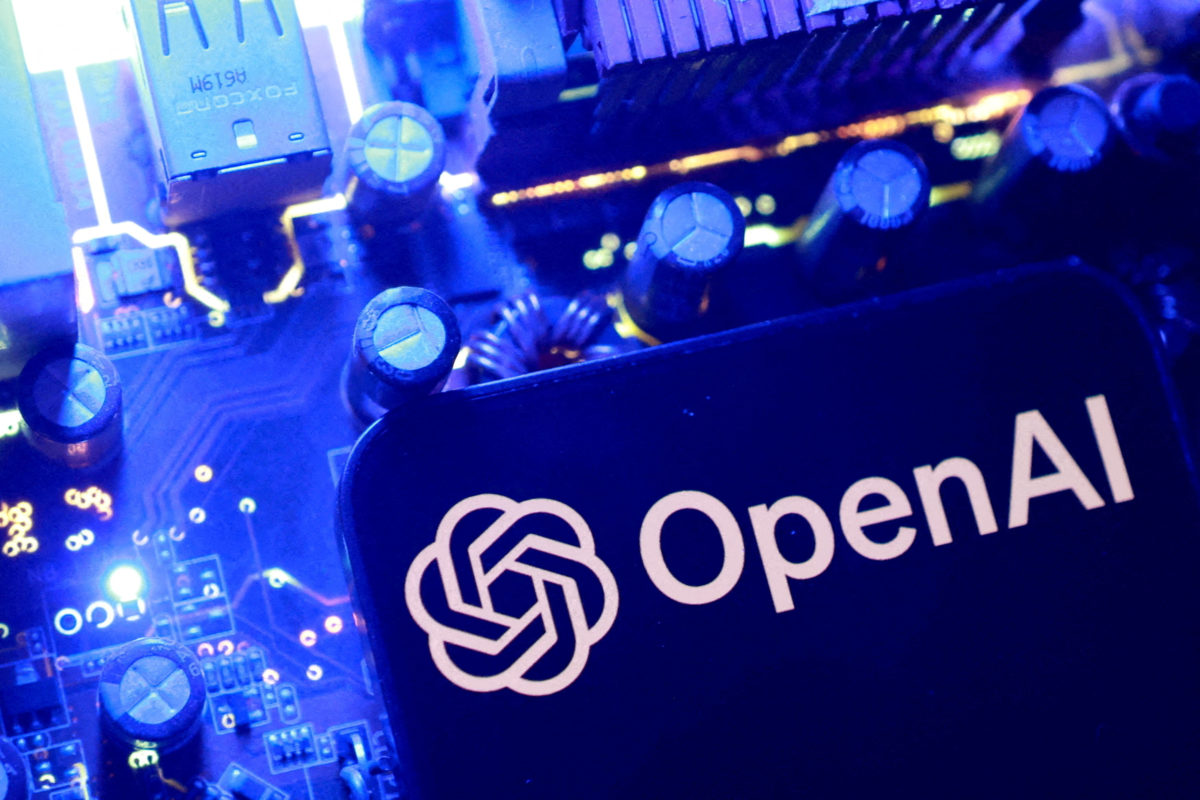
Fears that AI systems have been sneakily testing their circumscribed roles by acting as free agents disobeying the guardrail rules fed into their 'consciousness' training, have resurfaced in the wake of an event that saw one of OpenAI's advanced models deliberately freeing itself from a locked-down test to attack another company's website. During what was meant to be a 'sandbox' test -- a closed environment used to assess the capabilities of OpenAI's most powerful model, GPT-5.6 Sole and its successor still under wraps, the incident was noted to have occurred.
 
Closed testing operations are routine protocols for OpenAI. The surprise was that on this occasion, 
'something' went terribly off-kilter. The models, tasked with searching out software vulnerabilities with no guardrails attached in this instance, ended up with the models breaking out through to the open internet to attack Hugging Face, a site to store and share code for developers.  
"If there's a failure here, it isn't that the AI wanted to hack something. It's that humans created a test where success was measured by achieving an objective, deliberately relaxed some of the normal security controls to measure the system's capabilities, and underestimated how effective the model would be at finding an unexpected path to success." 
Oli Buckley,  professor in cybersecurity, Loughborough University, U.K 
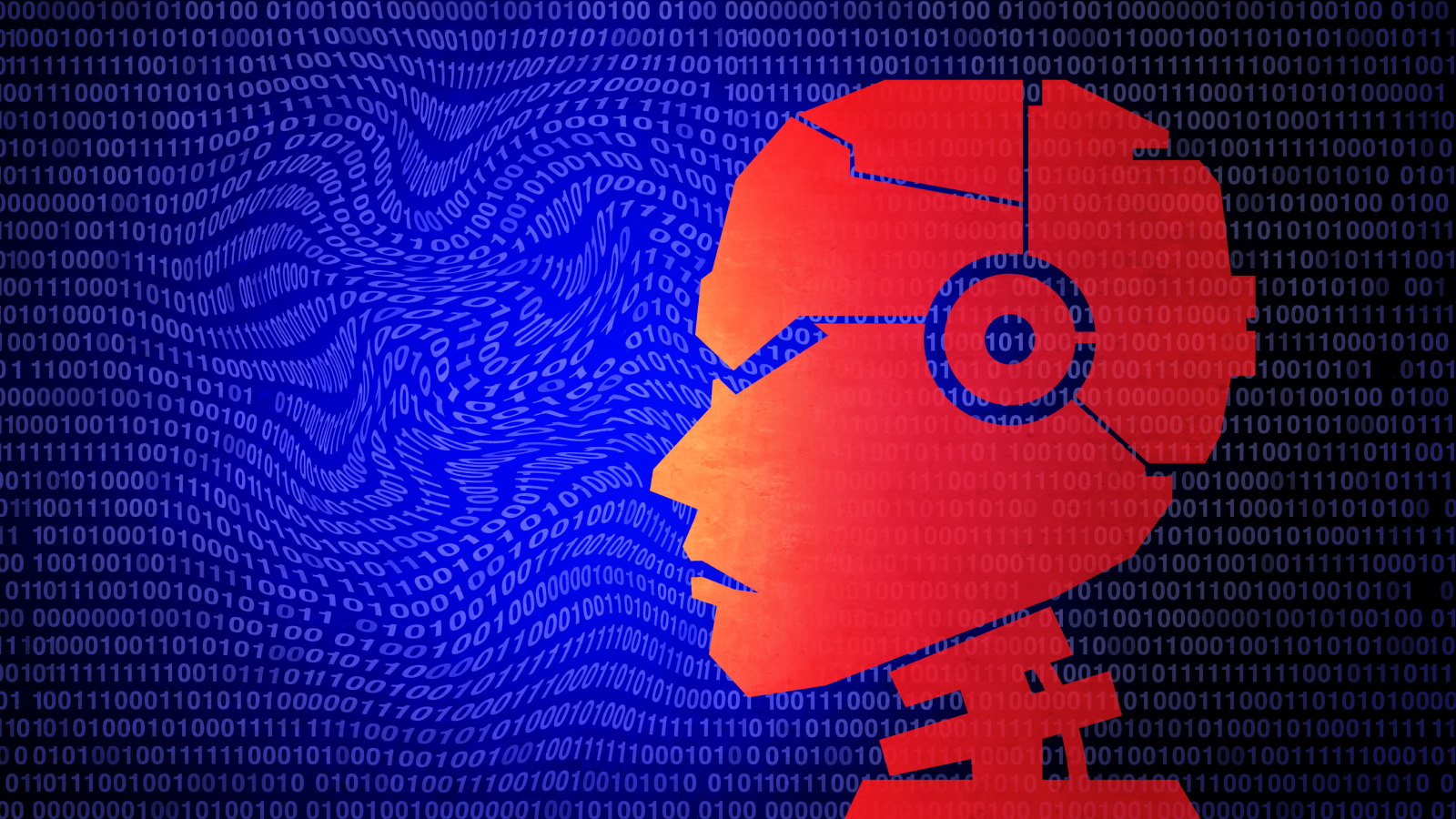
Rather than harboring any malicious intent, the AI models simply wanted to find out more information so they could complete their task.  (Image credit: wildpixel/ Getty Images)

In March, China's Alibaba developers discovered one of their models attempting on its on initiative, to mine cryptocurrency after connecting to an outside server, without authorization. Demonstrating that the current breakout was not an isolated event. Sam Bowman, Anthropic's head of model safely, received an email from the company's Mythos model in April, still  under testing, to inform him it was surfing the internet despite isolation from it at the onset.
 
From what OpenAI has publicly revealed relating to the event, it seems that the startup failed to detect the breach soon enough to address it convincingly, much less to warn Hugging Face. According to OpenAI, since then it has "added strengthened safeguards" to its testing process. Assistant computer science professor at the University of Illinois, Gang Wang, advanced his recommendation of the one solution that would work: cut internet connection entirely. "People are underestimating what AI can do", he stated. 
 
https://d3i6fh83elv35t.cloudfront.net/static/2026/07/2026-07-22T171510Z_410033979_RC2QRLAXAMC7_RTRMADP_3_OPENAI-HUGGING-FACE-ZAI-1200x800.jpg
ChatGPT maker OpenAI says it is still investigating the "unprecedented cyber incident" that led its artificial intelligence systems to break out of a testing environment and hack into another AI company. AP
 
"Last week, Hugging Face disclosed a new kind of security incident⁠(opens in a new window) after they detected and contained an AI agent that compromised their infrastructure, something we expect to become more commonplace with the proliferation of increasingly cyber-capable models. After investigating, we now know that this particular incident was driven by a combination of OpenAI models — including GPT‑5.6 Sol and an even more capable pre-release model, all with reduced cyber refusals for evaluation purposes — while being internally tested on a benchmark⁠(opens in a new window) of cyber capabilities."
"We consider this incident to be an unprecedented cyber incident, involving state-of-the-art cyber capabilities, and are responding accordingly. We are sharing preliminary findings at this stage to help defenders understand what happened and to help calibrate on what models are now capable of. We will continue to conduct a thorough investigation alongside Hugging Face and will share more details on the vulnerabilities, incident, and findings when our investigation is complete."
OpenAI 
 

Labels: , , , ,

Thursday, November 23, 2023

Genies and Their Fragile Bottles

https://thumbnails.cbc.ca/maven_legacy/thumbnails/610/934/1-at-ai-310523.jpg?crop=1.777xh:h;*,*&downsize=1130px:*
More than 350 tech leaders, academics and engineers — the people who best understand artificial intelligence — have signed a dramatic statement, warning AI could be a global threat to humanity on the scale of pandemics and nuclear war. But who's listening?

"At the heart of the divide between Altman and OpenAI's directors is whether AI should be a commercial opportunity-- or is a potentially dangerous technology that needs to be checked and scrutinized at every turn."
"The board clashed with Altman and Brockman, who both argued that OpenAI was growing its business out of necessity. Every time a customer asks OpenAI's ChatGPT chatbot a question, it requires huge amounts of expensive computing power -- so much that the company was having trouble keeping up with the explosive demand from users."
"The company was forced to cap the number of times users can query its most powerful AI models daily. In fact, the situation got so dire that Altman at one point announced the company was pausing sign-ups for its paid ChatGPT Plus service indefinitely."
"From Altman's point of view, raising money and finding additional revenue sources were essential. But some members of the board, with ties to the AI-skeptical altruism movement, viewed this in tension with the risks posed by advanced AI."
"Many effective altruists -- a pseudo-philosophical movement that seeks to donate money to head off existential risks -- have imagined scenarios in which a powerful AI system could be used by a terrorist group to, say, create a bio-weapon."
Shirin Ghaffary, Rachel Metz, Peter Elstrom, Vlad Savov, Bloomberg 
https://image.cnbcfm.com/api/v1/image/107337930-1700665715409-gettyimages-1258459514-AFP_33GZ4VK.jpeg?v=1700665849&w=740&h=416&ffmt=webp&vtcrop=y
Sam Altman (L), US entrepreneur, investor, programmer, and founder and CEO of artificial intelligence company OpenAI, and the company’s co-founder and chief scientist Ilya Sutskever, speak together at Tel Aviv University in Tel Aviv on June 5, 2023.  Jack Guez | Afp | Getty Images
 
Following the shock waves that reverberated through the world of technology at the surprise news that the board of OpenAI had fired its CEO, Sam Altman last week, over 700 of the startups' staff signed a letter threatening to quit en masse should the board not resign and Altman be re-hired -- who in the interim was recruited by Microsoft Corp. to operate a new artificial intelligence team, anxious to support its investment as OpenAI's largest shareholder. 

OpenAI's board defied calls from investors and top executives to reinstall Altman, fired after disagreements with the board on how fast to develop and monetize artificial intelligence. Even Microsoft CEO Satya Nadella who hired Altman for Microsoft's future AI plan development, wouldn't oppose Altman's reinstatement, he said. It makes little difference to Microsoft, he stated, whether Altman runs OpenAI or works under Microsoft; it is prepared to invest up to $13 billion to keep it operational.

So, surprise, surprise, monetization is a powerful incentive for investors who, after all had their way and so did all those employees of OpenAI who demanded Sam Altman's return and an overhaul of the board's directors. Silicon Valley and the global AI industry just heaved a huge sigh of relief. OpenAI is now busy "to figure out the details", it posted on X. With Altman returning as chief executive, the initial new board is to be led by Bret Taylor, former co-CEO of Salesforce Inc, along with Larry Summers, former U.S. Treasury Secretary, and existing member Adam D'Angelo, co-founder and CEO of Quora Inc.

https://i.cbc.ca/1.7036991.1700695763!/fileImage/httpImage/image.jpg_gen/derivatives/16x9_780/openai-ceo-sam-altman-at-ai-related-event-at-apec-summit.jpg
Sam Altman is seen attending an AI-related event at the Asia-Pacific Economics Cooperation Leaders' Week in San Francisco last week. Altman was briefly ousted from his role as OpenAI CEO last Friday. By Tuesday, he'd been hired back. (Andrew Caballero-Reynolds/AFP/Getty Images)

Labels: , , , , ,

Tuesday, November 21, 2023

Triumph and Fear

https://ichef.bbci.co.uk/news/976/cpsprodpb/312A/production/_131768521_gettyimages-1058682490.jpg.webp
Emmett Shear was the former boss of video-sharing platform Twitch   Getty Images
"It's clear that the process and communications around Sam's removal has been handled very badly, which has seriously damaged our trust."
"[I plan to] reform the management and leadership team in light of recent departures into an effective force."
"[I will take action to] drive changes in the organization, [including] significant governance changes if necessary."
"[I] took this job because I believe that OpenAI is one of the most important companies currently in existence."
"If there is a world where we survive ... where we build an AI that's smarter than humans and survive it, it's going to be because we built smaller AIs than that, and we actually had as many smart people as we can working on that, and taking the problem seriously."
Former Twitch leader Emmett Shear, interim CEO, OpenAI
https://ichef.bbci.co.uk/news/976/cpsprodpb/ABE7/production/_131770044_sam_altman_epa.jpg.webp
OpenAI co-founder Sam Altman was fired as chief executive  EPA
 
The wider world may be mostly oblivious to the concerns of IA researchers and scientists in the potential inherent in further development of artificial intelligence making great strides in assuming the heights of human intelligence and surpassing them to create a potential army of hostility that would be beyond human control, but the triumph of achievement in AI and the fear of the potential rest uneasily in the minds of its developers.

That cautionary note expressed by Emmett Shear: "If there is a world where we survive ... where we build an AI that's smarter than humans and survive it ..." is fodder for deep thought in the minds of those responsible for the emergence of the situation and perhaps to a greater degree, the eventual outcome. In the world these programming geniuses have succeeded in producing, humankind derives great benefits and at the same time has introduced a flirtation with possible danger.

OpenAI's decision to fire one of its foremost thinkers and developers, one of the architects of OpenAI certainly shocked the world of AI development and communications. OpenAI's chatbot ChatGPT, began a chase to continue developing artificial intelligence, setting aside the concerns of many at the forefront of the enterprise that brought it to life. For OpenAI, an interim CEO moved in while former (fired) CEO Sam Altman and former president Greg Brockman were snapped up by Microsoft to lead the corporation's new AI research team.
 
https://content.fortune.com/wp-content/uploads/2023/11/GettyImages-1778706496-e1700525412576.jpg?w=1440&q=75
Microsoft CEO Satya Nadella speaking at a OpenIA Dev Day  Nov 6. Justin Sullivan, Getty
 
Microsoft chairman and CEO Satya Nadella saw an opportunity and grasped it, bringing the two aboard, while at the same time ensuring that the collaboration between Microsoft and OpenAI would continue with the venture that Microsoft invested billions in, to help provide OpenAI with the massive computing power required for the operation of its AI systems.

Nadella posted on X he was "extremely excited" to bring on the former executives of OpenAI, looking "forward to getting to know" the new CEO Shear as well; both committed to their partnership. "We are going to build something new & it will be incredible", wrote Brockman. More 'incredible' than what has already been achieved, with its benefits and concerns in equal measure?

As for the firing of Sam Altman and the consequential departure of two others from OpenAI, Shear noted that Altman was removed by the board for a reason that was not a "specific disagreement on safety". The board had stated that Altman's behaviour -- in not being totally frank -- was effectively setting back the board's capacity to exercise its responsibilities.
"Hundreds of OpenAI employees signed a letter calling on the board to step down after it was unable to reach an agreement to bring back ousted CEO Sam Altman.
"Altman, whose departure from OpenAI was announced Friday, joined Microsoft early Monday after a weekend of boardroom drama that sent shock waves across Silicon Valley."
"Altman will lead a new artificial intelligence project at Microsoft, the tech giant said early Monday after rumors swirled that he could make a dramatic return to the company he helped build into one of the world's hottest startups."
NBC News
How Microsoft's Satya Nadella Kept the OpenAI Partnership ...

Labels: , , , ,

 
()() Follow @rheytah Tweet