Ruminations

Blog dedicated primarily to randomly selected news items; comments reflecting personal perceptions

Thursday, November 23, 2023

Genies and Their Fragile Bottles

https://thumbnails.cbc.ca/maven_legacy/thumbnails/610/934/1-at-ai-310523.jpg?crop=1.777xh:h;*,*&downsize=1130px:*
More than 350 tech leaders, academics and engineers — the people who best understand artificial intelligence — have signed a dramatic statement, warning AI could be a global threat to humanity on the scale of pandemics and nuclear war. But who's listening?

"At the heart of the divide between Altman and OpenAI's directors is whether AI should be a commercial opportunity-- or is a potentially dangerous technology that needs to be checked and scrutinized at every turn."
"The board clashed with Altman and Brockman, who both argued that OpenAI was growing its business out of necessity. Every time a customer asks OpenAI's ChatGPT chatbot a question, it requires huge amounts of expensive computing power -- so much that the company was having trouble keeping up with the explosive demand from users."
"The company was forced to cap the number of times users can query its most powerful AI models daily. In fact, the situation got so dire that Altman at one point announced the company was pausing sign-ups for its paid ChatGPT Plus service indefinitely."
"From Altman's point of view, raising money and finding additional revenue sources were essential. But some members of the board, with ties to the AI-skeptical altruism movement, viewed this in tension with the risks posed by advanced AI."
"Many effective altruists -- a pseudo-philosophical movement that seeks to donate money to head off existential risks -- have imagined scenarios in which a powerful AI system could be used by a terrorist group to, say, create a bio-weapon."
Shirin Ghaffary, Rachel Metz, Peter Elstrom, Vlad Savov, Bloomberg 
https://image.cnbcfm.com/api/v1/image/107337930-1700665715409-gettyimages-1258459514-AFP_33GZ4VK.jpeg?v=1700665849&w=740&h=416&ffmt=webp&vtcrop=y
Sam Altman (L), US entrepreneur, investor, programmer, and founder and CEO of artificial intelligence company OpenAI, and the company’s co-founder and chief scientist Ilya Sutskever, speak together at Tel Aviv University in Tel Aviv on June 5, 2023.  Jack Guez | Afp | Getty Images
 
Following the shock waves that reverberated through the world of technology at the surprise news that the board of OpenAI had fired its CEO, Sam Altman last week, over 700 of the startups' staff signed a letter threatening to quit en masse should the board not resign and Altman be re-hired -- who in the interim was recruited by Microsoft Corp. to operate a new artificial intelligence team, anxious to support its investment as OpenAI's largest shareholder. 

OpenAI's board defied calls from investors and top executives to reinstall Altman, fired after disagreements with the board on how fast to develop and monetize artificial intelligence. Even Microsoft CEO Satya Nadella who hired Altman for Microsoft's future AI plan development, wouldn't oppose Altman's reinstatement, he said. It makes little difference to Microsoft, he stated, whether Altman runs OpenAI or works under Microsoft; it is prepared to invest up to $13 billion to keep it operational.

So, surprise, surprise, monetization is a powerful incentive for investors who, after all had their way and so did all those employees of OpenAI who demanded Sam Altman's return and an overhaul of the board's directors. Silicon Valley and the global AI industry just heaved a huge sigh of relief. OpenAI is now busy "to figure out the details", it posted on X. With Altman returning as chief executive, the initial new board is to be led by Bret Taylor, former co-CEO of Salesforce Inc, along with Larry Summers, former U.S. Treasury Secretary, and existing member Adam D'Angelo, co-founder and CEO of Quora Inc.

https://i.cbc.ca/1.7036991.1700695763!/fileImage/httpImage/image.jpg_gen/derivatives/16x9_780/openai-ceo-sam-altman-at-ai-related-event-at-apec-summit.jpg
Sam Altman is seen attending an AI-related event at the Asia-Pacific Economics Cooperation Leaders' Week in San Francisco last week. Altman was briefly ousted from his role as OpenAI CEO last Friday. By Tuesday, he'd been hired back. (Andrew Caballero-Reynolds/AFP/Getty Images)

Labels: , , , , ,

Saturday, August 13, 2022

Cannabis Retail Dilemma Solved

"Alberta Gaming, Liquor & Cannabis [AGLC] is deeply concerned about the rise of violent robberies at Alberta retail cannabis stores."
"We have been working with retailers and law enforcement partners to understand options and increase safety for the public, employees and responding police officers."
Alberta Gaming, Liquor & Cannabis statement

"Alberta is not the only province to see an uptick in cannabis store robberies in recent years."
"Because employee safety is a paramount concern for us we encourage other provinces, including Ontario, to do the right thing and follow Alberta's lead."
"Complying with this regulation meant that most licensed cannabis stores in the province have been forced to black out exterior windows, making them prime targets for criminal elements."
"Tuesday's news is a win for our employees' safety, and our ability to continue pushing back against illicit market operators."
Omar Khan, spokesperson, nationwide cannabis retailer High Tide Inc.

"Having that frosting up is dangerous for employees on the inside, as well as not contributing to the classic principle of 'eyes on the street' on the exterior as well."
"We're elated to hear that logic has won."
"The reason why these [regulations] were put into place as for the safety of children, but we're now talking about the physical safety of staff, patrons and the general public outside."
Alena Jenkins, owner, FivePoint Cannabis, Calgary
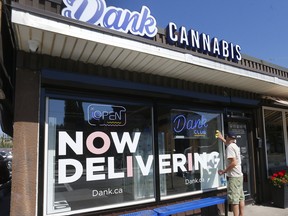
The windows at a Calgary cannabis store are cleaned on August 9, 2022 as the provine will no longer force licensed cannabis stores to black out their windows.
The windows at a Calgary cannabis store are cleaned on August 9, 2022 as the province will no longer force licensed cannabis stores to black out their windows. Photo by Darren Makowichuk/Postmedia
 
Last summer, youth began swarming Calgary pharmacies and cannabis shops to make off with weed and over-the-counter codeine cough syrup. In the process they assaulted staff at these establishments. In Toronto, police arrested three men -- Bryan Sabino De La Cruz, 29, Edwin Ramirez Mercedes, 25, and Enricko Charles0Woodley, 24, for their participation in a string of cannabis store break-ins in a north-west communities of Toronto back in March. All three now face about 50 burglary-related charges.

In Ontario, recreational cannabis stores are supervised by the Alcohol and Gaming Commission of Ontario (AGCO), supervised in turn by the provincial Ministry of the Attorney General. About 41 percent of Canada's legal recreational cannabis sales take place in Ontario, followed by Alberta with 17 percent, Quebec with 14 percent and British Columbia with 14 percent.

Across Canada, licensed cannabis retailers have been aware of the potential problems inherent in the requirement that to protect the tender aspirational eyes of the under-aged element of society, the cautionary requirement to cover shop windows to ensure that no alluring cannabis products are placed in full frontal display to tempt the young to enter the ranks of recreational cannabis users has had unforeseen consequences.

Opaque window coverings, however, have led to break-ins; violent intrusions by the criminal-minded are shielded from public view, in a reversal of the purported need to keep shop interiors and the products sold there from outside view. Now, the Alberta Gaming, Liquor & Cannabis regulatory body for the province has finally taken steps to help stop an epidemic of burglaries and violent cannabis store robberies.

A memo was issued by the AGLC to retailers, striking down the regulations requiring stores to cover windows so that henceforth store interiors will be visible from outside. The original purpose of preventing minors from viewing legally available cannabis and paraphernalia may have been well-intentioned, but further down the road stores complying with regulations for opaque windows became targets for criminals.

The regulatory body cautioned retailers not to take advantage of the open visibility by using storefronts to showcase wares in outward-facing promotional displays. Federal rules on promoting cannabis to minors were to remain subject to enforcement. The success for Alberta retailers of having the regulation repealed has given hope to other provincial cannabis retailers that their provincial regulatory bodies will also see their way clear to removing the covered-window regulation and for the same reason that it was deemed necessary for Alberta.

It was the Alberta Cannabis Council, an advocacy group for the licensed retailers of the province having drafted a letter to AGLC urging a reversal on frosted windows to combat the increase in crime. The rise in retail robberies was causing shop owners concern over the safety of employees. 
"We already took off our door wrapping over two years ago, for exactly that reason."
"We were actually the first in Calgary to take off our wrappings. I felt that my right to protect my staff superseded [Alberta’s rules]. So we’re really excited to take off the rest of the wrappings, now."
"We have a lot more checks and balances in terms of our security than a good portion of other businesses."
"We’re really just a retail store with a lot of security precautions, so it’s nice to get rid of this unsafe rule."
Alena Jenkins, owner FivePoint Cannabis, Calgary
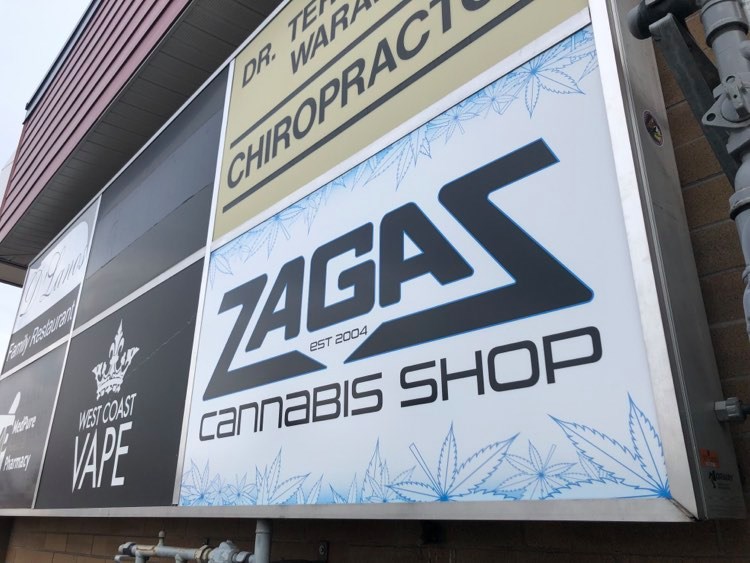
Zagas Cannabis Shop storefront (Photo by Dione Wearmouth, MyPGNow.com)

Labels: , , ,

Friday, November 19, 2021

Seriously Adverse Side Effects : COVID Vaccines

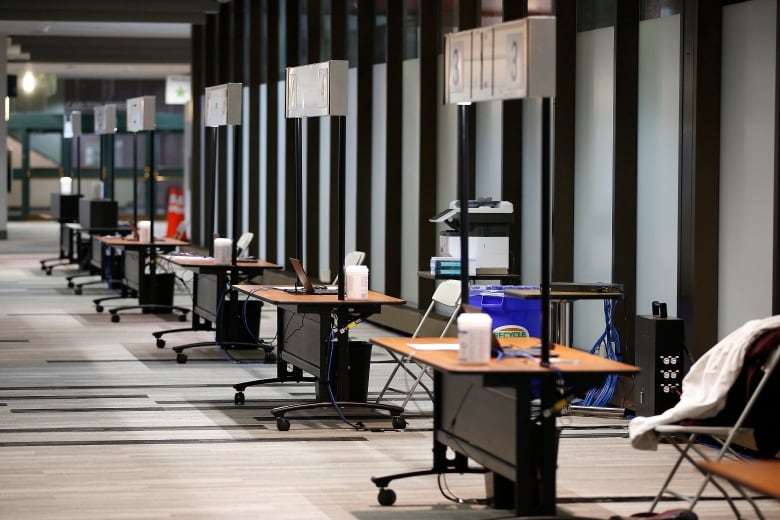
A COVID-19 vaccination centre at Winnipeg's Convention Centre on January 1, 2021. (John Woods/The Canadian Press)
"VITT [vaccine-induced immune thrombocytopenia, a rare blood clotting phenomenon linked to AstraZeneca and J&J, adenoviral vector vaccines] can be very persistent and malignant."
"It just can get worse and worse, and sometimes people end up with very bad outcomes, including death." 
"[It is one scenario] where I feel like we can say with confidence that this entity is causually related to the vaccine."
Dr.Donald Arnold, medical director, Platelet Immunology Laboratory, McMaster University

"There has been rapid communications of new adverse events related to new safety concerns."
"Really, the key there, when you have a fatal outcome is, what was the cause of death? What was the diagnosis, the condition, that led to the fatal outcome."]
"In a younger, healthy person who dies suddenly, that may be easy to tease out compared to someone who is very elderly and has a number of different conditions."
"Obviously, the physician who sees the patient is in the best position to say. People who die at home, that information may be more limited."
"[The bigger challenge is that] most of the conditions, pretty well all the conditions, that can occur with adverse events following vaccination can also be triggered by other things."
"It very, very rarely may be a higher risk with the AstraZeneca vaccine. For the most part,  health care providers are encouraged to report anything where they have a concern, regardless of the time interval."
Dr.Karina Top, infectious disease specialist, IWK Health Centre, Halifax
A tiny fraction of the thousands of Canadians who have received a COVID-19 vaccine have reported experiencing adverse reactions following the injection, according to new safety information published by Health Canada. (Nathan Denette/The Canadian Press)
 
An editorial published in the Canadian Medical Association Journal outlined "robust" evidence to rebut claims that the anti-COVID vaccines are experimental or unsafe. They write that while the vaccine-resistant are free to decide not to be inoculated "they ought not to be free to refuse SARS-CoV-2 vaccination and to work as physicians". Serious reported "adverse events" are rare in the face of tens of millions of doses having been dispensed within Canada's population.

Among the serious reactions to the vaccines that have been reported anaphylaxis, if not recognized quickly enough and treated expeditiously can be fatal; it can occur in minutes of a hypodermic needle piercing skin. Vaccine-induced immune thrombotic thrombocytopenia, a rare blood clotting event, can also be fatal if not caught quickly through a diagnostic test checking for unusual antibodies against platelets the vaccine produces.

According to Health Canada, a serious adverse drug reaction is defined as a "noxious and unintended response to a drug" that can place someone in hospital, causes birth defects, disability or incapacity and can be life-threatening, or which ends in death. AEFI (Adverse Events Following Immunization) forms are filled out by doctors, nurses and pharmacists. Check boxes are included for reactions like "angoedema" (swelling of the tongue, throat, eyelids, face or lips) along with respiratory reactions such as wheezing or shortness of breath, along with other reactions such as gastrointenstinal problems 

Reports are important to data gathering, but they are not regarded as proof of causation. A total of 208 reports of deaths following a COVID-19 vaccine was reported through the Canadian Adverse Events Following Immunization Surveillance System (CAEFISS). Of the total, 79 deaths were deemed unlikely to be linked to a COVID vaccine, 82 deaths were absent enough information for an  assessment, and 47 remained under investigation. The blood clotting complication was implicated in seven of those deaths.

Nationally in Canada there were slightly over 22,200 reports of adverse reactions following immunization, out of the more than 59 million doses administered. Of the total, 5,653 were reported as serious, representing 0.010 percent of all doses given to the end of October. Two complications reported in higher numbers than normally expected were myocarditis and pericarditis, inflammation of the heart muscle and the lining of the heart following inoculation with a mRNA vaccine.

Over 423 million doses were administered in the United States from December 2020 to November 1st, 2021. In that time frame the Vaccine Adverse Events Reporting System (VAERS) had 9,367 reports of death representing 0.0022 percent of all administered doses. In the U.S. health-care providers are required to report any death following vaccination for COVID "even if it's unclear whether the vaccine was the cause".

In Britain, 1,739 reports of people who died following receipt of a COVID vaccine were recorded, the majority representing elderly people, or those with heart, kidney or other chronic health problems. "Review of individual reports and patterns of reporting does not suggest the vaccines played a role in these deaths", stated the summary of the reports. Over 107 million vaccine doses were administered in the United Kingdom.

People attend a COVID-19 mass vaccination clinic in Toronto in June. More than 59 million doses of COVID-19 vaccines have been administered in Canada. Nationally, as of Oct. 29, there had been just over 22,200 reports of adverse reactions following immunization; of those, 5,653 were reported as serious.
People attend a COVID-19 mass vaccination clinic in Toronto in June. More than 59 million doses of COVID-19 vaccines have been administered in Canada. Nationally, as of Oct. 29, there had been just over 22,200 reports of adverse reactions following immunization; of those, 5,653 were reported as serious. Photo by Cole Burston/The Canadian Press

Labels: , ,

 
()() Follow @rheytah Tweet