Ruminations

Blog dedicated primarily to randomly selected news items; comments reflecting personal perceptions

Thursday, May 08, 2025

New Brunswick's Mysterious Brain Disease

https://www2.gnb.ca/content/dam/gnb/Departments/h-s/neuro/herotest2.jpg
Investigation of a Cluster of a Potential Neurological Syndrome of Unknown Cause in New Brunswick

"Unfounded concerns that a potentially fatal mystery disease, possibly induced by an environmental toxin, is causing the patients' neurological symptoms have been amplified in traditional and social media."
"Misinformation regarding this cluster [of patients] has proliferated in both traditional and social media, from not only the predictable and easily identifiable groups co-opting the crisis to suit their agenda, such as anti-vaccine advocates, but also those who are unknowingly amplifying an incorrect diagnosis from their physicians."
JAMA-published Study
https://smartcdn.gprod.postmedia.digital/nationalpost/wp-content/uploads/2025/05/gettyimages-2123636327_288836615.jpg?quality=90&strip=all&w=564&h=423&type=webp&sig=sdAeiicO1RSZd1ytJ-bnEw
A new study published in JAMA Neurology debunks “an alleged ‘mystery’ neurological illness” that emerged in New Brunswick six years ago. Photo by ALAIN JOCARD /AFP via Getty Images
 
A new study evaluating patients at two hospitals in New Brunswick and Ontario that identifies symptoms possibly traced back to known neurodegenerative and non-neurodegenerative conditions, published in the journal JAMA Neurology, posits no evidence in claims of a mystery brain disease that centres itself in New Brunswick. Close to 400 residents of New Brunswick in the Acadian Peninsula and Moncton areas reported symptoms of a "neurological syndrome of unknown cause".
 
Symptoms are inclusive of memory problems, balance issues, behavioural changes, muscle spasms and bursts of intense pain. In 2022, a team of six neurologists and other experts in medical health, formed under the former government found no evidence after their investigation of 48 patients, that a cluster of cases existed. In fact, 46 of the cases studied for their report had been referred by one specific neurologist. 
 
Once the list of patients reporting symptoms increased close to 400, the successive government committed to reopening the investigation. Authors affiliated with the University of Toronto, New Brunswick Horizon Health Network and other Canadian health institutions who had joined the updated study published in JAMA, support the initial research. Initial health records and follow-ups were studied between November 2023 and March of 2025, along with demographic data and autopsy reports when applicable.
 
According to the study's conclusions, conditions such as traumatic brain injury and metastatic cancer were identified in all 25 patients evaluated at New Brunswick's Horizon Health Network and Ontario's University Health Network. "Strong evidence" exists against an exposure to an environmental toxin which had been formerly posited as a source of the mysterious illness. The study pointed out that some of the patients' conditions were 'complex' warranting a second opinion: "However, it appears few patients sought this".
 
 The reputation of the illness as a "mystery brain disease", the study suggested related to a combination of the public's decreased trust in public health institutions in the wake of the COVID-19 pandemic, along with a widespread general misinformation aura. Data indicated that patients could be suffering from other diagnosable neurological conditions, which a multidisciplinary treatment might benefit them with. "Some patients", noted the study, rejected the diagnosis of a second opinion, preferring to believe they were suffering from an unknown neurological disease.
 https://www2.gnb.ca/content/gnb/en/departments/health/neuro-cluster/_jcr_content/gnbstrap-middle/textimage_1941638325/image.img.jpg/1745340435307.jpg
In the 2022 report, the New Brunswick Health Department attributed some symptoms to conditions such as Alzheimer's, dementia, Parkinson's, paranoid schizophrenia, chronic fatigue, severe anxiety disorder, and cancer. Chief medical officer of New Brunswick committed  his office to review 222 files with the Public Health Agency of Canada, to clarify issues surrounding the illness. 
"[Despite the small sample size], when we did the statistics … the chances of any of those other individuals having a mystery disease was less than one in a million. So the numbers are pretty staggering and, I think very, very convincing."
"The neurological problems varied a great deal. Some had neurodegenerative diseases, but others had other neurological problems and therefore a single environmental toxin … could never have explained this broad variety of neurological abnormalities."
"I think that if there really had been a mystery disease with those numbers, we would have been hearing from more than a single physician. … We would be seeing physicians raising red flags, raising awareness and concern that there was an epidemic of neurological diseases that could not be explained."
Dr. Anthony Lang, senior neurologist, neuroscientist, Toronto, among the 13 study co-authors
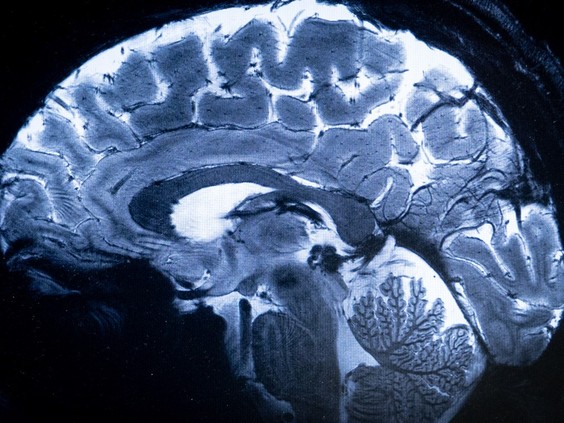
https://i.cbc.ca/1.7228157.1717782259!/cumulusImage/httpImage/image.jpg_gen/derivatives/16x9_1180/brain-scan.jpg?im=Resize%3D780
Of the 25 patients reassessed for the study, 14 are still living. (Shutterstock)
 
"Clear and transparent communication strategies to report the much-needed re-evaluations are required."
"Education, reassurance, and mental health support should also be prioritized for patients and families who have been profoundly impacted by claims that a potentially fatal mystery disease continues to affect them." 
JAMA-published Study

Labels: , , , , , ,

Tuesday, December 19, 2017

Hopes for the Future in Controlling Parkinson's

"Funding pioneering studies like this has the potential to throw Parkinson’s into a completely new light."
"It’s very early days in the research, but if it’s proved there is a unique odour associated with Parkinson’s, particularly early on in the condition, it could have a huge impact. Not just on early diagnosis, but it would also make it a lot easier to identify people to test drugs that may have the potential to slow, or even stop Parkinson’s, something no current drug can achieve."
Dr Arthur Roach, Director of Research, Parkinson’s UK

"The sampling of the skin surface will provide a rich source of metabolites which we can mine to distinguish healthy patients from those in the early stages of Parkinson’s. We are excited to embark on this biomarker discovery project. It is hoped that these results could lead to the development of a non-invasive diagnostic test that may have the ability to diagnose early Parkinson’s – possibly even before physical symptoms occur."
"It's very humbling as a mere measurement scientist to have this ability to help find some signature molecules to diagnose Parkinson's. It wouldn't have happened without Joy [Joy Milne of Perth, Scotland]. For all the serendipity, it was Joy and Les who were absolutely convinced that what she could smell would be something that could be used in a clinical context and so now we are beginning to do that."
Professor Perdita Barran and her team at the Manchester Institute of Biotechnology (MIB)
Joy Milne's husband
Joy first detected the odour on her husband Les, who was diagnosed with Parkinson's at the age of 45
How strange, the many permutations of diseases and their markers. Patients suffering from Parkinson's disease have been identified with impaired olfactory sense resulting from Parkinson's. Olfactory dysfunction appears to be a pre-onset sign of Parkinson's. Yet how strange it is that a detectable odour in people with Parkinson's, both before and after diagnosis of the symptoms, has been discovered thanks to one woman's discerning sense of smell when her husband was entering the diagnostic period of Parkinson's onset.

Joy Milne of Perth, Scotland was  absolutely certain she detected a change in her husband's personal odour a full six years prior to his diagnosis with Parkinson's. According to the now-67-year-old woman, her husband's characteristic odour underwent an alteration, subtle as it was, that she could detect long before he experienced any difficulty with movement. Her husband, Les Milne, after living for 20 years with Parkinson's following his diagnosis, died at age 65 in 2015.

Now this woman whose acute sense of smell and identification of an odour she linked with Parkinson's has led scientists toward a discovery of ten molecules which may lead to the first diagnostic test for this condition, as researchers at Manchester University became convinced that a discernible odour emanated from people with Parkinson's. Initially, researchers tested Mrs. Milne to verify her claim of detecting Parkinson's by odour.

She was exposed to skin swabs from groups of people living with Parkinson's, and those without the condition. And by smelling each she was able to accurately determine who suffered from Parkinson's and who did not, in a blind test. Among those who had Parkinson's, according to Mrs. Milne, was one of those whose sample was included but was not yet diagnosed because at that early stage no symptoms had been manifested.

The ten molecules appearing in high concentration on the skin swabs from Parkinson's patients have since been identified by the researchers. One in 500 people in Canada and Britain is affected by Parkinson's, causing deterioration of neurons in a specific portion of the brain. The condition leaves people struggling to move and even to speak or sleep. No definitive tests are currently in use; symptoms begin typically at the time when over half of the nerve cells in the brain have been lost to the disease.

Dr. Tilo Kunarth also tested Mrs. Milne's diagnostic ability through smell alone at Edinburgh University, confirming her ability to detect the condition. Given a dozen unmarked Tee-shirts to smell, six having been worn by Parkinson's patients, the other six worn by volunteers absent the disease, she correctly identified all those with the condition. "She was telling us that this individual had Parkinson's before he knew; before anybody knew", explained Dr. Kunath.

Speculation is that dogs could be trained to sniff out the disease if the molecules are correctly identified. And from there doctors could use the mass spectrometry analytical technique.

Labels: , ,

 
()() Follow @rheytah Tweet