Ruminations

Blog dedicated primarily to randomly selected news items; comments reflecting personal perceptions

Sunday, September 20, 2026

Judged 'Not Criminally Responsible', Yet a Community Threat

https://content.presspage.com/uploads/2189/1920_suspect-5.jpg?10000
Hamilton Police
"He pulled out a knife and began stabbing her with it in the back. She was stabbed upwards of seven times and suffered a severed bicep and collapsed lung amongst other injuries."
"He resumed using cannabis during the time he was living with his parents."
"[The panel] concluded that Mr. Ghawar remained a significant threat to the safety of the public and that a detention order was necessary and appropriate. With respect to the additional privileges suggested by the hospital, the panel determined that it was appropriate to include in the disposition seven-day passes accompanied by an approved person, and seven-day passes indirectly supervised with a pre-approved itinerary."
Ontario Review Board (ORB)  
"In April 2014, Mr. Ghawar stopped taking his anti-psychotic medication, and his mental health symptoms intensified almost immediately."
"According to his family, Mr. Ghawar became very anxious and irritable, and would refuse to leave the house alone."
Hospital Report  
This is an Ontario resident who twice stabbed people multiple times in the back, and subsequently found not criminally responsible, which led to his being granted a series of day passes, despite the fact that he remains, in the professional opinion of health experts, a "significant threat to the safety of the public". 
 
Diagnosed with schizophrenia and cannabis use disorder "in remission in a controlled environment", Muneeb Ali Ghawar was found in February of 2024 to be not criminally responsible for aggravated assault while wearing a disguise. The second episode where he stabbed a woman took place in 2023, at a Hamilton cannabis store. 
 
He had entered the Sweet Releaf Cannabis shop on February 3, 2023 wearing a mask and a trapper hat pulled down over his forehead. A female clerk began the process of ringing up his cannabis purchase, and while she was thus engaged, the man moved behind her, and withdrawing a knife, stabbed her back repeatedly. Ghawar ran from the store when another employee screamed and called 911. 
 
https://smartcdn.gprod.postmedia.digital/nationalpost/wp-content/uploads/2026/09/cannabis_304621129.jpeg?quality=90&strip=all&w=564&h=423&type=webp&sig=9nz8KVrPqHKgV_BaIWN_sw
Lighting up a marijuana joint. Photo by Adobe Stock
 
Ghawar was identified through studying the surveillance video at the cannabis operation where he had appeared on a previous occasion, unmasked. Six days following the stabbing he was arrested. He is now under the jurisdiction of the Ontario Review Board for a second time. He had been declared 'not criminally responsible' for a similar attack nine years previously, when an acquaintance was stabbed in the back and torso by him. He was hospitalized in a psychiatric ward for two years then discharged to live with his family.   
"Mr. Ghawar was compliant with his medication, met consistently with the outpatient team, and maintained stable mental health. He was granted an absolute discharge on February 11, 2019."
"There has been no evidence of mood disorders or psychotic breakthrough. He engages appropriately with co-patients and staff and is always pleasant and polite during interactions."
"His persistent use of cannabis is a  significant risk factor."
"He was using cannabis at the time of the first index offence in 2014, and at the time of the current index offence in 2023. He became extremely psychotic and committed very violent offences that could have resulted in the death of either victim."
Ontario Review Board ruling  
Mental health symptoms had afflicted the man for years. He began the use of cannabis at age 15. In 2024 he was ordered to be placed at St. Joseph's Healthcare where he was given privileges whereby he could enter the community of Hamilton under indirect supervision. He has been treated for anxiety and depression since 2012 by a psychiatrist. He also has amassed a criminal record including assault, mischief, break-and-enter, and assault with a weapon.
 
A psychological assessment in 2023 revealed that Ghawar "expressed delusional thought content, such as that the victim of the index offence was selling bad cannabis to kids in order to draw them into sex trafficking", the ORB decision noted. Ghawar admitted long-standing auditory hallucinations, and that he had stopped taking his medication prior to the offence, while smoking marijuana. 
 
https://lh3.googleusercontent.com/gps-cs-s/AHRPTWmg1zCZ0wc0OAr17ycwFh9lzR5R90_G_wl37CpvmP30uWZUbTiW4oL8-xH-gMN7ryepJ1SUYL62pbxJiuHy3of6BhqEGJlOeaBspIelDQHrAucHKMNOdCubSYsBhhvZvayIReCR=s680-w680-h510
Sweet Releafs Inc.
 
"He again denied using cannabis, and suggested that the positive urine result was from others smoking cannabis around him", noted the ORB decision. And this is the man his parents plan to take to Pakistan to have him married there. "This would be an arranged marriage to a woman he has not met", even while his psychiatrist "expressed concern that bringing another person into the family home would increase the stress at a time when Mr. Ghawar is struggling with cannabis use".  
 

Labels: , , , , , , ,

Sunday, November 23, 2025

"Acting Out" -- Deadly Psychosis on the Loose -- Posing a Threat to the Public

"On March 22, 2015, Ms. Campbell was parked in a commercial parking lot. Her mother exited the car and walked away with the assistance of a walker. Ms. Campbell drove towards her mother at a high rate of speed causing her mother to be thrown into the air, on to the hood of the car and then on to the ground."
"Closed circuit television captured Ms. Campbell accelerating and reversing over her mother four times. She then exited the car, appeared to check on her mother, and then drove away."
Ontario Review Board, case review 
Murder charge laid after Toronto woman ran down her mother in parking lot: police - image
A Toronto woman is facing a murder charge after police allege she intentionally ran down her mother in a furniture store parking lot. March 23, 2016  Global News / Ben Jonah
 
Now 52 years old, born in Kingston, Jamaica as an only child, Michelle Campbell was raised by her grandparents for the first four years of her life. She moved with her mother at age seven to Toronto when her mother married a Canadian. Ms. Campbell graduated from high school, then attended York University. At 2:00 p.m. in the afternoon of March 23, 2016, she drove her 65-year-old mother Eleanor to a Leon's Furniture store in Pelmo Park, Toronto. As her mother exited the vehicle in the parking lot, her daughter Michelle deliberately rammed her mother, killing her.
 
She was found guilty of killing her mother, but not held to be criminally responsible, at trial in 2017. She was diagnosed with schizophrenia. She is under constant supervision by an assigned team of medical workers at the Forensic Outpatient Service at the hospital responsible for her well-being, and sees her psychiatrist every six to eight weeks. In the last reporting year she has worked as a cashier and shelf-stocking clerk at both Walmart and Dollarama. 
 
She attends religious services at two congregations, while living in a subsidized apartment where she is supported by the Canadian Mental Health Association. At a recent hearing at Ontario Shores Centre for Mental Health Sciences in Whitby, Ontario, her psychiatrist informed the Ontario Review Board during a periodic review of her case that the patient incurred judgment lapses of late, citing having made contact with her ex-husband and his son, contrary to court order. 
"The team continues to be concerned that without the support Ms. Campbell has, her presentation and beliefs can shift quite quickly and that could result in a re-offence scenario like that of the index [original] offence."
"Ms. Campbell continues to pose a significant threat to the safety of the public."
"[Her psychiatrist] also explained that Ms. Campbell is a very religious person, and there are some aspects of the religiosity which cross the line into illness but these are more benign and less threatening now." 
"When she is going to be driving Campbell will list all the places she is going to go that week, and the destinations that are consistent with her schedule. If the itinerary is acceptable, the hospital approves it. The itinerary requests and approvals are done by email."
"[Her psychiatrist] is monitoring the emails  and Ms. Campbell's mental state and advised he would intervene if there were a change in her mental state that would impact her driving."
Ontario Review Board 
 She also undertook, without notifying and discussing the matter beforehand with the hospital treatment team to purchase a car for herself. For the first infraction she is facing a criminal charge. Responding to the board's query of the seriousness of the second infraction, the psychiatrist responded on behalf of the woman's treatment team by reminding them that the acquisition of a personal vehicle was problematic since is was "the murder weapon, so to speak". 
 
The approved method of the woman getting around to running her itemized and approved personal errands was to rent cars and driving only as she was permitted to do in her disposition. That she had self-initiated a car buying expedition for herself without first discussing that decision with her care team was a surprise, since conditions in her disposition limit her driving to an approved itinerary.
 
Querying the psychiatrist with respect to the woman's insight level  of the act of killing her mother elicited the response that her insight is 'limited'. "Ms. Campbell acknowledges she was unwell, but continues to believe that it was partly her mother's fault." The Board decided to continue Michelle Campbell's existing conditional discharge, while stating "Ms. Campbell continues to pose a significant threat to the safety of the public, since her offence is the most serious criminal offence in the criminal Code". 
 
The Ontario Review Board concluded by discharging Campbell on conditions including that she reside in the Durham Region. 
She has incurred a new charge of breaching her conditions for contacting her ex-spouse. She purchased a vehicle for herself without consultation with her [psychiatric] team. In addition, she has a longstanding history of psychotic symptoms, and past non-compliance with her medication."
"She continues to have limited insight, and beliefs that may be indicative of symptoms of her underlying illness. There is concern that such beliefs have the potential to intensify and cause her to act out, as was the case at the time of the index offence."
"[Campbell] picks up her medications weekly and remains medication compliant. Ms. Campbell is aware she requires treatment and is agreeable to taking her medications."
However, Ms. Campbell was also recently more stressed about the criminal charges which have impacted her mental state."
"The [medical] team will continue to work with her to build insight These are items the treatment team will be monitoring and working closely with her over the next year in order to best support her."
Ontario Review Board 
Toronto traffic on Queen Street West during night time. (Credit: Getty)


Labels: , , ,

Thursday, May 08, 2025

New Brunswick's Mysterious Brain Disease

https://www2.gnb.ca/content/dam/gnb/Departments/h-s/neuro/herotest2.jpg
Investigation of a Cluster of a Potential Neurological Syndrome of Unknown Cause in New Brunswick

"Unfounded concerns that a potentially fatal mystery disease, possibly induced by an environmental toxin, is causing the patients' neurological symptoms have been amplified in traditional and social media."
"Misinformation regarding this cluster [of patients] has proliferated in both traditional and social media, from not only the predictable and easily identifiable groups co-opting the crisis to suit their agenda, such as anti-vaccine advocates, but also those who are unknowingly amplifying an incorrect diagnosis from their physicians."
JAMA-published Study
https://smartcdn.gprod.postmedia.digital/nationalpost/wp-content/uploads/2025/05/gettyimages-2123636327_288836615.jpg?quality=90&strip=all&w=564&h=423&type=webp&sig=sdAeiicO1RSZd1ytJ-bnEw
A new study published in JAMA Neurology debunks “an alleged ‘mystery’ neurological illness” that emerged in New Brunswick six years ago. Photo by ALAIN JOCARD /AFP via Getty Images
 
A new study evaluating patients at two hospitals in New Brunswick and Ontario that identifies symptoms possibly traced back to known neurodegenerative and non-neurodegenerative conditions, published in the journal JAMA Neurology, posits no evidence in claims of a mystery brain disease that centres itself in New Brunswick. Close to 400 residents of New Brunswick in the Acadian Peninsula and Moncton areas reported symptoms of a "neurological syndrome of unknown cause".
 
Symptoms are inclusive of memory problems, balance issues, behavioural changes, muscle spasms and bursts of intense pain. In 2022, a team of six neurologists and other experts in medical health, formed under the former government found no evidence after their investigation of 48 patients, that a cluster of cases existed. In fact, 46 of the cases studied for their report had been referred by one specific neurologist. 
 
Once the list of patients reporting symptoms increased close to 400, the successive government committed to reopening the investigation. Authors affiliated with the University of Toronto, New Brunswick Horizon Health Network and other Canadian health institutions who had joined the updated study published in JAMA, support the initial research. Initial health records and follow-ups were studied between November 2023 and March of 2025, along with demographic data and autopsy reports when applicable.
 
According to the study's conclusions, conditions such as traumatic brain injury and metastatic cancer were identified in all 25 patients evaluated at New Brunswick's Horizon Health Network and Ontario's University Health Network. "Strong evidence" exists against an exposure to an environmental toxin which had been formerly posited as a source of the mysterious illness. The study pointed out that some of the patients' conditions were 'complex' warranting a second opinion: "However, it appears few patients sought this".
 
 The reputation of the illness as a "mystery brain disease", the study suggested related to a combination of the public's decreased trust in public health institutions in the wake of the COVID-19 pandemic, along with a widespread general misinformation aura. Data indicated that patients could be suffering from other diagnosable neurological conditions, which a multidisciplinary treatment might benefit them with. "Some patients", noted the study, rejected the diagnosis of a second opinion, preferring to believe they were suffering from an unknown neurological disease.
 https://www2.gnb.ca/content/gnb/en/departments/health/neuro-cluster/_jcr_content/gnbstrap-middle/textimage_1941638325/image.img.jpg/1745340435307.jpg
In the 2022 report, the New Brunswick Health Department attributed some symptoms to conditions such as Alzheimer's, dementia, Parkinson's, paranoid schizophrenia, chronic fatigue, severe anxiety disorder, and cancer. Chief medical officer of New Brunswick committed  his office to review 222 files with the Public Health Agency of Canada, to clarify issues surrounding the illness. 
"[Despite the small sample size], when we did the statistics … the chances of any of those other individuals having a mystery disease was less than one in a million. So the numbers are pretty staggering and, I think very, very convincing."
"The neurological problems varied a great deal. Some had neurodegenerative diseases, but others had other neurological problems and therefore a single environmental toxin … could never have explained this broad variety of neurological abnormalities."
"I think that if there really had been a mystery disease with those numbers, we would have been hearing from more than a single physician. … We would be seeing physicians raising red flags, raising awareness and concern that there was an epidemic of neurological diseases that could not be explained."
Dr. Anthony Lang, senior neurologist, neuroscientist, Toronto, among the 13 study co-authors
https://i.cbc.ca/1.7228157.1717782259!/cumulusImage/httpImage/image.jpg_gen/derivatives/16x9_1180/brain-scan.jpg?im=Resize%3D780
Of the 25 patients reassessed for the study, 14 are still living. (Shutterstock)
 
"Clear and transparent communication strategies to report the much-needed re-evaluations are required."
"Education, reassurance, and mental health support should also be prioritized for patients and families who have been profoundly impacted by claims that a potentially fatal mystery disease continues to affect them." 
JAMA-published Study

Labels: , , , , , ,

Tuesday, February 11, 2025

Cannabis Use Medical Problems: Cannabis Use Disorder

"I think broadly there is a lot of interest for people around the world in what the Canadian experience is." "In a way, much of the cannabis policy decisions made internationally are going to come from Canadian data and U.S. data."
"We found that there have been concerning increases over time in the percentage of people with a new schizophrenia diagnosis who had received care for a cannabis use disorder before their diagnosis."
"I think the concern is that daily cannabis use has really increased in the last 15 years and at the same time the potency of cannabis has rapidly risen. Both are what prior literature says are major risk factors for psychosis and schizophrenia."
Dr. Daniel Myran, Canada Research Chair in Social Accountability, University of Ottawa 
https://i.cbc.ca/1.6989954.1696631784!/fileImage/httpImage/image.JPG_gen/derivatives/original_1180/toronto-4-20.JPG?im=Resize%3D1180
Cannabis is now widely available since being legalized in October 2018. (Heather Waldron/CBC )
 
Ottawa researcher Dr. Daniel Myran led two new studies, both published in the journal JAMA Network Open this week, establishing a link between higher rates of death, along with 'concerning increases' in new schizophrenia diagnoses and cannabis use disorder. Cases of schizophrenia associated with cannabis use disorder, according to one of the studies, tripled between 2006 and 2022, when people looking for hospital treatment for cannabis use disorder increased by 270 percent.
 
https://smartcdn.gprod.postmedia.digital/ottawacitizen/wp-content/uploads/2025/02/1190210172.jpg?quality=90&strip=all&w=564&h=423&type=webp&sig=F1weQukMtMyreadyGVR_kw
People treated at  hospitals for cannabis use disorder, according to the second study, were at a significantly higher risk of death in comparison to the general population. Both studies were based on Ontario data in a period including cannabis legalization. Canada has some of the most reliable research data, given its history as the second country to legalize cannabis in 2018, and the only country to date to have built a retail market. The research work being produced on the impact of cannabis use disorder has caught international attention.
 
Links between cannabis use disorder and schizophrenia, along with psychosis, represent one focus of the research. The recent study found cannabis use disorder contributing to new cases of schizophrenia had tripled over the past 17 years in Ontario.  Individuals unable to deter themselves from cannabis use despite knowing it can cause serious social and health problems are defined by the term 'Cannabis use disorder'. Such situations are not in the majority; many people use cannabis without suffering such consequences.
 
A sharp increase in cases of psychotic disorders "not otherwise specified" (no previous diagnosis with a specific disorder) associated with cannabis use disorder was also noted in the study. A strong association between cannabis use disorder and schizophrenia in young males surfaced in the research with an estimated 18.9 percent of incidents of schizophrenia cases associated with cannabis use disorder in young males. In young women, also, cases of diagnosed schizophrenia had increased, while decreasing among older adults. 
 
Researchers from ICES, The Ottawa Hospital, University of Ottawa Department of Family Medicine and Bruyere Health Research Institute participated in the study which focused on all Ontario residents age 14 to 65 , eligible for universal health care in the years 2005 to 2022. Three policy time periods were encompassed; prior to legalization, following liberalization of medical cannabis, and finally after legalization of non-medical cannabis when a total of 118,650  individuals sought emergency department aid or hospitalization during that period, for cannabis use disorder. 
 
Nine percent of people with cannabis use disorder developed schizophrenia over the study period, in comparison to 0.6 percent of the general population. The second paper found a significantly higher risk of death among people who had been treated at hospital for cannabis use disorder, including all individuals between the ages of 15 and 105 living in Ontario between 2006 and 2021. 

https://www.usnews.com/object/image/00000194-e176-d161-abd4-e77e1b620000/HD1738929195844AdobeStock203265013.jpeg?update-time=1738947600000&size=responsiveFlow970
HealthDay
"Our study highlights the growing public health challenge posed by the combination of increasingly high-potency cannabis and rising regular cannabis use."
" Although our study cannot establish causality, individuals with a hospital-based diagnosis of cannabis use disorder were at elevated risk of death."
"Although cannabis use disorder may not be directly responsible, our findings highlight a growing segment of the population at elevated risk of death and [who] may benefit from preventative measures."
Dr. Daniel Myran, scientist/investigator with ICES, Bruyere Health Research Institute, and associate scientist, The Ottawa Hospital

Labels: , , , , , ,

Monday, February 12, 2024

Does Schizophrenia Lead to Smoking? Does Smoking Lead to Schizophrenia?

"Your brain processing power is divided into two. One is intellect, the other is cognition. Intellect tends to be more stable. Cognition is a more malleable or changing type of processing power of your brain: attention, short-term memory, decision-making. Things can fluctuate from day to day."
"Smoking improves your cognition in the short term. It could be that they're trying to boost their cognition by smoking. Unfortunately, long-term smoking makes the condition worse. They already have cognition problems, and they're smoking. Patients with schizophrenia smoke maybe two or three times more often. It's compounding the problems they have."
Dr. Lauri Tuomenin, neuroscientist, Royal Hospital, Ottawa
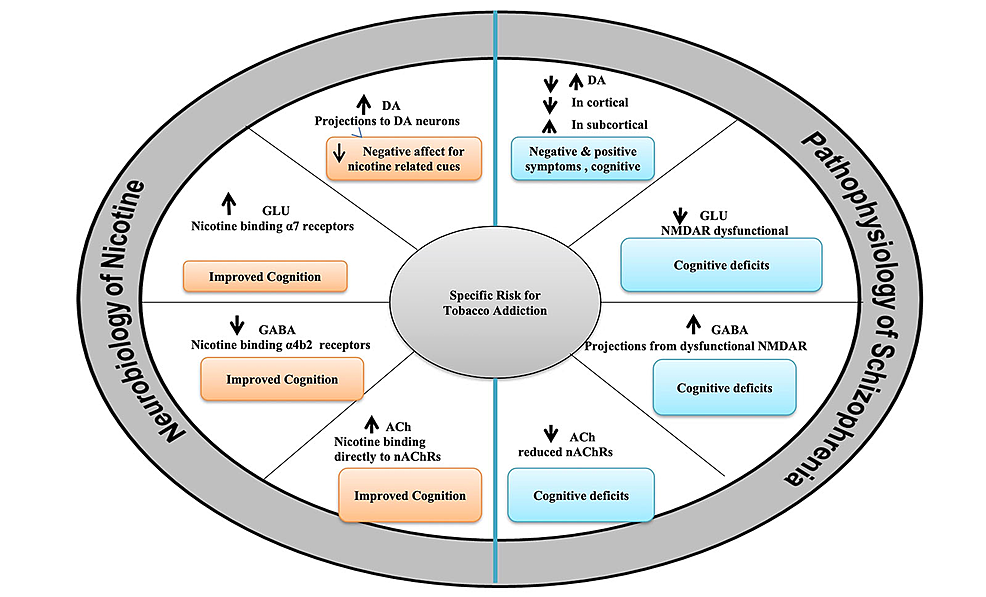
Pathophysiology-of-schizophrenia-and-neurobiology-of-nicotine.
Pathophysiology of schizophrenia and neurobiology of nicotine. Cureus

Dr. Tuomenin at The Royal has set out to discover with the use of brain scans what precisely the relationship is between nicotine and and the complex medical condition known as schizophrenia. What is known is that people diagnosed with schizophrenia tend to smoke at rates much higher than is the case within the general population. Schizophrenia is known by disturbing symptoms such as hallucinations and delusions and 'hearing' voices; the source of the illness is believed to be both genetic and environmental, affecting roughly one in a hundred population with an initial episode occurring at a point between the teens and mid-20s.
 
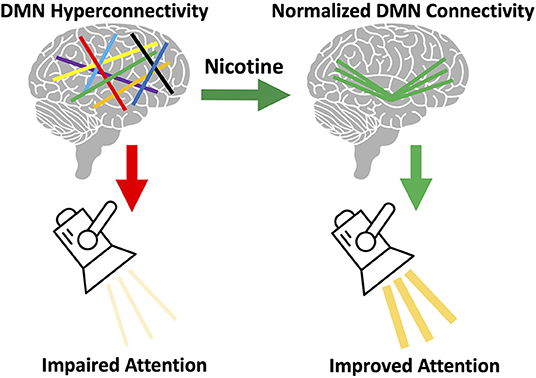
www.frontiersin.org
Part of the challenge facing the researchers is to determine whether smoking leads to schizophrenia or is a by-product of the mental illness in an effort to control its symptoms. Two theories are current; that smoking is a schizophrenia risk factor, the other, that those with schizophrenia smoke in an effort to self-medicate, in  hopes of focus acuity. Those suffering from schizophrenia often experience problems with attention, manipulating information, and decision-making. Even before the first episode of psychosis has been experienced in a schizophrenia patient, cognitive symptoms can be present.
 
Anti-psychotic drug treatments, in use for 70 years, have proven effective therapy in treating t he condition; however these drugs do nothing to improve cognition. Which is why researchers hope to discover more with brain imaging to help understand how nicotine affects brain processes. Brain images of about fifty people are to be part of the research by Dr. Tuomenin and his research colleagues; ten to twenty of whom would be habitual smokers without schizophrenia.
 
The cholinergic system is the focus of the research, for the vital role it plays in memory, digestion, control of heartbeat, blood pressure, movement related functions -- all of which are affected by nicotine. Positron emission tomography (PET) scans make use of a small portion of radioactive tracer to create a picture showing t he function of a specific brain process, and the MRI uses a strong magnet and radio waves to capture the detailed pictures of the brain.

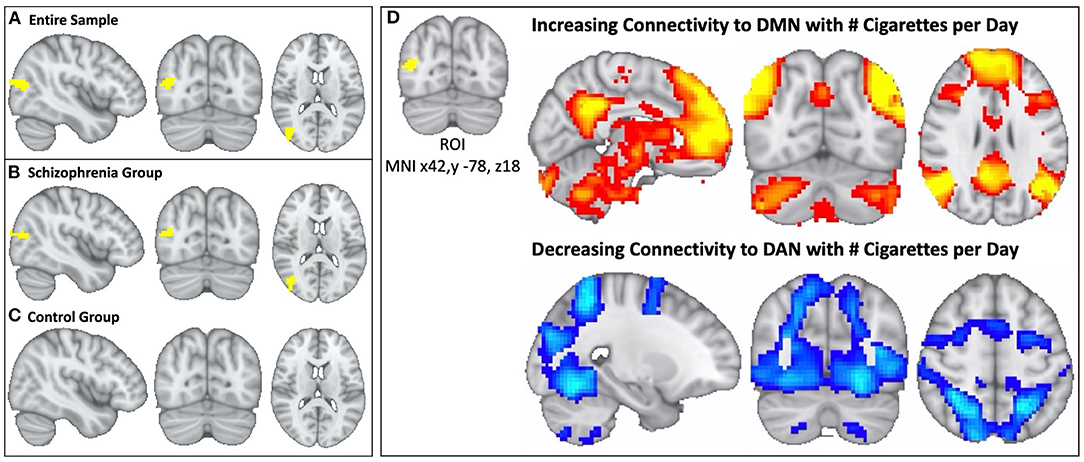
www.frontiersin.orgStarting with psychological and cognitive tests, followed by two scans, one of working memory testing how the brain functions, and another of the cholinergic system using the PET scans, the study takes about ten hours for each participant profile. Ironically enough it has become difficult to recruit smokers who are otherwise healthy for such studies given that the population of those who smoke is on the decline. As well, the researchers are searching for people who, while smoke or vape, do not use cannabis, since the focus is on nicotine.

Cannabis on the other hand, has an altogether other relationship with schizophrenia since its use can trigger schizophrenia in people genetically predisposed, particularly those who use it frequently, use potent products, or began using the drug at a young age. Which still leaves a number of unanswered questions relating to the relationship between smoking and schizophrenia. While the smoking rate has declined markedly in the general population, no indication exists that schizophrenia prevalence has dropped as well.

Some people self-medicate with nicotine to deal with the side-effects of antipsychotic medications; anxiety and restlessness. Those with schizophrenia tend to live isolated lives that tend to encourage nicotine consumption. Connections abound, those with schizophrenia end up with shorter life expectancies, partially attributable to excessive smoking. And then there are separate questions respecting how new ways to consume nicotine such as vaping, may affect schizophrenia risk.

Hopes are high for the discovery of a new class of drugs to treat the cholinergic system, to help those with schizophrenia with hallucinations and delusions, and also have the benefit of effectively treating  the issues of cognition. 
research, nicotine and schizophrenia from www.medicalnewstoday.com
"We know much less about vaping because it's such a new thing. The way you smoke and the way you vape is different."
"People smoke a cigarette and then they wait for another. Vaping is much more constant."
Dr. Lauri Tuomenin

Labels: , , , , ,

Tuesday, March 05, 2019

Health Diagnostic Technology

"Dopamine is an important marker for a lot of psychiatric conditions, but it’s been difficult in the past to measure it without PET imaging."
"With NM-MRI, we can understand some of the same things that PET tells us, but in a much more practical and accessible way."
"A clinical biomarker for schizophrenia would help people to get the treatment they need faster, and hopefully lead to an improved quality of life."
"In mental health care, we still don’t have widely available diagnostic tests for mental disorders. This means that psychiatrists still have to rely on a patient’s description of symptoms, and clinical behavioural observations in order to make an accurate diagnosis, which can sometimes mean significant trial and error."
Dr. Clifford Cassidy, scientist, The Royal’s Institute of Mental Health Research, Ottawa
Dr. Clifford Cassidy, a scientist at The Royal’s Institute of Mental Health Research is part of a research team that has discovered a potentially ground-breaking new way to diagnose and treat schizophrenia

 New research from The Royal's Institute of Mental Health Research at the Royal Ottawa Mental Health Centre has produced a study revealing a biomarker based in the brain, for schizophrenia identifiable with the use of specially configured MRI machines. The study, co-authored by Clifford Cassidy, offers a look at an accurate, quick diagnostic tool to diagnose whether people have schizophrenia, a diagnosis that has always been reliant on assessment by psychiatrists of an individual's behaviour and symptom descriptions. Such a readily available diagnostic test as described by the new study could result in a reliable diagnostic tool used is an improved strategy for early intervention and prevention.

Approximately one percent of any given population can be diagnosed with schizophrenia. The sooner the diagnosis is made and remedial intervention taken, the better the afflicted individual will be able to adjust to a protocol strategy that will enable him/her to successfully cope and to lead a fairly normal life. The new diagnosis technique with the use of specialty MRIs will extend beyond schizophrenia to encompass other mental health problems, such as PTSD. The very same technique outlined in the research has proven effective in detecting neurodegeneration in patients with Parkinson's disease; using it for patients with schizophrenia is a first.

The study was conducted to widen the scope of usefulness in diagnosis of a type of MRI (magnetic resonance imaging machine) called neuromelanin-sensitive, which has the capacity to indirectly measure dopamine function in patients. The brain chemical dopamine aids in regulating movement, learning, emotional response and attention. In the brains of people at risk of developing schizophrenia, or those experiencing some type of psychosis, excess dopamine is released. These specialty MRIs are able to indirectly measure that excess dopamine is being produced by targeting neuromelanin, a pigment created when dopamine breaks down. MRI scans detect the presence of the dark pigment.

The study identifies the MRI and its process as a reliable method to measure dopamine; a psychosis biomarker, in other words. Dr. Cassidy spoke of the satisfaction felt by researchers in achieving this breakthrough and the potential for it to lead to additional applications in the future, paving the way to diagnose psychosis and schizophrenia in a more 'accessible' manner in the sense that PET-CT scans also can measure the presence of excess dopamine, but PET-CT scans are expensive, not readily accessed and can often become an invasive technique.

The tool, stated Dr. Cassidy, could be useful for additional applications as for example diagnosing PTSD for which a different brain chemical -- noradrenaline -- has been associated with post-traumatic stress disorder. This chemical as well is pigmented and can be 'seen', to be measured through the use of specialized MRIs. There is an existing gap between individuals with mental illness and the problems they face versus the technological challenges of understanding brain function. And the hope is that the work undertaken in this study could lead to improved strategies for intervention and prevention of mental health diseases.
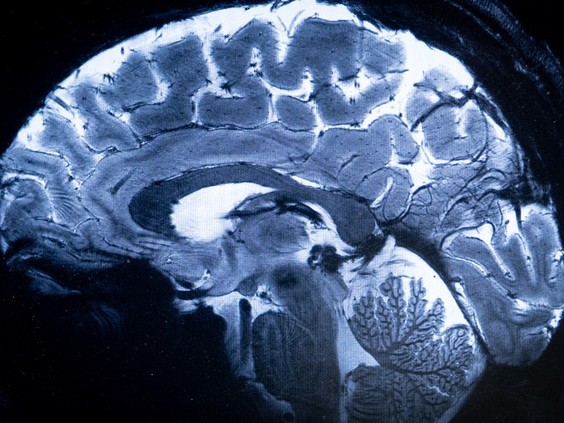
Head and neck MRI scan Kondor83 / Getty Images/iStockphoto

Labels: , , , , , ,

 
()() Follow @rheytah Tweet