Ruminations

Blog dedicated primarily to randomly selected news items; comments reflecting personal perceptions

Thursday, September 29, 2022

Clarity-AD : Alzheimer's Breakthrough

"This is a historic moment for dementia research, as this is the first phase-three trial of an Alzheimer's drug in a generation to successfully slow cognitive decline."
Lecanemab slows the progression of memory and thinking problems in people with early Alzheimer's, demonstrating a major breakthrough in dementia research."
"This is the first drug that's been shown to not only remove the buildup of a protein called amyloid in the brain, but to have a small but statistically significant impact on cognitive decline in people with early-stage disease."
"Regulators ... will assess the full data to determine whether lecanemab is safe and effective enough to be used in people with Alzheimer's. If it is approved, it is essential that it gets to those who may benefit from it as quickly as possible."
Dr. Susan Kohlhaas, director of research, Alzheimer's Research UK

Scan of the brain of a patient affected by Alzheimer's Disease in an axial section.
The brain of a patient affected by Alzheimer's disease in a scan of an axial section. BSIP / UIG via Getty Images
"This is an unambiguously statistically positive result and represents something of a historic moment when we see the first convincing modification of Alzheimer's disease."
"God knows, we've waited long enough for this."
Rob Howard, professor of old age psychiatry, University College London
What is being hailed as a "historic moment" for research focusing on Alzheimer's disease has scientists waxing enthusiastic about the possibilities of a drug identified as capable of reducing memory decline while destroying key proteins known to be associated with the brain-degenerative condition. A study of 1,800 individuals suffering from Alzheimer's found twice-weekly injections of lecanemab to reduce progress of the disease by 27 percent.

The drug is being heralded as the first treatment to emerge able to slow cognitive decline and to reduce the plaques associated with Alzheimer's. It took no more than six months for changes to become evident once participants began taking the drug. At the same time, researchers caution that the drug is not a cure for Alzheimer's. It was also found, however, that lecanemab slowed the decline in functional thinking of participants.
 
Eisai has been the only Japanese pharmaceutical company with a heavy focus on neurocognitive disorders. (Photo by Kosaku Mimura)
 
A pharmaceutical company based in Tokyo -- Eisai -- manufactures the drug, and has partnered with Biogen, a U.S. biotech company, in the drug's development. Application for approval in the U.S. is expected to take place this year, following which an application for a license early next year, in Europe. The drug, an "anti-amyloid beta protofibril antibody" has been designed to target and to clear amyloid, a protein that builds in the early development of Alzheimer's. 

To date, Eisai's study, named Clarity-AD, represents the largest to test a long-debated assumption that the progress of Alzheimer's may be deterred once the protein has been cleared. The significance of the study results resides in the fact that those taking the drug had lower levels of amyloid in comparison with study participants who were given a placebo. The trial results are recognized by Alzheimer's groups as the first in a generation to indicate a significant impact on cognitive decline.

The study could be "game changing. I believe that research will cure dementia, and this is a vital milestone on that journey", asserted Dr. Richard Oakley, associate director of research at the Alzheimer's Society.

Given the largely disappointing rollout of Biogen's Alzheimer's drug, Aduhelm, last year, any drug that appears to help Alzheimer's patients is welcome. Photo courtesy of HealthDay
"If borne out by the full details of the study, as they are the clearest indicator so far that by lowering amyloid levels in the brain, cognitive decline can be slowed [the results are] exciting."
"The results are consistent in size with those found in earlier phase trials with other anti-amyloid drugs."
"This convergence strengthens the findings. However, the size of the effect, while significant, is small -- the disease is slowed by 27 percent over 18 months."
\"What we cannot know yet is whether that effect increases over time in an individual; that would be predicted but is untested -- time will tell."
Dr. Catherine Mummery, consultant neurologist, National Hospital for Neurology and Neurosurgery, central London

Labels: , , ,

Sunday, July 14, 2019

Headache? There's a Pill for That!

"It's a mismatch of models."
"They want the car repair model: 'Hello, doctor, I've got this carburetor that doesn't work in my car. Could you fix it for me without talking to me?' It's laughable."
Leonore Tiefer, sex therapist, New York

"[The debate over HSDD -- hypoactive sexual desire disorder -- is] an old argument that there's no point in having any more."
"Lighting a candle and having a glass of wine isn't helpful for these women, just as going to see a funny movie isn't helpful for someone who's depressed."
Dr. Sharon Parish, sexual medicine, New York-Presbyterian Hospital

"[What women diagnosed with HSDD need] is not medical treatment, but a thoughtful exploration of what creates desire between them and their partners."
Emily Nagoski, sex educator, author

"We're not trying to prescribe a one-size-fits-all desire."
"It's about empowering women to have the choice and the ability to restore their desire where they think it's been robbed."
Dr. Julie Krop, chief medical officer, AMAG Pharmaceuticals
FDA approves new sex drive drug, giving women more options for boosting their libidos
The FDA has approved Vyleesi, a new medication for pre-menopausal women with female hypoactive sexual desire disorder, or HSDD. (Peter Cade/Getty Images)
A marketed treatment for hypoactive sexual desire disorder in women is in the marketplace, one that the U.S. Food and Drug Administration approved in 2015. In pill form, it is called Addyi. When it was introduced debate followed whether sexual desire was to be considered a medical issue at all. Since then, Addyi has languished in sales, largely because women may not drink alcohol before taking it. Although its introduction to the marketplace caused a huge furore, when it became known it came with severe restrictions, its sales fizzled.

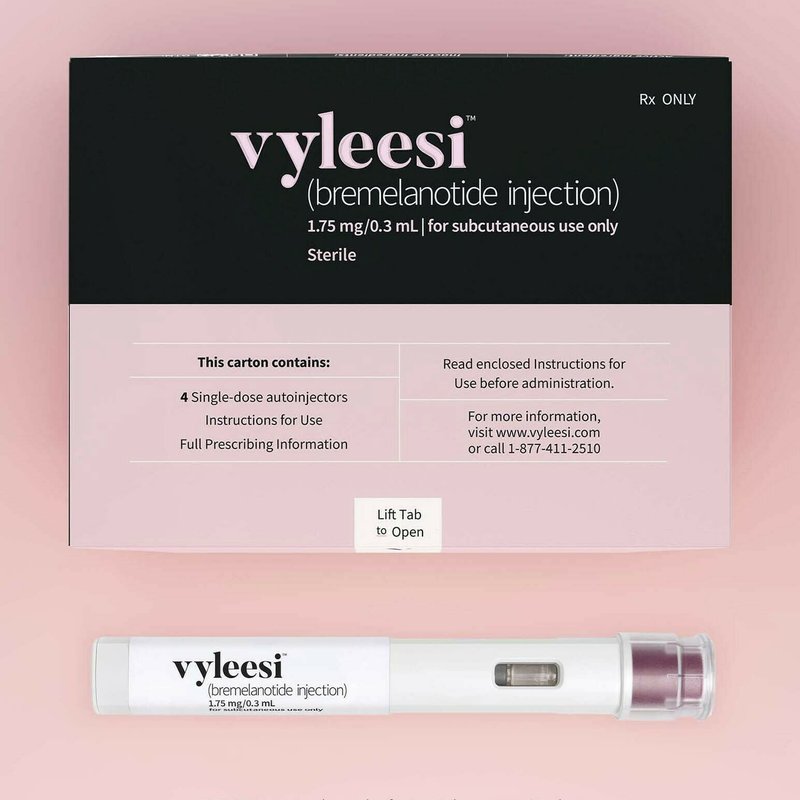
Now another drug formula, bremelanotide, has now been approved by the FDA, and a similar storm of controversy has erupted. AMAG Pharmaceuticals, which produces this new drug called Vyleesi has high hopes of a wild sales coup, similar to that seen when Viagra for erectile dysfunction in men was introduced to the consumer market. Bremelanotide has an effect similar to Addyi, absent many of its side effects.

"Sexual disorder" of low sex drive is a common condition, with an estimated one in ten women reporting HSDD. But not everyone can use the drug; it is definitely not recommended for women with high blood pressure or heart disease. And while stress is certainly known to play a part in low  sex drive, we live in a stressful world. The drug doesn't come cheap and insurers are not known to cover it.

Its price originally was set at $800 monthly but as a result of women balking at that price, it was slashed down to $400. The drug stimulates hormones called melanocortin, associated with sexual arousal and appetite for both genders. It now joins once-a-day Addyi as the second female libido medication on the market.And one wonders how many women will appreciate that Vyleesi must be injected, not swallowed.

As for its efficacy, despite that many doctors claim the drug would represent a solution to a real need for thousands of women, its demonstrated effects have been recognized as relatively modest. By many others, its creation and marketing is considered as yet another instance of pharmaceutical overreach with its on-demand therapy for HSDD.

AMAG claims that desire is governed by a compromise between excitatory and inhibitory neurons, that women with HSDD are imbalanced toward inhibition, so that bremelanotide, targeting an excitatory receptor, melanocortin 4, has the effect of moderating the situation, reducing distress and increasing desire. Self-administered through a tiny needle slipped under the skin of the thigh or abdomen, the drug underwent clinical trials with over 1,200 women.

Bremelanotide decreased distress by one point from baseline on a four-point scale and at the other end, in desire increase, the results were more modest, the median patient experiencing an improvement of a mere .6 from baseline on a scale ranging from 1.2 to 6. That level of improvement, according to AMAG is sufficient to achieve real benefit for women with HSDD.

A doctor must rule out every other possible cause of a woman's waning sex drive; whether relationship-associated, or the side effects of another medication, or the impact of a surgery -- before the woman can be diagnosed with HSDD, and bremelanotide prescribed. And then, only 25 percent of women using the drug responded well to its effects.

As for probable and potential side effects, the most common is nausea, reported in 40 percent of women -- as well as vomiting, flushing, injection site reactions and headaches. Leading one to doubt the value of its usefulness; not much going for it, after all...
"We’re obviously thrilled about being able to bring another option to patients."
"These women have suffered significantly, pretty much in silence, for a stigmatized condition, and many of them have not known that it’s a treatable medical condition."
Dr. Julie Krop, chief medical officer, AMAG
Oh, and according to psychologist Lori Brotto, director of the University of British Columbia's sex health laboratory, no  definitive scientific proof exits that low sexual desire in women is caused by aberrant brain chemistry. Good evidence exists, however, that the mind-body nexus provides the key to female sexuality, and having a physiological explanation for a condition may lead many people to search out help for a problem that might otherwise have been dismissed.

This image provided by Amag Pharmaceuticals in June 2019 shows packaging for their drug Vyleesi. The medication OK'd Friday, June 21, 2019 by the U.S. Food and Drug Administration is only the second approved to increase sexual desire in a women, a market drugmakers have been trying to cultivate since the blockbuster success of Viagra for men in the late 1990s. (Amag Pharmaceuticals via AP)

Labels: , , ,

 
()() Follow @rheytah Tweet