Ruminations

Blog dedicated primarily to randomly selected news items; comments reflecting personal perceptions

Friday, January 30, 2026

Canada, Diminished and Faltering

"One could argue that we've lost that unifying sense of right and wrong."
"The very sense of [the] liberal, permissive, non-judgmentally embracing society that our countries were fundamentally founded on is now being openly exploited for the purpose  of reshifting the balance." 
Former Vice-Chief of the Canadian Defence Staff, Mark Norman
 
"Symbolic politics has never been sufficient, it is a sign of weak leadership. Condemnations without enforcement, statements without consequences and gestures without policy are not leadership."
"Canadians do not need additional legislation layered over existing statutes. We need the consistent application of the laws already in force.e"
"Canada is lost and no longer immune. A nation cannot remain open if it forgets how to be a nation. The choice is not between tolerance and cohesion. It is between a confident pluralism anchored in shared civic norms, and a politics of endless accommodation that dissolves the very framework that makes diversity possible."
Larry Maher, CEO, Exigent Foundation
https://smartcdn.gprod.postmedia.digital/nationalpost/wp-content/uploads/2024/12/protest-prayer-1.jpg?quality=90&strip=all&w=564&h=423&type=webp&sig=cR05VijxOvQxlyMLZ2mhaQ
 
It took no more than a  decade to fundamentally alter Canada, reverse many of its values, not the least the outstanding human right assurance of equality and rights under the Canadian Charter of Rights and Freedoms. With that assurance came the expected responsibility of each member of society to respect the social contract that ensured equal opportunities (if not equal outcomes) to succeed and prosper for Canadian citizens who obeyed Canadian laws and whose experience in the general education system helped them to understand their citizen obligations to the country. 
 
In an earlier era those rights and obligations were unevenly applied and issues of discrimination against minority groups reflected a European heritage of entitlement and belittlement of the exotic 'others' who had made their way into North America, many as refugees fleeing persecution and conflict. Under moderately good governance evinced by leaders who at best understood their own guiding obligations to the people they served, laws were passed that ushered Canada into an era of fair justice and social cohesion.
 
Migrants from abroad who entered Canada in the first half of the 20th century as immigrants from impoverished backgrounds to make a home for themselves in a new country where opportunities abounded worked hard, obeyed laws, and accommodated themselves to a new culture with values that suited their own notions of being and belonging. Canadian authorities refined immigration rules to eventually reflect Canada's needs in a point system that rewarded education, professional qualifications, age suitability and an assessed philosophical fit.
 
A succession of Liberal governments in more recent times gradually morphed toward the kind of liberal progressivism that loosened qualifications and requirements of suitability to join the Canadian population. Sympathy for people searching for haven from authoritarian governments, from endemic poverty, from societal crime rates, from conflict zones opened the gates of entry to Canada wide, including the refugee class and illegal migrants who bypassed normal entrance procedures to declare themselves refugees. 

 
https://smartcdn.gprod.postmedia.digital/nationalpost/wp-content/uploads/2026/01/CP175643100-1.jpg?quality=90&strip=all&w=564&h=423&type=webp&sig=6A6W4-uztecW2wA-YBVNKQ
 
The intake swelled, fulfilling what government and business leaders professed to be a need to replace an aging, low-child-bearing population with new recruits to build Canada's working population. Entry to the country no longer relied on screening for adaptability and suitability for integration into the prevailing culture, its values and its laws. To the point where landed immigrants and new citizens openly declared their defiance of those values and accompanying laws, bringing havoc and division and open discrimination to the very streets of the cities throughout the country where they settled in influential numbers.
 
Newcomers to the country felt no loyalty to the country that had adopted them and there were no expectations from government that they should integrate and accept the prevailing social order as it was. Instead religious and ideological divisions erupted and with no amending reaction from government and institutions at any level, those divisions deepened, becoming more publicly expressed, including through deliberate acts of law-breaking.   
 
Canadians of long standing were treated to displays of overt challenges to the  public order in universities and cultural institutions where mass protests took to the streets, bringing foreign campaigns, conflicts, ideological convictions averse to Canada's own, to the fore, with no government intervention at any level. All the while Canada congratulated itself as a bastion of liberal democracy. Politicians rather than applying themselves to Canada's and its populations' defense, eyeing the numbers of voluble protests and the votes they represented, chose appeasement of activist groups.
 
https://static01.nyt.com/images/2026/01/17/multimedia/17canadaletter-CX-mfgv/17canadaletter-CX-mfgv-superJumbo.jpg?quality=75&auto=webp
Canadian PM Mark Carney : China's President Xi Jinping AP
 
And from the outside world, lax attention to the actions of foreign powers that invaded Canada's sovereignty through the infiltration of foreign agents acting on their behalf on the social, academic and political levels exercised the 'soft power' of authoritarian regimes and of extremist movements, effectively interfering in Canada's politics as well as the social contract unique to Canada. Russia, China, Iran, 
Qatar, Turkey and the Muslim Brotherhood all have made an indelible impact within Canada with their malign presence. 
 
The moral, institutional foundations of Canada's principles of equality and human rights have been assailed by Islamist, Marxist, socialist and other radical engagements in destabilizing Canada, as well as other Western nations they have entered both legally and under the radar. What all these Western nations appear to have in common is an attitude of oblivious disinterest in the interference and subtle changes being wrought in normalizing abnormal social behaviour and its effect on their institutions.
 
The exploitation of liberal societies, priding themselves on their Democratic principles of inclusion appear willing to accept the slow erosion of their adherence to the public weal rather than risk being labelled racist, exclusionary or 'Islamophobic'. Identity politics, moral relativism, and DEI guide governments content to do nothing in response to the unravelling of their nations' stability and social coherence. If there is a solution to Western democracies' inaction in the face of this dilemma, it has not yet shown its face. 
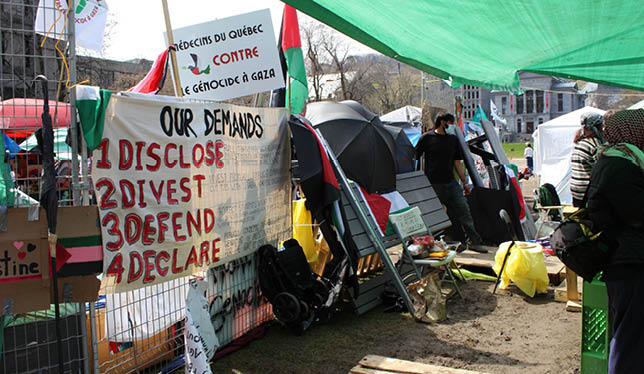
 
https://universityaffairs.ca/wp-content/uploads/2024/11/644x374-McGill-supporting3.jpg
Canadian universities have seen a surge of pro-Palestinian protests following similar demonstrations across North America.  University Affairs
 

Labels: , , , , , , , , ,

Monday, January 12, 2026

Living Illegally in Canada

"[Between] 20,000 and 500,000 persons [were living illegally in Canada. Known officially as] undocumented migrants, [these were foreign nationals with] no authorization to reside and/or work in  Canada."
"Some may have overstayed their temporary status, while others may have remained in Canada following a rejected asylum claim."
Immigration, Refugees and Citizenship Canada, 2023 report
 
"The vast majority leave voluntarily, and that's what's expected."
We are talking about 4.9 million documents, sometimes many that apply to one person. They are tourists."
"The vast majority of the people leave the country including artists who come to this country, such as Bruce Springsteen and others." 
(Then) Immigration Minister Marc Miller, 2024
 
"Canadians are fair-minded people. We welcome newcomers, we value immigration, and we understand that a growing country needs talent and ambition from around the world. But fairness cuts both ways. A system that welcomes newcomers must also enforce its own rules. When someone is in Canada illegally and then breaks the law, the response should be direct and decisive. They should be removed from the country. Not years later. Not after endless reviews. Promptly."
"This is not radical. It is common sense."
"Recent reporting out of British Columbia underscores the problem. Police there dismantled an organized extortion network targeting members of the South Asian business community. The crimes involved threats, violence, and fear used to extract money from business owners. According to police and court filings, several individuals charged in that case were either in Canada illegally or here on temporary student visas. The investigation revealed links to organized crime networks operating across borders, with some suspects lacking permanent legal status in Canada."
"This was not a paperwork issue. This was serious criminal conduct carried out by people who were not entitled to be here in the first place, or whose right to remain depended on obeying Canadian law."
"At the same time, Canadians are watching another disturbing pattern play out in Ontario. Individuals who entered the country illegally, had refugee claims rejected, or remained in Canada after their legal status expired, went on to face charges involving violence, extremism, and organized crime. These cases are not theoretical debates about policy. They involve real victims and real threats to public safety."
"The details differ, but the question is always the same. Why are people who have no legal right to remain in Canada still here after committing serious crimes."
"Canada’s immigration system is built on rules. We decide who qualifies to enter. We decide who qualifies to stay. We also decide the conditions under which those privileges are lost. If those rules are not enforced, the entire system loses credibility."
Kevin Klein, Winnipeg Sun
https://bloximages.chicago2.vip.townnews.com/winnipegsun.com/content/tncms/assets/v3/editorial/2/5d/25d3b8e7-cebe-40f5-93f5-bbb6ffea1040/696240646aa00.image.jpg?resize=990%2C660
PHOTO CREDIT Ian Dewar
 
According to federal records at the start of 2025, 4.9 million visas would be expiring in the following 12 months, an issue that the federal opposition Conservative party expressed concern over, questioning how the Liberal government planned to react and respond to the situation of those living in Canada holding expired visas. The expectation optimistically held by the government that of those millions, the majority  would leave of their own volition, represents a notional number since there are no data kept on voluntary departures to support the government's response.
 
The issue of out-of-control population growth in Canada resulting from an unprecedented intake of new immigrants, refugee-class and undocumented migrants has been a concern for years, resulting from the previous Liberal government's open-doors policy enunciated by Justin Trudeau, the previous prime minister; essentially that Canada stood prepared to welcome all those seeking haven, as a response to the U.S. crackdown on illegal residents during the first Trump administration. 
 
That embrace of uncontrolled migration, immigration and foreign students studying in Canada has had predictable, but obviously government-agency-unanticipated results, impacting the social fabric of a country known for its 'multiculturalism'. Housing has become scarce and expensive. Social services are beginning to fray under new demands from a skyrocketing population base. The country's universal health care system is in peril with insufficient numbers of medical workers and hospitals stretched to their limits.
 
Moreover, multiculturalism itself has taken on a grim new meaning with growing-in-prevalence ethnic/religious/cultural groups bringing with them cultural biases including racism -- along with political and religious ideological beliefs that run counter to Canadian laws, rights and privileges. Statistics Canada has made note of a minor contraction in the population as 2025 closed, with "enforced removals" seeing an increase, despite no formal exit statistics being kept regarding foreign visa holders.
 
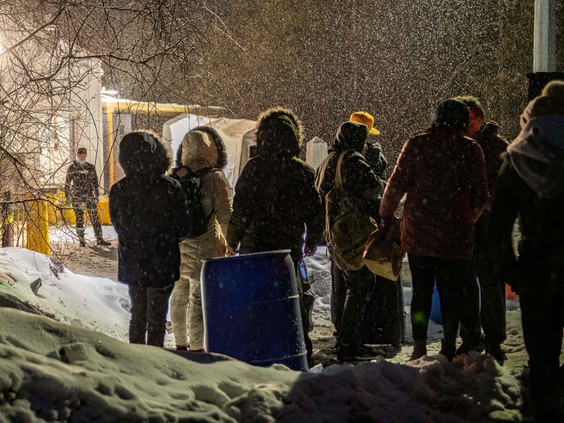
https://smartcdn.gprod.postmedia.digital/nationalpost/wp-content/uploads/2023/03/Roxham-Road-1.jpg?quality=90&strip=all&w=564&h=423&type=webp&sig=AQxUWMfqc0u7DyYFhyqTVA
 
The Minister of Immigration noted in 2024 that the number of illegal foreigners living in Canada might be as high as 600,000. Yet the Conservatives confirmed a total of 4.9 million visas and immigration permits were on the cusp of expiring at year's end, 2025. A number, the Liberals responded, that included tourist visas, temporary work permits and foreign students. A record number of temporary migrants arrived on student visas, or as temporary foreign workers, visas that would not be renewed in a too-late government effort to control the upward spiral of an unprecedented population growth.
 
According to Statistics Canada, 3,138,129 temporary migrants were residing in Canada, over double the number of three years earlier. An influx unlike any other in Canada's history, resulting in Canada being  recognized as the fastest growing country in the G7...an "unprecedented surge in immigration"  comprised primarily of low-skilled migrants from the developing world, a far cry from the carefully paced and measured previous immigration protocol that favoured skilled workers into the Canadian economy.
 
Of the 1.5 million migrants who, following the end of COVID lockdowns surged into the country, an estimated 1.3 million remain in Canada. Canada Border Services Agency released statistics indicating that their officers were removing record rates of unauthorized foreign national, by the end of 2025, leading to records for "enforced removals", a category including deportations, along with foreigners who left after receiving a deportation order or were turned away from the border with an exclusion order. 
 
The Conservative contended that should even a relatively small number of the record-high temporary migrant population refuse to self-deport, the government had no capacity to remove them forcefully. Immigration, Refugees and Citizenship Canada in October of 2025 informed a committee of the House of Commons that 47,175 individuals who entered Canada on student visas were "non-compliant"; in that they had failed to register at a university, and their locations were unknown.
 
Dozens of students showed up at the park in the community northwest of Toronto to fight to stay in Canada.
Dozens of international students showed up at a park in Brampton, Ont., recently to fight to stay in Canada. (Submitted by Harinder Singh)
"By the end of this year, nearly five million people will be in Canada with expired or expiring visas, and the government has no plan for how it is going to get them to leave."
Conservative immigration critic Michelle Rempel Garner
 
"We take our immigration system very seriously on this side of the aisle (Liberal), as I know all Canadians do."
"For that reason, we are strengthening the integrity of our system while maintaining the humanitarian ability that we have in this country."
Immigration Minister Lena Diab 
https://imageio.forbes.com/specials-images/imageserve/67d1985a311c544bec58c4bf/Picture-of-a-sign-saying-immigrate-to-Canada-on-top-of-a-picture-of-a-US-and-a/0x0.jpg?crop=3255%2C1843%2Cx0%2Cy166%2Csafe&width=960&dpr=1


Labels: , , , , , ,

Tuesday, November 18, 2025

Galloping Immigraton Slows to a Canter in Canada

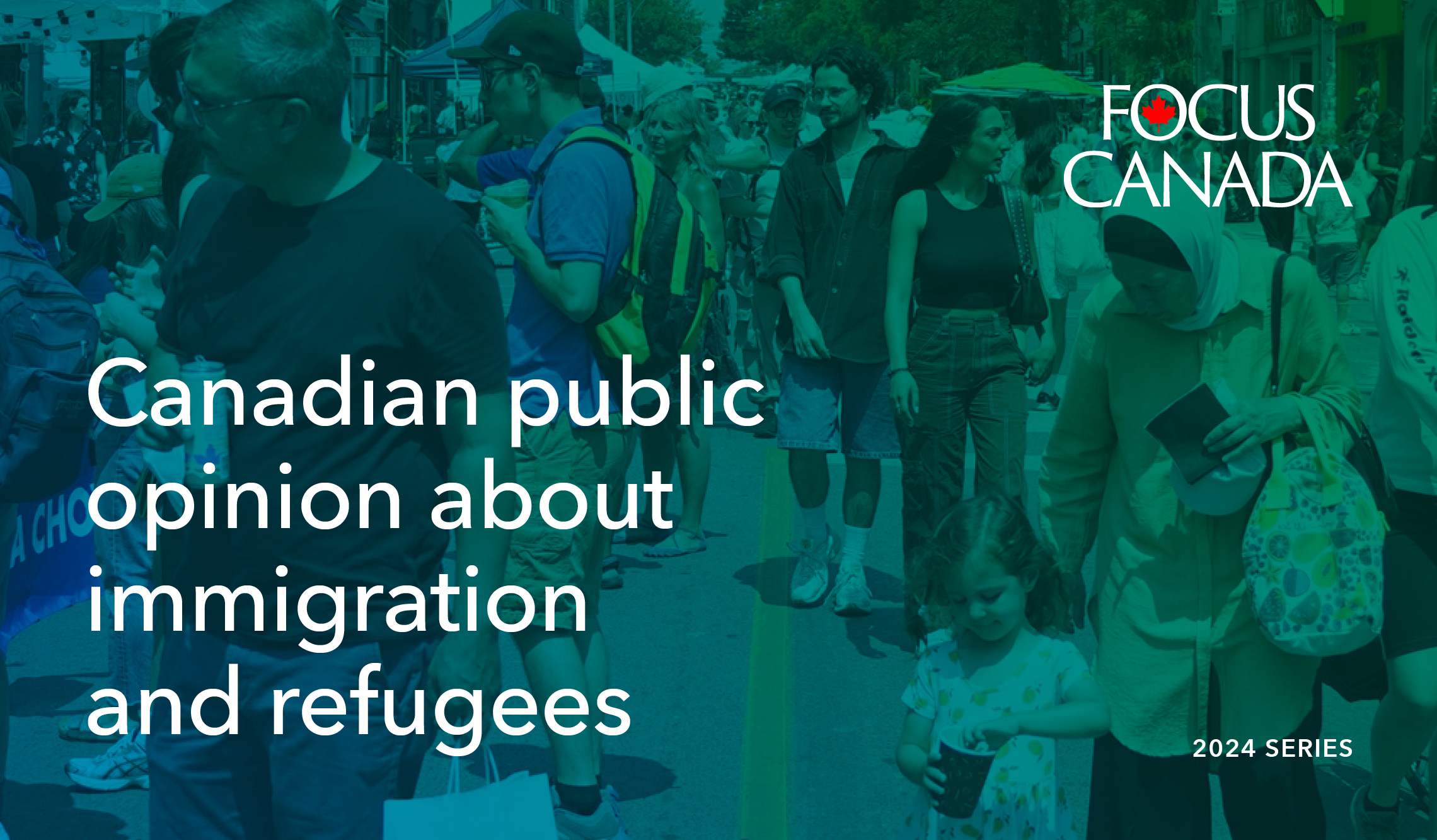
https://www.environicsinstitute.org/images/default-source/2023-nia-ageing-in-canada-survey/env_fc_imm_websitec27abd13-a2a5-4bd0-ac5e-ebf0dbf0030b.jpg?sfvrsn=3c169ca_1 
"There was considerable asymmetry to the cuts to overall immigration that saw much larger percentages in reductions to refugees over the 2024 to 2025 period. It seems as though many Canadians believe that there are man asylum claims that are not legitimate, thus fuelling greater distrust in refugees."
"In previous surveys we've done there was much less dissonance and lesser distinction in either trust or positive sentiment towards immigrants and refugees, but we're now seeing a widening gap between the two, owing, in my view, to a growing perception that many claims are not valid and thus raising questions about the admission process."
Jack Jedwab, president, Association for Canadian Studies  
Compared to 2024, the same eight-month period in 2025 saw a 32.7 percent drop in refugee claimants to Canada; at the same time there was a 18.6 percent drop in economic immigrants while an 8.1 percent drop was seen in family sponsorship immigrants. This, according to an analysis by the Association for Canadian Studies of Immigration, Refugees and Citizen Canada's own data. According to the analysis "The numbers of asylum claimants has gone into a veritable free-fall." 
"We regularly see that polls produce different results depending on how the question is framed, and people's answers are also impacted by the narratives they see being replicated in the media and by political leaders."
Gauri Sreenivasan, o-executive director, Canadian Council for Refugees
A Haitian msn pulls a suitcase.
 
The federal government recently announced changes in immigration policies for the direct purpose of reducing the number of people arriving in Canada. Canada's population swelled by millions in the past several years with immigration target numbers, family reunification, temporary foreign workers, asylum seekers, refugees and foreign students studying at Canadian universities stretching the limits of the country's social welfare systems and its housing stock, and most critically its universal health care system beyond the breaking point.
 
A new poll conducted by Leger Marketing for the Association for Canadian Studies saw 43 percent of respondents stating their distrust of refugees. More respondents, according to the poll, trusted immigrants, on the other hand, some 46 percent. The really interesting part of this revelation is that distrust is highest among immigrants themselves, against refugees, albeit in lower percentages for immigrants. 
 
People from Haiti claiming asylum from their gang-violent nation of poverty and social unrest, increased by 130 percent in that period. Asylum claims from Bangladeshis, Sri Lankans, Ghanians, and people from India, on the other hand saw drops from 68 to 79 percent. Airport asylum claims dropped 76 percent in the first eight months of 2025, over 2024.
 
More men than women stated their distrust of refugees on the survey question. And the same applied for distrust of immigrants; men outnumbering women. International students garnered a 44 percent trust level, while in the distrust category, once again men outnumbered women.  
https://immigration.ca/nitropack_static/LoajYdBTWDqCSJMggZglhyiUJEMYjedR/assets/images/optimized/rev-bf62069/immigration.ca/wp-content/uploads/2025/10/image-3-1024x640.png 
"Immigration has become one of the sharpest fault lines in Canadian politics. Eighty-two per cent of Conservative supporters say there is too much immigration, compared with 40 per cent of Liberals and 30 per cent of New Democrats. This partisan gap is now the widest recorded since the late 1970s and shows no sign of narrowing."
"This political split extends to almost every aspect of the immigration debate – from refugees and integration to perceptions of crime. Supporters of the governing Liberals tend to see immigration as an economic and cultural strength, while Conservative supporters increasingly view it as a strain on resources and national identity."
Immigration Canada 
 

Labels: , , , , , ,

Tuesday, April 09, 2024

The Situation in Sudan

"[Sudan is in the grips of a] catastrophic situation, [on the brink of a man-made famine.]"
"There are reports of mass graves, gang rapes, attacks in densely populated areas and many more horrors."
"We are failing the people of Sudan."
Edem Wosornu, UN relief advocate

"We haven't done anything -- just expressing concern, which doesn't solve any problems."
"There's not enough pushing from the international community, including Canada, to stop this war."
Imad Satti, director, Sudanese Canadian Communities Association
 
"We are looking to welcome Sudanese people fleeing war at the end of this year or the beginning of next year."
"It's very important to talk about what has become a forgotten war for a lot of us."
Canadian Immigration Minister Marc Miller
 
"Fighting broke out in Khartoum, Sudan’s capital, on 15 April 2023 as an escalating power struggle between the two main factions of the military regime finally turned deadly."
"On one side are the Sudanese armed forces who remain broadly loyal to Gen Abdel Fattah al-Burhan, the country’s de facto ruler. Against him are the paramilitaries of the Rapid Support Forces (RSF formerly known as Janjaweed), a collection of militia who follow the former warlord Gen Mohamed Hamdan Dagalo, known as Hemedti.'
"The RSF was founded by the former dictatorial ruler Omar al-Bashir as an Arab counterinsurgency militia. Bashir wanted to crush a rebellion in the region of Darfur that began more than 20 years ago due to the political and economic marginalization of the local population."
Background
https://i.guim.co.uk/img/media/8751f566629fb1fc8d04309d2eef8159217a1aba/0_0_6000_4000/master/6000.jpg?width=1900&dpr=2&s=none
Gen Mohamed Hamdan Dagalo, known as Hemedti, at a rally in Abraq village, outside of Khartoum, 22 June 2019. Photograph: Yasuyoshi Chiba/AFP/Getty Images
 
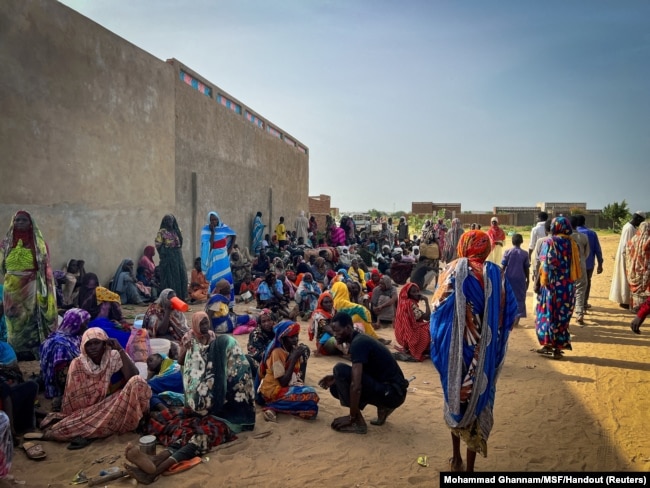
Desperate Sudanese trying to escape Sudan with its raging conflict re-ignited by a reconstituted Islamist group known for the horrors they inflicted on Black Darfurian farmers seek haven elsewhere than in a country that has distinguished itself for its lethal confrontation between traditional herders and pastoralists, forcing farmers off their land through uninhibited human rights violations of mass murder, rape, and situations where the then-government sent helicopter gunships to mow down people fleeing for their lives.

An estimated 8.5 million people have been forced out of their indigenous lands -- described by the United Nations as the largest internal displacement crisis in the world. Sudanese who had previously immigrated to, or been absorbed as refugees in Canada, escaping political and social oppression, call upon Canada to exert its immigration bureaucracy to enable threatened Sudanese to be reunited with their families in Canada.

The Liberal government of Justin Trudeau is skilled in expressing support for the war-torn unfortunates of the world by 'expressing concern' as it did last spring, in addressing the security situation in Sudan, airlifting its Canadian citizens to safety. However, the Canadian government has refrained from sanctioning the warlords, much less expressly naming and blaming countries that have been involved in fueling the war.

A family reunification program had been announced late in 2023, one designed to permit those fleeing Sudan to join their relatives in Canada with the proviso they have the means to provide financial support. According to the families involved, the program's demands for paperwork make the process impossible in an active war zone. Potential sponsors have been advised they must have $18,100 in cash, along with a minimum annual income of $51,128 to proceed with sponsorship of a family of four.

According to Mr. Satti, speaking through his organization as representing Sudanese groups across Canada, there are those with the required cash, set back by futile efforts aiding relatives in Sudan with the required paperwork, while others send money to help their relatives in a desperate situation, an effort that serves to deplete savings, while accomplishing little to actually enable their relatives to travel outside Sudan, much less look to the onerous requirements before immigration is countenanced.

Applications were being accepted from February 27, to the point where 680 applications had been received by a month later, representing the hopes of some 1,500 people who qualified for processing. To this point, however, no applications have yet been approved by Immigration, Refugees and Citizenship Canada. The program was scheduled to accept as many as 3,250 applications, yet the minister of Immigration, Marc Miller has no expectation that anyone will arrive any time soon in Canada.

Former Ottawa ambassador to Sudan, Nicholas Coghlan, has spoken out for months urging Canada to follow the United States and Europe in sanctioning economic networks which warlords in Sudan are reliant upon. He also criticized Canada for lagging on appointing a senior diplomat for the region, to among other issues, gather intelligence to guide Ottawa on how best it could project humanitarian and diplomatic moves to aid the situation in Sudan. 

https://gdb.voanews.com/01000000-0aff-0242-2195-08dc45531226_w650_r0_s.jpg
Sudanese refugees gather as Doctors Without Borders teams assist the war-wounded from West Darfur, Sudan, in Adre hospital. (Mohammad Ghannam/MSF/Handout via Reuters)


Labels: , , , , ,

 
()() Follow @rheytah Tweet