Ruminations

Blog dedicated primarily to randomly selected news items; comments reflecting personal perceptions

Sunday, February 08, 2026

Raising An AI Pet

"When it comes to data-privacy concerns, the core problem is that the public has very little transparency into what companies are actually doing."
"If you're having highly personal conversations, [with these sweet and cuddly AI toy-companions] there are companies on the other end that are doing the listening and the talking."
R.J. Cross, director, consumer privacy campaign, U.S. Public Interest Research Group
 
"[AI companion toys ranked at No. 9 in official] Top 10 Products of the Year [list in 2025]."
"After all, they not only look cute but also speak nicely."
"They have already outperformed 90 percent of human partners."
Taobao online shopping platform, China 

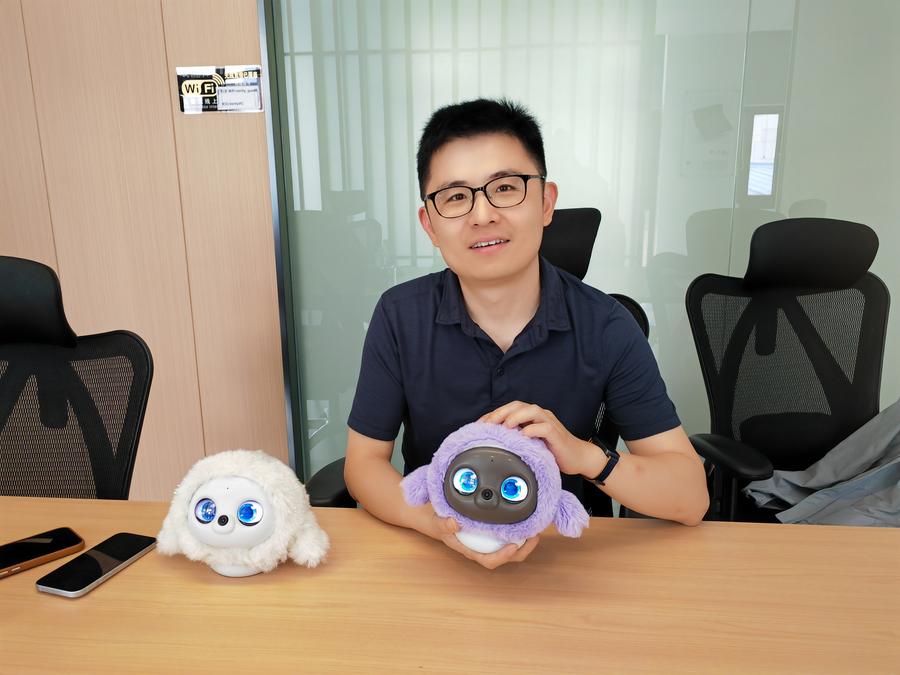
Zhou Yushu, co-founder of ROPET and a professor at Renmin University of China, poses for photos with AI pet products he has developed, in Beijing, capital of China, May 23, 2025. (Xinhua/Ma Sijia)

"As an extension of traditional pets, AI companions offer stickiness and sustainability."
"Annual compound growth rate has exceeded 8 percent in recent years, and forecasts indicate it could reach 10 percent over the next five years."
Professor Wei Xiang,  University of Chinese Academy of Social Sciences  
AI companion pets are the latest consumer sensation out of China where young people have taken to talking pets with no need of being taken for walks nor the routine of messy clean-ups afterward, taking the place of marriage. The digital creatures have become comfort companions, replacing human-to-human interaction; an emotional safety net that owners can confide in without fear of their inner thoughts being broadcast about a circle of friends potentially causing embarrassment and requiring explanations.

AI pets have endeared themselves mostly to young, unattached adults as well as to children. Chinese tech-producing companies including Huawei have designed and developed AI pets with young Chinese who live alone specifically in mind as pet-consumers of the AI-variety. Most of the 'pets' have a fluffy body with large, expressive eyes that light up and have the appearance of emotional expression. Their proliferation has state support within a tightly integrated industrial supply mechanism.
 
The Shenzhen Toy Industry Association projects the AI toy market in China is set to surpass US$1.4 billion by year 2030 at an annual compound growth rate of over 70 percent. This is big business under the umbrella of the state as an experiment in social engineering manipulation that may restore a level of emotional satisfaction and fulfillment absent in a social aura of discontent over economic stability linked to difficulties in securing life partners and establishing families.
Chinas-cute-robot-pets-emerge-as-cuddly-companions.jpg
Ropet robotic pets mimic the behaviour of a real animal. They require regular feeding and make grumbling sounds when hungry. If you present it with fruits like apples, oranges, or bananas, its eyes—two LED screens—light up with images of food, making interactions with it more enjoyable. PHOTO: CHINA DAILY
 
AI toys with distinct personalities are being offered, such as digital pets by the Shanghai-based tech company Robopoet where, in Las Vegas last month, Fuzozo made its U.S. debut, dubbed the CES event's 'cutest' renditions of 'tech'. Attendees crowded around the show floor to experiment with the palm-size devices to test their responses in various languages, witness how they wobble and briefly appear 'dizzy' when shaken. Two units placed in proximity can communicate with one another for the amused appreciation of onlookers.
 
Most AI toy owners are women in their 20s and 30s who share their experiences on Chinese social media platforms. Female users on Rednote speak of their pets filling an emotional void: "Other people are getting married and giving birth; I'm already raising an AI pet". Moreover, one that can express joy with widened eyes. While real living pets come with real-life problems, AI pets present none of those tedious responsibility burdens.
 
AI pets are considered part of the 'emotional economy', steadily rising in popularity. "This is exactly the need AI pets currently meet: providing emotional companionship along with minimal caregiving costs", pointed out Qi Ye, associate professor of psychology, Renmin University, Beijing. Urban younger generations weighted by the struggle for good grades, find good jobs settle down and have multiple children, find the AI-toy companion trend particularly resonating to their emotional needs.

This picture taken on January 7, 2025 shows Zhang Yachun talking to her her AI-powered robot named Aluo at a shopping mall — AFP
Zhang Yachun talking to her AI-powered robot named Aluo, AFP

Labels: , , , ,

Saturday, February 07, 2026

Lapsed START Treaty ... World Doomsday Clock


https://thebulletin.org/wp-content/uploads/2026/01/Featured-Image-1024x768.jpg.optimal.jpg
89 SecsMidnight Doomsday Clock
"The last nuclear arms control deal between the United States and Russia is set to expire today— [Feb.5] though eleventh-hour talks are reportedly working to prolong it. Unnamed sources told Axios the two countries were weighing an extension of the New START treaty, which limits the size of both countries’ nuclear arsenals and provides for inspections and information exchanges. Russia had halted inspections in 2023 in response to U.S. military support for Ukraine, and Trump did not formally respond to a proposal from Moscow last September to extend the treaty for a year. As China expands its own nuclear arsenal and U.S. allies in Europe question the reliability of Washington’s nuclear umbrella as a deterrent, UN Secretary-General António Guterres said yesterday that “the risk of a nuclear weapon being used is the highest in decades.”   
"Details on the reported talks to extend the deal were not immediately available. In January, Trump had told the New York Times that the United States would seek “a better agreement” than New START that should also include China. A Chinese foreign ministry spokesperson said yesterday that it would not be fair for Beijing to join nuclear disarmament talks given its nuclear arsenal was smaller than the United States’. Russia said it remained open to diplomacy to “comprehensively stabilize the strategic situation” and that it regretted the lapse of the deal."
Council on Foreign Relations  
"[Trump has made it clear that] in order to have true arms control in the 21st century, it's impossible to do something that doesn't include China because of their vast and growing stockpile."
U.S. Secretary of State Marco Rubio
 
"[Russia will maintain its] responsible, thorough approach to stability when it comes to nuclear weapons."
"Of course, it will be guided primarily by its national interests."
Dmitry Peskov, Kremlin spokesman
 
"[Moscow] remains ready to take decisive military-technical measures to counter potential additional threats to the national security."
"At the same time, our country remains open to seeking political diplomatic ways to comprehensively stabilize the strategic situation on the basis of equal and mutually beneficial dialogue solutions, if the appropriate conditions for such cooperation are shaped."
Russian Foreign Ministry   
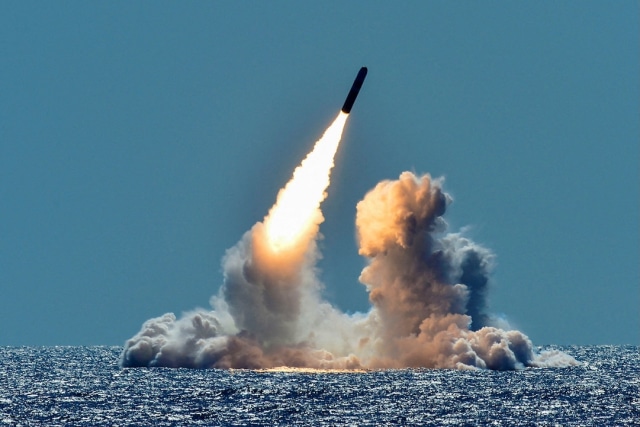
https://assets.cfr.org/images/w_640/t_cfr_3_2/f_auto/v1770303509/RUSSIA-USA-NUCLEAR-TREATY_381173af4e3/RUSSIA-USA-NUCLEAR-TREATY_381173af4e3.jpg?_i=AA
An unarmed Trident II D5 missile is test-launched from the Ohio-class U.S. Navy ballistic missile submarine USS Nebraska off the coast of Californi-a, U.S. March 26, 2018. U.S. Navy/Mass Communication Specialist 1st Class Ronald Gutridge/Reuters
 
"If the president supports, or is willing to tolerate, the prospect of nuclear proliferation by allies, a post-American nuclear order may materialize quickly…Such an outcome would rapidly accelerate Trump’s push to shift defense burdens to allies by diminishing their reliance on U.S. conventional and nuclear deterrence."
"But in doing so, it would also undercut the United States’ influence over allied policies while creating significant new nuclear risks."
Rebecca Lissner/Erin D. Dumbacher, CFR experts, Foreign Policy 

The last remaining nuclear arms pact between Russia and the United States has now expired, leaving no limits on the atomic arsenals of the two largest holders of atomic arms in the world, for the first time in over a half-century. Termination of the New START Treaty took place on Thursday, February 5, 2026, leading arms control experts to the opinion that an unconstrained nuclear arms race may now proceed.

Last year, at a similar expiration juncture, Russian President Vladimir Putin stated his readiness to cement the limits the treaty imposes for another year, should Washington agree. This year, American President Donald Trump appears noncommittal-to-indifferent over extending the Treaty once again, indicating he is holding out for China to become an integral third-party of a new pact. Beijing's response to that expectation was a clear 'not interested'.  

The pact's expiration occasioned President Putin to discuss the matter with Chinese President Xi Jinping the day before the treaty expired, emphasizing the U.S. failure in responding positively to Mr. Putin's recommended overture for another extension for the limitations, emphasizing that Russia "will act in a balanced the responsible manner based on thorough analysis of the security situation".

With the expiration of the New START, the United States and Russia reached an agreement to re-establish high-level military-to-military dialogue following a meeting between senior officials representing both sides that took place in Abu Dhabi, according to the U.S. military command in Europe. New START restricted each side to no greater numbers than 1,550 nuclear warheads on no more than 700 missiles and bombers.

The treaty was signed by then-U.S. president Barack Obama and Dmitry Medvedev, his Russian counterpart, in 2010. The treaty was originally meant to expire in 2021, but had been extended on mutual agreement for an additional five years -- now elapsed. 

"Today, I can reveal that the U.S. Government is aware that China has conducted nuclear explosive tests, including preparing for tests with designated yields in the hundreds of tons."
“China conducted one such yield producing nuclear test on June 22 of 2020,” he said, without providing further details. A former senior US official told CNN that information about China’s 2020 test had been declassified.
"[The Chinese military sought] to conceal testing by obfuscating the nuclear explosions because it recognized these tests violate test ban commitments."
"China has used decoupling – a method to decrease the effectiveness of seismic monitoring – to hide their activities from the world."
U.S. Undersecretary of State for Arms Control and International Security Thomas DiNanno  
https://media.cnn.com/api/v1/images/stellar/prod/gettyimages-2233529223.jpg?c=original&q=w_860,c_fill/f_avif
Land-based intercontinental ballistic missiles at V-day ceremony Tienanmen Square, Beijing, September 3, 2025. Getty Images

Labels: , , , , ,

Monday, February 02, 2026

Terra Nullius, Svalbard: Cold Shore

"Norway now finds itself in the most serious security situation since 1945."
"[Svalbard has for too long been seen by nations as a place where] everyone who wants to can come up and do almost whatever they want."
"That's not the fact. This is Norwegian sovereign territory. So we're making that a bit clearer."
Eivind Vad Petersson State Secretary, Ministry of Foreign Affairs, Norway 
https://csis-website-prod.s3.amazonaws.com/s3fs-public/styles/1400x600/s3/2023-09/GettyImages-1240741560_Crop1.jpg?VersionId=mWKSkGPe0GKiiz9cG_mcY1Bo2xQci7Ps&h=266da715&itok=RNVD8uor
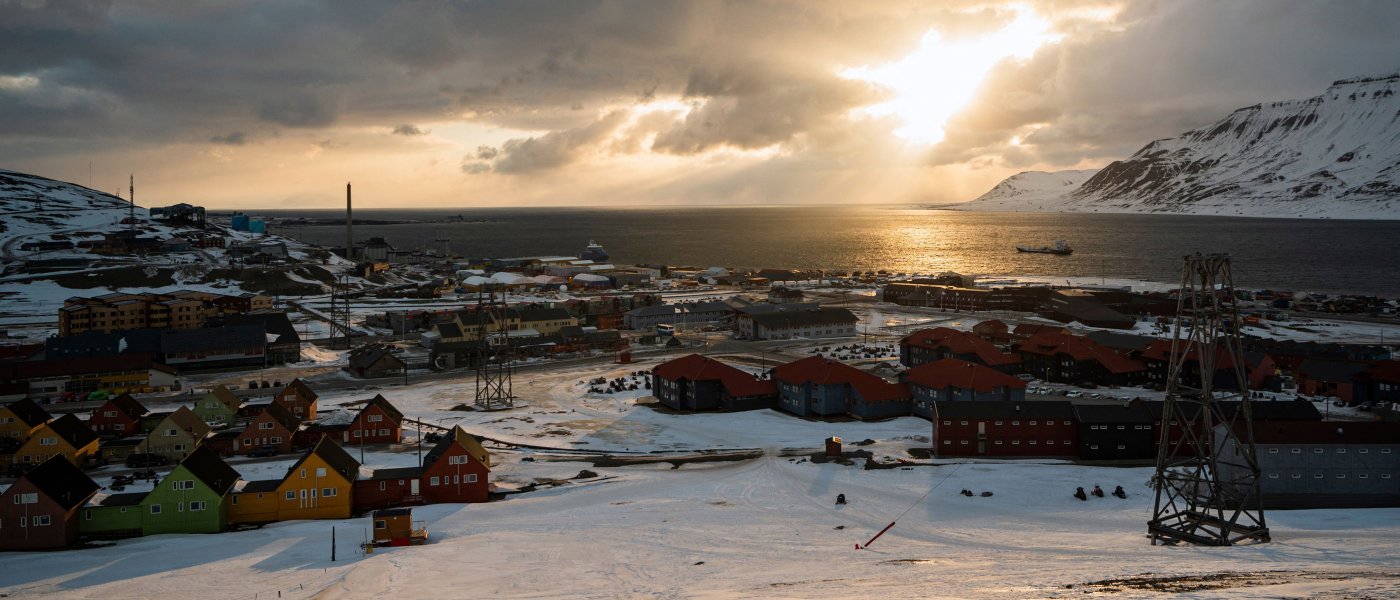
The Svalbard Archipelago   Photo: Jonathan Nackstrand/AFP via Getty Images
 
Following World War 1, Norway's claim to the Arctic archipelago and its islands was officially recognized. The Svalbard Treaty of 1920 banned the presence of activity linked to the military while granting all other nations choosing to sign on to the agreed-upon treaty access to hunting, fishing, mining and land ownership. Over the years, close to fifty countries added their names to the treaty which allowed them access.
 
Of late, studies of the geology of Svalbard and the ocean floor surrounding it have identified vast amounts of copper, zinc, cobalt, lithium and rare earth elements buried in the ocean floor. These are eagerly-sought-after minerals that power electric car battery technologies and wind turbines. It was  generally taken that the Svalbard Treaty granted signatories rights to its surrounding seas and seabed. Until January 2024 when Norway's governing party announced it would pursue deep-sea mineral exploration in an enormous sweep of its seabed.
 
The remote, frigid island, viewed as hostile to human life on a prolonged basis where minus 34 Celsius temperatures were not unknown, were initially home to Norwegian miners and Russian fur trappers. Longyearbyen, Svalbard's largest town, these days boasts candlelit restaurants, hotels, daily flights to the mainland, and is home to 2,500 people from 50 countries. According to the town's mayor, a surge in investment, official visits and strategic attention has recently focused on Svalbard.
 
https://csis-website-prod.s3.amazonaws.com/s3fs-public/styles/original_aspect_ratio_style/s3/2023-09/230913_ERE_Svalbard_Map.jpg?VersionId=6St.B4o5DWrkzOdGqX9xuMpPNfkmFdoO&itok=OWDx1xTK
 
Recently, the Energy Ministry of Norway publicly declared that Norway's goal in exploiting the natural geology of the area had a defined purpose; the goal of "profitable and sustainable" pursuit of seabed minerals, including the seabed around Svalbard. As Norway moves toward consolidating its sovereign rule over the island, its attitude toward foreigners and civil rights has hardened. Foreigners since 2021 were able to cast a vote in the political arena. 
 
That changed when authorities declared that voting in local elections would be off limits to foreigners living on Svalbard if they had not lived on Norway's mainland for the previous three years. "Should have been done a long time ago", said Mr. Petersson. The Svalbard Treaty guaranteed "equal access, not equal rights", he said, pointing out that in other countries foreigners are not given the right to vote. 
 
Svalbard is located about 800 kilometers from the North Pole, one of the only places on Earth where instant connection is possible with polar-orbiting satellites, leading to uninterrupted, clearer feeds and faster downloading speeds; more advantageous than anywhere else on the planet. In fact SvalSat, the world's largest satellite downloading station is based on Svalbard. 
 
https://csis-website-prod.s3.amazonaws.com/s3fs-public/styles/original_aspect_ratio_style/s3/2023-09/GettyImages-1240634673.jpg?VersionId=QZhSaW8ej6MSzDQa6fE02YGYNHnnPq6Z&itok=xu5dbLeF

Telecommunications domes of KSAT, Kongsberg Satellite Services, on a mountain near Longyearbyen. Photo: Jonathan Nackstrand/AFP via Getty Images 

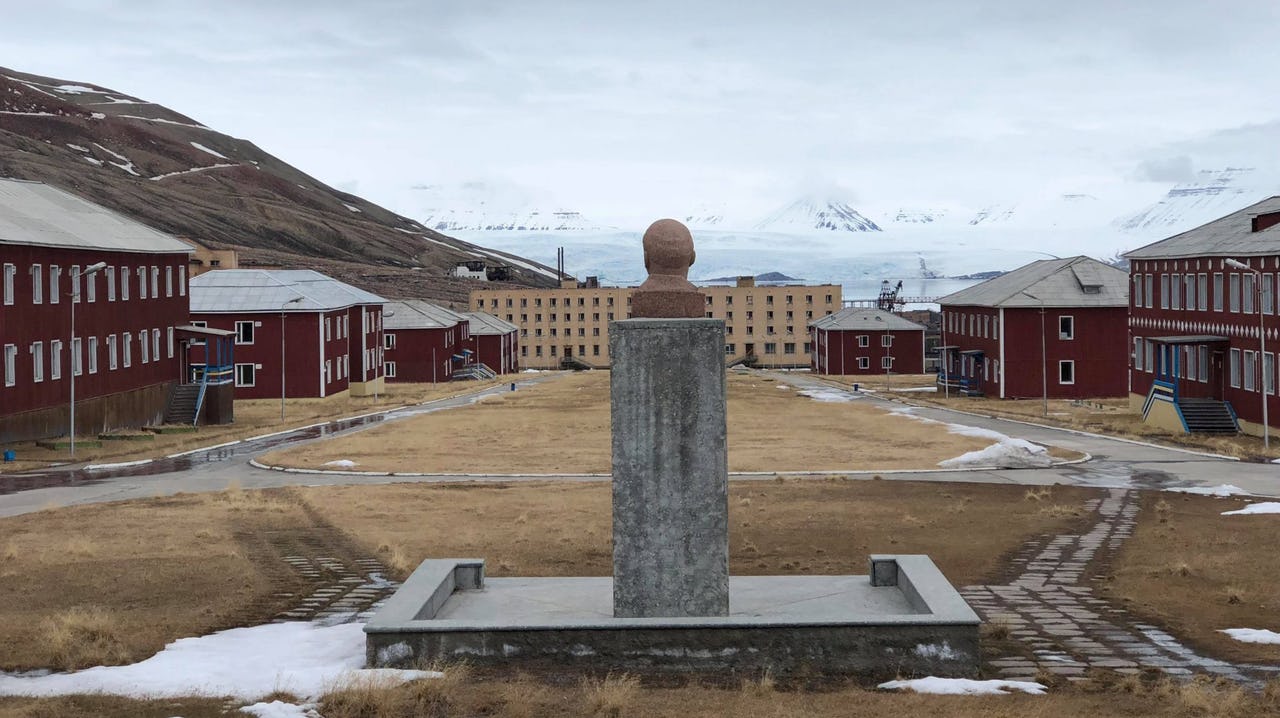
Fur traders from the Pomor region in northwestern Russia arrived at Svalbard some 300 years ago. The Soviets established several coal mining towns in Svalbard a century ago and had signed the Treaty. Of the mining towns, only one, Barentsburg, remains and still operates minimally. Once there was a population of 1,000, now reduced to around 300. One Russian official claimed the archipelago should be renamed the "Pomor Islands".
 
A powerful radar system monitoring space weather and the atmosphere is at the service of Chinese scientists. Data gathered from this equipment have been shared with the China Research Institute of Radiowave Propagation, a Chinese defense organization. Members of the U.S. House Select Commission on the Chinese Communist Party are convinced China is performing military research on Svalbard in defiance of the Treaty proscription. 
 
Outside the Yellow River Station where the Chinese scientists live a pair of granite lions stands guard.  
Norway ordered the Chinese to remove the lions, each of which weighs 900 kilograms, installed 20 years ago when the Chinese government agents arrived on Svalbard. For the first time last summer, the archipelago's sole university,   the University Center, operated by the Norwegian government, barred entry to Chinese students, identified by Norwegian intelligence agencies as a potential security risk. 
 
Criticisms of China's activities represent "nothing but distortion of facts and groundless speculation", according to officials at the the Chinese Embassy in Norway. As for the lions standing guard, they continue to remain where they were placed two decades earlier. 
"While the Russian geopolitical threat remains paramount, Chinese encroachments facilitated by an isolated Russia may complicate the Arctic security landscape in the longer term. The coast guard agencies of Russia and China recently signed a cooperation agreement on strengthening maritime law enforcement to great fanfare in Murmansk, a city on Russia’s western flank close to Norway."
"Moreover, when all other Arctic coast guard agencies suspended their participation in the Arctic Coast Guard Forum, Russia invited China to join the forum—clear signs of China’s expanding presence in the High North."
"As Iris A. Ferguson, U.S. deputy assistant secretary of defense for arctic and global resilience, has put it, Chinese efforts aim “to normalize its presence and pursue a larger role in shaping Arctic regional governance and security affairs.”"
Center for Strategic and International Studies  
https://www.thearcticinstitute.org/wp-content/uploads/2019/12/Lenin-statue_Pyramiden-Svalbard.jpg
The world’s northernmost Lenin statue looks over the abandoned Russian city of Pyramiden on Svalbard, summer 2018. Photo: Alina Bykova
 

Labels: , , , , ,

Friday, January 30, 2026

Canada, Diminished and Faltering

"One could argue that we've lost that unifying sense of right and wrong."
"The very sense of [the] liberal, permissive, non-judgmentally embracing society that our countries were fundamentally founded on is now being openly exploited for the purpose  of reshifting the balance." 
Former Vice-Chief of the Canadian Defence Staff, Mark Norman
 
"Symbolic politics has never been sufficient, it is a sign of weak leadership. Condemnations without enforcement, statements without consequences and gestures without policy are not leadership."
"Canadians do not need additional legislation layered over existing statutes. We need the consistent application of the laws already in force.e"
"Canada is lost and no longer immune. A nation cannot remain open if it forgets how to be a nation. The choice is not between tolerance and cohesion. It is between a confident pluralism anchored in shared civic norms, and a politics of endless accommodation that dissolves the very framework that makes diversity possible."
Larry Maher, CEO, Exigent Foundation
https://smartcdn.gprod.postmedia.digital/nationalpost/wp-content/uploads/2024/12/protest-prayer-1.jpg?quality=90&strip=all&w=564&h=423&type=webp&sig=cR05VijxOvQxlyMLZ2mhaQ
 
It took no more than a  decade to fundamentally alter Canada, reverse many of its values, not the least the outstanding human right assurance of equality and rights under the Canadian Charter of Rights and Freedoms. With that assurance came the expected responsibility of each member of society to respect the social contract that ensured equal opportunities (if not equal outcomes) to succeed and prosper for Canadian citizens who obeyed Canadian laws and whose experience in the general education system helped them to understand their citizen obligations to the country. 
 
In an earlier era those rights and obligations were unevenly applied and issues of discrimination against minority groups reflected a European heritage of entitlement and belittlement of the exotic 'others' who had made their way into North America, many as refugees fleeing persecution and conflict. Under moderately good governance evinced by leaders who at best understood their own guiding obligations to the people they served, laws were passed that ushered Canada into an era of fair justice and social cohesion.
 
Migrants from abroad who entered Canada in the first half of the 20th century as immigrants from impoverished backgrounds to make a home for themselves in a new country where opportunities abounded worked hard, obeyed laws, and accommodated themselves to a new culture with values that suited their own notions of being and belonging. Canadian authorities refined immigration rules to eventually reflect Canada's needs in a point system that rewarded education, professional qualifications, age suitability and an assessed philosophical fit.
 
A succession of Liberal governments in more recent times gradually morphed toward the kind of liberal progressivism that loosened qualifications and requirements of suitability to join the Canadian population. Sympathy for people searching for haven from authoritarian governments, from endemic poverty, from societal crime rates, from conflict zones opened the gates of entry to Canada wide, including the refugee class and illegal migrants who bypassed normal entrance procedures to declare themselves refugees. 
 
https://smartcdn.gprod.postmedia.digital/nationalpost/wp-content/uploads/2026/01/CP175643100-1.jpg?quality=90&strip=all&w=564&h=423&type=webp&sig=6A6W4-uztecW2wA-YBVNKQ
 
The intake swelled, fulfilling what government and business leaders professed to be a need to replace an aging, low-child-bearing population with new recruits to build Canada's working population. Entry to the country no longer relied on screening for adaptability and suitability for integration into the prevailing culture, its values and its laws. To the point where landed immigrants and new citizens openly declared their defiance of those values and accompanying laws, bringing havoc and division and open discrimination to the very streets of the cities throughout the country where they settled in influential numbers.
 
Newcomers to the country felt no loyalty to the country that had adopted them and there were no expectations from government that they should integrate and accept the prevailing social order as it was. Instead religious and ideological divisions erupted and with no amending reaction from government and institutions at any level, those divisions deepened, becoming more publicly expressed, including through deliberate acts of law-breaking.   
 
Canadians of long standing were treated to displays of overt challenges to the  public order in universities and cultural institutions where mass protests took to the streets, bringing foreign campaigns, conflicts, ideological convictions averse to Canada's own, to the fore, with no government intervention at any level. All the while Canada congratulated itself as a bastion of liberal democracy. Politicians rather than applying themselves to Canada's and its populations' defense, eyeing the numbers of voluble protests and the votes they represented, chose appeasement of activist groups.
 
https://static01.nyt.com/images/2026/01/17/multimedia/17canadaletter-CX-mfgv/17canadaletter-CX-mfgv-superJumbo.jpg?quality=75&auto=webp
Canadian PM Mark Carney : China's President Xi Jinping AP
 
And from the outside world, lax attention to the actions of foreign powers that invaded Canada's sovereignty through the infiltration of foreign agents acting on their behalf on the social, academic and political levels exercised the 'soft power' of authoritarian regimes and of extremist movements, effectively interfering in Canada's politics as well as the social contract unique to Canada. Russia, China, Iran, 
Qatar, Turkey and the Muslim Brotherhood all have made an indelible impact within Canada with their malign presence. 
 
The moral, institutional foundations of Canada's principles of equality and human rights have been assailed by Islamist, Marxist, socialist and other radical engagements in destabilizing Canada, as well as other Western nations they have entered both legally and under the radar. What all these Western nations appear to have in common is an attitude of oblivious disinterest in the interference and subtle changes being wrought in normalizing abnormal social behaviour and its effect on their institutions.
 
The exploitation of liberal societies, priding themselves on their Democratic principles of inclusion appear willing to accept the slow erosion of their adherence to the public weal rather than risk being labelled racist, exclusionary or 'Islamophobic'. Identity politics, moral relativism, and DEI guide governments content to do nothing in response to the unravelling of their nations' stability and social coherence. If there is a solution to Western democracies' inaction in the face of this dilemma, it has not yet shown its face. 
 
https://universityaffairs.ca/wp-content/uploads/2024/11/644x374-McGill-supporting3.jpg
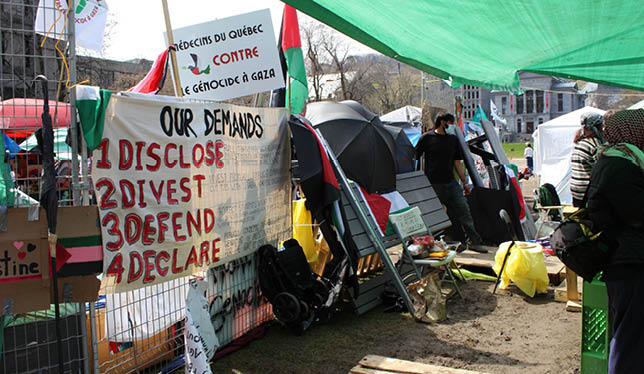
Canadian universities have seen a surge of pro-Palestinian protests following similar demonstrations across North America.  University Affairs
 

Labels: , , , , , , , , ,

Monday, August 18, 2025

When Allies Fall Out

"Sections of the Indian foreign policy community feel 'betrayed' by the Donald Trump administration, which has found unexpected affection for Rawalpindi, raised a host of tough demands on trade, and threatened additional tariffs on India because of its BRICS membership and continued purchase of Russian oil."
"It is, perhaps, a small consolation that India is not alone. America’s neighbours and largest trading partners [Mexico and Canada] and its longstanding allies in Europe and Asia have even more reasons to feel betrayed."
C. Raja Mohan, Indian Express
 
"[There will be] very pragmatic strategic recalibrations [by New Delhi to protect its interests]."
"[India's growing economy allows its leaders breathing room, bit it is still a moment of] deep introspection [for the country]."
"We have to draw our lessons from that and really focus on the national priorities and what we need to do to become strong and more influential."
Nirupama Rao, former Indian ambassador to Beijing and Washington 
 
"In the dim-lit antechambers of global power, India stands as both witness and architect to a world on the edge of multipolar chaos."
"The tectonic plates of international order are shifting, and New Delhi – long a master of strategic ambiguity – now finds itself the subject of a more perilous experiment in global pressure with Washington brandishing the threat of sweeping tariffs and secondary sanctions."
"Republican Senator Lindsey Graham’s bill – stipulating 500% tariffs on countries buying Russian oil to curb Moscow’s aggression against Ukraine – puts India’s time-honoured doctrine of ‘strategic autonomy’ to its severest test."
"NATO Secretary General Mark Rutte’s subsequent warning to India of being hit ‘very hard’ by secondary sanctions if it continues to trade with Russia only underlines the gravity of the challenge."
Vinay Kaura, Royal United Services Institute  
Sunday Guardian

India, the world's most populous democracy, knows what it feels like to be caught between a rock and a hard place. And right now, the walls of that hard place are steadily albeit slowly moving inward to trap India, giving it due cause for concern and certainly cause to look about carefully in considering its options. Options which in and of themselves complicate an already complex situation, making it extremely difficult to make critical decisions. For any decisions made will come with ready-made headaches at a time when India would prefer to focus on its strengthening economic situation as a potential to nudge China aside as the world's premier producer of hard goods on the world stage.

On the one hand, New Delhi's growing power as a world-class producer capable of overturning China's current status as the globe's producing colossus, has seen Beijing's attention also swivelled to that likelihood so there is a certain level of tension to add to the belligerent territorial claims of the two giants over border issues and the high plateau Himalaya in particular. Rivalry of this calibre makes for uneasy neighbours.

But it is not only China and its penchant for territorial aggression that makes its neighours nervous; in India's case there is another neighbour with whom relations are fraught with tension; the ill will that emanates from Pakistan toward India is best seen in their fractious relations over Kashmir, a tinderbox of unresolved claims leading to occasional vociferous accusations and culminating in indecisive, violent clashes.
 
India's sterling relations with the United States, arguably still the world's dominant superpower, have recently taken a turn for the worse. Although in President Donald Trump's first administration no issues erupted that would rock a congenial relationship between the two countries had surfaced, the second Trump administration has roiled all of America's trade partners to a significant degree, threatening to upend world trade, causing no end of turmoil in stock markets and the suddenly wobbling global economy. 
 
When that calm and friendly relationship between India and the U.S. erupted suddenly into an antagonistic trade issue, it was not only India, but all of the U.S.'s normally reliable Western-democratic allies finding themselves staring down the barrel of a targeted trade tariff of staggering proportions. The Trump administration levying a whopping 50 percent tariff on Indian goods as punishment for Russian oil contracts by New Deli and Moscow stunned Prime Minister Narendra Modi.
 
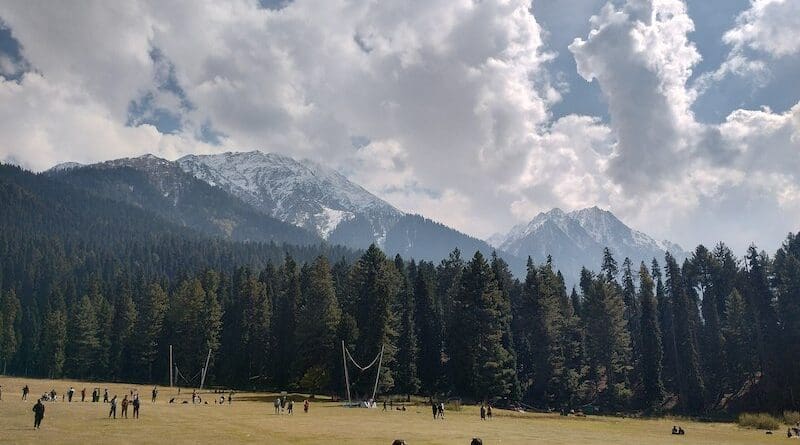
Baisaran Valley, near Pahalgam, Jammu and Kashmir, India. Photo Credit: Hellohappy, Wikipedia Commons
 
And when Donald Trump recognized Pakistan on an equal footing during a standoff between India and Pakistan over a conflict that began when Hindu tourists in Kashmir were attacked and killed by Pakistani terrorists whom New Deli identified as linked to the Pakistani military, India was taken aback, insulted and incredulous that this could occur, when even Trump himself has acknowledged that Pakistan harboured and sponsored terrorists in their midst -- with India in mind.
 
Donald Trump took credit for smoothing over the rankled hostility between the two neighbours, even as India took credit for its superior military having gained the advantage over Pakistan that led to a ceasefire. That Narendra Modi took exception to Trump's declaration as a premier peacemaker whose overtures had succeeded in arranging the ceasefire and his subsequent declaration of India having been responsible in view of its military success over Pakistan did not endear him to his erstwhile ally.
 
The diplomatic distance that ensued, made the imposition of steep tariffs inevitable as Mr. Modi has opened up to Vladimir Putin of Russia, both vowing to deepen "the India-Russia Special and Privileged Strategic Partnership" -- a red flag to a raging bull. With India facing a situation where rivals like China and the United States hemming in India's ambitions on the economic and diplomatic front, uncertainty reigns, forcing India to recommit to its doctrine of "strategic autonomy"; a situation similar to what Israel, an ally of India, is facing for entirely different reasons.
 
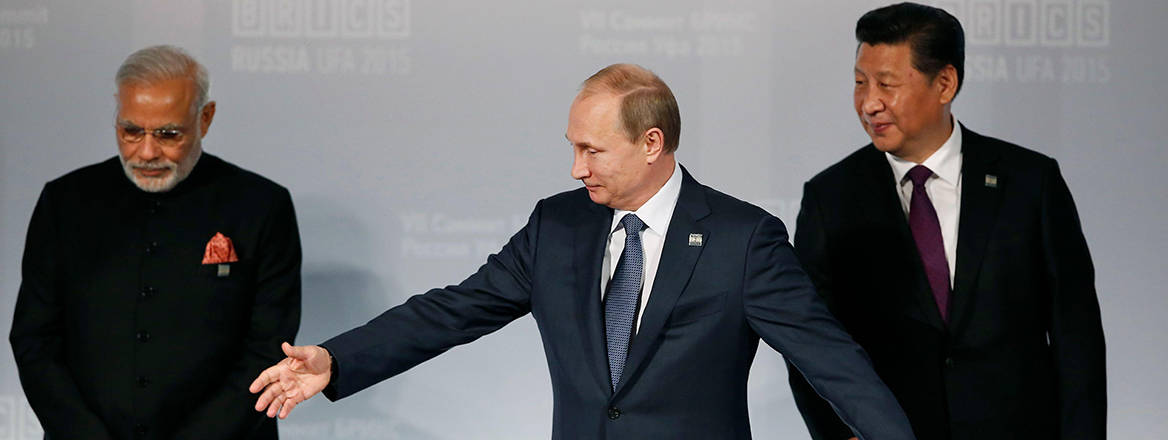
Russian President Vladimir Putin, welcomes Indian Prime Minister Narendra Modi and Chinese President Xi Jinping prior to a signing ceremony at the BRICS Summit in Ufa, Russia, Thursday, July 9, 2015.
Royal United Services Institute, U.K.

Labels: , , , , , , ,

Thursday, June 26, 2025

A Benevolent Uyghur Employment Opportunity in China?

"[Such allegations are] nothing but vicious lies concocted by anti-China forces. [The Uyghur Forced Labor Prevention Act is interference in China's internal affairs]."
"[All residents in Xinjiang] enjoy happy and fulfilling lives."
"Xinjiang-related issues are not human rights issues at all, but in essence about countering violent terrorism and separatism."
Washington Chinese Embassy 
 
"Uyghur society is going to be changed in the long term through labor transfer. So it's a long-term strategy, and that’s why China is doubling down on it."
"China is intensifying it because with labor transfer you can achieve cultural assimilation."
"You can achieve linguistic assimilation. You can break apart communities – traditional communities – and break apart families."
German Scholar Adrian Zenz, director, China Studies, Victims of Communism Memorial Foundation, Washington
 
"The so-called forced labor is only a groundless accusation."
"Isn’t there any right to work for minority ethnic groups such as the Uyghurs in Xinjiang?"
"If you make them unemployed, unable to work, and unable to sell their products under the pretext of forced labor, is this humane?"
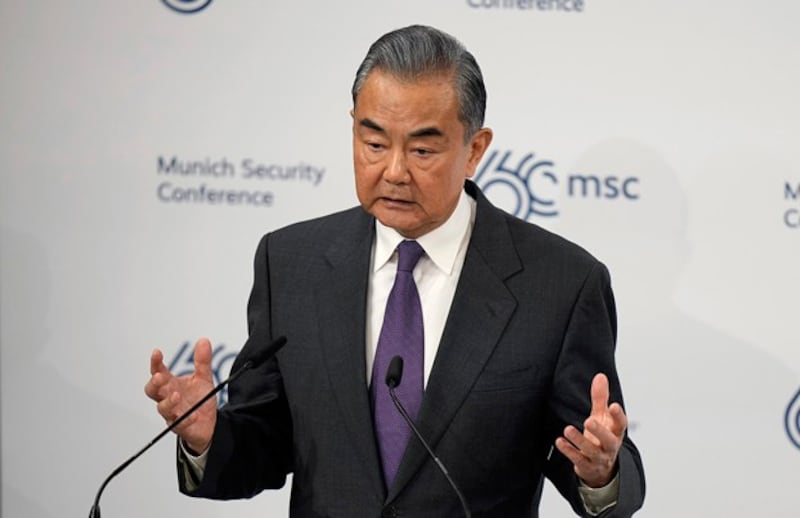
Chinese Foreign Minister Wang Yi 
Chinese Foreign Minister Wang Yi delivers a speech at the Munich Security Conference in Munich, Germany, Feb. 17, 2024. (Matthias Schrader/AP)
 
Supply-chain auditors and border and customs officials involved in identifying labour abuses and blocking import of tainted goods, appear to have little knowledge around China's more recent placement of Uyghurs from Xinjiang in factories across China, involved in the production of a wide range of goods that will be identified with brand-name products around the world. The United States and the European Union adopted laws to prevent consumers and businesses from funding the persecution of China's Uyghurs.
 
Tracking the relocation and treatment of workers from Xinjiang to factories across China is an endeavour vexed with practical difficulties, quite unlike targeting imports known to emanate from Xinjiang province. Tens of thousands of Uyghurs have been dispatched by China's government to work in factories located outside of Xinjiang. Although the workers earn salaries, labour conditions of their workplace are unknown. U.N. labour experts, scholars and activists claim the programs reflect well-documented patterns of forced labour.
 
According to China, participation by Uyghurs in these out-of-province, across-China programs is strictly voluntary. A great favour is being done the Uyghurs by the Beijing in moving them to workplaces across the country, in the process exposing them to economic opportunities, a situation that ends up addressing chronic poverty in Xinjiang. The rejoinder by experts and activists is that Uyghurs have little choice but to accept job assignments. 
 
The programs, they insist, fold into Beijing's design to exert control over a minority population  historically engaged in resisting Chinese rule. Uyghurs, a Central Asian, Muslim people live in Xinjiang, up to 12 million-strong, on the border with Kazakhstan.  
 
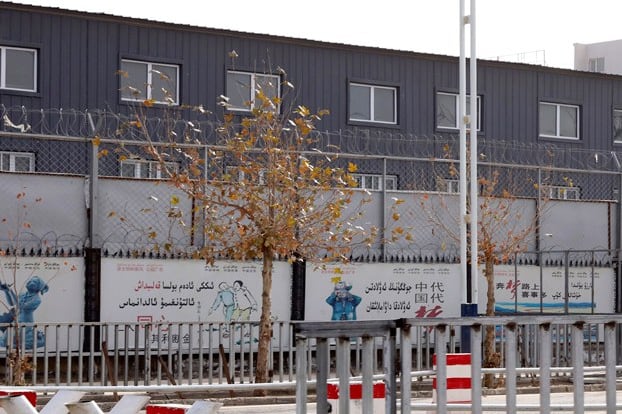
Two layers of barbed wire fencing ring the Hotan City apparel employment training base where Hetian Taida Apparel Co. has a factory, in northwestern China's Xinjiang region, Dec. 5, 2018. The U.S. blocked shipments from Hetian Taida in 2019 over accusations the manufacturer was using forced labor.
Two layers of barbed wire fencing ring the Hotan City apparel employment training base where Hetian Taida Apparel Co. has a factory, in northwestern China's Xinjiang region, Dec. 5, 2018. The U.S. blocked shipments from Hetian Taida in 2019 over accusations the manufacturer was using forced labor. (Ng Han Guan/AP)
 
The Uyghur Forced Labor Prevention Act bars imports into the United States from Xinjiang made with forced labour. Reports place forced labour in various places; prisons, mass internment camps and large-scale relocation programs regionally. The regional production of cotton, textiles, critical minerals and solar panels is involved. Videos demonstrate other Central Asian minorities from Xinjiang -- Kazakhs and Kyrgyz people included -- who also are persecuted, and the U.S. law covers their work production as well.
 
A number of discreetly interviewed workers hesitatingly suggest they labour under close supervision at arranged jobs, requiring permission to leave factory grounds, new on arrival. At some factories, security guards confirm Uyghur workers had been sent by government agencies. Other workers interviewed claimed to have willingly agreed to take the offered jobs, and remain as workers of their own accord. 
 
A worker in Hubei Province spoke of himself and 300 other Uyghurs living in a dormitory separate from staff comprised of the majority Han Chinese population. The Uyghurs were assigned minders from their home counties in Xinjiang, and were permitted to leave factory premises and should they wish to return to Xinjiang, a month's notice is required. Working up to 14 hours daily, a monthly salary up to 6,000 yuan ($837) is earned; the national average for a factory worker in China. 
 
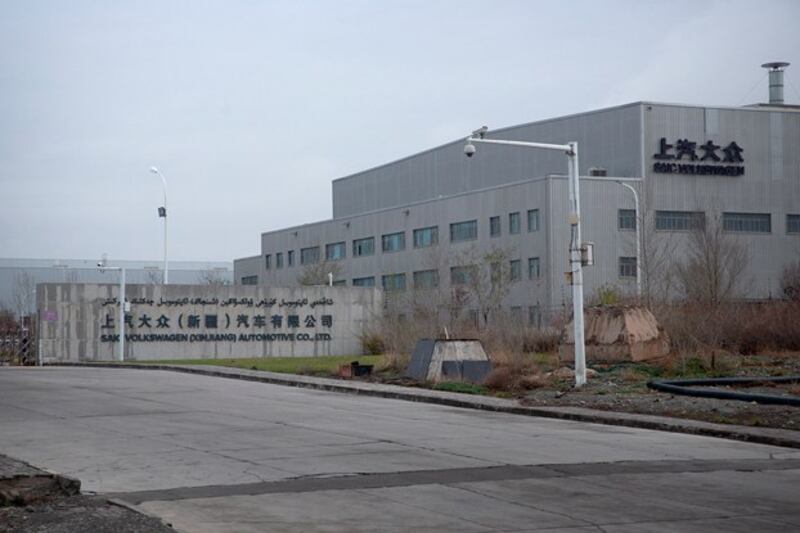
The SAIC-Volkswagen plant is seen on the outskirts of Urumqi, capital of northwestern China's Xinjiang region, April 22, 2021. (Mark Schiefelbein/AP)
 
 The government identified 3.2 million transfers of Xinjiang's labour in 2023. The U.N. agency, International Labor Organization, reported in February that the labour transfer programs appear to use measures "severely restricting the free choice of employment". A wide range of multinational companies rely on suppliers to which Uyghur workers have been assigned. The programs are part of China's dominant role in the global economy.
 
The Uyghur workers process chicken for McDonald's and KFC restaurants in China while others make products for export, such as washing machines for LG Electronics and footwear for Crocs. German automakers, including Volkswagen, Mercedes-Benz and BMW attempted to address the sensitive forced labour issues. Over 100 companies were identified as receiving Uyghur workers or parts or goods produced by them, including LG, Tesla, Midea and KFC.
 
If suppliers are found to have been using forced labour they risk having their imported goods seized by U.S. customs officials. Some companies deny the  use of forced labour by their suppliers. "Based on recent audits, we do not have reason to believe that any of our suppliers are in violation of our policies", stated Colorado-based Crocs. 
 
Over a million Uyghurs were held by China in internment camps from 2017 to 2019, ostensibly to fight extremism. Once the camps closed, an estimated half million Uyghurs were sentenced to prison, according to rights groups. Xi Jinping, China's leader, informed officials during a visit to Xinjiang in 2023 that they should be vigilant against threats to stability and "encourage and guide Xinjiang people to go to the Chinese interior to find employment". 
 
"This is not about poverty alleviation. This is about dispersing Uyghurs as a group and breaking their roots", charged Rayhan Asat, a rights lawyer at the Atlantic Council, whose brother has been imprisoned since 2016 in Xinjiang. 
 
FILE - Residents line up inside the Artux City Vocational Skills Education Training Service Center, which was revealed by leaked documents to be a forced indoctrination camp at the Kunshan Industrial Park in Artux in western China's Xinjiang region, Dec. 3, 2018.
Residents line up inside the Artux City Vocational Skills Education Training Service Center, which was revealed by leaked documents to be a forced indoctrination camp at the Kunshan Industrial Park in Artux in western China's Xinjiang region, Dec. 3, 2018. Voice of America


Labels: , , , ,

Thursday, May 22, 2025

Militarizing Space -- Oblivious to Malevolent Internal Threat

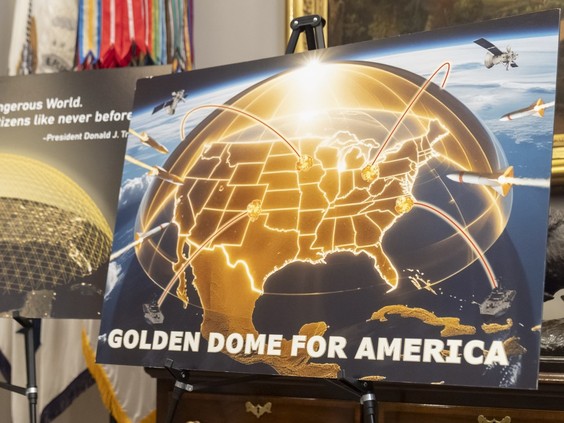
"[The new American 'Golden Dome' defence system will] deploy next generation technologies across the land, sea and space, including space-based sensors and interceptors."
[The Trump administration is prepared to work with Canada on] pricing [and] they'll pay their fair share."
"We are dealing with them on pricing. They know about it very much."
U.S. President Donald Trump 
 
"[Canadians gave Prime Minister Mark Carney] a strong mandate to negotiate a comprehensive new security and economic relationship with the United States." 
"To that end, the prime minister and his ministers are having wide-ranging and constructive discussions with their American counterparts."
"These discussions naturally include strengthening NORAD and related initiatives such as the Golden Dome."
Prime Minister's Office 
https://i.cbc.ca/1.7506442.1744244556!/fileImage/httpImage/image.JPG_gen/derivatives/16x9_1180/donald-trump.JPG?im=Resize%3D780
President Donald Trump says Canada has asked to join the U.S. missile defence program. (Nathan Howard/Reuters)
 
The new missile defence system that the U.S President has announced to the world is touted to have far more advanced technology than anything in its class heretofore, including the ability to ward off missiles and even threats from outer space. The multilayered system has been costed at US$175 billion, according to the president, to be completed within his term, ending in 2029. The system, the president emphasized, will have the capability of intercepting missiles launched from the other side of the globe, or even from space.
 
The 'Golden Dome' has been in the works since President Trump's first administration, when critics panned it as too expensive, and too complicated to deploy over such a large land mass. Based on Israel's "Iron Dome" defence network, the American updated version is on the cusp of operability. Mr. Trump's cost claims aside, the Congressional Budget Office estimates just the space-based components alone could cost up to US$542 billion over 20 years. 

For years the Pentagon issued warnings of the newest missiles developed both by China and Russia, to be sufficiently advanced to require updated countermeasures. Satellites and interceptors, where the bulk of the program's cost lie for the Golden Dome, are to be focused on stopping those very same advanced missiles early, or in the midst of their flight. Golden Dome's space-based weaponry "represent new and emerging requirements for missions that have never before been accomplished by military space organizations", stated head of the U.S. Space Force, General Chance Saltzman.
 
Offensive Chinese and Russian satellites with the capacity to disable critical U.S. satellites have the potential to make the United States vulnerable to attack. It was revealed through the United States last year that Russia was developing a space-based nuclear weapon able to loiter in space for long periods, then be triggered to release a burst to destroy satellites in proximity. Trump mentioned he had not yet discussed the issue with Russian President Vladimir Putin "but at the right time, we will".
 
https://smartcdn.gprod.postmedia.digital/ottawacitizen/wp-content/uploads/2025/05/trump_295698273.jpg?quality=90&strip=all&w=564&type=webp&sig=VzAl2LEm9ijWVXbwJ7RFzg
Posters for the proposed Golden Dome for America missile defense shield are displayed before an event with President Donald Trump in the Roosevelt Room at the White House. Photo by MARK SCHIEFELBEIN /AP
 
A joint statement by Russia and China issued earlier in the month spoke of the Golden Dome as "deeply destabilizing in nature", with the warning it would transform "outer space into an environment for placing weapons and an arena for armed confrontation". 
 
President Trump's repeated complaints of the U.S. protecting Canada, and his calls for more Arctic security to push back on an increase in Russian and Chinese presence in the region, have led to the new Canadian administration becoming more attentive to the situation. According to some experts Mr. Trump's musing threats of annexation of Greenland and Canada could be rooted in part in concerns over the Arctic.
 
What if, just what if the threats seen to be posed by Russia and China toward North America are for the most part rooted in trade advantages and a challenge to a unipower represented by the United States dominating world affairs? As opposed to the equally imminent and possibly in the long view more dangerous threat constituted by the ongoing infiltration through immigration, migrant and refugee intake sweeping the West from Europe to North America, Asia and Africa by Islamist jihadists whose numbers are overwhelming and whose dedication to conquest is unquenchable?
 
https://i.cbc.ca/1.7541699.1747957222!/cpImage/httpImage/image.jpg_gen/derivatives/16x9_1180/trump-golden-dome.jpg?im=Resize%3D780
Experts say U.S. President Donald Trump's proposed Golden Dome missile defence system could take decades to build and cost hundreds of billions of dollars. (Alex Brandon/The Associated Press)

Labels: , , , ,

Thursday, March 20, 2025

Beijing's Deep Concern for Human Dignity

"The facts of the crimes committed by the Canadian nationals involved in the cases are clear, and the evidence is solid and sufficient."
"The Chinese judicial authorities have handled the cases in strict accordance with the law, and have fully guaranteed the rights and interests of the Canadian nationals concerned."
"China always imposes severe penalties on drug-related crimes and maintains a 'zero tolerance' attitude toward the drug problem."
"[Canada should] respect the rule of law and China's judicial sovereignty [and] stop making irresponsible remarks."
China's Ottawa Embassy 

"Global Affairs Canada [Canadian Foreign Affairs Department] can confirm it is aware that, earlier this year, Canadians were executed in the People's Republic of China."
"Canada strongly condemns China's use of the death penalty, which is irreversible and inconsistent with basic human dignity."
"Canada repeatedly called for clemency for these individuals at the senior-most levels."
Foreign Affairs Canada 
https://static.bangkokpost.com/media/content/20250320/c1_2983981_250320120208_790.jpg
The Chinese flag flies outside Beijing’s embassy to Canada in Ottawa. (Photo: Jharnett44 via Wikimedia Commons)  
 
China is distinct in the world for many reasons, and one of its distinctions is its free use of the death penalty for what it considers to be capital offense crimes. Although there are many countries across the globe that continue to use the death penalty -- the United States among them -- China has the distinction of putting more people to death as a crime penalty than all other countries combined. A runner-up in the state-death competition is the Islamic Republic of Iran whose mode of execution includes hanging, crucifixion, stoning and firing squads.
 
China's choice of state execution for those judged to have run afoul of its criminal laws in capital offenses also die by firing squads, although Beijing has latterly introduced lethal injections as well. Once a charge has been laid by the state of anyone having committed a capital offense, it is almost unknown for a court to strike a trial, instead rubber-stamping guilt with the accompanying penalty of execution. With its vast population of over 1.4 billion people, Beijing is not known to be sensitive to any concept as remote to it as 'human rights'.
 
In the instance of the publicly newly-revealed death by state execution of Canadian citizens, neither the Chinese embassy in Canada's capital of Ottawa or Canada's Foreign Affairs department divulged just how many Canadians had been executed, nor identified those executed by publishing their names. An Abbotsford, British Columbia native, Robert Lloyd Schellenberg, known to have been sentenced to death by a Chinese court in 2019 on a charge of drug smuggling, however, was not among the executed. 
 
https://i.cbc.ca/1.7016679.1698953481!/fileImage/httpImage/image.jpg_gen/derivatives/original_1180/fentanyl-lab-bust.jpg?im=Resize%3D1180
A photo submitted by the RCMP shows a clandestine drug lab where Mounties say a large quantity of fentanyl was discovered in Mission, B.C. in November 2023. (submitted by Mission RCMP)

Those who met their untimely fate may have been dual citizens of Canada and China. China does not recognize or give credence to dual citizenship, and feels no diplomatic sensitivity in ignoring Canadian citizenship alongside Chinese citizenship. Although the Chinese head of mission at the embassy in Ottawa did not clarify whether any of these executed were involved in drug smuggling or trafficking, they did state that Beijing has a "zero tolerance" approach to drug crime.
 
There are, it seems, altogether 100 Canadians currently detained in China. It is interesting to note that while China deals severely with anyone identified and caught being involved in the drug trade, it is from China that the artificial, laboratory-produced opioid Fentanyl arrived in North America to wreak deadly havoc in Canada and the United States. Although on appeal Beijing listed fentanyl making it illegal to transport or sell it abroad, the precursor chemicals associated with fentanyl production still emanate from Chinese labs, where criminal gangs in North America employ 'cooks' to produce lethal fentanyl.
 
https://i.cbc.ca/1.6736808.1675481763!/cumulusImage/httpImage/image.jpg_gen/derivatives/original_1180/bc-decrim.jpg?im=Resize%3D1180
Health Canada says it can only take a few grains of fentanyl to kill someone. (Ben Nelms/CBC)

"As in pre­vi­ous years, exe­cu­tion totals do not include the esti­mat­ed thou­sands of exe­cu­tions car­ried out by the world’s lead­ing exe­cu­tion­er, China, where exe­cu­tion data is con­sid­ered a state secret; secre­cy prac­tices and chal­lenges access­ing infor­ma­tion in Afghanistan, North Korea, Palestine, Syria, and Vietnam also cre­at­ed dif­fi­cul­ties in iden­ti­fy­ing min­i­mum totals. This world­wide increase was pri­mar­i­ly dri­ven by a 48% rise in exe­cu­tions in Iran, which account­ed for 74% of exe­cu­tions world­wide. Iran (at least 853 exe­cu­tions), Saudi Arabia (172 exe­cu­tions), Somalia (at least 38 exe­cu­tions), the U.S. (24 exe­cu­tions), and Iraq (at least 16 exe­cu­tions) were the top five coun­tries respon­si­ble for record­ed exe­cu­tions."
Death Penalty Information Centerhttps://img.dpic-cdn.org/images/Graph_Amnesty-International-Global-Report-Death-Sentences-and-Executions-2023.jpg?w=1024&h=723&q=82&auto=format&fit=crop&dm=1717099922&s=1ba40e62143421c30b021eaed1521090

Labels: , , , ,

Monday, February 10, 2025

U.S. President Donald Trump's Trade War With Canada

"All gloves are off."
"Canada is being hit hard from its historically strongest ally, and it may be politically expedient to target individuals like Musk who garner outsized influence over the U.S. administration."
James Hinton, senior fellow, Centre for International Governance Innovation
 
"Provinces would need to heavily subsidize new infrastructure to replace Starlink, which could take years to implement."
"Legally, targeting Musk's companies could be seen as overreach and Musk could sue in Canadian or U.S. courts to challenge such measures."
"[A bull's-eye on Musk's back also] risks looking like a personal vendetta rather than a rational economic response."
Andreas Schotter, professor of International business, University of Western Ontario Ivey School of Business
https://smartcdn.gprod.postmedia.digital/nationalpost/wp-content/uploads/2025/02/AFP_33U346X.jpg?quality=90&strip=all&w=564&h=423&type=webp&sig=gYlks_qD6QXoKnGoO5fUCw

As it begins to appear more and more inevitable that Donald Trump is prepared to launch another painful trade war with Canada, Mexico, China and the European Union in his determination to, in his opinion, put a stop to other countries' reliance on America's generosity, helping them to fund their own economic advance to the detriment of that of the United States, former allies and trade partners are mulling their options in an effort to stop the roller-coaster destruction of the global economy.
 
Economists everywhere agree that a substantial trade war such as what Mr. Trump is gearing up for will have the end effect of harming the world's economy, as it plays havoc in targeted nations' economies, bringing many to the point of inflationary stress, certain to impact heavily on national populations' quality of life. There is also the recognition that the United States itself will not come away free from the impact of such a draconian move as Mr. Trump contemplates.
 
In Canada, government authorities at every level are making plans and consulting with one another in a combined effort to produce a protective shield as much as possible to avoid the harm certain to arise when a commanding country whose industries are enmeshed with those of the very countries being targeted will produce harmful effects that will bring economies to their knees. In Ontario, Canada's wealthiest province, a plan is afoot to target Elon Musk in recognition of his influence with the Trump White House. 

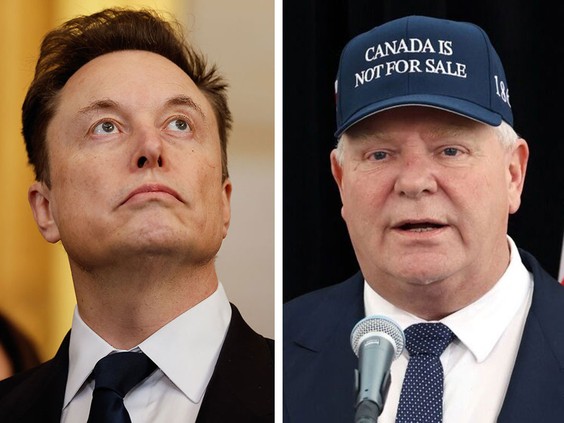
Ontario Premier Doug Ford announced his intention to begin the process by "ripping up" the province's $100 million contract with Starlink, Elon Musk's satellite internet provide operated by aerospace company Space Exploration Technologies Corp. Signed last November, the deal  was on tap to provide internet access for Canadians resident in rural communities. "Ontario won't do business with people hellbent on destroying our economy", blustered Premier Ford, leading other premiers to scrutinize their own Starlink contracts.
 
https://i.cbc.ca/1.7449638.1738629733!/cumulusImage/httpImage/image.jpg_gen/derivatives/16x9_1180/ford-tariffs.jpg?im=Resize%3D780
Ontario Progressive Conservative Leader Doug Ford holds a news conference in Etobicoke on Feb. 3, 2025. Later Ford said, with the U.S. pausing tariffs, Ontario will also pause its retaliatory measures. (Evan Mitsui/CBC)
 
A situation that elicited a shrug from Mr. Musk who responded to the Premier's X warning statement with a two-word "Oh well". This type of criticism will be no surprise to a man who has aligned himself so intimately with the Trump administration, taking on the role of efficiency czar to a President whose unexpected turn against his U.S. allies has drawn surprise and resentment from his international colleagues. 
 
Emmett Macfarlane, political science professor at University of Waterloo in Ontario, approved of the move to send a powerful message to Musk. "Appeasement does little to stop a bully. We should exercise our powers to punch the bully (metaphorically) in the nose", he said in support of the Starlink cancellation threat. 

Aside from the Starlink contract, there is the issue of Musk companies in operation across Canada; Tesla alone operates 32 stores, Canada's most popular electric vehicle brand. Should a 100 percent tariff be slapped on Tesla vehicles the purchase price would be pushed from its current $56,000 tab into a sphere most electric vehicle buyers would consider hands-off. 

https://smartcdn.gprod.postmedia.digital/financialpost/wp-content/uploads/2025/02/elon-musk-doug-ford-0203-ph.jpg?quality=90&strip=all&w=564&h=423&type=webp&sig=DSJDtq4U7f_7AtsluCl9Cw

"A $100 million contract when he's worth [over] $400 billion -- this is just a flea on his side."
"If we want to truly irritate the Americans, we need to move beyond thinking about what kind of ketchup we buy and think of ways of hitting their [digital] service providers without unduly harming Canadian consumers."
Daniel Trefler, trade economist, Canada research chair in competitiveness and prosperity, Rotman School of Management at University of Toronto 

Labels: , , , , , , , ,

 
()() Follow @rheytah Tweet