Ruminations

Blog dedicated primarily to randomly selected news items; comments reflecting personal perceptions

Friday, May 26, 2023

Back by Unpopular Demand : XBB Omicron Subvariant

"The number of infections will be less. The severe cases will be certainly less, and deaths will be less, but that could still be a large number."
"Even when we think this is a milder wave, it could still be quite a substantial health impact on the community."
Ben Cowling, epidemiologist, School of Public Health, University of Hong Kong
https://cdn.wionews.com/sites/default/files/styles/story_page/public/2023/05/24/353953-untitled-design-2023-05-24t091421658.png?imwidth=1920
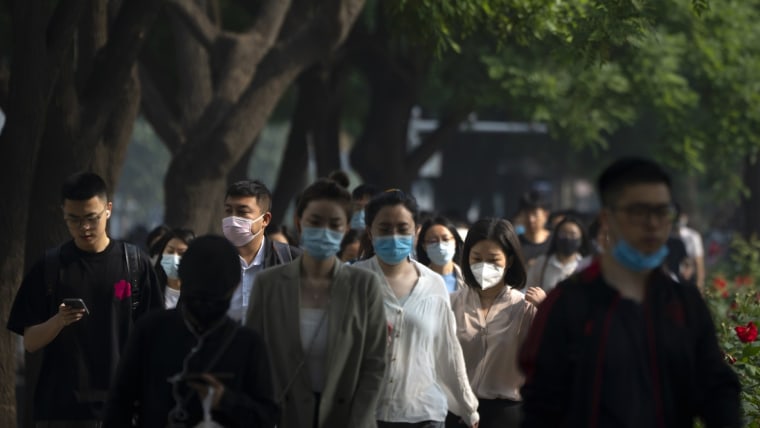
People walk at the tourism site of Qianmen street in Beijing.  Photograph:(Reuters)

There is no complacency over the vastly lower presence in our consciousness of COVID. Globally, one country after another has declared SARS-CoV-2 to have been established as a constant presence which in its various presentations following mutations veered toward greater infectiousness, but lower infections of serious qualities. It still has been capable of great health injury, and the lingering effects of Long COVID, bedevil the unfortunate, but there are far fewer hospitalizations and deaths. 
 
The everyday cautions in the first few years of the coronavirus pandemic such as mask-wearing and enhanced hygiene along with distancing have been officially relaxed at the very same time that regional health authorities warn that the threat of viral infection remains and with it health risks, counselling those at greatest risk to continue practicing those everyday cautions. 
 
In China, the state's 'zero-COVID' policies, strictly policed, made for abject misery for the population. A population so vexed at the severe restrictions that rebellion was in the air, influencing Beijing's decision to release itself from that draconian policy. And people adjusted to life's ordinary freedoms again following a huge outbreak of large-scale infections, which in the final analysis came close to herd protection against the virus.
 
Yet despite the fact that an immense swath of the population was exposed to the virus at some level said to represent fully 85 percent of the population, a new wave of the coronavirus is spreading throughout China with expectations that it will affect up to 65 million people weekly. The new XBB variant of the virus has evolved to overwhelm the built \-up immunity that resulted from the abrupt lifting of the 'zero COVID' mandate of the Chinese Communist Party.
 
As a result Chinese medical authorities are expediting vaccines, two of which, a Chinese epidemiologist, Zhong Nanshan explained, were designed to overcome the XBB omicron subvariant, have been given initial approval. Speaking at a biotech forum in Guangzhou, Dr. Zhong stated that three to four other vaccines would be approved shortly to address the new outbreak which could become the largest infection wave since the zero-COVID regime was dismantled.

Experts in the United States have not ruled out new variants creating another wave of infections in years to come. An increase in infections has been noted in the U.S. caused by the new variants -- which had no impact on the declaration of the end of the public health emergency on May 11. 

Public health experts feel an aggressive vaccine booster program and a ready supply of antivirals at hospitals are required in prevention of another death spike among China's large elderly population despite the acknowledgement that the new wave is expected to be less severe.  Most residents in China are continuing life as usual, and the government has made no effort to prevent infections, resembling the severe restrictions of previous years.
 
NBC News


Labels: , , ,

Wednesday, March 24, 2021

COVID Re-runs : One Vaccine Dose or Both?

"Somebody who has had COVID before seems to respond very quickly to a dose of vaccine. They respond as a naive person would with their second shot." 
"The question that remains is that a one-size-fits-all for every previous infection? If you were asymptomatic at first infection, is it still OK?"
"Will the response to a first dose of vaccine be the same for everybody who has had a COVID infection before, regardless of the severity of disease?"
Dr.Caroline Quach-Thanh, pediatric infectious disease specialist, co-chair, National Advisory Committee on Immunization, Canada

"There's certainly the suggestion that if you have previously been infected, it's kind of like having had your first dose [of vaccine]."
"[Reinfection can happen] It's not as rare as people think [and mutations are increasing the risk such that people who have contracted COVID before should be vaccinated]."
"[For younger people, a one-dose strategy may be a reasonable approach] but I think we need more data."
"For older people, I think it's really unknown, and I think assuming you could get away with it is probably not necessarily so wise."
Dr.Andrew Morris, infectious disease specialist, Toronto
COVID-19 vaccination record card
Credit: iStock, Bill Oxford
 
In Canada, its premier national expert immunization advisory group is in the process of deliberating whether one dose of vaccine only may be sufficient protection for those people who have already experienced a bout of COVID-19. Recently, a few small studies appear to conclude that a single dose of the Pfizer/BioNTech and Moderna vaccine could be useful in creating a rapid immune response in people who have previously been infected with the coronavirus.

People with a known history of having had COVID report more vaccine side effects -- including fever, headache, chills and muscle and joint aches -- than the never-infected, following the first dose. The second dose generally tends to be more intensely prone to side effects. It remains unclear whether a single dose would gain sufficient protection for older people who were infected previously, or those people with compromised immune systems.

France's elite health authority recommends a one-dose-after-COVID strategy,  a recommendation that the province of Quebec has picked up for its effect in stretching vaccine supplies in this initial period of short supplies. The thought is there that while people appear to tolerate the vaccines, a single dose might also spare people unnecessary side effects by withholding a second dose, according to researchers.

It was found by one small study that following the first dose of a Pfizer or Moderna shot antibody titers -- meaning the amount of antibodies appearing in an individual's blood -- of those previously infected were seen to be ten to 46 times as high as those people being vaccinated who had no previous immunity after the first dose. They were 25 times as high 13 to 15 days following the first dose. Antibody concentrations of people never infected increased by a factor of 3 following the second shot "no increase in antibody titers was observed in the COVID-19 survivors who received the second vaccine dose" researchers from the Icahn School of Medicine in New York concluded, as they suggested a booster or second dose might offer little value.

Messenger RNA vaccines such as the Pfizer and Moderna models work by instructing the body's cells to produce a bit of the spike-shaped protein on the virus's surface, causing COVID. An immune response is then triggered to which the body responds by producing antibodies to protect against infection in the instance of the real virus entering someone's body. Once primed by a past infection to recognize the spike protein, the immune cells respond more vigorously following the first vaccine dose.

However, it is not yet understood how long those early differences in immune responses might last, much less whether older people would respond similarly. Nor how long a time the vaccine-based immune response would be effective. The advisory panel's controversial decision early in the month to recommend spacing shots out to up to 16 weeks in the interests of having more of the population vaccinated at least once places the new question into "less of an emergency situation to tackle."

Irrespective of which, according to most experts, booster shots are expected to represent the norm for the future which would see the regularization of annual vaccines to counter the coronavirus's anticipated season return and ongoing mutations. The Mount Sinai researchers suggested that people be screened for the presence of antibodies should infection history be unknown. Here too there are disagreements taking into account that people could have lower antibody levels following a COVID infection if they experienced mild or no symptoms at all.

Out of Denmark a larger study suggests that prior COVID infections endow people with up to an 80 percent protection rate against reinfection. There is, however, an age differential where people 65 and older were seen to have only a 47 percent protection against reinfection. 

A nurse supervisor prepared a dose of the Pfizer-BioNTech vaccine at a mass vaccination site in Hartford, Conn., this month.
   Credit...Christopher Capozziello for The New York Times

Labels: , , ,

 
()() Follow @rheytah Tweet