Ruminations

Blog dedicated primarily to randomly selected news items; comments reflecting personal perceptions

Monday, April 20, 2026

Opioid Chemical Compound Papers Online Fuelling Drug Trade

"It is ten times more potent than fentanyl. We are just seeing this for the first time [on the streets]." 
"The reality is, yes, there's always a possibility [that scientists publishing their findings for easy accessibility for other scientists, enabled a trend]."
"Nobody knows what's really coming next. So you can make the argument that having that information is more beneficial to us than not having the information."
Alex J. Krotulski, forensic toxicologist Center for Forensic Science Research & Education, Pennsylvania laboratory
 
"If I can access the literature [then] they [amateur chemists and illicit drug suppliers anywhere in the world] can access the literature."
"[The challenge, was to be] not one step behind but one step ahead." 
Istvan Ujvary, Hungarian medicinal and pharmaceutical chemist 
https://static01.nyt.com/images/2026/03/19/multimedia/00HS-POTENCY-BOULDER-official-file-08-ltfp/00HS-POTENCY-BOULDER-official-file-08-ltfp-articleLarge.jpg?quality=75&auto=webp&disable=upscale
Alex J. Krotulski runs a lab tasked with identifying a growing assortment of new synthetic drugs.
 
Illegal drugs today are produced in unregulated laboratories around the world, from Chinese and Indian enterprises to single-individual operations operated out of apartments. Fentanyl is just one of hundreds of synthetic compounds, growing steadily more potent, that are known as novel psychoactive substances. There are now 1,446 new psychoactive substances listed by the UN's Office on Drugs and Crime, whereas a decade earlier there were 643. 
 
Any combination of chemicals or molecular structure published online becomes immediately available to those lurking in the wings waiting to see what has more recently been synthesized in a reputable scientific laboratory as a strictly scientific endeavour, perhaps for the purpose of finding new chemical combinations that might be useful for medical prescriptions addressing the kind of pain suffered by individuals who fail to respond to existing treatment protocols. 
 
According to Dr. Laura Bohn, associate dean of research at Morsani College of Medicine, University of South Florida, the internet has become the 'cookbook' for the drug trade. She is herself engaged in the study and development of new opiate molecules in medical research, and  her work like all others, published in online medical journals, is open to scrutiny for anyone within the scientific community, but also to those whose keen interest in new opiate potentials has a malevolent purpose.
 
https://bloximages.chicago2.vip.townnews.com/journal-news.com/content/tncms/assets/v3/editorial/e/af/eaf8d919-3ea0-527c-b6a4-ddd69ecb83a9/69ceec9eca66d.image.jpg?resize=750%2C500
Kettering Health
 
That purpose is to synthesize new combinations of chemicals, derived from shadowing legitimate research to appropriate findings deemed useful to be mixed, substituted and adulterated on a continuous search for new street drugs to fuel the profits of drug cartels as well as individual illicit drug entrepreneurs. Some 42 percent of samples that contain fentanyl include five or more psychoactive compounds, an increase from the 23 percent found three years ago, through a recent study from the National Institute of Standards and Technology.
 
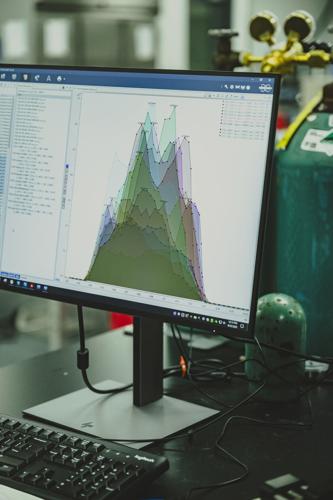
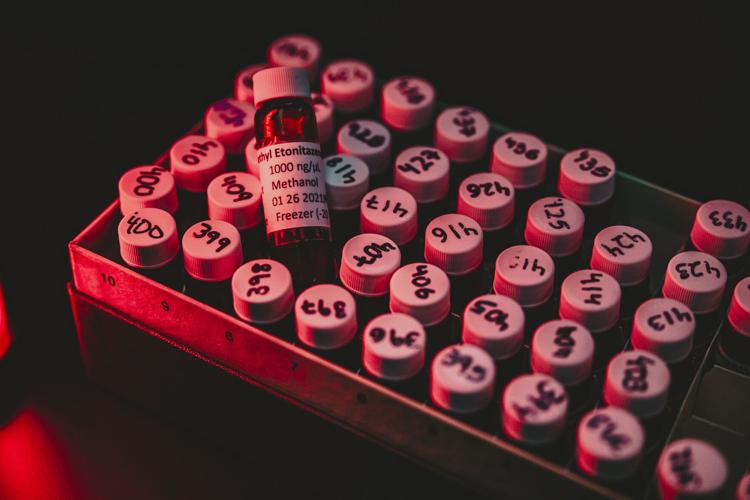
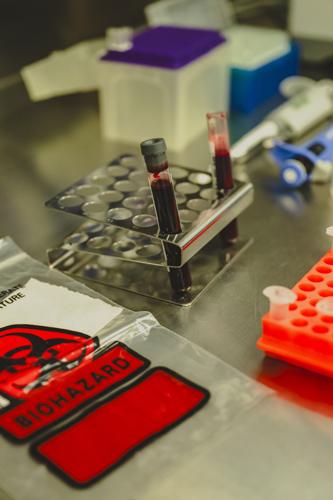
Compounds can be identified by having samples of finished products run through a high-resolution mass spectrometer to finely measure the molecular weights of compounds, which are then compared against a database of 1,200 known drug molecules. N-desethyl etonitazene is among them, from a family of synthetic opiates named nitazenes. Dr. Alex J. Krotulski became aware of this chemical group in 2019 when he and other scientists in forensic toxicology heard of a fatality in Alberta.
 
https://bloximages.chicago2.vip.townnews.com/journal-news.com/content/tncms/assets/v3/editorial/7/56/7560ac08-385d-5ac3-96a5-212a27d28d6e/69ceec9a9f316.image.jpg?resize=333%2C500
Kettering Health
The Alberta fatality was caused by a nitazene variant, isotonitazene. Not long after, that very drug was implicated in deaths in Minnesota, Iowa and a few other states. These nitazene opiates were developed 70 years ago by a Swiss pharmaceutical company in the hope that scientists working there had discovered a new drug for pain. The drugs were found in fact, to dangerously suppress breathing and the old patents were shelved. 
 
Their resurgence, it was hypothesized, related to the U.S. and China outlawing fentanyl, forcing illicit drugmakers to look elsewhere for a replacement. Istvan Ujvary is considered to be an influential prophetic scientist, capable of modelling the future of drug compounds appearing suddenly and recognizable by new deaths from street drugs. Tasked by the EU's Drug Agency for a paper to explore which nitazene substances might make a dangerous new appearance, his research was ultimately published in two journals, even while he was congnizant of the risk of street chemists making use of the research. 
 
One of the papers written in tandem with other scholars, examined existing nitazene compounds modelled by hypothetical new compounds, exploring their interaction with the brain's opioid receptor. Some of the drugs the papers mentioned soon after began to appear on the street. One of them was N-desethyl etonitazene, found to have contributed to new deaths of unsuspecting drug users.  
https://bloximages.chicago2.vip.townnews.com/journal-news.com/content/tncms/assets/v3/editorial/e/5c/e5ced396-289f-5d79-9202-d2d93cf73158/69ceeca0b1f24.image.jpg?resize=333%2C500
Kettering Health
Nitazenes: The Emergence of a Potent Synthetic Opioid Threat The global unregulated drug supply faces a critical challenge with the emergence of nitazenes, a class of novel synthetic opioids (NSOs) structurally distinct from fentanyl and associated with extreme potency and high risk of fatal overdose. First synthesised in the late 1950s, etonitazene was a target of preclinical research in rats and rhesus monkeys, but it never reached clinical trials due to an unfavourable balance between therapeutic and toxic effects. Nitazenes’ consistent reappearance began in 2019 with isotonitazene, followed by a rapid proliferation of analogues worldwide, many reported to be hundreds to thousands of times more potent than morphine and, in some cases, stronger than fentanyl. This rise is fuelled by their ease of synthesis, low production costs, and evasion of regulatory controls. Nitazenes are frequently mis-sold as counterfeit medications or adulterated into other drugs, resulting in unintentional exposure and overdose, particularly among opioid-naïve users. The primary cause of death is severe and prolonged respiratory depression. Analytical challenges are significant, as traditional screening methods are ineffective, and the low concentration in biological samples requires expensive and highly sensitive liquid chromatography mass spectrometry techniques. This perspective paper highlights critical gaps in detection, clinical management, and regulatory readiness for nitazenes. Urgent efforts are needed to improve surveillance, develop robust analytical methodologies, provide clinical guidance to nitazene intoxications, and strengthen international policy to curb their proliferation.
MDPI  Advancing Open Science 

Labels: , , , , ,

Sunday, April 13, 2025

When Unreasonable Intuition Takes The Initiative

"We've launched a massive testing and research effort that's going to involved hundreds of scientists from around the world."
"By September, we will know what has caused the autism epidemic and we'll be able to eliminate those exposures."
"Our food system, our water, our air, different ways of parenting, all the kind of changes that may have triggered this epidemic."
"We are going to look at vaccines, but we are going to look at everything. Everything is on the table."
Robert F. Kennedy Jr., U.S. Secretary of Health and Human Services 
 
"It would be a great disservice to our families if, despite plentiful and robust evidence to the contrary, the administration announces vaccines cause autism, declares the case closed and stops funding critically needed autism research that is providing valuable information about the true causes." 
Alison Singer, president, Autism Science Foundation 

"There's got to be something artificial out there that's doing this."
"If you can come up with that answer where you stop taking something, you stop eating something, or maybe it's a shot, but something is causing it."
U.S. President Donald Trump
https://s.yimg.com/ny/api/res/1.2/nVe5wsi9DYs1QkUOEVEe9g--/YXBwaWQ9aGlnaGxhbmRlcjt3PTEyNDI7aD04Mjg-/https://media.zenfs.com/en/rolling_stone_news_992/474ecdbf64a85c734cdfdac1db6750cf
A former top federal vaccine official spoke on the danger of Robert F. Kennedy Jr. giving “false hope” to people as the Health and Human Services secretary recently promised to identify the “cause” of autism by September.  Rolling Stone
 
Autism is a complex human condition, a spectrum of disorders inhibiting language and communication, affecting behaviour, that has been studied by scientists for decades. Autism, it is generally held, is caused by genetics and environmental factors even prior to birth; parents for example, conceiving children past reproduction prime; exposure to chemicals during pregnancy -- each contributing to the condition.  Crucial questions abound without answers. Which genes are involved, and how environmental exposure can influence the condition.
 
The Autism Society's response to the stated certainty of these deep scientific biological mysteries suddenly being revealed in several months' time is as skeptical as the premise deserves to be regarded: "We are deeply concerned by the lack of transparency around this effort -- who is leading it, what methods are being used and whether it will meet established scientific standards", stated Christopher Banks, president and chief executive of the organization. 

What do the experts, the scientific community, the parents of children with autism, and the specialized charitable organizations formed to represent their interests know, after all? Surely all it takes is an individual with an ingrained sense of entitlement and a belief in his own intuition fortified by theories outside the scientific realm of medicine, fuelled by suspicion of vaccines meant to save lives which a segment of the population prefers to believe threatens lives -- to arrive at an answer.
 
One that might conclude with a public announcement that repeats that old hyperbolic message of smug "I told  you so!" It is an investigative query of a conclusion searching for validation. Even health officials nominated by Donald Trump as advisers note that the deadline for conclusive resolution of the mystery is overblown rhetoric in which there can be little confidence. The reference of September is a reflection of the research process reaching finalization, and certainly not the analysis and conclusion finalization. 

A multi-million-dollar research program meant to examine the spike in autism diagnoses is underway but yet still in its early stages under the auspices of the National Institutes of Health. Over $300 million has been spent annually in the funding of autism research. Studies examining the roles of genetics and environmental influences have been factored into the study along with the manner in which the condition is diagnosed.
 
Given Mr. Kennedy's previous statements certifying his belief in the role of vaccines in producing autism, and other health theories he subscribes to beyond the pale of real science, medical researchers have sound reason to be concerned that the statements by this man have the purpose of legitimizing the debunked claims of vaccines causing autism, reflecting Mr. Kennedy 'sstanding by the claims for years past.
 
In his confirmation hearings for the post of Secretary of Health, he would not disavow those claims. Worse, under his leadership, David Geier, a discredited researcher and robust proponent of a connection between autism and immunization was hired to conduct a government study on their purported connection. Mr. Kennedy latterly gave short shrift to research that denies a causal link.  

 President Trump is right behind his Secretary of Health, fully in support of his intuitive theory, urging Kennedy and his research team to investigate autism's causes. The mass layoffs under this administration at the Centers of Disease Control which will have a deleterious impact on health research for the nation, did not extend to the autism program at the gutted agency.
 
"It's like saying 'by September we are going to know the cause of cancer'."
"Autism is every bit as complicated as cancer, and that's how it needs to be addressed."
Peter Hotez, pediatrician, author, Vaccines Did Not Cause Rachel's Autism
"It has become clear that truth and transparency are not desired by the Secretary, but rather he wishes subservient confirmation of his misinformation and lies."
"There’s no scientific evidence ruling out genetics [as a cause of autism]."
"There is data that had been published that say that genetics may contribute to autism. There are, obviously, data that… suggest that perhaps environmental factors may. But one has to be incredibly careful, incredibly careful about making associations between environmental factors and autism."
"Autism is an incredibly complicated issue. So, we have the issue of diagnosis bias. We don’t know how many of those cases are true, how much of this is true growth of autism, how much of this is just that we now have diagnostic criteria and we diagnose it more often."
Dr. Peter Marks, former head of the Food and Drug Administration’s Center for Biologics Evaluation and Research
a sign reads 'CDC Centers for Disease Control and Prevention'
The CDC’s headquarters in Atlanta, Ga, USA. Photograph: MIguel Martinez/AP

Labels: , , , , , ,

Friday, August 07, 2020

Agriculture and Species Protection

"I tell my students, it's like all the Saturdays for the rest of your life are gone. From my perspective, it's just a crime that we are destroying the biodiversity on the planet."                                                                                                                    "Of course, people need to eat and we have to have agriculture, but we were wondering if there was a way to arrange crop fields in a way that would reduce the impact on biodiversity."                                                                                          "Even when you have these very narrow bits between crops, that still represents a refuge. So that a species that's in a crop field when something's going on -- plowing, for example -- that's a place they can go to sit out the storm, so to speak, without having to go great distances, which many of them can't do."                         "People are worried right now about the crisis in the numbers of pollinators. The numbers of birds, frog and insects are all declining, and all of these actually do things for us without us being aware of it (eating pests in the fields, pollinating crops; roots reduce soil erosion]. Most of the things we do rely on natural species." "Many farmers really do love nature, so if they could be convinced that they could make their fields smaller, have this large benefit to nature and not reduce their profit, they would probably be pretty amenable to it."                                         "From my perspective, it's just a crime that we are destroying the biodiversity on the planet."                                                                                                         Lenore Fahrig, biology professor, Carleton University

Small strips of natural and semi-natural habitat, like this hedgerow, can provide wildlife with an area for food, breeding or an escape from farming operations. (Shutterstock)

 It has been estimated by experts in the field of biology and biodiversity that human activity has been the cause of an estimated 15 percent reduction in species; one in seven becoming extinct in the last century and a half. Studies have concluded that the bird population has been reduced by close to 30 percent in the past fifty years; amphibians are disappearing at close to four percent yearly, and insect decline stands at roughly nine percent every decade.

Professor Fahrig has been leading research in Eastern Ontario and across Europe for the past decade, identifying strategies possible to  help in halting the purge of species. She identified important factors in an article published in the journal The Conversation; the sizes of agricultural fields, and crop variety, all contributing to biodiversity decline. Suggesting alternatives that could see farmers making changes to help emeliorate the identified biodiversity losses.

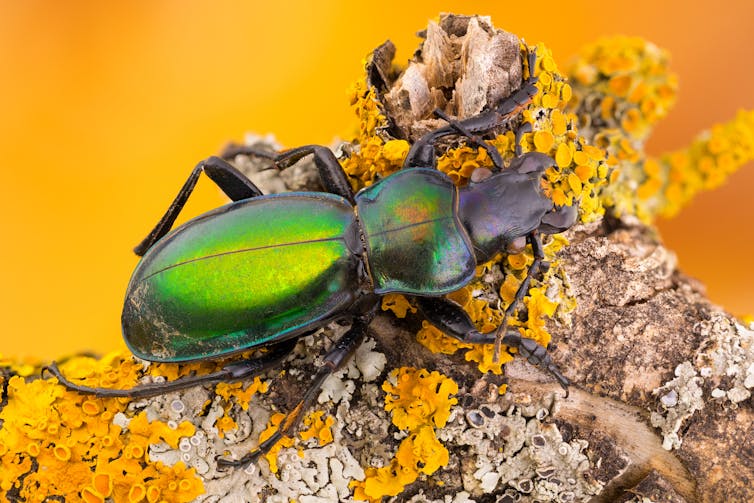
Pest-eating carabid beetle, can benefit crops. (Shutterstock)

As a landscape ecologist, Professor Fahrig zeroes in on factors like deforestation, urban buildup and roads affectng biodiversity. While all these issues play a negative role in diminished biodiversity there is no other issue that matches the effects of agriculture on species reduction worldwide as agriculture. With her colleagues, she examined 93 Eastern Ontario landscapes, each one square kilometre in measure, chosen as representing field size varieties and crop diversity.

 Sampling bird numbers, along with bees, plants, spiders, carabid beetles, frogs, syrphid flies, bats and butterflies in each of the fields and at their edges, they found that the loss of many of the species important for pollination and pest control would result in serious consequences should they be eliminated from the species pool thanks to the influence of agriculture on their habitat.

In their research, they found that where smaller fields were used, much greater biodiversity resulted, reasoning that some of the increased numbers would be attributable to fence lines, ditches and hedgerows that separate fields.  Professor Fahrig, however, argues that on the evidence greater biodiversity resulted by 50 percent, where average field sizes were diminished from eight to two hectares.

Similar fieldwork took place, led by Professor Fahrig in over 300 landscapes located in seven different regions and climates in Europe; England, France, Germany and Spain. Where findings were seen to be consistent with data resulting from the Ontario studies. This, at the very time when economy of scale and operational efficiency in larger fields on larger farms are currently the preferred norm.

Labels: , , ,

Tuesday, December 03, 2019

Undersea Bubble Transport

"It was absolutely transformative. The profusion of life was so much greater than what I had imagined."
"It was amazing to see all this bioluminescence [within the dark sea] and realize it's a major form of communication."
"It really changes your perspective."
"Regardless of the driver, whether it's rich guys with yachts or scientists with instruments, the fact that the technology is evolving means it's going to be much easier to do this kind of research in the future."
Dr.Bruce H.Robison, marine biologist Monterey Bay Aquarium Research Institute, California

"They keep reaching deeper and deeper."
"People want to see it firsthand. It's all about connecting with the ocean."
Will Kohnen, Marine Technology Society
https://mondrian.mashable.com/uploads%252F2019%252F1%252F16%252FOceanX_Mashable_01.09.19_8.jpg%252Ffit-in__1440x1440.jpg?signature=hPiEGrNipfn8bQ1LDoR35fBxHFY=
Looking at a sunken ship's barnacle-covered propeller.
OceanX
Back in 1985 a giant bubble constructed of clear plastic carried Dr. Robison down into the sea, below the level where sunshine penetrates, to give him an unobstructed view of life deep under water at a depth hardly imagined previously, accessible in the past by submarines whose view perspective was through tiny round windows hardly illustrative of a wide panoramic view of what the ocean deep holds to astonish the onlooker. That unique, first-time experience has bloomed into a large-scale adventure in scientific investigation and tourism for thousands of people, decades later.
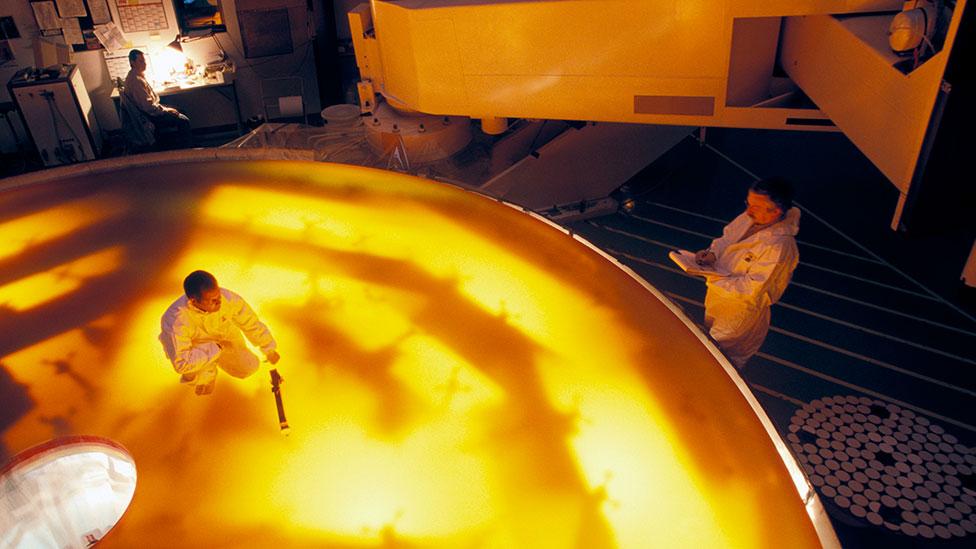
The submarine's glass hull might need to be made in a similar way to giant telescope lenses (Science Photo Library)
Ocean exploration is steadily reaching new depths and with it adding to the bank of data and answering questions to age-old dilemmas about the world and its oceanic inner depths. What are now referred to as 'bubble' crafts are steadily advancing their technological capabilities. Dives can go as deep as close to 3,000 metres, far below depths where sunlight can penetrate, to reveal sea life promiscuously carrying on hidden from human eyes.

The current crop of plastic globes can carry up to seven people, with larger, deeper-diving bubbles being engineered for the future.
An OceanX submersible being lifted out of the sea.
OceanX

The sunless depths of the ocean are being revealed and new discoveries being logged constantly. A dive off Portugal's Azores Islands in 2016 witnessed a female anglerfish and a mate in a sexual embrace. The resulting video caused marine biologists to celebrate the revelations of the anglerfish behaviours hitherto unseen. Dangling a bioluminescent lure in front of its needlelike teeth has boosted behavioural knowledge for biologists of this secretive, deep-ocean fish.

That same year, scientists attached a satellite tag to a blunt-nose sixgill shark, notable as a giant predator predating the presence of most dinosaurs. The scientists in a bubble that succeeded in tagging the shark anticipate deep tagging to provide accurate tracking of these animals. Advances in electronics and materials sciences have assisted hugely in the manufacture and expanding usefulness of these plastic bubbles aiding scientific discovery.

A jellyfish in Alaskan waters.
OceanX

In Sebastian, Florida, a bubble-sub company is building a plastic bubble two meters wide, with 2,700 kilograms of acrylic. The craft can dive 2,000 meters with three people aboard, with its 16 centimeter-thick walls. It is mostly wealthy people; owners of superyachts pricing out at $100-million and more that are behind the development of bubble ocean craft, which are themselves heftily priced between $2 and $5 million.

Triton Submarines announced in September that a Norwegian billionaire has ordered a bubble able to descend 2,286 metres, at a depth marking the deepest yet dive for such a sphere. The plan is to make use of the three-person sphere for scientific research with its 30 centimeter-thick walls, for his ocean foundation. A Triton vehicle was piloted nearly 22 kilometers down into the Challenger Deep -- the deepest trench on Earth, by a wealthy investor in April. Made of titanium, the craft featured three portholes the size of dinner plates fixed into its superstrong metal carapace.

An undersea luxury resort to be named Poseidon [in Greek legend Poseidon was the god of the seas] has been proposed by Triton, to sit at the base of a lagoon in Fiji next to a coral reef, and featuring 24 guest rooms, their domes made of plastic.


Labels: , ,

 
()() Follow @rheytah Tweet