Ruminations

Blog dedicated primarily to randomly selected news items; comments reflecting personal perceptions

Wednesday, May 05, 2021

Original Stewards of the Land

"These plants never grow together in the wild. It seemed obvious that people put them there to grow all in one spot -- like a garden."
"On the north-west coast, conifer forests are stubborn. They will re-establish themselves 20 to 30 years after a disturbance."
"Elders and knowledge-holders talk about perennial management all the time. It's no surprise these forest gardens continue to grow at archaeological village sites that haven't yet been too severely disrupted by settler-colonial land-use." 
"This shows humans have the ability to not just allow biodiversity to flourish, but to be a part of it."
Chelsey Geralda Armstrong, ethnobiologist, archaeologist, Simon Fraser University, British Columbia
Sts’ailes forest garden
The Sts’ailes forest garden near Vancouver, British Columbia seen from the air. (Nick Waber)

 Forest gardening is practised in Indigenous communities world-wide, most particularly in tropical regions of the world. It represents a common practise of cultivating food combining it with agroforestry. Ancient Indigenous forest gardens which have been untended for over a century and a half along the northwest coast of Canada still thrive. Coast Salish and Ts'msyen peoples once designed these forest gardens, planted and cared for plots of fruit and nut trees native to the area, along with shrubs and medicinal plants. A new study by Simon Fraser University published in Ecology and Society represents the first time these open, orchard-like plots have been studied in North America.

Typically in these coastal forest gardens a canopy consisting of crabapple, hazelnut, wild cherry and plum trees shield understory plants and trees like cranberry, elderberry and hawthorn, along with wild ginger and wild rice root. Greater species diversity than the surrounding conifer forests are to be found in these coastal forest gardens. Patches of diversified food vegetation intentionally planted now provide a habitat for birds, bears and pollinators.

Indigenous peoples practised controlled burning, coppicing (the cutting back of trees or shrubs to ground level to encourage new growth), fertilizing, long-distance transplanting, pruning and weeding. Unmanaged for over a century, evidence of these historical practices can be detected at remote archaeological villages. This varied combination of species planting occupying different niches left little room for new species to take root, given the effective use of space: "There's a canopy, a sub-canopy, a bush-shrub layer, a vine layer going up and around, and then a herbaceous layer", wrote the researchers.
 
Chelsey Geralda Armstrong, Simon Fraser University

The researchers selected four archaeological sites that had been occupied for over 2,000 years; two Ts'msyen village complexes in north-western British Columbia, and two Coast Salish complexes in the south-west. (Two or more nearby villages each with five to 20 houses comprises a village complex.) These forest gardens were tended on these sites by Indigenous peoples until the late 1800s when the villagers were displaced. More biological and functional diversity was seen in forest gardens than was evident in the dominant evergreen woodlands.

Chelsey Geralda Armstrong, Simon Fraser University

"It's striking to see how different forest gardens were from the surrounding forest, even after more than a century", observed study co-author Jesse Miller, ecologist and lecturer at Stanford University. A swath of conifer forest contiguous with a garden forest, logged decades earlier, then regenerated naturally saw a mere fraction of species numbers present by comparison. Planted originally with a wide number of edible and medicinal flora for human use, forest gardens now remaining present as a rich and varied food source for resident animals.
 
The Ts'msyen forest garden in northwestern B.C.

Labels: , , , , , ,

Sunday, August 16, 2020

Human Wanderlust in Antiquity

"For centuries we've suppressed the fact of the migration instinct, demonizing it as a harbinger of terror. We've constructed a story about our past, our bodies and the natural world in which migration is the anomaly. It's an illusion. And once it falls, the entire world shifts."                                                                                    "[Xenophobia, population control, environmental conservation and white supremacy have intersected to fuse systematic efforts to restrict peoples' migration and establish a] Linnaean vision of nature, in which biologically distinct peoples lived separately in geographically distinct locales."                                              Sonia Shah, science journalist The Next Great Migration: The Beauty and Terror of Life on the Move

<resource_carousel.datastructures.RCItem object at 0x7ff562788240>

In the 18th century the hugely influential and respected taxonomist Carl Linnaeus influenced the work of other scientists to follow him for centuries through his system of classifying the world of living species to geographic areas specific to their existence. He believed in a hierarchical, fixed natural order. And his rationale to explain and justify the belief that living organisms belong where their habitat happens to be, and none other, was popularly accepted as the only reasonable science to be followed.

His belief system was challenged by a coeval, French naturalist George-Louis Leclerc de Buffon who "imagined a history of migration" and "questioned the permanence of nature and challenged the perfection of the Creator", explains Ms. Shah in her recently published book, an exploration of humanity's tendency through the ages to migrate from one geographic area to another. When other living organisms 'travel' from their particular geography, we tend to speak of them as 'invasive species', be they vegetation, insects, aquatic lifeforms, other animals and even infectious moulds. 

And this was precisely how people were moved to recognize others arriving on their native shores from wherever it might be they originated from elsewhere on the globe. Invasive species. Somehow inferior. Whose presence would be certain to destabilize and sully the natural order of things. That thought of course was not quite the natural order of things; mistaken for social, cultural, social values specific to a country that viewed itself being invaded by an alien social culture with a heritage completely unlike that of the indigenous population.

In 19th century Europe and America, a science of race developed and out of that arose the eugenics movement. Millions of immigrants from Europe, Asia, the Caribbean and Central America flooded into the ports of New York, to become Americans. Elites of the time spoke warningly of "hybridization", the "germplasm" of immigrants contaminating the human stock of the nation. Which led one elite of the day, Madison Grant, to write The Passing of the Great Race, in 1916.

In it was declared the risks inherent in migration, in upending racial hierarchies. Which in turn led to a 1924 law in the United States restricting non-white immigration. Adolf Hitler called that publication his "bible", as a template that would fit right into his National Socialist ideology of the Ubermensch and non-Aryan dross. Those designations in turn led directly to the policy of destroying lives considered by the Third Reich to be a burden and a threat on society.

As a case lesson in the invigorating potential in genetic differentiation, Ms.Shah describes the study in the mid-20th century of a wolf population isolated on an island in Lake Michigan. Over the decades inbreeding produced offspring that were clearly deficient, suffering spine deformities and abnormalities in their eyes, leading the pack to begin a gradual and clear physical deterioration. Until the arrival of a single male wolf in1997 who managed a journey to the island and whose presence marked a major shift in a revitalized wolf population.

human migration | Definition, Overview, & Facts | Britannica
Britannica

At the present time an estimated 60 million people have fled conflict, persecution and the effects of climate change. These are refugees who will mostly as time progresses find new homes elsewhere on the globe as they are gradually absorbed into countries far from their own and become settled permanent residents. Their presence in numbers refreshes a working population, infuses the prevailing social order and customs with their own even as they accept the values of the welcoming country, in the best-case scenario.

Migration, holds Ms. Shah, as a natural re-distribution of humankind and their associated genetic material, infuses populations with a new and expanded human potential, one that expands into the economic and social life of a nation. Some welcoming nations claim that this diversity represents a strength, while others describe it as a source of tension, weakness and disunion. And in truth, it is both, given humankind's propensity to suspicion and apprehension of 'otherness'. 

From humankind's common ancestry in Africa, to breakthroughs in the science of bioarchaeology in understanding the past to have been imbued with early waves of migratory humans in ancient times, to the present, humans have an urge, however subconscious, to move about, explore, arrive at new and unknown destinations. All is not, however, sweetness and light as a general rule. 

When sufficient numbers of migrants arrive in imposing numbers, a certain amount of destabilization does set in, and the unease caused to indigenous populations at the presence of huge numbers of strangers inexorably altering their heritage, culture and values become societally troubling.

Early human migrations - Wikipedia
Wickipedia

Labels: , , ,

Friday, August 07, 2020

Agriculture and Species Protection

"I tell my students, it's like all the Saturdays for the rest of your life are gone. From my perspective, it's just a crime that we are destroying the biodiversity on the planet."                                                                                                                    "Of course, people need to eat and we have to have agriculture, but we were wondering if there was a way to arrange crop fields in a way that would reduce the impact on biodiversity."                                                                                          "Even when you have these very narrow bits between crops, that still represents a refuge. So that a species that's in a crop field when something's going on -- plowing, for example -- that's a place they can go to sit out the storm, so to speak, without having to go great distances, which many of them can't do."                         "People are worried right now about the crisis in the numbers of pollinators. The numbers of birds, frog and insects are all declining, and all of these actually do things for us without us being aware of it (eating pests in the fields, pollinating crops; roots reduce soil erosion]. Most of the things we do rely on natural species." "Many farmers really do love nature, so if they could be convinced that they could make their fields smaller, have this large benefit to nature and not reduce their profit, they would probably be pretty amenable to it."                                         "From my perspective, it's just a crime that we are destroying the biodiversity on the planet."                                                                                                         Lenore Fahrig, biology professor, Carleton University

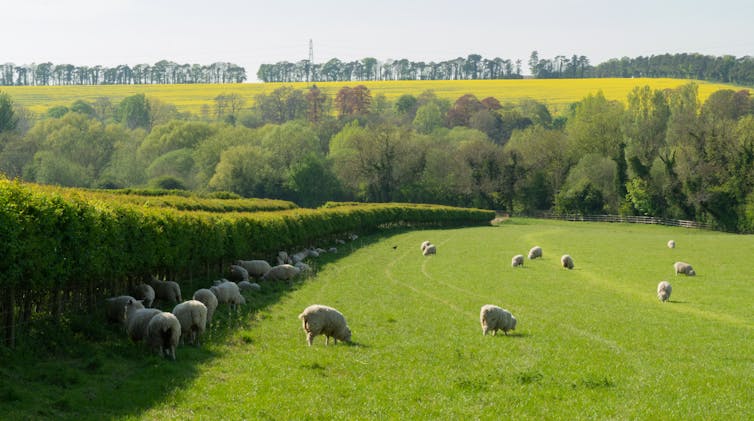
Small strips of natural and semi-natural habitat, like this hedgerow, can provide wildlife with an area for food, breeding or an escape from farming operations. (Shutterstock)

 It has been estimated by experts in the field of biology and biodiversity that human activity has been the cause of an estimated 15 percent reduction in species; one in seven becoming extinct in the last century and a half. Studies have concluded that the bird population has been reduced by close to 30 percent in the past fifty years; amphibians are disappearing at close to four percent yearly, and insect decline stands at roughly nine percent every decade.

Professor Fahrig has been leading research in Eastern Ontario and across Europe for the past decade, identifying strategies possible to  help in halting the purge of species. She identified important factors in an article published in the journal The Conversation; the sizes of agricultural fields, and crop variety, all contributing to biodiversity decline. Suggesting alternatives that could see farmers making changes to help emeliorate the identified biodiversity losses.

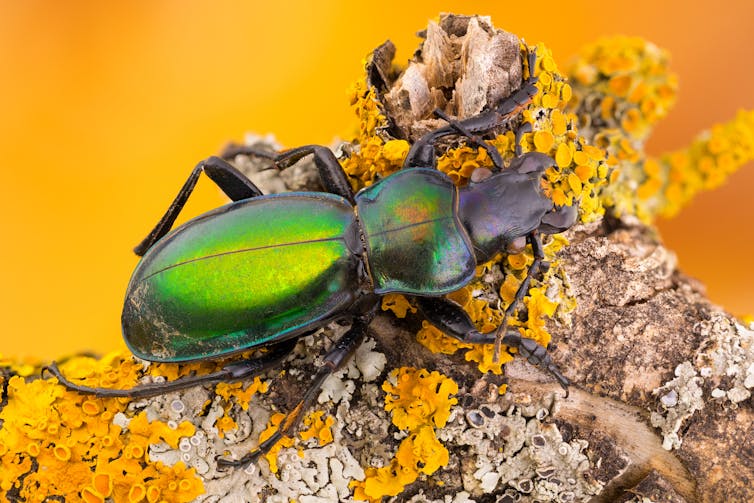
Pest-eating carabid beetle, can benefit crops. (Shutterstock)

As a landscape ecologist, Professor Fahrig zeroes in on factors like deforestation, urban buildup and roads affectng biodiversity. While all these issues play a negative role in diminished biodiversity there is no other issue that matches the effects of agriculture on species reduction worldwide as agriculture. With her colleagues, she examined 93 Eastern Ontario landscapes, each one square kilometre in measure, chosen as representing field size varieties and crop diversity.

 Sampling bird numbers, along with bees, plants, spiders, carabid beetles, frogs, syrphid flies, bats and butterflies in each of the fields and at their edges, they found that the loss of many of the species important for pollination and pest control would result in serious consequences should they be eliminated from the species pool thanks to the influence of agriculture on their habitat.

In their research, they found that where smaller fields were used, much greater biodiversity resulted, reasoning that some of the increased numbers would be attributable to fence lines, ditches and hedgerows that separate fields.  Professor Fahrig, however, argues that on the evidence greater biodiversity resulted by 50 percent, where average field sizes were diminished from eight to two hectares.

Similar fieldwork took place, led by Professor Fahrig in over 300 landscapes located in seven different regions and climates in Europe; England, France, Germany and Spain. Where findings were seen to be consistent with data resulting from the Ontario studies. This, at the very time when economy of scale and operational efficiency in larger fields on larger farms are currently the preferred norm.

Labels: , , ,

Friday, January 04, 2019

The Intelligence of (some) Animals

"It suggests the octopus is carrying these tools [stacked coconut shells] around because it has some understanding they may be useful in the future."
"[Researchers have argued that smarter animals] cooperate and learn from other members of the same species."
"We can't take for granted that there's just one way to intelligence. There could be different paths [nature devises for her various creatures]."

"Octopuses, unlike many other molluscs, they do not have a protective shell. So [octopuses] are very, very vulnerable to many kinds of predators — from fishes to marine mammals to birds — and the idea is that by becoming quite smart, this is a kind of weapon they can use to avoid being eaten."

Piero Amodio, graduate student, Cambridge University, Britain
A two-month-old octopus tries to unscrew the lid of a jar to get hold of its content, a crab, at Denmark's Aquarium in Copenhagen. (JORGEN JESSEN/AFP/Getty Images)
Scientists have focused on studies to reveal how different animals' intelligence evolved and have come up with some pretty astonishing findings. None more strange than the intelligence of cephalopods, an animal grouping including octopuses, squid and cuttlefish. In a paper published recently in Trends in Ecology and Evolution, Piero Amodio and five other biologists who focus on animal intelligence explore this biological mystery.

Generally speaking, shared factors of intelligent animals have been identified by scientists; large brains, animals whose lifespan is long, and animals that evolve a social culture forming long-lasting social bonds. For the conundrum of how certain animals have evolutionarily become intelligence those similarities explain much.

 One intelligence hypothesis speaks of intelligence evolving as a foraging adaptation. Some animals enjoy the advantage of a reliable food supply in their habitat, while others must cope with the unpredictability of food availability. And then there are those species which form cooperative bonds, learning from the experiences and successes of others within their community.
 
It was the middle of the night and no one saw Inky the octopus leave New Zealand's national aquarium, but staff found a trail of water leading from the tank to a 50-metre drainpipe leading to the ocean. (National Aquarium of New Zealand)

Cephalopods are known to behave in ways suggesting high intelligence, demonstrated when an octopus escaped from the National Aquarium of New Zealand, by exiting his enclosure, slithering into a floor drain and presumably out to sea and freedom. There is an instructive video showing an octopus pulling two halves of a coconut shell together to enable it to hide inside. The octopus subsequently stacks the shells like nesting bowls and hauls them off as it leaves the area.

In Israel, researchers at Hebrew University placed octopuses alongside an L-shaped box with food placed within. The animals then managed to figure out they could push and pull the food through a tiny aperture in the wall of their tank to access the tempting morsel. Cephalopods have a good-sized brain; most of the neurons the brain instructs are located in the arms of the octopus, differentiating it substantially from other animals with large brains and high intelligence.

Among scientists involved in researching intelligence in  animals like cephalopods it is theorized that some 275 million years ago their ancestors lost their external shells leaving the animals free to explore places they were unable to access with a shell -- such as rocky crevices, in their hunt for prey. With the loss of the shell cephalopods became vulnerable to predators which may have led to the need to outwit those predators.

In so doing cephalopods learned to disguise themselves and to escape threatening situations, accomplishing this through the evolution of their large brains leading to the capacity to solve new problems; even plan for the future, such as occurred with the octopus that took along those coconut shells (or clam shells) which could prove useful at some future time.

And though most intelligent animals are thought to live long with their large brains, cephalopods do not, with some living up to two years, and others only a few months. Cephalopods are also social loners, they don't form social bonds. The traits that identify other animals' propensity for intelligence are obviously not shared by these creatures, making their high-grade intelligence all the more perplexing to science.

A veined octopus hides in an coconut shell. Scientists have filmed the octopus collecting and assembling coconut shells for shelter. (Associated Press/Museum Victoria, Roger Steene)

Labels: , , ,

Thursday, January 03, 2019

Marine Animals in Peril

"I spent all of my undergrad and my masters referencing this [2006 overview of the world's fresh waters] paper, and it was just becoming outdated."
"A lot of the threats are still present, but so many new ones have emerged. There are now 3,700 major hydro power dams that are either planned or under construction [many of them in India and South America]."
"We're seeing there is definitely a shift [in chemicals]. We are seeing a lot of pharmaceuticals in water, like antibiotics that are accumulating in the river systems and are going without treatment."
"For the most part [unused pills flushed down the toilet] they get into the ecosystem undetected. [Other pollutants cause] a range of impacts [on fish] ranging from reduced abundance of fish to effects on individual fish [as, for example] inter-sex fish ... that are essentially stuck between two sexes."
"They are happening under the water's surface and there aren't the same cheerleaders for these lesser-known fish as there are for the killer whales off the coast, or seals. They really do get forgotten. We can monitor things on a huge scale. We can monitor an entire drainage basin and know what's in the fresh water and in the terrestrial habitat."
Andrea Reid, Doctoral biologist candidate, Carleton University

"They [researchers] are now finding fewer inter-sex fish in the Grand [River]."
"[This overview of issues] will keep the alarm bells ringing. We need to keep looking forward instead of being reactive. .. But within all of this there is also some optimism, I think. People do care, [and] there are some advances in water treatment."
"But some of these [conservation measures] are not engineering changes. They are about wholesale changes in human behaviour."
Steven Cooke, biology professor, Carleton University, Ottawa
Palau National Marine Sanctuary, Indonesia

The ecological threats faced by fish today endanger their existence in a way unknown generations ago. The presence of antibiotics in water systems along with micro-plastics pose lethal threats to the survival of fish. Then there is the plight of exotic fish that people buy over the Internet and once they become too large to manage they are dumped into Canadian waters. Canada does not yet and perhaps never will experience the issue of large, dangerous fish and reptiles that the Florida Everglades has undergone, when exotic fish and reptile owners 'free' their fish into the wild.
An Argentine black and white tegu is caught in one of 160-plus traps set out by a University of Florida research team. The group collaborates with the Florida Fish and Wildlife Conservation Commission, the National Park Service, the U.S. Geological Survey, the U.S. Fish and Wildlife Service, and the South Florida Water Management District to contain and reduce the tegu population Photo: Karine Aigner
When ecologist David Dudgeon published a review of the world's fresh waters it was considered hugely authoritative and used as a university reference for the following dozen years. Now, Andrea Reid, completing her PhD in biology felt it timely that an update was produced. Working alongside other biologists including Dr. Dudgeon, an update has been published in the journal Biological Reviews.

Containing the booming Burmese python population has become virtually impossible for the Florida Fish and Wildlife Conservation Commission, and so the agency and its partners created the month-long Python Challenge to enlist the help of the public. Pythons are believed to have decimated the Everglades' populations of small mammals, but they will also eat waterbirds like herons, egrets, ibises, and spoonbills. Photo: Karine Aigner


Among threats to fish life, dams have been blocking rivers to produce hydroelectric power, a situation that has been many decades in the making, and their presence by happenstance prevents fish from their customary biological imprinting; migrating up and down waterways as they hatch, mature and return to their native waters to spawn. Fish 'ladders' put in place in dams have partially solved the problem, and in North America some of those dams have been removed to restore natural aquatic habitation.

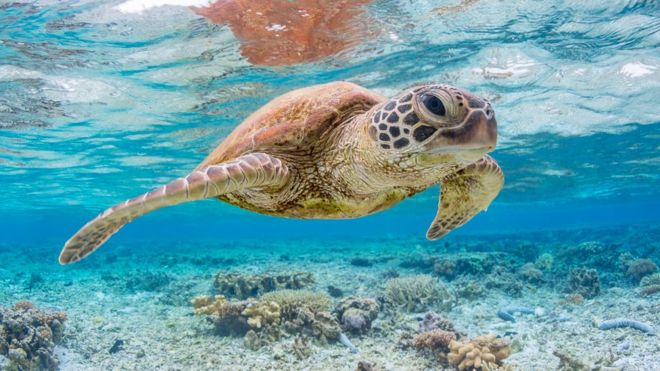
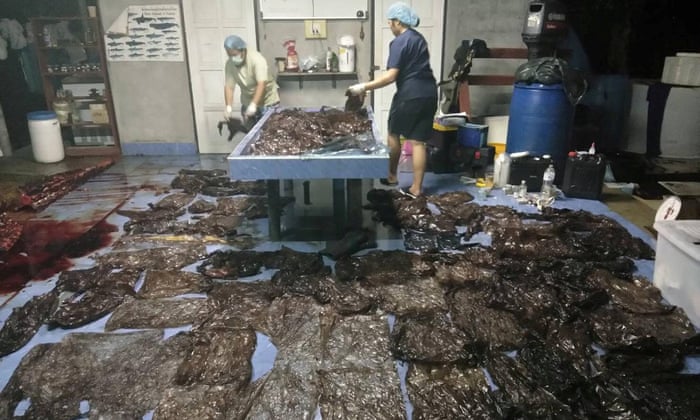
The concerns over the omnipresence of microplastics in the world's waterways relate in part to the deleterious effects on aquatic life of which fish represent a large portion. Plastics of every size and shape have been implicated in the deaths of whales, turtles and other aquatic wildlife who ingest plastic but are unable to digest these substances with no nutritional value as they it end up mutilating their interiors, and tangling their fins.

An estimated million seabirds die annually resulting from ocean pollution and ingestion or entanglement in marine debris. Even marine debris like discarded fishing lines and nets create deadly hazards for marine animals when they are directly or indirectly thrown into rivers, oceans and lakes.  About 80 percent of plastic trash originates from landfills, washing into rivers and reaching oceans where sharks can become entangled and coral reefs damaged.

sea turtle
A new study suggests that ingesting even a single piece of plastic can be deadly for sea turtles. Google

And although pollutants from chemicals have been around for quite a while, there has been a notable increase of their presence as people are increasingly prescribed medicinal drugs, excreting them in their urine where they reach waterways and impact on fish and other marine creatures. Sewage treatment plants remove solids and kill germs, they have not been designed to remove chemicals. when people flush down unused pills or excrete them in urine, fish absorb them in their habitat.

The result is fish have fewer offspring, or offspring whose genetic material has been damaged. Most of these impacts occur downstream from urban centres. There have been changes for the better; locally a sewage plant in Kitchener-Waterloo, Ontario has been upgraded to remove many pharmaceuticals and the result is that researchers are finding fewer fish being deleteriously impacted.

Researchers also use environmental DNA (eDNA), genetic traces left by animals in water or on land when they slough off bits of skin or scales or leave droppings. Samples are taken to learn how species interact, a monitoring that makes available solid information to governments and regulators who can respond by designing conservation measures that answer to any given identified need.

But there is always another important part of the puzzle, and that involves the public, and awareness. That it is not positive ecological practise to thoughtlessly dump medicine into a toilet, but to return unused pills to the pharmacy where they were bought. And to take care with their plastic discards by reusing or recycling them, for starters, and just perhaps buying less of disposable plastic 'conveniences'.

Some of the plastic bags extracted from a whale’s stomach in Thailand. Photograph: Social Media/Reuters

Labels: , , , ,

Saturday, August 04, 2018

The Profoundly Affecting Grief of Animals

"There's evidence that cetaceans such as dolphin and whales are often attending to dead bodies. Sometimes, it's because of curiosity or exploration and not necessarily emotion. Other mother dolphins and whales have kept their calves buoyant."
"What's different about J35 is her persistence. How resilient can she be? How long can she keep this up? Is she eating? Is she taking care of herself?"
Barbara King, professor emerita, anthropology, College of William and Mary

"There's an optic that's more powerful than any other statistic."
"It's a picture of what we can assume is a heartbroken mother who herself is necessary and precious to this population [of orcas]."
Jason Colby, professor, environmental history, University of Victoria
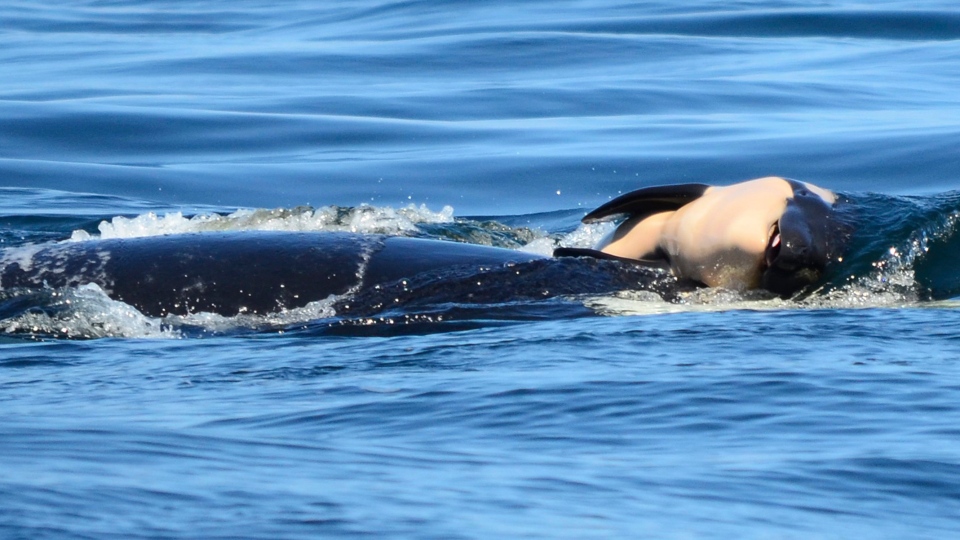
In this photo taken Tuesday, July 24, 2018, provided by the Center for Whale Research, a baby orca whale is being pushed by her mother after being born off the Canada coast near Victoria, British Columbia. (Michael Weiss/Center for Whale Research via AP)

Orcas have been listed for the past decade in both Canada and the United States as an endangered species. There is an alarming deficit of Chinook salmon comprising the black-and-white orcas' main diet. Other threats ranging from toxic contamination to disturbing noise and other troubling potential threats from boat traffic -- interfering with their foraging or communication -- that contribute to their threatened status.

Lacking the essential fat and energy required to ensure their health status lends itself to reproduction, female orcas have been seen to experience problems with pregnancy due to nutritional stressors that biologists link to a critical shortage of salmon. Last year, University of Washington and other researchers undertook a multi-year study that indicated two-third of the orcas' pregnancies have failed for the last seven years.

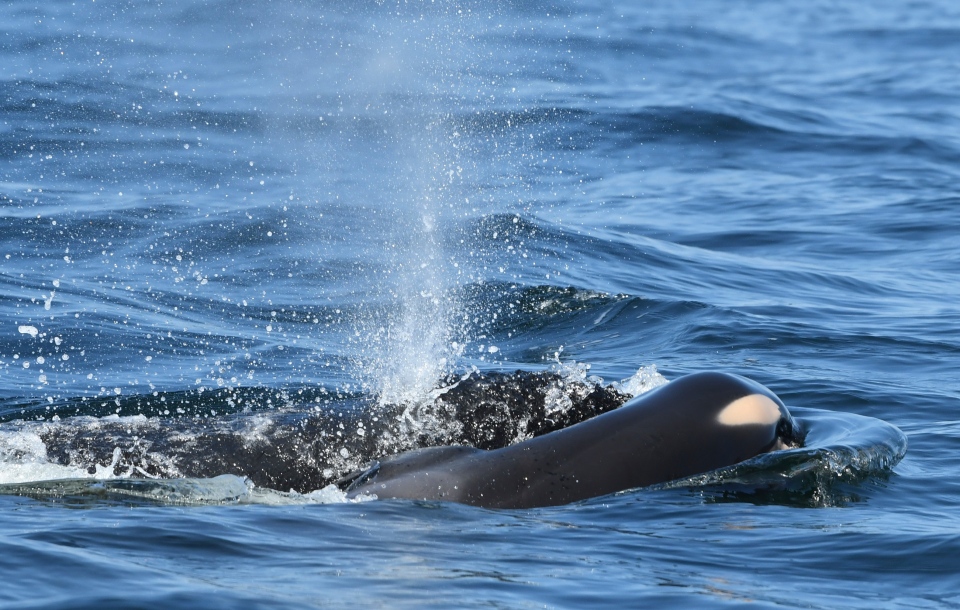
In mid-July, a 20-year-old whale tagged as J35 gave birth to an orca calf. The baby whale failed to survive, dying just days after its birth. Its grieving mother has since been seen clinging to her dead calf, off the Gulf Islands of British Columbia. Other members of her pod are travelling alongside the bereaved mother, helping her to keep her baby afloat. She quite obviously is not prepared to discard her dead calf.

The scientific community might have been elated at the birth, finally, of an orca calf, only to discover that promising sign was short-lived for a species moving along the endangered scale of existence. The mother orca appears to have been devastated by the loss of her baby, taking extraordinary measures to keep the calf afloat, while knowing it is dead.

She and the members of her family have been pushing the dead calf along, propping it up, swimming with it for miles upon end in the waters of Washington State and British Columbia. According to experts, grief at the loss of any pod member, much less a calf, is part of the species' mourning ritual; what is unusual, they say, is the lengths the orcas have gone to, to try to support the mother refusing to let her baby go.

Researchers at the Whale Museum on San Juan Island have collected fecal samples from the group in the interests of knowing more about the situation. They plan to attempt a recovery of the dead calf, in an effort to examine it to determine why it failed to thrive after birth. The situation is of high concern for the preservation of these killer whales since there is now a total of only 75 of the southern resident whales that typically spend spring to fall in Pacific Northwest waters.


In this photo taken Tuesday, July 24, 2018, provided by the Center for Whale Research, a baby orca whale is being pushed by her mother after being born off the Canada coast near Victoria, British Columbia. (Michael Weiss/Center for Whale Research via AP)

Labels: , , ,

Friday, July 13, 2018

The Beautiful Big Cat

"[The undertaking of breeding Iberian lynxes in captivity is costly and complex, somewhat like] having a nursery for rich kids, in which you have one teacher for each kid."
"We like to say beauty isn't everything, but it does count and -- let's be frank -- the lynx sells extremely well [as an endangered species requiring public funds toward reversing threats of extinction]."
Angelo Salso, Italian official, Brussels, manager, European Commission's Life environmental program
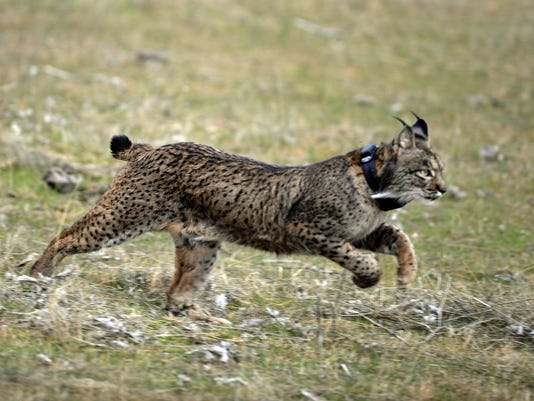
Iberian lynx
An Iberian lynx at a nature reserve in Spain. Photograph: Victor Fraile/Reuters/Corbis

"This lynx clearly evolved to be a rabbit hunter on the Iberian Peninsula -- and the price for being such a precious and specialized hunter is a higher [degree of] vulnerability."
Urs Breitennmoser, feline specialist, International Union for Conservation of Nature

"If the lynx disappears, we will of course continue to live on this planet, but I don't think with the same quality of life."
Javier Madrid, environmental official, Andalusian regional government

"We've seen the species recover, but it's still in danger. I'd love to see it, but I can't imagine a time when we won't need programs like this. We've got a lot of work ahead of us."
"We have a 70% survival rate. That's good, very good. Anything over 50% is a success."
"We get through around 600 rabbits a month." 
"We have to avoid them getting used to human presence. Also there's always a risk of people bringing some cat or dog disease in with them, that could be fatal."
"We are not just saving them, we're studying them. These are the most closely observed animals in the universe."
"It's like the Big Brother house in here [at the breeding center]. You need dedication for this work, it's not easy and it's not well-paid. It has to be a passion."
Rodrigo Serra, director, Iberian Lynx Breeding Center, Silves, Portugal 
Oryctolagus cuniculus (Linnaeus, 1758), European Rabbit
Donald Hobern (dhobern on flickr) / Licensed under Creative Commons

At the Silves breeding center space is at a premium, and workers on the breed-and-release program use a network of over 80 cameras to monitor the lynxes in their care, taking cautious measures to ensure that the 17 staff and volunteers strictly limit their physical contact with the animals, a requirement to ensure that no human-lynx patterning and dependency takes place, to keep the animals in a 'wild' condition, so that when they are eventually released they will be capable of fending for themselves as nature intended.


The existential problem that arose with these Iberian lynx is simple enough; they feed exclusively on what they prefer to hunt; diet-specific rabbits. When their food source dried up several decades ago when a catastrophic disease affecting rabbits wiped out their food source, the lynx went into starvation mode and came close to extinction. Since then, a breeding relocation program has turned the tide as Europe has succeeded in extracting the beasts from extinction -- in so doing preserving vital regional biodiversity.
Iberian Lynx mother carries cub born in the Program Ex-situ Conservation in 2005
By http://www.lynxexsitu.es [CC BY 3.0 es (http://creativecommons.org/licenses/by/3.0/es/deed.en)], via Wikimedia Commons

Veterinarians and additional staff members in four breeding centers adhere to very necessary rules to ensure young lynx are raised protected from pathogens that would affect their health, while at the same time maintaining as much of a physical distance as possible to make certain that the animals in their charge remain wary of human contact, planning ahead for their eventual release into the wild. The animals are kept from their kitten stage to their juvenile stage -- about a year in total, in captivity.

Once set free to seek out their territorial living space the rest is up to nature. The young cats are released in variant areas in hopes of avoiding inbreeding -- with each release a matter of celebration, witnessed by locals as the animal dashes out of its enclosure to vanish among the trees and bushes of its chosen area. To the present, the breeding program has come at a cost of approximately 34 million euros, some two-thirds of which is funded from the European Union.

Smaller than other lynx species in northern Europe, the Iberian lynx has similar pointed, tufted ears, large paws and glowing eyes. The rabbits are seen as expendable, readily replaced because they breed easily and frequently, while their predators are seen as valuable mainstays of the regional animal presence. Rabbits are viewed as pests; while local farmers welcome the lynx as they would not the return of brown bears and wolves, which threaten the security of livestock.
A file picture taken Dec. 14, 2009, shows a lynx being released during the first experimental reintroduction of two Iberian lynxes in Villafranca de Cordoba, southern Spain.    (Photo: Cristina Quicler, AFP/Getty Images)

Over the past five years alone 50,000 rabbits have been released into areas newly populated by lynx in the Spanish program of rehabilitation. The program is considered a resounding success; no longer is the Iberian lynx the world's most endangered feline, a huge leap in confidence and sustainability since a 2002 census indicating fewer than one hundred remained in their wilderness habitat. The lynx population has rebounded since those sober figures were released a dozen years ago, with about 550 lynx now living and prospering in nine areas of southern Spain and Portugal.

Still, there are skeptics like Urs Breitenmoser who emphasizes the difficulty of safeguarding an animal susceptible to starvation because it lacks the capacity to adjust to the disappearance of its major food source by accepting alternate food sources, should a virus once again infect the rabbits it hunts.
Iberian Lynx adult from the Program Ex-situ Conservation
By http://www.lynxexsitu.es [CC BY 3.0 es (http://creativecommons.org/licenses/by/3.0/es/deed.en)], via Wikimedia Commons

Labels: , , , , ,

Thursday, July 12, 2018

The Ultimate Survival Resilience: Adaptation

"I don't think anyone's betting against the coyote getting to South America eventually. They have to be one of the most adaptable animals on the planet."
"Is this something we should view as a natural expansion that's a good thing, or that we should view as an invasive species that's a bad thing?"
"In some ways that's a philosophical question, because in the end, there's nothing we can do about it."
Roland Kays, ecologist, North Carolina State University
There are some species that are so specialized in what they will eat that when their food source disappears so will they. Take giant pandas, as an example; the absolute mainstay of their diet is bamboo. Monarch butterflies dine exclusively on milkweed, while koalas eat only eucalyptus, and a bird called a kite has been species-selected for dining out on snails. Should those specialized foods no longer be available those animals would soon become extinct.


Not so for other animals, which eat omnivorously, like goats as an example, and raccoons. Raccoons have adapted themselves to urban living because they long ago discovered that what people living in cities discard tastes pretty good to them and they thrive on what they can pick out of compost piles and other discarded foodstuffs in our wasteful society. And then there's the ultimate animal adapter, coyotes who have become ubiquitous on the margins and beyond, of human habitation.

They distinguish themselves as a species by breeding swiftly, eating just about whatever they find and adjust to living anywhere that they find haven for themselves, living in fields and forests, parks and even backyards (albeit somewhat discreetly) all around North America, surprising people by their sudden presence and their willingness to pick off very small family pets on occasion. They are bold and not given to bolting in a brief and sudden encounter with people.

Dr. Kays, associated with the North Carolina Museum of Natural Sciences, along with a graduate student studied reams of museum specimens, fossil records, peer-reviewed reports and wildlife agency records tracing coyotes' pathways on their migratory journeys up to ten thousand years ago. They produced maps published recently in the journal ZooKeys demonstrating that the historical range of North America's adaptable canids were previously incorrect.

The study established that coyotes lived in grasslands, prairies and deserts those thousands of years ago, headed east to the Mississippi and Ohio Rivers and west as far as California in the United States until 1900 when coyote packs moved into forested habitat making their way in the early quarter of the 20th century into Alaska and many decades later, to the East Coast of the U.S. They expanded their range by mid 20th century at least twice that of any other North American carnivore since 1950.
171227_SCI_urbanCoyote
Maybe we should leave them alone.   iStock
With the expansion of agricultural lands leading to forest fragmentation destroying the habitat of predators such as wolves, cougars and jaguars, the coyotes thrived and hybrids of coyotes and wolves or dogs (breeds like German Shepherds) were aided in adaptation by developing traits receptive to adapting to new environments. The rapidity of their expansion, however, remains a mystery; that they entered Alaska and the Northwest where intact forests host wolves and mountain lions, a conundrum.

Coyotes are now expected to keep expanding their presence. In 2010 they crossed the Panama Canal. Should they appear in South America it would rank as the first time predators have been exchanged between the continents in three million years.

Coyotes in densely populated areas
Coyotes in densely populated areas (a Los Angeles suburb) can be alarming. But wildlife experts say they fill a niche in the urban ecology. (Troy Boswell / Los Angeles Animal Services)

Labels: , , ,

Sunday, March 04, 2018

Darwin's Firebirds

"We get a lot of humbug [from the birds]."
"We make firebreaks, and sometimes that bird makes another fire and he makes a lot of trouble."
Robert Redford, Aboriginal Australian ranger, Darwin, Australia

"It's notable that we did not receive credible reports from casual tourists or others who might have simply gotten lucky [observing a natural phenomenon]."
"It appears that one needs to have spent a lot of time in the bush, and a fair amount of it close to wildfires."
"I'm glad that others are now talking about co-evolution and learning from birds. Fire may not be so uniquely human after all."
Mark Bonta, assistant professor, earth sciences, Pennsylvania State University, Altoona, PA.
Australian Savanna when aflame. and not Images: (left) Thomas Schoch (right) Bidgee

Aboriginal people are known to have used fire for millennia, as a land management device; burning arable fields to restore critical minerals, instead of allowing the land to lie fallow. The device results in more fertile fields for agricultural restoration. Thanks to the knowledge and management of carefully controlled burns, Aboriginal populations importantly shaped critical forest infrastructure and savannas in the interests of improved hunting and for arable purposes.

Aboriginal peoples have intimate knowledge of the bush that surrounds them. And they know that some birds deliberately spread fires; a certainty of knowledge they share with other indigenous groups elsewhere, according to Dr. Bonta. His research team that includes ornithologist Bob Gosford also of PSU in Altoona have plans for an expedition in May to work with Aboriginal fire rangers hoping they will be able to document that very bird-setting-fire behaviour.

Black kites (Milvus migrans) circle near a roadway during a fire on the Cape York Peninsula in Queensland, Australia. Dick Eussen

According to locals around Darwin, firehawks represented by flocks of black kites, whistling kites and brown falcons hunting near bushfires snap up small animals that smoke and sparks from bushfires flush out. When a fire begins to diminish in strength and flicker out, according to the locals, some birds will ensure the fires keep going by picking up fire-lit sticks and flying with them to new locations with the purpose in mind of setting new fires.

In scientific circles there is a great deal of skepticism that birds can conceive of manipulating fire. A paper published recently in the Journal of Ethnobiology gathered reports of an anecdotal nature -- though the hope is that some photographs of birds flying with fiery sticks to a geographical goal will be achieved -- that all three of those bird species have developed avian expertise in spreading wildfires to satisfy their hunting needs.
The black kite has been seen on numerous occasions to deliberately drop burning sticks into grasslands. sompreaw/Shutterstock
Drs. Bob Gosford and Mark Bonta and colleagues documented ethnographic reports and conducted interviews with eyewitnesses, including Aboriginal firefighters and academics, who described raptors stealing burning twigs from cook fires to transport the burning brands up to a kilometer in distance. One firefighter saw a flock of birds spread a wildfire all the way up a small valley. And all of the accounts seem to suggest the birds act for the most part when wildfires are about to wane.

According to Steve Debus, adjunct lecturer at the University of New England in Armidale, Australia, black kites have a particular reputation for cleverness, known to appropriate food from schoolyards "even from children's hands, and use bread scraps at picnic areas to bait fish within capture range".  Dr. Bonta believes that fire-spreading technique is reserved to especially precocious birds, that not all birds in a flock are aware of the technique.

There is a legend among Aboriginals that these clever birds, capable of manipulating fire to their advantage were in fact the first animals ever to do so. That it was their activities that alerted humankind to the possibilities inherent in the usefulness and management of fire.

Black kites (Milvus migrans) visit a grass fire in Borroloola, Northern Territory, Australia, in 2014   .Bob Gosford

Labels: , , , ,

Wednesday, August 02, 2017

Asia: A Vast, Living Genetic Natural Experiment

"[These are] genetic experiments of nature that have occurred across the planet [naturally manifesting gene changes in humans found across South Asia]."
Alan Shuldiner, professor of genetics, University of Maryland

"I would argue that it's unequal to anywhere else [the genetic phenomenon called 'knockouts' of almost every gene in the genome that is seen in India, with its variant ethnic groups]."
"[The South Asian groups have] just as many, or more recessive diseases [as two other major recognized founder groups outside Asia]."
David Reich, geneticist, Harvard Medical School
Hindu Nepalese women
Mapping India's diversity could have benefits in health, enabling doctors to help people at risk from their genetic inheritance.  (Ajay Verma/Reuters)

"Nearly all Indians can claim descent from two ancestral groups, says a new study, adding that millennia of inter-marriage may have left the country's population more at risk to some inherited diseases."
"US and Indian scientists took blood samples from 132 individuals from 25 diverse groups in India, representing 13 states, all six language families as well as tribal groups and castes."
"By examining the volunteers' DNA, two ancestral populations emerge, which dominate the Indian genome today, researchers say."
News in Science
In India, medical workers are aware that people with Vysya ancestry, inhabiting Andhra Pradesh and Telangana states primarily, experience responses that can have fatal consequences when exposed to muscle relaxants otherwise commonly used, alerting doctors to the need to substitute a different combination of drugs before entering surgery. Which is why anesthesiologists routinely ask patients undergoing surgery if they are of Vysya ancestry, to avoid tragedy.

South Asia is the genetic repository of hundreds of subpopulations, as made clear by a study recently published in Nature Genetics where researchers suspected from their studies that many medical conditions relate to how the groups have remained separate genetically even while living for thousands of years side-by-side. It is the habit and tradition of sub-groups to marry within their groups, the result being inimical to genetic health owing to a limited gene-pool inheritance.

These thousands of distinct groups remain distinct through their cultural practices discouraging the marriage of group members outside one's own community. The end result is that endogamy (marriage within a limited group) has been responsible for the creation of populations in the millions susceptible to recessive diseases, developing when a child inherits a disease-carrying gene from both parents, according to Kumarasamy Thangaraj, study author, senior scientist at the Center for Cellular and Molecular Biology, Hyderabad, India.

Dr. Thangaeraj, working in a tandem partnership on the project with Dr. Reich at Harvard Medical School, led a study analyzing data derived from over 2,800 individual members of over 260 distinct South Asian groups distinguished by caste, geography, family ties, language, religion and associated factors. The outcome was that 81 groups exhibited loss of genetic variation more extreme than those discovered to exist in Ashkenazi Jews and Finns, representative of groups showing high rates of recessive disease due to genetic isolation.

South Asia, at the present time, represents roughly five thousand anthropologically well-defined groups. The researchers took fifteen years to collect DNA from people representing a broad swath of these groups. The result was the accumulation of a rich set of genetic data ripe for study. Which led the scientists to observe something named the founder effect, relating to populations originating from within a discrete group of founders breeding only within their group, and which leads to certain genetic variants becoming amplified.

Commonly within populations recognized with strong founder events, rare conditions are seen to be disproportionately observed. Finns, for example are noted for congenital nephrotic syndrome, a fairly rare kidney disease, prevalent among their population. Just as screening for diseases like cystic fibrosis among Ashkenazi Jews has become routine. Drs. Reich's and Thangaraj's teams of researchers searched out long stretches of DNA shared between individuals reflecting particular subgroups where the greater the number of shared sequences, the stronger the founder event.

The conclusion they arrived at was that the strongest of the founder groups may likely have begun with major genetic contributions from a mere one hundred people, or even fewer. Fourteen groups with these genetic profiles in South Asia at the present time reflect a rough census size each of over one million, all of which groups have founder effects about ten times as strong as those of Finns and Ashkenazi Jews.

Professor Shuldiner and others, though not involved in the study have themselves gained insights into heart disease and Type 2 diabetes (formerly known a 'adult-onset')  from their studies of Old Order Amish whose inbred culture leads to a lack of genetic vigour. Scientists have experimented with attempts to manipulate, or 'knock out' genes in laboratory mice or flies in an effort to acquire a finer understanding of human disease.

While, in essence, outside the laboratory, a larger arena of populations across South Asia provide the opportunity to study just how gene changes naturally originate in human populations.

Labels: , , , ,

Tuesday, July 11, 2017

Hummingbird Decline

"No one has ever measured pesticides in hummingbirds before. So we decided to try it. It turns out, to our surprise actually, that the birds are obviously picking up pesticides in their food, which can be nectar and also insects."
"Now what does it mean? Right now we're just understanding what the level of exposure is, and then how is it affecting the [hummingbird] population."
Christine Bishop, biologist, Environment and Climate Change Canada
Christine Bishop, a research scientist with Environment and Climate Change Canada, holds a rufous juvenile male hummingbird as she prepares to measure and band it and collect urine and feces for testing, in Surrey, B.C.
Christine Bishop, a research scientist with Environment and Climate Change Canada, holds a rufous juvenile male hummingbird as she prepares to measure and band it and collect urine and feces for testing, in Surrey, B.C. (Darryl Dyck/Canadian Press) 

Research scientist in British Columbia, Christine Bishop, is attempting to determine why it is that some species of North American hummingbirds appear to be in severe decline. A preliminary finding is that the cause may possibly be related to the very same insecticide used in agriculture that is affecting the honey bee population. She and other researchers have begun studying a number of factors ranging from habitat loss to alterations in plant bloom time, that may be involved.

And the method these researchers decided to rely upon from which to extract their data is the collection of urine and feces from the hummingbirds. That collection and the resulting data appear to confirm that the concentration of pesticides in hummingbird urine is fairly high, at three parts per billion. The study focused on the Fraser Valley and southern British Columbia, those agricultural regions identified as a core locale for the rufous hummingbird.

The tiny bird with a red throat has a negligible weight, roughly that of a five-cent piece. It spends its summers in British Columbia, in Alaska and the Pacific Northwest states. When signs of winter arriving alert the hummingbird to its survival imperative by reverting to its species' habitual migration, it returns to the southern United States and Mexico which represent its winter habitation site, away from the bitter cold of the summer location.
Hummingbird Pesticides 20170709
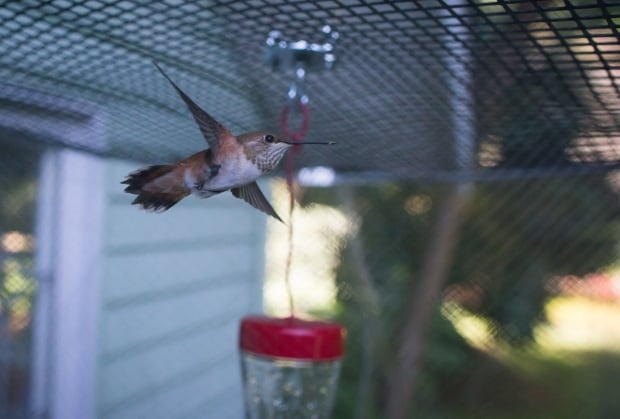
A rufous juvenile male hummingbird flies around after being captured with a net above a feeder. (Darryl Dyck/Canadian Press)

To obtain the feces and urine of those flighty, ever-moving tiny birds, the researchers place nets over feeders which are lowered when a hummingbird comes along to feed. As a byproduct of the hummingbird's constant processing of nectar, it concomitantly expels it so that the collection of urine and feces for test results is then accomplished with the help of the nets. This study is meant to last for five years, and is only in its initial stage, at two years.

Hummingbirds, like bees, habitually come back to routinely recognized places to find their food, recalling where certain flowers grow. Another concern is that pesticide absorption might have the effect of disrupting their memory. According to an annual breeding bird survey, between 1966 and 2013, the population on the Pacific Coast of the rufous hummingbird has declined an average of 2.67 percent annually.

Two other species of hummingbird were also found to be in decline, the Allen's and broad-tailed hummingbirds, leading Health Canada to reevaluate the use of imidacloprid, a neonicotinoid insecticides commonly used on agricultural crops and coincidentally used as well for flea and tick control on cats and dogs. Separately, an earlier Health Canada report noted that imidacloprid has the potential to exact short- and long-term effects on bees inclusive of behavioral changes and mortality rates.

Aside from suspicions about the effect of these insecticides there are additional issues which may be impacting on the well-being of both hummingbirds and bees. Habitat loss, seasonal plants blooming at a different time of season, even an increase in the deer population, consuming the same flowers required by the hummingbirds to exist, could all be found to play a role in the decline of these wonderful, tiny birds.

Hummingbirds are filling up for the winter.
Hummingbirds filling up for their winter migration flight. (Grouse Mountain)

Labels: , , , , ,

Sunday, June 04, 2017

The Biological Impudence of Science

"It gives me an unsettled feeling because we don't know what this could lead to. You can imagine one man providing both the eggs and the sperm, almost like cloning himself."
"You can imagine that eggs becoming so easily available would lead to designer babies."
Paul Knoepfler, stem cell researcher, University of California, Davis

"There are groups out there that want to reproduce among themselves."
"You could have two pairs who would each create an embryo, and then take an egg from one embryo and sperm from the other, and create a baby with four parents."
Sonia Suter, law professor, George Washington University

"I.V.G. [in virtro gametogenesis] may raise the specter of 'embryo farming' on a scale currently unimagined, which might exacerbate concerns about the devaluation of human life."
"We have come to realize that scientific developments are outpacing our ability to think them through."
"It's a challenge for which we are not fully prepared. It would be good to be having the conversation before we are actually confronting the challenges."
Dr. Eli Y. Adashi, professor of medical science, Brown University, Providence, Rhode Island

"It strikes many people as intuitively yucky to have three parents, or to make a baby without starting from an egg and sperm."
"But then again, it used to be that people thought blood transfusions were yucky, or putting pig valves in human hearts."
Arthur Caplan, bioethicist, New York University
A new and quickly progressing reproductive technology called in vitro gametogenesis (IVG) could potentially give fertility clinics the ability to make sperm and eggs from people's skin.
A new and quickly progressing reproductive technology called in vitro gametogenesis (IVG) could potentially give fertility clinics the ability to make sperm and eggs from people's skin. (John Javellana/Reuters)

Researchers in Japan used I.V.G. to produce reproductive eggs from adult female mice skin cells. Led by Katsuhiko Hayashi last year, embryos were produced, implanted into female mice, and eventually those mice produced healthy babies. This process was far removed from the biological protocol of reproduction that nature programmed into her creatures. Reproductive technology appears to be swiftly outpacing our imagination of what is possible.

It was forty years ago when the world received the startling news of a baby born through reproductive technology. That was done by eggs and sperm being harvested, placed in test tubes for fertilization to take place, and the resulting fertilized eggs implanted into the womb of a woman, unable through normal, 'natural' means to become pregnant; fecundity is not a guarantee of nature, there are too many variables that can interrupt the natural process where either a man or a woman is for any number of reasons, infertile.

Now that the world has become accustomed to the now-routine impact of in vitro fertilization, we are informed that strides are being made in the laboratory to stimulate human skin cells to become embryonic stem cells, capable of becoming any kind of cells, including eggs and sperms, to be used to produce babies. The laborious, costly process of ovary stimulation to produce eggs to be retrieved is to become a thing of the past, overtaken by the simple collection of skin cells to be transformed into eggs and sperm.

Stem cell biologists claim that before long human reproduction could be simplified by creating a baby from human skin cells. It might have been inconceivable not that long ago to ever imagine that a baby could be created without a female to carry fertilized eggs through to successful gestation. That this process could ever be sidelined, with an alternative approach formulated to enable two males to reproduce themselves through this new technology.

The timeless life-giving force of natural conception with the mating of a man and a woman has been upended by science.

Skin cells can be taken from one of a male pair to produce eggs to be fertilized by sperm produced from the other man's skin cells. And then there is the free-enterprise scenario of the potential of having hotels surreptitiously on the lookout to retrieve skin cells from the bedding of celebrities passing the night, to be sold to the highest bidder. Or celebrities selling their skin cells to their besotted audiences.

That would represent quite a personal autograph.

Prominent academics in medicine and law weighted in on the possible consequences of I.V.G. in a paper published in 2017 when Dr. Eli Y. Adashi, medical science professor at Brown University,
I. Glenn Cohen, professor, Harvard Law School and Dr. George Q. Daley, dean, Harvard Medical School, between them wrote of their concerns in the journal Science Translational Medicine.

I.V.F., now such a common procedure, elicited much controversy when in vitro fertilization techniques were first brought to public attention. Such procedures, however, now represent close to two percent of babies born in the United States annually, with an estimated 6.5-million babies having been born through such technologies, world-wide.

In vitro gametogenesis is not all that straightforward; as a new medical technique layers of complicated bioengineering are involved, with adult skin cells harvested, reprogrammed to become embryonic stem cells with the capacity of growing into various types of cells which must be guided to become eggs or sperm. What could possibly be more basic to nature in survival of the species than the biological processes that nature has equipped us with?

How troubled should we be over someone proceeding with the intention, using I.V.G., to reproduce themselves, or members of the same immediate family doing the same? What happens to genetic variability, and what of the health outcomes of a concentrated gene pool? Is this not the stuff of a too limited gene pool that instructs us that incest produces harmful genetic mutations?

Little wonder it represents a hornet's nest of ethical concerns.
65890829
Bioethicists feel that reproductive strategies like IVG put too much of an emphasis on a genetic link and undermine other ways of creating families. (Sean Gallup/Getty Images)

But science is piqued by human curiosity. And curiosity guides science into new theories inevitably some of which reach laboratory status and then repeatability leads to recognition and because the outcome represents another milestone in scientific achievement, science bids its practitioners to keep right on investigating and challenging nature at every level of her complex blueprints for existence.

Labels: , , , ,

 
()() Follow @rheytah Tweet