Ruminations

Blog dedicated primarily to randomly selected news items; comments reflecting personal perceptions

Sunday, January 08, 2023

Netherlands Treasure Hunt

"We don't know for sure if the treasure existed. But the institute did a lot of checks and found the story reliable."
"But they never found it and if it existed, the treasure might very well have been dug up already."
Dutch National Archives spokeswoman Anne-Marieke Samson
 
"I see groups of people with metal detectors everywhere."
"Like a lot of people, the news about the treasure made me go look for myself."
"The chance of the treasure still being here after 70 years is very small I think, but I want to give it a try."
Jan Henzen, 57, Dutch citizen
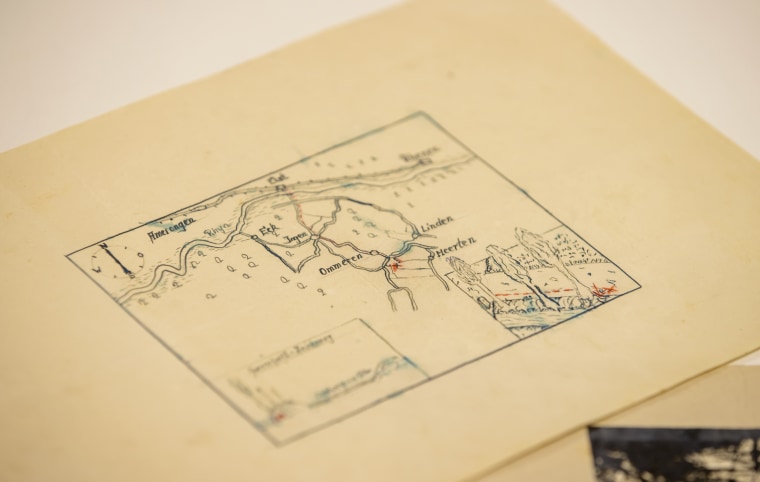
A map shows possible Nazi treasure in Ommeren, Netherlands.
A map shows possible Nazi treasure in Ommeren, Netherlands.Hollandse Hoogte / Shutterstock
The Dutch National Archive released a map for public scrutiny that was stored in its archival collection since immediately following World War II, when a German soldier was relieved of its possession. Immediately post-war, the Dutch institution was assigned the task of tracing German capital in the Netherlands, finally freed from Nazi occupation in 1945.
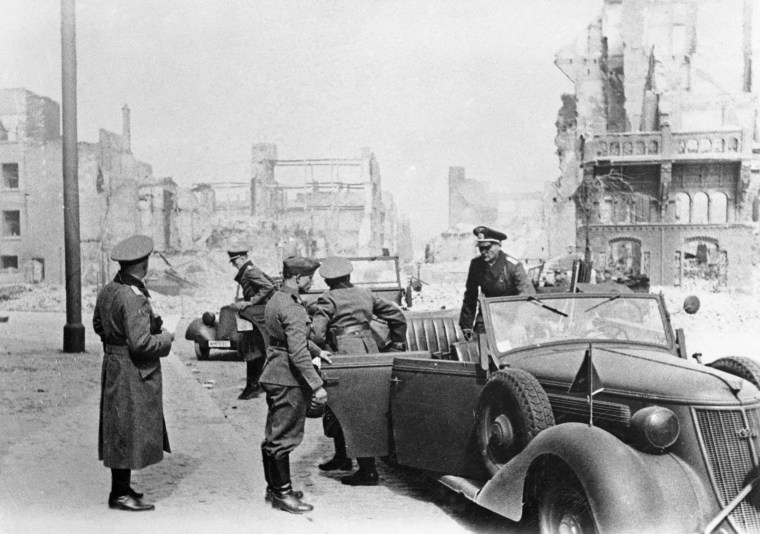
 
German officers leave their car to inspect the ruins of the Alstadt quarter of Rotterdam, Netherlands, in 1940.
German officers leave their car to inspect the ruins of the Alstadt quarter of Rotterdam, Netherlands, in 1940. Most of the city burned after aerial bombardment.  Bettmann Archive
Its possession obviously intrigued those in charge of the Archival collection where the map was held in a research file. When the maximum period of withholding the map from public scrutiny had passed this week, it could no longer be held in confidential confinement. The treasure's existence had been rumoured but was never fully confirmed. And though the institute sought on various occasions to find the treasure, three attempts had failed by 1947.

Now,  with the map's release, amateur treasure-hunters have fanned out in numbers armed with metal detectors and shovels wandering through fields around rural Ommeren in the country's east. According to the Archive, the map was believed to indicate where Nazi soldiers buried four large boxes containing diamonds, rubies, gold, silver and jewellery -- all of which had been looted following an explosion at the Arnhem branch of the Rotterdamsche bank when it was bombed in August 1944.
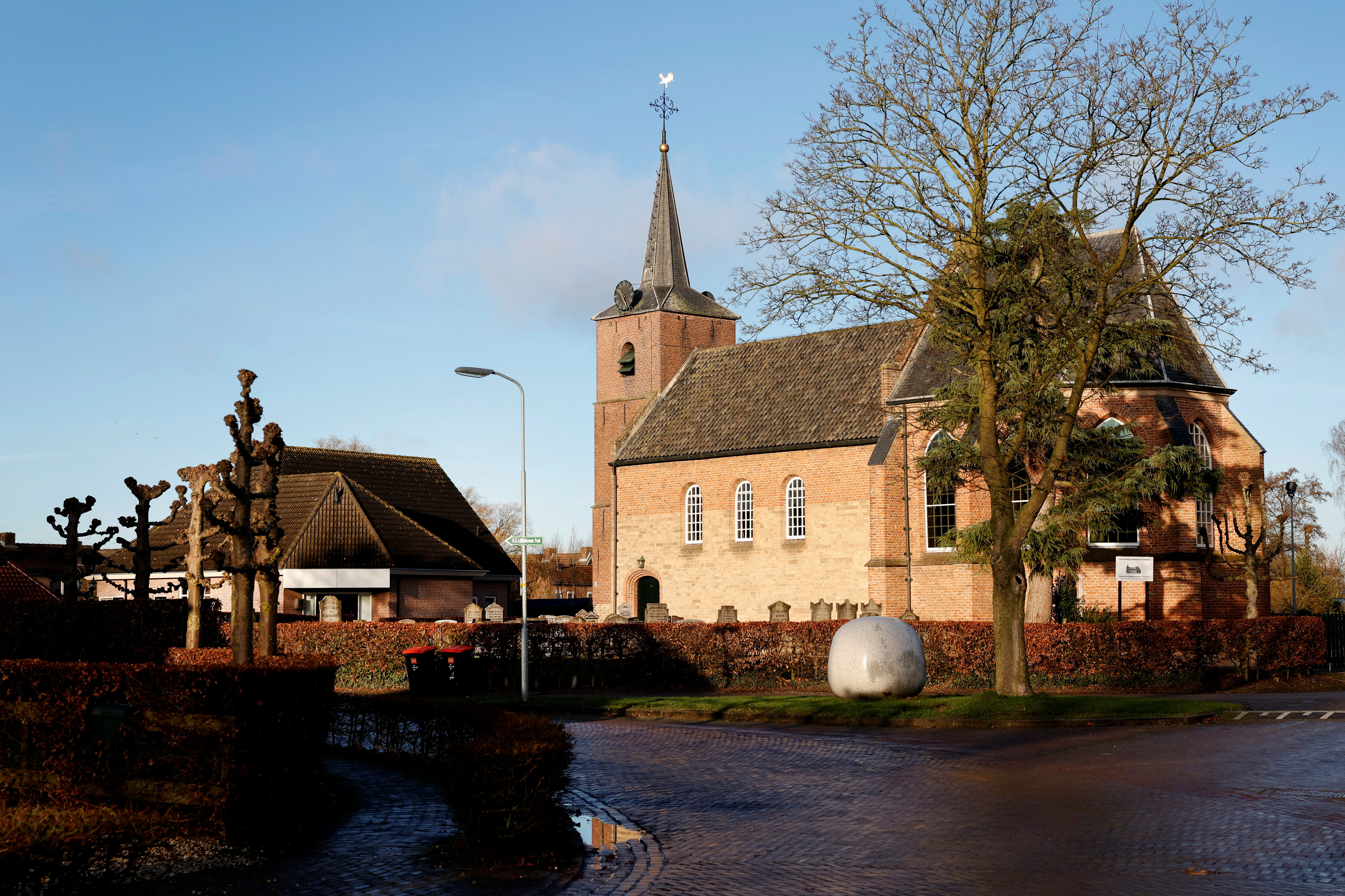
 
A general view of a street in the Dutch village of Ommeren
A general view of a street in the Dutch village of Ommeren, Netherlands January 6, 2023. REUTERS/Piroschka van de Wouw
 
Chances are remote that anything at all will be discovered, but that hasn't stopped those who set out determined that if anyone would discover the whereabouts of the treasure, why shouldn't it be they themselves? The town's former mayor is now in charge of a foundation with ownership of the lands in question. He had seen people converge on the land from all over the Netherlands.

And there is this: There were obsequious Dutch Nazi collaborators throughout the country, eager to please the occupiers whose ideology was one they connected with personally. Many of these collaborators were well known personalities in banking and the arts, high in the social strata of the day. With the defeat of Nazi Germany by the Allied Forces and the end of the occupation, Netherlands' police and security of the resistance forces searched out the collaborators and enacted the rough justice of a firing squad to the cheers of onlookers.

Some of these collaborators were tracked down, investigated and put on trial and some mounted a vigorous and sometimes successful defense. It is entirely likely that those who escaped punishment or even those who paid the price for their betrayal to the enemy forces had insider knowledge and had already taken possession of the looted, hidden treasure.
 
Old postcard of people watching German soldiers walking on a road in Holland in 1945 that was captioned ‘Departure of the Herrenvolk [master race]’
A Dutch postcard of German soldiers leaving the Netherlands after surrender in May 1945 whose caption reads: ‘Departure of the Herrenvolk [master race]’. Photograph: Culture Club/Getty
 
But hope springs eternal in the human imagination, and though the groups digging feverishly through unyielding soil for treasure now will eventually thin out as days go by and nothing will be exposed, others will remain, determined to find what may or may not still be buried in the hope that their lives will be enriched by a bounteous discovery with an unsavoury past. 
"A map with a row of three trees and a red cross marking a spot where a treasure should be hidden sparks the imagination."
"Anyone who finds anything will have to report it to us, so we'll see."
"But I wouldn't expect it to be easy."
Former Ommeren mayor Klaas Tammes

Labels: , , , , ,

Sunday, November 22, 2020

Assisted Death -- Relaxing Rules and Regulations

    Credit...Aleks Furtula/Associated Press
"This freedom has been there in law [Netherlands euthanasia law] from the beginning, but the law is being interpreted more and more broadly."
"Nobody can look inside the head of someone with dementia."
Jaap Schuurmans, researcher

"[In cases where a patient has advanced dementia], It is not necessary for the doctor to agree with the patient the time or manner in which euthanasia will be given."
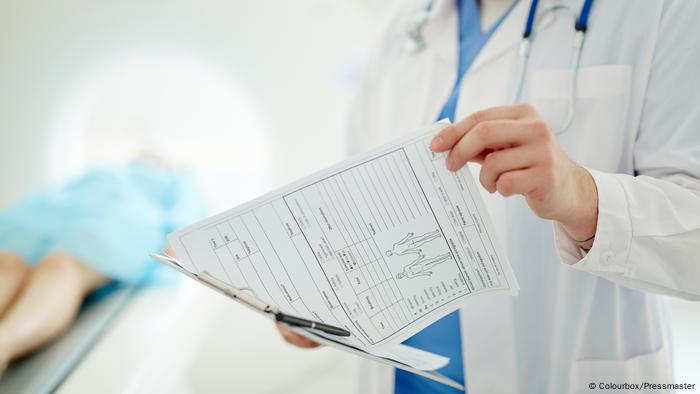
Netherlands right-to-die medical code change
Arzt mit Klemmbrett
The Netherlands recently updated their euthanasia rules to permit doctors to use sleeping pills for patients to prevent patients suffering from dementia from becoming violent preparatory to receiving lethal injections to end their lives. Dissolving pills in a patient's drinks will serve to pacify their urge to violence, avoiding the inconvenience of an awkward end to their lives. The amended code supports the use of sedatives in food or drink of patients with advanced dementia should any concerns arise that the patient might be "disturbed, agitated or aggressive".

"It's only two or three cases a year but this might  help doctors to have less fear of a penal case", suggested Jacob Kohnstamm, chair of the regional euthanasia review committee, stating this to be a needed clarification to relieve fears of prosecution in the instance of reasonable, professional judgement carried out by doctors when faced with such situations requiring action to be taken to end a sufferer's life humanely.

The changes were occasioned when a court ruling overturned a murder charge against a nursing home doctor. Marinou Arends had surreptitiously placed a sedative into a 74-year-old's coffee, who was suffering from dementia, before he proceeded to administer a lethal injection. Having reached an advanced stage of dementia, the woman was no longer capable of any kind of informed consent on the treatment's timing. The doctor was in possession of an instruction from the woman who had stated she wished to die when she felt "the time was right".

Dr. Arends received a written reprimand by the Dutch medical board for having acted on "advance directives". According to critics of the doctor's actions, the patient had been victimized, a dignified end that euthanasia is meant to provide, having been denied her. A relative present during the procedure had pushed the woman back down on the bed when the had sat up in an effort to avoid being given the injection. There was obviously no comfort given the dementia patient as death was delivered.

According to the Dutch Supreme Court, the doctor had acted within the country's euthanasia law, enacted in 2002. The court ruled that should a patient no longer be capable of consent due to dementia, medical professionals were given discretion to determine for themselves when the correct time had arrived to terminate said patient's life. Opponents of euthanasia were alarmed at the ruling. The Netherlands, a pioneer in the practice of euthanasia, according to opponents has taken to interpreting set rules ever more inclusively.

Contradicting the critics, the country's euthanasia review committee is of the belief that the amendments to its code provides doctors with additional legal support in such instances where it is deemed to be "pointless" to attempt consent by the patient. Some Dutch medical practitioners have opposed the ruling. Over 200 doctors issued a statement that no doctor should be allowed to secretly sedate patients before euthanasia, when news of Arends's case emerged in 2018.

Coincidentally, in Germany, two terminally ill patients being treated for COVID-19, ages 47 and 50 were administered medication by a senior doctor that led to their immediate deaths. Employed at the University Hospital in Essen city in North Rhine-Westphalia, the 44-year-old doctor was arrested and charged with manslaughter this past week, and remain in custody. Essen police have divulged that in one case the doctor stated his intention was to end further suffering of the patient and his relatives.

A newspaper account described the two patients as suffering from coronavirus infections, their condition in his ward, according to the doctor "very critical". No further information was forthcoming relative to the treatment the patients had received. In Germany, seriously ill patients have the freedom to request assistance in ending their lives, under a court ruling of last year. Whether this happened in the doctor's case is as yet unclear; several steps are required before the provision of such assistance. An investigation is ongoing.

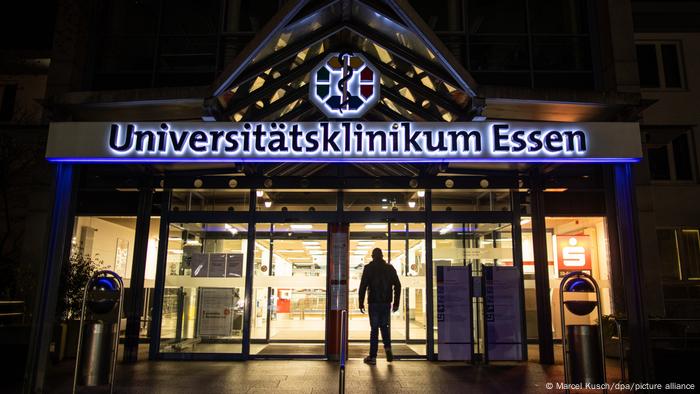
Outside of the Essen University Hospital
The doctor was employed at the Essen University Hospital

The unnamed doctor is facing manslaughter charges, in a country where assisted death is an extremely sensitive topic, considering the legacy of six million European Jews experimented on, used as starved slave labour in Nazi Germany's munitions factories, and finally annihilated by the regime during the Holocaust years amidst the Second World War.

Labels: , , , ,

Sunday, August 23, 2015

Enlightened Compassion

"...The concept of 'unbearable suffering' has not yet been defined adequately. There are no guidelines for the management of euthanasia requests on grounds of mental suffering in Belgium."
Lieve Thienpont Belgian psychiatrist

"What is presented at first as a right is going to become a kind of obligation."
Belgian law professor Etienne Montero

"...Physicians must remain primary healers."
"Part of the problem with the slippery slope is that you never know when you are on it."
"[Reports published in JAMA Internal Medicine] seem to validate concerns about where these practices [approving euthanasia for psychiatric patients] might lead."
Bioethicists Barron Lerner and Arthur Caplan
Belgian law allows euthanasia for patients who suffer from severe and incurable distress, including psychological disorders.

Belgian law allows euthanasia for patients who suffer from severe and incurable distress, including psychological disorders. Credit Photograph Courtesy Tom Mortier

The growing clamour in the public arena taking place in Canada and the United States for people suffering from incurable chronic illness diminishing the quality of their lives, or those facing certain death after diagnoses of incurable conditions like metastasized cancer or Lou Gehrig's disease is steadily bringing those countries toward the legalization of assisted suicide. Canada's Supreme Court has come down in favour of assisted suicide.

And the medical profession finds itself facing a situation where the healing profession becomes the enabling profession and many physicians struggle with their moral conscience and the pledge taken when they hung out their professional medical shingle to 'do no harm'. Those who believe in the right to die, feel that a medical professional giving them assistance to leave life behind is doing no harm, but rather obliging their wishes.

Many in the medical profession, however, having dedicated their professional lives to improving the quality of life for patients, envision that to be achieving success in mitigating the ill effects of disease or chronic conditions, as much as is medically feasible. Their black bag stuffed with protocols and pharmaceuticals doesn't include drugs to stop the heart and give surcease to suffering patients.

There is suspicion from within the medical community and from the public at large as well, who don't subscribe to the positive aspects of deliberately aiding someone to die, that society, once accustomed to helping people in end-stage medical conditions to take leave of their miserable lives prematurely, will become desensitized to the issue and begin the process of extending the 'right' to people merely dissatisfied with their lives.

A clinic in Belgium served people with depression or schizophrenia and in a few instances Asperger's syndrome, who sought the solution to their problems in euthanasia. One hundred people between 2007 and 2011 reached out to doctors at the clinic for "help". The doctors in their wisdom chose to agree with 48 of that one hundred and agreed to end their "untreatable", "unbearable" conditions by lethal injection.

One of the doctors working at the clinic wrote of her experience, in a BMJ Open journal article. The clinic's operation was legal under the country's 2002 euthanasia statute which includes terminal physical illness and a growing minority of psychological issues. Nine cases of euthanasia resulting from "neuropsychiatric" disorders took place in 2004-05, and the figure rose to 120 in 2012-13.

The Netherlands decriminalized euthanasia in 2002 and right-to-die activists opened a clinic to "help" people whom their family physician refused to "help". In the year that followed euthanasia was approved for six psychiatric patients and another eleven whose complaint was that they were "tired of living".

Dr. Thienpont, working out of her Belgian clinic insisted the clinic respects patients' wishes, while stating that "further studies are recommended". The co-author of the article which was critiqued by Drs. Lerner and Caplan in JAMA Internal Medicine is an advocate of  euthanasia, Wim Distelmans. Dr. Distelmans saw nothing amiss in ending a 44-year-old's life. who was upset over a botched sex-change operation.

Nor did he see anything immoral when he put to death identical 45-year-old deaf twins who claimed to have lost the will to live when they were informed they would eventually lose their eyesight. Another man, given a 30-year prison sentence for rape and murder claimed his incurable impulses to violence and the anguish he felt behind bars qualified him for assisted death.

The irony is that in Belgium there is no death sentence for murder. Dr. Distelmans had second thoughts and decided against acting on his original acquiescence in this instance. In any event Dr. Distelmans is unlikely to face professional chastising since Belgium's Euthanasia Control and Evaluation Commission which reviews cases is co-chaired by himself. And of thousands of cases reviewed since 2002, none were referred to law enforcement.

In the socially and medically enlightened Netherlands, euthanasia accounted for one of every 28 deaths in 2013, three times the figures of 2002. In Belgium's Dutch-speaking area one of every 22 deaths was due to euthanasia in 2013 representing an increase of 142 percent since 2007. Euthanasia for children under 12 has been legalised for terminal physical illness in Belgium.

Activists of the collective Yellow Safety Jacket protest against the proposed statutory amendment legalizing the euthanasia of young children, in Brussels, Feb. 11, 2014.

Julien Warnand—EPA Activists of the collective Yellow Safety Jacket protest against the proposed statutory amendment legalizing the euthanasia of young children, in Brussels, Feb. 11, 2014.


Labels: , , ,

Monday, July 28, 2014

Sole Israeli national on downed Malaysian airliner was son of Christian evangelist

Ithamar Avnon, the sole Israeli national aboard the downed Malaysia Airlines Flight 17, pictured in Jerusalem in 2008. (Shai Penn Eisenman)

AMSTERDAM (JTA) — A few hours before he departed Amsterdam for Australia on July 17, Ithamar Avnon was praying for peace with his parents at their home in the Netherlands.
That evening, pro-Russian separatists shot down Avnon’s flight, Malaysia Airlines Flight 17, over eastern Ukraine, killing all 298 passengers and crew. Avnon, 26, was the sole Israeli national on board.

The son of a Dutchwoman and an Israeli who became a Christian evangelist, Avnon loved peace because of how well he and his family knew war.

His father, Dov, served for three years in the Israel Defense Forces before moving to the Netherlands in the 1970s. His older brother, Jonathan, was an Israeli paratrooper. Following his brother’s lead, Avnon voluntarily joined the paratroopers and fought with that unit in the 2009 Cast Lead operation in Gaza.

Friends and family say that Avnon, who was born in the Netherlands in 1988, was a fun-loving man with a penchant for buffoonery who was looking forward to completing his international business degree at Swinburne University in Melbourne, Australia.

“Ithamar liked horsing around, he wasn’t a stern guy,” his mother, Jeannet, told JTA. “I never thought Ithamar would join the army, but he was inspired to do it by his brother. Ithamar completed the training and got that red beret.”

One of his former commanders, Shlomi Biton, said Avnon — Ito, to his friends — was a forgetful soldier who would often lose pieces of gear, including that red beret, just moments after receiving it. Avnon got away with it because of how well-liked he was by his peers and commanders.

“I really loved Ithamar,” Biton wrote on a Facebook page in Avnon’s memory. “I wanted to be the one to give Ithamar the beret — and then another one after he lost the first one, which was typical.”
Dov Avnon moved to Holland after meeting Dutch Christians in Eilat in the 1970s. Even as an ex-Jewish Christian living in Holland, Dov Avnon and his wife raised their children with a love of the Jewish state.

After Avnon’s death, Dov wrote on Facebook: “I am happy that he grew up with the bible and the faith that Christ died for him on the cross.”

Avnon had been in the Netherlands to attend the wedding of his sister, Ruth, who learned of the flight’s demise on the radio.

“I knew immediately that it was my little brother’s flight and it felt as though I was sinking and the world around me was falling apart,” Ruth Avnon said.

In their home near Utrecht, Avnon’s parents were waiting last week for a Dutch forensics team to finish identifying the remains of the dead in the hope of recovering their son’s body.

Though the final remains found at the crash site arrived in Holland last week, the search is ongoing. Full identification of the victims could take months and it’s not yet clear whether all the bodies have been recovered. Dov has little hope of recovering his son’s remains, since he was sitting close to the engine.

“It’s a strange sort of mourning because we have no body,” Jeannet said. “I’m afraid that when and if a body is recovered, we would need to mourn all over again.”

Avnon had a knack for comedy and impersonations and had a face he would make by puckering his lips. “We called it the Berrie face,” Jeannet said.

His thespian skills also helped him at work, according to Nata Sapuga, Avnon’s former boss at a recycling company. During a business trip to India, Avnon got an upset stomach and had to run to the bathroom every few minutes while working at a business fair.

“He would tell visitors to his booth, ‘Excuse me, sir, but I just figured out that I need to exchange a few urgent words with my biggest buyer, who just passed by,’” Spuga recalled.

Holland lost 194 of its citizens on board MH17, prompting the government to declare a day of mourning — the first in a century. The national outpouring of grief has provided some consolation to Avnon’s parents.

“We are consoled by the feeling of a community, by the respect the Netherlands is showing to all victims,” Jeannet said. “It dulls the pain, as did the powerful speech of our foreign minister, Frans Timmermans, at the United Nations.”

In that speech, Timmermans condemned pro-Russian separatists for delaying access to the bodies and urged delegates to imagine they were parents of the victims “and then two or three days later see some thug steal their wedding ring from their remains.”

Western leaders also criticized Russian President Vladimir Putin, accusing him of supplying the separatists with the weapons used to bring down the plane and for failing to expedite the return of the bodies. Dov Avnon wrote Putin a scathing letter, accusing him of harboring “people who have lost all humanity.”

On Wednesday, Dov was at the ceremony in Eindhoven Airport, where the first bodies were returned. Organizers had placed a flag for every nation that lost civilians in the crash, including Israel.

“I know that flag is especially for Ithamar,” Dov Avnon said. “I am proud to be an Israeli and a Dutch citizen and grateful for this treatment.”


Labels: , , ,

 
()() Follow @rheytah Tweet