Ruminations

Blog dedicated primarily to randomly selected news items; comments reflecting personal perceptions

Wednesday, October 14, 2026

Senagalese Criminalizes of the LGBTQ Community

"In many African languages, including Wolof [the local language in Senegal], terms have long existed to describe realities related to homosexuality, proof that it is neither new nor imported."
"On the other hand, the laws that repress them are, for the most part, a legacy of colonisation. Whether it be the French-inspired penal codes or the 'sodomy laws' introduced by the British Empire during the reign of Queen Victoria, these provisions were imposed from outside. And the foreign forces pushing Senegal to prosecute homosexual and transgender people, and even to ban any calm debate on the issue, are very diverse." 
"Furthermore, several African countries have recently moved towards greater recognition of rights: Botswana, Mozambique, Gabon and Angola have decriminalised homosexuality in recent years. These choices show that, within Africa itself, there are diverse paths forward, and that no inevitability condemns the continent to repression." 
Open letter sent last May to President Faye of Senegal
https://cassette.sphdigital.com.sg/image/straitstimes/de331fca2c19fd3a25f313fcee366f271ab04d41e54f8a1a016008cddccb4a57

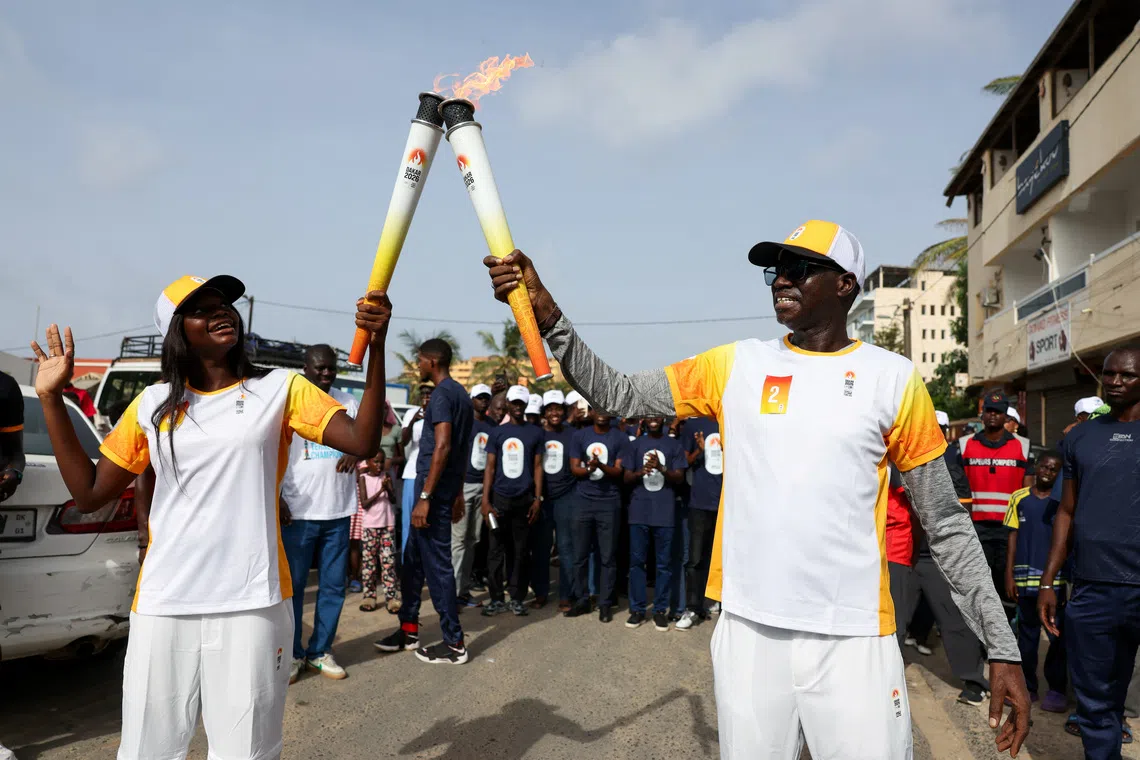
Senegal will host the first-ever Olympic sporting event on African soil – the fourth edition of the Youth Olympic Games from Oct 31 to Nov 13.  PHOTO: REUTERS

 
"The Olympic Charter prohibits discrimination on any grounds and commits host countries to respect human rights and human dignity."
"The ongoing government crackdown on LGBT people raises serious concerns about Senegal's compliance with international law, the Olympic charter, and Senegal's own laws."
HRW/ Larissa Kojoue, HRW rights researcher 
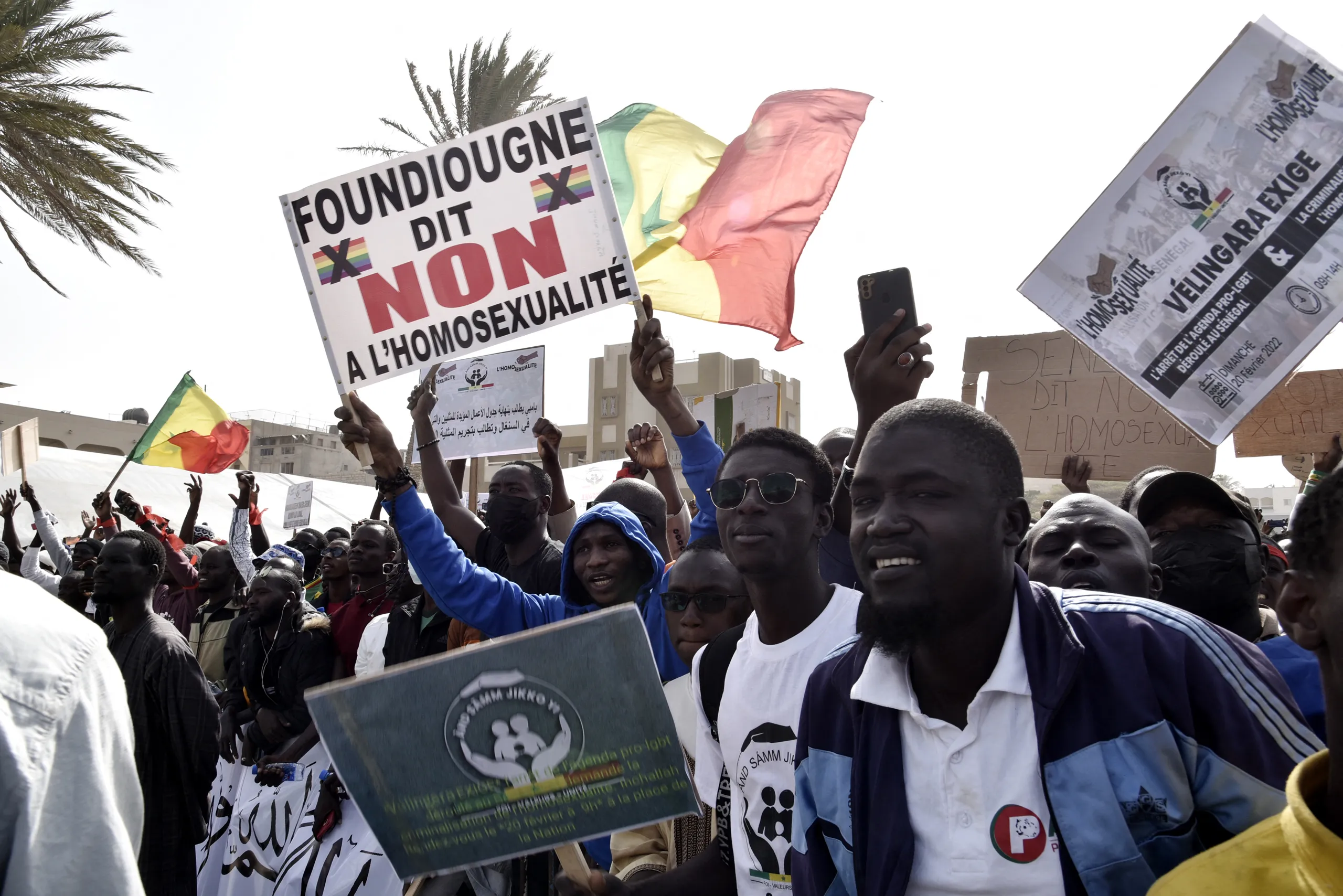
The West African nation of Senegal adopted new legislation in March that would widen the penalties already on its books for same-sex relations up to a ten-year prison sentence. Recent months have seen the predominantly Muslim country experiencing a wave of homophobia -- with dozens of people arrested on suspicion of same-sex relations.
 
In August, 71 men were referred to trial for "acts against nature", a quaint term referring to same-sex relations. This, at a time when the country is set to be the first African country to host the first Olympic sporting event, set to welcome 2,700 young athletes for the fourth edition of the October 31 to November 13 Youth Olympic Games. 
 
https://itg-media.lon1.cdn.digitaloceanspaces.com/images/01a134de-c030-8644-99eb-8d426fd6e96a/01a134de-c030-8644-99eb-8d426fd6e96a_w2560.webp?w=16&q=100
Senegal is set to host Dakar 2026 amid allegations of human rights violations towards its LGBT+ community.    Seyllou/GETTY IMAGES
 
Criticism of Senegal's move to double its punishment for those caught, or assumed to be engaging in same-sex acts that the population views as religiously reprehensible, has questioned its commitment to upholding the requisite standards in human rights spelled out in the code of the Olympic charter. Human Rights Watch came right to the point: that in Senegal, "rights causing increasing fear and stigma are being violated, and should be ended immediately". 
 
Fear of arrest and stigma, stressed the rights group, drives individuals into hiding. The targeted 'criminals' avoid being tested for HIV and much-needed treatment, a situation serving as well to deter the legal community from engaging in legal representational relations with members of the LGBTQ community. They are left in abandonment, to defend themselves in a country that denies them defence.
 
The law abridging their human rights was passed in the National Assembly by an overwhelming majority. A law which establishes criminal penalties for anyone found guilty of promoting or financing same-sex relationships. Senegal also denounces LGBTQ rights advocacy as a method the West uses to impose their own nihilistic values on other countries.
 
CDN media

IOC says it has 'full confidence' in Senegal authorities, as report lays out scale of the Youth Olympics host nation’s anti-LGBTQ crackdown.   outsports.com


Labels: , , , ,

Monday, May 19, 2025

Mercury Contamination in West Africa's Artisanal Gold Mining

"If it hurt right away, like a knife, people would stop. But the issue is that it takes years for the dangers to manifest."
"People are dumping it directly into the river. They're burning it in the open, releasing toxic smoke into the air.
"It's extremely dangerous."
"Kedougou has rich land -- very rich land. Now mercury is everywhere. Our animals consume it, and it comes back to us."
"Even the soil is no longer fertile."
Doudou Drame, president, Observatoire Territoriale du Secteur Extractif, Kedougou, Senegal 

"Women are much more exposed than men."
"People used it [mercury-free gold processing unit] for a while, but then they stopped, because one single unit can't cover an entire community. Naturally, those who were nearby could use it. But for those who are very far away, they can't afford to transport the ore all the way, process it and then go back. It's extra work. That's a problem."
"There's a new administration in place, but promises are still just promises. The solution is to install the gold processing units within the communities -- at least one per village."
We need to convince communities that even if they make more money using mercury, in the end, they'll spend that profit on treating illness caused by it. The long-term consequences are far worse."
Modou Goumbala, manager, La Lumiere, southeastern Senegal NGO 
https://scx1.b-cdn.net/csz/news/800a/2018/1-smallgoldmin.jpg
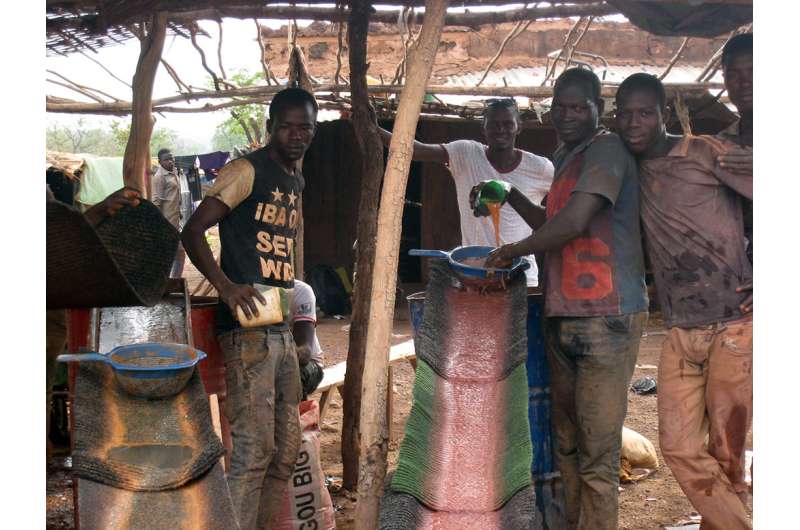
Senegalese gold miners process their ore to produce gold. Duke University
 
The dominant technique for the extraction of gold from ore across West Africa -- mercury, a potent neurotoxin -- persists in informal mining, much of which is illegal and unregulated. In gold-rich Kedougou region of Senegal, women use mercury regularly, and most often without using protective gloves and masks. Exposure to mercury can result in irreversible brain damage, developmental delays, tremors and loss of vision, hearing and co-ordination.
 
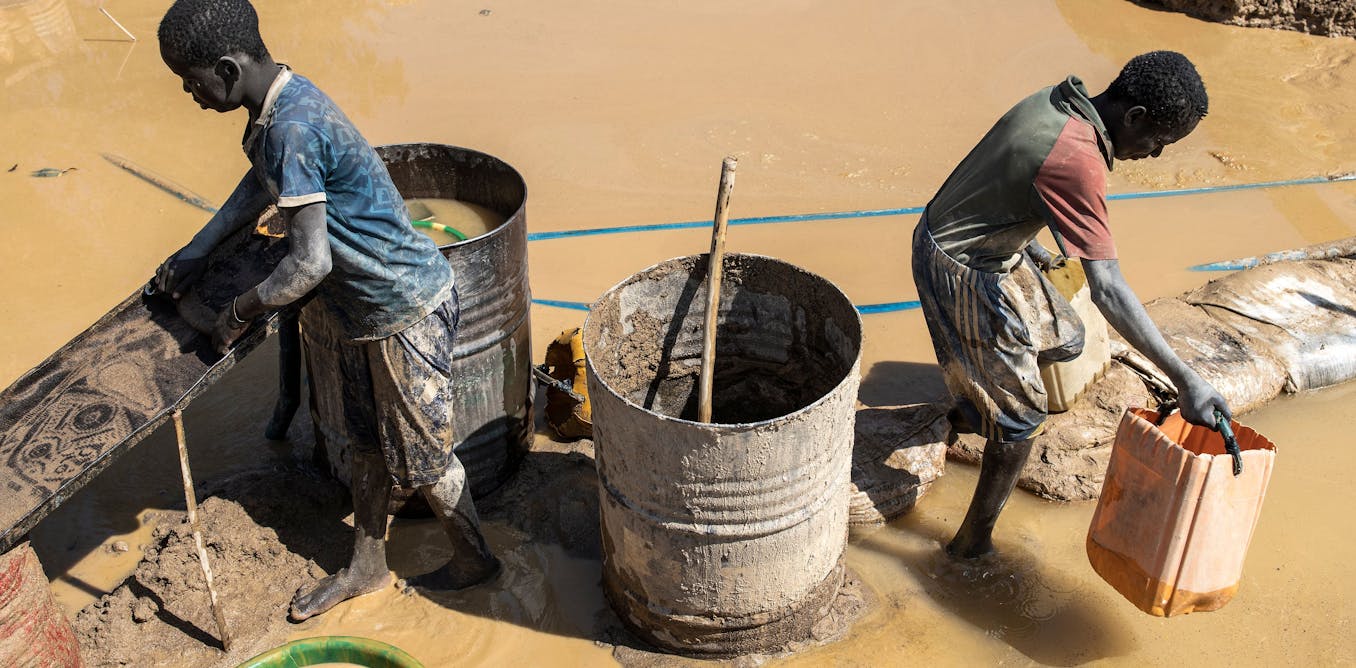
Once released into the atmosphere, mercury spreads through air, water and soil. The metal contaminates rivers, poisons fish and accumulates up the food chain, particularly in the wake of heavy rains. Mercury levels in soils, sediments and water near artisanal gold mining villages in southeastern Senegal were found by a 2018 study led by Duke University to exceed safety thresholds set by the World Health Organization and the U.S. Environmental Protection Agency by ten to 100 times. 

Mercury is prized for its ability to quickly bind to gold in artisanal mining. The liquid metal is mixed into crushed ore, and then heated -- often over open flames -- to evaporate the mercury, where a lump of gold is then left behind; a cheap, effective -- and dangerous process. Small-scale artisanal gold mining is the primary global source of mercury emissions, exceeding the burning of coal, according to the UN Environment Program. Artisanal mines in Senegal alone are estimated to release between 12 and 16 metric tons of mercury annually.
 
https://gdb.voanews.com/022a0000-0aff-0242-feff-08dacdf73b40_w650_r0_s.jpg
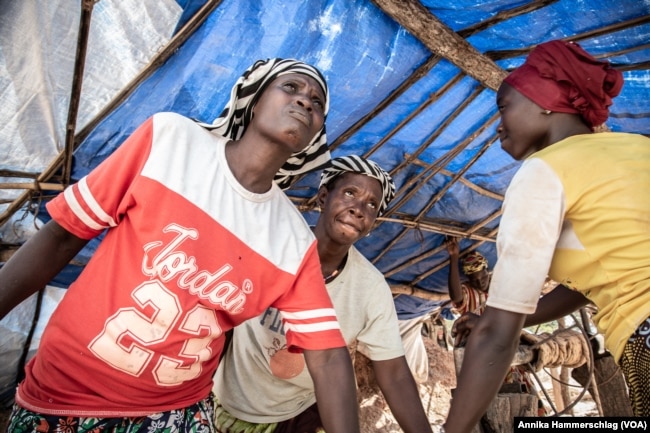
Women make up about half the gold miners in Senegal. Here, women work at a gold mine in the country's Kedougou region

Pregnant and lactating women exposed to mercury is particularly dangerous, since the metal is able to cross the placenta, placing fetuses at risk of developmental delays and birth defects. Through contaminated breast milk, infants may absorb the toxin. Mercury evaporates over heat, leaving behind a kernel of gold. No protective mask or gloves are used, just the raw materials and bare hands. Typically, children stand close by, watching the process and breathing the fumes. 
 
Gold processors in Senegal tend to process between five and 10 grams of gold monthly, earning themselves between $370 to $745, more than double the national average salary of about $200. The substance is widely accessible, with supplies arriving from Guinea, Mali, Burkina Faso and Ghana, according to a 2022 report by the Institute for Security Studies. The government promised it would build 400 mercury-free gold processing units in 2020. Only one so far has been constructed; a facility that uses gravity to separate gold from ore, eliminating mercury by relying on sluices and shaking tables. 

To curb pollution, Senegalese authorities suspended mining temporarily within 500 metres of the Faleme River which cuts through Senegal's gold belt, forming part of the border with Mali. Weak enforcement left officials struggling to stem the influx of informal miners, many arriving from neighbouring countries. A measure that barely scratches the surface of the problem, according to critics. Access to clean water is a problem, leaving women to use local contaminated waterways to bathe their children, wash clothes and clean dishes.
 
https://images.theconversation.com/files/564371/original/file-20231207-17-c98opg.jpg?ixlib=rb-4.1.0&q=45&auto=format&w=1356&h=668&fit=crop
Artisanal gold miners pan for gold at the Bantakokouta gold mine, south-east Senegal. John Wessels/AFP via Getty Images


Labels: , , , , ,

 
()() Follow @rheytah Tweet