Ruminations

Blog dedicated primarily to randomly selected news items; comments reflecting personal perceptions

Monday, May 19, 2025

Mercury Contamination in West Africa's Artisanal Gold Mining

"If it hurt right away, like a knife, people would stop. But the issue is that it takes years for the dangers to manifest."
"People are dumping it directly into the river. They're burning it in the open, releasing toxic smoke into the air.
"It's extremely dangerous."
"Kedougou has rich land -- very rich land. Now mercury is everywhere. Our animals consume it, and it comes back to us."
"Even the soil is no longer fertile."
Doudou Drame, president, Observatoire Territoriale du Secteur Extractif, Kedougou, Senegal 

"Women are much more exposed than men."
"People used it [mercury-free gold processing unit] for a while, but then they stopped, because one single unit can't cover an entire community. Naturally, those who were nearby could use it. But for those who are very far away, they can't afford to transport the ore all the way, process it and then go back. It's extra work. That's a problem."
"There's a new administration in place, but promises are still just promises. The solution is to install the gold processing units within the communities -- at least one per village."
We need to convince communities that even if they make more money using mercury, in the end, they'll spend that profit on treating illness caused by it. The long-term consequences are far worse."
Modou Goumbala, manager, La Lumiere, southeastern Senegal NGO 
https://scx1.b-cdn.net/csz/news/800a/2018/1-smallgoldmin.jpg
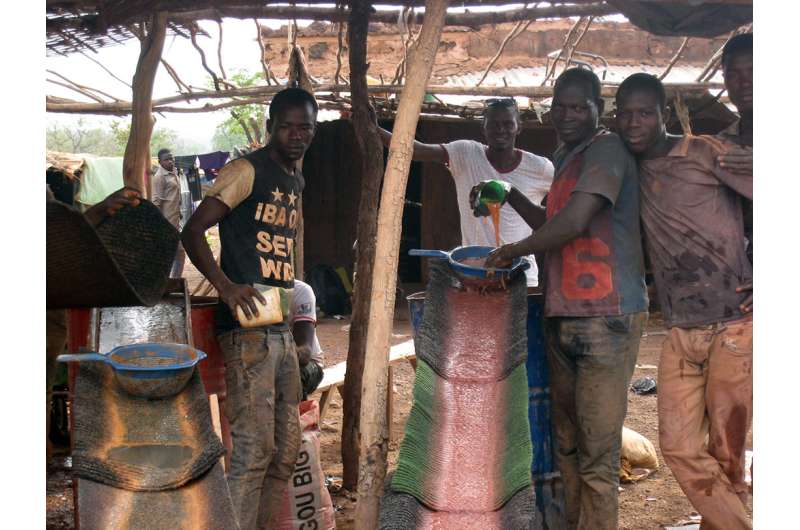
Senegalese gold miners process their ore to produce gold. Duke University
 
The dominant technique for the extraction of gold from ore across West Africa -- mercury, a potent neurotoxin -- persists in informal mining, much of which is illegal and unregulated. In gold-rich Kedougou region of Senegal, women use mercury regularly, and most often without using protective gloves and masks. Exposure to mercury can result in irreversible brain damage, developmental delays, tremors and loss of vision, hearing and co-ordination.
 
Once released into the atmosphere, mercury spreads through air, water and soil. The metal contaminates rivers, poisons fish and accumulates up the food chain, particularly in the wake of heavy rains. Mercury levels in soils, sediments and water near artisanal gold mining villages in southeastern Senegal were found by a 2018 study led by Duke University to exceed safety thresholds set by the World Health Organization and the U.S. Environmental Protection Agency by ten to 100 times. 

Mercury is prized for its ability to quickly bind to gold in artisanal mining. The liquid metal is mixed into crushed ore, and then heated -- often over open flames -- to evaporate the mercury, where a lump of gold is then left behind; a cheap, effective -- and dangerous process. Small-scale artisanal gold mining is the primary global source of mercury emissions, exceeding the burning of coal, according to the UN Environment Program. Artisanal mines in Senegal alone are estimated to release between 12 and 16 metric tons of mercury annually.
 
https://gdb.voanews.com/022a0000-0aff-0242-feff-08dacdf73b40_w650_r0_s.jpg
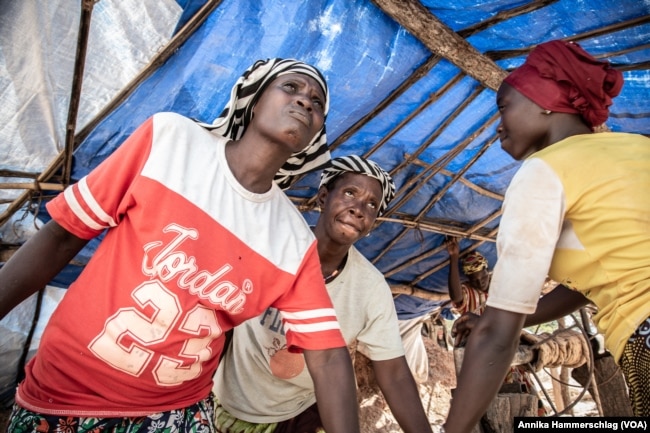
Women make up about half the gold miners in Senegal. Here, women work at a gold mine in the country's Kedougou region

Pregnant and lactating women exposed to mercury is particularly dangerous, since the metal is able to cross the placenta, placing fetuses at risk of developmental delays and birth defects. Through contaminated breast milk, infants may absorb the toxin. Mercury evaporates over heat, leaving behind a kernel of gold. No protective mask or gloves are used, just the raw materials and bare hands. Typically, children stand close by, watching the process and breathing the fumes. 
 
Gold processors in Senegal tend to process between five and 10 grams of gold monthly, earning themselves between $370 to $745, more than double the national average salary of about $200. The substance is widely accessible, with supplies arriving from Guinea, Mali, Burkina Faso and Ghana, according to a 2022 report by the Institute for Security Studies. The government promised it would build 400 mercury-free gold processing units in 2020. Only one so far has been constructed; a facility that uses gravity to separate gold from ore, eliminating mercury by relying on sluices and shaking tables. 

To curb pollution, Senegalese authorities suspended mining temporarily within 500 metres of the Faleme River which cuts through Senegal's gold belt, forming part of the border with Mali. Weak enforcement left officials struggling to stem the influx of informal miners, many arriving from neighbouring countries. A measure that barely scratches the surface of the problem, according to critics. Access to clean water is a problem, leaving women to use local contaminated waterways to bathe their children, wash clothes and clean dishes.
 
https://images.theconversation.com/files/564371/original/file-20231207-17-c98opg.jpg?ixlib=rb-4.1.0&q=45&auto=format&w=1356&h=668&fit=crop
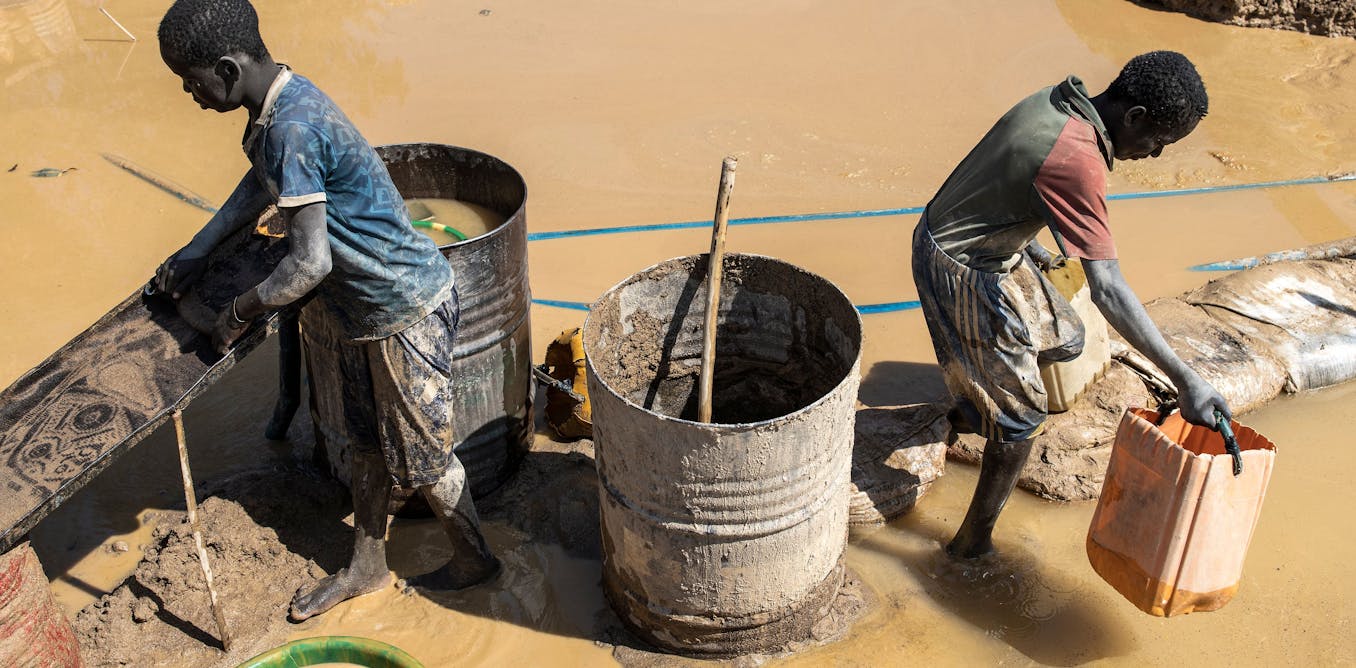
Artisanal gold miners pan for gold at the Bantakokouta gold mine, south-east Senegal. John Wessels/AFP via Getty Images


Labels: , , , , ,

Sunday, November 10, 2019

Misled by the Allure of Chocolate

"The companies have always done just enough so that if there were any media attention, they could say, ‘Hey guys, this is what we’re doing'."
"We haven’t eradicated child labor because no one has been forced to... How many fines did they face? How many prison sentences? None."
"There has been zero consequence."
Antonie Fountain, managing director, Voice Network

"The truth is that consumers today have no sure way of knowing if the chocolate they are buying involved the use of slavery or child labor. There are many different labels on chocolate bars today, such as various fair trade certifications and the Rainforest Alliance Certification; however, no single label can guarantee that the chocolate was made without the use of exploitive labor. In 2009, the founders of the fair trade certification process had to suspend several of their Western African suppliers due to evidence that they were using child labor. Chocolate companies, however, continue to certify their products to tell consumers that they source their cocoa ethically. But in 2011, a Danish journalist investigated farms in Western Africa where major chocolate companies buy cocoa. He filmed illegal child labor on these farms, including those certified by UTZ and Rainforest Alliance. Despite the industry’s claims, child labor still plagues cocoa farms in Western Africa."
Food Empowerment Project
cocoa bean harvest in Cameroon
 ICCFO – Cocoa bean harvest in Cameroon
"Consumers believe that by buying certified cocoa they are doing something good for the environment, or children, or farmers."
"But that is a fiction."
Francois Ruf, Ivory Coast-based researcher
There are two outstanding issues in the growing of cocoa plants; that in West Africa where most cocoa plantations are located, the use of child labour is rampant. The second issue is the critical deforestation of rainforests, degrading the environment and threatening the larger global ecosystem. These issues, when they are addressed, alarm the world's chocolate industry, alerting prominent chocolate makers to a potential withdrawal of appetite for chocolate on a world scale. Not to worry: their hurried responses of assurances, lull chocolate lovers into the belief that nothing is as bad as it seems, and the chocolate industry is in the process of addressing the situation.

Chocolate wrappers come complete with traceability and sustainability certificates and manufacturer assurances that all is well, they're on top of the situation. The situation? That two and a half million children work in miserable and occasionally dangerous conditions on plantations in Ghana and Ivory Coast where most of the global supply of cocoa beans come from. And where the widespread rainforest clearing with their threatened biodiversity is increasingly imperilled. Mars and Nestle among other well-known manufacturers -- to the rescue! Despite which, somehow, the situation has managed to accelerate.

Ivory Coast is losing its rainforests even more rapidly than elsewhere. According to an article in the Yale School of Forestry & Environmental Studies Yale Environment 360 publication, rainforests in Ivory Coast have been reduced by at least 80 percent already. The depletion rate in both Ghana and Ivory Coast last year alone was higher than elsewhere on the planet. "Any time someone bites on a chocolate bar in the United States, a tree is being cut down", environmental activist Eric Agnero warned, from Abidjan, Ivory Coast.

Utz "has had significant lapses in its compliance reviews", found an investigator for the Washington Post. The Dutch organization held to be authorized to inspect most of the cocoa supply globally appears to have slipped its watchdog moorings. Its verification of approximately two-thirds of the world's total supply of certified cocoa in 2017 alone, failed to catch breaches. "Tackling child labour is at the core" of Utz's mandate, states its website, yet the Washington Post revealed that in two reports co-sponsored by the certifier, a higher rate of child labourers were found in Utz-approved plantations.

Child labourers working on such plantations are exposed to danger, as they put "in more work deemed dangerous, such as working with machetes and insecticides". Close to 5,000 previously certified Utz farmers were in fact, located in purportedly protected areas, according to a spokesperson with Utz, which belatedly decertified them. Yale Environment 360 was informed by Richard Scobey, president of the World Cocoa Foundation "very few international companies directly source from protected areas" even as those sources indirectly supply a dozen companies acquiring 85 percent of the cocoa harvest through intermediaries.
child labourers on cocoa farm in Côte d’Ivoire
Men and young boys working on a small cocoa farming commune near Abengourou, Côte d’Ivoire  Racounteur

Labels: , , , , , ,

Tuesday, February 28, 2017

Disease Super-Conductors

"It's similar to looking at a blood spatter pattern and figuring out where the shooter was standing."
"Superspreading was more important in driving the [Ebola] epidemic than we realized."
"[Public health authorities should think about] What are the scenarios where superspreading might occur [in future epidemics to help in protocols leading to outbreak controls]."
Benjamin Dalziel, assistant professor, population biology, Oregon State University
Monrovia, Liberia, was hit hard during the 2014-2015 Ebola epidemic in West Africa. (Zoom Dosso/AFP via Getty Images)

Random contamination within a community is one thing that nature has designed where infectious diseases become epidemic in nature. Another, apparently, is to nominate individuals through their biological genetic inheritance as carriers of infection, people who, through no fault of their own and unbeknownst to themselves actually are involved in spreading infection on a wide scale. These people have been labelled "superspreaders".

This minority of people whom science recognizes have been vectors whose presence spells a large-scale increase of the number of people whom morbidly infectious diseases strike, thus spreading the reach of the disease much beyond any other process is capable of doing through the process of contamination and infection. Scientists engrossed in a study to comprehend how it was that Ebola spread so rapidly in the 2014 -- 2015 epidemic in West Africa, concluded.

New research has led to the discovery that a large role was held by superspreaders; findings recently published in the Proceedings of the National Academy of Science. Now, it is understood that had there been control of superspreading, close to two-thirds of the resulting infections could have been avoided, according to scientists. Obviously, candidates for superspreading would have had to be identified and isolated from vulnerable populations.

Over 28,000 confirmed, probable and suspected instances of Ebola had been reported during the outbreak in West Africa, resulting in over 11,000 deaths, according to the World Health Organization. That is a huge mortality percentage for any infectious disease, explaining more than adequately just why the medical community worldwide was on such tenterhooks and local health authorities felt helpless until the Ebola epidemic was well in hand.

A retrospective analysis of the timing and location of 200 community burials, taking place between October 2014 and March 2015 in urban areas around Freetown, Sierra Leone was undertaken by researchers from Princeton University and Oregon State University. With the use of a mathematical model the transmission network was reconstructed to determine the proportion of cases caused by superspreaders.
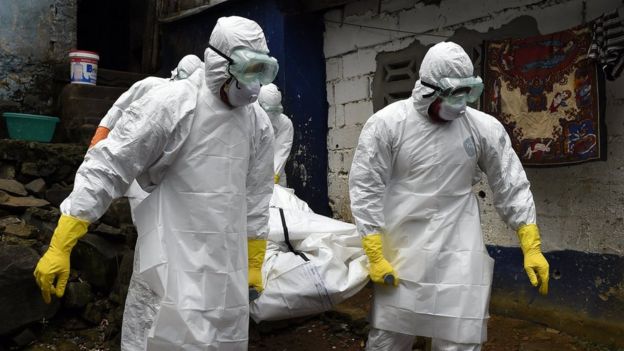
A dead body being carried on a stretcher by nurses in protective clothing
Getty Images -- a dead body carried on a stretcher by nurses wearing protective clothing

The estimate was that roughly three percent of infected people had been responsible for the infection of around 61 percent of resulting cases. That pattern was detected as well in Guinea and Liberia which, aside from Sierra Leone, represented the three countries hardest hit by Ebola. Children under age 15, or adults between the ages of 40 and 55 were those identified as within the superspreader community who spread the disease in their communities.

From the communities those who were first infected went to treatment centres and there transmission was under much improved control. And it was not only Ebola where superspreaders were seen to have played a major role in transmission of infection, but in the 2002 - 2003 outbreak of severe acute respiratory syndrome (SARS), one of the features of the outbreak was its transmission by superspreaders.

To the extent that in Hong Kong, a 26-year-old patient who had been admitted for treatment to a hospital, himself infected another 156 people, that number inclusive of hospital staff, patients and visitors.

Labels: , , , ,

Sunday, October 19, 2014

World Health Organization Ebola Response

"Time will come for investigation. Right now we have to focus on the response."
"When we scaled up, the beginning of the outbreak was very comparable to what we had seen elsewhere in Africa. And then, by June, it became something different."
"We indicated that this outbreak was different. I'm afraid we probably didn't say it loud enough for the world to understand what we were saying and for all the international community to be mobilised."
Isabelle Nuttall, head of global response and alert, World Health Organization, Geneva
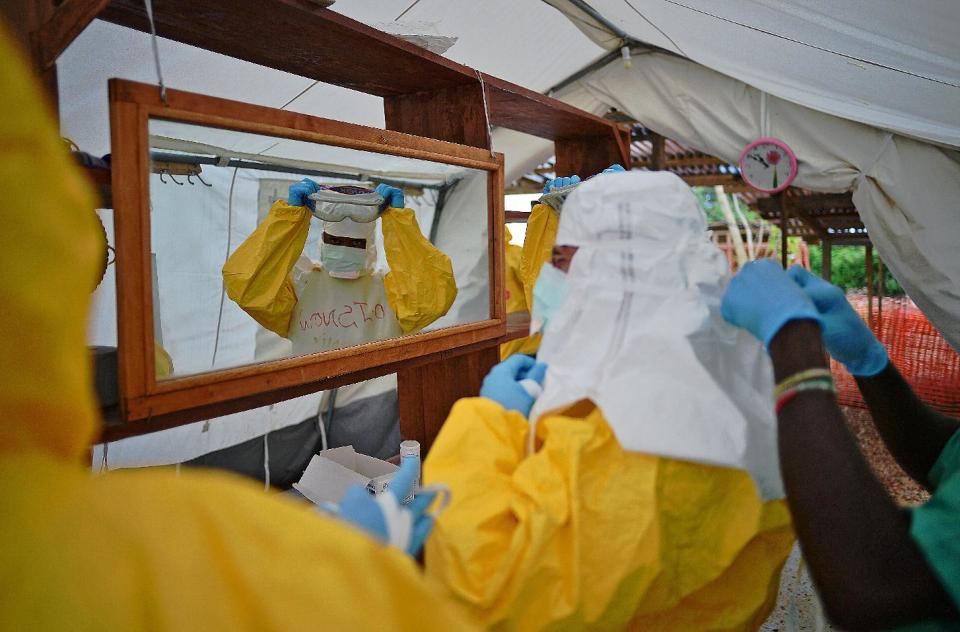
A medical worker dons protective gear before entering an Ebola treatment centre in Freetown, Sierra Leone - 16 October 2014  The World Health Organization is ramping up efforts to stop Ebola from spreading elsewhere in Africa
"I was not fully informed of the evolution of the outbreak. We responded, but our response may not have matched the scale of the outbreak and the complexity of the outbreak."
WHO director general, Margaret Chan

"We are putting in place the foundations of a very powerful response"
"I am absolutely certain that when we look at the history, that this effort that has been put in place will have been shown to have had an impact, though I will accept that we probably won't see a reduction in the outbreak curve until the end of the year." 
David Nabarro, United Nations Ebola Coordinator

Since April, Doctors Without Borders has been on the ground treating the ill suffering from the dread effects of Ebola, from the outset. They've long had familiarity with such outbreaks and the requirement to respond swiftly and put them to an end. They were alarmed by the spread of the most recent outbreak and the weak response to what looked to them to be becoming a real problem. And they began to warn that the global response to the Ebola outbreak was inadequate.

"Leaders are failing to come to grips with this transnational threat", MSF international president Joanne Liu cautioned at a UN briefing. "We are in uncharted waters." The trouble was the warning really was falling on deaf ears. The World Health Organization simply wasn't responding in a manner adequate to the perceived danger. Margaret Chan claimed to have been "very unhappy" in late June when she realized the scope of the health crisis outlined in a memo describing her local team's deficiencies.

Now the blame is being placed on poor communication, a lack of leadership and underfunding. All of which conspired to permit the disease to spiral out of control thanks to the World Health Organization's initial weak response to the Ebola outbreak. The WHO director general took personal command at that point in June to initiate moves to replace the heads of offices in Guinea, Liberia and Sierra Leone, and at the same time upgrade the emergency to the top level.


Doctors Without Borders medical workers put on protective clothing at an Ebola treatment facility in Kailahun, Sierra Leone, on August 15, 2014 (AFP Photo/Carl de Souza)

Since that time the situation has only become exacerbated, the spread of the virus even more alarming, and particularly so with the swath it was cutting in the already-short-handed numbers of local health practitioners. Nurses and doctors were contracting Ebola from the overload of patients they were caring for, and dying. All of this occurring though there was no lack of warning. In April Doctors Without Borders warned the outbreak was "unprecedented". Even while the WHO felt the contagion was under control.

Toward the end of June, WHO's top Ebola expert, Pierre Formenty, finally produced a presentation to a steering committee of the Global Outbreak Alert & Response Network, with charts indicating that the outbreak in Sierra Leone, Liberia and Guinea were swamping the capacity to respond. New infections were doubling every 24 days. By August, the tally had eclipsed the case total reported in the previous 24 Ebola outbreaks all combined. Nine thousand cases are now expected to emerge as of this week.

According to an October 8 report in the Lancet medical journal, the WHO's response capacity was weakened and eroded in the wake of budget cuts. And a  report in the British Medical Journal added that donors' contributions declined to 25% of the WHO's revenue in 2010 - 2011 from 80 percent in 1978 -1979. But the larger problem appears to be bureaucratic complacency and an unwillingness to listen to the experts in the field.

Labels: , , , , , ,

Thursday, October 16, 2014

Coping and Hoping

"This provides hope because if the Canadian vaccine is shown to be safe and effective, it will stop this devastating outbreak."
Health Minister Rona Ambrose, Canada

"It does change substantially how we approach it [Ebola virus transfer]. We have to rethink the way we address Ebola infection control. Even a single infection is unacceptable."
"There could be additional cases, particularly among the health-care workers who provided care [for Liberian man who entered the U.S. infected with Ebola]."
"We worked through the night with staff there [Texas Health Presbyterian Hospital] to implement the [new infection-safety] procedures."
Dr. Thomas R. Frieden, director, Centers for Disease Control and Prevention, U.S.

"The health-care workers on the ground are the most likely target to do the next step. Clearly if those studies show that it's effective in health-care workers, the world would go into mass production."
Dr. Gregory Taylor, Canada's chief public health officer

"You're going to see many instances like this over the next few weeks as health-care workers and others return from the area [West Africa]. We're going to become very used to it [Belleville patient recently returned from West Africa]."
Dr. Richard Schabas, medical health office, Belleville, Ontario
ebola liberia
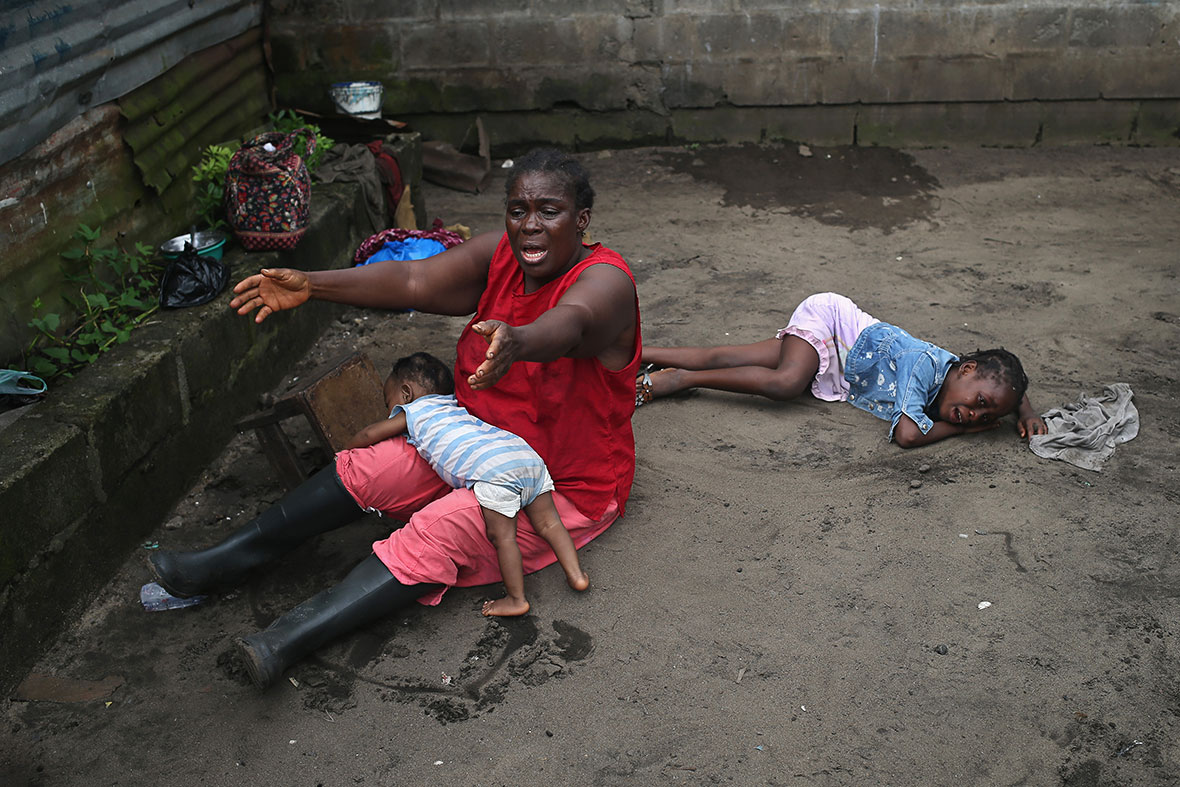
Sophia Doe sits with her grandchildren, while watching the arrival of an Ebola burial team to take 
away the body of her daughter for cremation in Monrovia. The children seen in the photo are daughters 
of the deceased. The woman died outside her home earlier in the morning while trying to leave her 
home and walk to a treatment centre, according to her relatives(John Moore/Getty Images)

An experimental Canadian-made Ebola vaccine that has shown great promise in animal-model trials is set to begin clinical trials which, if expectations for success are confirmed, will lead the way to shipping the formula's results for the vaccine in sufficient amounts to help in the international effort to stem Ebola's deadly tide. The Walter Reed Army Institute of Research in Maryland has received twenty vials of the vaccine to begin testing it on some forty healthy volunteers, according to Health Minister Ambrose.

The vaccine, created by Public Health Agency of Canada, identified as VSV-EBOV will be tested for safety and efficacy for human use through the Phase 1 trial. The trials will determine proper dosage levels, and test as well for evidence of possible side effects. Initial studies showed the vaccine works in non-human primates, succeeding in both preventing infections when given before exposure, and in its capability to increase survival when quickly administered after exposure to the virus.

It will be December before firm results can be anticipated, according to Canada's chief public health officer. With success, the following stage would be its testing in a larger human sample, inclusive of those directly handling Ebola cases in West Africa. A small American pharmaceutical company called NewLink Genetics holds the vaccine licence and is preparing  to arrange trials at the U.S. military laboratory.

According to NewLink Genetics five clinical trials will be geared shortly to initiate in the United States, Germany, Switzerland and an as-yet unnamed African country that is Ebola-free. Yet another leading Ebola vaccine created in the laboratories of the U.S. National Institutes of Allergy and Infectious Diseases, has been licensed to pharmaceutical giant GlaxoSmithKline with the first clinical trial for that vaccine, cAd3, already underway, since September.

Both Canada and the United States have initiated screening measures at airports and arranged for the posting of quarantine officers at designated airports. In the United States about one thousand people weekly arrive from Africa, whereas with no direct flights to Canada, about 30 people a week arrive on connecting flights from Guinea, Sierra Leone and Liberia, the three countries most impacted by Ebola on Canadian soil.

Data from a 12-year survey published in Family Practice journal revealed that those Americans who return with illness travelled to sub-Saharan Africa (25%), Central America/Mexico (18%) and South America (14%). Most travel-acquired illnesses were gastrointestinal (58%) and fever (18%). Among those with fever, 27% had malaria and 12% Dengue.

People who travel to visit friends and relatives generally tend to take fewer health precautions when they travel, and travel deeper into the country. Only 40.5% of travellers who became ill after such trips had seen a doctor before embarking according to a recent study in the Annals of Internal Medicine. According to a PloS One study climate change will be responsible for the Asian tiger mosquito entering North America, capable of transmitting Dengue fever and the chikungunya virus.

With a greater awareness of the dangers inherent in picking up infectious disease, there is incumbent on the international traveler a greater responsibility to avoid exposure, and to honestly inform health authorities on return where they have been and whether they have been exposed to areas where such health threats as Ebola exist.

Toronto emergency room physician Dr. Brett Belchetz, who had experience with the SARS outbreak recently wrote of his experience with patients presenting with symptoms denying just about anything related to exposure and personal responsibility.  
"Which brings me to my greatest concern with regard to the current Ebola epidemic. While Ebola is quite difficult to catch, requiring direct physical contact with the bodily fluids of a symptomatic patient, in its early stages it is virtually indistinguishable from the common flu, with non-specific symptoms like fever, headache, sore throat, vomiting and diarrhea. The only instrument we have to separate early Ebola from the flu, at our borders and our hospitals, is a history of fever and travel to an affected area. Laboratory testing is expensive and time-consuming, and only conducted when we are already suspicious. As fevers can easily be masked with common medications such as acetaminophen or ibuprofen, our process of risk stratification is based on history alone, and relies -- in fact, depends 200% -- upon the honesty of patients.

"When the largest single reason for the failure to contain Ebola in Western Africa was the lack of recognition of the disease before it spread too widely, when our only current method for distinguishing Ebola from the common flu is a truthful history, and when experience tells us patients will lie to doctors, I worry deeply that our over-reliance on patient honesty may be our undoing. Consequently, when it comes to an Ebola outbreak in our nation, the question, terrifyingly, may not be if it happens, but when."

Labels: , , , , ,

Wednesday, October 01, 2014

Targeting Aid Workers

"There are not a lot of diseases that can be transmitted by corpses."
"It's hard for people to comprehend that the dead body is actually a threat."
Meredith Stakem, adviser, Catholic Relief Services
Few medical options for American Ebola patients | USA NOW
While the rest of the world looks on, and aid organizations appeal for charitable donations to help them alleviate the strains on local health care workers whose numbers are steadily declining as they too fall victim to Ebola virus, and the United Nations speaks of the need for the international community to respond to this outbreak with its monumental mortality rate, Liberia, Sierra Leone, Guinea, Nigeria and Senegal desperately attempt to devise ways to manage those infected in the hope of restraining the outbreak, already proving unmanageable with their inadequate resources.

Such measures, draconian under any other circumstances, as lockdowns, persuading people as was done in Sierra Leona, to remain in their homes while health delegates are sent door to door to find and isolate those infected, to hand out soap and emphasize the need to exercise sanitary measures and to explain that harbouring the ill will only lead to its spread, and engaging in the usual signs of respect for the dead, by handling them, will most certainly lead to increased infections, are a sign of the desperation of authorities to gain control.

Disinfection of public places that teams working to safely dispose of bodies by swift burial, are engaged with, contradict custom and tradition, leaving the bereaved not only mourning their dead, but unable to pay their usual respectful homage to them through the exigencies of disease prevention, leaving people angry and disgruntled. It is difficult to persuade people whose experience of the wider world is limited and whose way of life is suddenly entirely disrupted with danger lingering and threatening, that they must themselves observe safety procedures through hygiene and avoidance of contact.

The International Federation of Red Cross Societies has seem their volunteer workers attacked, their vehicles vandalized by angry family members of those who have died. A fairly widespread belief that the disease they are being threatened with is one that has been deliberately set loose among them by conniving foreigners who wish them ill, under the guise of giving them aid poisons the atmosphere of trust. Outright denials that Ebola even exists, along with fears that those purportedly aiding them are really carriers of the virus, has created a situation of utter dysfunction.

Crowds of villagers in Guinea have stoned regional health offices. Health care teams attempting to bury bodies are doing their utmost to ameliorate the dreadful situation threatening and attaining a wider scope. Red Cross-assigned health workers who were dispatched to educate people about Ebola, and the journalists who were accompanying them were abducted and killed in Guinea. That is the death of eight people involved in attempting to give aid and educate people to enable them to protect themselves against the virus.

To date, efforts to slow the spread of the disease in the most affected countries, Liberia, Sierra Leone, and Guinea, have been ineffective, due partly to the shortage of isolation wards, equipment and health care workers, and partly because the population itself is resistant to the reality of a virus that is spread by touching its victims, alive or dead. The lethality of the disease leads to irrational responses, where those in danger believe that the very people who risk their lives to help them, are suspected of bringing the disease with them.

Labels: , ,

Friday, September 05, 2014

The World's 'Lethally Inadequate' Response to Ebola

"There's a lot of misunderstanding, a lot of rumour, a lot of denial within communities that Ebola is not real, (that) this is something being given to them from outside."
"It's important not to send the wrong message, that 'you're going to die'."
Dr. Margaret Chan, director-general, World Health Organization

"There are not enough beds for people to go to if they are ill; there are not enough ambulances to transport people when they're ill."
"[Sick people don't look for treatment since they feel] there are no real benefits."
"They want to understand what is going on, how are decisions made, why are they being made. They want to understand how to do things."
"Many people understand that it is now unsafe to touch someone who has died. They understand that if somebody is sick they can get infected from them But what they don't understand is, 'What do we do?'"
"They want to know that other people know what they are going through."
Dr. Keiji Fukuda, assistant director-general for health security, World Health Organization
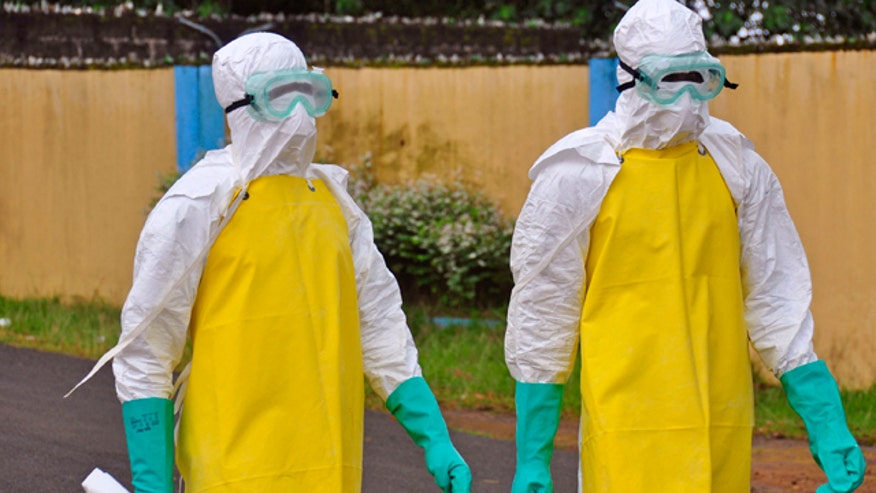
Liberia Ebola_Cham(1)640081714.jpg Health workers wearing protective gear go to remove the body of a person who is believed to have died after contracting the Ebola virus in the city of Monrovia, Liberia. (AP Photo/Abbas Dulleh)

On an Ebola ward in Liberia nurses have little to protect themselves with from the potential for infection. International promises of equipment have been made, but the equipment has not been received. Exposure to the Ebola virus has not been contained; Guinea, Sierra Leone and Liberia, the West African countries most hit by the disease, have seen the death of 1,900 people "The outbreaks are raging ahead of control efforts in these countries", stated Dr. Chan.

Health workers so far account for roughly ten percent of the deaths. They are severely hampered by a lack of protective gear although they are the front-line workers at highest risk of infection. Their plight represents a major obstacle to halting the outbreak. At one hospital in Monrovia, the capital of Liberia, one nurse described how she and others cut up old uniforms to tie them on their heads, cutting holes for their eyes. "It is really pathetic. We are not equipped to face the situation", she said.

At another hospital in the city in the country worst hit by Ebola, overwhelmed by a surge of patients, doctors and nurses cannot find enough hazard suits for safety. Doctors Without Borders, operating several treatment centres stated last week that its Monrovia clinic has been overrun with patients and as a result doctors no longer are able to provide intravenous treatments.

The misinformation going around Liberia is widespread. Some are accusing the government of creating Ebola to raise foreign aid money. Others believe the disease is caused by sorcery and that doctors are killing patients.
John Moore/Getty Images

Officials at WHO give a figure of $600-million as the cost to enable medical authorities to wrangle the epidemic under control. "We are not in a position where we can afford to lose even a day", warned Dr. David Nabarro, senior United Nation system co-ordinator for Ebola control. Stigma, according to his colleague Dr. Chan, both within and outside affected areas undermines efforts to contain the outbreak.

UNICEF and other aid groups are struggling to get information to those who require it, to encourage people to come forward to obtain treatment.

Dr. Fukuda travelled to Monrovia, meeting with community and traditional leaders. He reported that communities lack essential requirements, from treatment and isolation beds to ambulances and trucks to enable transport of bodies, as well as gloves and personal equipment, let alone funding for salaries and hazard pay to go to front-line workers.

Most infections occur among families caring for their loved ones.

It has been estimated that between 200 to 250 people are required in the care of 80 patients, and as the outbreak grows, several thousand people would be needed to care for those who are ill, and several hundred international workers, to provide the expert training and support required by those providing the hands-on care.

Symptoms of Ebola include flu-like illness; sudden fever, profound weakness, muscle pain, headache and sore throat -- with vomiting, diarrhea, impaired kidney and liver function following, sometimes internal and external bleeding, as well. The virus is spread through direct contact with blood, secretions and other body fluids of those infected with Ebola.

Doctors Without Borders has been struggling to get the West African outbreak under control since March, its teams now stretched to their limits. In Sierra Leone MSF field hospitals are forced to turn the sick away and, said Dr. Joanne Liu, MSF president, "highly infectious bodies are rotting in the streets."

Labels: , , ,

Saturday, August 30, 2014

Working on a Cure for Ebola

CPT108209938_high.jpg
Gary Kobinger works in a mobile laboratory installed by the National Public Health Agency of Canada, in Mweka, Congo, in 2007. The drug ZMapp was produced in collaboration with the agency. The Canadian Press

A Cure for Ebola

"What's quite remarkable is that we could rescue some of the animals that had advanced disease. For us, advanced disease is an animal that is just a few days from the end, if not only a few hours."
"I was quite surprised that we would be going as far, and this time rescue animals up to day five -- and all of them -- which was fantastic news."
"We know there is a point of no return when there is too much damage to major organs, so there's a limit."
Dr. Gary Kobinger, chief of special pathogens, National Microbiology Laboratory, Winnipeg, Canada
Gary Kobinger works in a mobile laboratory installed by specialists of the National Public Health Agency of Canada, in Mweka, Congo, Friday, Sept. 28, 2007. The experimental Ebola drug ZMapp was able to save infected monkeys even when treatment was only begun five days after the animals were infected, a new study shows. THE CANADIAN PRESS/AP, WHO, Christopher Black, HO
- See more at: http://www.princegeorgecitizen.com/life/scientists-at-canada-s-national-lab-created-tested-the-anti-ebola-drug-zmapp-1.1334370#sthash.3H3j349n.dpuf

"I never thought that 40 years after I encountered the first Ebola outbreak, this disease would still be taking lives on such a devastating scale."
"It is now critical that human trials start as soon as possible."
Peter Piot, director, London School of Hygiene and Tropical Medicine

"The gap between animal studies and first time, in-human studies even in the top institutions in the world is enormous."
"It's not ethically neutral to raise hopes in this way. Everyone is on the same page -- no one wants everyone to be dying. Everyone wants the game-changer."
"But I don't think that it's responsible or even respectful of the populations that are affected right now to be even reporting these things in ways that suggest it might be simpler than it really is. There's nothing simple about this."
Dr. Jim Lavery, managing director, Ethical, Social & Cultural Program for Global Health, St.Michael's Hospital, Toronto

"[The World Health Organization can't handle [the outbreak]. I don't see how, with the current measures, we're going to control the outbreak."
Mego Terzian, Doctors Without Borders president for France

The results of a Canadian-led study was published in the journal Nature online on Friday. Canadian scientists have succeeded in rescuing monkeys infected with a lethal dose of Ebola from certain death, in the latest study of an experimental drug already used, though officially unapproved, on a handful of Ebola victims in West Africa. This is the antibody-based compound known as ZMapp.

One hundred percent of the 18 rhesus macaques infected with Ebola survived, even when the drug was administered up to five days after they were exhibiting the symptoms of Ebola infection. All of the treated monkeys had full recoveries, with no side-effects, stated Dr. Kobinger, chief of special pathogens in Winnipeg. This represents the first study reported in monkeys of the version of ZMapp being administered currently in the West African outbreak.

As yet unlicensed, it is produced in collaboration with the Public Health Agency of Canada, and still requires testing in humans. Even so, it is unlikely ever to be produced in sufficient batches to make any impact on the current Ebola outbreak in parts of West Africa. According to a notice placed on the website of ZMapp's San Diego-based developer, Mapp Biopharmaceuticals Inc., the available supply has been exhausted.

Generated in tobacco plants that have been genetically modified to produce the antibodies, it takes a full month to produce 20 to 40 doses. Last November, a study was published on the testing of an earlier version of the drug, finding Ebola-infected macaques survived after being given the mixture within 24 hours of infection. In humans the infection is often fatal; the current outbreak has a fatality rate up to 90%.

The drug was given to seven patients infected in the West African outbreak, two of whom died, despite treatment. ZMapp, produced in collaboration with the Canadian federal public health agency, is comprised of three "humanized" monoclonal antibodies which are designed to bond to Ebola virus proteins. In humans, Ebola virus has an incubation period of between three to 21 days after exposure.

The first symptoms appear as a flu-like illness rapidly progressing to haemorrhage, multiple organ failure and shock-syndrome.

The monkeys had been infected with a strain of Ebola different than the one behind the current West African outbreak, but Dr. Kobinger explained that when tested in cell cultures, ZMapp stopped the new strain from replicating. 

Labels: , , ,

Friday, August 29, 2014

Ebola's Genetic Variances

"Twenty-thousand is a scale that has, I think, not ever been anticipated in terms of an Ebola outbreak."
"That's not saying we expect 20,000 cases. That is not saying we would accept 20,000 cases. I think that's completely unacceptable."
"[But a robust plan is required in preparation for a] very bad case scenario."
Dr. Bruce Aylward, World Health Organization assistant director-general

"We've uncovered more than 300 genetic clues about what sets this outbreak apart from previous outbreaks."
"Although we don't know whether these differences are related to the severity of the current outbreak, by sharing these data with the research community, we hope to speed up our understanding of this epidemic and support global efforts to contain it."
"[The outbreak is] expanding exponentially [emerging from remote, forested villages to major cities which] raises the spectre of increasing local and international [spread]."
Stephen Gire, research scientist, Broad Institute and Harvard University
Medical staff in protective clothing transport a patient infected with the Ebola virus from an airplane to an ambulance at Hamburg Airport, northern Germany, on Aug. 27, 2014. Agence France-Presse/Getty Images

West Africa has been afflicted with the worst outbreak of Ebola virus disease that any nightmare scenario might have predicted would one day occur. A U.S.-led team of international scientists has produced a report stating its success in deciphering the killer strain's genetic code with the use of samples from 78 patients infected in the early days of the outbreak in Sierra Leone.

The report has the opinion that the outbreak in Sierra Leone was initiated by the burial of a faith healer who had himself treated Ebola patients in Guinea where the hemorrhagic fever virus had been on low simmer for months previously. At that burial thirteen mourners developed Ebola. To date, 1,552 people are known to have died in Liberia, Sierra Leone, Guinea and Nigeria, out of a total of 3,069 people infected. And now Senegal too has been affected.

Of the researchers involved in the international group effort to understand the situation better and parse the virus's genetic code, five of the almost 60 researchers became infected and died of the disease they were decoding. But the team published the results of their research in the journal Science, to reveal that the West African variant, though related to the first reported Ebola strains has genetically altered itself.

Even as the WHO is warning that the outbreak is accelerating and might exceed 20,000 cases, the study reveals that the virus is swiftly undergoing genetic mutations whose effect has the potential to make it difficult to diagnose, treat or prevent with vaccines. It is understood that the caseload, in reality, is without doubt much higher than reported. Particularly in large urban areas where infections are breaking out faster than they can be reported.
A Liberian health worker disinfects a corpse Friday after the man died in a classroom now used as Ebola isolation ward in Monrovia. John Moore/Getty Images

Canada's three scientists have been moved by the country's public health agency out of the mobile laboratory set up in Sierra Leone, as a protective measure after three people living in the same hotel as the Canadian scientists contracted Ebola. Many of the mutations discovered by the scientific team have altered protein sequences which are the very targets for experimental vaccines and antibody-based therapies.

The U.S. National Institutes of Health will begin testing an experimental Ebola vaccine on humans next week. The preliminary trial will test the vaccine in healthy American adults in Maryland, while British experts will test the vaccine in healthy people in the U.K., Gambia and Mali. The trial accelerated to respond to the outbreak emergency that has been the source of riots as quarantines were put into place and people reacted adversely, fearing a conspiracy of the West.

Those infected with Ebola are felt to be contagious when they are sick with it only, not while the virus is in its incubating stage. The time from exposure to verifiable, symptomatic infection can range from two to 21 days, with the virus transmitted through contact with bodily fluids.

Labels: , , , ,

 
()() Follow @rheytah Tweet