Ruminations

Blog dedicated primarily to randomly selected news items; comments reflecting personal perceptions

Monday, July 12, 2021

From China (Again) With Love

"If bacteria resistant to all drugs acquire this resistance gene, they would become untreatable, and that's a scenario we must avoid at all costs." 
"The trend for feeding dogs raw food may be fuelling the spread of antibiotic resistant-bacteria."
"We know that the over-use of antibiotics drives resistance and it is vital that they are used responsibly, not just in medicine but also in veterinary medicine and in farming."
Dr.Juliana Menezes, University of Lisbon, Spain
 
"The close contact of humans with dogs and the commercialization of the studied brands in different countries poses an international public health risk."
"European authorities must raise awareness about the potential health risks when feeding raw diets to pets and the manufacture of dog food, including ingredient selection and hygiene practices, must be reviewed."
Researcher in biomedical science, Ana Freitas, University of Porto, Portugal
New research could point to raw dog food as a source of antibiotic-resistant bacteria
New research could point to raw dog food as a source of antibiotic-resistant bacteria Cristina Vega RHOR AFP/File
In 2015 the first case of a potentially untreatable superbug transitioning from dogs to humans was reported in China. Colistin, a last-chance antibiotic to treat and defeat bacterial infections resistant to any other drugs, is also resistant in the presence of the mer-1 gene. The mer-1 gene was found to be present in a small number of both dogs and humans where bacteria including mer-1 were present. In China, dogs and cats are more likely to be eaten than kept as pets.

Scientists now warn of a pending "nightmare scenario" with the discovery of the gene transmitted to people via their companion dogs, the bacterium known to be resistant to the powerful antibiotic used in medicine as a last resort to save peoples' lives. New research published by a team of scientists from the University of Lisbon has alerted the world of medical science in a presentation at the European Congress of Clinical Microbiology and Infectious Diseases conference.

What truly distinguishes the study is that it is recognized as one of the first reports that mer-1 has been found in humans. Raw dog food has been recognized as a major source of antibiotic resistant bacteria. As well, in analyzing a range of dog food, researchers at the University of Porto found that 54 percent of the food contained Enterococci bacteria, 40 percent of which was resistant to a number of antibiotics.

Antimicrobial resistance is growing in the general world population, estimated to have caused the death of 700,000 people annually throughout the globe, and forecast to kill ten million yearly by 2050 should the situation of antibiotic resistance not be controlled. Multiple animal species are thought to carry the gene, but scientists have become specifically concerned about domestic dogs being a carrier simply because of their proximity to humans.

Fecal samples were taken from 126 healthy people living with 102 cats and dogs from 80 households in a two year period up to February 2020. Of that number, eight dogs and four people were discovered to possess bacteria, including mer-1. Mer-1 gene was found in two households where dogs had tissue infections, having infected both dog and owner with analysis suggesting the gene was passed from dog to owner.

Sharing sleeping arrangements with dogs has been identified as another of the contagion opportunities where the mer-1 gene is transmitted; harboured in the gut, transported via microscopic fecal particles. Experts have warned for years that the overuse of colistin in particular on meat-producing animals, raises the risk of mutant genes with the potential to render the drug useless for humans.
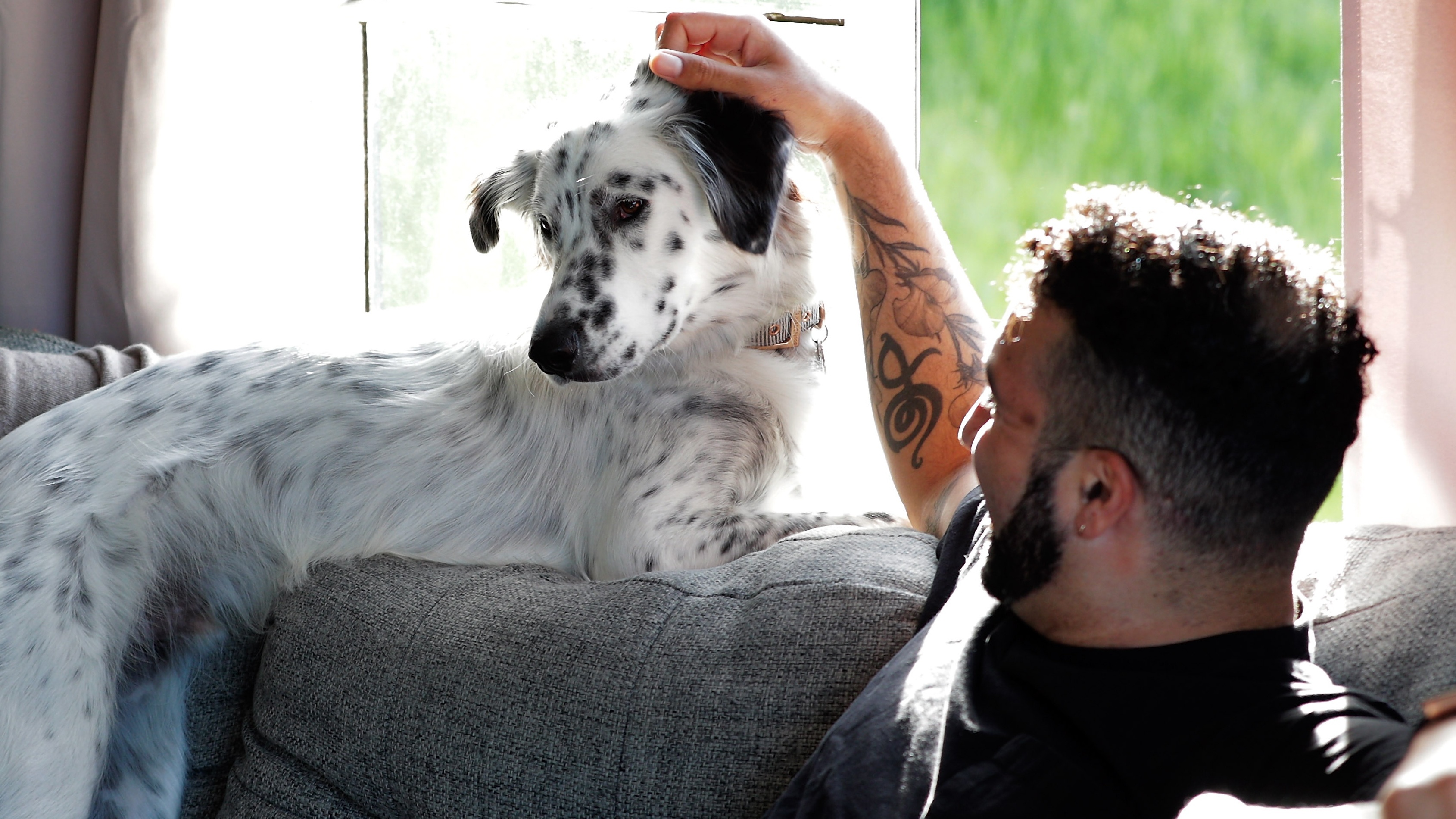
Dog with owner
Carlos Avila Gonzalez/The San Francisco Chronicle via Getty Images

Labels: , , , ,

Monday, February 01, 2021

Microbial Avoidance in COVID-19 Protocols and Human Microbiome

"The COVID-19 pandemic has the potential to affect the human microbiome in infected and uninfected individuals, having a substantial impact on human health over the long term."
Canadian Institute For Advanced Research, humans and microbiome program study
 
"It gives us an experiment that you can't normally do: If you lock people up for a year, does it have long-term consequences?"
"We know, based on history, that there are consequences."
"A child born today in a COVID world, who is that kid interacting with? They are not getting the microbes they are normally exposed to. We know in early life it is really important to have diverse microbial exposure, and that is just not happening in COVID, so I think there is some significant concern about what goes on there."
"We have really drastically changed society in the last year and we know these often result in significant changes in the microbiome. It is a wonderful experiment."
"We are in a position to look at these things, so we need to use this opportunity to really examine this and learn from it."
Brett Finlay, microbiologist, University of British Columbia
https://www.pasteur.fr/sites/default/files/styles/tetiere_1300x527/public/microbiote_intestinal.png?itok=ggIj4HbT&c=139640
Institut Pasteur

Lead author of the study published in the journal Proceedings of the National Academy of Science, Dr.Finlay considers the pandemic a real-time experiment on the impact of public health measures brought to the fore as a required protocol in the time of a global pandemic to avoid contracting the virus associated with SARS-CoV-2 that causes COVID-19, whose longer-term consequences can be anticipated in deleteriously affecting the microorganisms living within human bodies whose role is to contribute to overall health.
 
Undeniably, measures that have been identified by health authorities and which have been urged on the public in an effort to control the coronavirus succeed in contributing to prevention of viral infection. The wearing of protective face masks to screen out the pathogen, maintaining distance, frequent handwashing -- all contribute positively to public measures meant to contain COVID. At the same time there is a growing recognition that scrupulous attention to hygiene has its downside in potential health consequences for the future.
 
The recently published study raised the possibility of profound changes in the human microbiome resulting from these COVID-protective measures. Changes that will invariably ensure that some people become more susceptible to chronic conditions and diseases which would include obesity and asthma.  Human microbiome is comprised of microbes existing on and within the human body whose function in protecting human health and staving off disease is well known.
 
https://www.sapiens.org/wp-content/uploads/2020/04/01_GettyImages-1087470118-1920x1080.jpg
Sapiens
Changes in the microbiome are inevitable, with the use of antibiotics or alternately through limiting contact with microorganisms and particularly in early childhood with foreseeable health consequences. Early-childhood exposure to certain microorganisms protects against allergic diseases and contributes to the immune system's development, a well-recognized hygiene hypothesis in medicine. While sanitary precautions along with distancing whose aim is to prevent the spread of COVID are recognized preventives, people should be prepared for microbiome changes, as a result.
 
hand hygiene
Some hand sanitizers may negatively impact a person’s microbiome, a suite of microbes that support human health. U.S. Food and Drug Administration

Allergic responses, asthma, obesity and diabetes are all linked to alterations in the human microbiome, resulting from less exposure to microorganisms. Dr.Finlay points out that research demonstrates consequences occur as a result of a "hyperhygienic" society, and he laid it all out in the book Let Them Eat Dirt, that he wrote. Increased rates of obesity, asthma, inflammatory bowel disease and allied conditions, particularly in children, have all been linked to less exposure to microbes. Such that children who are raised on farms, suffer lower incidences of asthma and allergies.
 
The use of antibiotics with infant care has been reduced in British Columbia in the last several decades, and Dr.Finlay has focused on British Columbia in his research to conclude that significantly higher risk of asthma is tied to the use of antibiotics exposure in infancy. What has been seen is that a reduction in rates of asthma resulted when antibiotics use was diminished with infants in the province. Dr.Finlay points out as well that physical distancing itself produces a variance in people's exposure to microbes.
 
He also prescribes a living  formula that can help offset alterations in microbiome as a result of scrupulous hygiene practices in COVID avoidance countered through a diet rich in the kind of fibre found in grains, fruits, nuts and vegetables, along with a regular exercise regimen, and close contact with family pets as well as ensuring outdoor quality time remains a priority. Children in particular benefit hugely from outdoor play "in the environmental microbes", rather than playing indoors.
 

During the 19th-century Crimean War, Florence Nightingale, who transformed the field of nursing, initiated handwashing practices in British army hospitals. J.A. Benwell/Wikimedia


Labels: , , , ,

Friday, April 12, 2019

Go Ahead, Pick Your Nose....

"I tell people, when they drop food on the floor, please pick it up and eat it."
"Get rid of the antibacterial soap. Immunize! If a new vaccine comes out, run and get it. I immunized the living hell out of my children. And it's OK if they eat dirt."
"You should not only pick your nose, you should eat it."
"Our immune system needs a job. We evolved over millions of years to have our immune systems under constant assault. Now they don't have anything to do."
Dr. Meg Lemon, dermatologist, specialty allergies and autoimmune disorders, Denver

"Hay fever is said to be an aristocratic disease, and there can be no doubt that, if it is not almost wholly confined to the upper classes of society, it is rarely, if ever, met with but amongst the educated."
British Journal of Homeopathy, Volume 29, 1872

"Allergic diseases were prevented by infection in early childhood, transmitted by unhygienic contact with older siblings, or acquired prenatally from a mother infected by contact with her older children."
"Over the past century, declining family size, improvements in household amenities, and higher standards of personal cleanliness have reduced the opportunity for cross infection in young families."
"This may have resulted in more widespread clinical expression of atopic disease, emerging in wealthier people, as seems to have occurred for hay fever."
Paper: "Hay Fever, Hygiene, and Household Size, British Medical Journal, 1980
Too many? Mark Blinch/Files/Reuters

Hay Fever? A catch-all term for all manner of allergies caused by seasonal exposure to pollen along with other airborne irritants. An aristocratic condition? In the 1980 paper published in BMJ in 1980, the author studied the prevalence of hay fever among 17,414 children whose birth month and year was March of 1958. "Most striking", he observed, was a detected association between the number of a child's siblings and the chance the child would acquire hay fever allergy.

He concluded that the more siblings, the less the likelihood of an allergy. Those children unlikeliest to become allergic were the children with older siblings. Exposure, exposure, exposure. This paper and its conclusion appeared to herald the hygiene hypothesis since evolved and expanded, providing deep insight into a condition the modern world imposes on people. We are now, more than at any time in our relationship with the world around us, exposed to less 'good' bacterial germs that help immunize us against the 'bad' ones.
Jack Gilbert, co-author of the book "Dirt Is Good," says kids should be encouraged to get dirty, play with animals and eat colorful vegetables.      Elizabethsalleebauer/Getty Images/RooM RF

We do all we can to shield ourselves from exposure to unsanitary conditions, unclean water, dire weather conditions, turning what we felt once to be an environment dangerous to good health outcomes in our search for survival techniques. We identified and then avoided foods that could be dangerous. Before refrigeration, long before any kind of safe food storage, pork was identified in ancient cultures as harbouring toxic contaminants from E.coli.

We learned to clear our hands of the presence of contaminants by washing them before eating, we learned to cook our food thoroughly to have it last longer before spoiling and to avoid being threatened by raw-based germs. "So they shall wash their hands and their feet, that they die not", advised the Biblical chapter of Exodus. We wash everything now that comes in contact with our mouths, and we wash our surroundings and purify our water.

Our homes are cleaner than they ever were; we observe the injunction that 'cleanliness is next to godliness'. And our immune system began to find itself unemployed. We have smaller families, our milk is pasteurized, food processed and sterilized, to avoid microbes we imagine are all harmful. The immune system is more readily aggravated, developing allergies, chronic attacks of the immune system and inflammation; counter-productive, irritating and potentially dangerous.
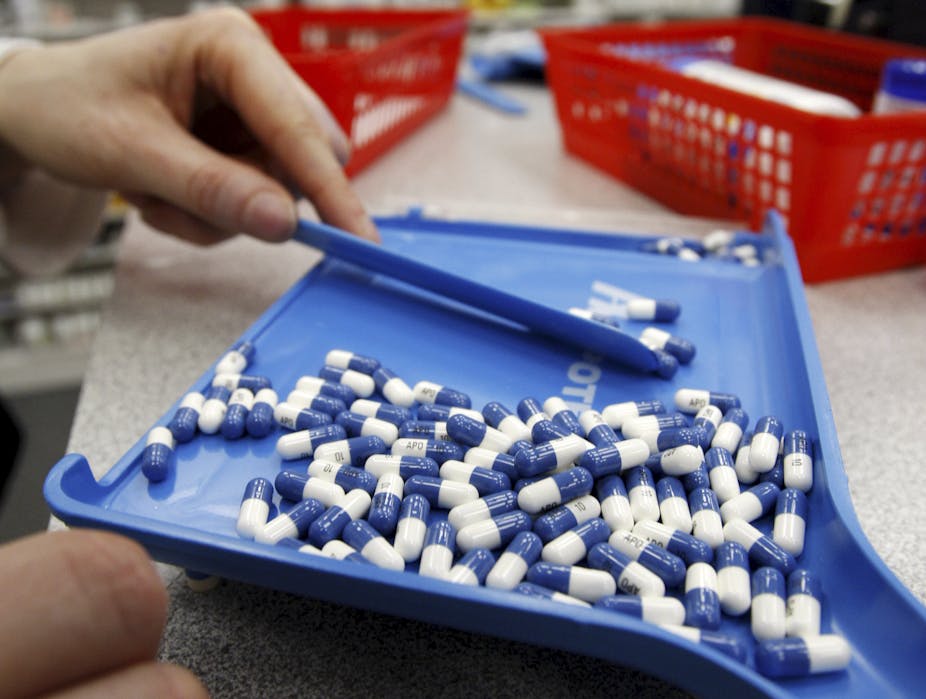
More prescriptions for antibiotics might mean more allergies. Gary Cameron/Reuters

According to a paper citing research from the Journal of Allergy and Clinical Immunology, skin allergies "doubled or tripled in industrialized countries during the past three decades, affecting 15 to 30 percent of children, and two to ten percent of adults [while asthma] is becoming an 'epidemic' phenomenon". Another report by the World Allergy Organization states that by 2011, one in four children living in Europe had acquired an allergy, a figure on the rise.

The conclusion has been realized that antibiotics have been vastly over-prescribed, leading to a situation where the immune system faced with a deadly infection can no longer rely on the efficacy of antibiotics. "We have to get away from the idea of annihilating these things in our local environment. It just plays upon a certain fear", stated Dr. Keiji Fukuda, a scientist who led a mission at the World Health Organization to develop a global policy limiting the use of antibiotics.

We have done ourselves no favours in minimizing our interaction with nature, with germs, and with what can be 'friendly' bacteria by holding ourselves aloft and separate from contact with anything that might conceivably transfer germs to us. Those 'friendly' bacteria and parasites that once taught our immune system how to react are in short supply, leaving our immune system at sea and over-reacting, allowing exposure to dust mites or pollen to produce allergies at an ever-rising rate of infection.

dirt
uBiome

Labels: , , , ,

 
()() Follow @rheytah Tweet