Ruminations

Blog dedicated primarily to randomly selected news items; comments reflecting personal perceptions

Sunday, July 04, 2021

Good Faith Collaboration with Chinese Biological Research

"Why did Canada stand idly by when CanSino breached the agreement?"
"We could have sued them, basically, which would have put Beijing in a tough spot to explain its obstruction."
"That would have been worth doing for reasons of accountability, even if we concluded the vaccine was not a very good one."
Amir Attaran, law professor, health-policy expert, University of Ottawa

"After some time it became clear CanSiono could not secure the authority to ship the materials to Canada."
"The shipment delays did not constitute a termination of the agreement with cause by CanSino."
National Research Council spokesperson

"The experience of this partnership demonstrates once again that any collaboration with China can be jeopardized by Chinese authorities with malign intent towards Canada."
"It therefore renders all partnerships with China as inherently unreliable. Certainly in this case, Beijing is fully to blame."
"Canadians are learning this hard lesson, and are realizing that we should diversify our collaborations away from China and focus on partnering with countries that follow the rule of law." 
"When I talk to Canadian AI scientists, they often say ‘I have partnered with my Chinese friends, they would never steal from us'. I say ‘yes they would. Unfortunately, that is how China’s system works'."
"This was a surprise to see our commitment to China, in sharing very significant proprietary intellectual property, run into this major blockage. China’s success in vaccines is standing on the back of Canadian researchers and scientists. Over the years we helped China develop its capacity. But China is no longer a reliable partner."
Margaret McCuaig-Johnston, senior fellow, Institute for Science, Society and Policy, University of Ottawa
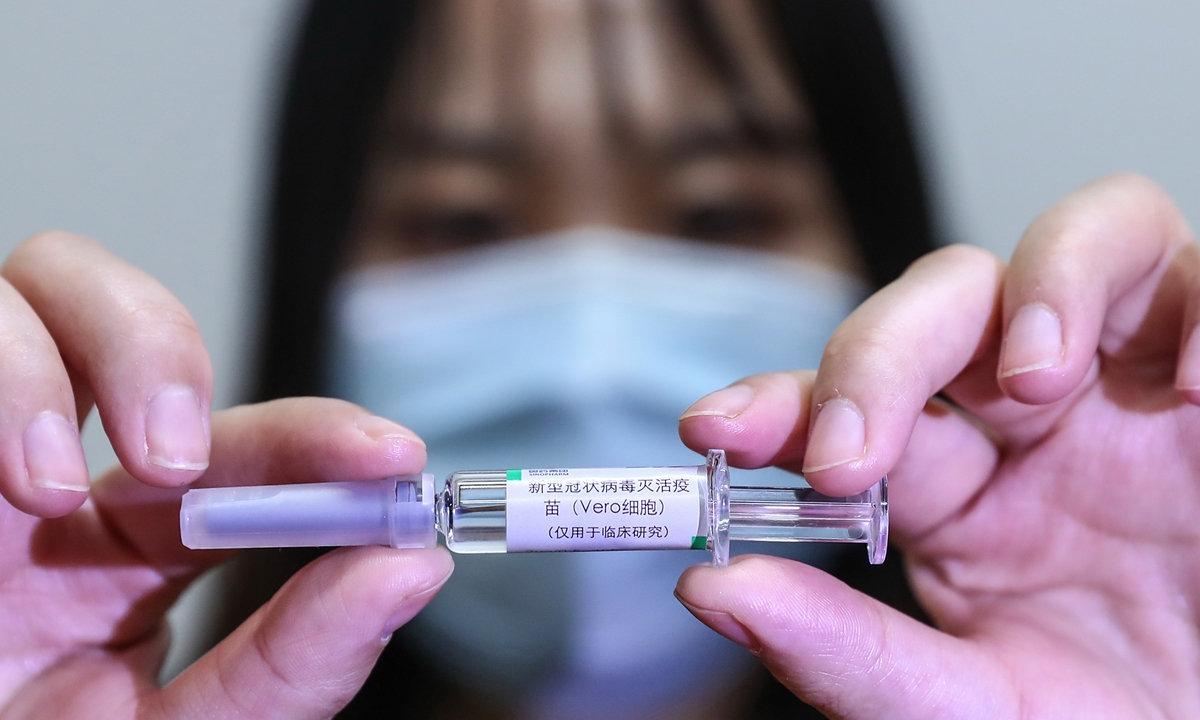
A medical worker shows the inactivated COVID-19 vaccine candidate developed by SinoPharm at the company's vaccine candidate production plant. Photo: Xinhua
 
In the world of scientific research, scientists the world over have always striven to rise above politics in the interests of sharing and learning from one another and working together for a higher purpose. Since so much of science and research benefits humankind, it makes good sense to separate the political world from that of scientific research and to maintain open communications and research exchange opportunities between various nations' scientists and research projects. 

China's approach is somewhat different; under the Chinese Communist Party, control is everything and there is no avenue of endeavour, including scientific research where the CCP does not intervene. Moreover, China is well known for its penchant for hijacking whatever it can of other nations' discoveries, formulae and production secrets to get a jump-start on its own endeavours in technology and science. Above all, Beijing expects all its citizens, current and former, to be faithful to the aspirations of China and to work on its behalf, whether culturally, socially, politically or through espionage.

Canada's National Research Council signed a "collaborative research agreement" between itself and CanSino Biologics whose CEO had a Canadian connection in attending university in Canada and working for Canadian research facilities before setting out on his own with CanSino. The NRC provided CanSino with a cell line on which to establish its agreed-upon COVID vaccine. The agreement was for CanSino to ship samples of its vaccine to Canada to be tested and if proven successful, to be manufactured in Canada as well.

The Academy of Military Medical Sciences, an arm of China's People's Liberation Army, through an army major general as the lead researcher, co-jointly developed the ensuing vaccine with CanSino. The contract signed between the NRC and CanSino stipulated that neither party would be liable for problems caused by factors beyond their reasonable control.

And though the agreed-upon arrangement was meant to see Canada conducting phase one trials then possibly moving on to two and phase three trials on the vaccine, then to begin producing the vaccine at a National Research Council facility if it was approved by Health Canada, the agreement announced in May of 2020 to have the potential to place Canada up front with a COVID vaccine to inoculate against the SARS-CoV-2 virus, that is not quite how things turned out.

When the vaccine was ready for shipment and a Canadian plane sent to China to pick up the vaccine samples, they were denied by Chinese customs, refusing to permit vaccine samples to be sent to Canada. The event was generally assumed to be another of China's punishing tactics over the arrest in Canada of Huawei executive Meng Wanzhou, on an extradition request by the U.S. Department of Justice. The message was clear; the collaboration agreement was dead in the water, leaving Canada to scramble to find other vaccine sources.

Beijing did permit CanSino to provide its vaccine to Russia and Pakistan to fight the coronavirus pandemic there. Trial results from Pakistan rendered the information that the one-dose shot was roughly 66 percent effective in prevention of symptomatic COVID-19; while results from other sources using the China-produced vaccines gave even lower effectiveness rates of 51 percent, barely scraping through the minimum efficacy required for approval.

As for Canadian scientists heeding the warning of standing clear of possible scientific collaborations with their Chinese counterparts; in some areas it has fallen on deaf ears. Two scientists at the Canadian Centre for Vaccinology at Dalhousie University continue to be listed as principal investigators on the CanSino vaccine's phase three trials in other countries.
 

Vaccine Ad5-nCoV is backed by Tianjin-based CanSino Biologics Inc., seen here on Nov. 20, 2018, and the Institute of Biotechnology of the Academy of Military Medical Sciences. CHINA STRINGER NETWORK/Reuters

Labels: , , , ,

Tuesday, January 26, 2021

China's Contractual Obligations

Immunogenicity and safety of a recombinant adenovirus type-5-vectored COVID-19 vaccine in healthy adults aged 18 years or older: a randomised, double-blind, placebo-controlled, phase 2 trial
This randomised, double-blind, placebo-controlled, phase 2 trial of the Ad5-vectored COVID-19 vaccine was done in a single centre in Wuhan, China. Healthy adults aged 18 years or older, who were HIV-negative and previous severe acute respiratory syndrome coronavirus 2 (SARS-CoV-2) infection-free, were eligible to participate and were randomly assigned to receive the vaccine at a dose of 1 × 1011 viral particles per mL or 5 × 1010 viral particles per mL, or placebo. Investigators allocated participants at a ratio of 2:1:1 to receive a single injection intramuscularly in the arm. The randomisation list (block size 4) was generated by an independent statistician. Participants, investigators, and staff undertaking laboratory analyses were masked to group allocation. The primary endpoints for immunogenicity were the geometric mean titres (GMTs) of specific ELISA antibody responses to the receptor binding domain (RBD) and neutralising antibody responses at day 28. The primary endpoint for safety evaluation was the incidence of adverse reactions within 14 days. All recruited participants who received at least one dose were included in the primary and safety analyses. This study is registered with ClinicalTrials.gov, NCT04341389.
CanSino Biologics, China   The Lancet
Courtesy of CanSino Biologics

China-based CanSino Biologics is the brainchild of Yu Xuefeng, who studied in Canada and earned his doctorate at McGill University. He later was in the employ of Sanofi Pharmaceutical based in Toronto and eventually returned to China where he launched his vaccine business. His links to Canada gained him an insider status. The National Research Council agreed to allow the use of a Canadian-created cell line to aid in the development of a vaccine first for Ebola and following that, SARS-CoV-2. 

For reasons known only to Canada's prime minister an agreement was signed with CanSino for collaboration in the development of a COVID vaccine, at a time when relations with Beijing were beyond  strained and bad faith was redolent and in full view when the Chinese Communist Party launched its hostage diplomacy initiative by arresting and charging two Canadians in China with security breaches endangering China, and then initiating a trade war. 
 
Canada been burned in the past when dealing with China when Chinese technologists were hired to work for Canada's then-telecommunications giant Nortel Networks attaining positions of trust enabling them to lift trade secrets for their own, and Chinese hackers infiltrated and gained access to Nortel's top executive accounts spiriting away additional Nortel data which eventually helped lead to the company's demise but gaining China's telecommunications industry through Huawei where former Nortel employees worked, the edge they looked for, linked with China's military.

Once again the trusting Canadian government of Prime Minister Justin Trudeau who was personally transfixed with the notion that Canada would benefit hugely by association with China, in lucrative trade deals and investment, laid itself open to expropriation of Canadian technical and scientific expertise, signing a contract with CanSino to test their vaccine at Dalhousie University in conjunction with the National Research Council, which could produce samples of the vaccine. A vaccine which never arrived in Canada, as per the agreement.
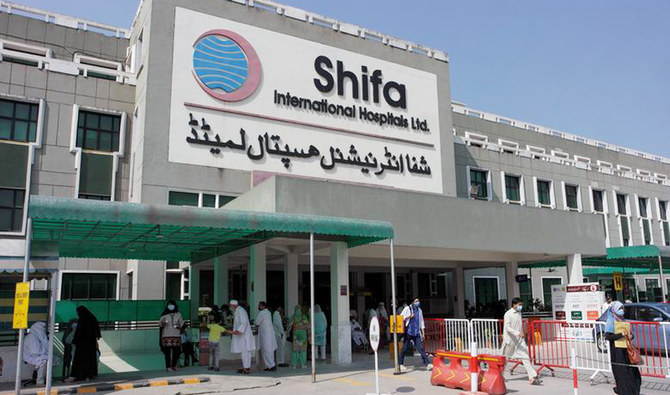
Inside the CanSino Phase 3 COVID-19 vaccine trial at Pakistan’s Shifa Hospital
A general view of Shifa International Hospital in Islamabad, Pakistan where a Phase 3 trial of CanSino's COVID-19 vaccine is undergoing trials. (Reuters)
 
A vaccine that Beijing refused to allow entry to Canada, while shipping it off elsewhere for testing. "In June, the vaccine (based on the Canadian cell line) was approved for use by Chinese military forces. As for the rights to the cell-line, a comment to Global News from Innovation, Science and Industry Minister Navdeep Bains was 'The NRC (National Research Council) retains the intellectual property related to the cell line, while CanSino in turn owns all intellectual property rights for the vaccines it develops.' Canada cannot claim any revenue if the vaccine proves successful", wrote Radio Canada International journalist Mark Montgomery.

"What exactly motivated Canada to enter into such an unstable partnership in the first place given the dire state of Canada-China relations and the scandalous history of China's vaccine industry?" questioned science writer Iris Kulbatski in the health-care journal Healthy Debate. She quoted Margaret McCuaig-Johnston, former assistant deputy minister in charge of Canada's vaccine collaboration with Beijing, that China's history of creating customs 'obstacles' in any trade disagreements, as leverage was well known.

"McCuaig-Johnston further said that 'China's success in vaccines is standing on the back of Canadian researchers and scientists. Over the years we helped China develop its capacity. But China is no longer a reliable partner." There is, in fact, nothing new about China's penchant for infiltration, sabotage and subterfuge along with the stealth mining of technological and scientific data originating elsewhere, than the ill-gotten gains used by China to further its own interests. 
 
This is merely one more instance in a long history of unprincipled looting of other nations' research and development. With China taking the short-cut route to using others' intellectual property, parading it as their own, and reaping the financial benefits thereof. The question remains: why would this Canadian government see fit, all this being well known, to engage in a contractual agreement with a country that cannot be trusted, with a pharmaceutical company that has direct links to the People's Republic of China's Military?

https://static.reuters.com/resources/r/?m=02&d=20201221&t=2&i=1545302862&r=LYNXMPEGBK0Y0&w=1600
Vials of a COVID-19 vaccine candidate, a recombinant adenovirus vaccine named Ad5-nCoV, co-developed by Chinese biopharmaceutical firm CanSino Biologics Inc and a team led by Chinese military infectious disease expert, are pictured in Wuhan, Hubei province, China. China Daily via REUTERS

Labels: , , , ,

 
()() Follow @rheytah Tweet