Ruminations

Blog dedicated primarily to randomly selected news items; comments reflecting personal perceptions

Sunday, July 04, 2021

Good Faith Collaboration with Chinese Biological Research

"Why did Canada stand idly by when CanSino breached the agreement?"
"We could have sued them, basically, which would have put Beijing in a tough spot to explain its obstruction."
"That would have been worth doing for reasons of accountability, even if we concluded the vaccine was not a very good one."
Amir Attaran, law professor, health-policy expert, University of Ottawa

"After some time it became clear CanSiono could not secure the authority to ship the materials to Canada."
"The shipment delays did not constitute a termination of the agreement with cause by CanSino."
National Research Council spokesperson

"The experience of this partnership demonstrates once again that any collaboration with China can be jeopardized by Chinese authorities with malign intent towards Canada."
"It therefore renders all partnerships with China as inherently unreliable. Certainly in this case, Beijing is fully to blame."
"Canadians are learning this hard lesson, and are realizing that we should diversify our collaborations away from China and focus on partnering with countries that follow the rule of law." 
"When I talk to Canadian AI scientists, they often say ‘I have partnered with my Chinese friends, they would never steal from us'. I say ‘yes they would. Unfortunately, that is how China’s system works'."
"This was a surprise to see our commitment to China, in sharing very significant proprietary intellectual property, run into this major blockage. China’s success in vaccines is standing on the back of Canadian researchers and scientists. Over the years we helped China develop its capacity. But China is no longer a reliable partner."
Margaret McCuaig-Johnston, senior fellow, Institute for Science, Society and Policy, University of Ottawa
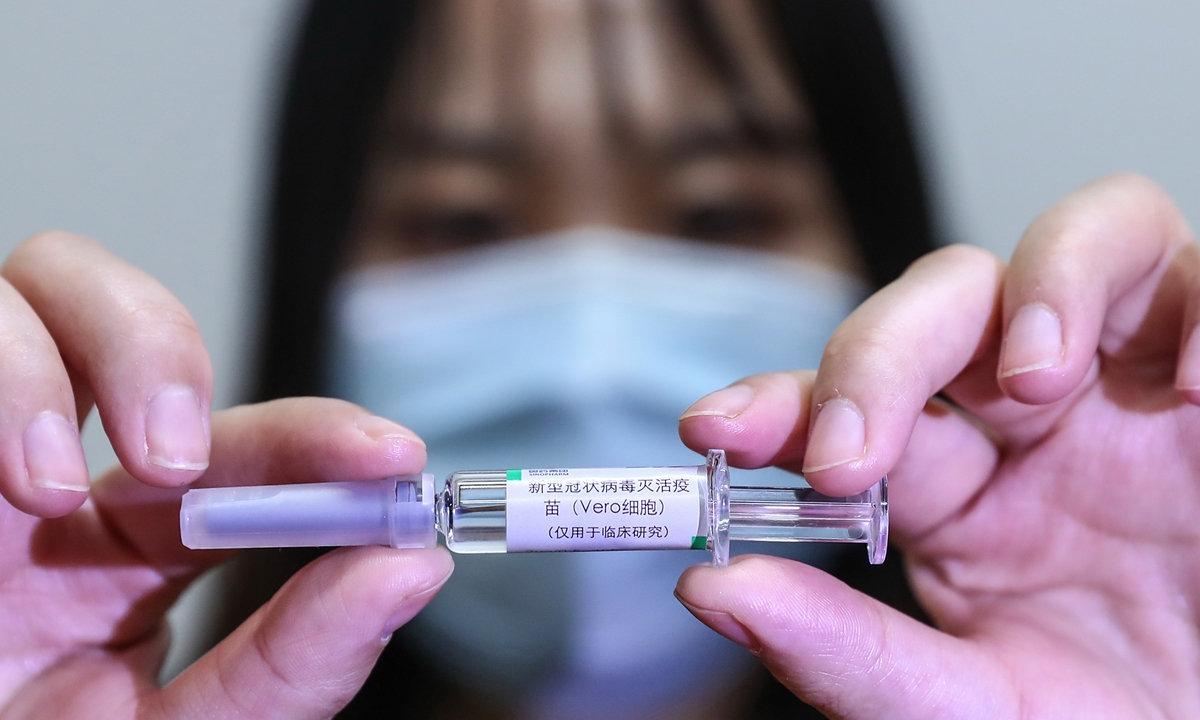
A medical worker shows the inactivated COVID-19 vaccine candidate developed by SinoPharm at the company's vaccine candidate production plant. Photo: Xinhua
 
In the world of scientific research, scientists the world over have always striven to rise above politics in the interests of sharing and learning from one another and working together for a higher purpose. Since so much of science and research benefits humankind, it makes good sense to separate the political world from that of scientific research and to maintain open communications and research exchange opportunities between various nations' scientists and research projects. 

China's approach is somewhat different; under the Chinese Communist Party, control is everything and there is no avenue of endeavour, including scientific research where the CCP does not intervene. Moreover, China is well known for its penchant for hijacking whatever it can of other nations' discoveries, formulae and production secrets to get a jump-start on its own endeavours in technology and science. Above all, Beijing expects all its citizens, current and former, to be faithful to the aspirations of China and to work on its behalf, whether culturally, socially, politically or through espionage.

Canada's National Research Council signed a "collaborative research agreement" between itself and CanSino Biologics whose CEO had a Canadian connection in attending university in Canada and working for Canadian research facilities before setting out on his own with CanSino. The NRC provided CanSino with a cell line on which to establish its agreed-upon COVID vaccine. The agreement was for CanSino to ship samples of its vaccine to Canada to be tested and if proven successful, to be manufactured in Canada as well.

The Academy of Military Medical Sciences, an arm of China's People's Liberation Army, through an army major general as the lead researcher, co-jointly developed the ensuing vaccine with CanSino. The contract signed between the NRC and CanSino stipulated that neither party would be liable for problems caused by factors beyond their reasonable control.

And though the agreed-upon arrangement was meant to see Canada conducting phase one trials then possibly moving on to two and phase three trials on the vaccine, then to begin producing the vaccine at a National Research Council facility if it was approved by Health Canada, the agreement announced in May of 2020 to have the potential to place Canada up front with a COVID vaccine to inoculate against the SARS-CoV-2 virus, that is not quite how things turned out.

When the vaccine was ready for shipment and a Canadian plane sent to China to pick up the vaccine samples, they were denied by Chinese customs, refusing to permit vaccine samples to be sent to Canada. The event was generally assumed to be another of China's punishing tactics over the arrest in Canada of Huawei executive Meng Wanzhou, on an extradition request by the U.S. Department of Justice. The message was clear; the collaboration agreement was dead in the water, leaving Canada to scramble to find other vaccine sources.

Beijing did permit CanSino to provide its vaccine to Russia and Pakistan to fight the coronavirus pandemic there. Trial results from Pakistan rendered the information that the one-dose shot was roughly 66 percent effective in prevention of symptomatic COVID-19; while results from other sources using the China-produced vaccines gave even lower effectiveness rates of 51 percent, barely scraping through the minimum efficacy required for approval.

As for Canadian scientists heeding the warning of standing clear of possible scientific collaborations with their Chinese counterparts; in some areas it has fallen on deaf ears. Two scientists at the Canadian Centre for Vaccinology at Dalhousie University continue to be listed as principal investigators on the CanSino vaccine's phase three trials in other countries.
 

Vaccine Ad5-nCoV is backed by Tianjin-based CanSino Biologics Inc., seen here on Nov. 20, 2018, and the Institute of Biotechnology of the Academy of Military Medical Sciences. CHINA STRINGER NETWORK/Reuters

Labels: , , , ,

Tuesday, January 26, 2021

China's Contractual Obligations

Immunogenicity and safety of a recombinant adenovirus type-5-vectored COVID-19 vaccine in healthy adults aged 18 years or older: a randomised, double-blind, placebo-controlled, phase 2 trial
This randomised, double-blind, placebo-controlled, phase 2 trial of the Ad5-vectored COVID-19 vaccine was done in a single centre in Wuhan, China. Healthy adults aged 18 years or older, who were HIV-negative and previous severe acute respiratory syndrome coronavirus 2 (SARS-CoV-2) infection-free, were eligible to participate and were randomly assigned to receive the vaccine at a dose of 1 × 1011 viral particles per mL or 5 × 1010 viral particles per mL, or placebo. Investigators allocated participants at a ratio of 2:1:1 to receive a single injection intramuscularly in the arm. The randomisation list (block size 4) was generated by an independent statistician. Participants, investigators, and staff undertaking laboratory analyses were masked to group allocation. The primary endpoints for immunogenicity were the geometric mean titres (GMTs) of specific ELISA antibody responses to the receptor binding domain (RBD) and neutralising antibody responses at day 28. The primary endpoint for safety evaluation was the incidence of adverse reactions within 14 days. All recruited participants who received at least one dose were included in the primary and safety analyses. This study is registered with ClinicalTrials.gov, NCT04341389.
CanSino Biologics, China   The Lancet
Courtesy of CanSino Biologics

China-based CanSino Biologics is the brainchild of Yu Xuefeng, who studied in Canada and earned his doctorate at McGill University. He later was in the employ of Sanofi Pharmaceutical based in Toronto and eventually returned to China where he launched his vaccine business. His links to Canada gained him an insider status. The National Research Council agreed to allow the use of a Canadian-created cell line to aid in the development of a vaccine first for Ebola and following that, SARS-CoV-2. 

For reasons known only to Canada's prime minister an agreement was signed with CanSino for collaboration in the development of a COVID vaccine, at a time when relations with Beijing were beyond  strained and bad faith was redolent and in full view when the Chinese Communist Party launched its hostage diplomacy initiative by arresting and charging two Canadians in China with security breaches endangering China, and then initiating a trade war. 
 
Canada been burned in the past when dealing with China when Chinese technologists were hired to work for Canada's then-telecommunications giant Nortel Networks attaining positions of trust enabling them to lift trade secrets for their own, and Chinese hackers infiltrated and gained access to Nortel's top executive accounts spiriting away additional Nortel data which eventually helped lead to the company's demise but gaining China's telecommunications industry through Huawei where former Nortel employees worked, the edge they looked for, linked with China's military.

Once again the trusting Canadian government of Prime Minister Justin Trudeau who was personally transfixed with the notion that Canada would benefit hugely by association with China, in lucrative trade deals and investment, laid itself open to expropriation of Canadian technical and scientific expertise, signing a contract with CanSino to test their vaccine at Dalhousie University in conjunction with the National Research Council, which could produce samples of the vaccine. A vaccine which never arrived in Canada, as per the agreement.
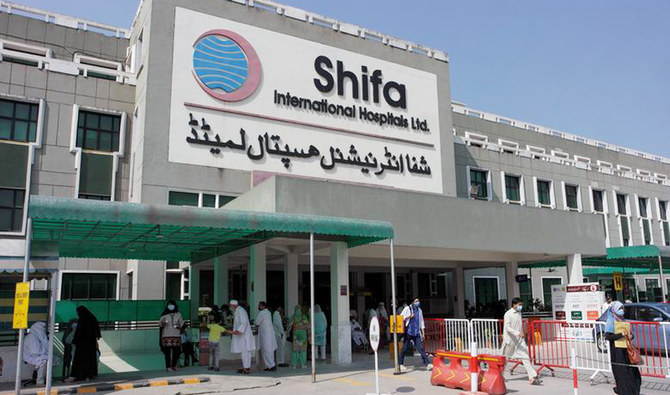
Inside the CanSino Phase 3 COVID-19 vaccine trial at Pakistan’s Shifa Hospital
A general view of Shifa International Hospital in Islamabad, Pakistan where a Phase 3 trial of CanSino's COVID-19 vaccine is undergoing trials. (Reuters)
 
A vaccine that Beijing refused to allow entry to Canada, while shipping it off elsewhere for testing. "In June, the vaccine (based on the Canadian cell line) was approved for use by Chinese military forces. As for the rights to the cell-line, a comment to Global News from Innovation, Science and Industry Minister Navdeep Bains was 'The NRC (National Research Council) retains the intellectual property related to the cell line, while CanSino in turn owns all intellectual property rights for the vaccines it develops.' Canada cannot claim any revenue if the vaccine proves successful", wrote Radio Canada International journalist Mark Montgomery.

"What exactly motivated Canada to enter into such an unstable partnership in the first place given the dire state of Canada-China relations and the scandalous history of China's vaccine industry?" questioned science writer Iris Kulbatski in the health-care journal Healthy Debate. She quoted Margaret McCuaig-Johnston, former assistant deputy minister in charge of Canada's vaccine collaboration with Beijing, that China's history of creating customs 'obstacles' in any trade disagreements, as leverage was well known.

"McCuaig-Johnston further said that 'China's success in vaccines is standing on the back of Canadian researchers and scientists. Over the years we helped China develop its capacity. But China is no longer a reliable partner." There is, in fact, nothing new about China's penchant for infiltration, sabotage and subterfuge along with the stealth mining of technological and scientific data originating elsewhere, than the ill-gotten gains used by China to further its own interests. 
 
This is merely one more instance in a long history of unprincipled looting of other nations' research and development. With China taking the short-cut route to using others' intellectual property, parading it as their own, and reaping the financial benefits thereof. The question remains: why would this Canadian government see fit, all this being well known, to engage in a contractual agreement with a country that cannot be trusted, with a pharmaceutical company that has direct links to the People's Republic of China's Military?

https://static.reuters.com/resources/r/?m=02&d=20201221&t=2&i=1545302862&r=LYNXMPEGBK0Y0&w=1600
Vials of a COVID-19 vaccine candidate, a recombinant adenovirus vaccine named Ad5-nCoV, co-developed by Chinese biopharmaceutical firm CanSino Biologics Inc and a team led by Chinese military infectious disease expert, are pictured in Wuhan, Hubei province, China. China Daily via REUTERS

Labels: , , , ,

Friday, January 22, 2021

Unscrupulous China ... Naive Canada

Prime Minister Justin Trudeau needs to tell Canadians why his government signed a deal with China-based CanSino Biologics in the first place.
"Trudeau inherited a naive affection for China's dictatorship that devolved into craven passivity in the face of blackmail."
"What else can explain his willingness to work with Tianjin-based CanSino Biologics on a COVID vaccine, given our highly contentious relationship with China and while the two Michaels [arrested on specious charges of espionage days after Huawei's CFO Meng Wanzhou was taken into custody by the RCMP on an American extradition warrant] languish in jail? The deal collapsed when Chinese authorities blocked exports of vaccine to Canada."
"The government pursued a controversial, and now delayed, $170-million initiative with a National Research Council lab that was supposed to be ready last November. Industry players were rightly skeptical and believed a better approach would have been to fund private-sector companies like bio-manufacturer PnuVax Inc or clinical-stage biopharmaceutical Medicgo, both located in Quebec."
Joe Oliver, former Conservative Minister of Finance, Canada
"The result is that the vast majority of Canadians will have to wait many months to get protection from the rampaging coronavirus. And it's all because Canada has a prime minister who's lacking in good judgement, a health minister without health expertise, a procurement minister who was a law professor and a recently departed foreign affairs minister who borrowed $1million from a Chinese bank and then thought better of it when the information became public."
"Getting vaccines for all Canadians was a moral obligation. To rely on an unscrupulous, sworn enemy like China to provide vital supplies is just asking for trouble."
"Canadians deserve answers as to why this has happened, and so do the country's premiers, who run our health-care system."
Diane Francis, columnist, Financial Post
A researcher works in a lab at Chinese vaccine maker CanSino Biologics in Tianjin, China in November 2018. A collaboration between CanSino and the National Research Council of Canada to run the first Canadian clinical trials for a possible COVID-19 vaccine has been abandoned. (Reuters)

Canada, a first-world, technologically advanced country until the SARS-CoV-2 virus causing     COVID-19 became an international menace to life and the wealth of nations, is in the grip of an devastating beast of a virus that has clamped down on a population awaiting the rescue of inoculation against its predatory presence. Each day that lapses without the ability to vaccinate as many people as possible is a day the virus advances, infecting and killing greater numbers of Canadians. The desperate need to create a safe health environment for the country has never been greater.
 
Yet the poor judgement of the federal government has made it clear that while other countries in the same position as Canada -- with equal access to necessary resources, made more practically resolute and intelligent decisions to arm themselves with vaccines as soon as they passed their final trials and were given regulatory approval for public use -- are now inoculating the most vulnerable segments of their populations against the virus sweeping the globe.
 
At present, while other countries forge ahead with their vaccination programs, in Canada a tad over one percent of the country has received one dose of a vaccine requiring two separate doses for ultimate safety. Canada's former finance minister under a previous government and a pharmaceutical industry expert have laid out a case for placing the responsibility where it belongs -- the decision-making of the current Prime Minister of Canada, Justin Trudeau. While Mr. Oliver is front and centre, the industry expert, highly placed, speaks on condition of anonymity in defence of his position.
 
It is his contention that it is no mere urban legend making the rounds in his industry and echoing in political circles, that a Chinese businessman who has the prime minister's confidence persuaded the suggestible Trudeau that Canada would do well to buy its vaccines from China. Convinced, Trudeau proceeded to order  the vaccine, signing a contract with CanSino which had a previous Canadian connection, rather than turning to American pharmaceutical companies. The agreement with CanSino was of a partnership between it and the National Research Council for testing of the final vaccine.
 
When the time arrived for the vaccine to be delivered to Canada to allow for the testing to commence through the National Research Council, Chinese authorities extended an ultimatum; the freedom of Meng Wanzhou in exchange for the vaccines. Which translated to the end of the contract signed in naive good faith in the expectation that a contract is a contract. The non-receipt of the vaccine left Canada without defences, and it quickly turned to reliable sources in the west.
 
The fly in that remediative ointment was that the line-up to acquire vaccines was growing longer day by day and Canada's place was at the very end of it. This, in any event, is the pharmaceutical industries' reading of events surrounding the manner in which the Trudeau government handled the urgency of acquiring vaccines. Former Foreign Affairs Minister Francois-Philippe Champagne who was tasked with moving the Canada-China-relations file forward along with Prime Minister Trudeau are both proteges of former Prime Minister Jean Chretien, a notorious China appeaser. 
 
 CanSino Biologics in China. (Reuters)
Canada was a loser with this contract, but China was not:The failed collaboration was based in part on the National Research Council agreeing to provide CanSino with a license to use Canada’s proprietary biological product HEK293, a line of cells that CanSino had previously used with the Chinese military to develop a vaccine for the Ebola virus. CanSino is linked to the People's Liberation Army of China; a clear warning that anything could go wrong. CanSino's CEO, Chinese scientist Dr. Xuefeng Yu, was educated at McGill University in Quebec and had worked for Sanofi Pasteur, before returning to China.  
"A vaccine is the most powerful weapon to end the novel coronavirus."
"If China is the first to develop this weapon with its own intellectual property rights, it will demonstrate not only the progress of Chinese science and technology, but also our image as a major power."
CanSino’s military partner, Major General Chen Wei 

Labels: , , , , , ,

Monday, August 13, 2018

The Never-Ending Battle Against Deadly Bacteriums

"The fear is: Is it going to turn into the Hib story in the sense that it will grow more globally? And even if it doesn't, right now it's a problem in the North, where people -- and little ones, in particular -- are dying unnecessarily."
"This is an invasive bacterial disease. You can get meningitis, you can get septicemia, you can lose your leg. And once it gets a hold it really advances quite quickly, a little bit like the meningococcal diseases."
"The incidence is quite low but the mortality is quite high. ...In the first two years of life, you're most at risk for this disease. It does seem to be skewed toward the Indigenous populations being most at risk."
Andrew Cox, research officer, National Research Council, Canada
The vaccine developed at NRC kills all Hia Type A bacteria strains from different parts of Canada, leading Andrew Cox, senior research officer, to believe it will be 'a very good vaccine.' (Pierre-Paul Couture, CBC News)


The National Research Council was tasked to perform preliminary work on finding a pharmaceutical response to a deadly new disease afflicting Indigenous communities in Northern Canada. Researchers, under the direction of Dr. Cox worked diligently, undertaking major research work that began in 2012 leading to a workable approach on defeating the bacterium in question through to 2016. Undertaking a gradual and determined series of steps leading to a general concept to produce a solution that in mice could be proven to work.

Now what remained was to find a pharmaceutical company willing to take the concept through tests to determine whether the therapeutic process in question is both safe and effective for human use, and to proceed with the manufacture of a commercial product. "That's where the so-called Valley of Death is, where a lot of products don't get through because of the sheer cost and the stringency of the tests", admitted Dr. Cox, of a prevalent situation where brilliant ideas do not necessarily end up as drugs available to sufferers of a remote disease whose victims are few, making it unlikely that the costs associated would not be recovered through returns on investment due to the paucity of patients.

The vaccine in which much hope will now be vested is meant to grapple with a new type of bacterial infection breaking out across Canada's North called Hemophilus influenzae type A; or Hia. Name aside, this infection has little relation to and no bearing on common influenza, caused b a virus leading to the familiar symptoms we're all familiar with. This bacterial disease is extremely nasty and sometimes deadly. In decades past, a cousin of this disease, the Type B version, called Hib, caused consternation and illness on a wide scale. Drug companies developed a vaccine for Type B, the result of which is hat it has been largely eradicated in Canada as well as in many other countries.

That nature abhors a vacuum is proven by example after example, and in the case of Hia, it moved in where Hib had vacated its presence and expanded -- but for the time being, appears to be selectively targeting Indigenous communities in the North. According to the Public Health Agency of Canada, over 300 cases surface yearly with a ten percent death rate. It remains a mystery why this killer bug has its dangerous presence in Nunavut, in the Far North of Quebec and in the Northwest Territories, excluding, for some unknown reason, Yukon where its presence is far less noticeable.
Frank St. Michael demonstrates how scientists at the National Research Council of Canada and the Public Health Agency of Canada created a vaccine for Hia, a potentially deadly bacteria. It affects predominantly northern Indigenous communities. (Pierre-Paul Couture, CBC News)

"That's a key question [why it targets Indigenous communities]. Simplistically, you think maybe it's the living conditions", muses Dr. Cox, cautioning that the disease is certainly not exempt from surfacing in major cities in the south as well in due time. When Dr. Cox's research group in Ottawa and Montreal initiated their study of the disease, the basic approach was clear to them even before launching their research. To teach the immune system to 'recognize' a piece of the bacterium and for the immune system to respond by mounting a defence against its foreign presence.

The outside membrane of the bacterium was used; basically, a minuscule chunk of carbohydrate which the immune system 'learns' to recognize. Their research complete and ready for trials and eventually production, the NRC alerted pharmaceutical companies along with Indigenous communities and scientists from around the nation, inviting them to take part in discussions. What resulted was that InventVacc Biologicals of Vancouver has been granted a licence to take the technology pioneered by the NRC to the next step; testing and producing a commercial product.

Once -- and if -- approved, the resulting vaccine is meant to be given in the first months of life, responding to the reality that risk begins at a young age. InventVacc anticipates the drug trials starting around 2020, taking two to four years for completion before production can start. In acknowledging that more widespread health problems such as tuberculosis exist in the North, Dr. Cox addresses that reality by noting "...this is one thing that we believe we could prevent. It's a gratifying feeling when you think, 'Yeah, we found a way where we can combat this'. But I realize there's still a very long way to go."

  • Since the late 1990s, there has been an emergence of Hia infections, especially in Indigenous communities in the northern regions of Canada and Alaska associated with significant morbidity and approximately a 10% mortality rate.
  • A total of 102 Hia cases have been observed since 2007, an average of 12.5 cases per year, with territorial referrals representing one-third of the cases.
  • Most Hia cases were observed in Winnipeg, Edmonton and Montréal hospitals, which serve as referral centres for Canada's territories.
  • InventVacc Biologics Inc. and its parent company Inventprise specialize in developing and manufacturing vaccines for unmet needs. The president of the firm, Dr. Subhash Kapre, led the development of the MenAfrivac vaccine to prevent Meningococcal A epidemics in Africa.i

Labels: , , , ,

 
()() Follow @rheytah Tweet