Ruminations

Blog dedicated primarily to randomly selected news items; comments reflecting personal perceptions

Wednesday, March 11, 2026

Canada's DND Procurement Efficiency

"The C19 Ranger Rifle remains an effective and accurate weapon, and it continues to be used by the Canadian Rangers without any safety issues."
Cheryl Forrest, DND spokesperson 
 
"The performance requirements detailed performance against specific environmental conditions [cold, wet, etc.], and the C19 met these criteria."
"Therefore, Colt Canada fulfilled its contractual requirements, based on what was asked. There are no warranties that addresses the current issue being faced."
"[The issue] only became apparent and reported after extended field usage in extreme climatic conditions leading to cycles of expansion and contraction in the stock."
"This was not observed during Initial Operational Capability training; it only became apparent in the last two months before the end of deliveries."
DND spokesperson Alex Tetreault
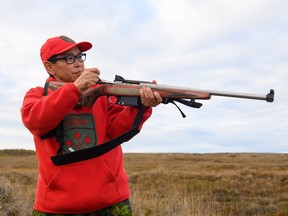
A Canadian Ranger handles the military's new C-19 rifle. Shortly after the rifles were sent to Ranger units, red dye from the stocks started appearing on the hands of the soldiers when the weapons were exposed to wet conditions.
A Canadian Ranger handles the military's new C-19 rifle. Photo by CORPORAL MARC-ANDRÉ LECLERC /CANADIAN ARMED FORCES
 
The Canadian Department of National Defence signed a contract with Colt Canada for $32.8 million in cost for 7,000 C-19 rifles to be provided to the Canadian Rangers; servicemen/women of aboriginal stock living in remote, isolated coast communities across Canada, and operating as a component of the Canadian Armed Forces. They have specific assigned tasks to fulfill, including:
 
  • Canadian Rangers conduct and provide support to sovereignty operations such as reporting suspicious and unusual activities as well as collecting local information of military significance.
  • Canadian Rangers conduct and provide assistance to CAF domestic operations such as providing local knowledge and expertise (i.e. advice and guides) or participating in search and rescue operations.
  • Canadian Rangers maintain a CAF presence in the local community through instruction, mentoring, and supervision of youth in the Junior Canadian Rangers Program.
  •  
    The arms they had originally been supplied with were long outdated and badly in need of replacement. With their usual lack of efficiency in defence procurement, the 7,000 C-19 rifles supplied to the Rangers by National Defence turned out to be defective. Distributed to the Ranger units in 2018, reports from the Rangers indicated that the stocks on the rifles were incapable of surmounting problems with moisture, with the wood stock laminations not only bleeding colour but peeling off their lamination.
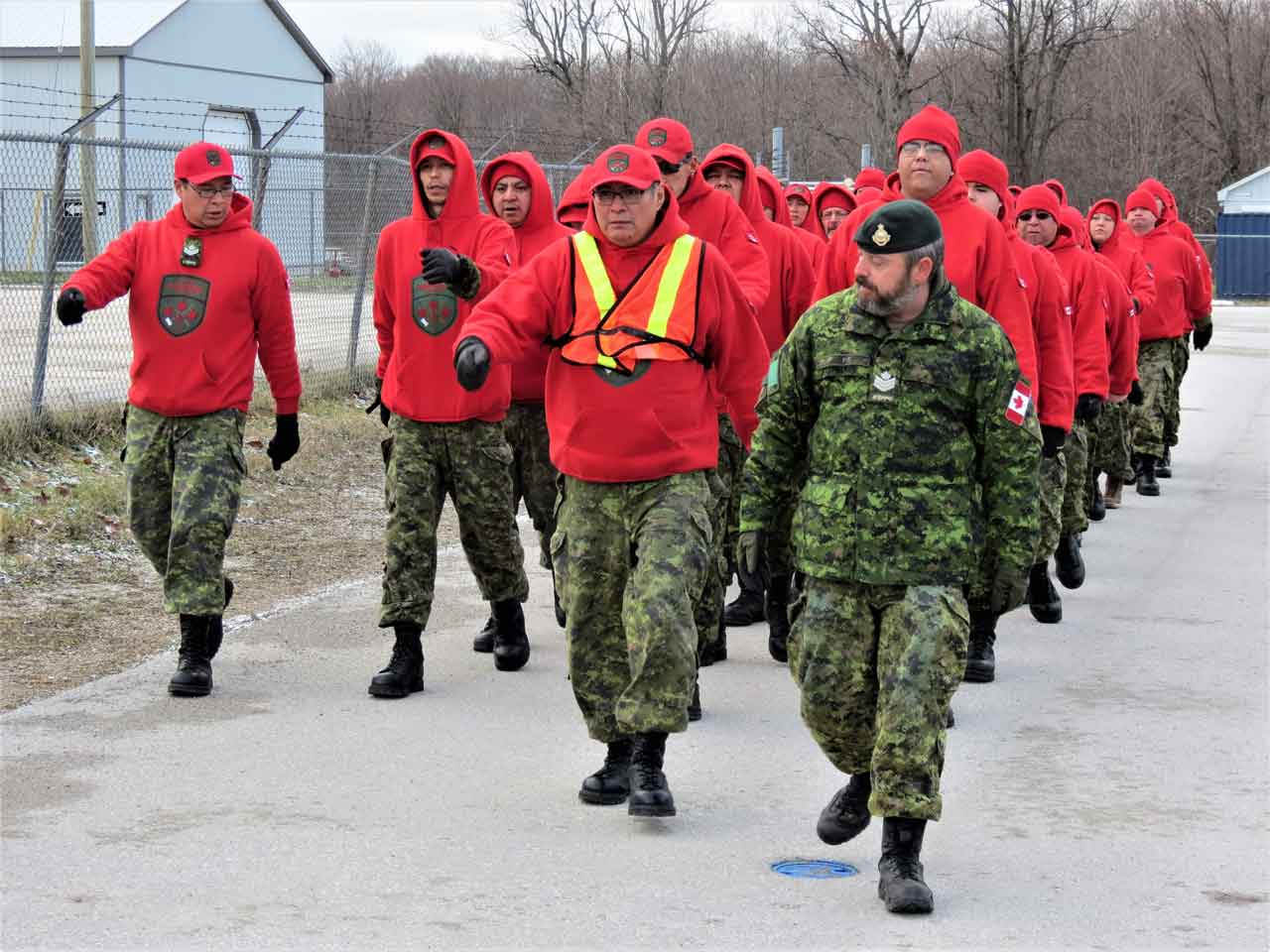
     
    Canadian Rangers Complete Challenging Training Course - NetNewsLedger

    Canadian Rangers Training Course  DND

    In handling the new rifles it became almost immediately apparent that their use in rain caused military personnel to see their hands lathered in red dye. The original contract stipulated that the rifles had to withstand extreme Arctic cold, including moderate-to-high humidity in coastal and forested areas of the country, where in fact the Rangers are tasked to operate. The one-year warranty that came with the bolt-action rifles has long since expired.
     
    Despite which, the procurement arm of the Department of National Defence has turned to Colt Canada to expedite repairs to the weapon ... at additional taxpayers' cost. The original contract was for a weapon that was meant to be an improved version of the SAKO Finland, Tika T3 rifle. Which itself replaced the Lee Enfield .303 rifle, the mainstay weapon used since 1947 by the Canadian Rangers.
     
    Now, after having been in circulation and use by the Rangers since 2018, replacement stocks for the C-19 will start to be delivered by the end of this year, when installation of the new stocks replacing the substandard originals will take place. So, if Ukraine has not taken up the offer to take possession of the 1947-era Lee Enfields, presumably they will be returned in the interim to the Rangers, while awaiting rectification of their brand-new, faulty replacements. 
     
    DND records, obtained under the 'freedom of information' act, reveal through internal documents that Rangers had issued complaints during Initial Operational Capability training of the C-19s that failed to live up to its contract specifications, despite the disclaimer by DND spokesperson Tetreault. After a brief exposure to moisture, the problems with the faulty stocks were identified. Problems with the main firing component on the rifles were also documented at that time.
     
    https://www.canada.ca/en/ombudsman-national-defence-forces/education-information/caf-members/career/canadian-rangers/_jcr_content/par/mwspanel/panPar/mwscolumns/colpar-1/mwsadaptiveimage/image.img.png/1734026133056.png
    "Obviously from a health and safety perspective having dye released onto the skin is not a good situation", remarked Arthur Hall in 2018, with the Department's small arms program, in respect to the faulty C-19, making it obvious that issues with the rifle saw discussions occurring among DND officials. Complaints continued to arrive from Ranger units when the stocks began cracking. One officer assigned to the Rangers made note of having taken the new rifle out in the rain for a mere five minutes, then returning indoors.
     
    "I held the weapon for approximately for 5 - 10 minutes and it started to stain my hand", wrote Capt. T.N. Collier, after noticing the new weapon was dripping red dye after his return indoors. Soldiers were vocal about the problem they were faced with, believing the Canadian Army and DND leadership had been misleading the public about the weapon's worthiness and how well taxpayer funding was being allocated in needed updates to Armed Forces weapons usefulness.
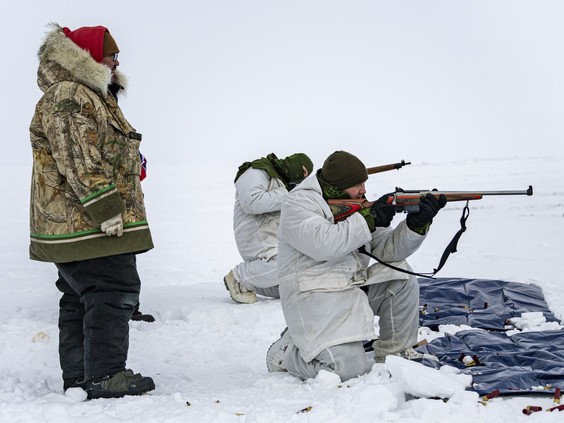
     
    https://smartcdn.gprod.postmedia.digital/ottawacitizen/wp-content/uploads/2026/03/20230304vcp0004d017-1-_295598381-1.jpg?quality=90&strip=all&w=564&type=webp&sig=rvNpy8Mz_asJCbWGi8fhrg
    The Canadian military will be receiving new stocks for its ranger rifles after the old ones bled red dye. (Photo submitted by Canadian Forces) Photo by CANADIAN FORCES
    "The issue is that when exposed to moisture the red dye in the stock will run, and will discolour the hands of the user."
    "This is also an indication that the stocks are not properly protected from the elements."
    Luke Foster, Directorate of Soldier Systems Program Management 

    Labels: , , , , ,

    Thursday, June 29, 2023

    Defending the Arctic

    "The importance of these issues has been rising steadily over time, due to increased access to the region, competing interests, and changing geopolitical dynamics."
    "Canada's armed forces are highly skilled and fiercely dedicated, but they remain below complement, under-resourced and stretched to the limit. They deserve our support."
    "More than ten [previously abandoned Soviet-era far-north military bases] are operational. Nuclear-powered submarines are stationed there."
    "Russia also has an arsenal of hypersonic missiles, which combine the maneuverability of cruise missiles with the range and speed of intercontinental ballistic missiles."
    "Our report emphasizes the urgency of procuring and activating these new defensive systems."
    Senator Tony Dean, committee chair, Senate national security, defence and veterans affairs committee, Parliament of Canada

    "The importance of the Arctic in military defence and security cannot be overstated."
    "However, it is equally important to note that while the Arctic is viewed as a strategic location, it is also my home and the home of the Inuit people."
    "During committee visits to Inuvik and Iqaluit, we were reminded of the tangible presence that the military once had in these communities, and the desire for their return."
    "The Canadian Rangers and Coast Guard remain visible connections to the military, yet the pervasive challenges posed by the vastness, elements and obstacles persist."
    Senator Margaret Dawn Anderson
    Master Cpl. Enoki Irqittuq from 1 Canadian Ranger Patrol Group is pictured in Nunavut  (Sergeant JF LauzĂ©/Canadian Forces Combat Camera)
     
    A fact-finding mission that took place in 2022 has resulted in a report recently issued and under discussion, focusing on the state of Arctic defence. The Senate national security, defence and veterans affairs committee found that much work must be undertaken to meet the challenges reflecting contemporary geopolitical conflict. These link to the issues that persist regarding Canada's and NORAD's capacity to monitor still-subtle but very real aggression from Russia, from across the Arctic Circle.

    Sites in Canada's far north visited by the study group included Iqaluit and Cambridge Bay in Nunavut, Tuktoyaktuk and Inuvik in North West Territory. There they spoke extensively with military and government officials as well as local Indigenous leaders and members of their communities. The condition of Canada's defence forces is rather grim, stretched as thin as they can be without snapping. The Canadian Army is vastly understaffed. Its Navy is short of vessels as is its Air Force, with current stock at the end of their useful life.
     
    Initiatives like Operation UNIFIER in support of Ukraine's military defence against the Russian invasion, along with Canada's battle group in Latvia under NATO and the deployment of an additional warship to the Indo-Pacific through Operation HORIZON -- at the same time being called on domestically to aid in handling the unprecedented wildfire season throughout Canada, has drained its military reserves.

    Senators observed Canadian military commanders at work "seamlessly" with their American counterparts during their tour of NORAD headquarters in Colorado Springs. NORAD is described as the "world's only binational military command structure". NATO's northern flank has come under increased scrutiny in relation to ongoing Russian aggression. The longer navigation seasons as a result of the dwindling ice packs have sparked concern among Arctic nations, with northern defence back on the agenda.

    Chief of Defence Staff General Wayne Eyre has warned that Russia is in the process of reoccupying far north military bases abandoned at the end of the Cold War. Those old war bases have undergone extensive upgrades in refurbishment in preparation for reestablishing them as actionable military bases. Serious questions have arisen whether NORAD has the required capacity to monitor and thwart emerging threats that require modern space-based surveillance systems in operation alongside ground-based, over-the-horizon radar networks.
     
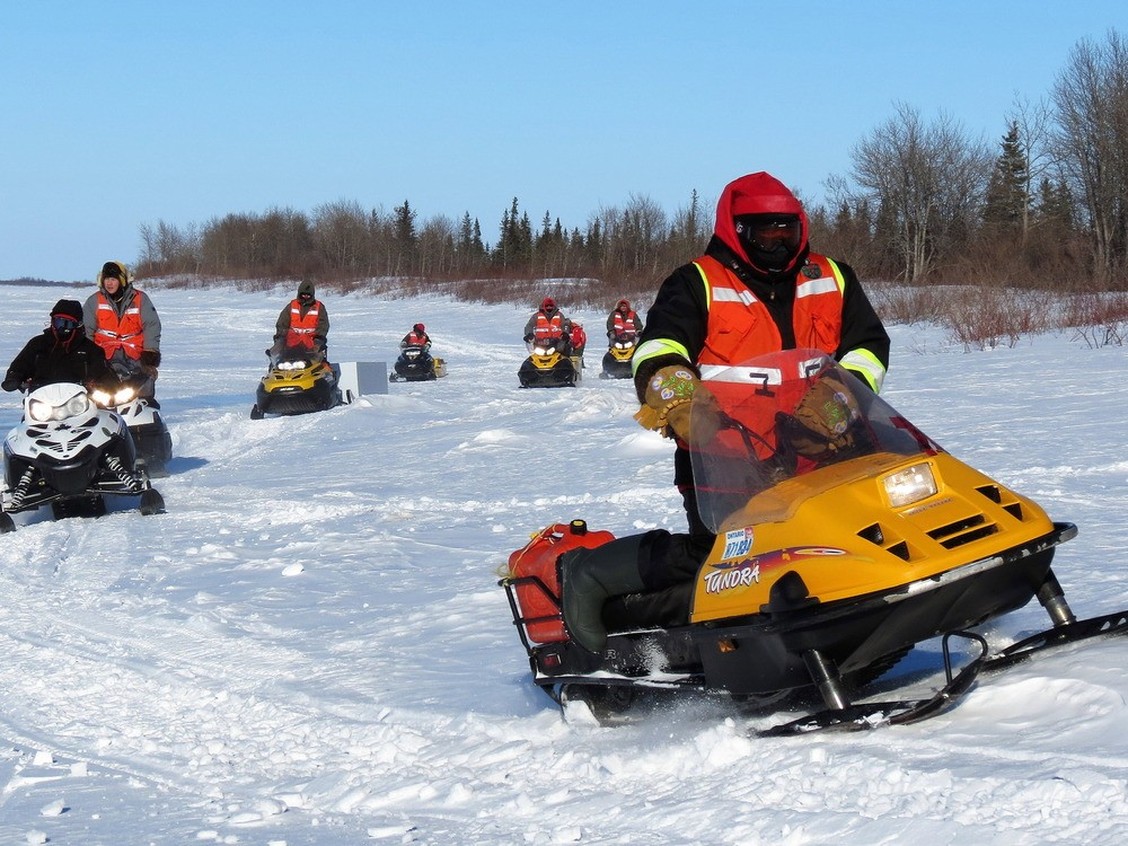
    https://smartcdn.gprod.postmedia.digital/ottawacitizen/wp-content/uploads/2023/03/0110-td-a3-rangers1-td.jpg?quality=90&strip=all&w=1128&type=webp&sig=WrWbv-k7imFSjTsYdq8WZg
    Canadian Rangers are seen here conducting search and rescue training near Moose Factory, a community in Northern Ontario, in 2017. Photo by Sgt. Peter Moon 
     
    Senator Margaret Anderson, who was raised in Tuktoyaktuk, her community part of the now-dismantled Distant Early Warning radar station of the Cold War era, states the importance of including local, Indigenous voices in northern defence must not be overlooked. Tuktoyaktuk's ports are seeing increased traffic, with current resources making it impossible to track those aboard incoming ships, representing a serious national shortcoming for security purposes; increased visits result in opportunities for espionage.

    Issues of note, she pointed out, include a lack of basic and secure infrastructure and continuing reliance on outdated equipment, and even that is frequently in short supply. China's increasing interest in the north, along with Beijing's growing warmth with Moscow represented another issue the committee drew attention to. "We have to keep an eye on this. China's 'belt-and-road' infrastructure funding initiatives might eventually emerge as a competitor in the absence of an accelerated homegrown Arctic investment strategy", pointed out Senator Dean.

    The North Sea provides handy transport routes east for Russia which currently draws about 80 percent of its natural gas from its Arctic gas fields. The impacts of climate change on the north -- melting permafrost, receding shorelines and deteriorating infrastructure -- pointed out the senator, pose immense challenges.
     
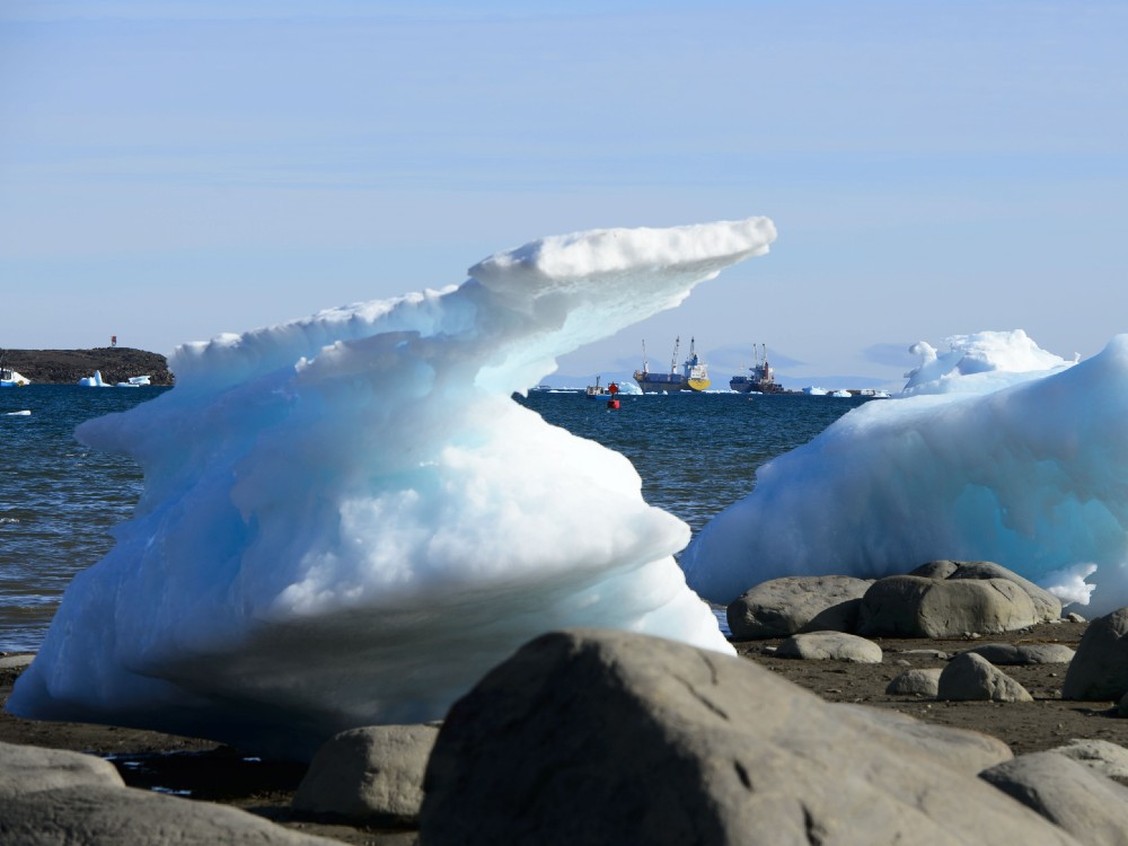
    https://smartcdn.gprod.postmedia.digital/nationalpost/wp-content/uploads/2023/06/Arctic.jpg?quality=90&strip=all&w=1128&h=846&type=webp&sig=tdUi-FIEu2HQb3dNOHikYA
    "Our relatively low population density up there, it's not inconceivable that our sovereignty may be challenged."
    "We've got to have capabilities in place that can protect that sovereignty, going decades into the future."
    General Wayne Eyre, Chief of Defence Staff

    Labels: , , , , ,

     
    ()() Follow @rheytah Tweet