Ruminations

Blog dedicated primarily to randomly selected news items; comments reflecting personal perceptions

Thursday, April 16, 2026

Guard It Or Lose It -- Canadian Arctic

"These activities [Russian and Chinese] rarely trigger formal defence responses, but over time they reshape the strategic environment."
"Canada's current security architecture is not strongly equipped to counter grey-zone activity." 
"[While] Arctic ice melts at an unprecedented pace, the region is opening up. Navigation windows are getting longer, leading to increased activity by research vessels, ice-capable survey ships, cable-mapping operations, and autonomous underwater systems."
"[Russia and China] are rapidly advancing their Arctic-based drone capabilities, outpacing NATO."
Sweekriti Pathak, fellow, Macdonald-Laurier Institute think tank 
https://www.canada.ca/en/ombudsman-national-defence-forces/education-information/caf-members/career/canadian-rangers/_jcr_content/par/mwspanel/panPar/mwscolumns/colpar-1/mwsadaptiveimage/image.img.png/1734026133056.png
The Canadian government issued a February announcement of up to $40-billion investment in Arctic defence infrastructure. This is part of the Liberal government's pledge to increase defence spending to reach the level that NATO members were informed to be the latest expectation for member-states of the Western military alliance, from 2% of national GDP to a new high of 5%. Arctic defence falls into that general commitment for Canada.
 
In line with that commitment and increased military infrastructure spending to meet the target, the Canadian Armed Forces' intention is to operate in the Arctic on a more permanent basis, rather than as has been the norm to the present, only during warmer months. To that end, troops are expected to practice military operations in the frozen north during its iciest periods, and to accustom themselves to operating in sub-zero conditions on a prolonged basis.
 
https://i.cbc.ca/ais/1.7632874,1757708951000/full/max/0/default.jpg?im=Crop%2Crect%3D%280%2C0%2C4032%2C2787%29%3BResize%3D796
Canadian soldiers prepare for a surveillance mission in Pond Inlet, Nunavut, as part of the annual Operation Nanook on Sept. 6. The exercise sees the small team inserted onto a remote mountain top with no additional support, honing their survival skills for multiple days. (David Common/CBC)
 
"Canada must guard against foreign research in the Canadian Arctic and North that is dual-use -- having both research and military applications", alerted a statement by Global Affairs Canada. Canada has long neglected its Arctic geography, and but for an Indigenous battery of Northern Rangers, poorly equipped by Canada, which is dedicated to acting as security scouts guarding Canadian territory, the government has not formally made it a priority to protect its northern assets. 
 
Both Russia, which geographically has a presence in the Arctic, and China, which has not, but is preparing for shipping opportunities for the future through the fast-melting sea ice -- hitherto unused in view of winter sea ice making passage challenging -- have been aggressively pursuing their objectives in the Arctic. Russia has committed to refitting and manning elong-neglected and abandoned military bases in the Russian Arctic, stationing troops there, asserting sovereignty. 
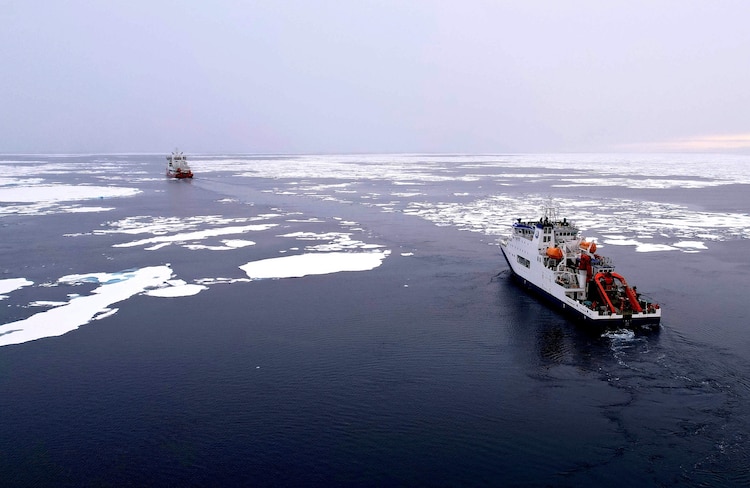
 
https://i.abcnewsfe.com/a/89670b34-0f76-4166-9470-ca5187e311ad/arctic-gty-er-251125_1764110138930_hpMain.jpg?w=750
A drone photo shows China's research icebreaker Xuelong 2 breaking the ice to lead the way in the Arctic Ocean, Aug. 5, 2025.  Liu Shiping/Xinhua via Getty Images
 
Both countries have established an active and alert presence in the Arctic, on the long-held theory that absence is abandonment, and presence is a deterrent to any challengers. Their sustained presence focuses on data collection and development of infrastructure. Both Russia and China have keen interests in future exploitation possible in mining the seabed of its mineral and energy resources. Both have invested in Arctic-condition ships, capable of cutting through thick sea ice.
 
Russia has built nuclear icebreakers that go along with revitalized bases along sea lanes key to their interests, that include activities along the Northern Sea Route through Russia's Arctic coast, with a focus on extensive seabed and hydrographic surveys to identify underwater features; depth, topography and hazards in the interests of safe navigation and marine construction plans. Canada is just finally waking up to the necessity to do the same, initiated by the previous Conservative government.

https://images.jpost.com/image/upload/f_auto,fl_lossy/q_auto/c_fill,g_faces:center,h_720,w_1280/716579
The Israeli Elbit Systems Ltd. Hermes 900 unmanned aerial vehicle (UAV) flies over the airbase during a media presentation in the central Swiss town of Emmen
(photo credit: REUTERS)
 
Canada recently took possession of a sophisticated and powerful new Hermes 900 StarLiner drone, capable of multiple tasks such as monitoring the North for oil spills and surveys of ice conditions, part of the Department of National Defence plan to strengthen Canada's Arctic defences. Built by Israel's Elbit Systems, the drone is a medium-altitude, remotely piloted device with a range of over 1,400 nautical miles, equipped with radar and camera sensors. 
 
The drone is meant to fill the gaps between satellites and manned aircraft in support of maritime surveillance for oil spills, ice mapping, shipping monitoring, search and rescue, and environmental protection. Currently, the Canadian Coast Guard has in operation six icebreakers used in the Arctic from June to November to advance maritime safety and security. New icebreakers will be designed to operate during the months heretofore left untended, featuring greater icebreaking capacities. 
 
https://www.thearcticinstitute.org/wp-content/uploads/2023/03/Chinese-Coast-Guard-vessel_icy-Russian-waters-2048x908.jpg.webp
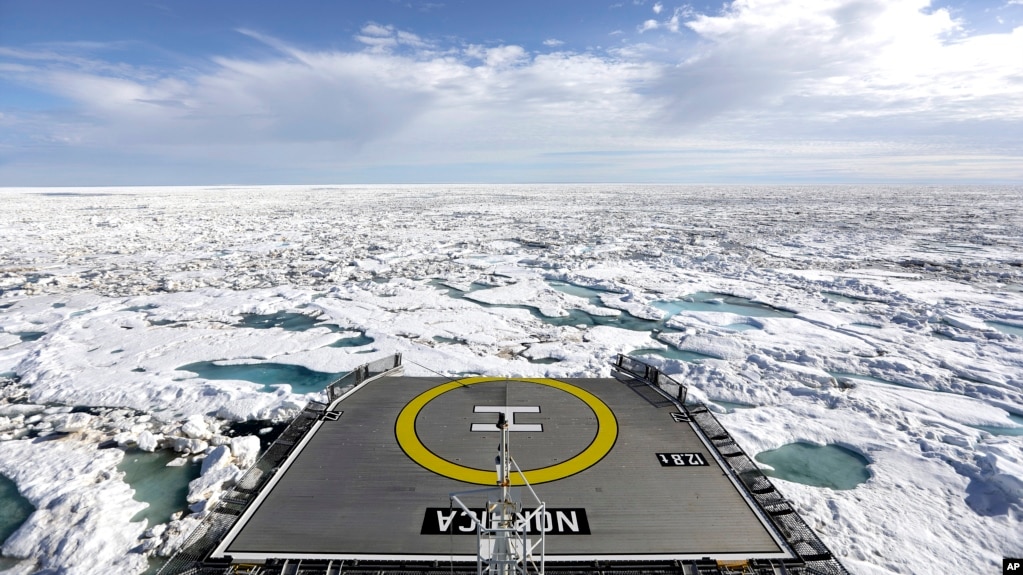
Chinese Coast Guard vessels traversing icy waters during the joint exercise with Russia in 2024. Photo: China Coast Guard
 

Labels: , , , , , ,

Saturday, September 21, 2024

Canadian Arctic -- Defend It Or Lose it

"I look forward to seeing those actions [Canadian Liberal government promises of new fighter jets and submarines] but there's not a history of [Canada] taking those actions."
"There is no sense of urgency, for the most part, from the leadership of the government of Canada. It is easy to say we're going to buy F-35 [fighter jets], we're going to buy submarines. But with that comes a lot of requirements to build infrastructure, set up logistics pipelines, set up training pipelines."
"And my question is, is Canada ready to do that?"
U.S. (ret) General Glen Vanherck, former commander NORAD
 
"[Alliances like NORAD and NATO are particularly important with authoritarian leaders like Russia's Vladimir Putin] on the prowl [but Canada's part in those groups is] sorely lacking."
"You have to contribute your fair share and, quite frankly, Canada, over the last nine to ten years has not done so."
"There's one issue that seems to galvanize and unify [U.S.] Republicans and Democrats, both in the House of Representatives and the Senate. That is their concern and dismay over Canada's paltry contributions to international peace and security and the unacceptable -- and I'll use that word again, unacceptable -- levels of money spent on defence capabilities."
"[The Army is short 16,000 personnel, while] 70 percent of the army's vehicles don't work because they're either waiting for spare parts or they don't have the mechanics to fix them."
"Half our Navy's fleet, their ships can't actually set sail because they don't have the sailors or the spare parts to get them out of port."
Retired Canadian General Andrew Leslie, former Liberal MP
 
"[The U.S. Defense Department] is focused on fighting the away game, hamstringing the commander of NORAD, U.S. Northern Command [USNORTHCOM], and belying the vulnerability of our homeland."
"As the Middle East missions evolved -- ISIS, al Qaeda, the Taliban, whatever it was -- Russia began flexing its muscles with each and every incursion into the air defence identification zones of Canada and the United States."
"They approach our coastlines from all sides. They still do. And the most recent incursions -- include Chinese aircraft along with them."
"I have long said, where you see the intersection of Russian and Chinese interests, especially in military cooperation, we should be worried."
Retired Major General Scott Clancy, formerly NORAD director of operations
https://i.cbc.ca/1.3776785.1678031639!/fileImage/httpImage/image.jpg_gen/derivatives/16x9_780/canada-sovereignty.jpg
A Canadian part-time military volunteer drives over the frozen sea past an abandoned landing craft off Cornwallis Island, Nunavut on April 9, 2006. (David Ljunggren/Reuters)
 
A Mackenzie Institute forum on security in the Arctic taking place in Toronto brought together speakers all of whom contended Canada has a requirement to expeditiously increase lagging investment in defence, or risk seeing its control slip away of the Canadian Far North, leaving it in the hands of foreign adversaries. The Canadian Arctic comprises about 40 percent of Canada's geography. A military presence along with transportation infrastructure and resource development benefiting local Indigenous populations would counter increasing incursions by Russia and China. 

Alison LeClaire, one-time Canadian ambassador to Moscow, and before that one of the country's recognized Arctic officials, feels that Russian interest is primarily an ambition to exploit the Arctic for economic gain, to take command of its natural resources. While Canada derives less than one percent of its GDP from its Arctic, Russia counts upon 20 percent of the GDP from its part of the Arctic: "The reality is that everybody wants into the Arctic, and it's ours to protect. We need to stand up for ourselves and be present."

If there was one thing that all present agreed upon, it was that the current Liberal government under Justin Trudeau as prime minister will commit to nothing more than lip service. Stating that in its spring defence policy the government would acquire new fighter jets and submarines, yet no one has any expectation that these are any more than vague promises. 

Leona Alleslev, a former air force officer, former MP, felt that Canadian citizens, companies and think tanks have an obligation to strenuously support "nation building" in the country's north to protect it. Concerns that as climate change makes the Arctic more navigable for ships move countries like Russia with its recently rebuilt Arctic bases, and China, which represents itself as a "near-arctic" nation, albeit thousands of kilometres' distance, send military vessels and aircraft into the region. Incursions meant to deliver a message provocative challenging North America.

American airspace in Alaska can be reached within a half-hour by Russian planes, while in reverse the closest F-22 Raptor American fighter jet, would take two hours to arrive full-speed, at the same spot. The idea that Russia is a "paper tiger" given its long attrition-type conflict with Ukraine is misguided, according to General Vanherck. "In my three and a half years in command of NORAD and NORTHCOM, what I saw was exactly the opposite."

"Strategically, they deplored more, they deployed more bombers, they deployed more submarines.  They're still very capable, with the world's largest nuclear arsenal and hypersonic weapons." Others argued that Russia or China would actually attempt to invade the Canadian Arctic or otherwise attack North America, to be unlikely. Given that their goal is canted toward imposing themselves in the region with resource development and infrastructure such as ports and roads. 

Narratives from Indigenous organizations and other authorities in the North, report being offered major funding from Chinese interests, commented Mackenzie president Brian Hay.
 
https://gdb.voanews.com/a4543e69-52ba-4059-8d97-e1dfc0f98aa9_cx0_cy8_cw0_w1023_r1_s.jpg
A Finnish icebreaker sails through sea ice floating on the Victoria Strait along the Northwest Passage in the Canadian Arctic Archipelago, July 21, 2017. The U.S., Canada and Finland on July 11, 2024, announced they will build up their icebreaker fleets.
 
"The actions that are ongoing are for influence -- Russian influence, Chinese influence."
"They're seeking to change international haw norms, get after resources through claims that put them in a better position globally, economically, diplomatically, than they are today."
"This is about influence and changing the world order."
General Glen Vanherck
https://d.newsweek.com/en/full/2474292/russian-ballistic-missile-submarine.webp?w=790&f=4abac35108b873dc773dd86fc2ef48ae
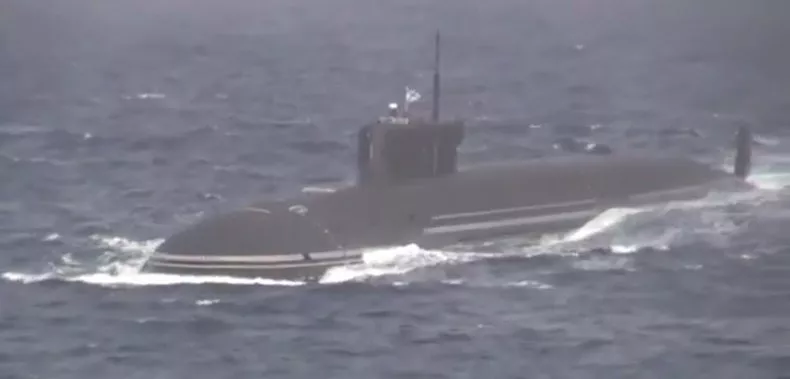
In this photo taken from video released by the Russian Defense Ministry on September 16, Russian Borei-class ballistic missile submarine Imperator Aleksandr III sails toward the Rybachiy submarine base on the Kamchatka Peninsula. Russian defense ministry


Labels: , , , ,

Thursday, June 29, 2023

Defending the Arctic

"The importance of these issues has been rising steadily over time, due to increased access to the region, competing interests, and changing geopolitical dynamics."
"Canada's armed forces are highly skilled and fiercely dedicated, but they remain below complement, under-resourced and stretched to the limit. They deserve our support."
"More than ten [previously abandoned Soviet-era far-north military bases] are operational. Nuclear-powered submarines are stationed there."
"Russia also has an arsenal of hypersonic missiles, which combine the maneuverability of cruise missiles with the range and speed of intercontinental ballistic missiles."
"Our report emphasizes the urgency of procuring and activating these new defensive systems."
Senator Tony Dean, committee chair, Senate national security, defence and veterans affairs committee, Parliament of Canada

"The importance of the Arctic in military defence and security cannot be overstated."
"However, it is equally important to note that while the Arctic is viewed as a strategic location, it is also my home and the home of the Inuit people."
"During committee visits to Inuvik and Iqaluit, we were reminded of the tangible presence that the military once had in these communities, and the desire for their return."
"The Canadian Rangers and Coast Guard remain visible connections to the military, yet the pervasive challenges posed by the vastness, elements and obstacles persist."
Senator Margaret Dawn Anderson
Master Cpl. Enoki Irqittuq from 1 Canadian Ranger Patrol Group is pictured in Nunavut  (Sergeant JF LauzĂ©/Canadian Forces Combat Camera)
 
A fact-finding mission that took place in 2022 has resulted in a report recently issued and under discussion, focusing on the state of Arctic defence. The Senate national security, defence and veterans affairs committee found that much work must be undertaken to meet the challenges reflecting contemporary geopolitical conflict. These link to the issues that persist regarding Canada's and NORAD's capacity to monitor still-subtle but very real aggression from Russia, from across the Arctic Circle.

Sites in Canada's far north visited by the study group included Iqaluit and Cambridge Bay in Nunavut, Tuktoyaktuk and Inuvik in North West Territory. There they spoke extensively with military and government officials as well as local Indigenous leaders and members of their communities. The condition of Canada's defence forces is rather grim, stretched as thin as they can be without snapping. The Canadian Army is vastly understaffed. Its Navy is short of vessels as is its Air Force, with current stock at the end of their useful life.
 
Initiatives like Operation UNIFIER in support of Ukraine's military defence against the Russian invasion, along with Canada's battle group in Latvia under NATO and the deployment of an additional warship to the Indo-Pacific through Operation HORIZON -- at the same time being called on domestically to aid in handling the unprecedented wildfire season throughout Canada, has drained its military reserves.

Senators observed Canadian military commanders at work "seamlessly" with their American counterparts during their tour of NORAD headquarters in Colorado Springs. NORAD is described as the "world's only binational military command structure". NATO's northern flank has come under increased scrutiny in relation to ongoing Russian aggression. The longer navigation seasons as a result of the dwindling ice packs have sparked concern among Arctic nations, with northern defence back on the agenda.

Chief of Defence Staff General Wayne Eyre has warned that Russia is in the process of reoccupying far north military bases abandoned at the end of the Cold War. Those old war bases have undergone extensive upgrades in refurbishment in preparation for reestablishing them as actionable military bases. Serious questions have arisen whether NORAD has the required capacity to monitor and thwart emerging threats that require modern space-based surveillance systems in operation alongside ground-based, over-the-horizon radar networks.
 
https://smartcdn.gprod.postmedia.digital/ottawacitizen/wp-content/uploads/2023/03/0110-td-a3-rangers1-td.jpg?quality=90&strip=all&w=1128&type=webp&sig=WrWbv-k7imFSjTsYdq8WZg
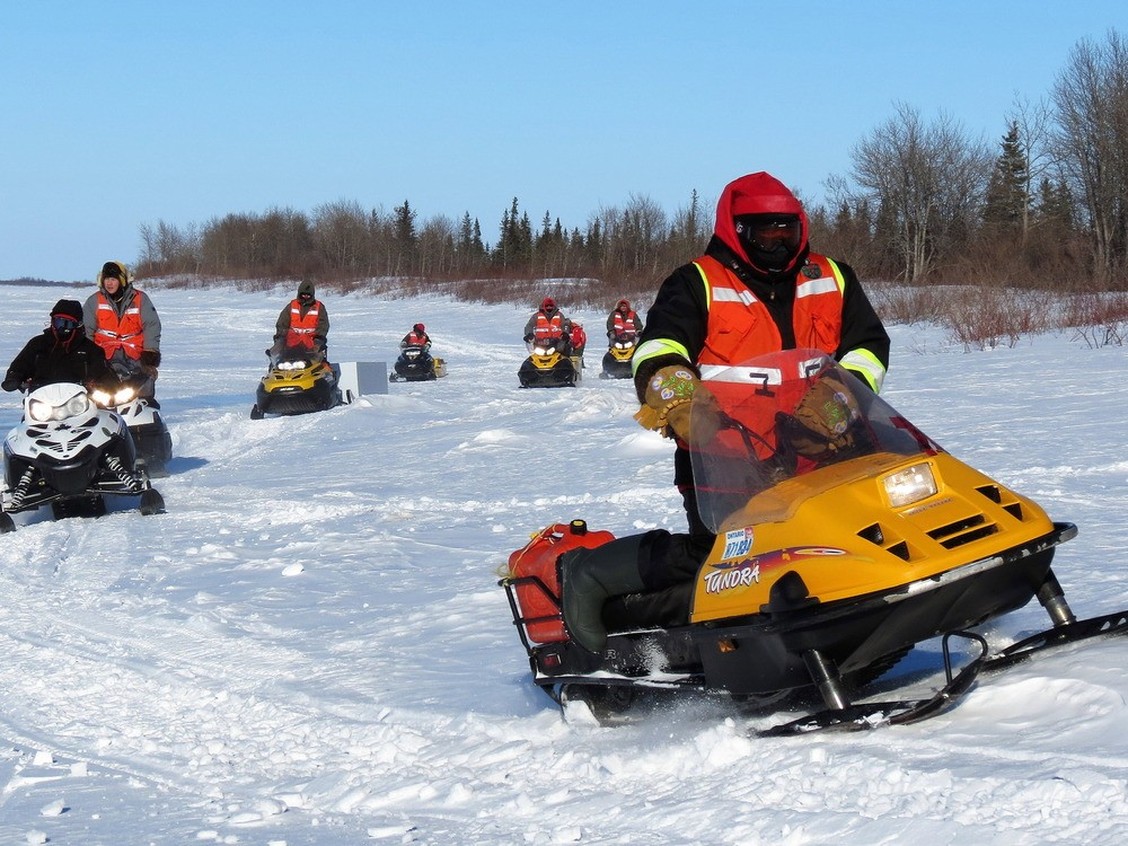
Canadian Rangers are seen here conducting search and rescue training near Moose Factory, a community in Northern Ontario, in 2017. Photo by Sgt. Peter Moon 
 
Senator Margaret Anderson, who was raised in Tuktoyaktuk, her community part of the now-dismantled Distant Early Warning radar station of the Cold War era, states the importance of including local, Indigenous voices in northern defence must not be overlooked. Tuktoyaktuk's ports are seeing increased traffic, with current resources making it impossible to track those aboard incoming ships, representing a serious national shortcoming for security purposes; increased visits result in opportunities for espionage.

Issues of note, she pointed out, include a lack of basic and secure infrastructure and continuing reliance on outdated equipment, and even that is frequently in short supply. China's increasing interest in the north, along with Beijing's growing warmth with Moscow represented another issue the committee drew attention to. "We have to keep an eye on this. China's 'belt-and-road' infrastructure funding initiatives might eventually emerge as a competitor in the absence of an accelerated homegrown Arctic investment strategy", pointed out Senator Dean.

The North Sea provides handy transport routes east for Russia which currently draws about 80 percent of its natural gas from its Arctic gas fields. The impacts of climate change on the north -- melting permafrost, receding shorelines and deteriorating infrastructure -- pointed out the senator, pose immense challenges.
 
https://smartcdn.gprod.postmedia.digital/nationalpost/wp-content/uploads/2023/06/Arctic.jpg?quality=90&strip=all&w=1128&h=846&type=webp&sig=tdUi-FIEu2HQb3dNOHikYA
"Our relatively low population density up there, it's not inconceivable that our sovereignty may be challenged."
"We've got to have capabilities in place that can protect that sovereignty, going decades into the future."
General Wayne Eyre, Chief of Defence Staff

Labels: , , , , ,

 
()() Follow @rheytah Tweet