Ruminations

Blog dedicated primarily to randomly selected news items; comments reflecting personal perceptions

Friday, March 21, 2025

Liberal Government of Canada Bypassing Canadian for Foreign Technology

"It was a slap in the face. We seem to have a problem in this country buying our own, made-in-Canada solutions. It's a lack of national pride."
"DND [Department of National Defence] thinks Canadian companies should be happy with secondary work, doing logistics or setting up antennas."
Dipak Roy, Chairman, D-TA Systems 
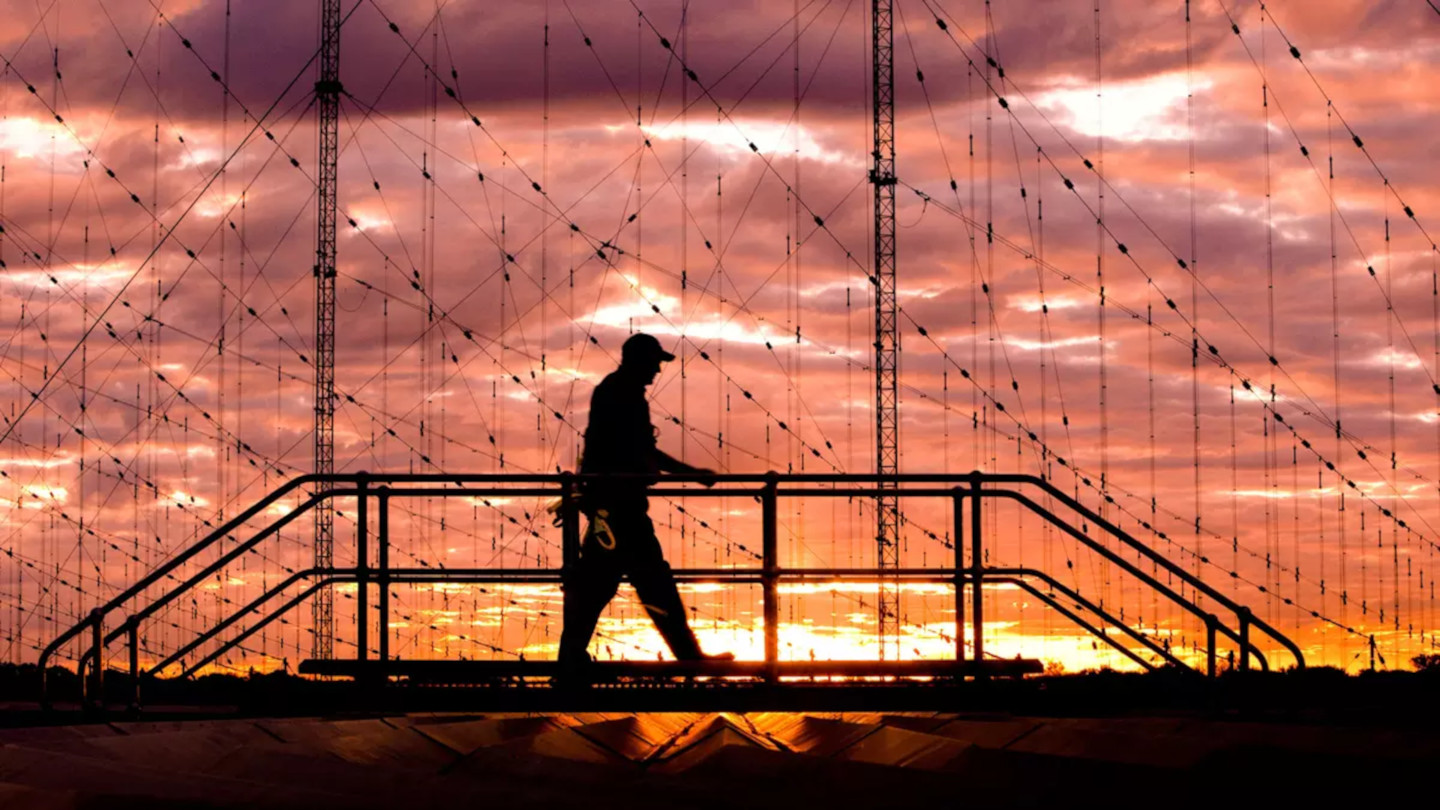
https://www.twz.com/wp-content/uploads/2025/03/canada-australia-over-the-horizon-radar-partnership.jpg
BAE Systems
 
Despite having worked on a number of contracts for the Canadian Department of National Defence, mostly preparatory work for the longer vision of an over-the-hoirizon-radar project for which D-TA received funding for the development of such a system, Mr. Roy is disturbed that his firm had not been consulted in any meaningful way by the very Canadian government that had promoted D-TA, speaking of it as a success story in its development of unique industrial technologies.
 
With 50 employees, D-TA Systems delivered a working radar to Defence Research and Development Canada, the DND science agency based in the national capital, Ottawa. Established in 2007, D-TA Systems was involved in defence projects in the United States, Canada and other NATO nations, as well as Japan. Working on over-the-horizon radar since 2011 for various DND and U.S. military projects, it has not only the leading technology, but the experience in installing it. 

The actual initial capability for the new dedicated system was with the firm, for which DND spent $30 million. Accordingly a number of systems have been delivered. The Liberal government's decision to contract with an Australian company for a new radar system for a recently announced $6-billion project for the Department of National Defence over-the-horuzon radar system left Mr. Roy in disbelief, since his company has been a leader in producing such systems for DND and companies who supply the U.S. military.
 
The March 18 announcement by Prime Minister Mark Carney that a system to detect incoming missiles over the Arctic was planned, and that the chosen supplier would be in Australia, along with the British firm BAE to provide the technology, made little practical sense to Mr. Roy who pointed out that the Australian government will own the intellectual property rights for the system whereas with D-TA radars, Canada itself has full control over such rights. 

Over-the-horizon radar has the capacity to conduct surveillance at far greater ranges than ordinary radar technology, extending the distance of capabilities by bouncing signals off the ionosphere -- a layer of the Earth's atmosphere that reflects radio waves. The minimum range for the radar is estimated to be 500 kilometres, the maximum range could be over 3,000 kilometres. The system's purpose is meant to track aircraft, missiles and surface ships.
 
Australia's defence minister lauded the contract which would significantly give advantage to the country's defence firms, while Australian media outlets point to the Canadian project as the largest defence export agreement in Australian history. Mr. Roy turns that around, stating that Canadian firms would be left with support work if they were lucky.
 
Among domestic aerospace and defence companies in Canada, frustration is growing that the Liberal government has passed over Canadian technology -- rather deciding to opt for foreign systems. The lack of Canadian-built systems on board the new Canadian Surface Combatant ships, originally to be outfitted with a command system developed in Canada called the CMS-330, failed to materialize when the Liberal government approved use of an American radar and command system, gifting the United States with full control over a critical capability for the Canadian fleet.
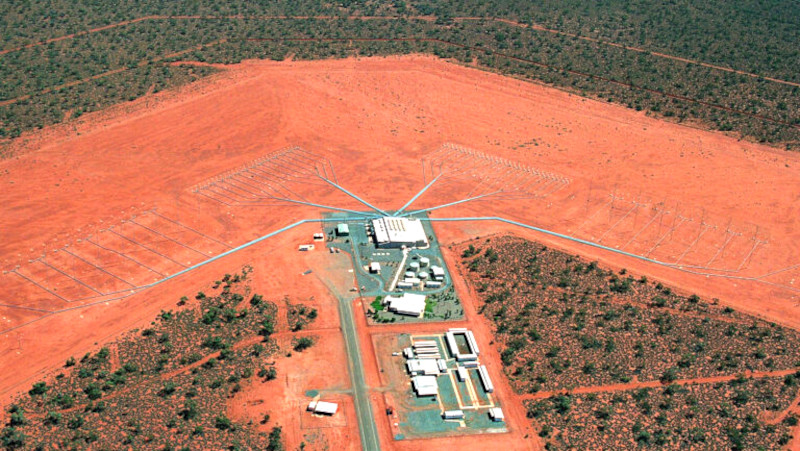
 
https://www.twz.com/wp-content/uploads/2025/03/jorn-transmitter-western-australia.jpg
An aerial view of a portion of Australia’s Jindalee Operational Radar Network (JORN). Australian Department of Defense

Labels: , , , ,

Saturday, September 21, 2024

Canadian Arctic -- Defend It Or Lose it

"I look forward to seeing those actions [Canadian Liberal government promises of new fighter jets and submarines] but there's not a history of [Canada] taking those actions."
"There is no sense of urgency, for the most part, from the leadership of the government of Canada. It is easy to say we're going to buy F-35 [fighter jets], we're going to buy submarines. But with that comes a lot of requirements to build infrastructure, set up logistics pipelines, set up training pipelines."
"And my question is, is Canada ready to do that?"
U.S. (ret) General Glen Vanherck, former commander NORAD
 
"[Alliances like NORAD and NATO are particularly important with authoritarian leaders like Russia's Vladimir Putin] on the prowl [but Canada's part in those groups is] sorely lacking."
"You have to contribute your fair share and, quite frankly, Canada, over the last nine to ten years has not done so."
"There's one issue that seems to galvanize and unify [U.S.] Republicans and Democrats, both in the House of Representatives and the Senate. That is their concern and dismay over Canada's paltry contributions to international peace and security and the unacceptable -- and I'll use that word again, unacceptable -- levels of money spent on defence capabilities."
"[The Army is short 16,000 personnel, while] 70 percent of the army's vehicles don't work because they're either waiting for spare parts or they don't have the mechanics to fix them."
"Half our Navy's fleet, their ships can't actually set sail because they don't have the sailors or the spare parts to get them out of port."
Retired Canadian General Andrew Leslie, former Liberal MP
 
"[The U.S. Defense Department] is focused on fighting the away game, hamstringing the commander of NORAD, U.S. Northern Command [USNORTHCOM], and belying the vulnerability of our homeland."
"As the Middle East missions evolved -- ISIS, al Qaeda, the Taliban, whatever it was -- Russia began flexing its muscles with each and every incursion into the air defence identification zones of Canada and the United States."
"They approach our coastlines from all sides. They still do. And the most recent incursions -- include Chinese aircraft along with them."
"I have long said, where you see the intersection of Russian and Chinese interests, especially in military cooperation, we should be worried."
Retired Major General Scott Clancy, formerly NORAD director of operations
https://i.cbc.ca/1.3776785.1678031639!/fileImage/httpImage/image.jpg_gen/derivatives/16x9_780/canada-sovereignty.jpg
A Canadian part-time military volunteer drives over the frozen sea past an abandoned landing craft off Cornwallis Island, Nunavut on April 9, 2006. (David Ljunggren/Reuters)
 
A Mackenzie Institute forum on security in the Arctic taking place in Toronto brought together speakers all of whom contended Canada has a requirement to expeditiously increase lagging investment in defence, or risk seeing its control slip away of the Canadian Far North, leaving it in the hands of foreign adversaries. The Canadian Arctic comprises about 40 percent of Canada's geography. A military presence along with transportation infrastructure and resource development benefiting local Indigenous populations would counter increasing incursions by Russia and China. 

Alison LeClaire, one-time Canadian ambassador to Moscow, and before that one of the country's recognized Arctic officials, feels that Russian interest is primarily an ambition to exploit the Arctic for economic gain, to take command of its natural resources. While Canada derives less than one percent of its GDP from its Arctic, Russia counts upon 20 percent of the GDP from its part of the Arctic: "The reality is that everybody wants into the Arctic, and it's ours to protect. We need to stand up for ourselves and be present."

If there was one thing that all present agreed upon, it was that the current Liberal government under Justin Trudeau as prime minister will commit to nothing more than lip service. Stating that in its spring defence policy the government would acquire new fighter jets and submarines, yet no one has any expectation that these are any more than vague promises. 

Leona Alleslev, a former air force officer, former MP, felt that Canadian citizens, companies and think tanks have an obligation to strenuously support "nation building" in the country's north to protect it. Concerns that as climate change makes the Arctic more navigable for ships move countries like Russia with its recently rebuilt Arctic bases, and China, which represents itself as a "near-arctic" nation, albeit thousands of kilometres' distance, send military vessels and aircraft into the region. Incursions meant to deliver a message provocative challenging North America.

American airspace in Alaska can be reached within a half-hour by Russian planes, while in reverse the closest F-22 Raptor American fighter jet, would take two hours to arrive full-speed, at the same spot. The idea that Russia is a "paper tiger" given its long attrition-type conflict with Ukraine is misguided, according to General Vanherck. "In my three and a half years in command of NORAD and NORTHCOM, what I saw was exactly the opposite."

"Strategically, they deplored more, they deployed more bombers, they deployed more submarines.  They're still very capable, with the world's largest nuclear arsenal and hypersonic weapons." Others argued that Russia or China would actually attempt to invade the Canadian Arctic or otherwise attack North America, to be unlikely. Given that their goal is canted toward imposing themselves in the region with resource development and infrastructure such as ports and roads. 

Narratives from Indigenous organizations and other authorities in the North, report being offered major funding from Chinese interests, commented Mackenzie president Brian Hay.
 
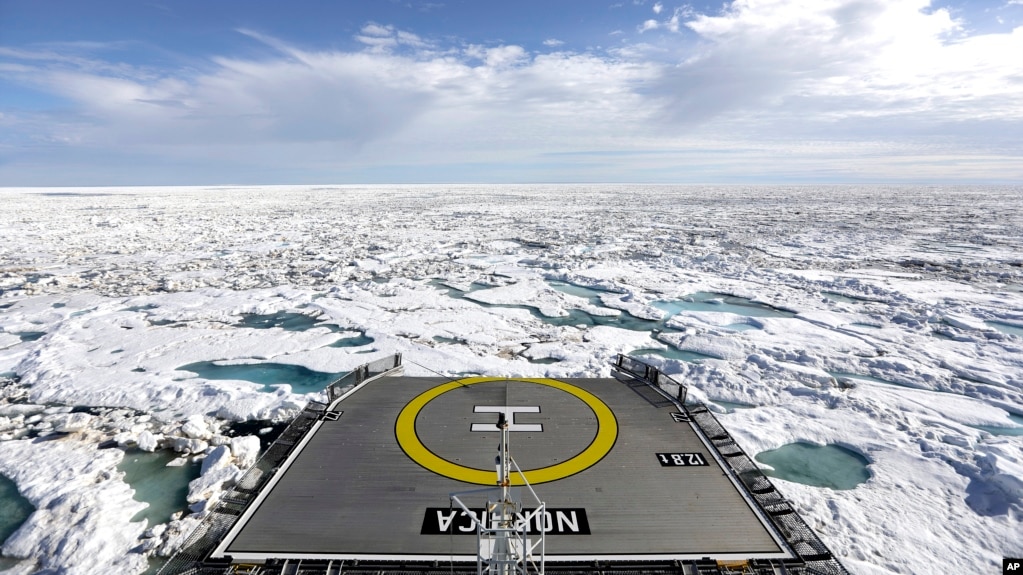
https://gdb.voanews.com/a4543e69-52ba-4059-8d97-e1dfc0f98aa9_cx0_cy8_cw0_w1023_r1_s.jpg
A Finnish icebreaker sails through sea ice floating on the Victoria Strait along the Northwest Passage in the Canadian Arctic Archipelago, July 21, 2017. The U.S., Canada and Finland on July 11, 2024, announced they will build up their icebreaker fleets.
 
"The actions that are ongoing are for influence -- Russian influence, Chinese influence."
"They're seeking to change international haw norms, get after resources through claims that put them in a better position globally, economically, diplomatically, than they are today."
"This is about influence and changing the world order."
General Glen Vanherck
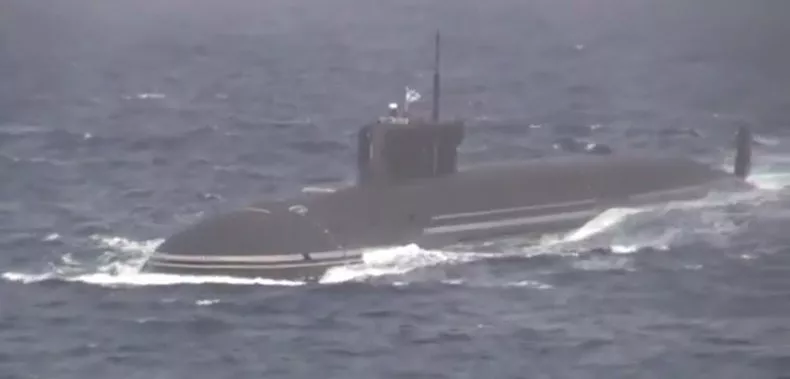
https://d.newsweek.com/en/full/2474292/russian-ballistic-missile-submarine.webp?w=790&f=4abac35108b873dc773dd86fc2ef48ae
In this photo taken from video released by the Russian Defense Ministry on September 16, Russian Borei-class ballistic missile submarine Imperator Aleksandr III sails toward the Rybachiy submarine base on the Kamchatka Peninsula. Russian defense ministry


Labels: , , , ,

Thursday, June 29, 2023

Defending the Arctic

"The importance of these issues has been rising steadily over time, due to increased access to the region, competing interests, and changing geopolitical dynamics."
"Canada's armed forces are highly skilled and fiercely dedicated, but they remain below complement, under-resourced and stretched to the limit. They deserve our support."
"More than ten [previously abandoned Soviet-era far-north military bases] are operational. Nuclear-powered submarines are stationed there."
"Russia also has an arsenal of hypersonic missiles, which combine the maneuverability of cruise missiles with the range and speed of intercontinental ballistic missiles."
"Our report emphasizes the urgency of procuring and activating these new defensive systems."
Senator Tony Dean, committee chair, Senate national security, defence and veterans affairs committee, Parliament of Canada

"The importance of the Arctic in military defence and security cannot be overstated."
"However, it is equally important to note that while the Arctic is viewed as a strategic location, it is also my home and the home of the Inuit people."
"During committee visits to Inuvik and Iqaluit, we were reminded of the tangible presence that the military once had in these communities, and the desire for their return."
"The Canadian Rangers and Coast Guard remain visible connections to the military, yet the pervasive challenges posed by the vastness, elements and obstacles persist."
Senator Margaret Dawn Anderson
Master Cpl. Enoki Irqittuq from 1 Canadian Ranger Patrol Group is pictured in Nunavut  (Sergeant JF Lauzé/Canadian Forces Combat Camera)
 
A fact-finding mission that took place in 2022 has resulted in a report recently issued and under discussion, focusing on the state of Arctic defence. The Senate national security, defence and veterans affairs committee found that much work must be undertaken to meet the challenges reflecting contemporary geopolitical conflict. These link to the issues that persist regarding Canada's and NORAD's capacity to monitor still-subtle but very real aggression from Russia, from across the Arctic Circle.

Sites in Canada's far north visited by the study group included Iqaluit and Cambridge Bay in Nunavut, Tuktoyaktuk and Inuvik in North West Territory. There they spoke extensively with military and government officials as well as local Indigenous leaders and members of their communities. The condition of Canada's defence forces is rather grim, stretched as thin as they can be without snapping. The Canadian Army is vastly understaffed. Its Navy is short of vessels as is its Air Force, with current stock at the end of their useful life.
 
Initiatives like Operation UNIFIER in support of Ukraine's military defence against the Russian invasion, along with Canada's battle group in Latvia under NATO and the deployment of an additional warship to the Indo-Pacific through Operation HORIZON -- at the same time being called on domestically to aid in handling the unprecedented wildfire season throughout Canada, has drained its military reserves.

Senators observed Canadian military commanders at work "seamlessly" with their American counterparts during their tour of NORAD headquarters in Colorado Springs. NORAD is described as the "world's only binational military command structure". NATO's northern flank has come under increased scrutiny in relation to ongoing Russian aggression. The longer navigation seasons as a result of the dwindling ice packs have sparked concern among Arctic nations, with northern defence back on the agenda.

Chief of Defence Staff General Wayne Eyre has warned that Russia is in the process of reoccupying far north military bases abandoned at the end of the Cold War. Those old war bases have undergone extensive upgrades in refurbishment in preparation for reestablishing them as actionable military bases. Serious questions have arisen whether NORAD has the required capacity to monitor and thwart emerging threats that require modern space-based surveillance systems in operation alongside ground-based, over-the-horizon radar networks.
 
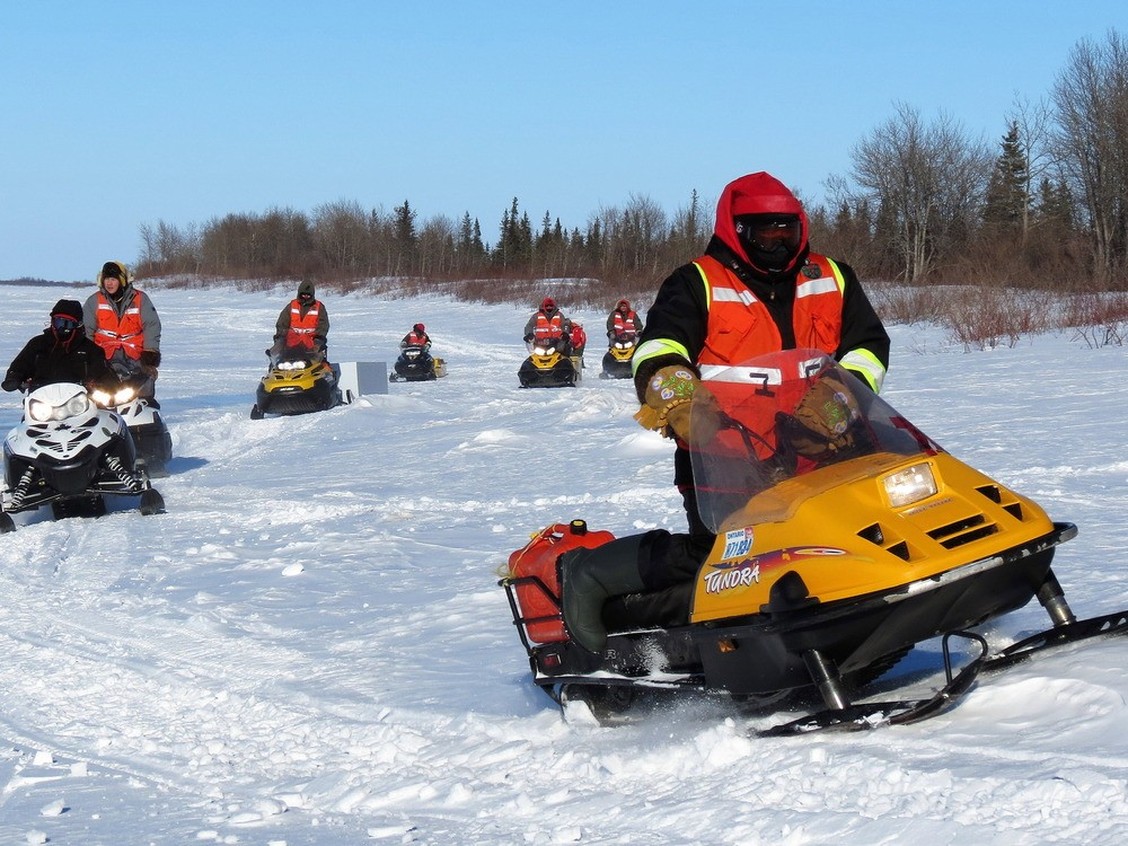
https://smartcdn.gprod.postmedia.digital/ottawacitizen/wp-content/uploads/2023/03/0110-td-a3-rangers1-td.jpg?quality=90&strip=all&w=1128&type=webp&sig=WrWbv-k7imFSjTsYdq8WZg
Canadian Rangers are seen here conducting search and rescue training near Moose Factory, a community in Northern Ontario, in 2017. Photo by Sgt. Peter Moon 
 
Senator Margaret Anderson, who was raised in Tuktoyaktuk, her community part of the now-dismantled Distant Early Warning radar station of the Cold War era, states the importance of including local, Indigenous voices in northern defence must not be overlooked. Tuktoyaktuk's ports are seeing increased traffic, with current resources making it impossible to track those aboard incoming ships, representing a serious national shortcoming for security purposes; increased visits result in opportunities for espionage.

Issues of note, she pointed out, include a lack of basic and secure infrastructure and continuing reliance on outdated equipment, and even that is frequently in short supply. China's increasing interest in the north, along with Beijing's growing warmth with Moscow represented another issue the committee drew attention to. "We have to keep an eye on this. China's 'belt-and-road' infrastructure funding initiatives might eventually emerge as a competitor in the absence of an accelerated homegrown Arctic investment strategy", pointed out Senator Dean.

The North Sea provides handy transport routes east for Russia which currently draws about 80 percent of its natural gas from its Arctic gas fields. The impacts of climate change on the north -- melting permafrost, receding shorelines and deteriorating infrastructure -- pointed out the senator, pose immense challenges.
 
https://smartcdn.gprod.postmedia.digital/nationalpost/wp-content/uploads/2023/06/Arctic.jpg?quality=90&strip=all&w=1128&h=846&type=webp&sig=tdUi-FIEu2HQb3dNOHikYA
"Our relatively low population density up there, it's not inconceivable that our sovereignty may be challenged."
"We've got to have capabilities in place that can protect that sovereignty, going decades into the future."
General Wayne Eyre, Chief of Defence Staff

Labels: , , , , ,

 
()() Follow @rheytah Tweet