Ruminations

Blog dedicated primarily to randomly selected news items; comments reflecting personal perceptions

Tuesday, June 17, 2025

Beware Cannabis Hyperemesis Syndrome

"Telltale symptoms of CHS are severe and persistent vomiting.] Scromiting [is a term that's been used, a merger of[ vomiting [and] screaming." 
"You may have intense pain, which causes you to scream while you vomit."
"Cannabinoid hyperemesis syndrome [CHS] can affect people who use cannabis [marijuana)]long-term. CHS causes frequent, severe nausea and vomiting."
"Hot baths and showers may temporarily relieve symptoms. But the only way to cure CHS is to stop using cannabis." 
The Cleveland Clinic 
https://my.clevelandclinic.org/-/scassets/images/org/health/articles/cannabinoid-hyperemesis-syndrome-feature.jpg
Symptoms of CHS typically come on several years after the start of chronic marijuana use.  ClevelandClinic.org
 
"When I talk to youth, they can easily access strains [of pot] that are upwards of 25 percent. And that's huge."
"[Youth can mistakenly think using more pot will help with the nausea and pain], but it's actually exacerbating it, because they don't even realize that they have anything called cannabis hyperemesis syndrome."
"They're not able to take down food without purging. Chronic use substantially increases the risk of nausea."
"[Left untreated severe vomiting and dehydration can lead to acute kidney injury. In rare cases] it can lead to death, if you are that severely dehydrated and you're not getting your electrolytes up."
"The most recent data we have from Canada -- and this is kind of alarming -- is that about one in five, or 20 percent of 16- to 19-year-olds have used cannabis in the past month and close to nine percent daily, or almost every single day."
"Potency is a huge factor. But there is also now growing social acceptance [of cannabis] and a lot of youth think there is very little harm associated with its use." 
Jamie Seabrook, professor, epidemiology and biostatistics and department of pediatrics, Western University 
https://images.theconversation.com/files/672874/original/file-20250606-62-p559qm.JPG?ixlib=rb-4.1.0&rect=0%2C380%2C2571%2C1285&q=45&auto=format&w=1356&h=668&fit=crop
Emergency departments are seeing a surge in cases of cannabis hyperemesis syndrome. THE CANADIAN PRESS/Doug Ives
 
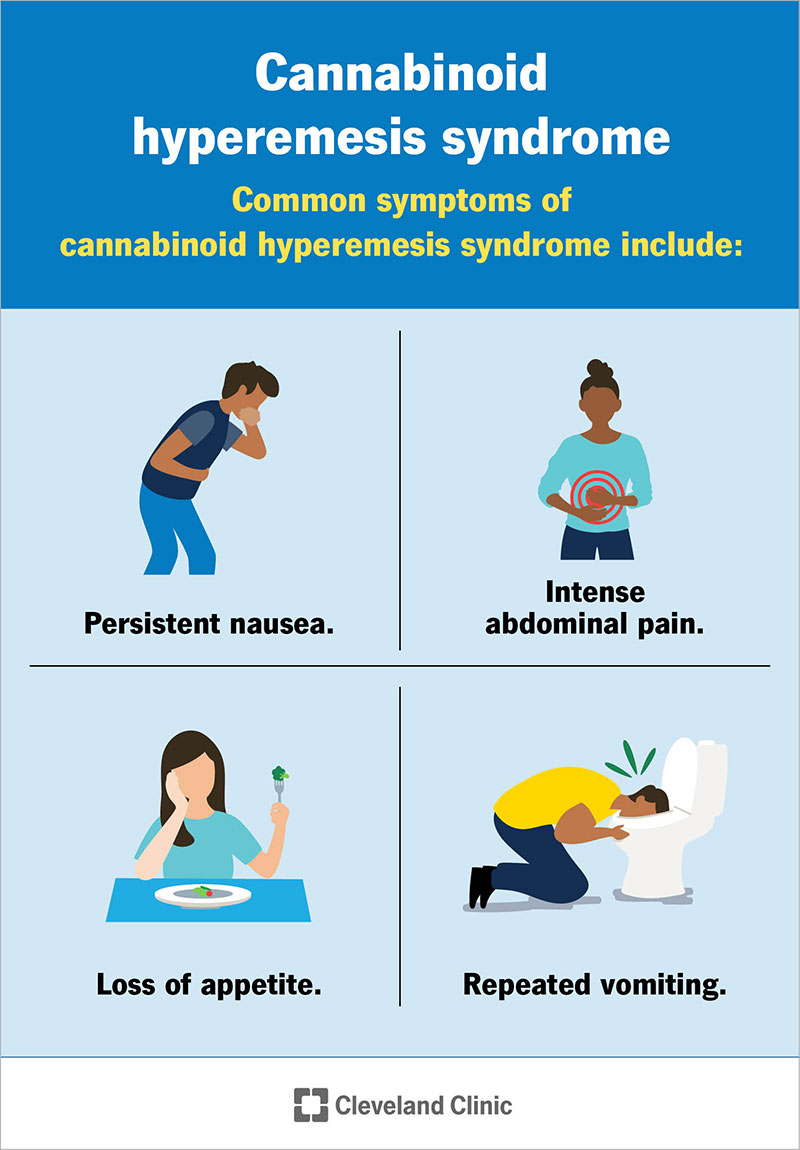
Hospital Emergency doctors are reporting increasing cases of cannabis hyperemesis syndrome, a gastrointestinal condition that can affect those who use cannabis frequently over a period of months or years [several times weekly at least, daily at most]. Symptoms of CHS as well as 'cyclical' vomiting may include morning nausea, intense abdominal pain, and finding "relief through compulsive hot showers or baths". According to Western University researchers, the chronic illness increasingly is affecting teens and young adults. "Yet few people -- including many clinicians -- know it exists".
 
Visits resulting from CHS episodes to emergency departments increased 13-fold in Ontario following the legalization of recreational cannabis in 2018, according to one study. The legalization had no association to a sudden or gradual change in cases; instead the commercialization of pot led to unlimited numbers of stores, more products included, overlapping with the COVID-19 pandemic which led to an immediate rise in cannabis user-rates 
 
And it is the potency of THC (tetrahydro cannabinol) which has drawn concern, as the main psychoactive compound in cannabis. Rising from some 3 percent in dried cannabis in the 1980s to 14 percent in 2023, with some strains as high as 30 percent. THC, its potency in the hands of high schoolers and university  attendees is a situation of grave concern. From its first documentation in 2004 by researchers in South Australia, cases of CHS have since been appearing around the world.

 
https://images.theconversation.com/files/673426/original/file-20250610-56-c8orz.jpg?ixlib=rb-4.1.0&q=45&auto=format&w=754&h=503&fit=crop&dpr=1
Nausea and early morning discomfort begin in the early stages of CHS. (Shutterstock)
 
12,866 emergency department visits by 8,140 individuals were documented between January 2014 and June of 2021; ranging from pre- and post- legalization. Of that number some 35 percent were identified as being between the ages of 19 to 24. Ten percent of visits saw hospital admissions rising as CHS emergency visits increased from 0.26 per  100,000 population in January 2014 to 3.43 visits per 100,000 population in 2021.
 
"Chronic use substantially increases the risk of nausea", though it remains unclear what causes CHS. Cannabinoids bind to cannabinoid receptors in the brain and gastrointestinal tract. With constant vomiting, food intake and nutrition is challenged. "They're not able to take down food without purging", explained Professor Seabrook.  "Some patients become diagnosed with bulimia nervosa on presentation. ''
 
Hot baths or showers can grant temporary relief but "when they get out, the symptoms reappear", explained Professor Seabrook. Left untreated, severe vomiting and dehydration can lead to acute kidney injury. At risk are most people who develop CHS as a result of long-term cannabis use on a frequent basis. Canada has one of the highest rates of youth cannabis use in the world. Up to around age 25, the human brain continues to develop.Exposure to THC over this period of development has been linked to problems with attention, memory and learning, along with an increased risk of paranoia, psychosis and schizophrenia.
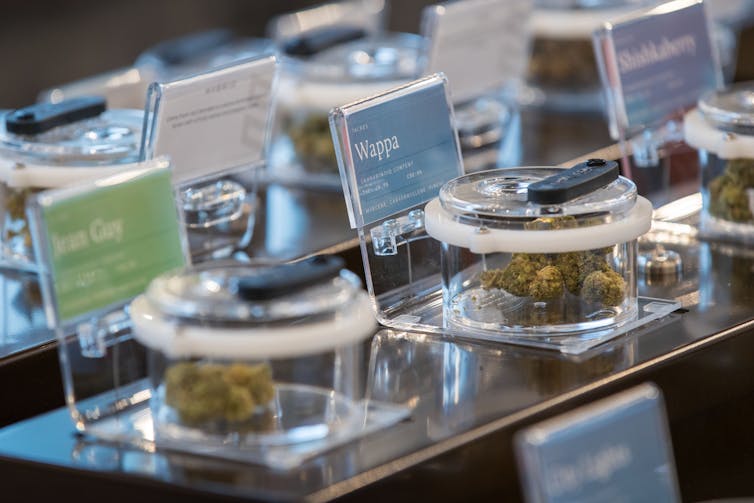
 
https://images.theconversation.com/files/672873/original/file-20250606-56-799aiy.jpg?ixlib=rb-4.1.0&q=45&auto=format&w=754&h=503&fit=crop&dpr=1
This rise in regular, heavy use coincides with a 400 per cent increase in THC potency since the 1980s. THE CANADIAN PRESS/Lars Hagberg


Labels: , , , , ,

Sunday, April 03, 2022

Bowing to the Inevitable

"[This] long overdue legislation [the Marijuana Opportunity Reinvestment and Expungement (MORE) Act] that would reverse decades of failed federal policies based on the criminalization of marijuana...would also take steps to address the heavy toll that these policies have had across the country, especially among communities of colour."
Jerrold Nadler, Democratic congressman, New York
 
"When the U.S. medical cannabis market opens, which is inevitable, there is going to be increasing competition for Canadian firms."
"We've got regressive excise taxes, we've got oppressive provincial markups and margins, and offensive taxes on medical cannabis. Medical cannabis continues to be the only medical product that has a tax on it [in Canada]."
"I am less worried about U.S. companies entering our market space as I am about our own ability to compete, based on the way the federal government supports our sector."
Rick Savone, senior vice-president, Aurora Cannabis Inc., board chair, Canadian Cannabis Council
"Something as ambitious as the MORE Act will probably not get through the Senate."
" [However], U.S. politics are difficult to predict."
Michael Armstrong, professor of operations research, cannabis researcher, Brock University
Canadian cannabis retailers had a head start in the North American market, since legalization of the recreational use of marijuana in October of 2018. Previous to that date, medical marijuana with a medical prescription was legalized. Now, it appears that the United States will finally have federal legalization legislation passed after the MORE Act was introduced by Congressman Jerrold Nadler and passed in the House by a vote of 220 to 204.

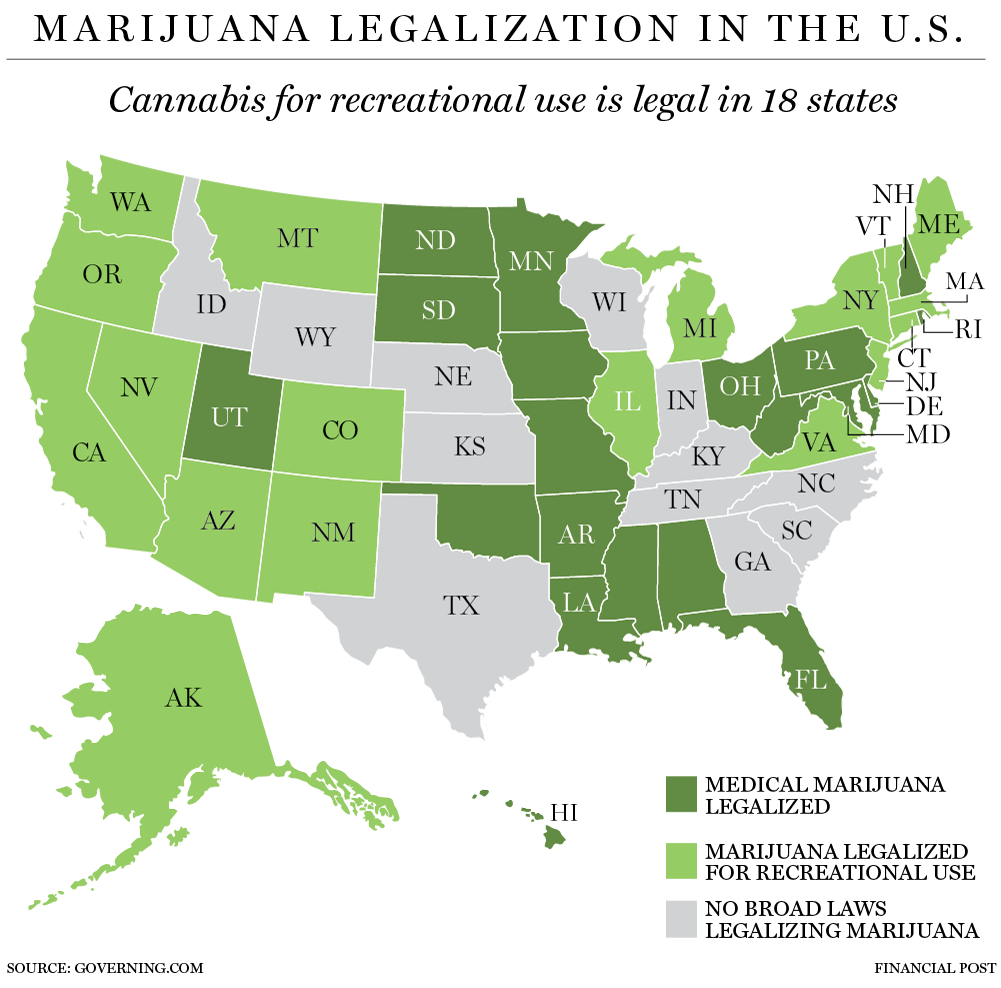
It will now be up to the Senate whose members appear to be less enthused over marijuana legislation potential, to swing enough votes for legalization. In 18 states, including Washington, D.C. and Guam, recreational marijuana use already has legal status. As well, 38 states along with the District of Columbia have approved marijuana for medical use. 

Legalization appears inevitable in the United States having made its way through the House with proponents of legalization pointing out that American prisons overflow with people convicted criminally for non-violent offences which the possession of marijuana exemplifies. The country awaits the Act's passage as a kind of testimonial to America's failed 'war on drugs'.

The bill's opponents have their own arguments con passage of the Act, as they point out the important issues of the day that consume the attention of the United States government; inflation, rising fuel prices, the war in Ukraine. Augmented by the argument of marijuana being a gateway drug for other, harder, insidious drugs and the cartels that will inevitably become more enterprising. 
"What's deeply and truly disturbing about this bill is the failure to address the clear consequences of legalization such as what this drug does to children, to drivers on our highways, to the mental health of up to 30 percent of adults who choose to use marijuana."
Cliff Bentz, Republican representative, Oregon 

"It's inevitable it will pass."
"I'm hoping the impetus doesn't take years, and that it happens sooner than anyone expects."
Stephen Ruffini, CFO, Village Farms International

Labels: , , ,

Thursday, February 24, 2022

Cannabis Poisoning in Children

cannabis
Photo: Public Domaine
"It's not your grandfather's cannabis or your father's cannabis."
"We want people to know legal does not mean safe and they should treat it [cannabis] with appropriate caution and respect." 
"It’s troubling to see such a dramatic rise in pediatric cannabis-related emergency department visits, even before legalization. The social reasons behind this surge are not found in the data used for this study, but the significant increase in visits should be a warning to families and doctors."
"More research is needed to identify the causes of this increase and the health and social consequences of cannabis-related visits for these youths."
"It’s important to be aware that cannabis-related emergency department visits in youth were on the rise even before the 2018 legalization of recreational cannabis use for adults 18 and older in Canada."
"Post-legalization and with cannabis edibles, such as chocolates and gummies, now available throughout Canada, these rates may continue to rise. We suggest that emergency department clinicians maintain a high index of suspicion for cannabis exposure in young people presenting to the emergency department."
"Suppose a young person has unexplained decreased consciousness or agitation; in that case, doctors should ask about possible cannabis exposure early in the visit."
"A recent study showed an increased rate of cannabis poisoning in young children under ten in Canada. Along with our study, this reinforces that parents must be aware of the risks associated with cannabis in youth and properly store and lock any cannabis products in the home."
"We know this phenomenon is happening and will likely become more severe."
Dr.Melanie Bechard, Researcher, Emergency Department Physician, assistant professor of pediatrics, University of Ottawa
Between 2003 and 2017, according to a new study led by the CHEO [Children's Hospital of Eastern Ontario] Research Institute, cannabis-related hospital emergency visits for children and youth saw a five-fold increase in the province. This spike arrived before cannabis was legalized in Canada in 2018, affecting children, youth and young adults between the ages of ten and 24, related to cannabis consumption.

Based on research from other jurisdictions, the study lead author, Dr.Bechard, stated her expectation that the steep rate of increase in emergency visits would simply continue following legalization. Over 14.5 million administrative records of emergency department visits in Ontario were examined by researchers. Not only did hospital visits increase, but the medical severity of cannabis visits and the likelihood also rose that a patient in an emergency department for cannabis intoxication would then be admitted to hospital.

An explanation for the increase was not part of the study, but Dr.Bechard felt a number of reasons are likely that would explain why hospitals are seeing such increased cannabis-related visits. Among those possible reasons is the fact that THC is of a higher concentration in today's product than formerly; the main psychoactive compound in cannabis now is greater in comparison to decades earlier, studies confirm.

The steep emergency hospital visit increase arrives in a period when student self-reports indicated that cannabis use was stable, and even on the decrease. Leaving higher THC concentration, not wider use, the culpable explanation. Changing societal attitudes toward cannabis has most likely played a role in the increasing numbers of young people presenting with serious illnesses placed at cannabis' door. Which could also account for cannabis being more readily accessible to young children within a household.

"It is something I see day in and day out as an emergency provider", explained Dr.Bechard. Other research out of Ot4tawa published a month earlier discovered that cannabis poisonings in children dramatically increased once edibles were legalized in 2019, and close to ten percent of all emergency department visits for poisoning in young children are now seen to involve cannabis.

Providers of pediatric health have been attempting to promulgate public health messages highlighting the need for safe storage of cannabis in the household presence of children. Parents and family members are asked as well, to alert health care providers should they suspect cannabis is involved in a child's illness. 

As far as educating older adolescents and teens of safer cannabis use, the study emphasizes its importance. Teens exposed to safe practices in cannabis use should be taught the importance of using lower doses and to increase usage slowly, being careful not to ingest large amounts of edibles, in the process.

Child cannabis poisonings increased after legaliza

Labels: , ,

Saturday, January 08, 2022

The Serious Downside

"These events weren't supposed to happen: Canada prided itself on a public health, strict regulatory approach to legalization. I find it very concerning it doesn't seem to have worked."
"These findings suggest that the introduction of legal commercial edible cannabis products was a key factor associated with emergency department visit frequency and severity."
"My view is that there is no need for cannabis products to look and taste like candy, baked goods or snacks."
"These products should be treated like a poison because that's what it is if a young child ingests it."
"It's absolutely astounding that we are three years post-legalization and we have so little information about what has happened."
Dr.Daniel Myran. public health and preventive medicine specialist, The Ottawa Hospital
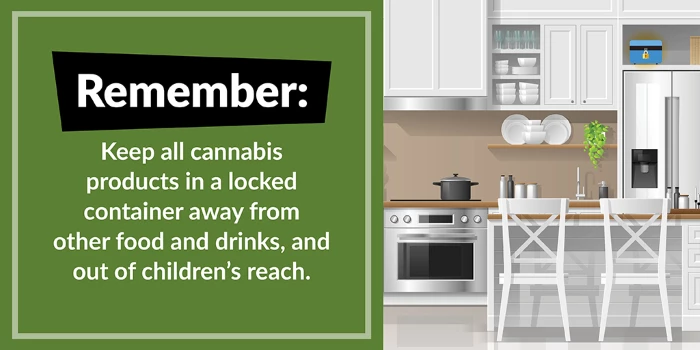
 Message on the left reads "Remember: keep all cannabis products in a locked container away from other food and drinks, and out of children's reach." Right side shows an image of a kitchen with a locked box on top of the refrigerator.
 
A new study headed by Dr. Myran, published in the online medical journal JAMA Network Open, found significant numbers of children under age ten suffered cannabis poisoning sufficiently severe to require hospitalization in the wake of legislation enabling the sales of edible cannabis products. The findings, emphasized Dr. Myran, suggest that the federal government's legalization plans designed to prevent any increase in child cannabis poisoning, has failed.

A close up of skull-shaped gummy candies
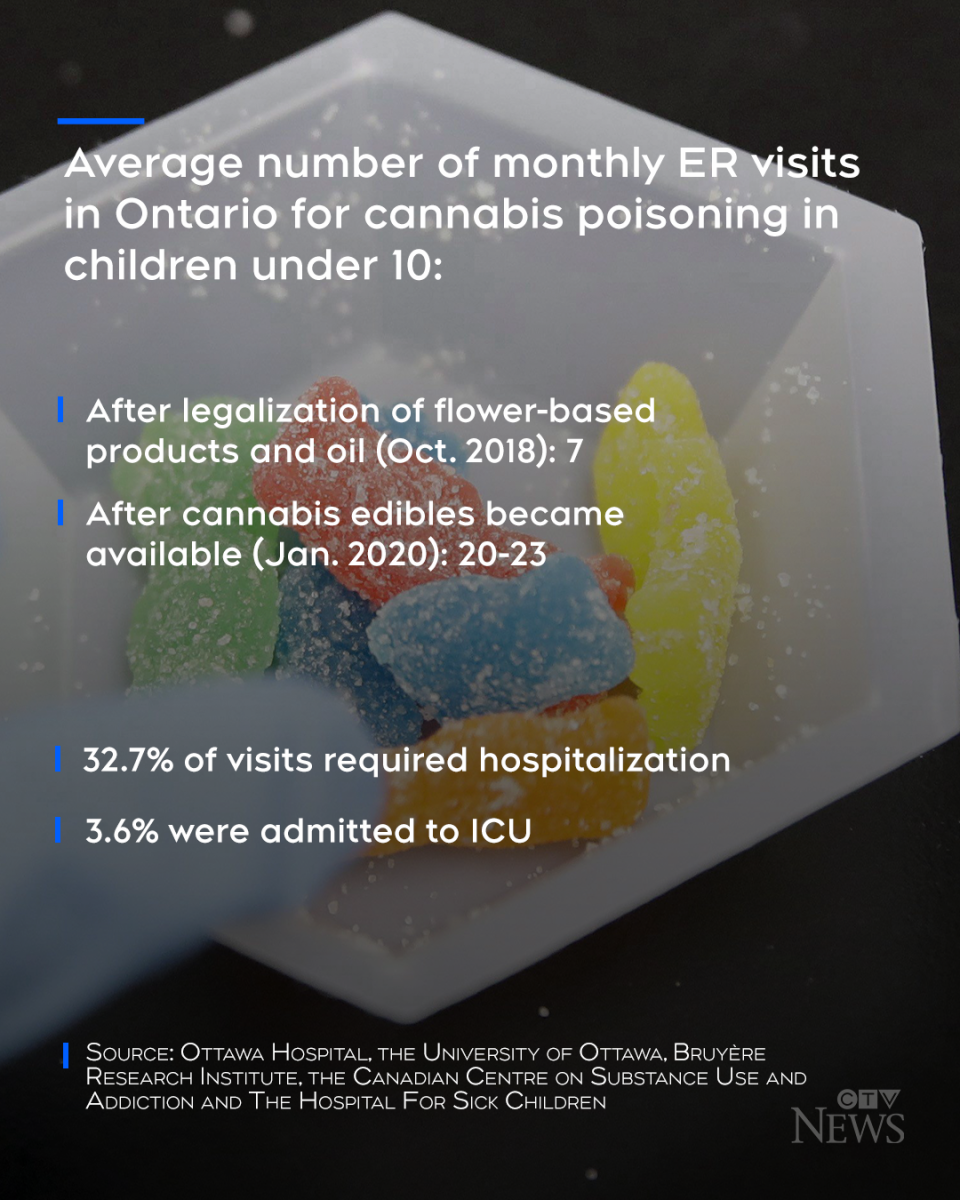
Close to ten percent of all Ontario emergency department visits for young children's poisoning events are attributed to cannabis. Cannabis edibles -- such as gummies and chocolates -- are required to be packaged in plain, child-resistant packaging and should contain up to and no more than 10 mg. of tetrahydrocannabinol (THC) in each package, according to federal regulations.

Dr.Myran and his study team of researchers examined emergency department visits in the province taking place between January 1, 2015, and March 31, 2021 related to child admissions under age ten. Cannabis poisonings were identified in the data, then divided by the researchers into three time categories; the 33 months prior to legalization (Jan.2016-Sept.2018); the 16 months during which only flower-based cannabis products were legal to sell (Oct. 2018-Jan.2020); and finally the first 14 months following legal availability in Ontario of edible cannabis products (Feb.2020-March 2021).

During the five-and-a-half years the study encompassed, a total of 522 children were brought to hospital emergency departments with cannabis poisoning. None of the cases were lethal. The number, rate and severity of cannabis poisonings rose in each of the three time periods. For the 33 months prior to legalization, 81 children under age ten received emergency care for cannabis poisoning, representing a rate of 2.5 visits monthly. Of those children, one-quarter were admitted to hospital for care.

Once cannabis was legalized, during the 16 months immediately following, 124 children were taken to emergency departments for cannabis poisoning, representing a rate of 7.8 visits each month; a three-fold increase over the pre-legalization period, resulting in a stable hospitalization rate. Finally, in the third category, once edibles were legalized, 317 children were brought to emergency departments, a rate of 22.6 visits each month, representing a nine-fold increase in cannabis poisoning over the pre-legalization period.

Poisoning cases sufficiently severe to require hospital admission after edibles were placed on the market saw many more children (39 percent) involved.  "These findings suggest that the introduction of legal commercial edible cannabis products was a key factor associated with emergency department visit frequency and severity", wrote the researchers in their conclusion.

Coincidentally, poisonings among children for other reasons, such as ingestion of medications, cleaning products, hand sanitizer for example, decreased in the year following the availability on the market of commercial cannabis edibles. The average age of children arriving at hospital with cannabis poisoning was three years, nine months of age. The kind of cannabis product or how children gained access to them was not part of the study.

The effects of THC, given the size of a child's body mass as compared to that of adult, makes children far more vulnerable to ill effects. In children, cannabis poisoning can manifest with vomiting, confusion, lethargy, muscular weakness and depressed breathing, sometimes requiring ICU treatment. Children, in rare cases, may sometimes end up in a coma.

Child cannabis poisonings increased after legaliza

Labels: , ,

Saturday, August 24, 2019

Judging The Experiment

Released: 2019-08-15
Canadian males aged 15 and older are more likely to consume cannabis compared with their female counterparts. Males use cannabis more frequently—they are also more likely than females to consume it for non-medical reasons and to purchase the cannabis they use.
New data from the National Cannabis Survey (NCS) continue to show that males and females differ in how they obtain and consume cannabis products post legalization.
Females, for example, more often report getting cannabis from family and friends than their male counterparts, which may also explain why fewer females pay for the cannabis they consume.
The use of "other" methods of cannabis consumption, such as "on the skin or under the tongue" is also more common among females.
Males are more likely to report consuming dried cannabis (flower/leaf) and hashish.
The Cannabis Act (C-45) became law on October 17, 2018. To monitor cannabis consumption before and after the legislative change, Statistics Canada has been conducting the NCS every three months (quarterly) since 2018. This release provides the latest information about cannabis use in Canada. Analyses of data for the first half of 2019, as well as for the second quarter of 2019, are available.
Statistics Canada
This is a screenshot of the Ontario Cannabis Store website, which sells dried flower for as low as $7.50 a gram. OCS

In the StatsCan collection of data an estimated 48 percent of  cannabis users surveyed by Statistics Canada stated the legal market was the source of 'some' of their cannabis. Canadians, in other words are self-reporting that they obtain 'some' of their marijuana legally, and the remainder through the same illegal black-market sources that the legislation was meant to put out of business. Well, it's early days yet, just a year since the federal government legalized possession.

It would appear however, from an analysis of the responses received by StatsCanada that fewer than 30 percent of consumers of cannabis actually make their purchases exclusively from the legal market. The latest quarterly snapshot published and made public by the venerable old statistical-gathering institution indicated that Canadians spent $5.9 billion on cannabis. The black market accounted for $4.7 billion of that total, interestingly enough.

Which, of course, like the illegal market for counterfeit tobacco, deprives the government of any profit through taxes. And what it really means is that 80 percent or thereabouts of all cannabis bought in Canada was derived from the black market. So much for government intervention to free up cannabis use for Canadians and at the same time controlling quality and gathering revenues by opening up a new, legal consumer market.

While much of the stigma attached to drug use with a popular recreational drug has been removed, the other two essential reasons for enacting the critical legislation remain unfulfilled. But the problem of avoiding cannabis use by teens, of persuading cannabis users not to smoke up and drive, remains even as anticipated revenues remain elusive and purchasers are frustrated by ongoing government bureaucracy in the availability of the product they crave.
Will you buy legal cannabis? Graeme Roy / THE CANADIAN PRESS

Price, access and product variability all represent issues that put users off legal purchases. Illegal cannabis is considerably less expensive to purchase than its legal variety; the price gap is extremely persuasive to people deciding to stick with what they know best; their long-time dealer. At the federal level, legal cannabis has GST attached, a ten percent excise tax, and a half billion dollars representing producers' compliance fees, all expenses passed on to consumers.

All of this, including provincial boutique taxes, double the price of legal cannabis for consumers who then seek out illegal cannabis, cheaper and more readily accessible since legal stores offer a limited product. A product not on display other than in boringly plain packaging for which marketing and advertising restrictions limit their appeal to the consumer.

Yet another government initiative taking over from the private sector to improve consumer experience, ending up a roaring success story.

A man smokes outside of a cannabis store in Montreal on the day marijuana became legal. MARTIN OUELLET-DIOTTE / AFP/Getty Images

Labels: ,

Wednesday, August 14, 2019

Studying Cannabis Availability

"It [cannabis] is associated with negative health outcomes including mental health problems, such as psychosis and addiction, cannabis-related motor vehicle collisions, and poisonings, particularly unintentional ones among children."
Study, published in CMAJ Open

"If it turns out that increased availability of cannabis stores translates into more consumption and more health impacts, this could mean that individuals in poor neighbourhoods are being overexposed to cannabis."
"We may be setting up these individuals to consume more and have more harms."
Dr.Daniel Myran, Ottawa Hospital, study lead author

"Canada is conducting a huge, unprecedented experiment in legalizing recreational cannabis, and it's crucial to gather as much data as we can."
"We need to understand not only where and how cannabis is being sold, but also what the impacts are on health and society."
Dr.Peter Tanuseputro, physician, scientist, The Ottawa Hospital, study senior author
In total, the study compared 260 cannabis stores that opened in Canada in the first six months of legalization. (David Horemans/CBC)
"Curriculum focused on the ECS [human endocannabinoid system, a network of cannabinoid receptors in cells of the central and peripheral nervous system] is minimal, if any, to none. It isn't taught in medical schools and if it's being implemented now, then it's a recent development."
"We're not tested on it during our exams, and usually the material we are taught throughout our training will reflect the knowledge needed to succeed there. Anything beyond that leaning would have to be self-taught, often during residency, fellowships or just on your own."
Dr.Dan Bal, Stamford Health, Connecticut
Recreational cannabis became legal in Canada in October 2018. (Juan Mabromata/AFP/Getty Images)
Famously Canada, under its current Liberal 'progressive' government made good on a popular pre-election promise by legalizing the possession of cannabis for recreational use years after it was legalized for medicinal use. A new study published in the online access journal CMAJ Open has seen its authors bring to the fore interesting questions relating to the experiment, for that truly is what it is.The study authors looked at the 260 cannabis retail stores throughout the country, assessing income levels of the neighbourhoods they sit in, reaching some telling conclusions.

In the lowest income quintile, these neighbourhoods had the privilege of hosting twice as many pot shops within or nearby (587) as opposed to the country's highest income neighbourhoods which managed to suffice with the presence of only 245 shops gracing their precincts. The researchers assessed neighbourhoods with established pot shops located within one kilometre to determine their proximity to schools, as well. Important to distinguish given that pot use by young people (up to around age 21) can be inimical to the maturing brain.

Family physician at the Ottawa Hospital, and lead author of the study, Dr.Daniel Myran, pointed out that the concentration of pot shops within low-income neighbourhoods raises reasonable concerns about public health issues. Additionally, privately operated pot shops were found to be located closer to schools than their government controlled counterparts, with private shops located a median distance of 577 metres from the closest school, and government shops, a median distance of 744 metres, while both abide by established guidelines in distance from schools.

The Province of Ontario mandates a distance of at least 150 metres distance from schools, while in Quebec that distance is 250 metres. People earning less than $40,000 annually, according to a Statistics Canada study released last year, represent the country's heaviest users of cannabis. Newfoundland and Labrador and Yukon on a per-capita basis hosted the most pot shops, with Ontario and Quebec having the least shops per capita.

2019-04-01 hobo retail cannabis
Hobo Recreational Cannabis in Ottawa, April 1, 2019. Jenn Pritchard/ OttawaMatters.com

Under the federal government's Cannabis Act, legalized in October 2017, provinces and territories are responsible for the regulation of cannabis sales and all provide online retail cannabis sales opportunities while Quebec, New Brunswick, Nova Scotia, P.E.I. and the Northwest Territories operate government-run pot shops; the other provinces and Yukon featuring privately run stores, though British Columbia and Yukon also permit private pot shops and Nunavut offers online sales exclusively.

According to the researchers, the country's mixed options of regulatory regimes highlights it as a living laboratory for the study of the impact of variant sales models. And according to the study published in the CMAJ Open, the use of cannabis is "not benign". They also point out that additional research should look to addressing the issue of whether government or private systems perform better at meeting the goals of cannabis legalization; to wit: eliminating the illicit market, and prevention of youth access to the drug.

"The Ontario College of Pharmacists announced it has made cannabis education mandatory ... and its members have until March 27, 2020, to complete an accredited course to help them provide patients with reliable information on how cannabis interacts with their medications."
"As the availability of recreational cannabis expands, pharmacists will have to consider that any patient may need to be informed on the interaction of cannabis with other medications, much like they do for alcohol use."
Backgrounder, Ontario College of Pharmacists
People line up outside the Hobo Recreational Cannabis Store on Bank Street April 1, the first day legal pot shops opened in Ottawa.
People line up outside the Hobo Recreational Cannabis Store on Bank Street April 1, the first day legal pot shops opened in Ottawa. Julie Oliver / Postmedia

Labels: , , ,

Wednesday, February 20, 2019

Risks of Underage Cannabis Use

"My study clearly shows that cannabis does not cause schizophrenia by itself. Rather, a genetic predisposition is necessary."
"It is highly likely, based on the results of this study and others, that cannabis use during adolescence through to age 25, when the brain is maturing and at its peak of growth in a genetically vulnerable individual, can initiate the onset of schizophrenia."
Dr. Lynn E. DeLisi, Harvard Medical School
c35a1265d4389cb6f274999af04c50db
Cannabis, also known as marijuana, is a product of the plant Cannabis Sativa.

"It has long been known that cannabis use can cause an acute psychotic episode in some individuals and recent epidemiologic studies suggest that frequent cannabis use in adolescents may lead to an acute psychosis that by itself develops into chronic schizophrenia. However, the majority of individuals who use cannabis do not develop a psychosis or schizophrenia. Thus, some additional mechanism must underlie the development of schizophrenia in those that are affected. If cannabis use can interact with an underlying genetic basis for the illness, changes in brain structure characteristic of patients with schizophrenia will be seen in those cannabis users who later develop schizophrenia. The brain changes may represent the genetic vulnerability for schizophrenia and be predictive of who develops the illness. Thus, Aim #1 (primary aim) of this proposal is to determine whether brain structural deviances in temporal and frontal lobes and their white matter connections will predict which cannabis users develop schizophrenia. To accomplish this we will evaluate consecutive admissions with a first psychotic episode subsequent to cannabis use admitted to two large NYC psychiatric emergency rooms. These patients will be compared with adolescent cannabis users who never had a psychotic episode, and age, sex, and social class matched non-cannabis using controls. The presence of brain structural anomalies, particularly those characteristic of patients with chronic schizophrenia psychoses will be determined by MRI scans. All cannabis using subjects will have a diagnostic follow-up evaluation one and two years subsequent to the first psychotic episode to determine who developed a diagnosis of schizophrenia or whether the initially non-psychotic individuals remained symptom-free." "Aim #2 of this proposal is to examine whether brain abnormalities among cannabis users with a first schizophrenic-like psychosis are associated with increased genetic risk for schizophrenia. This will be achieved by obtaining family information from reliable family informants. This study will ultimately have implications for early treatment strategies in adolescent cannabis users who are at high genetic-risk for psychosis and suggest early biological warning signs through MRI evaluations of individuals who have an acute psychosis following cannabis use."
Abstract:   Biological Prediction of Psychosis Susceptibility among Adolescent Cannabis Users     Harvard University, Boston, MA, United States

During the teenage years of brain development unneeded connections between brain cells in the prefrontal cortex are stripped away; this is the area that controls thinking and planning. This is also the region that becomes perturbed when psychotic conditions arise, a region rich in CBI (cannabinoid) receptors involved in pruning the brain, and which become engaged by the use of cannabis. The result is the potential for alterations to the pruning process to occur. leading to an increase in the risk of schizophrenia, according to recent research. 

Circumstantial evidence exists that a biological mechanism can be triggered with the use of cannabis, causing a psychotic disorder with a tendency to emerge in late adolescence or early adulthood, matched to a period of rapid brain development. There is a realization that an inherited genetic vulnerability is involved, since psychotic conditions tend to be genetically inherited as a familial trait. Studies suggest that people are likelier to experience paranoia with cannabis use when they are already at a heightened risk of psychosis.

A study conducted in 2014 found a heightened schizophrenia risk among those with a family history, irrespective of cannabis use, leading to the understanding that familial risk for psychotic disorders outweigh possible added effects of cannabis use. According to Dr. DeLisi of Harvard Medical School, it appears likely that cannabis use during adolescence to age 25 can have the effect of initiating schizophrenia onset. However, research that might finally settle the question is scarce since marijuana has been illegal for a long period of time.

With the legalization of marijuana, policy makers and physicians are increasingly aware of the potential dangers of recreational marijuana use given that experts make a distinction between the "new cannabis" strains that are legal and far more potent now available in edibles and vapes, as opposed to the old version which comes in as a much milder weed. T.H.C., the chemical producing marijuana's narcotic effect has been rising for the past three decades. But well before then, about 70 years ago the suspicion among doctors that a link existed between marijuana and psychosis in the young existed.

Other stimulants such as caffeine, nicotine, alcohol can also be viewed as a potential cause of psychosis and hallucinogenic effects when taken in excess, just like marijuana. The temporary disorientation with peculiar imagined sights and sounds, on occasion accompanied by paranoia are the symptoms of psychosis yet the vast majority of those who experience a psychotic episode fail to develop a persistent condition such as schizophrenia, characterized by episodes of psychosis recurring for years.

The debate now ongoing revolves around the distinction between correlation and causation where people with psychotic problems often use cannabis on a regular basis, but on the other hand what is as yet unclear is which came first, the habit of using cannabis or the psychosis. And, to date, insufficient evidence exists to define whether heavy cannabis use causes schizophrenia or other syndromes. This issue is quite aside from that of possible brain damage occurring with the constant use of marijuana by under-aged users.

The end result of studies and conclusions and alternating theories rests with the issue that everyone agrees with, that the regular use of the newer, high-potency cannabis may be regarded as a risk for youth who have a family history of psychosis. 


Labels: , , ,

Saturday, February 09, 2019

Challenging Illegal Cannabis

"Numbers show that 16 per cent of Albertans, aged 15 and older, have consumed marijuana in the last three months, down from 17 per cent reported between Aug. 16 and Sept. 12 — shortly before marijuana became legal in Canada on Oct. 17. The national average of consumption, according to Statistics Canada, is around 15 per cent."
"Maritimers continue to light up more than the rest of the country, with just below 22 per cent of Nova Scotians who have reported consuming marijuana in the last three months leading the pack. Newfoundlanders are trailing just behind at 19 per cent, followed by New Brunswick at 18.9 per cent, and Prince Edward Island at 17.9 per cent."
"Alongside Alberta, British Columbia has also seen a slight decrease in reported marijuana consumption — albeit more significant: around 15 per cent reported smoking weed in the last three months after legalization, versus 20 per cent who reported using cannabis just before. Manitoba has also seen a decrease, with 15 per cent reporting use of marijuana, down from 19 per cent before legalization"
thestar.com National Logo
A vendor displays marijuana for sale in Vancouver, B.C. Statistics Canada data shows that marijuana consumption has relatively stayed the same since legalization, and dropped in British Columbia and Manitoba.
A vendor displays marijuana for sale in Vancouver, B.C. Statistics Canada data shows that marijuana consumption has relatively stayed the same since legalization, and dropped in British Columbia and Manitoba.  (Darryl Dyck / The Canadian Press file)

A national cannabis survey was released on Thursday by Statistics Canada which found that non-medical cannabis users were less likely to obtain their cannabis legally. Surprising, since of course when the federal government brought in legalization of recreational cannabis in October of 2018, to great self-congratulatory plaudits, it emphasized that this would set the death knell to the illegal sale of marijuana while at the same time legal sales would ensure that pot wouldn't be getting into the hands of minors.

What the survey brought to light was, without doubt, surprising. Only 26 percent of non-medical cannabis users claimed to have purchased cannabis from authorized retailers or online producers. Of course some of this expectation lag can be attributed to the initial roll-out of the new system, where provinces are in various stages of authorizing legal pot outlets and where even government-approved sales outlets have been faced with product shortages from producers.

Still, according to Stats Canada, 42 percent of non-medical users state the cannabis they use has been illegally obtained; through drug dealers, or for example compassion clubs, unlicensed dispensaries or storefronts, or through unlicensed websites. Somewhat adverse to the claims by the federal government that the illicit drug trade would become extinct and in the final analysis, public safety would be greatly enhanced.
Statistics Canada’s national cannabis survey also revealed that 42 per cent of non-medical users say they obtained cannabis illegally, such as through drug dealers, compassion clubs, unlicensed dispensaries or storefronts, and unlicensed websites.
Statistics Canada’s national cannabis survey also revealed that 42 per cent of non-medical users say they obtained cannabis illegally, such as through drug dealers, compassion clubs, unlicensed dispensaries or storefronts, and unlicensed websites.  (Tijana Martin / THE CANADIAN PRESS)

The statistics-gathering agency of the Government of Canada is doing its work, maintaining track on the use, sales and prices of the product. The agency a month earlier reported the average price of a legal gram of medical or recreational marijuana in the fourth quarter of 2018 to be $9.70, while the black market price was ... $6.51. Old habits die hard, and they die harder when there is a sizzling price differential involved.

A third of consumers spent nothing on the marijuana they consumed, presumably because they also grew it themselves, also legal under the law ... which permits four plants to be grown in a home. Over $500 was claimed to have been spent by roughly 8 percent of respondent users, about $40 weekly, consistent according to Statistics Canada, with the spending pattern seen in the previous quarter.

According to consumers, quality and safety of product is uppermost in mind in deciding where to purchase. Price and accessibility are secondary, evidently.

Close to one in five Canadians (19 percent) plan to use cannabis in the next three months, representing a higher number than those reporting use at the present time. Oddly enough, fewer people appear to be using now than before legalization. For the present, however, 4.6 million or 15 percent of the population of Canadians over age 15 has reported using cannabis in the past three months; one quarter for medicinal reasons, the rest for non-medical use.

Cannabis use (%)
Fourth quarter 2018

Canada    15.4
Newfoundland and Labrador    19.2
Prince Edward Island    17.9
Nova Scotia    21.6
New Brunswick    18.9
Quebec    13.6
Ontario    15.4
Manitoba    15.1
Saskatchewan    16.5
Alberta    16.2
British Columbia    15.3


Cannabis use in the past three months by gender, Canada
Male    19.4
Female    11.3


Cannabis use in the past three months by age, Canada
15 to 24 years    27.4
25 to 34 years    23.2
35 to 44 years    17.5
45 to 54 years    12.8
55 to 64 years    10.4
65 years and over    5.2

Source(s): Statistics Canada, table 13-10-0383-01.


Labels: , ,

Saturday, November 10, 2018

To Serve and Protect

"From the point of view of public interest, the impact is profound. The conduct here you cannot describe as anything other than stupid."
"On the continuum, this is on the very low end, but nevertheless this is an evidence-tampering case before me."
"He might have taken cough syrup [rather than cannabis] or a pair of woolly comfortable socks that he wanted to try on his feet. It's interfering with evidence."
Justice Mary Misener, Toronto

"The first place to start is to say I’m sorry, sorry for my actions, my judgment and for being so inconsiderate. My actions were wrong, and the community that I served deserves that I be held accountable for those actions."
"My heart was pounding. I felt like it was going to come out of my mouth. I realized instantly what a stupid thing I had done [in consuming cannabis-laced chocolate]. At that point, I did not care any more about the prospects of getting caught or the professional consequences. I just wanted medical help."
Vittorio Dominelli, 36, 13-year constable, Toronto Police Services

"He assumed it would be a minor mellow feeling."
"He did not think consuming a small amount would impair each officer."
"He was sweating heavily and believed he was going to pass out."
Crown attorney Philip Perlmutter

"I would say it was an act of utter stupidity, quite frankly."
"He has done everything he can to show remorse and make reparation for what he's done."
Peter Brauti, lawyer for the defence
Officer
Const. Vittorio Dominelli, left, is one of the officers charged with multiple counts of professional misconduct under Ontario’s Police Services Act. - Twitter
As the son of a long-time Toronto police officer it could be fairly assumed that Vittorio Dominelli knew a thing or two about policing and the responsibilities inherent in that profession. Moreover, he is mature, married, the father of three children under ten years of age. He was with the force for thirteen years. The very basic of protecting criminal evidence whatever it happens to be is no trifling matter. But when the opportunity came to lift a few chocolate bars from the scene of an arrest, the temptation evidently proved too much for the man.

He had been part of a police raid team of an illegal pot-shop. Illegal sellers of marijuana were popping up everywhere in major cities of Canada in anticipation of legalization to arrive in October of 2018. Until legalization became a reality, setting up those shops represented a criminal offence under Canadian law. And police were tasked to uphold the law, as was being done on January 27 of 2018. When the raid was wrapping up at the dispensary, he had been nominated along with his partner to pick up dinner for the squad.

On his way out of the illegal marijuana dispensary he noticed a shelf of cannabis-oil-infused chocolate bars, and casually pocketed several. Then he and his partner went to a nearby pizza establishment to place their orders. Dominelli informed his partner, Constable Jamie Young what he had in his possession, telling her he was of a mind to leave the bars at the pizza place, and she failed to agree. Later in the evening the two constables were assigned to an after-hours bar surveillance.

While seated in their vehicle they discussed the pending legislation for legalization of marijuana. Each revealed to the other that neither had experienced marijuana and knew nothing about its effects. They decided they would conduct an impromptu experiment, consume some of the chocolate and discover first-hand what the effects would be. Between them they consumed eight squares of one of the chocolate bars, becoming "seriously intoxicated".

About twenty minutes after consuming the chocolate Dominelli became acutely aware of feeling unwell. He felt, he said, as though he was going to die and asked his partner to radio for help, but she refused. He then grabbed the radio and called for help: "Send an ambulance" he orders the dispatcher, saying he was on the brink of passing out.
The warning on the back of the packaging of a cannabis-infused chocolate bar, presented in court on Friday.
The warning on the back of the packaging of a cannabis-infused chocolate bar, presented in court on Friday.  (Court exhibit)
When other officers responded to the call, rushing to the scene of two of their own being in medical distress, one officer slipped on the icy surface suffering a severe head injury. That man remains with "significant difficulties with speech and vision" as a result, and ten months later is still off work on medical leave. As for the illegal pot-shop, seven people were charged after the raid. Charges laid against them were dropped because evidence had been tampered with.

Weeks following the raid, when the entire episode had become well known through media reports Dominelli had offered to resign. He remains in a depressed state, shakes with emotion when he speaks of the incident and breaks down in tears. While the Crown proposes a conditional sentence to be served in the community, the defence argues for a conditional discharge with the withdrawal of the charge of breach of trust.


Labels: , , ,

 
()() Follow @rheytah Tweet