Ruminations

Blog dedicated primarily to randomly selected news items; comments reflecting personal perceptions

Thursday, September 10, 2020

The Mental Health Burden Associated With COVID

Smartphone
(Pexels/Adrianna Calvo) 
"It definitely was a surprise. The elderly ... were thought to be most at risk of contracting COVID and having severe complications ... "
"They certainly are more likely to have built some level of resilience, and are not expecting the very worst-case scenarios."
Dr.Vincent Agyapong, psychiatry professor, University of Alberta
 

"Young people are doing especially badly, probably related to loneliness and maladaptive coping strategies." 
"Although older people are more prone to virus infection/complications, I would not expect them to be worse off psychosocially."
"The link between economic/employment security and mental health -- which is a powerful hazard at this time -- is not generally applicable to older people."
Dr.Roger McIntyre, psychiatry professor, University of Toronto
Published in the International Journal of Environmental Research and Public Health, the Alberta study led by Dr.Agyapong surveyed 8,300 individuals who had downloaded the province's Text4Hope app which sends out text messages to users with the designed purpose of offsetting negative feelings during the time of the global pandemic -- in the population at large among whom some choose to make use of the app for that very specific purpose.

Of the 9,011 Canadians who had lost their lives as a direct or indirect result of COVID-19 to date, close to 97 percent were aged 60 and over. The Alberta research study suggests that it is in fact, people under age 25 who are most at risk of becoming seriously anxious, depressed or stressed over the coronavirus and its fallout, affecting their lives negatively.

Text4Hope
The survey respondents admittedly represent a 'snapshot', failing to statistically reflect the makeup of Canada's general population, according to Dr.Agyapong, but the apparently counterintuitive findings do match the type of young patients he has been exposed to at a drop-in mental-health clinic in Edmonton. There are, he suggests, a number of logical explanations for the research findings.

For one thing, older people build up over a long life greater psychological firmness to the economic uncertainly individuals everywhere are facing, particularly those entering adulthood at a time of deep recession. The study was interesting, but not completely surprising to another expert studying the mental-health fallout of the pandemic and lockdown.

According to Dr.McIntyre those under 40 years of age and students are at high risk for depressive symptoms, reflected by a recent 'meta-analysis' of pandemic studies published by himself and colleagues in another study which was recently published. Along with Chinese researchers, Dr.McIntyre found an increase in depressive symptoms among Wuhan residents, depending on the amount of time spent on social media during the pandemic.

The authors of the second study hold the spread of COVID-19 misinformation over online platforms at fault; possibly amplifying panic and resulting in risky behaviours. In the Alberta study of the 823 respondents age 25 and under, 96 percent demonstrated moderate or high stress, 66 percent signs of anxiety disorder, and 67 percent major depressive disorder; representing the highest levels of four age groups.

Of the 475 respondents in the 60-and-over group, rates were 68 percent for stress, 23 percent for anxiety and 26 percent for depression --  the lowest affected levels of the groups. It can be generally acknowledged that younger people struggle with the fact that their more mobile active lives have been disrupted by the virus and lockdowns; schools closing, part-time work evaporating and gyms shuttered, notes Dr.Agyapong.

Whereas for older people, in particular those who have retired from the active workforce, they have less economic uncertainty to face, and have acquired experience in dealing with adversity at various levels.The Text4Hope app appears to be helping to generate positive feedback that Dr.Agyapong and his colleagues plan to mine for content in forthcoming journal papers.


The Text4Hope program has drawn attention from other quarters facing the very same dilemma of downward spiralling mental health leading to two states in Australia discussing how they might also set up their own version. As a result of the study and its publication, Dr.Agyapont has been receiving calls and emails expressing interest from the United States as well.

The positive feed back for the Text4Hope app appears to be helping people, on the evidence of the positive feedback that Dr.Agyapong and his colleagues have been receiving, and which has inspired them to plan to report on it in additional journal papers for publication.

"We can be unhappy about many things, but joy can still be there. It is important to know that at every stage of our life, we have an opportunity to choose joy", read one recent app-generated message.

Labels: , , , , , ,

Friday, March 20, 2020

Getting Bored. Isolated. Depressed. Don't!

"I know that you're not at risk, and that you want to see your friends. But if you do it, people will die."
"Even if you don't show the symptoms, you could still be carrying the genome, which means that  you can't go see that show."
"I haven't showered in three days, but my hands have never been cleaner."
Beatrice Martin (Coeur de Pirate), video, Quebec

"Limit your outings, try to avoid gatherings and respect social distancing measures."
"Greet people from a distance and wash your hands frequently."
"All these small individual sacrifices will minimize the impact of this pandemic on our community."
Laurent Duvernay-Tardif, Super Bowl-winning football player, M.D.

"The message I have today is for youth and teens. We have seen in Italy and in South Korea that young people were very important in the transmission of the virus and the information we have so far is that they don't take that seriously enough right now."
"Maybe as a young guy or young girl you're not really at risk of that, but you can give the virus to your grandmother or grandfather and then they are at risk."
Quebec Premier Francois Legault 

"Quebec authorities are using the proper channels to reach their target audience. If you're trying to get a message across to young people, then you need to go through social media. And they are doing that very successfully."
"Will that message get through? We'll find out soon. But coercive methods are not usually the most effective when speaking to rebellious teens. So I think this is the right strategy."
Dr.Sandrine Prom Tep, marketing professor, Universite du Quebec au Montreal, ESG business school
Coeur de Pirate
Montreal singer-songwriter Coeur de Pirate

When little else works to persuade the young on a prudent course of action, meet the  young on their own favoured grounds; social media platforms. And to that end, Quebec's Premier Legault sent out an appeal to popular Quebec celebrities whose following is mostly the young in the province, to help deliver a message in the interests of aiding the province to move toward a  high level of awareness among all its citizens, old and  young alike.

That appeal elicited the desired fallout, when popular Quebecois musicians, actors, comedians and athletes took to social media with videos, tweets and memes to appeal to the consciousness of young people in the province moved by the messages of the entertainers that have won popular acclaim as celebrities in the opinion of their young followers who have been immune to the messages urging social distancing to help avoid growing infection with COVID-19.

To date, 121 people in Quebec have been confirmed to have the novel coronavirus that is sending shock waves all over the world. One person has thus far died of the coronavirus in the province. The province is intent on delivering a simple enough message: stay home. Wash your hands. Avoid being a vector for transmission of the coronavirus.

Quebec is set on avoiding, if at all possible, a scenario where a St.Patrick's Day party took place in the streets of Kingston, where despite calls for it to be cancelled, Queen's University students chose to party. And something peculiar has arisen in that the Province of Quebec's director of Public Health, Dr.Horacio Arruda, who has gained the trust and admiration of Quebecers for his plain speaking style, has delivered a message of his own and it is resonating.

"Maybe parents should put soap and Purell next to the beer for your teens, and again, I do not recommend what I would call any exchange of bodily fluids at this time", Dr.Arruda delivered with a light smile during a daily briefing. In a video that highlights Dr.Arruda's messaging he explains the lack of rationality behind wearing a mask by those not infected by COVID-19.

"Wash my hands, so the virus I could have caught in the metro isn't on my hands anymore. But if I only wear a mask and think I'm protected, then I touch things and then I touch my face ...", he stated, while poking fingers around his eyes. His tone and explanations have gained him high praise in the Quebec media and approval from the public.

"Try doing what you never have time to do", suggested the doctor. As for himself,  his plans include trying out new recipes for Portuguese egg tarts. "It could be yoga. It could be music. It could be dancing, maybe even dancing online with someone else over FaceTime. But don't stay at home doing nothing. You'll get depressed."

Labels: , , , , , ,

Saturday, August 31, 2019

Delivering Nicotine : Diagnosing Lung Disease

"I think people will be sensitive and there will be a heightened awareness [resulting from American research linking vaping to lung disease]."
"[The situation in Canada is] like the wild west [currently, for vaping]. What is troubling is the complete absence of any form of regulation."
"[The epidemic of respiratory illnesses now recognized in clusters in the U.S. will result in] a whole new generation of addicts, many of whom will turn to nicotine products."
Dr.Andrew Pipe, Ottawa Heart Institute

"The Government of Canada will continue to monitor all available data sources for indications of similar issues in Canada and will take action, as appropriate, to protect the health and safety of Canadians."
Maryse Durette, spokesperson, Health Canada

"These [lung illnesses discovered in the U.S. with people vaping contaminated THC-based products] are fundamentally different from the nicotine vaping products that millions of people worldwide have been using in place of lethal cigarettes."
David Sweanor, chair, advisory board, Centre for Health Law Policy and Ethics, University of Ottawa

"[Non-smokers and young people should not vape] However, vaping is a less harmful option than smoking for Canadians who already smoke tobacco products."
"Smokers who switch completely to vaping can significantly reduce their exposure to many toxic chemicals found in tobacco smoke."
Health Canada
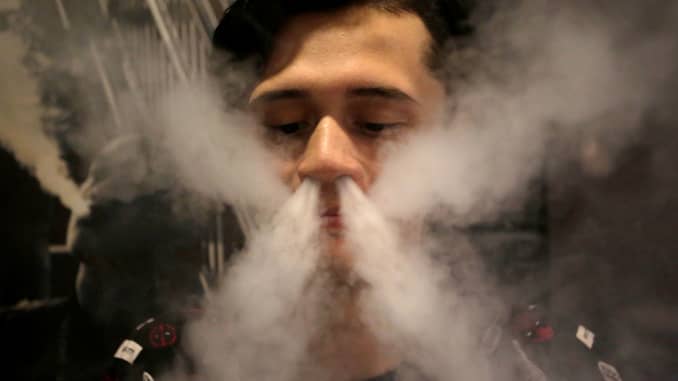
Vaping Nam Y. Huh / THE ASSOCIATED PRESS

In 2017, one quarter of high school students in Ottawa have claimed they experimented with e-cigarettes, and the general consensus is that since then that number has likely increased. According to Robert Schwartz, executive director of the Ontario Tobacco Research Unit, professor at the University of Toronto Dalla Lana School of Public Health, research indicates a clear link between advertising and promotion and e-cigarette use. The current promotion and advertising with JUUL Labs as an example, is geared toward youth.

The colourful, playful packaging, the youth-oriented flavours are all attractants specifically for a young market. And that market is responding with enthusiasm. Research by the Ontario Tobacco Research Unit demonstrates exposure to advertising to be sky-high in Ontario: "Just about everybody is exposed", stated Mr. Schwartz. And with that exposure, rates of vaping among youth who have never before smoked is increasing in Ontario as well as in other provinces, a situation concerning to school officials and health authorities alike.

Evidence of harm from vaping, including its negative effects on the lining of the respiratory system leading to young people accustomed to vaping, coughing and wheezing twice as frequently as non-users is pointed to by Dr. Schwartz. Tens of thousands of young people who have vaped are now becoming addicted to nicotine, thanks to the flavours attractive to teens. Now that the news of hundreds of instances of severe lung disease in the U.S. flagged as linked to vaping has alerted Canadian health authorities, a new spotlight on vaping has emerged.

Most lung illness cases now under investigation in the United States, a death included, involved youth and young adults, leading Canadian health experts like Dr. Andrew Pipe to calling out for more stringent rules on advertising and packaging and promotion of e-cigarettes. In the United States, certain flavours of the JUUL products have been banned on the basis of their appeal to children and teens, whereas no such preventive action has been taken in Canada.

There is little research into the long-term effects of vaping. Phil Noble / REUTERS

Dr. Michael Siegel, a professor in the Department of Community Health Sciences at Boston University School of Public Health points out that in each instance of lung disease, oil-based THC and not the alcohol-based liquids in most e-cigarettes has been identified. He takes exception to the U.S. Centres for Disease Control advising youth and young adults to avoid e-cigarettes altogether, insisting this bias places lives at risk by not singling out the specific product causing harm; instead causing general alarm that will result in moving people away from a safer alternative to smoking.

Dr. Pipe, on the other hand is concerned with evidence pointing to some e-cigarette products delivering greater amounts of nicotine into the system than cigarettes. Where a pod -- the system that JUUL uses to deliver nicotine and flavour -- contains the equivalent of 20 cigarettes' nicotine content. With reports of teens vaping an entire pod at a time, this rings alarm bells for him.

RT: Vaping vape e-cigarette 190205
A man poses for a picture as he vapes at a vape shop.
Daniel Becerril | Reuters

Labels: , , , , ,

Wednesday, February 20, 2019

Risks of Underage Cannabis Use

"My study clearly shows that cannabis does not cause schizophrenia by itself. Rather, a genetic predisposition is necessary."
"It is highly likely, based on the results of this study and others, that cannabis use during adolescence through to age 25, when the brain is maturing and at its peak of growth in a genetically vulnerable individual, can initiate the onset of schizophrenia."
Dr. Lynn E. DeLisi, Harvard Medical School
c35a1265d4389cb6f274999af04c50db
Cannabis, also known as marijuana, is a product of the plant Cannabis Sativa.

"It has long been known that cannabis use can cause an acute psychotic episode in some individuals and recent epidemiologic studies suggest that frequent cannabis use in adolescents may lead to an acute psychosis that by itself develops into chronic schizophrenia. However, the majority of individuals who use cannabis do not develop a psychosis or schizophrenia. Thus, some additional mechanism must underlie the development of schizophrenia in those that are affected. If cannabis use can interact with an underlying genetic basis for the illness, changes in brain structure characteristic of patients with schizophrenia will be seen in those cannabis users who later develop schizophrenia. The brain changes may represent the genetic vulnerability for schizophrenia and be predictive of who develops the illness. Thus, Aim #1 (primary aim) of this proposal is to determine whether brain structural deviances in temporal and frontal lobes and their white matter connections will predict which cannabis users develop schizophrenia. To accomplish this we will evaluate consecutive admissions with a first psychotic episode subsequent to cannabis use admitted to two large NYC psychiatric emergency rooms. These patients will be compared with adolescent cannabis users who never had a psychotic episode, and age, sex, and social class matched non-cannabis using controls. The presence of brain structural anomalies, particularly those characteristic of patients with chronic schizophrenia psychoses will be determined by MRI scans. All cannabis using subjects will have a diagnostic follow-up evaluation one and two years subsequent to the first psychotic episode to determine who developed a diagnosis of schizophrenia or whether the initially non-psychotic individuals remained symptom-free." "Aim #2 of this proposal is to examine whether brain abnormalities among cannabis users with a first schizophrenic-like psychosis are associated with increased genetic risk for schizophrenia. This will be achieved by obtaining family information from reliable family informants. This study will ultimately have implications for early treatment strategies in adolescent cannabis users who are at high genetic-risk for psychosis and suggest early biological warning signs through MRI evaluations of individuals who have an acute psychosis following cannabis use."
Abstract:   Biological Prediction of Psychosis Susceptibility among Adolescent Cannabis Users     Harvard University, Boston, MA, United States

During the teenage years of brain development unneeded connections between brain cells in the prefrontal cortex are stripped away; this is the area that controls thinking and planning. This is also the region that becomes perturbed when psychotic conditions arise, a region rich in CBI (cannabinoid) receptors involved in pruning the brain, and which become engaged by the use of cannabis. The result is the potential for alterations to the pruning process to occur. leading to an increase in the risk of schizophrenia, according to recent research. 

Circumstantial evidence exists that a biological mechanism can be triggered with the use of cannabis, causing a psychotic disorder with a tendency to emerge in late adolescence or early adulthood, matched to a period of rapid brain development. There is a realization that an inherited genetic vulnerability is involved, since psychotic conditions tend to be genetically inherited as a familial trait. Studies suggest that people are likelier to experience paranoia with cannabis use when they are already at a heightened risk of psychosis.

A study conducted in 2014 found a heightened schizophrenia risk among those with a family history, irrespective of cannabis use, leading to the understanding that familial risk for psychotic disorders outweigh possible added effects of cannabis use. According to Dr. DeLisi of Harvard Medical School, it appears likely that cannabis use during adolescence to age 25 can have the effect of initiating schizophrenia onset. However, research that might finally settle the question is scarce since marijuana has been illegal for a long period of time.

With the legalization of marijuana, policy makers and physicians are increasingly aware of the potential dangers of recreational marijuana use given that experts make a distinction between the "new cannabis" strains that are legal and far more potent now available in edibles and vapes, as opposed to the old version which comes in as a much milder weed. T.H.C., the chemical producing marijuana's narcotic effect has been rising for the past three decades. But well before then, about 70 years ago the suspicion among doctors that a link existed between marijuana and psychosis in the young existed.

Other stimulants such as caffeine, nicotine, alcohol can also be viewed as a potential cause of psychosis and hallucinogenic effects when taken in excess, just like marijuana. The temporary disorientation with peculiar imagined sights and sounds, on occasion accompanied by paranoia are the symptoms of psychosis yet the vast majority of those who experience a psychotic episode fail to develop a persistent condition such as schizophrenia, characterized by episodes of psychosis recurring for years.

The debate now ongoing revolves around the distinction between correlation and causation where people with psychotic problems often use cannabis on a regular basis, but on the other hand what is as yet unclear is which came first, the habit of using cannabis or the psychosis. And, to date, insufficient evidence exists to define whether heavy cannabis use causes schizophrenia or other syndromes. This issue is quite aside from that of possible brain damage occurring with the constant use of marijuana by under-aged users.

The end result of studies and conclusions and alternating theories rests with the issue that everyone agrees with, that the regular use of the newer, high-potency cannabis may be regarded as a risk for youth who have a family history of psychosis. 


Labels: , , ,

Saturday, November 04, 2017

Yearning to be Reborn

"Without any clear evidence of benefit beyond placebo, PRP is now being marketed aggressively as a cure-all for sports injuries. And at about $300 per injection (the NYT reports $2000/treatment), there’s plenty of money to be made. … a nation-wide marketing initiative has begun, using sports celebrities as guinea pigs."
ScienceBasedMedicine.org

"We test blood before and one month after treatment. [Just one infusion] dramatically improves people's appearance, their memory and their strength. It's sort of surprisingly effective."  
"It's too early right now [to submit data for publication scientific journals], but I don't want to wait forever."
"Aging isn't treatable with conventional approaches. It's pretty clear we need a paradigm shift. And there are a lot of people in the Bay area who think like that."
"There's just a lot of money to be invested, in anything."
Jesse Karmazin, founder, Ambrosia, San Francisco

"[Karmazin's research represents] science by go-fund-me; [the source of the plasma is troubling]."
"I think there's a betrayal in trust here. 'You may think we're using your blood to save somebody but we're actually using it in a kooky experiment to try and prolong the life of people who would never hire you'."
Arthur Caplan, bioethicist, New York

"We need to find something that is in the old blood and we need to neutralize it."
"Someone's young blood can't be added to in enough volume, or often enough to offset aging."
Irina Conboy, associate professor, University of California, Berkeley
Plasma
A controversial pay-to-participate clinical trial will test whether plasma from young donors can counteract aging.  Martin Schutt/picture-alliance/dpa/AP Images

Professor Conboy and her colleagues set off, in 2005, an interest in what is now called the "young blood" movement, when a research paper published in Nature alerted science to a procedure called parabiosis that appeared to give a youth advantage to old mice when paired with young mice. Her research team surgically stitched together an old mouse and a young one to enable the blood to run between both to determine whether old tissues might be rejuvenated.

They were rewarded when, within a five-week period, the older mice had muscle and liver cells restored. Dr. Conboy interpreted the result biologically, pointing out that it wasn't only blood that was shared, but with the two mice sutured together the old mouse had the advantage of access to younger lungs, heart, liver and kidneys. More latterly she and her colleagues developed another, direct blood exchange system with a special device to move blood between two mice without stitching them together.

Each mouse obtained half of the other's blood and while the older mouse demonstrated some improvement in muscle, "zero benefit" was obtained with its brain, cognition or the formation of new neurons. On the other  hand, the young mouse experienced notable declines in most tissues and organs tested, becoming immediately older, to show that the old blood dominated. She is now working on a new concept to cleanse old blood of harmful molecules "so that you will feel you are 35 years old when you are 65".

These genuine, replicable results conforming to methodology in scientific investigation are held to be reliable, enabling science to go on from the point where one step invariably leads to another. However, the new sensation among those seeking the 'fountain of youth", to be restored to that time when they were younger, physically and mentally, is being marketed to people through the injection of rich, yellow blood plasma with the promise that this protocol will help people live longer.

Infusion of the plasma takes two hours for two litres of the liquid that holds red and white blood cells and platelets. It is a physically painless procedure, and costs about $8,000 for each treatment through what is being termed a 'clinical trial' by Ambrosia, among other purveyors of instant youth. The plasma is obtained from donors whose age is between 16 to 25 who have been informed that their blood is vital to restore patients' blood in emergencies through infusions.

Another biotech company, Alkahest, the world's largest plasma-based manufacturers, been infusing pints of young plasma into Alzheimer's patients. The company's scientific advisory board is headed by Stanford neuroscientist Tony Wyss-Coray whose own research showed repeated injections of old mice with human plasma from newborn umbilical cords improved memory tests performance on old mice. The old brain is malleable, he said "It can be rejuvenated; it has just dried out".

McGill University biologists on the other hand wrote their conclusions recently through a massive study that humans could conceivably live to 150 or beyond in their Nature commentary, dismissing a profile paper published in the same journal a year earlier claiming the maximum human lifespan would be 115. Still, the general consensus is that though humans are mortal, no evidence exists we've yet reached a plateau in span-of-life.

Karmazin claims that his team found a ten percent drop in blood cholesterol levels, 20 percent fall-off in a protein recognized as causing the plaques linked to Alzheimer's, and changes in other biomarkers related to aging, since they began testing plasma infusions last September. The U.S. Food and Drug Administration has permitted Ambrosia's trial to proceed, and 100 people signed up as subjects, but the trial lacks a control group, invalidating scientific conclusions.

Ambrosia is reliant on blood banks making plasma available to him. A dozen blood banks refused to sell plasma from young donors to Karmazin, but one agreed to. Conventionally donations may be used for research purposes and donors are advised of this when they sign consent forms. Men, it appears account for two-thirds of Karamzin's trial subjects willing to pay $8,000 for each treatment, among whom have been a number of Silicon Valley executives.

07_21_YoungBlood_01
The concept of blood transfusions as an elixir of youth was the basis for season 4 episode 5 of Silicon Valley (entitled "Blood Boy")

Labels: , , , ,

Friday, October 13, 2017

Be Advised :  Rough Road Ahead

"It will be essential for those tasked with [educating youth about Cannabinoid Hyperemesis Syndrome -- CHS] this massive undertaking to figure out what to say by engaging stakeholders, including the Canadian Association of Emergency Physicians, in order to shed some light on CHS."
"We need to find out how to say it and who should say it so youth will listen."
"And, this all needs to be done starting now; we are on a tight time frame, after all. July 1 [2018, when Marijuana possession becomes lawful in Canada] is coming up fast, and we aren't ready."
Dr. Jessica Ross, emergency physician, Ontario
Marijuana
In this Feb. 17, 2016 photo, plants grow at the home of Jeremy Nickle, in his backyard in Honolulu, Hawaii. (AP / Marina Riker)

Abdominal pain, nausea and intractable vomiting resulting from chronic, regular cannabis use is a condition with a name: Cannabinoid Hypermesis Syndrome. Some doctors are familiar with the symptoms to enable them to make an accurate diagnosis and proceed with appropriate treatment, which of necessity includes persuading teens that it is not in their best interests to smoke pot. And some physicians have never heard of CHS, much less are knowledgeable about its symptoms; ergo, no diagnosis will be made in identifying an ill teen accompanied by a worried parent.

Dr. Ross, on the other hand -- in her capacity as an emergency physician, once she had ascertained that the very sick young man who had been admitted to her hospital in the company of his frantic mother had no fever, no diarrhea, and hadn't recently been on a trip to the tropics -- was able to identify the symptoms and link it to the cause. Her questioning of the 14-year-old boy and his mother elicited few clues, but the light slowly began to dawn when Dr. Ross suggested that the boy's mother briefly withdraw. And then it was that the boy admitted that he is a casual imbiber of alcohol and a daily pot smoker.

At the ripe old age of 14, the tow-haired boy said he was actually a veteran pot user, had been smoking it daily for a full two years. Making Dr. Ross quite confident in diagnosing his symptoms. She ran a few tests and then informed her patient and his mother that his vomiting was a result "of all the pot you've been smoking". Dr. Ross is becoming fairly confident and comfortable about such diagnoses, even while she is fairly perturbed and definitely uncomfortable that the syndrome is on the increase.

That being so, she is more than slightly concerned at the impending legalization of recreational marijuana. All the more so that cannabis use in the youth of Canada is taken as a casual reality, with more young people using the drug than most parents are prepared to credit. Young people feel relaxed about their cannabis use -- after all, 'everybody does it' and whatever is popular is a must for youth who are otherwise engaged in proving how 'different' they are from everyone else.

Young people in grades 7 through to 12 in responding to surveys affirm that one in five have tried cannabis, with over one in ten using it in the past month, while the average age of initiation into the ritual use of pot appears to be 15 years of age. In the United States, Colorado legalized marijuana use and if a dependable example is sought, they can qualify as a model for avoidance given they experienced close to a doubling of CHS cases following liberalization.

Hazards such as dangerous dehydration can result from CHS, which also contributes to absenteeism from school and from the workplace, even if setting aside the effect it has on an already overburdened health care system with emergency departments seeing the same sufferer on multiple occasions. And diagnosis is often elusive, leading to needless and expensive tests and prescribed treatments after consultation, which bypass correct diagnosis until an accurate diagnosis finally occurs.

Despite which the belief persists among young people that marijuana use is pretty safe. Education for parents, their children and health-care practitioners must be dependably in place to inform all parties. Health Canada has made it a priority to educate about the health effects of  cannabis, particularly among the young, while the Canadian Pediatric Society and the Canadian Psychiatric Association have produced positions statements giving warning of  cannabis harms to youth.

Risks such as impaired brain development, increased prevalence of mental illness and diminished school performance as well as lifetime under-achievement are real potentials and people need to understand this to be fact, not fiction, as they would prefer to believe. All to the good; Dr. Ross applauds their efforts, yet on the other hand, wonders why mention of CHS in these documents is completely absent.
Cannabis use has become one of the most commonly abused drugs in the world. It is estimated that each year 2.6 million individuals in the USA become new users and most are younger than 19 years of age. Reports describe marijuana use as high as 40–50% in male Cyclic Vomiting Syndrome patients. It is this interest in cannabis in the World, coupled with recognition of a cyclic vomiting illness associated with its chronic use that beckons a review of the most current articles, as well as a contribution from our own experiences in this area. The similarities we have demonstrated for both cannibinoid hyperemesis syndrome and cyclic vomiting make the case that cannibinoid hyperemesis syndrome is a subset of patients who have the diagnoses of cyclic vomiting syndrome and the role of marijuana should always be considered in the diagnosis of CVS, particularly in males.
Mithun B. Pattathan, Reza A. Hejazi, and Richard W. McCallum  U.S.National Library of Medicine: National Institutes of Health: Published online 2012 Jun 29.

Labels: , , , ,

 
()() Follow @rheytah Tweet