Ruminations

Blog dedicated primarily to randomly selected news items; comments reflecting personal perceptions

Sunday, September 17, 2023

Lucidity During Cardiopulmonary Resuscitation

What happens to the brain during near-death experiences
"[In some cases, brain activity returned to near normal physiological levels at different points up to an hour into CPR], suggestive of the emergency of consciousness and resumption of a network-level of cognitive activity."
"[A new study of cardiac arrest survivors reporting lucid experiences, including a] purposeful review of their lives [during revival by CPR despite their brains having] flatlined [with no visible signs of consciousness] is leading researchers to new insights where they describe their findings as the] first report of biomarkers of consciousness during CPR -- cardiopulmonary resuscitation]."
Research report
An illustration showing the moment of death
Photo by Cornelia Li for National Post
"[The aim of the study is to better understand] what's happening in the brain as people transition from life to death, and while we're trying to revive them, and to see if we can find any markers of these lucid experiences of death."
"Brakes [are removed while the brain is deprived of blood flow and oxygen, allowing access to deep memories and] hidden dimensions of reality that they would otherwise not be able to access under ordinary circumstances. [An experience that] only comes to the fore in death."
"Millions of people have reported having lucid recalled experiences of death and nobody understood what was going on in this phenomenon."
"The brain does not have resilience when it comes to oxygen deprivation."
"We were able to show that, yes, the brain does lose function, it does flatline. But that for even up to an hour after they have been oxygen deprived, and they're getting resuscitation, that you can see signs of normal brain activity emerge from the flatline state."
"[The flatlined brain stays flatlined, for a long period of time, but in between it shows spikes of normal activity] which shows it can mount a normal response. It hasn't permanently died."
Dr. Sam Parnia, senior study author, critical care and resuscitation specialist, NYU Langone Health
Published online in the journal Resuscitation, 25 British and American hospitals were involved in the study. The issue was that despite it has always been assumed that people lose consciousness or awareness at least ten minutes after their hearts stop beating, some cardiac arrest survivors, the study revealed, reported lucid experiences. 

The study involved 567 patients who, while they were in hospital experienced their hearts stopping. Of that total 43 only survived, were discharged and returned home. Of the discharged patients 28 were sufficiently fit and healthy to take part in an interview. Since so few patients survived, the researchers analyzed testimony from another 126 people separately, who had previously survived cardiac arrest.

Dr. Parnia, lead researcher in the study, believes his team may have discovered a mechanism that explains the seemingly unbelievable claims of near-death experiences: a disinhibited dying brain. "Brakes", he explained, in the brain that restrain information overload are removed while the brain is deprived of blood flow and oxygen. The claims of people having lucid thoughts during these crises have been dismissed by science with the assumption of hallucinations.

The assumption has always been that following ten minutes or so of oxygen deprivation the brain dies. What the study has done is differentiate between losing function immediately within seconds, and the brain's permanent death.  A dynamic process where the flatlined brain remains flatlined but spikes of normal activity erupt. Patterns consistent with when we're normally conscious, stresses Dr. Parnia.

When "code" for an in-hospital cardiac arrest was called, participating researchers dispatch to the resuscitation room carrying backpacks holding a portable EEG monitor and portable brain oxygen monitor. Patients were fitted with headphones and a tablet computer was stationed above their heads. The names of three fruits; apple, pear and bananas had been prerecorded on an app installed on the tablet along with ten "visual stimuli", pictures of people, animals, monuments and newspaper clippings.

365 people in total had headphones and computer attached. Of that number some 200 also had brain oxygen monitoring, with 85 having oxygen and EEG monitoring along with a consciousness test. 53, or 9% of the 567 people who went into cardiac arrest survived. Twenty-eight were interviewed, and 11 had memories or perceptions during CPR. And while no one described explicit recall of seeing the tablet images or hearing the recording, when asked to guess randomly, one chose the correct three fruits.

A black and white photo of a person in a hospital bed.
FreeThink

"What we realized is that there is a spectrum of consciousness. [At one end, vague perceptions.] At the other end of the spectrum, we have full visual and auditory awareness where people recalled specific details of what was happening to them."
"[People reported feeling] as if I was being lifted."
"I saw my entire life in great detail. My life and all its events started to play in my mind."
Dr. Sam Parnia 

"That would not have happened 10 years ago, and it would never have happened 20 years ago. We’re living in a different world, and now, this study opens up a new vista and we just have to learn more about it."
"My hat is off to Dr. Parnia because he’s trying to seriously study something that we all wonder about. Every one of us who’s taking care of a dying patient — I’ve taken care of thousands — and you wonder, could they be conscious? Might they have a near-death experience?"
Dr. Lance Becker, chair, emergency medicine, resuscitation researcher, Northwell Health System, Manhasset, New York


Labels: , , ,

Friday, July 21, 2023

The Power of Conviction

"The number of personalized drugs on the market has doubled in the past five years. Understanding how a patient's beliefs may affect personalized treatments could encourage researchers to better control for them when developing new drugs."
"We wanted to see whether these treatments are more effective for something other than just their chemical components. Contextual factors [are important in determining a treatment's effectiveness]. This can be patient expectations. These can be the process of personalizing the treatment, the setting where people receive the treatment and what kind of communication they receive from the physician or from the clinician that they received the treatment from."
"If it is confirmed in clinical settings then it could suggest that at least a part of the personalized treatment's effectiveness is due to the placebo effect. So, researchers need to control for it more when developing personalized drugs, and clinicians could use it when delivering these drugs."
"Participants who scored high on wanting to feel unique benefited the most from the machine when it was presented to them as personalized to their genetics."
Dasha Sandra, master of science graduate, neuroscience program, McGill University

"Currently, clinicians delivering personalized treatments know little about how psychological factors can improve their patients' outcomes."
"Our findings, if confirmed in clinical studies, could help clinicians harness these factors to deliver personalized treatments more effectively."
Mathieu Roy, associate professor of psychology, McGill University
https://smartcdn.gprod.postmedia.digital/nationalpost/wp-content/uploads/2023/07/Untitled-design-1.jpg?quality=90&strip=all&w=1128&h=846&type=webp&sig=qNNLKAcZCd9f5o4V6gmiaQ
Researchers in the department of psychology at McGill University undertook a study with the enrolment of 102 adult subjects, finding early evidence that convincing someone verbally that a health remedy has been personalized just for them, can vastly increase effectiveness.  The study subjects received forearm heat stimuli causing pain after which they were given an electric current which it was explained would reduce the pain. The treatment in actual fact was a sham, but those in the study informed the treatment was personalized, found it to be more effective than the rest of the subjects who received the placebo.
 
The results concluded that patients informed their treatments were personalized reported an 11 percent reduction in pain intensity, with the pain that was experienced being 15 percent less unpleasant in comparison to a three percent reduction on both counts for those who were told the treatment was generally effective. Personalized medicine makes use of genetic information and physiology in tailoring treatments to an individual patient, with the intention of delivering more effective results. Its use is gaining in popularity. 

For the study, participants underwent a process mimicking that of patients who actually are the recipients of personalized treatments in reality. The participants were given a sham genetic test, then informed it would be analyzed by doctors. A fake psychological test was also administered. The study conductors made a pretense of adjusting a machine to reflect the personalization of what they claimed was based on the results of the sham tests. 

What the placebo effect represents is any effect from a treatment unrelated to its pharmaceutical compounds. "The effect of the treatment (is) based on the patient psychology rather than based on the context of the pill", explained Ms. Sandra. And while scientists are uncertain precisely how the placebo effect works, it is recognized for its potentially powerful effects. There are theories justifying the effectiveness of the placebo effect; that less anxiety may result, or that it could lead to a change in the state of a patient's brain, or the release of endorphins in the brain may occur when patients believe in the treatment's effectiveness.

A personality test was required of the study participants which led the researchers to the conclusion that people who value feeling unique could be more greatly influenced by the placebo effect. It was from among these study subjects that reports of greater pain relief emanated than from the sham personalized treatment.
 
McGill University


Labels: , , ,

Wednesday, July 19, 2023

Recovering Hair Loss With Topical Hemp Extract

"Since this hemp extract works through novel mechanisms entirely different from finasteride and minoxidil, it can be used in conjunction with these current drugs and would be expected to have synergistic effects."
"The study is a case series of adults presenting to a 'Hair and Scalp' center in Clearwater, Florida. Adult subjects, who were not currently using minoxidil or finasteride, were offered the opportunity to receive the hemp-based formulation free of charge. Thirty-one subjects, 15 males and 16 females, representing a variety of racial backgrounds (27 Caucasian, 2 Asian, and 2 Mixed-race), presented AGA with Norwood-Hamilton scale classification score of 3V or higher. The predefined endpoints were hair counts obtained in a defined, representative area of scalp hair loss, and investigator clinical assessment of hair growth."
"Ages ranged from 31 to 65 for the females and from 39 to 64 for the males. The subjects gave their written informed consent for this 6-month trial. The study adhered to the Helsinki guidelines and was institutionally approved. None of the subjects were currently using minoxidil or finasteride. No other hair loss treatments were used during the 6 months of the research."
Topical Cannabinoids study, International Journal of Trichology
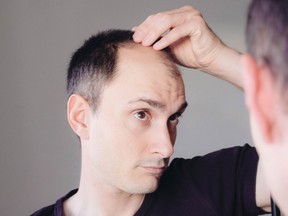
Man with thinning hair
A study involving 31 male and female patients with androgenetic alopecia -- the most common cause of hair loss -- was published recently in the International Journal of Trichology. Every patient in the study, 15 men and 16 women, was found to have experienced regrowth of hair following daily application of a topical solution which was formulated with hemp-derived cannabinoids over a period of the study's six-month experiment.

None of those involved in the study reported having suffered adverse effects of any nature as a result of the daily use of the topical solution. According to researchers, the finds resulted in "superior results" in comparison to traditional hair regrowth prescription medications such as finasteride and minoxidil ointments.

The study concluded that the cannabinoids which included cannabidiol (CBD), tetrahydrocannabivarin (THCV) and cannabidivarin (CBDV) were proven to have novel therapeutic effects on hair growth through the endocannabinoid system, playing a crucial role in regulating natural functions of many of the body's natural functions through "down-regulating" inflammatory responses and "up-regulating" regenerative processes.
 
An external file that holds a picture, illustration, etc.
Object name is IJT-15-18-g001.jpg
Male– Day 0–2 hairs/cm2
 
Male patients on average recorded a 15.07 hairs/cm2 increase of hair regrowth for an average increase of 246 percent.  Hair regrowth of 15.05 hairs/cm2, for an average increase of 127 percent was realized by female patients. Photographs before and after treatment of the patients' scalps according to an independent review, were found to have "mild" to extensive scalp coverage improvements for all participants in the study.
 
An external file that holds a picture, illustration, etc.
Object name is IJT-15-18-g004.jpg
Female– Day 180-37 hairs/cm2
 
2021 research had found that topical applications of about 3 to 4 milligrams of CBD fed an average of 93.5 percent increase in hair after six months' usage. Hair regrowth was recorded in that earlier study in every patient, with no adverse effects, as well. Although the latest study improved on those earlier results, researchers feel that further studies are required to determine safety and efficacy of topical hemp extracts used in conjunction with finasterid and minoxidil.
 
An external file that holds a picture, illustration, etc.
Object name is IJT-15-18-g002.jpg
Male– Day 180-19 hairs/cm2
 
Sold in general forms, Minoxidil in branded products such as Rogaine have been consistently popular as a hair loss treatment since the 1980s. Finasteride-based products like Proscar and Propecia were popular in the 1990s. There have been identifiable links to prostate cancer risk, skin rashes and sexual side-effects such as arousal and maintaining an erection, however, with Finasteride.

An external file that holds a picture, illustration, etc.
Object name is IJT-15-18-g003.jpg
Female– Day 0–16 hairs/cm2

Labels: , , ,

Thursday, June 08, 2023

Crewing a Mars Voyager Spacecraft with Female Astronauts

"On average, women tend to be smaller than men, and so this metabolic advantage may be greater in women, as suggested by our calculations."  
"This is why we concluded that there may be specific metabolic or life support resource operational advantages to all-female crews during future human space exploration missions."
"At this point in time, I don't think our study will have any influence [on the gender of the crew for a Mars mission], and I don't think it should."
"The two studies we performed, one on theoretical male and one on theoretical female astronauts, are just that — theoretical."
Jonathan Scott, researcher, French Institute for Space Medicine and Physiology
https://cdn.mos.cms.futurecdn.net/HQN4xAtnNMhVqf3G6EuWGb-1200-80.jpg
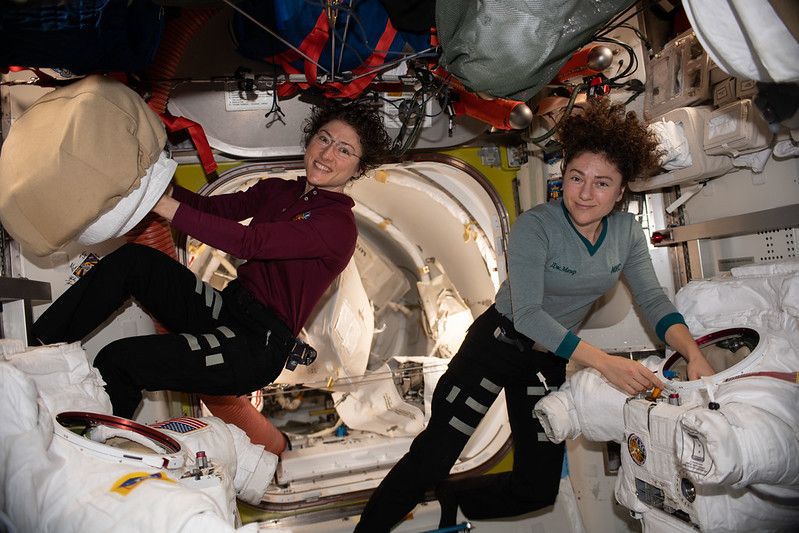
NASA astronauts Christina Koch (left) and Jessica Meir prepare their spacesuits for a series of spacewalks in January 2020. (Image credit: NASA)
Lead author of a new study published in April in the journal Scientific Reports -- Jonathan Scott and his colleagues -- found that female astronauts' requirements for food, water and oxygen are significantly less than needed by their male astronaut-counterparts. Their study looked at requirements for a four-person crew on a hypothetical three-year trip to Mars and back.

This study is one of a growing body of research that suggests female astronauts use far fewer resources of necessity than males. Any reduction in the amount of food, water and oxygen required to sustain life on a years-long journey to Mars and back would generate considerable savings, even to the degree that a mission might become a success, evading failure.

The Scientific Reports study calculated an all-female crew would have a total energy expenditure of between 5 and 29 percent less than would an all-male crew of similar stature, a differential accountable by female astronauts being lighter than males of a similar height, and requiring lower oxygen resources. The study team drew on astronaut data for both sexes back to the 1950s

Early NASA planners had considered female astronauts for the same reason of resource consumption, accompanied by the  belief that females might cope with more tolerance to the tight spaces and isolation linked to such an epic journey. Since that early period of space exploration dating back 70 years, the idea of all-female flights was periodically considered.

In the year 2000, NASA had seriously considered deploying an all-female space shuttle flight. In that same year a paper was published, entitled "An all-woman crew to Mars: a radical proposal", but one that has remained a proposal with dim expectations it would be carried out from its status as a potential to a commitment.

From left, astronauts Jessica Meir and Christina Koch aboard the International Space Station in 2019.
"[International Space Station modules have a diameter of about 4.2 metres; three metres in diameter. might represent the dimensions of a Mars ship.] As such, crews composed of individuals with smaller statures may also have potential habitability benefits (i.e., perceived volume and sensation of ‘crowdedness’) when co-working in the same module."
"In addition, there may also be reduced crew ‘traffic interactions’ where crew members need to move to allow another to pass and/or share equipment or workstations."
Scientific Reports-published study

Labels: , , ,

Saturday, May 20, 2023

Advances in Cancer Treatment

research, ndes, pancreatic cancer device from interestingengineering.com
The NDES Device
"One of the most exciting findings was that even though the NDES [nanofluidic drug-eluting seed] device was only inserted in one of two tumours in the same animal model, we noted shrinkage in the tumour without the device."
"This means that local treatment with immunotherapy was able to activate the immune response to target other tumours."
"In fact, one animal model remained tumour-free for the 100 days of continuous observation."
Corrine Ying Xuan Chua, assistant professor of nanomedicine, Houston Methodist Academic Institute

"Our goal is to transform the way cancer is treated."
"We see this device as a viable approach to penetrating the pancreatic tumour in a minimally invasive and effective manner, allowing for a more focused therapy using less medication."
Alessandro Gratoni, chair, department of nanomedicine, Houston Methodist Research Institute
Pancreatic cancer is one of the most aggressive forms of cancer. A small organ situated behind the stomach, the pancreas produces enzymes and hormones assisting the body in breaking down food to convert it to energy. Pancreatic cancer symptoms usually appear only once tumours have begun to take their toll on the body, which makes its presence difficult to detect. Patient prognosis varies dependent on how early in its development the cancer is detected. In Canada, the five-year net survival rate for pancreatic cancer stands at ten percent.

The most common treatment used in cancers that are difficult to treat and which have few treatment options available. is immunotherapy. Owing to the fact that immunotherapy is delivered throughout the entire body, the risk of side-effects that can last a lifetime, come with the therapy. Patients can expect fewer side-effects and a better quality of life during treatment, if the treatment area can be narrowed to the tumour site specifically, sparing the rest of the body from toxic chemical exposure.

A new and hugely promising technique has been advanced, detailed in the journal Advanced Sciences. The technique makes use of an implantable device smaller in size than a grain of rice. This device has been designed to deliver immunotherapy directly into pancreatic tumours. Called an NDES device, it can deliver sustained doses of CD40 monoclonal antibodies (mAb), and was shown to reduce tumours in mice models even though a fourfold lower dosage than what is required for traditional immunotherapy was used.

The nanofluidic drug-eluting seed (NDES) device includes a stainless-steel reservoir which contains nanochannels allowing for the sustained diffusion of CD40 monoclonal antibodies, an immunotherapeutic agent of great promise. Patients can avoid repeated infusions -- and corresponding side-effects that can accompany traditional immunotherapy -- because the device has been designed to be used over the long term.

More research is required, but the team from the department of nanomedicine at Houston Methodist Research Institute anticipates that the device will become a viable option for treatment of cancer patients within the following five years.

596150.jpg
Houston Methodist Research Institute nanomedicine researchers used an implantable nanofluidic device smaller than a grain of rice to deliver immunotherapy directly into a pancreatic tumor. Credit: Houston Methodist
Study Abstract
"Agonist CD40 monoclonal antibodies (mAb) is a promising immunotherapeutic agent for cold-to-hot tumor immune microenvironment (TIME) conversion. Pancreatic ductal adenocarcinoma (PDAC) is an aggressive and lethal cancer known as an immune desert, and therefore urgently needs more effective treatment. Conventional systemic treatment fails to effectively penetrate the characteristic dense tumor stroma. Here, it is shown that sustained low-dose intratumoral delivery of CD40 mAb via the nanofluidic drug-eluting seed (NDES) can modulate the TIME to reduce tumor burden in murine models. NDES achieves tumor reduction at a fourfold lower dosage than systemic treatment while avoiding treatment-related adverse events. Further, abscopal responses are shown where intratumoral treatment yields growth inhibition in distant untreated tumors. Overall, the NDES is presented as a viable approach to penetrate the PDAC immune barrier in a minimally invasive and effective manner, for the overarching goal of transforming treatment."

Labels: , , ,

Wednesday, May 17, 2023

Verifying "Aboriginal Folk Wisdom"

"This incredible result didn't really surprise us, as we're taught that when there's more and better evidence the truth will ultimately come out."
"UTIs [urinary tract infections] are horrible and very common; about a third of women will experience one, as will many elderly people and also people with bladder issues from spinal cord injury or other conditions."
"Even back in 1973, my mum was told to try cranberry juice to prevent her horrible and frequent UTIs and for her it's been a saviour. Despite me niggling in her ear about evidence, she's continued to take it daily, first as the nasty sour juice and in recent years, the easy-to-swallow capsules. As soon as she stops, wham the symptoms are back."
"As usual, it turns out that mum was right! Cranberry products can help some women prevent UTIs."
Gabrielle Williams, lead author, research study, Flinders University, Australia
A woman drinking a glass of cranberry juice.
 
For centuries, people believed that cranberry juice acted as a barrier against acquiring urinary tract infections. To the present that belief persists and people trust that cranberry juice and its supplements make it possible to prevent the onset of urinary tract infections [UTIs]. Now, a global study published in the journal Cochrane Reviews, has found the consumption of cranberry products can indeed lessen the risk of repeat symptomatic UTIs by 25 percent in women, by more than half in children, and by 53 percent in patients, following medical procedures.
 
Long touted as an effective deterrent, the most recent review of the literature in 2012 found no significant benefits in the juice and its supplements, including capsules and tablets. Researchers from Flinders University and The children's Hospital at Westmead in Australia, however, sought to update those findings and analyzed 50 recent trials involving close to 9,000 subjects. Their study revealed a different story; that the anecdotal but scientifically unproven merits of cranberry juice as a UTI preventive could be verified.

UTI infections are universal. An issue that arises generally when E.coli bacteria that live on human skin outside the body manage somehow to invade the body interior, enter the urethra, and travel to the bladder -- and once there, cause an infection.Women with their shorter urethras have more frequent incidents of UTIs than males since the shorter urethra results in bacteria not having to travel as far to reach the bladder.

Untreated infections have the potential to migrate to the kidneys to cause more serious complications, including, albeit rarely, sepsis, which makes it imperative that UTIs be prevented if at all possible. The published research analyzed by the Australian team revealed that cranberries, as popular belief had it, is a powerful ally in the prevention of urinary tract inventions, with few identified drawbacks.
 
"Most UTIs are effectively and pretty quickly treated with antibiotics, sometimes as little as one dose can cure the problem."
"Unfortunately, in some people, UTIs keep coming back."
"First Nations reportedly ate cranberries for bladder problems, leading to scientists exploring what it was in cranberries that helped and how it might work."
Jacqueline Stephens, study co-author, epidemiologist, Flinders University 


Labels: , , , , ,

Monday, April 17, 2023

Household Dogs and Cats Profoundly Beneficial to Children

Children who were exposed to dogs had less of a risk of developing egg, milk, and nut allergies.
Children exposed to dogs had less risk of developing egg, milk, and nut allergies.  Gettty Images
"The finding that exposure to dogs and cats is related to less food allergy seems pretty solid and agrees with several prior studies."
"[The new study] adds to the growing literature that contacts with pets could have many health benefits for children. In addition to food allergy, other studies have found lower rates of atopic dermatitis, wheezing illnesses, respiratory allergies, asthma and increased psychological well-being."
Professor James Gern, chief, Division of Allergy, Immunology and Rheumatology, University of Wisconsin, Madison
 
"Families with a strong family history of allergy are likely to have parents with pet-dander allergies.This makes it less likely that they will get pets for their children."
"So the inverse relationship between pets and allergies may be owing to the allergic parents not wanting to react to pets themselves."
Tom Marrs, senior author 2019 study
A new study found young children exposed to cats or indoor dogs had a lower risk of all food allergies compared with babies in pet-free homes.
A new study found young children exposed to cats or indoor dogs had a lower risk of all food allergies compared with babies in pet-free homes.   Paulo Sousa/EyeEm/Getty Images
 
Professor Gern published his own paper in 2004 that indicated the benefits of dog ownership in reducing the risk of all manner of allergies. But it was a new study, published in the journal PLOS One, led by Hisao Okabe of the department of pediatrics at the Fukushima Medical University that he was referring to. Hisao Okabe and his colleagues studied pet ownerships' link to food allergies overall, including a variety of specific food allergies. 
 
The new study from Japan had over 65,000 infants and parents enrolled, the largest such study yet. The conclusion appeared that in households with cats or dogs it was seen that children were less likely to develop food allergies. If exposure takes place during fetal development with a pregnant woman living with pets, the effect is still recognized.  During fetal development exposure to dogs or cats (or in the first few months of life) lowered odds of a later food allergy by some 14 percent. 
 
The benefit was most robust when the animals were kept indoors and exposure took place during fetal development as well as throughout infancy.

Their finding was that having a dog in the household had the effect of reducing risk of egg, milk and nut allergies. Cat ownership was also found to reduce the risk of egg, wheat and soybean allergies. Possible effects from other pets was also brought in to the study, with no significant association determined between food allergies and exposure to turtles, hamsters or birds.

The reduced risk of food allergy development as a result of living with dogs was still less in the most current study than in a paper previu9sly published, in 2019, a study which directly tested young children for food allergies rather than reliance on parents' questionnaires. It was that study that found living with dogs reduced the potential of developing food allergies by a whopping 90 percent. It also revealed that more dogs in a household, all the better. No infants in the study where at least two dogs shared a household developed a food allergy.

Parents-to-be may want to consider getting a dog or cat after reading this study.
Parentss ay want to consider getting a dog or cat  Getty Image
"I definitely would say it's been a murky area, but this study looks fairly convincing", commented Amanda Cox, professor of pediatrics at the Jaffe Food Allergy Institute, Icahn School of Medicine, Mount Sinai, in New York. She revealed that parents routinely ask her opinion on whether household pets increase or decrease their children's risk of developing allergies.

Last year, a review was published highlighting proven methods of reducing development of allergic disease which included breastfeeding exclusively for the first four to six months following birth; avoiding cows' milk in the first days of life; introducing peanuts in an age-appropriate manner; and growing up on a farm. "I would be interested in knowing whether spending more time inside with pets during the pandemic increased the effect on children's allergies", mused Dr. Cox.
"The authors [new study from Japan] may be over-interpreting the relationship between pets and specific food allergies like milk or wheat. They performed numerous comparisons, increasing the possibility that some random associations will be deemed significant."
"The benefits of exposure to animals have been demonstrated in several different contexts, such as with pets [like this study], farm animals [Central Europe, Amish and Wisconsin dairy farms}, and even pests [mice and cockroaches] in disadvantaged inner-city homes."
"Perhaps the overall message is that a biodiverse environment promotes immune development and healthy children."
Professor James Gern, University of Wisconsin
Owning a pet dog or cat could help your child from developing food allergies, new research shows.
Owning a pet dog or cat could help your child avoid developing food allergies, new research shows  Getty Images

Labels: , , ,

Saturday, April 08, 2023

The Emergence of Life on Earth

New evidence collected from the eastern Shennongjia Forestry District of China’s Hubei Province suggests that the Earth was not completely frozen during the Marinoan Ice Age
04-07-2023
"The key finding of this study is that open-water -- ice-free -- conditions existed in mid-latitude oceanic regions during the waning stage of the Marinoan Ice Age."
"Our study shows that, at least near the end of the Marinoan Snowball Earth event, habitable areas extended to mid-latitude oceans, much larger than previously thought."
"Previous research argued that such habitable areas,at best, only existed in tropical oceans."
"More extensive areas of habitable oceans better explains where and how complex organisms such as multicellular seaweed survived."
Huyue Song, geobiologist, China University of Geosciences
 
"It is widely believed that atmospheric carbon dioxide levels plummeted just prior to these events, causing the polar ice caps to expand and hence more solar radiation reflected back to space and the polar ice expanded further. And the Earth spiralled into Snowball Earth conditions."
"Compared to the most recent Ice Age, glacier coverage was much more extensive and, more importantly, much of the ocean was frozen."
"It is conceivable that these Snowball Earth events could have driven major extinctions, but apparently life, including complex eukaryotic organisms, managed to survive, attesting to the resilience of the biosphere."
Shuhai Xiao, geobiologist, study-coauthor, Virginia Tech 
Earth during the Marinoan Ice Age, 651–635 million years ago
An illustration shows Earth during the Marinoan Ice Age, 651–635 million years ago, when ice sheets covered most of the planet's surface. A new study suggests the presence of open waters in both low- and mid-latitude oceans rather than a planet completely frozen over. Huyue Song/Handout via REUTERS
 
From 720 million to 535 million years ago during the Cryogenian Period, Earth was frozen over twice with runaway glaciation that made the planet look from space like a shimmering white snowball. Yet despite this, somehow life managed to survive at a time when the planet was known as "Snowball Earth". That survival comes much closer to a scientific explanation through a new study recently published.

In central China's Hubei Province, fossils identified as seaweed were unearthed in black shale, indicating that habitable marine environments were in fact more widespread then than had been previously known. Findings that support the hypothesis that it was more of a "Slushball Earth", where basic multi-cellular organisms were enabled to endure their exposure to the cold icy conditions at mid-latitudes that were believed to have been frozen solidly over in ice.
 
The seaweed fossils were proven to date from the second of the two freezes, during the Cryogenian Period at a time that ice sheets stretched from the poles toward the equator, an interval called the Marinoan Ice Age which lasted from roughly 651 million to 635 years ago, findings that demonstrate the world's oceans were not completely frozen through so that habitable refuges existed enabling multicellular eukaryotic organisms -- including plants, animals, fungi and mostly single-celled organisms called protists to survive.
 
The first single-cell organism arose from an Earth formed about 4.5 billion years ago, approximately during the first billion years of the planet's existence. Perhaps 2 billion years ago, multicellular organisms arrived. Only in the aftermath of the Cryogenian was it that warmer conditions returned leading to a rapid expansion of different life forms, about 540 million years ago.
 
Scientists believe that a greatly reduced force of the sun's warmth was able to reach Earth's surface as a result of solar radiation, falling on Earth's frozen ice sheets, bouncing off and back futilely into the atmosphere. The multi-cellular life that did eventually emerge including red algae, green algae and fungi emerged before he Cryogenian age and survived Snowball Earth. The Cryogenian freeze is assessed to have been far more severe than the most recent Ice Age that humans survived, ending approximately 10,000 years ago.

Labels: , , , ,

Saturday, April 01, 2023

Benefits of a Refreshing, Good Night's Sleep

"I think these findings emphasize that just getting enough hours of sleep isn't sufficient; you really have to have restful sleep and not have much trouble falling and staying asleep."
"It's never too late o exercise or [to] stop smoking, it's also never too early.:"
"And we should be talking about and assessing sleep more often."
"If people have all these ideal sleep behaviours, they are more likely to live longer."
"So, if we can improve sleep overall -- and identifying sleep disorders is especially important -- we may be able to prevent some of this premature mortality." 
Frank Qian, clinical fellow in medicine, Harvard Medical School
Older couple jogging in park
Many experts suggest that quality sleep is as important to your health and well-being as good nutrition and exercise.
 
Researchers at Harvard University have concluded from a survey of data from over 170,000 people that those who enjoyed good-quality sleep lived the longest lives. Simply put, a good night's sleep has the potential to add years to a person's longevity. Sufficient sleep may extend a life by close to five years for males and over two years for females.

As well, eight percent of deaths from any cause may be linked to poor sleep quality, according to the study. Those who realized the largest benefit slept for between seven and eight hours nightly, had no difficulty falling asleep, nor trouble remaining asleep. Nor did they use any sleep medications. These are people who reported feeling well-rested on waking, at least five days of the week.
 
Close up of doctor taking someone’s blood pressure

Insufficient sleep may increase your risk of developing high blood pressure and cardiovascular disease 2008 JupiterImages Corporation


There are other deleterious effects of insufficient sleep, such as the recognition that just one night of poor sleep is capable of triggering a spike in a brain chemical linked to Alzheimer’s disease. People with sleep apnea, a condition which leads people to repeatedly stop breathing at night, are at risk for developing mild cognitive impairment on average ten years earlier than people without the sleep disorder.

Life expectancy came to 4.7 years' extension for men and 2.4 years for women, in those study subjects who reported enjoying quality sleep patterns. It has been known to medical science for years that having insufficient sleep increases risk of health complications such as high blood pressure, heart disease, obesity and diabetes. This, however, represents the first research that quantifies the benefit of good sleep to life expectancy.
 
The Harvard research team studied data from 172,321 subjects who participated in the National Health Interview survey which took place between 2013 and 2018. The Harvard study group presented their findings at the American College of Cardiology Annual Scientific Session.
https://d3k81ch9hvuctc.cloudfront.net/company/TKJEB5/images/3765db57-d95f-480e-8fad-9d341eeaf33a.jpeg


"Even from a young age, if people can develop these good sleep habits of getting enough sleep, making sure they are sleeping without too many distractions and have good sleep hygiene overall, it can greatly benefit their overall long-term health."
"It’s important for younger people to understand that a lot of health behaviours are cumulative over time."
"Just like we like to say, it’s never too late to exercise or stop smoking, it’s also never too early. And we should be talking about and assessing sleep more often."
Dr. Frank Qian
 

Labels: , , , ,

Saturday, November 26, 2022

What is the Daily Intake Formula for Water for Optimum Health?

"The science has never supported eight glasses as an appropriate guideline, if only because it confused total water turnover with water from beverages, and a lot of your water comes from the food  you eat."
"This work is the best we've done so far to measure how much water people actually consume on a daily basis -- the turnover of water into and out of the body -- and the major factors that drive water turnover."
Dale Schoeller, professor emeritus, nutritional sciences, University of Wisconsin-Madison
There is no formal recommendation for a daily amount of water people need.
Credit...Todd Heisler/The New York Times
An American nutritionist, Dr. Fredrick J. Stare, suggested in 1974 that six to eight glasses of water daily would represent an optimum liquid intake for people's health. He did add that other drinks and food should be accounted for, within that six to eight glasses of water daily. He was thought to have been the originator of what  became in time a wildly popular and widely accepted basis for fluid intake for the human body.

It is entirely possible that many people have the impression that the more water one drinks for a daily intake, the healthier they will be. In fact, blood sodium content too diluted by the intake of too much water stands the risk of triggering hyponatremis, a potentially life-threatening condition. So common-sense is called for in extreme reactions to any situation. And water intake is entirely situational.
 
Researchers have now studied thousands of people in 26 countries to determine how much water is needed and in the process discovered that there is great variation; water requirements for each individual is not summed up in a generalized 8-glass-a-day formula. It was found that daily averages including water derived from other sources such as food and other types of liquid, ranged from one to six litres per day.

Test subjects in previous studies were asked to self-report their water intake. This study instead measured water as it moved throughout the body. Water containing hydrogen and oxygen isotopes was given to participants so the water could be tracked as it moved through their bodies. Published in the journal Science, the results found amounts required was entirely dependent on temperature, gender and activity levels.

Around 3.2 litres daily was determined to be the ideal water intake of an 154-pound man of age 20 living at sea level in a developed country with a mean air temperature of 50F, with average physical activity. A woman of the sage age weighing 125 pounds whose activity in the same geographic area was average had a requirement of 2.7 litres. While a 112 pound person would need 2.5 litres daily, and an individual weighing 210 pounds would need five litres.

Doubling daily energy expenditure would see the same people requiring an additional litre, according to the researchers. A further 0.3 litres a day would be needed with a 50 percent increase in humidity, to remain properly hydrated.


Labels: , , ,

Saturday, October 29, 2022

The Bitter Club of 'Involuntary Celibate' Men

"I first detail the type of subordination incels argue they experience -- a social bias in favour of attractive people they call lookism."
"[According to incels Wiki, 'lookism' is defined as a prejudice or discrimination based on one's appearance.]"
"[They claim their physical deficiencies, disadvantaged by] Lookism [is what makes women dismiss them]." 
“They label themselves as victims, they see themselves as victims. They are ‘victimized’ by women in society and they think that the main reason why they’re victims is this form of social bias called ‘lookism,’ and they talk about lookism quite a bit.”
“These guys are not just sad, lonely people who are upset with themselves and maybe sexually frustrated because they’re still virgins. These are guys who want women treated like property, talk about murdering women, talk about stalking women, talk about completely removing women’s rights, celebrate things like the Taliban victory in Afghanistan because it was a loss for women . . . celebrate things like the overturning of Roe v Wade."
“So, they’re not just guys who are sad and lonely and looking for love. They are really guys who are aggressively misogynistic and want to see women harmed physically and socially."
"They’re all over the planet and they’re a diverse group of men."
 Michael Halpin, assistant professor, department of sociology and social anthropology, Dalhousie University
Dalhousie sociology professor Michael Halpin completed one of the largest studies on incels to date. He is seen here in his office on Tuesday.
Sociology professor Michael Halpin completed one of the largest studies thus far on the Incel movement. The Signal
"I get zero matches on Tinder with professional photographs, the most disgusting subhuman folks want nothing to do with me."
"This is despite me maintaining acceptable hygiene and well above-average physical fitness, and having impeccable etiquette."
"I am an absolute grotesque sub-human."
Incel community member 

"Wrist size is important .. wrist correlates almost perfectly with frame, and  you need a strong natural frame to be considered a 'real man'."
Incel community member

"Incels simultaneously situate themselves as failed hopeless losers while celebrating, encouraging and participating in violence against women."
"This paper analyzes weaponized subordination, wherein men strategically use their perceived subordinate masculine status to legitimate their degradation of women. The paper draws on a qualitative analysis of 9,062 comments made on a popular involuntary celibate (“incel”) discussion board. Incels are an online community of men who define themselves by their inability to participate in heterosexual sex/relationships. Incel forums are characterized by self-loathing, anger, and misogyny, with several incels having committed murders (e.g., Elliot Rodger)."
Newly published study
A study recently published in Sociologists for Women in Society based its conclusions partially on the examination of some 9,000 comments that were posted by men identifying themselves as 'involuntarily celibate'. The comments were posted on a popular incel discussion board where men feel free to post their ideas of their state of being and that subordinate masculinity entitles them and legitimizes the degradation of women through male supremacy.

The very term itself describing the emotional attitudes of men who feel themselves to have been unfairly judged as insufficiently masculine and attractive to women was first spoken of by a Canadian university student in the 1990s who initiated the online community on behalf of "anybody of any gender who was lonely, had never had sex or who hadn't had a relationship in a long time". On the site people were free to discuss their personal experiences.

By 2000 she was no longer involved in the website. The incel community was gradually led by extremists gathering to discuss hatred of women on the fora now mostly populated by men of all types and persuasions and backgrounds who view themselves as being "ugly, genetic trash" whose domination by other men and rejection by women has left them in a state of self-loathing, anger and misogyny, according to the study.

The study's author, Michael Halpin, analyzed the discourse he sought out on line for a deeper understanding of the incel justification of their misogyny. There is a penchant for incels to describe their poor self-image in emasculated terms such as "Manlets" for feminine-looking men of short physical stature, "jawlets" for men with weak jawlines, "wristlets" for those with small wrists, and "lanklets" for tall men with slender frames.
 
Their physical deficiencies, disadvantaged by 'lookism' is the primary focus, they believe, leading women to dismiss them, according to Dr. Halpin; a massive inferiority complex which the men then project onto women. The most infamous man associated with 'involuntary celibacy' is Elliot Rodger for violently murdering six people in Isla Vista, California. He is referred to within the incel community by some of its members as "Saint Elliot", given praise for stabbing three men to death and shooting three women, and another male student.
 
Done there, he drove through the city shooting at pedestrians and striking others with his car, finally committing suicide with a gun, shooting himself in the head. He left a 137-page manifesto and YouTube video recounting his search for vengeance against those responsible for women rejecting him.
Incels argue that apps such as Instagram and Tinder make it even easier for women to ignore average and unattractive men and only pursue men who are the best of the best, Dal researchers found in a recent study. (Freestocks photo/Unsplash)

illustration of a young man with head in hands
Getty Images

Labels: , , ,

Saturday, October 15, 2022

Mathematics School for Fish

stingray bluespotted ribbontail ray
Getty Images
"You provide a reward system. So if they do something right, they get a treat. We weren't surprised that it worked. Because they've done so many wonderful things before this study."
"[In general], all the fish preferred addition." 
"If you look at seven dots, you don't know it's seven. Could be six. Could be eight. You have to take a second and count."
"So the animals had to recognize the number of objects depicted and at the same time infer the calculation rule from their color. They had to keep both in working memory when the original picture was exchanged for the two result pictures. And they had to decide on the correct result afterwards. Overall, it's a feat that requires complex thinking skills."
Vera Schluessel, zoologist, study co-author, Institute of Zoology, Bonn University
One Fish, Two Fish, Fish Can Count(ish?) | Science ...
Cichlids, Smithsonian
Fish count? Well, why not. In a sense they must assess the benefits to their appetite on encountering a large mass of minuscule aquatic life or plants that form part of their diet, preferring that to the possibility of finding a much smaller cache elsewhere. Taking stock. Making choices. Being able to perceive what would most benefit them. Their very survival, after all, is dependent on a food source. So it makes sense that fish like any other animal can distinguish between a generous source of food and a paltry source, and make a choice accordingly.

It's just something we wouldn't really try to investigate unless you've got a probing mind that wants to have definite proof, evidence of what is suspected. And that motivated a team of researchers at Univ4rsity of Bonn, Germany, leading them to test the mathematical skills of freshwater stingrays and African cichlids. Two of each, distinguished by having been given names; Jennifer and Tiffany, Harry and Hermione.

series of blue and yellow shapes
The object of the study was to 'train' the fish to count, or to apply mathematical skills to qualify for a reward. The reward, of course, was fish food; pellets for the cichlids and worms, shrimp or mussels for the stingrays; their natural prey. Anyone at all knows how adaptable to learning skills dogs can be, when trained. And training includes rewards. The fish were exposed to a test card illustrating four shapes like circles or squares. The shapes were coloured blue. Two new cards were presented with three blue shapes and another with five.

Should the fish touch its nose to a card with three shapes there was no reward. On the other hand, touching its nose to a card with five shapes earned the fish a treat. In time the fish familiarized themselves that blue shapes on an original card instructed it to "add one" to the original number of shapes. Another experiment with yellow shapes taught the fish to "subtract one". Half the fish succeeded in the task. 

As it turned out, the stingrays managed to perform better than did the cichlids on these particular tests, while on other types of tests the cichlids outperformed the stingrays. The limit of the shapes was left at five, a small number deliberately used to avoid confusion. Dr.Schluessel pointed out that with numbers larger than five, even humans hesitate in their count momentarily to ensure they have the correct number. 

Stingrays (left) and cichlids
Stingrays and Cichlids    University of Bonn

Labels: , , ,

Friday, August 12, 2022

Viruses Leaping the Species Barrier

"[The Langya virus does not appear to] look like a repeat of COVID-19 at all."
"[The new virus is far less lethal than other henipaviruses and] probably doesn't transmit easily from human to human."
"[But this discovery serves as] yet another reminder of the looming threat caused by the many pathogens circulating in populations of wild and domestic animals that have the potential to infect humans."
Francois Balloux, computational systems biology professor, University College London
An Ussuri white-toothed shrew. Scientists in China have detected a novel virus in the species.
 
Zoonotics -- viruses that are endemic to animal species and that cross the animal-human barrier to infect humans, are not uncommon, since an estimated 70 percent of emerging infectious diseases in humans are of zoonotic origin. On the very tail end of humanity's global bout of infection with the SARS-CoV-2 virus that causes COVID-19's many variants and sub-variants, yet another virus appears to have crossed the species barrier to infect humans.
 
The recent discovery of the Langya virus infecting 35 patients in two eastern Chinese provinces has drawn attention by medical scientists. Researchers based in China, Singapore and Australia have produced a study published in the peer-review New England Journal of Medicine, detailing the Langya virus's discovery. The researchers failed to find evidence the virus was transmitted between people, possibly due to the small sample size studied.
 
The hypothesis reached by the researchers is that before the virus was found in humans it was likely to have been hosted by shrews. Tiny mammals forced to consume their body weight in insects to feed their high metabolic rate, on a daily basis. The first sample of the Langya virus was from a farmer in Shandong province in late 2018 looking for medical treatment for a fever. In a two-year period that followed, another 34 people were found with the infection in Shandong and neighbouring Human, mostly among farmers.
 
The pathogen, according to genetic sequencing of the virus, is within the family called henipavirus within which group five other known viruses are identified, two considered highly virulent, associated with high case-fatality ratios. None of the Langya patients identified died of their condition, according to the study.
 
Of the 35 patients, 26 were infected only with the Langya virus and all of the 26 featured fever, half of them in addition showing fatigue, decreased white blood  cell count and cough. Impaired kidney and liver function are among the more severe symptoms of the virus affecting the group. 
 
The virus's genetic material was "predominantly detected" in shrews, leading the team of researchers to suggest it is these small mammals that represent a "natural reservoir for the virus", after they had tested 25 other small wild animal species for the Langya virus.  There was no detection of sources of exposure common among those infected. 
 
A shrew is seen in this 2019 photo. (Hyun-tae Kim/WikiMedia/CC BY 4.0)
A shrew is seen in this 2019 photo. (Hyun-tae Kim/WikiMedia/
"From a medical and scientific perspective, there is a concern because we need to understand how distributed is this virus. And more importantly, what's the range of disease severity that you can get with this virus? And that's what we don't know."
"I think what we need to do is let the medical and scientific community focus on their concerns and get that information. Because until we have that information, there's really no need to panic."
"One of the things that Nipah virus [another henipavirus virus] can do in addition to the flu symptoms, is it can actually infect the lungs or give you pneumonia. But more importantly, it can also infect the brain,"
"Unfortunately, we have no drugs or vaccines against Nipah virus. We certainly have nothing against this new Langya virus and that question mark is a concern."
"Animals and insects … they have a habitat, they have a niche. And they also have their own biome, in a sense that they have germs, viruses and bacteria and other stuff that's inherent to them."
"Human encroachment into the environment has consequences to human health."
Dr. Donald Vinh, infectious disease specialist, McGill University Health Centre, Montreal

Labels: , , ,

 
()() Follow @rheytah Tweet