Ruminations

Blog dedicated primarily to randomly selected news items; comments reflecting personal perceptions

Monday, July 25, 2022

For Optimum Health: Balance Good Diet With Habitual Exercise

sneakers
"We hypothesize that physical activity and diet quality are independently associated with lower mortality risk, and that high levels of physical activity, either in total moderate-to-vigorous physical activity or vigorous physical activity, cannot offset detrimental effects of poor-quality diet."
"Sensationalized headlines and misleading advertisements for exercise regimens to lure consumers into the idea of 'working out to eat whatever they want' have fuelled the circulation of the myth about 'exercise outrunning a bad diet'."
"Our study provided important evidence for health professionals that exercise does not fully compensate for a poor diet and that we should recommend and advocate for both an active lifestyle and a healthy diet."
"[The selection of target foods reflects recommendations from the American Heart Association] These food groups were selected as markers for overall diet quality because other important dietary components and/or nutrient groups, such as whole grains and dairy, were not measured during baseline assessment."
Research conclusion, BMG Sports Medicine
One of very few research projects taking on the pairing of exercise and diet slanted toward the conviction that vigorous exercise regimens are capable of reversing the effects of poor nutrition has reached the conclusion that whatever the type of exercise that is paired with a poor diet, in the final analysis makes little difference. While exercise is beneficial and its effects are credited with healthier outcomes, this is separate and apart from the issue of a diet low in nutritional quality and high in health-harmful substances.

An international team of scientific researchers out of Australia, the U.S., Italy and Norway made use of a large sample of British adults in research to determine what impact diet has on human health that could be counteracted by a good exercise regimen. The multinational research ream reviewed exercise and diets' independent impact and in turn their joint impact on all-cause mortality, cardiovascular disease and a number of cancers.

stethoscope with medical papers
Self-reported health histories specific to diet and exercise habits of 346,627 study subjects between the ages of 40 and 69 were cross-referenced against data on local death records in the course of a decade. The purpose: to link cause of death to baseline health records gathered a decade earlier so that the impact of diet, exercise or a combination of both on mortality could be gauged. It was the very sparcity of such studies that motivated the study as well as curiosity whether vigorous exercise did in fact offer added protection against early death risk in comparison to more moderate exercise intensity.

Study subjects were fairly representative of most societies with 40.8 percent subscribing to no vigorous exercise weekly, 26.5 percent exercising fewer than 75 minutes of high-intensity workouts each week, and the remainder devoting over 75 minutes weekly to exercising vigorously. Concerning diet, 22 percent held a poor ranking, 53.4 percent a medium rating while 24.5 percent qualified as the healthiest in the diet category.

Separately reviewed, high levels of physical activity -- 211 to 450 minutes of moderate to vigorous weekly exercise along with a high-quality diet each was seen to have a positive influence on longevity. Study participants who excelled at both diet and exercise scored the lowest mortality risk. Leaving those who count on one healthy habit correcting the unhealthy one, extremely disappointed.

Slightly greater protection was provided with vigorous physical activity against cardiovascular disease as opposed to moderate-intensity exercise; only however, for those accumulating ten to 150 minutes of vigorous exercise a week. On the other hand, those who were credited with over 150 minutes a week failed to realize the same benefit boost. 

Harvard Healthy Eating Plate
People with the healthiest diets saw a 14 percent lower risk of cancer mortality, representing a benefit that failed to extend to those with a low- or medium-quality diet. The research results give clarity to the reality that a love of exercise cannot mitigate the negative effects of a love of fast food.
"The study results are no surprise to me. Many people have come to see me in my private practice after suffering a heart attack when training for their fourth or fifth marathon, or right after doing a CrossFit exercise."
"When I do a comprehensive evaluation of their lifestyle, it is apparent that they thought their intense daily exercise regimen would make up for their poor, unbalanced diet, and it simply doesn’t." 
Michelle Routhenstein, cardiology dietitian

Labels: , , , , , ,

Sunday, May 29, 2022

To Salt Or Not To Salt: That Is The Question

"We thought, 'That's peculiar'. Then we sat on that data for two years. We did everything we could to make it go away and we couldn't make it go away no matter how you analyze the data."
"The bottom line is, if low sodium is not helpful and may even increase the risk, it's better to focus on the overall quality of the diet."
"Reduce processed foods and focus on eating more fruits and vegetables and more potassium-containing foods -- an all-around wellness diet."
Professor Andrew Mente, epidemiology professor, McMaster University, Hamilton
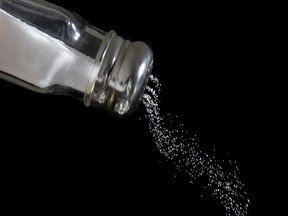
Salt generic
Crystals of table, kosher, and pickling salt   (AP / Nati Harnik)
 
In reflection of conventional wisdom respecting the place of salt in a diet therapy meant for people with high blood pressure, the World Health Organization recommends consumption of less than two grams of sodium (five grams of salt) daily. The Mayo Clinic and Health Canada along with other health bodies suggest no more than 2.3 grams (about a teaspoon of salt) daily. In Canada, a report issued in 2017 by Health Canada assessed the average intake per person of salt in the country to be 2.8 grams.

Studies like the Harvard University-led TOHP trial in the United States in late 1980s and early 1990s underpin such recommendations from within the international health community. In that study some 4,500 people were divided into groups receiving either general healthy lifestyle advice or alternately weekly group and individual counselling in reducing sodium intake. Leading to the conclusion that those who received salt-reduction assistance were 25 percent less likely to suffer strokes, heart attacks and other cardiovascular events in years to follow.

Other controlled studies reached like conclusions; that as people absorb less sodium, a reduction in hypertension resulted, according to a recent paper. And then in 2009 Dr.Salim Yusuf of the Population Health Research Institute (PHRI) of McMaster University and Hamilton Health Sciences published research and commentaries that suggested heart health did not improve with sharp salt reduction intake. To state that consternation, condemnation and confusion and controversy resulted is to understate the impact of this reversal of popular medical wisdom.

Dr.Yusuf and his team of researchers made the decision to study the issue relating to two studies they ran focused on testing blood pressure drugs. A sidebar sodium study enrolled about 28,000 people from 40 countries. The participants, all at risk of cardiovascular disease, had their intake of sodium measured through interpreting secretions of the mineral in urine samples. What this study revealed shocked the scientists when they found that as sodium levels fell the rate of heart-and-stroke-related illness did initially fall, then rose again, with sodium intake amounts lower than three grams daily.
 
High blood pressure leads to heart attacks, strokes and death. Hypertension is considered the world's leading cause of mortality, and sodium considered the culprit in up to 30 percent of cases. The greater the sodium intake, the greater the retention of water in the body, to wash it away. This increases the pressure of blood being pushed through arteries and veins. Not only did cutting sodium below a certain point not lead to improved cardiovascular health, lower levels it turned out, might in fact increase risk of disease.

After the results were published in some of the world's foremost medical journals, and the McMaster University research team led by Dr.Yusuf, a highly respected researcher, were castigated for their unacceptable findings, they followed up with a parallel study of 102,000 subjects from 17 countries in another McMaster-led international research project called PURE. Published in the high profile New England Journal of Medicine, the results for the second study were similar to the earlier ones.

Their conclusion led them to argue the earlier evidence, like the TOHP trials, did not indicate that the standard sodium diet-reduction to the recommended level had any effect on improving health outcomes. Their critics focused on what they found to be a flaw in the methodology of the study where the gold-standard method is to collect all urine someone produces in a 24-hour period to test for secreted sodium and repeat it on non-consecutive days, whereas the McMaster-led trial performed a single fasting (spot sample) of urine early morning.

"It's tough and it's tedious so people try to cut a lot of corners (24-hour sampling). With a single-spot sample] stuies are much easier to do, much less complex -- and give you the wrong answers", pointed out Dr.Norman Campbell of University of Calgary. "They're making inaccurate and false statements and misleading statements and misinterpretations and they're not correcting things that are obviously flawed. this is a global aggravation for people who are trying to improve the health of their populations."
 
Dr.Mente, on the other hand, speaks of the advice to maintain sodium intake no higher than four or five grams daily, and not to be concerned about cutting it much below three grams. He also pointed out that their sodium studies were subjected to intense peer review pre-publication, where prominent journals assign vetting to half a dozen scientist-reviewers and two statisticians to vouch for accuracy. 
 
Dr.Yusuf comments that the science is in flux and the research he and his team conducted has aided in altering the sodium-hypertension paradigm; that their critics are unwilling to consider that health and research understandings have undergone an alteration. He and his colleagues' study results have come under scrutiny with charges of bias resulting from study funders such as health charities and drug companies.
"[Campbell's] enthusiasm for this as a crusader, you have to admire it."
"But at the same time, all scientific debate has to be based on respect, it has to be based on openness."
"It has to be based on entertaining different viewpoints."
Dr.Martin O'Donnell, professor of medicine, National University of Ireland, Galway, McMaster group collaborator
Relying on the conventional scientific wisdom, the World Health Organization recommends consuming less than two grams of sodium — five grams of salt — a day. Health Canada, the Mayo Clinic and other health bodies suggest no more each day than 2.3 grams, about a teaspoon of salt.
 
"A new controversial study claims that in most cases, consuming salt will not increase health risks. The study published on August 9 in The Lancet, a scientific journal, followed 94 000 people between the ages of 35 and 70 across 18 countries to determine whether salt intake truly does increase the risk of cardiovascular disease and stroke (1), an accepted belief. Monitoring subjects over an average span of eight years,  interestingly, it was found that the risk only increases if the average sodium intake is greater than 5 g per day ― the equivalents of 2.5 teaspoons of salt."
"The research was led by Prof Salim Yusuf of the Population Health Research Institute (PHRI) of McMaster University and Hamilton Health Sciences in collaboration with colleagues from 21 different countries, including Canada, Argentina, Bangladesh, Brazil, Chile, China, Columbia, India, Iran, Malaysia, occupied Palestinian territory, Pakistan, Philippines, Poland, Saudi Arabia, South Africa, Sweden, Tanzania, Turkey, United Arab Emirates, and Zimbabwe."
"Salt-reduction enthusiasts argue that campaigns in the UK, Japan, and elsewhere over the past several years have led to a reduction in salt intake and consequently, a reduction in overall average blood pressure of the population. However, our bodies require essential nutrients like sodium to function, therefore, completely removing salt from our diets may be just as damaging as too much. But the question remains, how much is too much?"
European Scientist

Labels: , , , ,

Friday, April 30, 2021

Coffee Consumption and Cardiovascular Health Body Regulation

"People drink coffee for all sorts of reasons -- as a pick-me-up when they're feeling tired, because it tastes good or simply because it's part of their daily routine."
"But what we don't recognize is that people subconsciously self-regulate safe levels of caffeine based on how high their blood pressure is, and this is likely a result of a protective genetic mechanism."
"What this means is that someone who drinks a lot of coffee is likely more genetically tolerant of caffeine compared to someone who drinks very little."
"Conversely, a non-coffee drinker, or someone who drinks decaffeinated coffee is more likely prone to the adverse effects of caffeine and more susceptible to high blood pressure."
Elina Hypponen, director, Australian Centre for Precision Health, University of South Australia
Coffee 1000
 
Recent research concludes variously that coffee as a stimulant is useful for decreasing obsessive compulsive behaviour of germaphobes all the way up to increasing the rate at which the body burns fat when consumed pre-workout. It can hardly be surprising that one of the most popular reached-for  beverages globally has intrigued researchers to study its properties and effects on people, and there are many effects of various kinds on many different people.

Filtered coffee 1000

"Listen to your body, it's more in tune with your health than you may think", advises Dr.Hypponen, lead researcher of a recent study published in the Academic Journal of Clinical Nutrition. The study of almost 400,000 people revealed causal genetic evidence pointing to  n individual's cardiovascular health playing a role in that person's thirst for coffee, known for its caffeine-concentrated effects to start off the day.

Researchers involved in the study found that people with high blood pressure, angina and arrhythmia tend to drink less coffee, or to avoid it altogether. This is not a deliberate thought-out decision, but one that appears sub-conscious as though the body makes a decision in its best interests. The coffee-consumption habits of 390,435 individuals from the UK Biobank -- a large-scale health database containing in-depth genetic and medical data of a half million people -- compared this to baseline levels of systolic and diastolic blood pressure and heart rate.

Long-term, heavy coffee consumption - six or more cups a day - can increase the number of lipids (fats) in your blood to significantly heighten your risk of cardiovascular disease (CVD).(Pixabay)
The Mendelian randomization method used by the researchers established causation; it is an epidemiological technique using genetic variants in observational data to determine the effect of a modifiable exposure like coffee consumption. Some six million Canadians -- representing 19 percent of the population - suffer from high blood pressure with just 17 percent of people nationwide seemingly aware of their condition. 

High blood pressure represents the leading risk for death in the country. Research also bears out that at some time in their lives an estimated 90 percent of the Canadian population will develop high blood pressure or hypertension, typical of most populations in North America. Of those being treated for the condition, only two-thirds are known to exercise adequate control. The published study indicates that coffee assumes a relatively reliable role in the indication of cardiovascular health.

Methods: We used information from up to 390,435 European ancestry participants in the UK Biobank, aged 39-73 y. Habitual coffee consumption was self-reported, and systolic blood pressure (SBP), diastolic blood pressure (DBP), and heart rate were measured at baseline. Cardiovascular symptoms at baseline were based on hospital diagnoses, primary care records, and/or self-report. Mendelian randomization (MR) was used to examine genetic evidence for a causal association between SBP, DBP, and heart rate with habitual coffee consumption.

Results: Participants with essential hypertension, angina, or heart arrhythmia were all more likely to drink less caffeinated coffee and to be non-habitual or decaffeinated coffee drinkers compared with those who did not report related symptoms (P ≤ 3.5 × 10⁻⁸ for all comparisons). Higher SBP and DBP were associated with lower caffeinated coffee consumption at baseline, with consistent genetic evidence to support a causal explanation across all methods [MR-Egger regression (MREggr) β: -0.21 cups/d (95% CI: -0.34, -0.07) per 10 mm Hg higher SBP and -0.33 (-0.61, -0.07) per 10 mm Hg higher DBP)]. In genetic analyses, higher resting heart rate was associated with a greater odds of being a decaffeinated coffee drinker (MREggr OR: 1.71; 95% CI: 1.31, 2.21) per 10 beats/min).

Conclusions: We provide causal genetic evidence for cardiovascular system-driven influences on habitual coffee intakes, suggesting that people tend to naturally regulate their coffee consumption based on blood pressure levels and heart rate. These findings suggest that observational studies of habitual coffee intakes are prone to influences by reverse causation, and caution is required when inferred health benefits result from comparisons with coffee abstainers or decaffeinated coffee drinkers.

Labels: , , ,

 
()() Follow @rheytah Tweet