Ruminations

Blog dedicated primarily to randomly selected news items; comments reflecting personal perceptions

Wednesday, July 20, 2022

Coffee: Clean Bill of Health

"Based on this study, clinicians can tell their patients that there is no need for most coffee drinkers to eliminate the beverage from their diet but to be cautious about higher calorie specialty coffees."
Lead study author Dr. Dan Liu, department of epidemiology, Southern Medical University, Guangzhou, China
 
"Researchers from Southern Medical University in Guangzhou, China used data from the U.K. Biobank study health behavior questionnaire to evaluate the associations of consumption of sugar-sweetened, artificially sweetened, and unsweetened coffee with all-cause and cause-specific mortality. More than 171,000 participants from the U.K. without known heart disease or cancer were asked several dietary and health behavior questions to determine coffee consumption habits. The authors found that during the 7-year follow up period, participants who drank any amount of unsweetened coffee were 16 to 21 percent less likely to die than participants who did not drink coffee. They also found that participants who drank 1.5 to 3.5 daily cups of coffee sweetened with sugar were 29 to 31 percent less likely to die than participants who did not drink coffee. The authors noted that adults who drank sugar-sweetened coffee added only about 1 teaspoon of sugar per cup of coffee on average. Results were inconclusive for participants who used artificial sweeteners in their coffee."
Summary, Annals of Internal Medicine
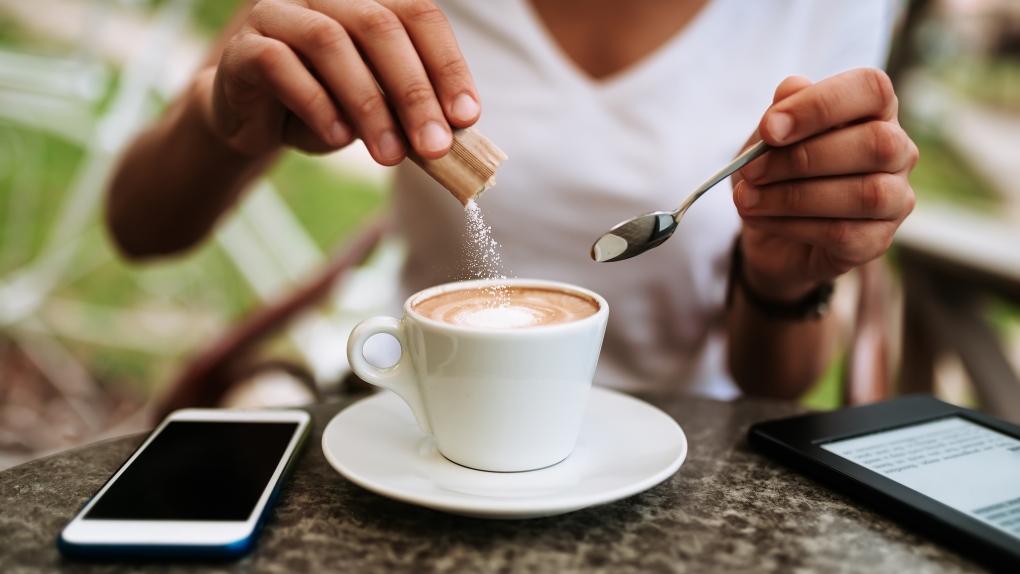
Results of a recent survey showed that for people who drank a moderate amount of coffee, had about a 30 per cent lower death risk compared with non-coffee drinkers. (Adobe Stock/CNN)

According to yet another published study on the health benefits of coffee consumption out of Guangzhou, China published in the Annals of Internal Medicine, people who consume moderate amounts of coffee -- up to three and a half cups daily -- might gain improved chances at achieving a longer life span. This, whether or not the coffee taken is lightly sweetened with sugar.
 
Study researhers tracked coffee consumption and health of 171,616 study participants for a period of seven years. The average age of the participants was around 56 years. All were free of cancer and cardiovascular disease a the beginning of the study. The researchers discovered that people who had a regular habit of drinking one and  a half to three and a half cups of coffee daily either plain or sweetened with a teaspoon of sugar were up to 30 percent less likely to die in the time frame studied from any cause, inclusive of cancer and cardiovascular disease, as opposed to those who drank no coffee at all. 

In addition it made no difference to the outcome, whether the type of coffee consumed was instant, ground or decaffeinated. The study results were noted to be inconclusive for the use of artificial sweeteners. The research does not prove coffee alone to be responsible for lowered mortality risk in participants, but over the years research revealed a variety of health benefits attributed to coffee consumption.

As for xample, a reduced risk for succumbing to Type 2 diabetes, or Parkinson's disease, depression and other chronic life-changing medical conditions. The benefits of coffee has often been attribued by nutritionists to the richness of antioxidants in coffee beans. Believed to help reduce internal inflammation and cell damage as well as protect against disease.

Consuming caffeinated coffee provides as well, an energy boast and is known to increase alertness. At the other end of the spectrum, caffeine is known to have a role in sleep disruption, as well as becoming a risky habit during pregnancy.
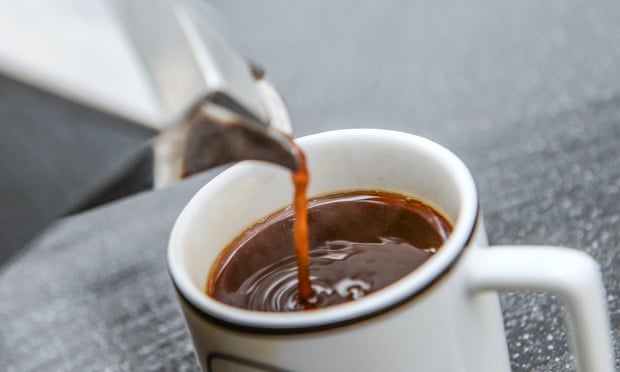
 
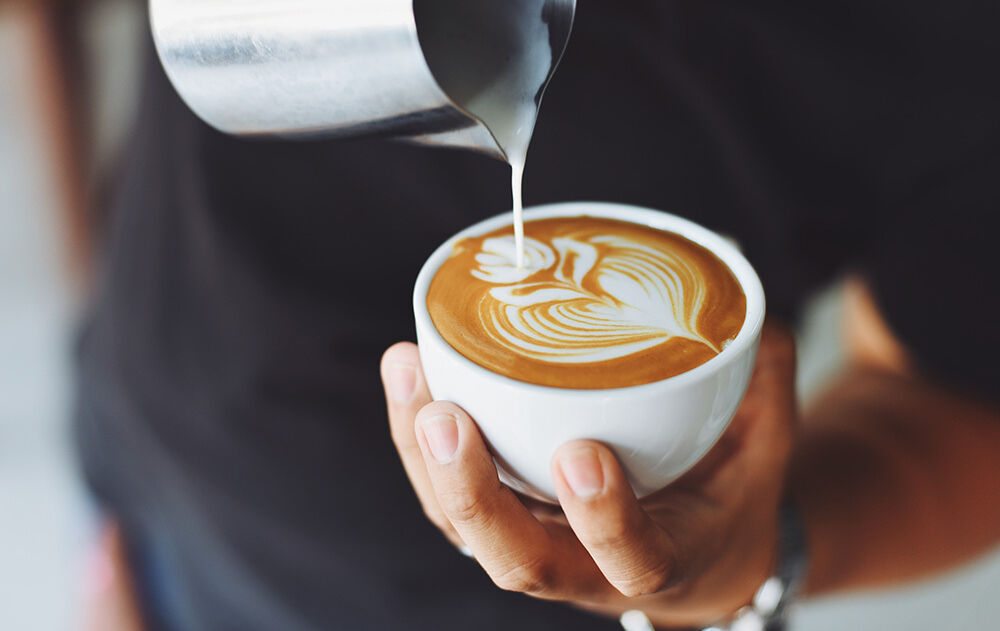
pouring coffee
Coffee drinkers who consumed 2.5 to 4.5 cups a day, without sugar, had a 29% lower risk of death than non-coffee drinkers, in a seven-year study. Photograph: Anthony Devlin/PA
"The observational nature of this new study means these conclusions are far from definitive."
"This is because coffee drinkers are in general more affluent and have healthier lives than non-drinkers and I remain unconvinced whether these factors can be overcome in observational studies."
"I would suggest people stick to coffee or tea, preferably without sugar, which most people can adapt to, and try to do all the other things we know keep you healthy – move more, eat and sleep better."
Dr. Naveed Sattar, professor of metabolic medicine, University of Glasgow

Labels: , , ,

Friday, April 30, 2021

Coffee Consumption and Cardiovascular Health Body Regulation

"People drink coffee for all sorts of reasons -- as a pick-me-up when they're feeling tired, because it tastes good or simply because it's part of their daily routine."
"But what we don't recognize is that people subconsciously self-regulate safe levels of caffeine based on how high their blood pressure is, and this is likely a result of a protective genetic mechanism."
"What this means is that someone who drinks a lot of coffee is likely more genetically tolerant of caffeine compared to someone who drinks very little."
"Conversely, a non-coffee drinker, or someone who drinks decaffeinated coffee is more likely prone to the adverse effects of caffeine and more susceptible to high blood pressure."
Elina Hypponen, director, Australian Centre for Precision Health, University of South Australia
Coffee 1000
 
Recent research concludes variously that coffee as a stimulant is useful for decreasing obsessive compulsive behaviour of germaphobes all the way up to increasing the rate at which the body burns fat when consumed pre-workout. It can hardly be surprising that one of the most popular reached-for  beverages globally has intrigued researchers to study its properties and effects on people, and there are many effects of various kinds on many different people.

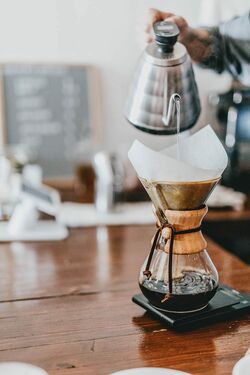
Filtered coffee 1000

"Listen to your body, it's more in tune with your health than you may think", advises Dr.Hypponen, lead researcher of a recent study published in the Academic Journal of Clinical Nutrition. The study of almost 400,000 people revealed causal genetic evidence pointing to  n individual's cardiovascular health playing a role in that person's thirst for coffee, known for its caffeine-concentrated effects to start off the day.

Researchers involved in the study found that people with high blood pressure, angina and arrhythmia tend to drink less coffee, or to avoid it altogether. This is not a deliberate thought-out decision, but one that appears sub-conscious as though the body makes a decision in its best interests. The coffee-consumption habits of 390,435 individuals from the UK Biobank -- a large-scale health database containing in-depth genetic and medical data of a half million people -- compared this to baseline levels of systolic and diastolic blood pressure and heart rate.

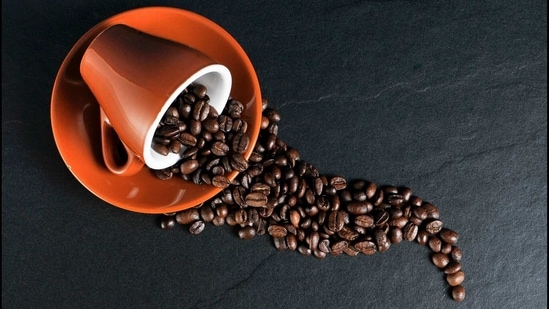
Long-term, heavy coffee consumption - six or more cups a day - can increase the number of lipids (fats) in your blood to significantly heighten your risk of cardiovascular disease (CVD).(Pixabay)
The Mendelian randomization method used by the researchers established causation; it is an epidemiological technique using genetic variants in observational data to determine the effect of a modifiable exposure like coffee consumption. Some six million Canadians -- representing 19 percent of the population - suffer from high blood pressure with just 17 percent of people nationwide seemingly aware of their condition. 

High blood pressure represents the leading risk for death in the country. Research also bears out that at some time in their lives an estimated 90 percent of the Canadian population will develop high blood pressure or hypertension, typical of most populations in North America. Of those being treated for the condition, only two-thirds are known to exercise adequate control. The published study indicates that coffee assumes a relatively reliable role in the indication of cardiovascular health.

Methods: We used information from up to 390,435 European ancestry participants in the UK Biobank, aged 39-73 y. Habitual coffee consumption was self-reported, and systolic blood pressure (SBP), diastolic blood pressure (DBP), and heart rate were measured at baseline. Cardiovascular symptoms at baseline were based on hospital diagnoses, primary care records, and/or self-report. Mendelian randomization (MR) was used to examine genetic evidence for a causal association between SBP, DBP, and heart rate with habitual coffee consumption.

Results: Participants with essential hypertension, angina, or heart arrhythmia were all more likely to drink less caffeinated coffee and to be non-habitual or decaffeinated coffee drinkers compared with those who did not report related symptoms (P ≤ 3.5 × 10⁻⁸ for all comparisons). Higher SBP and DBP were associated with lower caffeinated coffee consumption at baseline, with consistent genetic evidence to support a causal explanation across all methods [MR-Egger regression (MREggr) β: -0.21 cups/d (95% CI: -0.34, -0.07) per 10 mm Hg higher SBP and -0.33 (-0.61, -0.07) per 10 mm Hg higher DBP)]. In genetic analyses, higher resting heart rate was associated with a greater odds of being a decaffeinated coffee drinker (MREggr OR: 1.71; 95% CI: 1.31, 2.21) per 10 beats/min).

Conclusions: We provide causal genetic evidence for cardiovascular system-driven influences on habitual coffee intakes, suggesting that people tend to naturally regulate their coffee consumption based on blood pressure levels and heart rate. These findings suggest that observational studies of habitual coffee intakes are prone to influences by reverse causation, and caution is required when inferred health benefits result from comparisons with coffee abstainers or decaffeinated coffee drinkers.

Labels: , , ,

Tuesday, July 14, 2020

The Devastation of Cafe Culture

"It will be a slow and staged comeback for us as a lot of the offices in London are not coming back on until after summer, and some may even open only next year."
"If you feel like having a cappuccino, ordering it online doesn't really work as coffee is all about the social aspect."
Robert Robinson, Notes coffee-shop chain, London

"Manhattan traffic is still very light. The Hamptons is very busy."
"It makes sense for us. It's where many of our customers go."
Max Crowley, Bandit coffee shops, Midtown, Chelsea, New York

"We believe that consumers will move down price points, and turn more to cheaper, instant coffee, as they tighten their belts amidst the gloomy economic outlook."
"Consumers will continue to embrace home brew and instant coffee, both because they will still avoid heading out to cafes, and also because it is generally a cheaper alternative."
Taohai Lin, consumer and retail analyst, Fitch Solutions
Coffee drinkers.
Coffee drinkers. Photographer: Yorgos Karahalis/Bloomberg

Yet another victim falling prey to the dread SARS-CoV-2 virus. In a sense, not surprising. After all, the popularity of coffee houses, cafes and specialty coffee shops, just like restaurants and hotels and fast-food takeouts all got hit in a similar manner. With the initial wave of COVID-19 and the response mandating closure of all commercial enterprises where people tend to gather, why not coffee? Of course coffee's wake-up role could be redeemed by home brewing. After all, that's what people did before the sweep of the social/commercial coffee industry.


And while home brewing made sense during lockdown, since people were at home anyway and they had to feed themselves once they were satisfied they had acquired enough toilet paper for comfort of mind and body, producing home brewed coffee should have been a natural. It was, but it seems that hasn't rescued coffee; consumption has been down, worldwide. The wallop of caffeine was there, but somehow it just wasn't the same; the 'scene' was missing, the social aspect, the sang-froide.

Cafe culture simply cannot be successfully emulated in a home setting. That's it, in a nutshell. The U.S.Department of Agriculture has seen the writing on the wall, noting global coffee consumption set to fall. Yes, there's been a surge at grocery stores selling the beans for panic-pantry stuffing, but the shutdown of cafes and restaurants, typically accounting for roughly 25 percent of demand, was overwhelmed by under-demand.

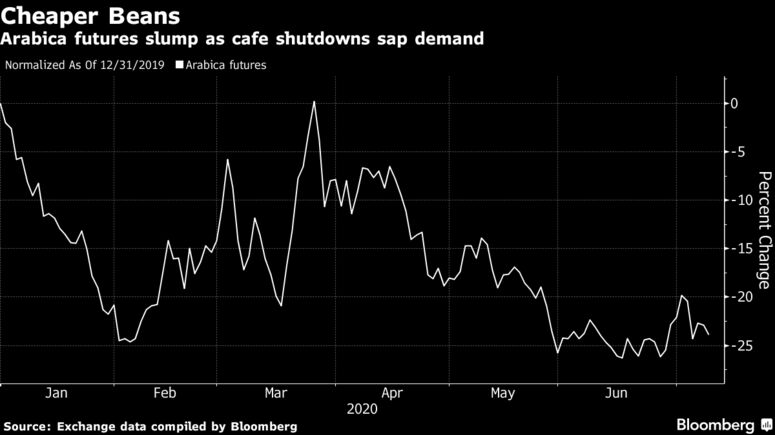
Arabica futures slump as cafe shutdowns sap demand

Marex Spectron research has estimated that over 95 percent of the out-of-home market shut down at some point during the pandemic. And despite the gradual opening prefacing the second wave of COVID, consumers have held back, hesitant to go out in droves despite the reopening of economies. Morning commuters and afternoon breakers supported area coffee shops and they've been hard hit. During the pandemic Dunkin' Brands Group Inc. lost its breakfast crowd.

A format featuring "pickup" stores sans tables and chairs sees Starbucks Corp. retooling its model --  a stark departure from the ambiance that made its cafes such an appealingly popular hangout. An estimated 125 million people globally work on coffee crops for their livelihood; with a hobbled recovery for coffee demand presenting a troubling picture for a quick recovery. The future for Arabica beans could see a 10 percent descent in the second half of the year to about US90 cents a pound, according to Citigroup.

The International Coffee Organization warns of a prospect of child labour proliferating in areas of production in lock-step with poverty hitting local farmers. The fastest growing market for coffee is Asia where consumption at restaurants and cafes is expected to recover, as countries emerge from lockdowns. In Brazil, one of the country's largest cafe chains, Suplicy Cafes Especials was unable to pay farmers for cargoes already delivered. "Some of our franchising partners already warned us that they will close", the company's CEO Filipe Braga warned.

Starbucks
The Starbucks logo  downtown Chicago. (AP/Gene J. Puskar, )

McDonald's Corp. warns if a second wave hits, it could stop reopening plans of all dine-in services in its U.S. restaurants, while Starbucks is operating about 95 percent of its U.S. stores, even while sales were down 43 percent in May.

In London, robusta futures are down 13 percent, while Arabica beans slumped 25 percent in New York.

Dalgona coffee, anyone?

Labels: , , , ,

 
()() Follow @rheytah Tweet