Ruminations

Blog dedicated primarily to randomly selected news items; comments reflecting personal perceptions

Monday, May 06, 2019

Ignore the Siren Call of that Cellphone

"When you want a whole cake to yourself because you're turning 30, which is basically 50, which is basically dead."
Offensive advertising
"After a bunch of us squawked about the ad on social media, the company apologized for what it called attempted humour, and what I'd call ageism."
"[Jabs like this] constitute mere microaggressions compared to the forms ageism often takes: pervasive employment discrimination, biased health care, media caricatures or invisibility."
"When internalized by older adults themselves, ageist views can lead to poorer mental and physical health."
Paula Span, writer, professor, Columbia School of Journalism

"By chronically raising levels of cortisol, the body's main stress hormone, our phones may be threatening our health and shortening our lives [aside from causing problems such as sleep loss and lessened attention span]."
Catherine Price, science journalist
"Your cortisol levels are elevated when  your phone is in sight or nearby or when you hear it or even think you hear it."
"It's a stress response, and it feels unpleasant, and the body's natural response is to want to check the phone to make the stress go away."
David Greenfield, founder, Center for Internet and Technology Addiction
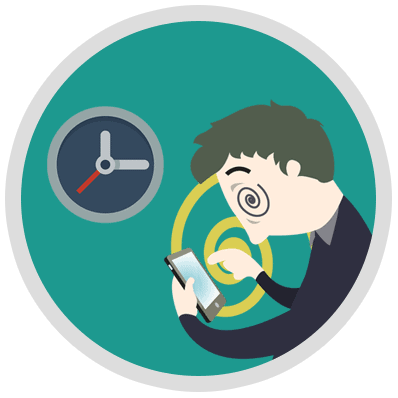
Chapter 2: Usage
Bankmycell.com

Yes, it's irritating. The phone has a habit of ringing, demanding it be answered immediately if not sooner, or else something hugely important will pass by and you'd never know you lost an opportunity to advance your life in some immeasurable way. It's a nag, a nuisance, and a tease. When you really want it to ring and for a voice on the other end to be the one you've been waiting for, it remains obstinately silent. It can be nerve-wracking.

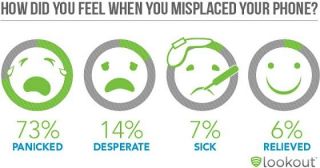
And it can make people stressed and depressed. A Gallup poll of over 150,000 people globally sought a response to a simple question. Those in the poll who lived in the United States scored higher than elsewhere on admission of a stress-level scale. Fully 55 percent of American responders reported being stressed throughout much of the previous day.

"We are seeing patterns that would point to a political explanation or a polarization explanation. But can we say that definitively? No", said Julie Ray from Gallup. The survey explored negative experiences and positive ones as well, finding that a low income for example was related to negative experiences; predictable enough. The World Health Organization points out "It's [ageism] an incredibly prevalent and insidious problem".


"It affects not only individuals, but how we think about policies", pointed out Alana Officer, lead of the WHO's effort to counter ageism. Researcher Becca Levy of Yale School of Public Health points to her decades'-long study of the issue, that people with a positive approach to aging are more likely to recover from disability than people who trust in negative stereotypes.

"They experience less depression and anxiety. They live longer", added Ms. Span, referring to the research. The consensus that all these professionals who study the problem of negativity and its impact on making people depressed is that regardless of age, the one step that could lower stress and anxiety is to stop personal reliance on that cellphone. Put it away. Sooner the better.

Electronic dependence has a cost. It is recognized as a cause of sleep loss as well a weakening of cellphone users' attention span. "Every chronic disease we know of is exacerbated by stress. And our phones are absolutely contributing to this", states Dr. Robert Lustig, author of The Hacking of the American Mind.

Chapter 1: Phone Addiction
Bankmycell.com

Labels: , , , ,

Monday, November 21, 2016

Text-Walking : Accidents Waiting To Happen

"Our results suggest that when dialing a phone while walking, healthy adults adopt a more cautious gait pattern, which may limit the risk of falling."
"Dual tasking resulted in increased stride width in our participants. This may represent compensation for a feeling of instability during dual-task walking by increasing the base of support."
"Gait speed is typically reduced when individuals simultaneously perform other tasks. However, in today's fast-paced world, individuals are often rushed and do not choose to slow their gait speed, and even if they do, they remain more likely to fall while walking."
Kelly Seymour, study author, University of Delaware
texting and walking dangers
Photo: Healthline News

Perhaps the issue should be the question and an answer explaining why it is that otherwise rational human beings have become so slavishly fixated on instant and continuous communication? We unfailingly communicate via our electronic playthings now, all of which have become integral to our lifestyles, and at the same time those who are so closely wedded to their cellphones and who so commonly make friends and acquaintances at social media and networking sites seem to lavish all their personal attention there, to the detriment of face-on-face contact with people around them.

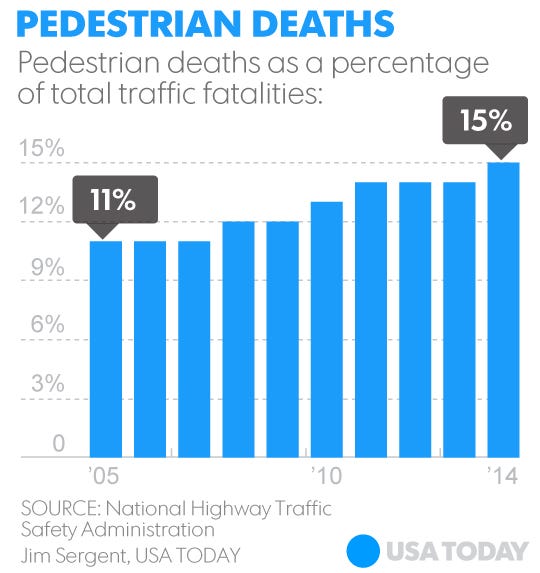
It is a universal problem. As is the vexatious habit people have succumbed to, in the face of institutional condemnation that makes it a traffic offense to text and drive, placing both the driver and everyone around him or her, whether in the vehicle with them, or other drivers and/or pedestrians in potential danger when a distracted driver is incapable of reacting appropriately under the influence of texting. Moving away from driving and texting simultaneously, there is the additional problem of people attending to their indispensable cellphones to text while walking.

All sense of proportion, and caution appear to escape the perception of someone wholly engrossed in texting, even while their attention should be fully focused on their locomotion, with adequate awareness of traffic, other pedestrians, physical encumbrances, traffic lights, crosswalks, broken pavement and other impediments to safety one is unable to guard against when attention is elsewhere. In Antwerp, Belgium, "text-walking lanes" have been introduced for safety for the inveterate texters and to keep other pedestrians safe from their blind obedience to cellphone communication.
Pedestrians walk past a "Look!" sign on the crosswalk at the intersection of 42nd St. and 2nd Ave. in New York. AP File/Seth Wenig
Pedestrians walk past a “Look!” sign on the crosswalk at the intersection of 42nd St. and 2nd Ave. in New York. AP File/Seth Wenig

Recently, scientists have been looking into the way that people's locomotion has been altered, resulting from texting while walking. Though they may not realize it, walking texters' gait becomes exaggerated in reflection of their inner awareness that their faculties are elsewhere than on the primary task of walking. Twenty-two volunteers were asked by researchers at the University of Delaware to dial a number on their mobile phone while in the process of treadmill walking for two-minute periods.
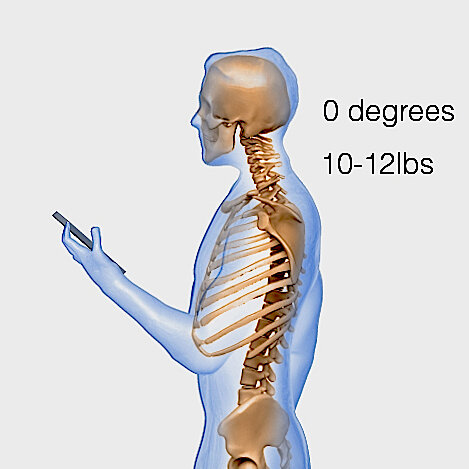
Keep Your Head Up: 'Text Neck' Takes A Toll On The SpineKeep Your Head Up: 'Text Neck' Takes A Toll On The Spine


Reflective markers were placed on the volunteers' arms, trunk, pelvis and legs, picked up by motion cameras measuring knee flexion, hip movement and leg swing. The experiment succeeded in showing that distraction through dialing numbers caused the volunteers to walk with strangely exaggerated strides, knees bending in peak position with every step, ankles fully flexed as though to offer as much opportunity as conceivable to step over tripping hazards. People, according to the researchers, unconsciously adapt their postures to the subconscious risk involved in this type of multi-tasking.

Diminished vision and with it attention, is compensated for by the exaggerated motions in aid of negotiating crowds. Published in Motor Behaviour, the study found that few errors occurred in dialing the numbers through the experiment, leading the researchers to conclude that the dialing was given priority over the walking. It took the texters 26 percent longer in their walking task as well, compared to those who were not distracted by cellphone texting.

Several recent studies have shown that people who use their phones when walking or driving have slower reaction times and pay less attention to their surroundings. With nine in 10 U.S. adults owning a cell phone as of January 2014, lawmakers have reacted by banning text messaging for all drivers in 46 states and the District of Columbia, according to Distraction.gov.

Labels: , ,

 
()() Follow @rheytah Tweet