Ruminations

Blog dedicated primarily to randomly selected news items; comments reflecting personal perceptions

Monday, January 30, 2023

Dealing With Stress and Anxiety

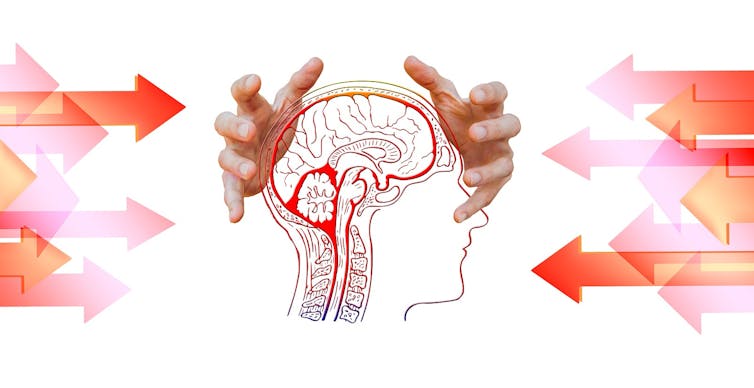
The determinants of our mental well-being go beyond our genes and brain chemistry to include inflammation, gut health, sleep, nutrition, hormones, chronic limbic hyperarousal due to  unresolved trauma, and even having our basic needs for community, nature, meaning and purpose going unmet. If we do have a chemical imbalance, it is probably a downstream effect of these other states of imbalance."
"In other words, anxiety is not all in your head; it's largely based in the body, and that's where it should first be addressed."
"While our cultural attitude toward mental health is to regard it as a genetic destiny and a matter of troubled brain chemistry, much of our anxiety is rooted in the body and is mostly avoidable. Eliminating unnecessary stress responses can make us more resilient in the face of unavoidable stressors."
Dr. Ellen Vora, holistic and board-certified psychiatrist, acupuncturist, and yoga teacher
What’s the Difference Between Stress and Anxiety?
 
An inventory of avoidable anxiety could include:
  • Hunger
  • Sleep deprivation
  • Being over-caffeinated
  • A Hangover (what is now spoken of as "hang-xiety")
  • Gut issues
  • Inflammation
  • Long stretches of being sedentary
  • Chemical fallout after consuming highly processed food
  • Late luteal phase (the days before the bleeding phase of the menstrual cycle)
  • Inter-dose withdrawal (the pharmacologic low-point when  you're due for your next dose of a psychiatric medication)
During the first year that the coronavirus pandemic struck the globe, according to the World Health Organization, global cases of anxiety and depression rose by 25 percent. Among mental health professionals the consensus appears to be that mental health struggles relate to chemical imbalance in our DNA implying that anxiety is chemical, determined by serotonin levels, leading to the belief that the issue reflects genetic destiny.  Applicable therapies and medications are prescribed accordingly.

There may, however be other available options, according to Dr. Ellen Vora. Therapy sessions are becoming more difficult to accommodate given the stressors and shortfalls of late on the health care system, and medications sometimes don't work for everyone. On the other  hand, much of what has an impact on our moods and body is another issue playing a critical role in mental  health. Dr. Vora speaks of two types of anxiety: true anxiety (or purposeful anxiety), and avoidable anxiety.

True anxiety symptoms, she points out, tell the individual that something is awry that should be paid attention to. Some introspection is required to analyze what certain symptoms may indicate as links to anxiety symptoms. Consultation with a health professional is a start. Avoidable anxiety, on the other hand, may represent the body reacting to a stress response. We live in a distracting world that presents us with issues that can be disturbing, both personally and in sympathy with occurrences elsewhere.

What occupies our minds and our thoughts can often bring on stress from information overload or constant exposure to events that are clearly upsetting on a macro level, but which we can do nothing about, ourselves. A solution can be found in focusing on the stress with a mind to addressing the locus of anxiety to  help lift the stress level of the body to eliminate unnecessary stress responses.

Identifying when anxiety has a physical basis can help in the recognition that life feels\somewhat overwhelmed than it is in actuality and that recognition alone can help lift the level of stress. Making it a practise to study how we react to external triggers arousing anxiety levels can help take steps to eliminate avoidable anxiety, as a heightened awareness helps to take charge of moods that stress, making us more resilient as we balance mood and anxiety.
"Experiencing occasional anxiety is a normal part of life. However, people with anxiety disorders frequently have intense, excessive and persistent worry and fear about everyday situations. Often, anxiety disorders involve repeated episodes of sudden feelings of intense anxiety and fear or terror that reach a peak within minutes (panic attacks)."
"These feelings of anxiety and panic interfere with daily activities, are difficult to control, are out of proportion to the actual danger and can last a long time. You may avoid places or situations to prevent these feelings."
"Examples of anxiety disorders include generalized anxiety disorder, social anxiety disorder (social phobia), specific phobias and separation anxiety disorder. You can have more than one anxiety disorder. Sometimes anxiety results from a medical condition that needs treatment."
"Whatever form of anxiety you have, treatment can help."
Mayo Clinic
img-banner - Betterhelp_mnt_fq_anxiety_imgbanner_39965

Labels: , , , , , ,

Tuesday, April 13, 2021

Mind-Sharpening Benefits of Moderate Stress

"It's possible that experiencing stressors creates opportunities for you to solve a problem; for example, maybe fixing your computer that has suddenly broken down before an important Zoom meeting."
"So experiencing these stressors may not be pleasant but they may force you to solve a problem, and this might actually be good for cognitive functioning, especially as we grow older."
"The assumption has always been that stress is bad. I took a step back and thought, what about the people who report never having stress?" 
"My previous work has focused on people who have higher versus lower levels of stress, but I'd never questioned what it looks like if people experience no stress. Are they the healthiest of all?"
"I think there's an assumption that negative events and positive events are these polar opposites, but in reality, they're correlated."
"But really, I think experiencing small daily stressors like having an argument with somebody or having your computer break down or maybe being stuck in traffic, I think they might be a marker for someone who has a busy and maybe full life."
"Having some stress is just an indicator that you are engaged in life."
David M. Almeida, professor of human development and family studies, Penn State
stressed woman

"... what really surprised us is that people at mid-life reported a lot more stressors, about 19% more stress in 2010 than in 1990. And that translates to 64 more days of stress a year,” said David M. Almeida, professor of human development and family studies at Penn State. Image: © Getty Images / laflor

Stress, when we speak the word we think of tension, of being upset, of being forced to tolerate something unpleasant in our lives -- or conversely reject the unpleasantness by dealing with it and in so doing causing other levels of stress. There is, in fact, stress inherent in living, and we feel stressors -- minor for the most part, major on occasion -- throughout our lives. And for most people the acknowledgment that feeling stress comes with the territory of being human and alive, allows us to learn to deal with the symptoms for the most part. It does take its physical and mental toll, however.

A new study from Penn State University reveals that there are some people among us who not only feel no stress whatever, but unlike our imagination that to never feel stress is to feel good about everything, the research pinpointed downsides to a stress-free life. There were just short of three thousand participants in the study who were requested to fill out a cognitive test before they were interviewed nightly for eight consecutive nights. The study subjects were asked to respond to questions about their mood, their physical symptoms, any chronic conditions, and what occupied them throughout the course of a day.

The study revealed that while people who reported experiencing no stressors to be less likely to have chronic health conditions, they were also more likely to exhibit lower cognitive function. All those small stressors of life may, after all, benefit the brain, aside from being irritatingly annoying. Many previous studies, the researchers noted, linked stress with a higher risk of poor emotional well-being and chronic illness, among other distinctions.

A scale with "work" on one side and "life" on the other
 Getty Images BrianAJackson
According to study results, there did appear to be some benefits for people who reported no stressors -- representing about ten percent of the participants -- since they were privileged with better moods throughout the day. Dr.Almeida pointed out that it may be logical to believe that someone who is stress-free may be healthier generally, but not much research has been done on that assumption. Those people who reported no stressors performed lower on the cognition test and were less likely to report giving or receiving emotional support; as a result were less likely to experience positive things occurring throughout the course of a day.

For many, if not most people, experiencing stress of one kind or another is merely considered to be a normal part of life; 50 percent of Canadians claim that stress has a negative impact on their sleep and 63 percent state that they feel the same (22 percent) or more (45 percent) amount of stress as they experienced five years previously, according to an Ipsos poll. No one would question the negative impact some stress has on many people's lives; however, this study suggests that it is likely fine to sweat the small stuff, after all. How we respond to the stressors we feel may be more important, than struggling to avoid stress altogether.

"Stressors are events that create challenges in our lives. And I think experiencing stressors is part of life. There could be potential benefits to that. I think what's important is how people respond to stressors. Responding to a stressor by being upset and worried is more unhealthy than the number of stressors you encounter", emphasized Dr.Almeida.

This shows a happy lady in a field with flowers
People who reported experiencing no stressors were more likely to experience better daily well-being and fewer chronic health conditions. However, they were also more likely to have lower cognitive function, as well. Image is in the public domain

Labels: , , , ,

Sunday, October 18, 2020

Mental Health Fallout from COVID Stress

"[Though women are likelier to admit to anxiety], my suspicion is there are more men who are anxious but they chose not to say so. [Even as people are searching out different ways to deal with coronavirus stress, alcohol as a choice is] deeply problematic and could haunt people in the future."
"[During the summer months, COVID declined and so did peoples' anxiety but now] more COVID, more problems. We need to get our game up."
Dr.David Gratzer, psychiatrist, Centre for Addiction and Mental Health (CAMH), Toronto 

"It's even left the people who don't trend into the territory of clinical diagnosis with a sense of impermanence and fragility that I think there is no comparison for."
"[The pandemic] has given us the sense that there can be something not which is immediate and horrifying, like 9/11 or a hurricane, but something that is sustained and completely changes the way that we interact and socialize with one another."
"[Our struggle is between uber-caution and under-caution] and we have to balance all the time the sense of the terrible physical risk attached to seeing people, and the sense of mental or psychological risk that is attached to not seeing people."
Andrew Solomon, writer, lecturer, professor of clinical psychology, Columbia University

"Until we have a better understanding of this virus, its behaviour and a vaccine, many people are going to experience stress."
"The psychological footprint of the pandemic is likely as big, if not bigger, than the medical footprint."
Dr.Gordon Asmundson, professor of psychology, University of Regina
The pandemic has brought with it numerous stressors, including health issues, financial issues, relationship issues, isolation and changes in home and work responsibilities. (Pixabay)
It was recognized early on in the global pandemic that the most critical change in people's lives requiring social isolation, distancing, mask-wearing, cautionary messages to refrain from undue exposure as protection against contracting the SARS-CoV-2 virus, with the accompanying lock-downs of schools, businesses, gyms, restaurants, people would react to the burden of fear and isolation in a manner that would do them great psychological harm. 

That focus on mental health problems scarring people's lives has led to surveys and research, all of which simply validate the initial concern, as health experts see a marked decline in mental stability in patient presentations. Simply put COVID-19 stress is taking its heavy toll on  populations wherever it strikes. A new study and the polls it produced from a collaborative undertaking between Toronto's Centre for Addiction and Mental Health and the Angus Reid Institute along with human resources firm Morneau Shepell, bring up a vision of a worrying issue of strained emotions.

The big question being asked and answers sought is how much of what people experience is to be considered normal human reaction to an absolutely abnormal situation? CAMH's national survey, still ongoing, conducted along with Delvinia, established that 24 percent of women experience higher levels of anxiety than men, at 18 percent; 29 percent of parents with children under age 18 at home are likelier to feel depressed, compared to 19 percent of adults with no offspring at home in the same age group.

The pandemic has increased stress levels (Piqsels)
In addition, 25 percent both of women and men stress over becoming infected with COVID-19; 29 percent of men and 23 percent of women cope with that stress by engaging in episodic heavy drinking. Seven months following the incursion of the first wave of the coronavirus, people are seen to be emotionally exhausted, reflecting the mental health index produced in the latest report by Morneau Shepell based on an online survey of 3,000 people in late August.

People are seen to be less work-motivated, are struggling to concentrate, have concerns over job security and their dwindling emergency savings. Juggling multiple 'mental and situational distractions added to work' has been a draining experience. Angus Reid finds the percentage of Canadians with the potential of being categorized as "The Desolate" -- people suffering from both loneliness and social isolation -- has increased from 23 percent of the population a year earlier to 33 percent at the present time.

"Most made an effort to mitigate the spread of COVID-19 by avoiding personal contact with others", the pollster revealed, even over the summer, in spite of reopened patios and beaches and opportunities to expand social 'bubbles'. The strain on many people represented by too much time alone took its toll, while for others alone-time is hard to find. Days spent confined to homes, the strain of lost employment, the missing physical connection with family and friends, all has been overwhelming to people who had never manifested mental illness, but now try to cope with anxiety and depression. 

Frontline workers like nurses, doctors, personal support workers, first responders, retail clerks, all have been exposed to relentless stress, according to a Royal Society of Canada policy brief published this week. Those who experienced symptoms awaiting test results are full of anticipatory angst. People have been hospitalized, some placed on ventilators and over 9,700 Canadians died from the effects of COVID. Continual health warnings and the daily case counts have become numbing. According to the survey, 20 to 25 percent of Canadians experience "moderate or severe COVID-29-related mental health problems".

Indigenous groups, people living in poverty, some racialized groups and those with pre-existing mental health problems are seen to be particularly vulnerable to worsening mental health strain. Dr.Gordon Asmundson, one of the authors of the Royal Society paper, admonishes that roughly 15 percent may not be capable of adapting, and stand a good chance of becoming "functionally impaired" consequentially. He is only too aware that the country's mental health system pre-pandemic was stretched to its hilt.

Fear, sadness, grief, loneliness, frustration, irritability are all common responses and completely normal in view of the pandemic, states Dr.Allen Frances. He advises that psychotherapy, available now through virtual care, is able to assist people to cope with abnormal stressors. He draws the line, however, at the increase in the use of antidepressants. "This is terrible, but it's not as bad as being in the blitz in [wartime] London", he says.
  Exercise when we need it most. (Unsplash)
"The increased rates of painful emotions in the general population do not necessarily mean an increase in rates of clinical mental disorder, and it doesn't mean you're going to have a chronic mental illness."
"I think we have to normalize this as the new normal -- the idea that we're going to face tremendous stressors from pandemics, and even more from climate change."
"And so people have to start thinking long term, not waiting, 'oh, I'll be OK', or the world will be OK next month, or even next year."
"People have to start planning their next several years in a way that doesn't have them constantly anxious and sad and regrettng what's been lost, but rather finds the most in each day under these new circumstances."
"Find things you enjoy the most, and fill your day with as many good minutes as possible. Find the people who matter the most to you and the things that matter the most to you, the things that make life worth living, most of them can be preserved even in -- a pandemic."
"So a rational person should be cautious and fearful for probably the next several years, especially if they are in high-risk groups."
Dr.Allen Frances, professor emeritus, former chair, department of psychiatry, Duke University
https://images.theconversation.com/files/336797/original/file-20200521-102642-102vz8q.jpg?ixlib=rb-1.1.0&rect=0%2C305%2C5802%2C2901&q=45&auto=format&w=1356&h=668&fit=crop
A brisk 30-minute walk three times a week is enough to prevent stress-induced depression. (Shutterstock)

Labels: , , ,

Monday, June 15, 2020

What Emergence From COVID Lockdown May Hold for Child Psychological Development

"To get child care back up and running, governments must find ways to bring employees back to the sector."
"This means addressing the problem of low wages and inadequate compensation, and putting in place special funding to make sure that child care facilities are safe for both children and staff."
Don Giesbrecht, chief executive officer, Canadian Child Care Federation

"Children who were isolated or quarantined during pandemic diseases were more likely to develop acute stress disorder, adjustment disorder and grief."
"Thirty percent of the children who were isolated or quarantined met the clinical criteria for post-traumatic stress disorder. Furthermore, separation from parents or parental loss during childhood also has long-term adverse effects on mental health, including a higher risk of developing mood disorders and psychosis, and 'death by suicide' in adulthood."
"Adults need to be vigilant that children are not inappropriately blaming themselves or feeling that the illness is a punishment for previous bad behaviour."
The Lancet Child & Adolescent Health 
Amparo Aguilera puts a protective face mask on her grandchild Kilian, 6, after restrictions were partially lifted for children, during the coronavirus disease (COVID-19) outbreak, in Igualada, Spain April 26, 2020. REUTERS/Nacho Doce - RC2GCG90NK6P
Amparo Aguilera puts a protective face mask on her grandchild Kilian in Igualada, Spain April 26, 2020
Image: REUTERS/Nacho Doce - RC2GCG90NK6P
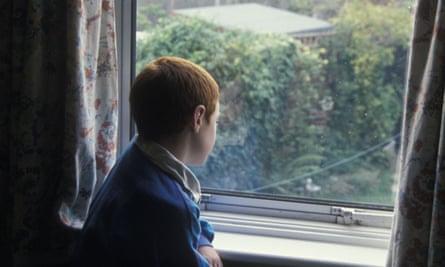
There is no question that most children would have reacted initially to school closures with triumphant pleasure that their time would be their own to do with as they pleased. Until the realization set in that though they had ample time, they were unable to do as they pleased with it. All normal channels of pleasure, physical expression, entertainment were closed off. And it was explained to them by exasperated, fearful parents that the family had to remain indoors together to tough out the spread of a serious disease.

Children are sensitive to dangers impacting on their family, threatening their security with their guardian parents, and they can be sensitive to unspoken fears that communicate to their comprehension of a total turn-about in the way their world has operated to the present. All the old familiar routines were to be abandoned, and new ones take their place, more rigid, protective, alien to their familiar way of life; claustrophobic in type and character.

And if those children are within a family unit further stressed by a lack of employment, of tight physical living conditions, of food shortage, and short-tempered parents stressed to the limit, an overwhelming sense of insecurity and fear for the future tempers their discomfort with the new reality. Child anxiety, depression, loneliness and despair are the perfect breeding grounds for mental illness.

Boy looking out of the window (posed by model)
Photograph: Photofusion/REX/Shutterstock

Kids Help Phone reported that in the early lockdown period the service reported a 350 percent increase in calls received by the national help line geared toward responding to children's needs. Each day an average of 2,000 calls, texts and chats were anticipated from young people in the ongoing lockdown; children who were looking for explanations, for empathy, for reassurance that all would turn out well.

A Spanish survey reported that close to nine in ten parents had noticed alterations in their children's expressed emotions and behaviours, with many suffering concentration difficulties, irritability and profound anxiety. In Canada, 72 percent of child care centres closed, making living arrangements more acute for parents, unprepared to look after their children full-time.

Clinical psychologists in the United Kingdom published some useful advice for parents in The Lancet Child & Adolescent Health, urging parents to be aware their children needed appropriate, age-centric information about the pandemic; to consider that between the ages of four and seven, children develop a sense of conscience, at the same time they have a poor understanding of the science of disease.
"Loneliness that may result from disease containment measures in the COVID-19 context could be associated with subsequent mental health problems in young people."
"Children and adolescents are probably more likely to experience high rates of depression and probably anxiety during and after enforced isolation ends."
"This may increase as enforced isolation continues. Clinical services should offer preventative support and early intervention where possible and be prepared for an increase in mental health problems."
British researchers, large-scale meta-analysis
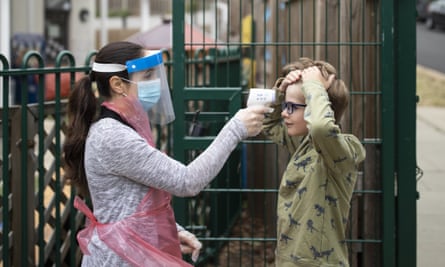
A member of staff takes a child’s temperature at the Harris primary academy Shortlands, London, on 4 June.
The truth is children’s lives are not really back to normal, and will not be for some time.’ A member of staff takes a child’s temperature at the Harris primary academy Shortlands, London, on 4 June. Photograph: Dan Kitwood/Getty Image

Labels: , , , , ,

Tuesday, May 05, 2020

COVID-19's Disruption of Sleep Patterns

"Dreaming is open season for the mind. There are no restrictions in dreams. You can kill people, or be killed. Fantastic things can happen. You can fly."
"There's tension, not necessarily conscious, that eats up a lot of your brain's time. You might not notice it, but you're trying to deal with it. Everything you do now, even going to the grocery store, is quite stressful."
"Your brain is like a computer. It's like you have a computer virus that's taking up space."
Joseph De Koninck, professor emeritus, psychology, University of Ottawa

"And for most of them [study respondents], this actually disrupts their sleep [intensity and frequency of bad dreams]."
"Those who sleep less report poorer sleep quality, and also seem to be more stressed."
Rebecca Robillard, clinical sleep researcher, Royal Ottawa Institute of Mental Health Research

"The challenges, social and economic, will still be there [post COVID-19]."
"Front-line workers were already on atypical schedules. Now they're doing it under a great deal of stress. And they don't have time to recuperate."
"The message is that we have to make sleep a priority for health, here and now. It is a predictor of your cognitive and emotional life in the future."
"It's an investment in your future health."
Julie Carrier, psychology professor, University of Montreal
The COVID-19 pandemic has disrupted sleep patterns, a state of affairs that doesn't bode well for our health. But it is also making people dream more vividly. And that's a good thing. PHOTO ILLUSTRATION from Shutterstock Kladyk / Getty Images/iStockphoto

Under the widely-experienced weight of concern over the contagious lethality of COVID-19, for many people sleep has changed from being a long, restful, brain-and-physical nurturing necessity to a fragmented, wearying experience. And people are dreaming more frequently. Dreams that have an extremely disturbing quality to them that can be classified as nightmares. The morning hours see the final cycle of REM sleep as people tend under lockdown conditions to sleep in later in the morning. When they awaken immediately after the dream they can also recall its details in amazing clarity.

The amygdala is that part of the brain where memory and emotions are processed and it is that part of the brain that remains active during dreaming. On the other hand, the centre of the brain controlling rational thought remains in repose. As an example, Dr.Robillard cited reading, writing and counting as never taking place during dreams. In normal circumstances only 50% of people who dream can recall those dreams. Now, with sleep becoming more fragmented even people who don't ordinarily recall dreams now do.

Tired woman turning off bedside alarm clock
In early April Canadian sleep scientists launched a survey of sleep habits, finding that between 20 and 30 percent of 2,300 respondents reported an increase in the intensity and frequency of bad drams and nightmares. Female respondents reported to the study greater frequency and intensity of bad dreams in larger numbers, resulting in higher stress, anxiety and depressive symptoms. The survey's purpose was to gauge the pulse of how people are managing to cope and to assess the psychological, social and economic impacts of the pandemic.

According to Dr,DeKonninck, subliminalized issues of the day shadow you through the night. The brain constantly attempts to process anxiety and uncertainty, and all the more so during the environment of the pandemic; one of stress and unpredictability, making life seem precarious. Elderly people tend to dram of episodes hearking back to their adolescent years where the intense emotions experienced then tend to resurface in dreams moving forward through the years.

According to Dr.Robillard, analyzing the sleep survey, overall increases in stress, anxiety, depressive symptoms and sleep difficulties have all arisen in response to the global pandemic. People report it is taking them longer to fall asleep and sleep becomes more intermittent. Sleep deprivation affects mood and motivation, resulting in poor decision-making. Additionally sleep disorders have been linked to conditions such as obesity, Type 2 diabetes, depression and dementia.

According to Dr.Carrier, scientific director of the Canadian Sleep and Circadian Network, roughly 25% of Canadians suffered from sleep disorders. It is her contention that this proportion will grow, and affect greater numbers of people, not only during the period of the pandemic but for months after it has been resolved as a direct threat.


Labels: , , , , ,

Tuesday, April 28, 2020

COVID Stress, Fear. Boredom and Alcohol

"At times of lockdown during the COVID-19 pandemic, alcohol consumption can exacerbate health vulnerability, risk-taking behaviours, mental health issues and violence."
"Alcohol consumption is associated with a range of communicable and noncommunicable diseases and mental health disorders, which can make a person more vulnerable to COVID-19."
"In particular, alcohol compromises the body’s immune system and increases the risk of adverse health outcomes."
"[Governments should consider] restricting access [during the COVID-19 pandemic, complemented by] communicating with the public about the risks [and] maintaining and strengthening alcohol and drug services."
World Health Organization, Europe 

"People turn to substances to cope with stress and trauma."
"These substances offer an immediate source of control. Having a drink or smoking can make you feel better right away."
"But long-term, as you get into addiction, then really the substance itself is driving that cycle of coping and stress rather than the outside environment itself."
Michael Chaiton, associate professor, Dalla Lana School of Public Health
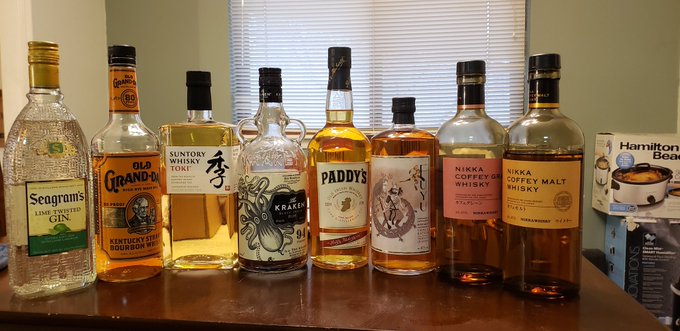
A shopper wears a mask and gloves at the liquor store. Alcohol sales across Canada increased in March as people stocked up to stay home. (Evan Mitsui/CBC)
Alcohol-related COVID-19 misinformation is not hard to find on various social media platforms. The public was informed by health experts early in the first wave of infections from SARS-CoV-2 that alcohol consumption plays an inimical role in the novel coronavirus, enabling the virus to stake a larger claim on the human body. At first people were just having fun about Corona beer, and then things began taking an uglier turn with the word, as in the name of a young boy in Australia with that given name being bullied.

Alcohol is viewed as a social good, as a relaxant, tempering moods during  times of high tension. Self-congratulating videos began appearing on Instagram and other platforms as people were eager to demonstrate how they were handling the new rules around self-segregation, having virtual on-line cocktail hours with friends. And then there were the supposedly reliable heads-up claims that alcohol would kill the virus, leading people to load up their systems with alcohol in the hopes of forestalling infection.


Leading the World Health Organization to issue a six-page instruction on COVID-19 and alcohol consumption in the public interest: "Under no circumstances should you drink any type of alcoholic product as a means of preventing or treatment COVID-19 infection." Irrespective of which Canadians, in a reflection of what is occurring on a global scale, have taken to drinking more and more frequently since the implementation of social distancing.

One quarter of Canadians aged 35 to 54 and one-fifth aged 18 to 34 respond that they have increased their alcohol consumption, even as 10 percent over age 54 report drinking more frequently, according to a Nanos poll commissioned by the Canadian Centre on Substance Use and Addiction. Rita Notarandrea, CEO of the addiction centre, points out the obvious; that stress and anxiety can lead to an increase in substance use.

View image on Twitter

"Disrupted routine may be accompanied by loneliness and anxiety about the current situation. With the possibility that people are stocking up and there is more alcohol in the home than usual, some might drink more than they typically do", added senior research and policy analyst at CCSA, Catherine Paradis.

Increased alcohol use has been recognized in many areas of the world, leaving some experts concerned that misinformation plays a role in the situation. "Consuming alcohol will not destroy the virus", the WHO urges on the public. It also addresses misconceptions about drinking and stress relief, pointing out that alcohol is known to amplify symptoms of anxiety, depression and other mental disorders.

And underlying the twin concerns of contracting COVID, and seeking relief from the pressures of stress and worry, a new survey shows half of Canadians who participated reporting their mental health situation has been exacerbated as a result of the global pandemic. The Angus Reid Institute set out to illuminate how economic uncertainty and social distancing measures caused by the pandemic affect the psychological balance of Canadians.

When asked to describe their primary emotions in recent weeks, 44 percent of respondents stated they are worried, 41 percent that they're anxious, and 30 percent that they are quite simply bored.

A liquor store lineup is 50 people deep in downtown Toronto as shoppers await their turn, CBC

Labels: , , , , ,

Monday, June 03, 2019

The Prevalence of Irritable Bowel Syndrome

"It's not a definitive disease. It's a collection of symptoms. IBS [irritable bowel syndrome] probably encompasses a number of entities."
"IBS is well documented after big outbreaks of gastroenteritis."
"These are disorders of the gut-brain axis."
Eamonn Quigley, gastroenterologist, Houston Methodist Hospital

"It's a collection of foods that are commonly malabsorbed. When anyone eats chili, they have gas. But most people go to work the next day."
"People with IBS are more sensitive. The gas gets trapped, there's cramping and they're out of work for two days."
Honestly, it's the difference between a diet that feels too restrictive and a pleasant experience [working with a professional dietitian to discover meal substitutions]."
Kate Scarlata, registered dietitian, Boston
Experts Issue Guidelines for Treating Irritable Bowel Syndrome

About ten to fifteen percent of the U.S. adult population has symptoms consistent with IBS, making it the most common diagnosis made by member physicians, according to the American College of Gastroenterology. In Canada, studies affirm IBS could be responsible for affecting up to 13 to 20 percent of Canadians, with a lifetime risk for development of IBS in Canada at 30 percent, according to the GI Society.

As for symptoms, they include excess gas, bloating, abdominal pain and irregular bowel movements which sometimes turn out to be diarrhea, or constipation, occasionally fluctuating between the two extremes. The presence of these symptoms is what leads to the diagnosis of irritable bowel syndrome. For the most part a battery of tests meant to rule out other conditions related to IBS are undergone; conditions such as celiac disease and Crohn's disease, before the final diagnosis is made.

Despite the fact that irritable bowel syndrome is so pervasive a condition within the population its cause is as yet unknown, and even the course the disease takes has a wide variance. For some people a relatively sudden onset occurs coinciding often with an intestinal infection or a stomach flu. For other people it is the awareness that they have always experienced digestive issues, as when in childhood having stomach upsets or food intolerances.

Over-the-counter pharmaceutical products can often help manage IBS along with attention to lifestyle habits. The attending physician could recommend a fibre supplement or a probiotic pill with "good" bacteria. Loperamide, an antidiarrheal and Bisacodyl, a laxative, can each help conditions of recurring bowel movement types. There are prescription-level pharmaceuticals to relax the intestinal muscles, relieving cramping, such as anti-spasmodics like Dicycloverine and Hyoscyamine.

As for the lifestyle habits, dietitian Kate Scarlata's book, The Low-FODMAP Diet Step by Step, can be useful. FODMAP represents an acronym for 'fermentable oligosaccharides, disaccharide, monosaccharide and polyols, all of them carbohydrates. Known gas-producing foods like beans and cauliflower fall into the FODMAP category. Other food types known to present problems for some people are wheat and dairy, as well as for some, onions, apples, mushrooms and honey.

Eating such foods for people with IBS can be the cause of major flare-ups in the condition because gut bacteria feed on the malabsorbed foods and then produce excess gas. Since not everyone with IBS is sensitive to all high-FODMAP foods, consultation with dietitians skilled in dealing with the symptoms comes highly recommended.

Stress reduction is yet another issue that can be usefully therapeutic in view of the fact that many IBS patients make the connection with stress having a deleterious effect on their symptoms. According to Dr. Quigley this observation is considered evidence of a direct connection between the brain and the gut. Symptoms of anxiety and depression, housed in the brain are seen to trigger IBS symptoms.

Labels: , , ,

Monday, May 06, 2019

Ignore the Siren Call of that Cellphone

"When you want a whole cake to yourself because you're turning 30, which is basically 50, which is basically dead."
Offensive advertising
"After a bunch of us squawked about the ad on social media, the company apologized for what it called attempted humour, and what I'd call ageism."
"[Jabs like this] constitute mere microaggressions compared to the forms ageism often takes: pervasive employment discrimination, biased health care, media caricatures or invisibility."
"When internalized by older adults themselves, ageist views can lead to poorer mental and physical health."
Paula Span, writer, professor, Columbia School of Journalism

"By chronically raising levels of cortisol, the body's main stress hormone, our phones may be threatening our health and shortening our lives [aside from causing problems such as sleep loss and lessened attention span]."
Catherine Price, science journalist

"Your cortisol levels are elevated when  your phone is in sight or nearby or when you hear it or even think you hear it."
"It's a stress response, and it feels unpleasant, and the body's natural response is to want to check the phone to make the stress go away."
David Greenfield, founder, Center for Internet and Technology Addiction
Chapter 2: Usage
Bankmycell.com

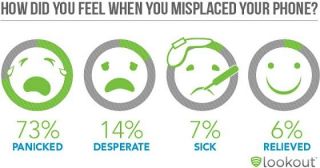
Yes, it's irritating. The phone has a habit of ringing, demanding it be answered immediately if not sooner, or else something hugely important will pass by and you'd never know you lost an opportunity to advance your life in some immeasurable way. It's a nag, a nuisance, and a tease. When you really want it to ring and for a voice on the other end to be the one you've been waiting for, it remains obstinately silent. It can be nerve-wracking.

And it can make people stressed and depressed. A Gallup poll of over 150,000 people globally sought a response to a simple question. Those in the poll who lived in the United States scored higher than elsewhere on admission of a stress-level scale. Fully 55 percent of American responders reported being stressed throughout much of the previous day.

"We are seeing patterns that would point to a political explanation or a polarization explanation. But can we say that definitively? No", said Julie Ray from Gallup. The survey explored negative experiences and positive ones as well, finding that a low income for example was related to negative experiences; predictable enough. The World Health Organization points out "It's [ageism] an incredibly prevalent and insidious problem".


"It affects not only individuals, but how we think about policies", pointed out Alana Officer, lead of the WHO's effort to counter ageism. Researcher Becca Levy of Yale School of Public Health points to her decades'-long study of the issue, that people with a positive approach to aging are more likely to recover from disability than people who trust in negative stereotypes.

"They experience less depression and anxiety. They live longer", added Ms. Span, referring to the research. The consensus that all these professionals who study the problem of negativity and its impact on making people depressed is that regardless of age, the one step that could lower stress and anxiety is to stop personal reliance on that cellphone. Put it away. Sooner the better.

Electronic dependence has a cost. It is recognized as a cause of sleep loss as well a weakening of cellphone users' attention span. "Every chronic disease we know of is exacerbated by stress. And our phones are absolutely contributing to this", states Dr. Robert Lustig, author of The Hacking of the American Mind.
Chapter 1: Phone Addiction
Bankmycell.com

Labels: , , , ,

Wednesday, April 24, 2019

That Other Eternal Search

"There’s currently a renaissance going on in psychedelic research with pilot trials and promising studies of full-dose MDMA (ecstasy) use for post-traumatic stress disorder and of psilocybin use within healthy populations or to treat depression and end-of-life anxiety. There hasn’t been the same research focus on microdosing. We didn’t have answers to the most basic epidemiological questions – who is doing this and what are they doing?"
"We wanted to ensure the results produced a good basis for future psychedelic science.Typical doses aren’t well established. We think it’s about 10 mcg or one-tenth of an LSD tab, or 0.2 grams of dried mushrooms. Those amounts are close to what participants reported in our data."
"Users engage in black market criminalized activities to obtain psychedelics. If you’re buying what your dealer says is LSD, it could very well be something else. We wouldn’t suggest that people microdose, but if they are going to, they should use Erlich reagent [a drug testing solution] to ensure they are not getting something other than LSD."
"With microdoses, there should be no ‘trip’ and no hallucinations. The idea is to enhance something about one’s daily activities, but it can be very difficult to divide a ½-cm square of LSD blotting paper into 10 equal doses. The LSD might not be evenly distributed on the square and a microdoser could accidentally ‘trip’ by taking too much or not taking enough."
"The goal of the study was to create a foundation that could support future work in this area, so I’m really excited about what these results can offer future research. The benefits and drawbacks data will help ensure we can ask meaningful questions about what participants are reporting. Our future research will involve running lab-based, randomized-control trials where psychedelics are administered in controlled environments. This will help us to better characterize the therapeutic and cognitive-enhancing effects of psychedelics in very small doses."
Thomas Anderson, PhD candidate, cognitive neuroscientist, Regulatory and Affective Dynamics (RAD) Lab, U of T Mississauga
Microdosers experiment with sub-hallucinogenic hits of acid and mushrooms in the hope of gaining some reprieve from depression, anxiety and other distractions. Brent Lewin/Getty Images
"What we found with microdosing is that people's negative feelings again were less. But they also had more positive feelings, which has never appeared on anti-depressant studies. People felt less bad, and more good."
"People indicate they have incredibly improved focus and attention. I remember one young man who said, 'I only use it [LSD] when I have a coding problem'."
James Fadiman, psychedelic researcher and psychologist, author The Psychedelic Explorer's Guide
LSD blotter tabs on top of a US quarter coin. Microdosers say they typically take about one- or two-tenths of a tab every three days or once per week. (Paul J. Richards/AFP/Getty Images)
"[Microdosing can induce a kind of] cognitive flexibility [one] that helps you reframe how you are seeing the world, what's salient to you, the kinds of connections you're able to make, the kinds of insights into problematic situations that you're capable of having." 
"[Psychedelics are about therapeutic or existential improvement], how to make sense of your environment and realize what's relevant to you."
"It's more about people trying to respond to the meaning crisis in culture [not the] tune in, drop [counterculture of the 1960s]."
John Vervaeka, assistant professor, cognitive psychology and cognitive science, University of Toronto
A new Canadian study digs into the little-researched subject of how and why people microdose psychedelic drugs, including so-called magic mushrooms, pictured above. (Evert-Jan Daniels/AFP/Getty Images)

There were 909 participants in one of the largest formal studies recruited online from 29 countries to focus on microdosing with psychedelics to assess the effects on mental health. Responses to the online questionnaire and having participants measure creativity allowed two University of Toronto PhD candidates to complete one of the first psychological profiles of a community that is growing, and identified by their commitment to microdosing; consumption of small amounts of LSD or "magic mushrooms".

Microdosers scored lower overall on neuroticism and "dysfunctional attitudes" than their non-microdosing counterparts. They also had higher scores on a "wisdom" scale measuring certain perceptions such as "I am in touch with my feelings", or "I have a good sense of humour about myself". The microdosers appeared to be more open-minded, curious and creative, able to think of more unique and unusual uses for example, that a brick or a knife could be put to. They appeared to the researchers to be prime examples of outstanding mental health.

The two researchers, Thomas Anderson and Rotem Petranker, compared current and former microdosers against controls with no microdosing experience in their backgrounds. University of Toronto Centre for Psychedelic Studies, newly launched, and the two researchers are now preparing for a first Canadian study of a new randomized trial to compare placebos to measured psilocybin -- the principal psychoactive compound in certain types of fresh and dried mushrooms. According to Mr. Petranker, the associate director of the new centre, microdosing has assumed the proportions of a new religion.
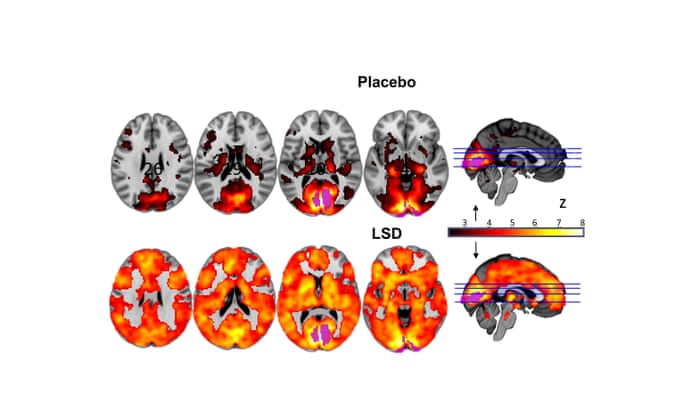
Several trials have been conducted on the affects of taking LSD, but none on microdosing it. Photograph: PR
Microdosing subreddit alone has close to 40,000 using subscribers making it abundantly clear that tens of thousands of people have launched their personal experiments with sub-hallucinogenic hits of acid and mushrooms hoping to feel less depressed, to assuage anxiety, to become more focused; a practise likened to an "illicit, chemical form of yoga", according to The New York Times. It's a trend that saw its beginnings in Silicon Valley when biohackers in 2010 were looking for a competitive edge.

Psychedelic-guided therapy at the present is based primarily on a phenomenon known as "ego dissolution"; belief that a person's sense of self, distinct from the rest of the world, evaporates during a psychedelic experience, permitting a new sense of connections and "boundlessness" to be gained. Microdosing involves "sub-perceptual" hits, typically representing one-tenth of a recreational dose; ensuring that no altered states of consciousness ensue. There should be no visions, no wavering lights; less about feeling at one with everything, more about pulling through the day.

More than half of Canadians, according to a recent survey, believe depression and anxiety have reached "epidemic" proportions. "People are saying, at a grassroots level, what else can we possibly do?", said Petranker, given that antidepressants dispensed so commonly offer little help over placebo for mild depression, according to studies. Mr. Fadiman, of Sofia University in Palo Alto, California and Toronto clinical psychologist Sophia Korb report from their experience with microdosers, the end result is that there is less depression, better mood, less procrastination, more energy and more patience.
Researchers presented the findings at the Beyond Psychedelics conference in Prague in June. (Source: The Benefits and Drawbacks of Microdosing Psychedelics)

Labels: , , , , ,

Monday, September 10, 2018

Eye Tic Syndrome (Computer Vision Syndrome)

"It's kind of like all the things your mom lectured you about growing up: lack of sleep, staring at screens, dry eyes, caffeine, dehydration, stress."
"[If a twitch happens], something has misfired, involuntarily."
Shameema Sikder, ophthalmologist, Johns Hopkins University School of Medicine

"[Eye twitches, or chronic myokymia, represents] fine, continuous, undulating contractions [across the orbicularis oculi muscle]."
"It's annoying [but], if patients can tolerate it, it's best that they just wait it out, and it will go away."
Rudrani Banik, ophthalmologist, Mount Sinai School of Medicine
Eyelid Twitch 2

Got a twitching eye? It's annoying. It's one of those things you wonder about; you feel it you know it's there but does anyone looking at you see it? Should you mention it? Are they too polite to remark on it? Evidently doctors assure their patients that though they are themselves acutely aware that their eye is continually, delicately but definitely twitching, no one else would be aware of it, even if they happen to be looking directly at you. Perhaps it would take sustained, close observation and people don't usually engage in that kind of intrusive viewing of other peoples' faces.

For relief from that twitchy eye that keeps spasming and annoying you, take a break from that computer screen after 20 minutes have elapsed, and do it regularly. Close your eyes and relax before resuming that stare at the glare. Closing your eyes can help to hydrate your eyes. Dr. Sikder mentions that Botox which disrupts communication between nerves and muscles has a high success rate in stopping a really persistent twitch. So if matters become really, really serious with that disruptive twitch, opt for a Botox injection.

Or not. If the frequency, duration and pattern of the twitch changes notably for the worse, it's time to consult your doctor. Should other facial muscles also begin twitching, or pain result in association with the twitch, it should be medically monitored; that combination of associated symptoms could conceivably be signals of damaged nerve fibres -- or, worse-case scenario, a brain-stem disease. Heaven forfend, tuck that away somewhere deep and out of sight.

As we spend more time continually viewing screens, we have a tendency to forget our health goals in prevention of complications due to excessive lifestyle habits. Our eye muscles become fatigued when we favour remaining fixated on that screen rather than tucking ourselves into bed at a decent  hour. Although why the biological reaction to close and continuous screen bonding causing that benign eye twitch is unknown, the process is understood, that the delicate muscle fibres which open and close the eyelid are impacted.
iStock

Dr. Banik with Mount Sinai School of Medicine studied the incidence of benign eyelid twitch, following patients over a multiple-year period. It might surprise, but seven years is evidently the average length of time reported with an eye twitch; that's pretty chronic and would certainly tend to wear people down, much less impact on their screen-viewing habits, whether an iPhone or a computer screen.

None of the patients that Dr. Banik studied progressed to a neurological condition throughout the period of the study but it is known that in rare cases an eye twitch can act as a symptom of a larger issue. Remedy? Relax an eye twitch by ensuring you have enough sleep hours, take in less caffeine, don't overindulge in alcohol, and of optimum importance, take those screen breaks.

Stress 2

Labels: , , , ,

Monday, April 02, 2018

Hooking Women onto Having It All

"In order to successfully market to women, you need to make it seem like it's part of the well-balanced life ... the good, happy life that includes yoga and running."
"I think lots of these activities are going to be tied to marijuana as a way to get women as customers."
"Maybe we want to be a bit more reflective about what we want our lives to look like."
"If you think, 'Naturally, I'm stressed out, and grouchy and angry and this is going to put me in a better mood', rather than thinking: 'Things here have to change for me to have a reasonable life', then I'm not so sure."
"I don't think the answer can be have another glass of wine, or a joint, and everything will be OK."

Samantha Brennan, feminist theorist, bioethicist, dean of arts, University of Guelph

"Is there a cohort effect happening there [in the 20-to-24-age group]. Or is it simply that women are starting to use at a frequency that's more parallel to men [similar to the way more women are tippling more like men]."
"[We didn't see that same level of increase [in pot use] in the 15-to-19-age group."
"[The federal Cannabis Act prohibits advertisement aiming for kids and youth, or the type associated with] glamour, recreation, excitement, vitality, risk or daring".
Rebecca Jesseman, director of policy, Canadian Centre on Substance Use and Addiction 

"If women truly are more likely to have a more rewarding experience with the drug perhaps we will see greater rates of addiction."
"You look at how quickly the rats learn: 'Hey, if I hit the lever on the left I'm going to keep getting the drug'."
Mohini Ranganathan, psychiatrist, associate professor, Yale School of Medicine

"In a society where prohibition has been the overlay that we've all experienced for so long, it feels illicit even when it's legal."
"Once you've titrated and figured out your ideal dose, you're just not intoxicated the way you would be with alcohol."
"Even if after the kids are in bed and you're enjoying a little bit of cannabis and one of the kids wakes up with a nightmare, you're still going to be equipped to take care of your child. If you'd had those three or four glasses of wine maybe you wouldn't be."
"It's smelly [smoking], it's inconvenient, you're going to draw attention to yourself and your kid is going to notice it [so the choice would be micro-dosed edibles, teas, tinctures]."
Jenn Lauder, co-founder Splimm, online pot and parenting newsletter


How we've matured as a society! How complicated the ordinary things of life have become...on our way to the future. At one time, not all that long ago, say the last fifty years, when women decided they'd have children they resigned themselves -- or looked forward -- to raising those children. In their own personal presence. From infancy to their teen years, women were there, emotional support built into their roles as mothers, along with the cleaning, cooking, baking and social steering that mothers have always relied upon to give their children a sound foundation into society.

All that was compromised when women were persuaded by the women's liberating feminist movement that raising children and providing comfort for a family was a waste of their ample, creative resources which could better be put to use in the world of business and commerce. Have children if you like, but plan for a career. Learn to juggle children's needs with your own. No problem, women are capable of multi-tasking and more than able to fulfill themselves and their offspring emotionally in the process.

Except it is complicated, and stress-inducing, and tiring, and quite, quite impossible. Of course, meal preparation was given a boost with the use of processed, pre-prepared and eating-out options. Maybe not quite as healthy as home-cooked meals, but no one can possibly do everything. And in that same spirit children were farmed out to day-care providers who would do for children what their parents hadn't the time for. "Quality time" was set aside in the evenings, when work-exhausted parents might read to their children, help with homework, bathe them, tuck them into bed.

Wearying, albeit rewarding, but stressful and irritating. No.time.for.yourself. Well, always time for a relaxant, and wine might do that, come the evening hours. Have another. And another. And suddenly but stealthily another problem erupts when the wine becomes a necessary part of the relaxing ritual and eventually a vital part. And now, with the recognition of cannabis as a soft alternative, there's the new relaxant, pot.

"A lot of moms, a lot of women, are starting to see that it's not this dangerous, scary thing. The moms who are using cannabis recreationally tend to be self-medicating for stress -- 'I have so much anxiety at the end of the day, I can't take it'. It's an alternative to wine", points out New Jersey-based registered nurse, Jessie Gill, cannabis advocate and MarijuanaMommy blogger.

The "pinking" of booze, which brought "Skinny girl" and "Girls' Night Out", and other low-calorie, ready-to-serve cocktails and wines to the rescue of maxed-out moms, is now passe. Enter cannabis. Doctors alarmed at the rise of female binge drinking where in 2013 over a million American women landed in an emergency room resulting from heavy drinking, now have an alternative to recommend to exhausted, played-out women. Can't tell a woman to stay at home, ditch the job, look after the children, and yourself. But can prescribe pot to keep the kettle boiling.
1797322_10202053927164294_2111408475_n
Pamele Wible, M.D.

Women dosing themselves with marijuana isn't new, according to sociologist Wendy Chapkis, co-author of Dying to Get High: Marijuana as Medicine. While it remains more a male than female issue, the gap appears to be narrowing. The 2015 Canadian Alcohol, Tobacco and Drugs Survey reveals that the percentage of women aged 20 to 24 reporting pot use in the previous year saw an increase of six percent between 2013 and 2015, with an increase of five percent among 25-to-44s.

The situation of legalization, yet new on the horizon: how industrious in promoting cannabis the industry will be permitted to be is unknown. The Coalition for Responsible Cannabis Branding, an independent group proposes to absent sexual language or imagery in naming pot strains, and to focus on flavour and taste advertising: "Factually based claims" on brand attributes. For her part, Dr. Brennan is uneasy about health claims linked to pot, from menstrual cramps and insomnia to weight loss and improved sex drive.

Dr. Ranganathan of Yale, is troubled by the acute effects of THC in human females, looking to understand the mechanisms underlying gender differences. Women appear on the basis of initial research, to be more receptive to the 'high' effect of cannabis. On the other hand, committed pot enthusiasts claim cannabis leads to greater introspection, euphoria, creativity and relaxation along with relief from physical aches and pains.

Using sophisticated PET brain imaging, Yale scientists have concluded that women experience greater cannabinoid receptor (CBI) responses, widely distributed in the brain, in comparison to men. In experiments with female rats trained to hit a level to self-administer cannabis, when the tap is turned off the rats keep hitting the lever, receiving no reward. Male rats tend to discontinue hitting the lever; female rats take longer before they stop whacking that lever.

Pot for what ails you, when what ails you is being driven to commit to greater production and less satisfaction in life? Where women respond to the demands of motherhood, often complicated by the stress of looking after the needs of aging parents, while holding down a job and struggling to do it all, managing somehow to hold it together by contracting out child care, house cleaning, cooking, and selling everyone short. Enter pot? That's the solution?

Does that help your depression, my dear?

Canadian teens say they are lighting up to handle stress, depression and anxiety.
Canadian Press

Labels: , , ,

 
()() Follow @rheytah Tweet