Ruminations

Blog dedicated primarily to randomly selected news items; comments reflecting personal perceptions

Wednesday, February 12, 2020

Mental Health and Prescription Drug 'Tranquilizers'

"[In their first year on the market in the 1960s benzodiazepine, described by their pharmaceutical producer as safe and effective as an alternative to barbiturates] the first report in the medical literature describing their addictive nature was published."
"There is a serious lack of physicians [in Canada] who are willing to do tapers and no accessible community-based resources where people can get help [with their addiction to 'benzos'."
"By the way, benzos are also sold on the street and widely used by heroin addicts and alcoholics."
Janet Currie, Canadian researcher, educator, doctoral candidate, University of British Columbia School of Nursing
"Dad was put on a low dose of a benzodiazepine a few years ago for anxiety following an extremely severe autoimmune reaction to food. He took the medication as prescribed. We weren’t aware that he was developing a physical dependence on the drug until last April when my mom was diagnosed with terminal cancer and the dose of the medication increased.  It became apparent that he was experiencing a paradoxical reaction to the medication, meaning the benzos did the opposite of what they’re supposed to do. These reactions are rare but are not unheard of."
"The worst symptom for dad was akathisia. Akathisia is an absolutely god awful condition where the person feels an incredible, irresistible restlessness, and an inability to sit still. It was so severe he was suicidal."
"For the last six months he’s been in horrible, unbearable discomfort from this drug, made worse when trying to remove it because of the physical dependence. We took him to several hospitals in North America where he experienced multiple cases of misdiagnosis, and the addition of more medications to cover the response he was experiencing from the benzodiazepines. He nearly died several times."
"In early January my dad, my husband, my daughter, and I flew to Russia. To make matters worse he was diagnosed with a fever and pneumonia in both lungs upon arrival. He was put into an induced coma for eight days and had the most horrific withdrawal I’ve ever read or heard about. He almost died from what the medical system did to him in the West. The doctors here aren’t influenced by the pharmaceutical companies, don’t believe in treating symptoms caused by medications, by adding in more medications and have the guts to medically detox someone from benzodiazepines."
"So, finally Dad is on the mend. His sense of humour is back. He’s smiling again for the first time in months, but he has a long way to go to recover fully. He spent four weeks in the ICU, he has neurological damage from the benzodiazepines, which is hopefully temporary."
"He’s still taking anti-seizure medication, and he can’t type or walk steadily yet. Still, this is a vast and rapid improvement. Last week he couldn’t sit up without help. The week before that he couldn’t lift an arm or speak."
Mikhaila Peterson, February 7, 2020 
Prof. Jordan Peterson in March 2018.   Craig Robertson/Postmedia

Benzodiazepines belong to the prescription sedative class of drugs. Although benzodiazepines have a calming effect, they are highly addictive, and a person who abuses them faces a host of symptoms. Some of the physical, psychological, and behavioral symptoms of benzodiazepine abuse include:
  • Weakness
  • Blurred vision
  • Drowsiness
  • Poor judgment or thinking
  • Doctor shopping
  • Asking friends, family, colleagues, and/or classmates for their benzodiazepine pills
  • Wanting to cut back on the volume of abuse but not being able to do so
  • Mood changes
  • Risk-taking behaviors, such as driving after abusing benzodiazepines
  • Combining benzodiazepines with alcohol or other drugs
Due to the natural process of building a tolerance, over time, a person will require a higher volume of benzodiazepines to reach the familiar high. When the abuse stops or the familiar dose is significantly cut down, withdrawal symptoms will emerge. Benzodiiazepine withdrawal can be particularly dangerous and even life-threatening. Undergoing medical detox under the direct care of a doctor is generally advised.
American Addiction Centers

In 1966, a woman by the name of Joan Gadsby who was a municipal official in British Columbia lost her young son to brain cancer. Her grief and subsequent depression theatened to consume her, until she was prescribed the "tranquilizer" drug benzodiazepine. She soon became addicted to the drug and its various side effects made her extremely ill. She brought a lawsuit against her prescribing doctor, but the case was lost even while the prosecution used all her retirement savings. She decided not to leave the situation at that point, but instead became an expert on drug over- and mis-use.

She wrote a definitive book on the subject, "Addiction by Prescription", and is generally acknowledged as the expert she became, so much so that she was given an honourary doctorate in view of the expertise she had attained and her focus on educating both the medical community and the lay public on the over-prescription of medications that have the very real potential to make people far more ill than they were before they were prescribed medication.

Pharmaceutical companies are not that interested in public health; they are focused on the sale of their patent-protected drugs, and in persuading the medical community of the efficacy of those drugs. When benzodiazepine was introduced to the modern pharmacopoeia, the medical community was assured it was non-addictive, a familiar old ploy seen more recently with opioid-alikes like fentanyl. It has been on the market for 60 years, under the names Ativan, Serax, Klonopin, Xanas, and most famous of all Vallium, among others.

They were originally marketed as a safer alternative to barbiturates, but that screen was soon enough shunted aside when its true nature as an addictive drug was revealed. Its use now, however, is pervasive. And instances of things going dreadfully wrong with its use, brought into public focus by the recently-revealed plight of Professor Jordan Peterson, Psychologist of note at University of Toronto, and public speaker of international renown, are not generally very well known.

An estimated 15 percent of adults may currently be prescribed the drug, roughly 65 percent of whom are women and the vast majority of those using the drugs as prescribed are likely to become hugely dependent on them, experiencing difficulties attempting to withdraw from their use. According to Canadian and international studies, 20 to 50 percent of all women over age 60 may be prescribed benzos or sleeping pills; long-term use of which increases with advancing age.

Moreover, a strong link has been established between elderly women taking these drugs, "of which 90 percent are benzodiapezines" and the issue of falling, which becomes swiftly catastrophic to the earlier mortality of these women as they age. A 2000 report stated that "one in three status Aboriginal women over 40 in Western Canada were prescribed benzodiazepines". This is a drug that is not meant for long-term use. When prescribed they should be taken for a course of mere weeks, and in carefully calibrated dosages.

Dr. Peterson suffered a situation where a "prescribing cascade" took place when withdrawal symptoms fail to be associated with benzos, resulting in more drugs being prescribed, and the outcome becomes even more deleterious than the condition of the patient when benzos were first prescribed. Prescribing doctors should be prepared to monitor their patients prescribed this drug, and to help them taper off the drug, meaning the process of gradually weaning a patient off a drug by incrementally lowered dosage, a process which can take months or years.

It's extremely difficult to sue pharmaceutical companies and doctors for malpractise. Pharmaceuticals have very deep financial resources and even deeper motivation in comparison to anything private citizens can muster, for legal costs. In the United Kingdom a class-action lawsuit through Britain's Legal Aid Funding Plan was undertaken, involving 14,000 patients and 1,800 lawyers. The group lawsuit failed for the simple reason that insufficient funds were available to pursue the already-year-long commitment for legal aid services to continue.
Benzodiazepines are a type of medication known as tranquilizers. Familiar names include Valium and Xanax. They are some of the most commonly prescribed medications in the United States. When people without prescriptions obtain and take these drugs for their sedating effects, use turns into abuse.
Doctors may prescribe a benzodiazepine for the following legitimate medical conditions:
  • Anxiety
  • Insomnia
  • Alcohol withdrawal
  • Seizure control
  • Muscle relaxation
  • Inducing amnesia for uncomfortable procedures
  • Given before an anesthetic (such as before surgery)
Benzodiazepines act on the central nervous system, produce sedation and muscle relaxation, and lower anxiety levels.
Although more than 2,000 different benzodiazepines have been produced, only about 15 are currently FDA-approved in the United States. They are usually classified by how long their effects last.
WebMD

Labels: , , , ,

Saturday, November 30, 2019

Mind Your Brain

"So now we know that pleasure is also encoded by opioids."
"The next time you're hungry and you see the McDonald's arches, that's leading to dopamine release. So it's predicting you're going to get reinforced or rewarded. But dopamine can also predict negative things."
"So if we're eating broccoli it's 10 units of dopamine. But when we're smoking crack cocaine, it's like 10,000. That's why for the average human seeking pleasure how can broccoli, or even brownies, compete with crack cocaine?"
"When you're activating this reward circuit, you're kind of tipping the balance up, and your brain is going to try to bring it down. It engages these compensatory responses."
"What you're feeling the next morning is the exact opposite of how you felt when you were on the stimulus. This would happen with any one of us if we were recreationally using."
"When you're using, you're activating all the circuits. And the next day, or the next week if you have a binge weekend, the circuits are kind of resetting the balance."
Dr. Kim Hellemans, chair, Department of Neuroscience, Carleton University
Mother talking to adolescent daughter.
MedicineNet.com

When humans come abreast of things required for survival, the brain releases a "reward circuit", as part of our evolutionary preparedness for the future of humankind. In primordial times when a successful hunt concluded that would ensure survival in the short term, brain circuits released a cascade of signals encoding pleasure, informing the memory to pay attention to where the successful event took place, so at a later time hunters could return with the expectation of another successful hunt.

Phenobarbital, Mebaral, Seconal, and Nembutal.

The hippocampus was engaged to inform the hunters where they were located, the nucleus accumbens lectured the mind how pleasurable the event had been with its expectations of a good tasting meal that would assure the dawning of another day, while the prefrontal cortex produced a mental note to return to the scene of success and pleasure. The brain is adept through long practise in its evolutionary trajectory in producing dopamine and releasing it to those brain areas alerting humans to survival techniques ensuring longevity.

Researchers have also discovered that the human brain released endorphins: opiates. The ingrained rewards system becomes engaged when we consume a substance such as cocaine, alcohol, nicotine, cannabis or opioids. That reward system becomes engaged in a superphysiological state, enhancing the experience of pleasure directly related to those substances. The complication is that the brain also is geared toward the maintenance of a steady balance (homeostatsis), and so engages in compensatory responses.
1130 opioids brain  Getty image brain scan Getty Images

Responses such as making it impossible for the dopamine to reach its reward potential by pulling the dopamine receptors from their location in the membrane even while  hormones that trigger stress are released, comprising the anti-reward circuits. Once the drug is metabolized and excreted, the high worn away, the compensatory responses are left; in the form of a 'hangover'. But in people gripped with a substance addiction where studies suggest early childhood trauma, the brain's circuits are rewired to blunt the reward baseline.

"That might have to do with depression or mental health, but they have this decreased reward baseline, and in some people, because of their history of trauma, they've got an overactive fear pathway." The stimuli that produce that good feeling in recreational users, makes traumatized people with addiction merely feel normal. Repeated use overrides the brain's stabilization efforts, setting a new, lower baseline to produce tolerance which people attempt to overwhelm through higher doses.

"Their baseline shifts, and people start feeling worse, even when they're not using. And they're trying to get to that level they did the first time they used, and they're never going to get there. This is 'chasing the dragon'."


"They'll say that they start using to feel good, and then they use just to feel normal, and then they're using to stay alive. Because what's happening is that when they're not using, the brain is saying 'Danger! Danger!". These fear pathways are skyrocketing, so you feel horrible and you feel scared. So when long-time users who are in withdrawal say they feel like they're dying, they actually feel like they're dying. Because all these fear pathways are going through the roof."

"All the decision-making in your prefrontal cortex is hijacked by addiction. When we're anxious, stressed, sad, a coping strategy can be alcohol, it can be opioids. And when you have an at-risk population -- people who may have experienced poverty, neglect, childhood trauma, systematic oppression due to the colour of their skin, their sexuality, their ethnic group -- this can certainly be the trigger that sets into motion a series of changes in the brain that may lead to addiction."

Labels: , , , , ,

Friday, November 15, 2019

Comparing the Tobacco Death Toll to E-Cigarette Uncertainty

"[Using e-cigarettes is] exposing yourself to all kinds of chemicals that we don't yet understand and that are probably not safe."
"There's almost no doubt that [e-cigarettes] expose you to fewer toxic chemicals than traditional cigarettes."
Dr.Michael Blaha, M.P.H., director of clinical research, Ciccarone Center for the Prevention of Heat Disease, Johns Hopkins Medicine

"As a safer alternative than smoking for people addicted to nicotine, [e-cigarettes] are analogous to prescribing methadone for people addicted to opioids, a strategy called harm reduction."
Dr.Sally Satel, The Vaping Overreaction, The Atlantic

"As a doctor who takes care of people who use drugs, I don't have a problem with people who use drugs."
"But there are so many people in this country who really hate them and don't care if they die. Or don't care if they are able to have lives of dignity and respect."
Dr.Kimberly Sue, Harm Reduction Coalition, New York and California

"The Canadian market is six to twelve months behind where we thought it would be."
"Sales of recreational cannabis are not living up to expectation. We built an incredible team here, and an incredible company."
Mark Zekulin, CEO, Canopy Growth, Canada
Photo by Amelia Holowaty Krales / The Verge
The U.S. Centers for Disease Control and Prevention announced over 2,100 cases of lung injury linked to e-cigarettes or vaping reported in the United States as of Wednesday. Canada has been waiting to see whether instances of pulmonary disease linked to vaping would be found among Canadians and instances are now emerging in Quebec, New Brunswick, British Columbia and Ontario. "The Public Health Department in collaboration with its doctors, is currently investigating [the latest case reported this week in Quebec]. The person was consuming legal nicotine-based products", added the statement.


In the U.S. the steadily emerging cases of lung disease attributable to vaping, has pointed at vaping pens bought on the black market, where the pens' ingredients included vitamin E acetate, forbidden in Canada as an ingredient in e-cigarettes. But the legal market in Canada has not taken off to the extent of expectations. The causes are diverse; though recreational cannabis has been legal for over a year, too few commercial retail outlets have been granted licenses, and their prices are substantially higher than products available on the black market.

The U.S. Centers for Disease Control and Prevention named "e-cigarette, or vaping, product use associated long injury (EVALI)", claiming to have detected "a potential chemical of concern in biologic samples from patients with EVALI". The identification of the chemical in fact, has been in the public domain for quite awhile. The addition of vitamin E acetate in some black market vaping products containing the canabinoid THC suggests risks of vaping can be ameliorated by avoiding black market products.

On the other hand, the latest identified case of lung injury in Quebec associated with vaping was said to have been acquired with legally-bought product which presumably was free of vitaimin E acetate. And then there is the perspective of harm and product and usage comparisons. Traditional cigarette smoking according to the CDC is the cause of over 380,000 deaths yearly in the United States, as opposed to the total number of reported vaping-related lung injuries standing at 2,100, with 39 deaths.

The evidence is strong that vaping cannabis products is infinitely safer than the use of traditional tobacco-filled cigarettes. Ideally, habitual smokers are encouraged to quite their habit of their own volition, and not to rely on a substitute as a crutch to enable them to move toward smoking cessation. Vaping, as a stop-smoking technique is not encouraged until and unless one's own efforts unaided by such devices fail, according to the Johns Hopkins Medical Center.


Yet the use of e-cigarettes is fairly universally recognized as a less health-dangerous treatment for tobacco addiction than the continuation of cigarette use. The horrendous death count linked to cigarette use seems to be accepted with a measure of equanimity, yet the far fewer lung disease presentations and even smaller number of deaths associated with pulmonary disease has sent shockwaves through the vaping and medical community.

The casual attitude toward vaping that saw a widespread take-up has been replaced in some quarters with suspicion and avoidance, except for attitudes among the youth generation who have taken up vaping with great enthusiasm, as a social recreational tool, not as a transitional tool away from cigarette use. In fact, there are fears in the medical community that vaping among teens will proceed to regular cigarette use.
"[Doctors found an] enormous amount of inflammation and scarring [on the teen's lungs]."
"This is an evil I haven't faced before. The damage that these vapes do to people's lungs is irreversible. Please think of that — and tell your children to think of that."
Dr.Hassan Nemeh, surgical director, thoracic organ transplant, Henry Ford Hospital
"We asked Henry Ford doctors to share that the horrific life-threatening effects of vaping are very real!" 
"Our family could never have imagined being at the centre of the largest adolescent public health crisis to face our country in decades."
"Within a very short period of time, our lives have been forever changed. He has gone from the typical life of a perfectly healthy 16-year-old athlete — attending high school, hanging out with friends, sailing and playing video games —  to waking up intubated and with two new lungs, facing a long and painful recovery process as he struggles to regain his strength and mobility, which has been severely impacted."
Family of 17-year-old teen transplant patient
A Michigan teenager was the recipient of what could be the first double lung transplant on a person whose lungs were severely damaged from vaping, health officials said Tuesday. (Tony Dejak, File/Associated Press)

Labels: , , , , , ,

Monday, May 06, 2019

Ignore the Siren Call of that Cellphone

"When you want a whole cake to yourself because you're turning 30, which is basically 50, which is basically dead."
Offensive advertising
"After a bunch of us squawked about the ad on social media, the company apologized for what it called attempted humour, and what I'd call ageism."
"[Jabs like this] constitute mere microaggressions compared to the forms ageism often takes: pervasive employment discrimination, biased health care, media caricatures or invisibility."
"When internalized by older adults themselves, ageist views can lead to poorer mental and physical health."
Paula Span, writer, professor, Columbia School of Journalism

"By chronically raising levels of cortisol, the body's main stress hormone, our phones may be threatening our health and shortening our lives [aside from causing problems such as sleep loss and lessened attention span]."
Catherine Price, science journalist

"Your cortisol levels are elevated when  your phone is in sight or nearby or when you hear it or even think you hear it."
"It's a stress response, and it feels unpleasant, and the body's natural response is to want to check the phone to make the stress go away."
David Greenfield, founder, Center for Internet and Technology Addiction
Chapter 2: Usage
Bankmycell.com

Yes, it's irritating. The phone has a habit of ringing, demanding it be answered immediately if not sooner, or else something hugely important will pass by and you'd never know you lost an opportunity to advance your life in some immeasurable way. It's a nag, a nuisance, and a tease. When you really want it to ring and for a voice on the other end to be the one you've been waiting for, it remains obstinately silent. It can be nerve-wracking.

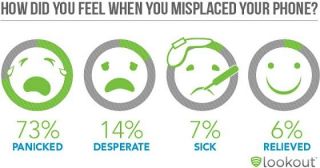
And it can make people stressed and depressed. A Gallup poll of over 150,000 people globally sought a response to a simple question. Those in the poll who lived in the United States scored higher than elsewhere on admission of a stress-level scale. Fully 55 percent of American responders reported being stressed throughout much of the previous day.

"We are seeing patterns that would point to a political explanation or a polarization explanation. But can we say that definitively? No", said Julie Ray from Gallup. The survey explored negative experiences and positive ones as well, finding that a low income for example was related to negative experiences; predictable enough. The World Health Organization points out "It's [ageism] an incredibly prevalent and insidious problem".


"It affects not only individuals, but how we think about policies", pointed out Alana Officer, lead of the WHO's effort to counter ageism. Researcher Becca Levy of Yale School of Public Health points to her decades'-long study of the issue, that people with a positive approach to aging are more likely to recover from disability than people who trust in negative stereotypes.

"They experience less depression and anxiety. They live longer", added Ms. Span, referring to the research. The consensus that all these professionals who study the problem of negativity and its impact on making people depressed is that regardless of age, the one step that could lower stress and anxiety is to stop personal reliance on that cellphone. Put it away. Sooner the better.

Electronic dependence has a cost. It is recognized as a cause of sleep loss as well a weakening of cellphone users' attention span. "Every chronic disease we know of is exacerbated by stress. And our phones are absolutely contributing to this", states Dr. Robert Lustig, author of The Hacking of the American Mind.
Chapter 1: Phone Addiction
Bankmycell.com

Labels: , , , ,

Thursday, November 29, 2018

Revisiting The Bad Seed

"The rehabilitation of  young offenders is one of the primary goals of the Youth Criminal Justice Act, but it is not the legislation's only goal. In a case such as this the goal of protection of the public must also be stressed."
"He is only fourteen years of age and in desperate need of treatment and supervised control. He constitutes a danger to the public and [to] his grandmother."
"Based upon the reports I recently discussed, it is difficult to see how such a sentence [Crown and defence suggested a period of six months of open custody and supervision, followed by a period of probation] will assist in [the boy’s] rehabilitation or protect the public from him. It appears obvious that [the boy] is not ready to be placed back into the community."
Judge Wayne Gorman, Corner Brook, Newfoundland

"[He is an] out of control, violent, manipulative youth with no concerns for how his actions affect others around him or any regard for following court orders."
"[In my opinion only a secure sentence represents an outcome to provide any level of rehabilitation.]" "Without a period of secure custody being imposed [the boy] will likely continue to be involved with the Youth Justice System on a regular and escalating basis."
Presentence report

"[The boy stated that he] has been stabbed and has stabbed others, that he kicked his adversary on the ground and sometimes gets in street fights for no other reason than satisfaction."
Psychological report
123RF Stock Photo

He's considered a child as a young offender and his identity is protected under Canada's Youth Criminal Justice Act. His behaviour is that of a sado-masochistic sociopath; he feels neither concerned compassion for others nor one iota of regret for his own harmful actions toward others. His commission of violent behaviour, his rejection of authority, his threat to society led to a ten-month sentence of secure custody and supervision.

Im Grade seven there were 125 "behavioural incidents" and in grade eight 66 such incidents logged against his conduct, at a time when he was in school for a mere hour daily. The sentence imposed on this boy takes into account multiple crimes committed this year, including breaking windows, break-ins, stealing lottery tickets from a mall kiosk. On September 21 the boy and a handful of his peers skipped school to go to an abandoned building.

They lured a twelve-year-old girl to accompany them. Once there the boys attacked the girl because they felt she was a "rat"; obviously believing she had "told" on them to school authorities. The boy placed a knife at her throat, she was forced to kneel and she was repeatedly kicked and informed the building was a "good place to kill someone", and their body would never be found. The boy placed a chokehold on the girl and she passed into unconsciousness.

When they left the abandoned building, he warned the girl that if she mentioned the incident to anyone he would kill her. The following day he was arrested. Six months of open custody and supervision with probation was the Crown and defence recommendation, one that the presiding justice deferred in favour of a more rigorous penalty in view of a need to protect the public and to make an effort to rehabilitate the boy.

This young boy has been diagnosed with partial fetal alcohol syndrome. Before he was a year old he was removed from the custody of his parents because of their inattention to the needs of a child, alongside their drug use. And he was placed in the custody of his grandmother, to raise. She informed officials of the limited control she had over the boy's actions. And she made no secret of her fears of her grandson's behaviour, that when he is released in her opinion he will represent a threat both to himself and to the public.

Labels: , , , , , ,

Sunday, November 11, 2018

Sexual Addiction aka Compulsive Sexual Behaviour (Disorder)

"[Symptoms of 'compulsive sexual behaviour disorder' can include] repetitive sexual activities becoming a central focus of the person's life."
"[Attempts to reduce the behaviour failing, and] continued repetitive sexual behaviour despite adverse consequences [are recognized symptoms]."
"Distress that is entirely related to moral judgments and disapproval about sexual impulses, urges or behaviours is not sufficient to meet this requirement [defining compulsive sexual behaviour]."
World Health Organization (WHO)

"From Tiger Woods to Harvey Weinstein, news articles have conjectured that 'sex addiction' is a growing and heretofore unrecognized 'epidemic', while the scientific community debates whether such a problem even exists."
Newly published study: JAMA Network Open

"There is a lot of controversy here, but we wanted to assess the one thing that is common in all these different conceptualizations -- the difficulty in controlling sexual urges and behaviours."
“It’s a lot more people than we expected to be having difficulty controlling sexual urges and behaviors and who are feeling distressed and impaired."
"The differences between the sexes are a lot less than we would have expected, raising concerns that the difficulty in controlling sexual behavior affects more than just men."
Janna Dickenson, lead author, post-doctoral fellow human sexuality, University of Minnesota

"It's interfering in the woman's life, she's paying for services, she feels a sense of it being out of control."
"In the cases I've seen there was a very kind of obsessional component to it, an anxiety-relieving component to it."
Dr. Lori Brotto, director, sexual health laboratory, University of British Columbia

"There are a lot of people in my patient population - regular folks - who really struggle with their sexual impulses. There are folks who are engaging with sex workers when they travel. Others struggle with pornography or the temptation to step away from marital fidelity. Many take risks even when it can impact their lives."
"I’ve had a lot of patients like that. They start out just poking around on the Internet. Then they’re doing it more and more. And then it becomes a problem for them. Their spouse gets all upset, or someone walks in on them. Then they come looking for help."
Thomas G. Plante, professor of psychology, Santa Clara University, California, adjunct clinical professor of psychiatry, Stanford University School of Medicine


A recently published study indicates that a significantly measurable percentage of any population is haunted with a newly identified (and controversial) disorder named compulsive sexual behaviour. The study set out to examine just how prevalent it is among the general population that overt sexual behaviour control has become a problem for people, given the revelations of the last several years of sexual misconduct on the part of people from all walks of life.

What the behavioural researchers discovered came as a surprise to them -- out of their study of 2,325 adults in the U.S. -- ten percent of whom were men professing by their responses to a set of questions to be evaluated with respect to prevalence and urges and repeat behaviours, and a more surprising seven percent comprised of women. All met the clinical cut-off point for 'compulsive sexual behaviour disorder' newly recognized as a sexual pathology involving an inability to control intense, repetitive urges and feelings of a persistent nature.

That sexual behaviour of a type identified as "that causes marked distress or social impairment". The condition was assumed to be prevalent in fewer numbers; between one and six percent of the population, men assumed to rate between two and five times likelier to express the disorder than women. So when the researchers set out to evaluate the results of the study, they assumed that 20 to 30 percent of those meeting the clinical cut-off point would be female. Their conclusion was otherwise; women accounting for 41 percent of those qualifying for a CSBD diagnosis.
About 10 percent of men and six percent of women in the US struggle with hard-to-control sexual urges raising concerns among psychiatrists

Both sexes exhibited a complete range of sexual symptoms from "problematic" yet nonclinical out-of-control sexual behaviour (failing to meet the standard for a formal diagnosis), to the opposite end of the spectrum; certifiable psychiatric disorder. The conclusion is anything but definitive in that the lines are hazy between when sexual urges, feelings and behaviours cross from normal to compulsive to become a pathological brain disorder.

A 13-item screening tool was used, meant to categorize their sample subjects (adults aged 18 to 50) who met criteria for a potential diagnosis of compulsive sexual behaviour, with questions such as How often -- never to very frequently -- people felt unable to control their sexual feelings and urges; How often they've concealed or hidden their behaviour from others; and How often they relied on excuses to justify their behaviour.

Lead author Dickenson felt that a reasonable explanation for women accounting for a larger than anticipated percentage of sexual disorder could be the result of a cultural shift toward more "permissive female sexual expression", along with the ready accessibility of online sexual imagery and a general social atmosphere of casual sex. The newer access to sexuality sites, along with anonymity given the Internet's ubiquitous use by people to forge relationships may also be counted as a possible vector. 
"They kind of mix things up, for example, using ‘impulsive’ and ‘compulsive’ interchangeably. They do find a high rate of people with some sort of distress with their sexuality. But is it impulsive, compulsive, addictive? Is it something else? You can’t tell from what they did."
"What you can take from this research is that there are a pretty decent percentage of people who are complaining about some sort of negative feelings about their sexuality. And those negative feelings are leading to some distress."
Robert Hudak,  associate professor of psychiatry, University of Pittsburgh School of Medicine, Pennsylvania, medical director, Obsessive Compulsive Disorders Outpatient Program, Western Psychiatric Hospital, University of Pittsburgh Medical Center


Labels: , , , ,

Tuesday, March 27, 2018

Proceed With Caution

"The consumption of cannabis causes a particular combination of relaxation and euphoria, commonly referred to as a 'high'."
U.S. National Academies of Sciences, Engineering and Medicine

"[Single dose of cannabis sativa effect on medical colleagues who were] articulate and fairly stable people [unleashed the onset of abnormal sensations], always abrupt and immediate."
"[One of those sensations: sustained hilarity] The whole idea of the experiment would suddenly seem enormously amusing."
"The test subjects reported events occurring in immediate sequence that] seemed separated by an eternity of time."
South African neuroscientist and psychiatrist, Frances Ames, 1958, Journal of Mental Science

"[Though pot users had not consumed marijuana in the month leading up to the study] memory distortion [occurred, suggesting a long-lasting compromise of memory and cognitive control mechanisms involved in reality monitoring."
2015 Spanish research results
The highly rated variety of medical marijuana known as "Blue Dream" was displayed among other strains at a cannabis farmers market in Los Angeles in 2014.   Frederic J. Brown/AFP/Getty Images

Will Lawn of University College London clinical pharmacology unit, lead author of a study published in 2015 where researchers asked volunteers to inhale pot vapour through a balloon on one occasion, a placebo vapour on another, appeared to affirm that cannabis use has no effect on motivation when people are sober. Other research conclude that long-term use of marijuana has been associated with cognitive impairment, particularly acute in learning and recalling new experiences; seen to affect not the mature so much, but the young.

A team of Spanish researchers in 2015 reported that it would appear heavy pot users are more vulnerable to "memory distortions" due conceivably to decreased activity in the hippocampus, the region of the brain associated with memory. This same study suggested that those leaning heavily on pot use may recall events that had never in reality occurred; conclusions reached through the study involving 16 test subjects each of whom had used cannabis on an average of 42,000 times over a 21-year period.

A committee of the U.S. National Academies of Sciences, Engineering and Medicine noted that during acute cannabis intoxication "sociability and appetite for sweet and fatty foods appears heightened possibly driven by THC", the active ingredient in marijuana's propensity to interfere with neurons in the brain ordinarily suppressing appetite, according to a study in Nature. Researchers injecting mice with THC resulted in the neurons responsible for shutting down eating suddenly accelerating. "It's like pressing a car's brakes and accelerating instead", commented lead author Tamas Horvath.

As for the paroxysms of laughter, though difficult to explain, there are suggestions highlighted by studies that marijuana's anti-depressant effects and the drug's capacity in increasing blood volume in the right frontal and left temporal lobes in the cerebral cortex, the brain areas felt to be associated with "mirth and laughter", may provide the eventual, accepted explanation. Yale School of Medicine researchers reported in 2015 that THC increases random "cortical noise" in the brain of healthy volunteers.
A variety of medicinal marijuana buds in jars are pictured at Los Angeles Patients & Caregivers Group dispensary in West Hollywood, California U.S., October 18, 2016. REUTERS/Mario Anzuoni/File Photo Thomson Reuters
This is the kind of 'white sound' we know as background. For reasons not quite understood, some people experience a "robust syndrome" mimicking aspects of schizophrenia, according to Dr. Deepak Cyril D'Souza, professor of psychiatry at Yale, the study's senior author. Symptoms of paranoia and voices appear, suggesting heavy pot use could precipitate or hasten schizophrenia, particularly in early or mid-adolescence.

Take note: Heavy pot use may depress a man's reproductive potential through affecting the morphology (size and shape) of sperm, according to a study published in the journal Human Reproduction. The study found that males under 30 with under four percent normal sperm to be almost twice as likely to have used cannabis in the last three months. The study took into account (controlled for) other factors such as BMI, type of underwear, smoking, alcohol consumption or a history of mumps.

Simply put, sperm with morphology issues become clumsy and functionally compromised; instead of swimming toward an egg to fertilize it as normally occurs, these sperm swim poorly and crash into the female reproductive tract hopelessly. Decreased libido in men has been attributed to chronic cannabis use. Research suggests that cannabis suppresses ovulation in its effect on women. Further, marijuana has been linked to early pregnancy loss and low birth weight babies. Animal data in the works suggest as well that the use of pot during pregnancy impairs fetal brain development.

Wait, there's more. The academies of sciences review finds the best evidence suggests that smoking pot doesn't increase risk for lung, head or neck cancers in adults although "modest" evidence exists linking it to a subtype of testicular cancer. Whether cannabis increases the risk of heart attack or stroke remains unclear, but some evidence has been found for anti-inflammatory effects. The use of pot prior to driving does increase the risk of involvement in a crash, but there is no evidence it increases the likelihood of developing depression, anxiety or post-traumatic stress disorder.

"Cannabis withdrawal", caused by sudden termination of heavy daily pot use, has been newly referenced in the fifth, latest edition of the Diagnostic and Statistical Manual of Mental Disorders (DSM-5). Withdrawal symptoms can include irritability, anger, or aggression, restlessness, sweating, fever, chills and hypersomnia (sleeplessness).

People suffering from the newly-recognized "cannabis use disorder" may spend hours daily under the influence of pot; alternately spend a lot of time to obtain, use, or recover from the effects of cannabis along with a requirement for substantially increased amounts of the drug to continue to enjoy the required effects.

A woman holds up a cannabis plant during a demonstration
A woman holds up a cannabis plant during a demonstration. www.sciencemag.or

Labels: , , , ,

Wednesday, March 07, 2018

Principle-Degenerate to Generate Profit

Model demonstrates Coca-Cola Japan Company's (CCJC) new 'e-40' vending machine in 2008
Coca-Cola says it markets dozens of new products on the Japanese market every year  Getty Images
"[The move is a] modest experiment for a specific slice of our [Japanese] market."
"We haven't experimented in the low alcohol category before, but it's an example of how we continue to explore opportunities outside our core areas."
Jorge Garduno, Coca-Cola's Japan president

"Young people don't feel like they are drinking alcohol because there is so much sugar and there is a lot of alcohol as well."
"Health Canada needs to take a look at that."
Lucie Charlebois, Quebec public health minister

"It was a mistake to enter this category to compete with Four Loko."
"In fact, the Four Loko category should not even exist."
"Last Friday I also ordered the removal of all advertisements that concern it — it’s the right thing to do."
Aldo Geloso, co-owner, Geloso Group
It's clear that the FCKD UP cans were designed to appeal to a younger demographic, Christopher Curtis, Montreal Gazette
Montreal-area beverage producer, Geloso Group, produces a sweet-tasting drink whose consumption is aimed at young people, and is loaded up with alcohol, enough alcohol to rival any spirits in the selection of wines. It planned to compete with another beverage company located in Chicago whose drink, Four Loko, is hugely popular among teens. That beverage contains 11.9 percent alcohol content and was, in fact, recently removed from store shelves in Quebec because it contains ethyl alcohol, in violation of Quebec's alcohol laws.

Phusion Projects manufacturers Four Loko, and it is safe to assume they produce a beverage that attracts young consumers who may not realize how loaded the drink is with alcohol. On the other hand, the tins clearly state the alcohol content. But it obviously provides the drink manufacturer with ample incentive to continue producing it because the profits are appreciable. And it was that profit quotient that attracted the attention of the Geloso Group which, in 2017 introduced their own product, FCKD UP.

It is perfectly clear moreover, that Geloso Group targeted young people as consumers of its product; its advertising and the coloured cans that hold the drinks are not meant to attract any but the young. Most unfortunately, a dreadful occurrence was reported last week, where a 14-year-old girl, Athena Gervais, was found dead near a stream close to her Laval high school. She and friends had lifted cans from a convenience store nearby their high school and she is said to have consumed several of those cans before dying.
Athena Gervais. Laval Police    Athena Gervais, 14, disappeared Feb. 26. Her body was found behind her school three days later.

Now, the co-president of the company whose drink it was, has announced it is immediately discontinuing manufacture of the drink, and the Quebec-based convenience store chain Couche-Tard will no longer sell the offending beverage. This is not an illegal drink. Young people can purchase it and drink it, as they would any other drink. But what they are buying and consuming is a high-alcohol beverage at their local convenience store at lunchtime, in the process becoming intoxicated and ill. They're looking for the buzz, some deliberately wanting to become drunk.

"Health Canada is already working with the government of Quebec to address this issue", responded spokesman Eric Morrissette who also mentioned that alcoholic or energizing beverages are sold legally in Canada; Health Canada is not responsible for giving approval to their sale. On the Four Loko website there is a hypocritically sanctimonious statement that reads: "Unfortunately, any alcohol beverage can be abused if not consumed responsibly. The issues of irresponsible alcohol consumption will only be solved by increased education, stronger enforcement of existing laws and personal responsibility."

In the industry that kind of beverage is referred to as "alcopop", with the full knowledge of what it contains and how it can affect the age demographic that advertising the product is meant to attract. It isn't particularly new on the market, it's been around since the 1990s in the United Kingdom where brands like Hooch, Reef, Smirnoff Ice and Bacardi Breezer became immensely popular, the names attracting teens who want to be adults and do the things that adults are known to do. The names of these drinks tell them they can.

They're easy to access and easy to drink. There's no off-putting odour emanating from them as there is with beer, it's the sweet taste that covers up the alcohol and caffeine-containing product, and taste is given a fruity flavour, like lemon, orange, mimicking the familiar but with the added fillip of producing a  high. Their marketability is undeniable, as is the huge profit associated with their sales, making them controversial in that they encourage young people to indulge in drinking large quantities of alcohol.

Wherever there is profit to be made and the allure of diversifying popular products, there will be a huge corporation like Coca-Cola whose executives endlessly sniff out enhancing their bottom line. That huge international beverage manufacturer is looking at their Japanese market, planning to introduce just such an alcoholic pop to young Japanese who have been introduced to the concept with their own national brands. Where a local spirit called shochu is added to Chu-Hi, a canned sparkling flavoured drink, between 3 and 8 percent alcohol by volume.

Famously, Japan has street vending machines everywhere, selling food and hot and cold drinks in a culture that likes convenience and availability. And despite the questionable ethics involved in selling quasi but powerful alcoholic beverages to children, where there is profit to be made through the commercialization of children yearning to be adult and emulating what the mature population does, it's just a matter of popularizing a unique brand to grow the market and enhance the bottom line.

Students enter Poly-Jeunesse high school March 2, 2018. The body of Athena Gervais was found in a creek behind the school. Allen McInnis / Montreal Gazette

Labels: , , , ,

 
()() Follow @rheytah Tweet