Ruminations

Blog dedicated primarily to randomly selected news items; comments reflecting personal perceptions

Monday, June 22, 2026

World War I With Drones

"Four years since Russia’s February 2022 full-scale invasion of Ukraine, Russia still occupies roughly 20 percent of the country after gaining almost five thousand square kilometers of territory in 2025." 
"Russia continues to bombard Ukrainian cities, while Ukraine maintains drone attacks on Russian oil infrastructure and military sites."
"Since January 2022, Ukraine has received about $188 billion in aid from the United States and $197 billion from the European Union."
"Fighting and air strikes have inflicted nearly 56,000 civilian casualties, while 3.7 million people are internally displaced, and 5.9 million are registered as refugees. 10.8 million people need humanitarian assistance."
Global Conflict Tracker 
 
"In many respects, this war in Ukraine is the one that most closely resembles World War I."
"[In both wars it was the intensity of firepower that forced armies to turn to trenches]: You bury yourself to protect yourself."
Michel Goya, former French colonel, historian 
People stand amid graves stones and candles
People visit the graves of their relatives, who were killed during Russia's attack on Ukraine, as a large-scale light installation illuminates the Lychakiv cemetery in Lviv, Ukraine, on Feb. 23, 2026, marking the fourth anniversary of the full-scale Russian invasion. (Roman Baluk/Reuters)
 
The heavy casualty counts and brutal infantry assaults of the ongoing war in Ukraine strikes some war historian as comparable to conflict conditions experienced during World War I. By June 11, the war in Ukraine -- Vladimir Putin's 'special military operation' -- saw a point in time where it has been prolonged for four years and three months, its duration outlasting World War I's epic conflict. 
 
Mr. Putin's expectation that his large operational full-on incursion of February 2022 would swiftly see Ukraine surrendering, his goal accomplished in a mere matter of months if not weeks. The Ukrainian counter offensive which saw Russia effectively opposed and the conflict became a war of attrition, it would have seemed inconceivable to any strategists, much less servicemen fighting for their lives on either side of the hostilities that the war would drag on for so many weeks, months and years. 
 
Yet the war has a life of its own, reflecting the level of determination on both sides; Moscow's to achieve its objective; Kyiv to sustain its sovereign rights and push its aggressor entirely out of its geography, including from Crimea and Donetsk, both of which fell to Russia in 2014. 
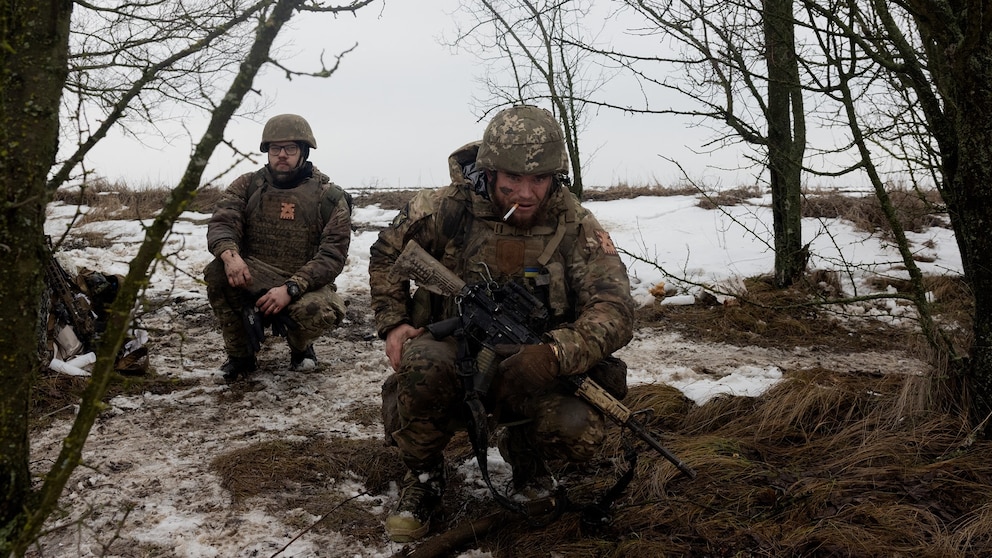
 
https://i.abcnewsfe.com/a/ce46f594-ba79-4872-ac0c-8bfbf57be6ea/ukraine-main_1771917851608_hpMain_16x9.jpg?w=992
Ukrainian servicemen of the 33rd separate assault regiment participate in a training at an undisclosed location in Zaporizhzhia region on Jan. 30, 2026, amid the Russian invasion of Ukraine.
Tetiana Dzhafarova/AFP via Getty Images
 
Recent polls indicate that almost fifty percent of Ukrainians feel the war will not end before 2027. Among Ukrainians many are prepared to argue that the war's beginning in reality was 2014 when Russian troops with the assistance of Russian-Ukrainian rebels swept Crimea to seize it for Greater Russia, complementing Vladimir Putin's yearning for the days of firm control of eastern Europe during the Soviet Union, and he a modern-day Czar. 
 
According to Ukrainian historian Yaroslav Hrytsak, the conflict that Russia imposed upon Ukraine will rank in historical accounts as among the most consequential in modern European history. Alluding to both wars, having altered geopolitics in Europe through the reshaping of military alliances, driving a feverish defense buildup through NATO, unseen since the end of the Cold War. 
 
https://s.yimg.com/lo/mysterio/api/7ec534c0eadceb44107863e713ad07bcc0414f700dcdbeb5346bf211288e9dbd/lightyear_networkapi/resizefill_w1200;quality_80;format_webp/https:%2F%2Fmedia.zenfs.com%2Fen%2Ftampa_bay_times_articles_917%2F08f2c08a0b05eb62ed96f0e814184db1
The war in Ukraine has now exceeded the first world war in duration. And while the comparison between these two conflicts is imperfect, it is becoming difficult to ignore.
 
 A century earlier, point out military analysts, it was the new technologies of warplanes and tanks that drove the fighting antagonists, while today advances in unmanned aerial war machines have taken centre stage in an increasingly brutal onslaught against humans more attuned to conventional warfare. As in 1914, so too in 2024, where a frozen front line maintains a status quo and where neither attacker nor defender can claim the upper hand. 
 
Historians see World War I trench warfare repeated in the trenches and bunkers that Ukrainian soldiers have been using where assaults with artillery barrages followed by storming enemy trenches by infantry squads were the elemental formulaic schemes brought to play in the early years of the current war, echoing what had been current a hundred years earlier. 
 
Once drones were brought into play, trench-like networks became outdated as unsafe, where drones monitored the battlefield, striking with precision greater than that of artillery shells. Survival now depends on smaller, more discreet and deeper trenches to outfox the drones; shelters now house a handful of soldiers in dugouts. As for the fearsome tanks of WWI, they have become targets for drones, and have been largely retired. 
 
According to Admiral Pierre Vandier, Supreme Allied Commander Transformation in NATO, the Ukrainian front has been lethalized by drones. And the strategy that Ukraine relies upon to use drones to strike deep into Russia to hit its oil assets, strikes at its very economy which funds Putin's special military operation. The battlefield has been flooded with small attack drones of Ukrainian design and forward technology. "This is World War I, but with drones", said historian Yaroslav Hrytsak.  
https://res.cloudinary.com/dmovl8u5q/images/w_680,h_730,c_scale/f_auto,q_auto/v1757948439/globalconflicttracker/image_20100fe68c/image_20100fe68c.png?_i=AA 

Labels: , , , ,

Wednesday, June 04, 2025

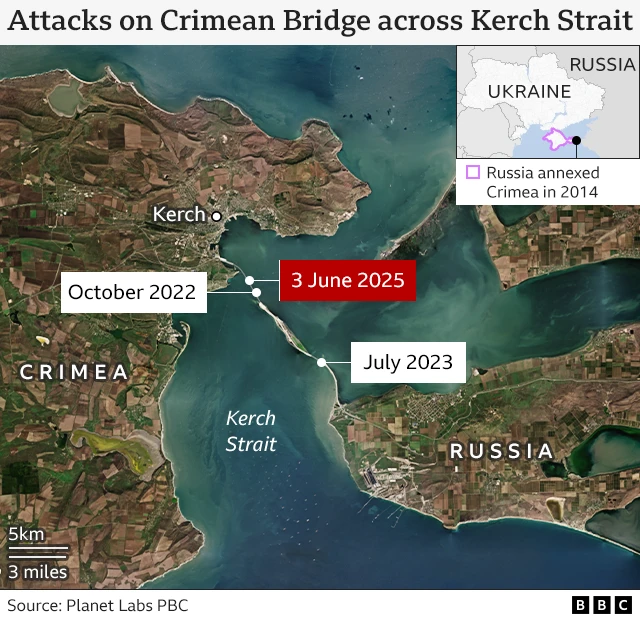
Ukraine Strikes Again

https://i.guim.co.uk/img/media/89e5dc99df0f55ede8d1b1e72cc41f87ccc2c295/1026_0_2688_2151/master/2688.jpg?width=620&dpr=1&s=none&crop=none
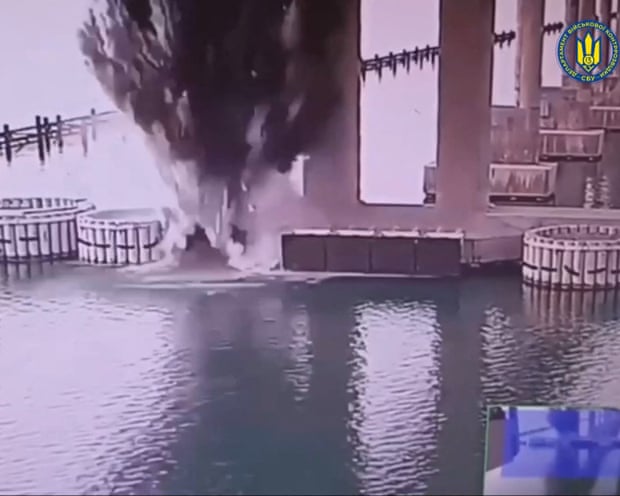
Moment Ukraine hits bridge linking Crimea to Russia – video
 
https://ichef.bbci.co.uk/ace/standard/800/cpsprodpb/vivo/live/images/2025/6/3/972a26c8-ca3e-4d6c-8775-f2a6d216e8fe.jpg.webp
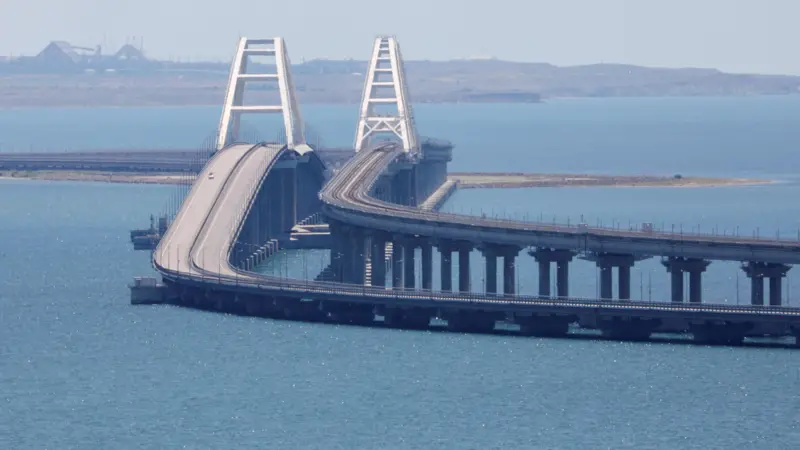
The bridge, pictured here in 2023, has been attacked twice before by Ukraine   Reuters
https://ichef.bbci.co.uk/ace/standard/800/cpsprodpb/vivo/live/images/2025/6/3/a514d562-d4e7-4421-bd56-c4864a2cc79c.jpg.webp
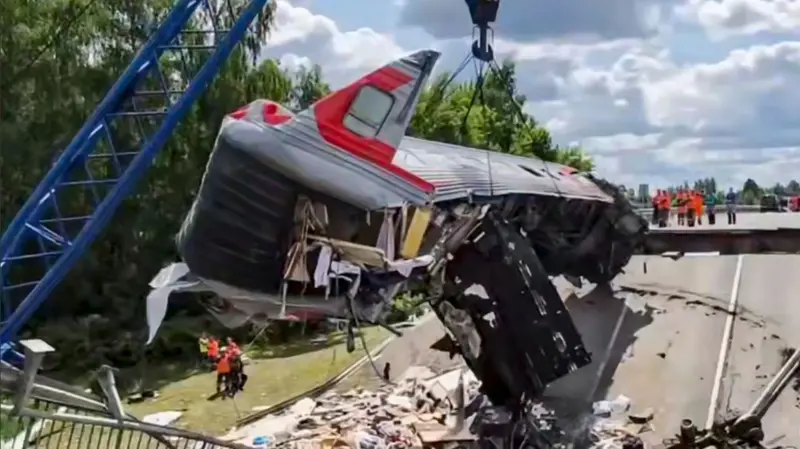
Russia's Investigative Committee accuses Ukraine of causing the collapse of two bridges in Russian border regions over the weekend.  Russian Emergencies Ministry

Labels: , , ,

Wednesday, April 02, 2014

NATO On Alert

Russia is busy chastising Ukraine for its audacious assertiveness in thinking it could behave as it wished to, without due authorization from the Kremlin. From Moscow, Alexei Miller, head of Gazprom announced that the discount on gas prices granted as part of a financial lifeline offered to former president Viktor Yanukovych a few months back, before Ukraine descended into fascist chaos, was officially rescinded.

Henceforth, Ukraine will pay for its critical gas courtesy of the Kremlin, $385.50 per thousand cubic metres not the discounted $268.50 per thousand cubic metres promised. Of course Ukraine could respond by blowing up the gas pipeline that sends Russian gas through Ukraine to the European Union -- a transfer of assets that nets Russia a huge proportion of its GDP, enabling it to modernize its military, mount a $50-billion Sochi Games extravaganza -- to deliver a mortal economic wound.

But that would discount, willy-nilly, Russia's million military personnel to Ukraine's tenth of that total. Moreover, it would not solve the issue of Moscow claiming that Ukraine owes over $1.7-billion  to Gazprom alone. Of course, there's more presumably, since Prime Minister Dmitry Medvedev claimed last month that Russia awaits the total debt of $16-billion that Ukraine, he asserted, owes it.

So the caretaker Ukrainian government, awaiting the May presidential elections is attempting to cope with its inner chaos where anarchy seems to prevail with an assortment of armed paramilitaries, and trying not to go off the deep end of aggravated concern over when the Kremlin will drop the next shoe. In the meanwhile, Ukraine's Parliament ordered law enforcement agencies to disarm unofficial paramilitaries.

The nationalists and assorted vigilante groups whose role in the overthrow of Viktor Yanukovych was so central to the coup manoeuvred by the persistent Maidan protests, must now surrender authority to the central government. Otherwise the country risks the impression that Russia is astutely pointing out, that fascists are running the country. So, in response to the "aggravation of the crime situation and systematic provocations on the part of foreigners in southeastern Ukraine and in Kyiv", the Interior Ministry and the Security Service of Ukraine was tasked to disarm the rogues.

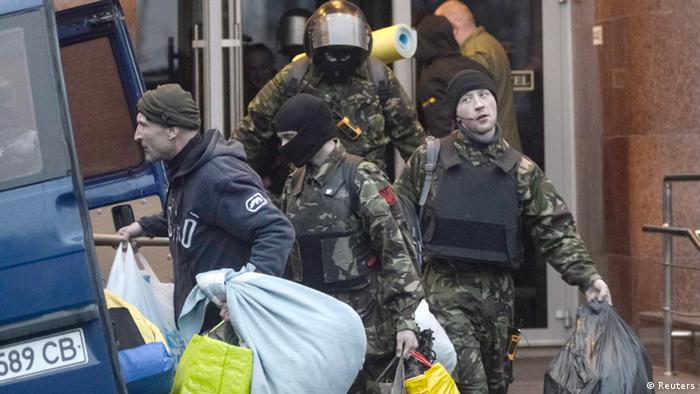
Last seen on Tuesday at the crack of dawn, after all-night 'negotiations' with police officers armed with automatic rifles surrounding Right Sector's headquarters, to be leaving, many wearing military fatigues and balaclavas, boarding buses en  route to a "training ground" outside Kyiv.

Members of the Ukrainian far-right radical group Right Sector leave their headquarters in Dnipro Hotel as police special forces stand guard in Kiev April 1, 2014.

While Ukraine is being thus afflicted, eyeing the 40,000 Russian troop buildup on its borders, concerned that east Ukraine may very well go the same route as Crimea, and desperately attempting to reassure Ukrainians that matters will improve, the country will somehow find itself on the road to economic recovery, that its friends in the West will ensure that no further ill befalls Ukraine through Russian military diplomacy, its neighbours nervously watch.

Poland has requested of NATO that it station ten thousand troops on its territory as an obvious and very visible deterrent to any Russian expansionist plans resulting from Vladimir Putin's vows to protect the interests of Russians living therein. NATO has, after all, stated its determination to stand in defence of all its member countries.

NATO foreign ministers met in Brussels for that very purpose, for it is not only Poland but the Baltic states as well, who plead for reassurance and the stationing of military on their soil, to ensure that it remains their soil. The pledge has been given; those NATO members feeling threatened by Russia will receive protection, while NATO itself is prepared to suspend "all practical civilian and military co-operation" with Moscow.

Take that to the bank....

Labels: , , , , , ,

 
()() Follow @rheytah Tweet