Ruminations

Blog dedicated primarily to randomly selected news items; comments reflecting personal perceptions

Monday, September 21, 2026

Tensions Rising in Europe as Russian Threat Increases

"There is a real risk that drones or other types of missiles may fly into the territory of one or more NATO countries on the eastern flank, even cause destruction."
"[Russia's] official narrative will be that this is an accident and that there is no reason for anyone to think about any response from NATO."
"Sustained, very frequent and intense attacks are expected on six major Ukrainian cities, including the destruction of warehouses, all types of products essential for the country's defence, and, as we have witnessed very strongly in recent weeks, the railway infrastructure." 
Polish Prime Minister Donald Tusk
 
"[The security situation has never been] so serious and so tense." 
"Can anyone imagine that we're told to prepare 5,000 soldiers, 10,000 soldiers? And they'll go to fight somewhere we don't even know with whom, why or for what?"
Slovak Prime Minister Robert Fico 
https://media.cnn.com/api/v1/images/stellar/prod/ap26258301841710.jpg?c=original&q=w_1316,c_fill/f_webp
Lithuanian soldiers secure the area where Italian fighter jets shot down a drone during NATO's Baltic Air Policing Mission near Pratkunai village, north of the capital Vilnius, Lithuania, September 15.  AP
 
Addressing parliament, Prime Minister Tusk spoke of the Kremlin's plans to destroy the economy and logistics of Ukraine, a conclusion supported by evidence intelligence services have gathered. Russia's plans extend to NATO's resolve, which it has focused on weakening by attacking the coalition's member states; in effect challenging them to respond. By launching 'hybrid style' drones and missile strikes against countries that are in support of Ukraine, NATO is being tested, even as the conflict launched by Vladimir Putin enters its debilitating fifth year.
 
As a key transit passage for Ukraine aid, Poland has undergone a number of suspicious incidents; multiple cyberattacks on public utilities. Critical domestic water, energy infrastructure and hospitals have been affected in Poland. The railway linking Warsaw to the Ukrainian border sustained damage that had all the hallmarks of Russian sabotage. Late July  saw a Russian missile crash in eastern Poland. Other NATO nations close to Ukraine have experienced similar, albeit fewer such 'warnings' related to Mr. Putin's 'special military operation'.
 
At a time when Moscow has intensified its attacks against Ukraine, inclusive of targets adjacent the Polish border, NATO jets responded by shooting down a drone of Russian origin over Lithuania a week earlier. Slovak Prime Minister Robert Fico made it clear that Slovakia, while taking its commitments to NATO seriously, he is prepared to do whatever he can to ensure that his country not be pulled into a conflict of uncertain value and outcome, in his opinion.
 
The fact is that Mr. Fico speaking for Slovakia does not regard Russia as posing a security threat. Advocating rapprochement with Moscow, he clearly diverges from other NATO members' concerns regarding the threat to their security posed by Russian President Vladimir Putin's territorial ambitions, pining for a return to the Soviet era with eastern Europe appendages of Greater Russia. The consequences of invoking NATO's Article 5, requiring all coalition members to act in defence of one another are unthinkable in Mr. Fico's considered opinion.
 
https://media.cnn.com/api/v1/images/stellar/prod/gettyimages-2281574181.jpg?c=original&q=w_1316,c_fill/f_webp
Military personnel from Poland, Lithuania, and France take part in training exercises during Operation Brave Boar 26 at the Orzysz Land Forces Training Center near the Suwalki Gap in Poland, on June 17.
Damian Lemanski/Bloomberg/Getty Images
 
"The path the world is on leads straight to the gates of hell. It is leading  us to World War Three", added Czech Prime Minister Andrej Babis, another critic of the European mainstream, at the IISS Prague Defence Summit. On the opposite side of the equation, the "rapidly worsening" situation concerning security and energy supplies in the face of conflicts afflicting Ukraine and the Middle East, motivates French President Emmanuel Macon to meet with government, party leaders and military and security officials to address the issues.
 
The oncoming, inevitable difficult winter ahead has Kyiv's full focus, along with that of its western allies. In meeting with Ukrainian President Volodymyr Zelenskyy, Mr. Tusk spoke of the potential of co-operation through the "anti-ballistic coalition", and to fully address Ukraine's energy infrastructure, once again in Putin's crosshairs in the coming months. 
 
It is not only Eastern Europe that has become alarmed over gathering dark clouds of war. In the United Kingdom, its government has given notice that people should prepare to stockpile canned food and drinking water in preparation for the possibility of war as Britain faces the 'most dangerous' threat in decades. Hospitals in Germany are preparing for the possibility of an attack by Russia, with Chancellor Friedrich Merz warning of "decisive moments, defending the freedom and peace of our continent". Switzerland too issued calls for resilience and preparations to defend itself against an armed attack. 
  
https://media.cnn.com/api/v1/images/stellar/prod/gettyimages-2274879379.jpg?c=original&q=w_1202,c_fill/f_avif
Russian soldiers who participated in the military invasion of Ukraine march through the Victory Day parade in Moscow, May 9th. Getty Images
"[The Kremlin isn't ready for] any serious talks about a ceasefire, not to mention peace without -- de facto -- Ukraine's capitulation."
"They [the Russians] are convinced the winter will be tragically critical for Ukraine."
Polish Prime Minister Donald Tusk 

Labels: , , , ,

Thursday, April 02, 2026

Trump, Excoriating U.S. 'Allies'

"You'll have to start learning how to fight for yourself, the U.S.A. won't n e there to help you anymore, just like you weren't there for us."
"Iran has been, essentially, decimated. The hard part is done."
"Go get  your own oil!"
"[Paris has been] VERY UNHELPFUL]. The U.S.A. will REMEMBER!!!"
"We’ve been there automatically, including Ukraine. Ukraine wasn’t our problem. It was a test, and we were there for them, and we would always have been there for them. They weren’t there for us."
"All of those countries that can’t get jet fuel because of the Strait of Hormuz, like the United Kingdom, which refused to get involved in the decapitation of Iran, I have a suggestion for you: Number 1, buy from the U.S., we have plenty, and Number 2, build up some delayed courage, go to the Strait, and just TAKE IT”."
"I’ve long said that, you know, I wonder whether or not NATO would ever be there for us. So … this was a great test, because we don’t need them, but they should have been there."
U.S. President Donald J. Trump
https://www.thedailybeast.com/resizer/v2/K5KS2W5L45A4JNL6OR5LUAHCQI.JPG?auth=ffde8817218f541eef32308836e222c7fc2c8ac856e38fe3e2bfe1660fdf402e&width=1440&height=1004
Donald Trump has also called NATO countries that do not help with the war in Iran "cowards." Evelyn Hockstein/REUTERS
 
"I hope that amid the emotions surrounding the President of the United States today, a moment of calm will come."
"And why? Because there is no NATO without the United States, and it is in our interest that this calm comes."
"But there is also no American power without NATO."
Polish Defense Minister Wladyslaw Kosiniak-Kamysz 
https://www.reuters.com/resizer/v2/6VNZZMO6CRJJ3G7AGD7B7N6W3U.jpg?auth=ce471fba128412505d459bc8e38d5acbbc1afa1df3da776fc344ad4e822e9e53&width=960&quality=80
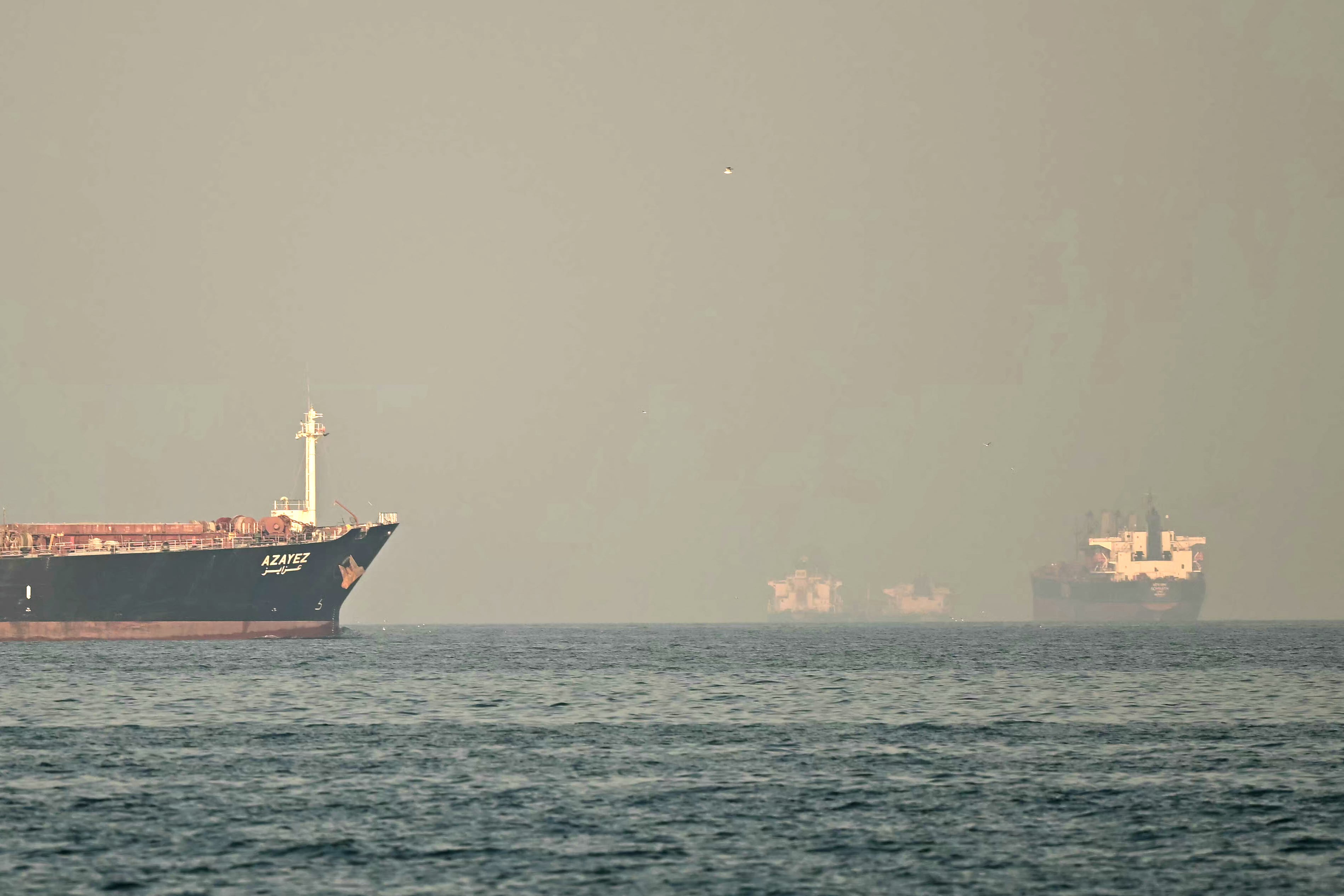
Cargo ships in the Gulf, near the Strait of Hormuz, as seen from northern Ras al-Khaimah, near the border with Oman?s Musandam governance, amid the U.S.-Israeli conflict with Iran, in United Arab Emirates, March 11, 2026. REUTERS/Stringer
 
Frustration with allies  unwilling to commit themselves through the NATO military alliance in support of the U.S. conflict in Iran, has hit boiling point with President Trump who is now telling his erstwhile allies to "go get  your own oil" in respect to the closure of the Strait of Hormuz by Iran, has sent energy prices soaring. 
 
Following U.S. strikes hitting Isfahan, the central Iranian city, leading to Tehran attacking a fully loaded Kuwaiti oil tanker in the Persian Gulf, Mr. Trump's precarious patience appears to have hit its limit. A month after the start of the aerial bombardment by the U.S. and Israel, the intensity of strikes on either side has not levelled off and major disruptions have erupted to the global supply of oil and natural gas, reflected by panicked global markets.
 
Earlier, Mr. Trump  shared footage of the massive attack on Isfahan, home to one of three nuclear enrichment sites that was attacked last June by U.S. strikes, where it is suspected that much of Iran's highly enriched uranium was stored. It seems evident that no agency foretold the extent of Iran's stranglehold on the Strait of Hormuz, with its catastrophic results to world shipping, much less the Iranian leadership's decision to attack its neighbours' energy infrastructure.
 
The roiling of world markets and the strait-closing effect on many basic goods such as fertilizer normally shipped across the world, has had its effect on the American president who directed responsibility at the United Kingdom and France for refusing to enter a war for which no clear endgame could be deduced, a war they were never consulted on, nor an alert given that it would be forthcoming. 
 
https://nationaltoday.com/wp-content/uploads/not-wordpress/2026/03/69cb37cf795ba.jpg
The U.S. attack on an Iranian ammunition depot in Isfahan raises tensions and the risk of further military escalation in the region. Los Angeles Today
 
France  permitted the U.S. Air Force use of the Isteres base in southern France once it received guarantees that planes landing there would not be carrying out strikes in Iran. Europe's loudest critic of the war, Spain stated it chose to close its airspace along with its joint U.S.-Spain airbases for any planes involved in the conflict. As for Italy, an official confirmed that U.S. military assets were refused use of the Sigonella airbase in Sicily for any operation with links to the offensive in Iran. 
 
American bombers were intending to land at the Italian base prior to continuing on toward the Middle East. However, affirmed Italy's Defence Minister Guido Crosetto, Italy would still allow the US. use of its bases; no cooling of relations between the two countries has resulted over the Iran conflict.
 
The world is now on notice that should a ceasefire not be "shortly" reached and the strait reopened, the U.S. was prepared to broaden its offensive, and that would include attacking the Iranian oil export hub on Kharg Island. 
 
https://www.reuters.com/resizer/v2/NB5JSYDZQZICZEQI6W3PU2YAOI.jpg?auth=b794af94d9519a0de03e8d8e92d9db35b8396c2e944f2107c80835dd27527ed9&width=960&quality=80
Luojiashan tanker sits anchored in Muscat, amid the U.S.-Israeli conflict with Iran, in Muscat, Oman, March 7, 2026. REUTERS/Benoit Tessier
"We don't want to have to do more militarily than we have to."
"But I didn't mean it flippantly when I said, in the meantime, we'll negotiate with bombs."
U.S. Defense Secretary Pete Hegseth 

Labels: , , , , , , ,

Tuesday, March 17, 2026

A Non-Coalition of the Unwilling

"We are not at war with anyone."
"[France's warship deployment's intent is to allow France] to respond to emergency situations [and evacuate French nationals if necessary."
"We stand by the side of our allies and our friends. There have been some interceptions that have continued in recent days."
French President Emmanuel Macron
Cargo ships and tankers are seen in the Strait of Hormuz on Feb. 25, 2026. (Giuseppe Cacace / AFP via Getty Images)
"We must be careful -- it's always a risky operation -- to make sure our warships are not targeted." 
"Because if they are attacked, we have to fire back."
Former French President Francois Hollande 
 
"It is not NATO's war. NATO is an alliance to defend the alliance area."
"[Berlin has taken note but] The United States did not consult us before this war, and so we believe this is not a matter for NATO or the German government."
Stefan Kornelious, spokesman for German Chancellor Friedrich Merz
 
"It's only appropriate that people who are the beneficiaries of the strait [of Hormuz] will help to make sure that nothing bad happens there."
"If there's no response or if it's a negative response, I think it will be very bad for the future of NATO."
U.S. President Donald Trump
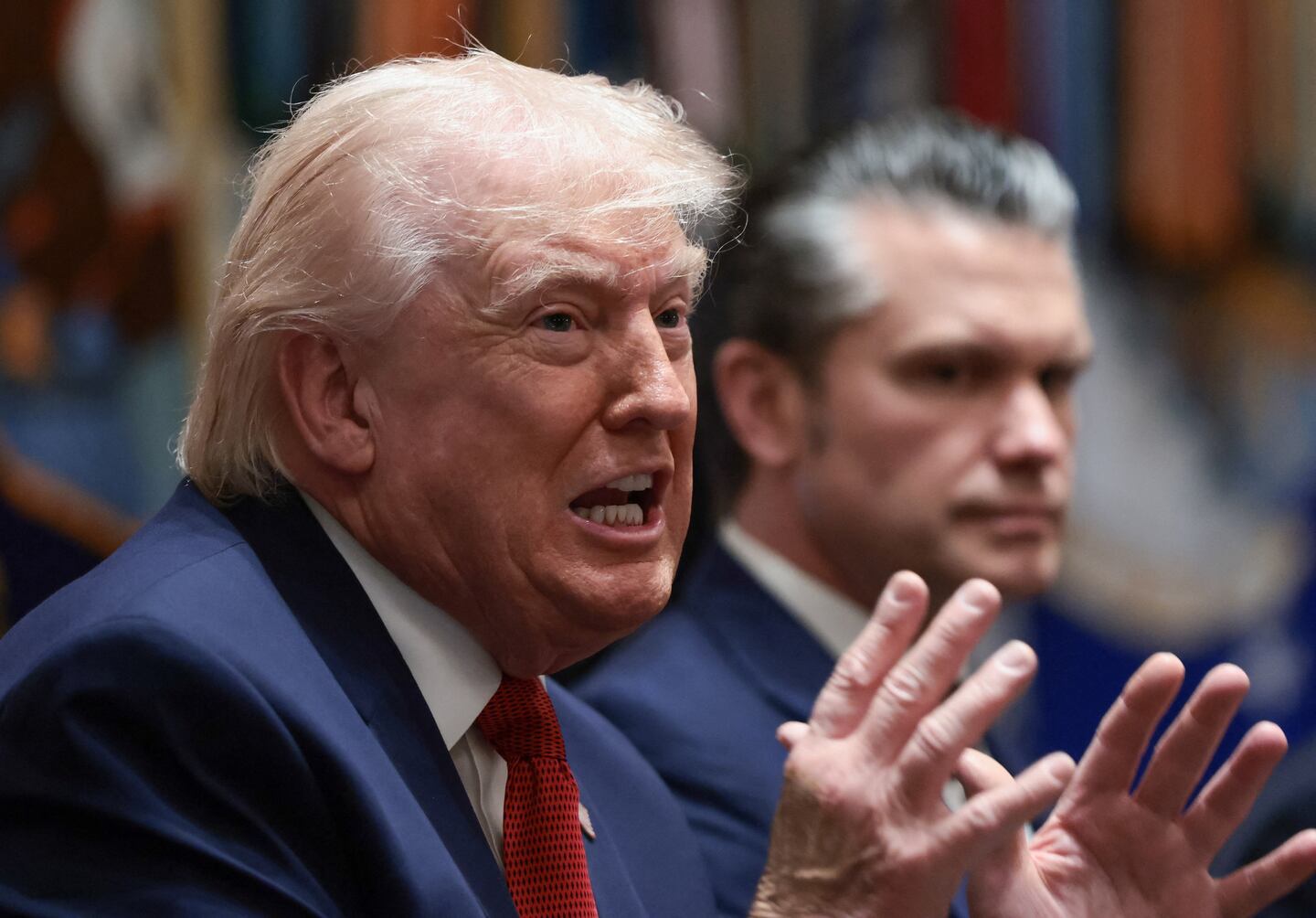
Donald Trump, seated at his desk, gestures with his hands out to the side
U.S. President Donald Trump speaks before signing an executive order in the Oval Office of the White House on Monday. (Julia Demaree Nikhinson/The Associated Press)
 
The American President, during the U.S.-Israeli aerial strikes against the Islamic Republic of Iran and the consequential blockading by Iran of the Strait of Hormuz to the world's 1/5th most important shipping route, has asked his allies in the North Atlantic Treaty Organization and others, that includes France, China, Japan, South Korea and the United Kingdom for their assistance in securing global shipping through the strait. Thus far there have been far more demurrals than offers of assistance. Appealing to China, in any event, would be a non-starter since it has allied itself with Iran and signed a Comprehensive Strategic Partnership, in its thirst for Iranian oil. 
"From our perspective, it [the Strait of Hormuz] is open -- just not for the U.S., Israel and its allies."
"[There have been] delusional [claims that Iran is searching for a negotiated end to the war]."
"[Wrong, Iran seeks nether] truce nor talks." 
Iranian Foreign Minister Abbas Araghchi
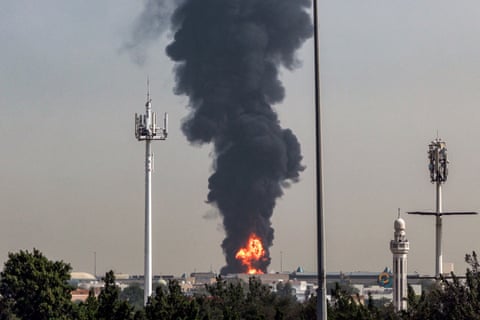
Several aircraft can be seen parked behind a fence as dark smoke rises in the distance.
Smoke can be seen in the distance from Dubai International Airport after a drone struck a fuel tank, forcing the temporary suspension of flights on Monday. (The Associated Press)
 
At the present time, cargo ships are stuck waiting in the Gulf, or have the alternative of a much longer detour around the southern tip of Africa. As the war in Iran continues, there will appear shortages and price increases on a widening range of goods, beyond soaring energy prices. The wider global supply chain beyond energy includes pharmaceuticals from India, semiconductors from Asia and Middle East-derived products such as fertilizers from oil byproducts. 
 
Foreign citizens from around the world work in the Middle East; more than any other country in Europe, France alone has over 400,000 of its citizens working there; with over 60,000 in the United Arab Emirates. Spain, Italy, the Netherlands and Greece have deployed their frigates in the region. France has signed key defence agreements with several countries; Qatar, Kuwait and the United Arab Emirates -- a permanent base in Abu Dhabi where French air and naval forces saw a doubling of Rafale fighter jets.
 
Typhoon and F-35 fighter jets, helicopters and air defence systems have been sent by the U.K. to assist in intercepting Iranian missiles and drones and to protect British troops stationed across the region, particularly in Cyprus and Qatar, along with Britain's other partners in the Middle East. France's Rafale jets have intercepted drones from Iran targeting the U.A.E. since the war's beginning. 
 
France's President Macon urged Iran to halt strikes against regional countries as the first Western leader to speak directly with Iranian President Masoud Pezeshkian since the war broke out. It will be remembered that President Macron was always the first, the second and the third to speak with Vladimir Putin about his invasion of Ukraine. According to Mr. Macron "a diplomatic solution" is required to put a stop to the escalation. As  a major peacemaker, Mr. Macron spoke as well with Israeli Prime Minister Benjamin Netanyahu and U.S. President Donald Trump.
 
The war continues. 
 
Fire and thick black smoke rise Dubai’s international airport
Fire and smoke rise from Dubai’s international airport on Monday after a ‘drone-related incident’. Flights were disrupted. Photograph: AFP/Getty Images
"The feeling is, this is not Europe’s war."
"Of course we are allies with America, but we don’t really understand their moves recently."
"We haven’t been consulted, and we don’t really understand, what are the objectives of this war."
"It is in our interest to keep the Strait of Hormuz open." 
Kaja Kallas, EU foreign policy chief 

Labels: , , , , ,

Saturday, January 17, 2026

Russian Imperialist Ambitions : Encirclement Paranoia

"I think people need to know Russia is not this benign thing. They want to dominate Europe, they want the United States to not be a great power any more ... America can't survive losing its allies in Europe."
"People need to understand what this means."
"[The MAGA movement Trump leads is] obviously penetrated by the Russians."
Jeff Nyquist, writer, geopolitics blogger 
 
"[The group's analysis is] pretty good." 
"Their work is extremely, extremely useful if it gets published because it's a way of telling the Russians 'We see you. And whenever you move, we know where you're going."
"NATO does not pose a military threat to Moscow but] you cannot express this to a Russian, who has an ingrained paranoia about encirclement. This is not new."
"This is centuries old, this fear of being encircled."
Frederic Labarre, expert on NATO-Russia relations, professor, Royal Military College 
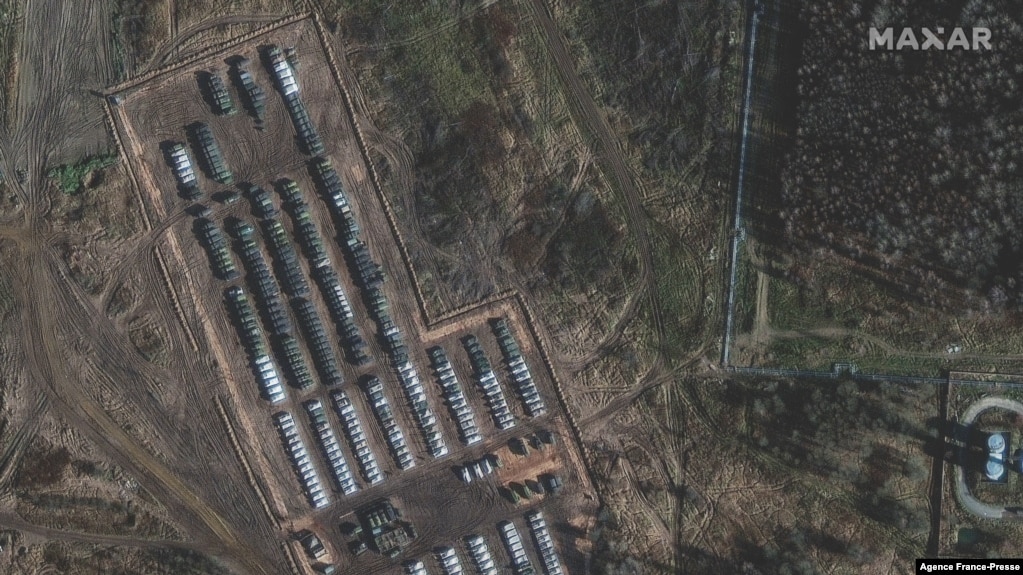
This handout satellite image released by Maxar Technologies and taken on Nov. 1, 2021, shows tanks, armored personnel carriers and support equipment amid the presence of a large ground forces deployment on the northern edge of the town of Yelnya, Smolensk Oblast, Russia.
 
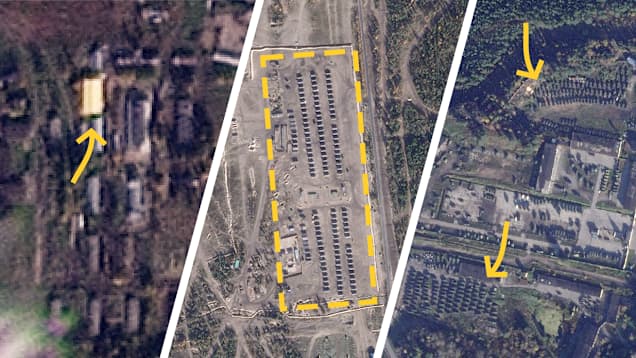
Using commercial satellite images, a group of private intelligence analysts has assembled a graphic illustration of the Russian military buildup on NATO's Eastern flank. Training sites, oil storage areas, anti-aircraft missile launchers, amphibious vehicle testing ponds. And nuclear-tipped missiles that in mere minutes could reach the capitals of Western Europe. Sobering at the very least.
 
Last month in Toronto, the group presented a video illustrating the evidence they discovered, to the Mackenzie Institute think tank, providing an overview of the heavily armed Russian presence close by the borders of Poland, Lithuania and Finland in the hopes that their research might impress authorities in North America whose focus has been on the Russian conflict in Ukraine, while missing what Vladimir Putin is scheming more generally in eastern Europe.
 
In scrutinizing the evidence presented, Professor Labarre of Royal Military College was not impressed with the military equipment Russia has stationed close to NATO member countries considering it to be of poor quality; not the kind of preparations consonant with an imminent invasion. He interprets the presence there of the Russian military to be preparatory for a vigorous defense based on Russian misconceptions relating to their presumed intentions of countries to its West.
 
For his part, Nyquist is concerned with what he interprets as a troubling new direction by American conservatives, once hawkish on the Russian threat; the MAGA movement, he is convinced, has been infiltrated by Russian agents. A perception perhaps linked to PresidentTrump's having been seen to court his Russian counterpart while attempting to broker an end to the war in Ukraine, as well as halting U.S. military aid to Kyiv directly from the U.S.
 
Russian military buildup on NATO’s Eastern flank revealed through satellite images
 
The group's impression of Trump accommodating himself to Russia and China consolidating their near geographic dominance, giving impetus to his own intentions as laid out in the recently published National Security Strategy to gain complete control of the Western Hemisphere, and to that end capturing Venezuelan President Nicolas Maduro for starters, leaving the impression that others like Colombia and Cuba may be next -- setting aside his intense interests in Greenland, the Panama Canal and Canada's Arctic. 
"We are Russia's next target."
"Conflict is at our door. Russia has brought war back to Europe."
"And we must be prepared."
Mark Rutte, NATO secretary general 
"Some military historians even believe we have already had our last summer of peace", stated German Defence Minister Boris Pistorius as he warned of Russia's preparations to invade other European countries. Poland's Prime Minister Donald Tusk blamed a rail-line sabotage, drone incursions and the torching of a shopping mall, on Russia: "We will accelerate the building of the strongest army in Europe", he said in preparation for ongoing aggression. A number of other European countries were faced with mysterious drone activities around their airports, all attributable to  Moscow.
 
Within the investigative group, Lee Wheelbarger, a one-time senior technologist with the U.S. Army, has been studying Russian military movements for over a decade, his results posted on his KLW News online video channels, collecting publicly available images from commercial satellites. Images from ground cameras are also accessed by Wheelbarger and his group colleagues. Another video method helps him glean information from sources globally. 
 
Photo taken by bystanders of Iskander intermediate-range ballistic missiles on a highway 19 kilometres from the Polish border during a Russian military exercise in Kaliningrad last year. The Iskander is capable of carrying conventional or nuclear warheads. The photo was obtained by a group of private analysts documenting Russian military buildup in Eastern Europe.
 
The group has ascertained evidence enabling them to reach certain conclusions:
  •  A major expansion of military installations in Kaliningrad with an enlarged command centre, new missile storage facilities and a reconstructed nuclear-weapons depot;
  • A  recent lengthening of a runway at a Kaliningrad airfield lined with fighter jets and supersonic bombers where a storage facility for SS-27s, nuclear-armed intercontinental ballistic missiles is located;
  •  Numerous trips by airliners into Kaliningrad from the Russian far east, night and day, suggesting an influx of troops;
  • In Belarus, scores of S-400 anti-aircraft missiles and launchers are stationed. A train from China delivered military hardware to a Russian base in Belarus...SS-27s stored 64 kilometres from the Latvian border.
Poland, they observed, has recently-added defences along its Kaliningrad border of concrete 'dragon's teeth' and tank ditches to thwart armoured vehicles. The capture of the Suwalki Gap along the Polish-Lithuania border to cut the Baltic states off  from the rest of NATO is arguably the most likely move by Russia were it to  invade NATO territory, Nyquist posited.
 
For his part, Professor Labarre, characterizing Russia as a "very nasty neighbour" with imperialist ambitions, downplayed the significance of its military hardware positioned adjacent to NATO-member borders. 
 
https://images.cdn.yle.fi/image/upload/c_crop,h_695,w_1237,x_0,y_0/ar_1.7765042979942693,c_fill,g_faces,h_358,w_636/dpr_1.0/q_auto:eco/f_auto/fl_lossy/v1736608729/39-14045556780cff3e7c7e
 Satellite images taken from areas near to Finland's eastern border. Image: Eeva Sarlin / Yle, Planet Labs PBC
 

Labels: , , , ,

Friday, January 09, 2026

Acquiring Greenland: Coercion or Military Action

"RUSSIA AND CHINA HAVE ZERO FEAR OF NATO WITHOUT THE UNITED STATES, AND I DOUBT NATO WOULD BE THERE FOR US IF WE REALLY NEEDED THEM."
"We will always be there for NATO, even if they won't be there for us."
"We are going to do something on Greenland whether they like it or not. Because if we don’t do it, Russia or China will take over Greenland, and we’re not going to have Russia or China as a neighbor."
"I would like to make a deal the easy way, but if we don’t do it the easy way we’re going to do it the hard way."
"You defend ownership. You don’t defend leases. And we’ll have to defend Greenland. If we don’t do it, China or Russia will. Not going to happen."
"I think that ownership gives you a thing that you can’t do with, you’re talking about a lease or a treaty. Ownership gives you things and elements that you can’t get from just signing a document [expanding its leased military base in Greenland]." 
"We need Greenland from the standpoint of national security, and Denmark isn't going to be able to do it. It's so strategic."
U.S. President Donald Trump
 
"If the United States chooses to attack another NATO country militarily, then everything stops."
"That is, including our NATO and thus the security that has been provided since the end of the Second World War."
Danish Prime Minister Mette Frederiksen
 
"The president and his team are discussing a range of options to pursue this important foreign policy goal, and of course,  utilizing the U.S. military is always an option at the commander-in-chief's disposal."
"[The president and his national security aides are] looking at what a potential purchase would look like."  
White House Press Secretary Karoline Leavitt 
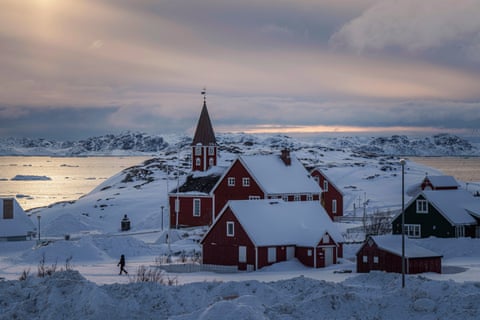
Nuuk, capital of Greenland
The Aurora Borealis (Northern Lights) is seen behind a building with social housings with a mural in Nuuk, Greenland. REUTERS/Hannibal Hanschke/
 
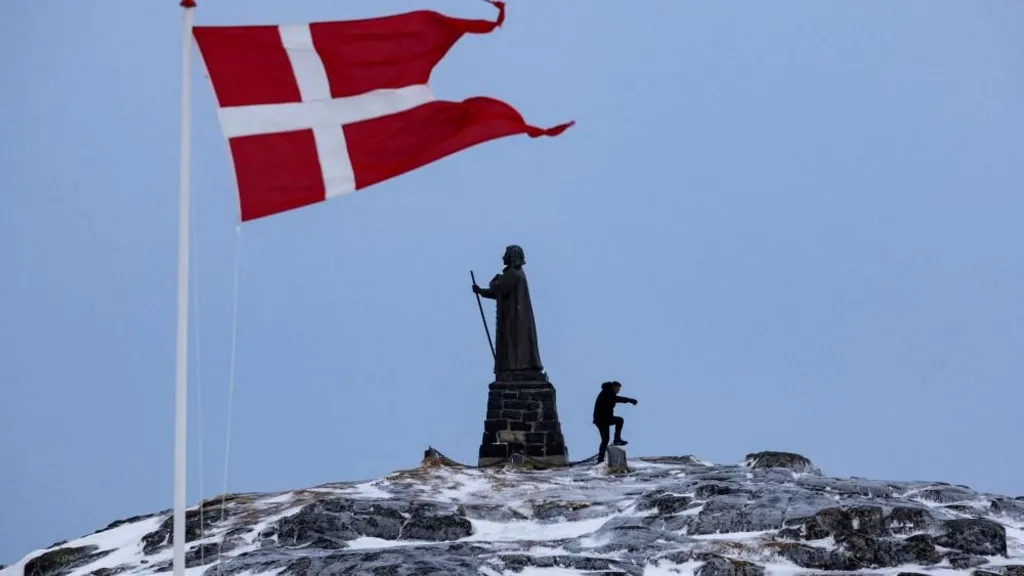
Clearly, Danish Prime Minister Frederiksen's statement that the U.S. in agitating to take over Denmark's Greenland territory would result in the dissolution of the military alliance of NATO did not sit well with President Trump. There are dim echoes of his persistent declarations of security demanding U.S. total possession of the island -- not that its abundance of rich resources in rare earth minerals doesn't come far behind in a race with China over the wherewithal to produce electronics -- with the Third Reich's 1938 insistence that security and protection of German Sudetenlanders made it imperative to force its surrender from Czechoslovakia. When Europe, represented by Britain and France, boasted that by persuading Czechoslovakia to voluntarily hand it to Germany 'war was avoided'.
 
Fast forward to the present, and Europe is once again faced with a similar conundrum; avoiding military conflict to preserve the military alliance of NATO. And although a Europe, nervous in the wake of the U.S. night-time bombing of Venezuela and the scooping up of Maduro and wife, signalling that the U.S. is on a roll, France, Germany, Italy, Poland, Spain, Britain and Denmark responded to the tense situation in support of Greenland and Denmark alone deciding the trajectory of their joint relations.
 
Now, discreet White House sources whisper of internal discussions with respect to the potential of 'buying' Greenland through lump sum payments, where guidelines revolving around $100,000-per-person payments which would cumulatively result in a total payout close to $6 billion may be a solution but one still in essence 'forced' on an obviously reluctant Denmark and Greenland. Greenlanders in particular are far more invested in their total independence, yet would still prefer a linkage with Denmark over the United States.
 
houses on the water
A woman walks near a church in Nuuk, the capital of Greenland. Photograph: Evgeniy Maloletka/AP
 
Although the White House has not totally discounted the possibility of 'military intervention', there are those who have declared a definite preference for paying for the island outright, if not acquiring it through diplomatic negotiations. Only one of which choices would force NATO to make good on its mutual-defence mechanism, Article 5. Its lone invocation and action took place after the shock waves of 11 September 2001. On such an occasion where a member of NATO -- its most powerful and influential member -- itself would take hostile military action against another member, the very thought of a unified reaction is out of the question, altogether neutering the group.
 
The always-mercurial Donald Trump remains aggrieved with another NATO founding member whose Nobel Committee deigned to overlook the American president's qualifications to be chosen as 2025's outstanding nominee for the Peace Prize; a "foolish" decision, he said scornfully. When Nicolas Maduro was captured by military force, Europe nervously eyed the potential for Mr. Trump's next acquisitive eye in his increasingly unrestrained willingness to deploy the U.S. military to achieve  his ends.
 
The joint warning issued by European leaders reminding the American president that the territorial integrity of Greenland and Denmark must be respected would no doubt have fallen on Mr. Trump's notice as a particularly grievous irritant. More so, the nudge to his consciousness that as part of the Kingdom of Denmark, Greenland falls under NATO's defence umbrella, with NATO allies collectively prepared to achieve Arctic security. 
 
https://ichef.bbci.co.uk/news/1024/cpsprodpb/be27/live/96225880-eda7-11f0-a422-4ba8a094a8fa.jpg.webp
Greenland and Denmark have rejected Trump's offer to buy the semi-autonomous territory   Reuters


Labels: , , , , ,

Sunday, December 14, 2025

Abandoning Allies and Making Deals

"For many countries outside the West, it has become a viable option  to forge strategic agreements with China rather than the United States."
"China and Russia, together with other like-minded states, are seeking to reduce Western -- and particularly U.S. -- global influence."
"At the same time, uncertainty has grown over how the United States will prioritize its resources in the future."
"This gives regional powers greater room for manoeuvre, enabling them to choose between the United States and China or to strike a balance between the two." 
"The strategic importance of the Arctic is rising as the conflict between Russia and the West intensifies, and the growing security and  strategic focus on the Arctic by the United States will further accelerate these developments." 
Danish Defense Intelligence Service report
Greenland became a flashpoint in US-Danish relations earlier this year.
"The goal of these Russian cyber and disinformation attacks is clear: It is to divide society, stir up mistrust, provoke rejection, and weaken confidence in democratic institutions."
"This targeted manipulation of information is one of a wide range of activities by Russia aimed at undermining confidence in democratic institutions and processes in Germany."
German foreign ministry spokesperson Martin Giese 
 
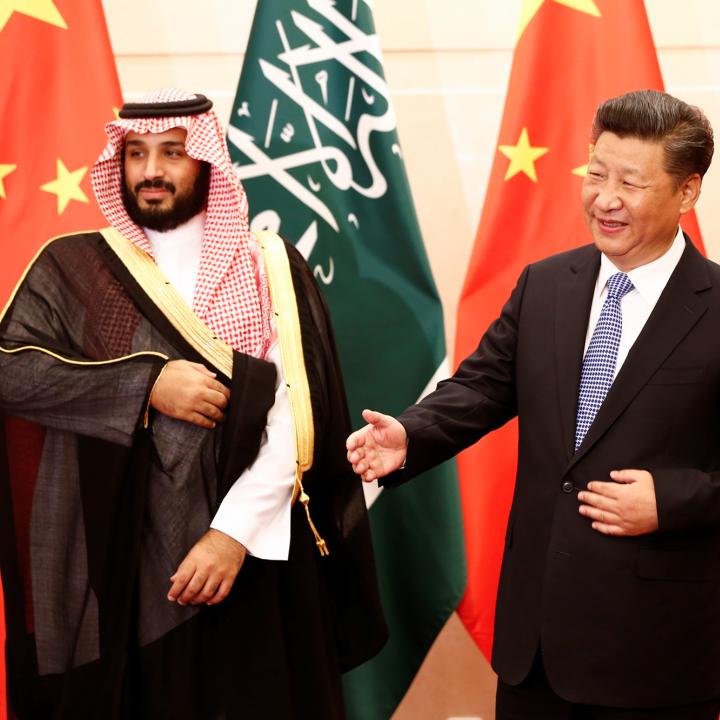
"Chinese Foreign Minister Wang Yi said on Sunday that China has always regarded Saudi Arabia as a priority in its Middle East diplomacy and an important partner in its global diplomatic strategy, and is willing to work with Saudi Arabia to elevate bilateral ties to new heights."
"Wang Yi, also a member of the Political Bureau of the Communist Party of China (CPC) Central Committee, made the remarks while co-chairing the Fifth Meeting of the Political Sub-committee of the China-Saudi Arabia High-level Joint Committee in Riyadh with Saudi Foreign Minister Faisal bin Farhan Al Saud."
"Wang said that Saudi Arabia is an important member of the Arab and Islamic worlds and an independent force in the process of multipolarization."
"In recent years, under the strategic guidance of Chinese President Xi Jinping and Saudi King Salman bin Abdulaziz Al Saud as well as Saudi Crown Prince Mohammed bin Salman Al Saud, exchanges and cooperation across all fields between the two countries have progressed in a sound and steady manner, he said, adding China-Saudi relations have increasingly gone beyond the bilateral dimension, taking on growing strategic significance and global influence."
China Daily 
Saudi Deputy Crown Prince Mohammed bin Salman meets with Chinese President Xi in Beijing in 2019 - source: Reuters
Washington Institute for Near-East Policy
 
Deliberately, the Trump administration has put its allies on notice of the withdrawal of the United States from its historical, post-WWII position as protector of Western democratic interests globally. Threats that surfaced with the potential to destabilize the security of Europe and allies further abroad brought the U.S. front and centre in its role as global policeman. The objective was always defence of democracy in the global order and with it the central position of capitalism, the engine that brought prosperity to Western economies.
 
When the people of the great United States of America decided to bring a dedicated businessman whose focus was always 'getting a deal' and winning concessions by coercive means to strike that deal whether it be real estate or tariffs, diplomatic tradition between allies was stood on its head. Allies could be casually dumped but the ultimate goal of mercantilism must always be pursued with the passion of amassing ever greater wealth, and that achievement came at a cost to former allies, so be it.
 
In pursuit of that wealth and the prestige that accompanied it, the Trump administration was more than willing to jettison its relations with Europe and its North American partners, and if any took umbrage at side-issues such as imperialist territorial gain, that was their problem. In surrendering the position of leader of global alliances, the United States forfeited the global esteem it had earned. Agitated, discomfited allies, realizing their new vulnerability huddled for support between themselves envisioning the plight of Ukraine under Moscow's military heel becoming their own.
 
Russian and Chinese policymakers, including Vladimir Putin and Xi Jinping, in a meeting room with Russian and Chinese flags, Chinese art on the wall, and flowers between the two delegations
Vladimir Putin attending a meeting with Xi Jinping during the Russian delegation’s visit to China in 2024. Photo: Ministry of Transport of the Russian Federation
 
And so a report issued in Denmark asserts the reality facing Europe: that the United States is asserting its will, threatening military force against friend and foe alike. At the very time that China and Russia, taking advantage of the monumental split they see between the U.S. and its allies, recognize the opportunity to commit to their own, covert schemes to further diminish Western global dominion, particularly that of the United States. 
 
 Denmark is particularly offended as a NATO and European Union member as well as an ally of the United States to be facing a situation where President Donald Trump has eyed the military advantages as well as mineral deposits to be had in taking Greenland, nominally part of Denmark, at a time when both Russia and China are themselves preparing to influence and take possession of mineral deposits in the Arctic, and Russia has not been shy about building military installations in an assertion of sovereignty in disputed polar territories. 
 
Rising tensions in the resource-rich Arctic  The U.S. is monitoring military cooperation between Russia and China in the resource-rich Arctic. ABC News 
"Several articles published in September 2025 revived alarmist positions on threats to Canada’s sovereignty. Their authors paint a bleak picture of a Canada unable to control its Arctic territory and facing aggressive China and Russia, which have great ambitions for its territory."
"These grim scenarios include Russian icebreakers sailing through the waters of the Arctic archipelago, Chinese bases built without the knowledge of Canadian authorities, and even an attack on the Canadian Arctic by the Russian military."
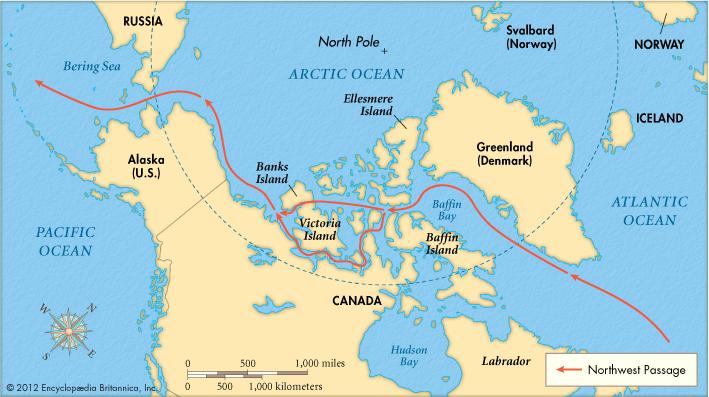
"The problem is that this bleak picture is based on highly theoretical scenarios and irrelevant observations. Worse still, it probably misses the real issues, which lie both in the need for the Canadian government to ensure a governmental presence in the North and to counter any challenges to its sovereignty in the Beaufort Sea and the Northwest Passage by the United States."
Network for Strategic Alliances, Department of National Defense of Canada 
https://www.thearcticinstitute.org/wp-content/uploads/2012/04/Northwest_Passage.jpg
Northwest Passage, historical sea passage of the North American continent. It represents centuries of effort to find a route westward from the Atlantic Ocean to the Pacific Ocean through the Arctic Archipelago of what became Canada.
 

Labels: , , , , ,

Thursday, October 16, 2025

"Europe Pays, the U.S. Provides, NATO Fields"

"We remain clear-eyed about the fact the most effective deterrents to Russian aggression are: number one, a lethal, capable and European-led NATO, and number two, a combat-credible Ukrainian military able to defend itself and thereby continue to deter Russian aggression along NATO's border."
"If the war does not end, if there is no path to peace in the short term, then the United States, along with our allies, will take the steps necessary to impose costs on Russia for its continued aggression."
"[NATO countries must] turn words into action in the form of PURL investments. All countries around this table, no free riders."
"If we must take this step, the U.S. War Department stands ready to do our part in ways that only the United States can do."
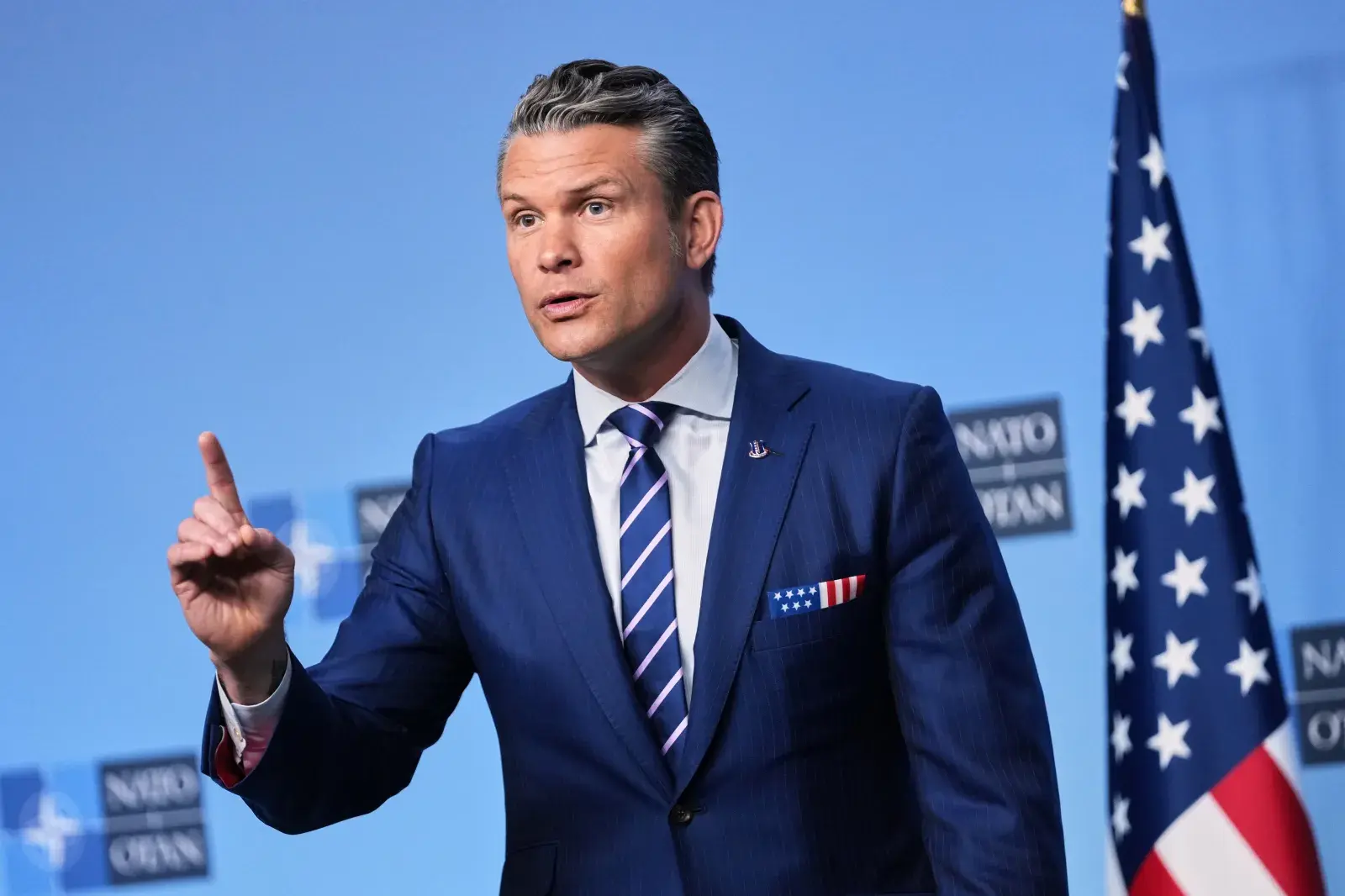
"You get peace when you are strong, not when you use strong words or wag your finger. You get it when you have strong and real capabilities that adversaries respect. And I believe that's what NATO is doing. I believe that's what the PURL initiative is."  
U.S. Defense Secretary Pete Hegseth 
 
"Today we heard from ally after ally about new contributions [from NATO members toward Ukraine's stock of military gear]."
"I'm really confident that we have the support from allies to buy from what the Americans provide in lethal and non-lethal aid." 
"Coming out of today’s meeting we have over half of all allies so more than 16, 17 allies now committing to PURL."
NATO Secretary-General Mark Rutte
https://assets.newsweek.com/wp-content/uploads/2025/10/AP25288254063921.jpg?w=1600&quality=75&webp=1
Defense Secretary Pete Hegseth speaking at a meeting of NATO defense ministers in Brussels on Wednesday. (Virginia Mayo/AP)
 
It will be Europe, with the United States anxious to bow out as the leader in the North Atlantic Treaty Organization, which will become the major force leading NATO, for the future. The issue being addressed as it has been since 2022, is Russian territorial expansionist aspirations threatening Europe. The world's policeman under the Trump administration is prepared to resign its leading position theorizing that it is after all, Europe's dilemma more than it is that of the United States, and this being so, the baton is being handed over to European defense with background assistance and a robust cheering section from the United States.
 
This, the 76th-year transition of the Alliance. Prepared to fulfill its obligations, Secretary of State Hegseth assured his European NATO counterparts that the U.S. is behind them all the way -- not forward-leading, but fully supportive, although time will tell exactly how that is to be interpreted with a new administration's semi-isolationist, America-first sentiment. The new expression from this administration is that America expects other nations to be responsible for their own defenses. The message, loud and clear, has now been fully absorbed following its initial shock.
 
https://static.dw.com/image/69975291_906.jpeg
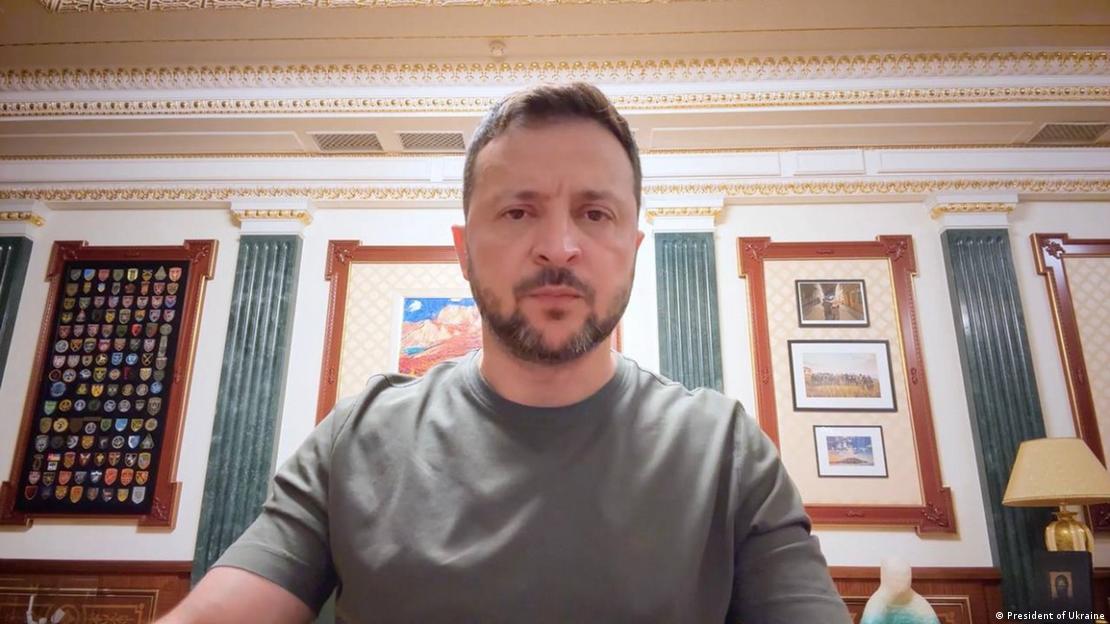
Ukrainian President Zelenskyy says only Russian military sites would be targeted, if Ukraine got Tomahawks
 
NATO Secretary-General Mark Rutte was quick to assure Mr. Hegseth at the Wednesday meeting in Brussels that the commitment to Ukraine's defense against Vladimir Putin's dreams of a renascent Greater Russia patterned after the USSR is incontestably firm. Over half of the military alliance's 32 allies are pledging to provide the capital required to help embattled Ukraine purchase the U.S. weaponry required to enable Ukraine's courageous defense to be fully offensive against the Russian threat. The need to infuse cash into the situation is obvious as Kyiv's wartime funding is floundering.
 
https://static.dw.com/image/74167656_1004.webp
Tomahawks have proven hard for Russian defenses to shoot down
 
 Following remarks from Ukrainian Defence Minister Denys Shmyhal, he was assured that the U.S. is prepared to continue performing its part in the conflict, including attempts at a  resolution that might lead to Russian agreement for a ceasefire and talks aimed at resolving the conflict, Mr. Hegseth emphasizing yet again that European allies must agree to primary responsibility for Europe's defence. At the same time he had praise for the increase of defense investments by the allies to address their own defense spending, along with aid to Ukraine.
 
The Priority Ukraine Requirements List (PURL) initiative was of utmost importance, he stressed, in guiding NATO members in supplying Ukraine with the tools required to continue to hold its own with the Russian military, in the hopes that longer-range missiles will provide an insurmountable advantage finally to persuade Moscow that enough lives on either side have been lost, and the war must finally be concluded, to save the continent and the world from the prospect of a third world war.
 
The initiative to provide weapons to Ukraine under the PURL agreement, he observed, could be summed up as "Europe pays, the U.S. provides, NATO fields". 
 
https://www.politico.com/dims4/default/resize/630/quality/90/format/webp?url=https%3A%2F%2Fstatic.politico.com%2Fbb%2Fa2%2F428a71e64e44af9457e654572a13%2Fbelgium-nato-defense-ministers-70190.jpg
Defense Secretary Pete Hegseth speaks with Britain's Defense Secretary John Healey during a meeting of the Ukraine Defense Contact Group at NATO headquarters in Brussels on Oct. 15, 2025. | Omar Havana/AP


Labels: , , , ,

Tuesday, October 14, 2025

Putin Prowling Provocatorily ... Germany On Alert

"[Russia is determined to expand its] sphere of influence further westward into Europe."
"To achieve this goal, Russia will not shy away from direct military confrontation with NATO if necessary."
"We must not sit back and assume that a possible Russian attack would come in 2029 at the earliest. We are already under fire today."
"The means Moscow uses are well-known – attempted manipulation of elections and public opinion, propaganda, provocations, disinformation, espionage, sabotage, airspace violations by drones and fighter jets, contract killings, persecution of opposition figures living abroad." 
"[The current] icy peace [with the European Union could erupt at any moment into] heated confrontation." 
German foreign intelligence chief, Martin Jaeger 
https://assets.newsweek.com/wp-content/uploads/2025/10/GettyImages-2240722052_dccfd6.jpg?w=1600&quality=75&webp=1
This image from October 13, 2025 shows the German navy’s Braunschweig-class “Erfurt” corvette of during the Andoya military exercise in the North Sea near Harstad, Norway. Gerry Images
"[Recent drone incidents underscored the potential] hybrid threat [to Germany and its European allies from Russia, even as investigations remain ongoing]."
"Russia is aggressively pursuing its political ambitions against Germany, the EU, and its Western allies. [Russian conduct is] increasingly escalatory."
"Russian services continuously adjust the levels of escalation of their activities with the strategic aim of weakening liberal democracies."
"As a result, we detect a wide range of espionage, disinformation, interference, sabotage, and cyberattacks conducted by foreign actors and states in Germany."
Sinan Selen, president, German domestic intelligence service (BfV) 
Russia, warned Martin Jaeger, head of Germany's BND (spy service) is prepared to expand its "sphere of influence further westward into Europe". To achieve this goal, Russia will not shy away from direct military confrontation with NATO if necessary." Mr. Jaeger addressed a public briefing with parliament members in Berlin, where he was  joined by leaders of the country's domestic and military intelligence agencies.
 
Other threats were given mention which face Germany, in the realm of political and religious extremism, but it was the threat posed by Russia that dominated their statements. As Russia's "number one target in Europe", since Germany is the largest country in the EU alliance, and plays a "leading role in supporting Ukraine" in Russia's war of territorial expansion, Germany too must consider itself a leading target for Vladimir Putin's grand plan of domination in Europe and its increasingly military opposition to NATO, testing the resolve of the group by challenging the sovereignty of its eastern European members.
 
A series of incidents in recent weeks prodding members of the European Union, included Russian drones appearing in Poland, and Estonian airspace violated by Russian fighter jets. Germany also suspects that Russia is behind a number of drone incursions in Germany as well, including the most recent incident that interfered with flight operations at the Munich airport a week earlier necessitating a temporary close-down. Ongoing sabotage and disinformation campaigns also have European authorities on edge. 
 
https://ichef.bbci.co.uk/news/1024/cpsprodpb/e1aa/live/58269e20-0bd9-11f0-aaa1-f15ca00ec6e1.jpg.webp
Germany has voted to hugely invest in upgrading its military . BBC
 
"We are threatened by Russia. We are threatened by Putin. We have to do whatever is needed to deter that. [NATO should be braced for a possible attack in as little as four years]."
"It's not about how much time I need, it's much more about how much time Putin gives us to be prepared." "And the sooner we are prepared the better."
"Unlike the western world, Russia is not thinking in boxes. It's not about peacetime and war, it's a continuum: let's start with hybrid, then escalate, then back."
"This is what makes me think we are facing a real threat." 
German General Carsten Breuer
 

Labels: , , , , ,

Thursday, September 25, 2025

Testing The NATO Alliance

"Three Russian fighter MiG-31 [jets] entered Estonian airspace in the Vaindloo Island area without permission, and remained there for approximately 12 minutes."
"The fighter jets did not have flight plans, and their transponders were switched off."
"At the time of the airspace violation, the fighter jets did not have two-way radio communication with Estonian air traffic control." 
Estonian defence forces
https://i.cbc.ca/ais/8a15a0ae-8aac-415e-ad57-cad4363bc0ae,1757526065646/full/max/0/default.jpg?im=Crop%2Crect%3D%280%2C0%2C1920%2C1080%29%3BResize%3D620
Europe in edge after Russian jets invade Polish airspace. Still from video  Poland is rejecting the claim that Russian drones crossed into Polish airspace by accident and says the move is reckless and could lead to potential escalation.
 
https://i.cbc.ca/1.7643197.1758811844!/fileImage/httpImage/image.JPG_gen/derivatives/original_1180/denmark-airport-drones.JPG?im=Resize%3D805
Denmark drone sightings Sept. 24
"This is part of the development we have recently observed with other drone attacks, airspace violations, and cyberattacks targeting European airports."
Denmark's Prime Minister Mette Frederiksen 
 
"[Denmark is facing a]high threat of sabotage."
"Someone may not necessarily want to attack us, but rather stress us out and see how we react."
Flemming Drejer, director of operations, Denmark intelligence service
 
"The number, size, flight patterns, time over the airport. All this together ... indicates that it is a capable actor. Which capable actor, I do not know."
"It was an actor that had the capacity, the will and the tools to make their presence known."
"Several large drones [flew over Copenhagen airport for over three hours, Monday]."
"You have to think very carefully before starting to try to take down such big drones. If they were to fall to the ground], there are planes with people, fuel, and also housing on several sides of the airport." 
Copenhagen police inspector Jens Jespersen
 
 When three Russian fighter jets violated Estonian airspace over the Gulf of Finland, complaints were swift of a dangerous new provocation that the EU and NATO now face. Stationed with NATO 's air defence support mission the Baltic states, Italian F-35 fighters scrambled to intercept the Russian jets, to warn them off. "This is yet another example of reckless Russian behaviour and NATO's ability to respond", stated NATO spokesperson Allison Hart.
 
Former Estonian prime minister Kaja Kallas, now the top diplomat with the EU, accused Moscow of "extremely dangerous provocation", warning the sortie "further escalates tensions in the region". Poland a week earlier complained that some 20 Russian drones had overflown its territory. This is Russia's way of taunting the European nations in its 'near abroad' for their joint support of Ukraine, during the conflict that the Kremlin imposed upon its neighbour. 
 
https://i.cbc.ca/1.7643189.1758811932!/fileImage/httpImage/image.JPG_gen/derivatives/original_1180/ukraine-crisis-poland-attack-flights.JPG?im=Resize%3D805
A Polish police officer stands near a unmanned aerial vehicle (UAV) fragment in Czesniki, Poland, on Sept. 10 after Russian drones violated Polish airspace during an attack on Ukraine and some were shot down by Poland. (Polsat News/Reuters)
 
A Russian M1-8 helicopter had violated Estonian airspace earlier in the month nearby the island of Vaindloo. The helicopter entered the country's airspace for four minutes, making no contact with air traffic control, nor did it have a flight plan, and its transponder was turned off, a warning gambit that Moscow plays by its own rules, in a repetitive, symbolic mission to unsettle its adversaries. 
 
Polish, Italian and Dutch NATO allies last week scrambled their jets to intercept about 20 Russian drones prowling their airspace. Plans were announced by the United Kingdom, Germany and France, to reinforce joint air patrols with more jets on NATO's eastern flank. Swedish Prime Minister Ulf Kristersson too notified on social media that the incident "Illustrates the seriousness of the Russian threat to European security and the fact that our and NATO's readiness is constantly being tested".
 
Copenhagen and Oslo airports were forced to shut down in the "most serious attack on Danish [and Norwegian] critical infrastructure" to date, as a result of large drones flying over for hours on Tuesday. Both countries' airports reopened hours after the unidentified drones caused dozens of flight diversions and cancellations, affecting thousands of passengers. 
 
The finger of responsibility was pointed directly at Russia by the governments of Poland, Estonia and Romania in the earlier violations in Poland and Romania by Russian fighter jets. Police in Denmark, in cooperation with the Danish military and intelligence services, saw a heavy police presence dispatched to investigate, while the drones flew back and forth for hours before eventually departing the airspace. They returned days later.
 
Police were unable to say with certainty who was involved, and where control of the drones emanated from. Copenhagen's airport sits on the coast of the Oresund Strait between Sweden and Denmark. Police in Denmark were in close cooperation with their Norwegian colleagues where the very identical scenario played out, closing the airport in the Norwegian capital for several  hours. 
 
https://i.cbc.ca/1.7643190.1758811895!/fileImage/httpImage/image.JPG_gen/derivatives/original_1180/ukraine-crisis-nato.JPG?im=Resize%3D805
A person works on a French Rafale aircraft, one of three mobilized by France following the launch of the Eastern Sentry operation to bolster the defence of NATO's eastern flank in response to Russian drone incursions into Polish airspace, in a location given as Poland in this screen grab from a handout video released on Sept. 12. (French Armed Forces/Reuters )
 
"Russia has already violated Estonia's airspace four times this year, which in itself is unacceptable. But today's incursion ... is unprecedentedly brazen."
"Russia's increasingly extensive testing of boundaries and growing aggressiveness must be met with a swift increase in political and economic pressure." 
Estonian Foreign Minister Margus Tsahkna 
 

Labels: , , ,

 
()() Follow @rheytah Tweet