Ruminations

Blog dedicated primarily to randomly selected news items; comments reflecting personal perceptions

Wednesday, August 05, 2026

Oh What a Tangled Web We Weave Allowing Criminals to Deceive

"[To deny him the chance to appeal] means he will suffer the 'unduly punitive effect' of removal from Canada based on guilty pleas that would not have been entered had he been properly informed, and deportation to a dangerous country he does not know and that does not want him."
"He and his family were declared Convention refugees by the United Nations in 2013 based on race-based attacks in Somalia, where his parents were born."
"Immigration proceedings leading to deportation were initiated against the applicant in 2024 because of his convictions, and he has since been found inadmissible to remain in Canada on grounds of serious criminality."
Alberta Court of Appeal Justice Kevin Feth 
 
"Mr. Sharif's criminal activities were both serious and dangerous to the public, in addition to the lack of evidence of rehabilitation and the difficulty following rules."
"I have reasonable ground to believe that Mr. Sharif represents a present and future danger to the Canadian public, whose presence in Canada poses an unacceptable risk."
Immigration Minister delegate
 
"My lawyer also told me that I likely would not be deported after pleading guilty because the charges were not serious."
"When I pled guilty to the charges, I did not know that a conviction for sexual assault or a sentence of more than six months would make me inadmissible in Canada and subject to deportation. I also did not know that if I was ordered removed by immigration officials, I would not be able to appeal that decision because I was a permanent resident and not a citizen."
Mahir Yahya Sharif 
https://smartcdn.gprod.postmedia.digital/nationalpost/wp-content/uploads/2026/08/0504-na-brean_96476706.jpg?quality=90&strip=all&w=564&h=423&type=webp&sig=wta4QSwKANCrOo2jVqWEVQ
The Court of Appeal building in Calgary. Photo by Stuart Gradon/Calgary Herald/Postmedia
 
This man of Somalian heritage who had been given refugee status in Canada with his family when he was 19 years of age in 2019, pleaded guilty to trafficking large amounts of methamphetamine and fentanyl, and committing  sexual assault. The Alberta judge whom the man stood before with his legal team allowed himself to be convinced by the man's pleas that he should be given more time to appeal his convictions, through his argument that he had been misled by previous legal advice.
 
Mahir Yahya Sharif, a permanent resident of Canada at the time of his 2022 conviction, having served three years for drug and sex crimes, now faces deportation to Somalia, having been declared a danger to Canada by the Department of Immigration. After his parents fled to Saudi Arabia from Somalia, Sharif was born there, in 1999. His first language is Arabic, speaking no Somali. The claim is that his substance abuse began after his arrival in Canada, exacerbating his history of schizophrenia.
 
He was returned to custody in 2024 when he breached his parole conditions, placed in the Regional Psychiatric Centre in Saskatchewan. Claiming his English to be too poor for him to fully comprehend the language and portent of the immigration documents he was given by an immigration officer when he was told to respond by April 2025, Justice Feth is in complete sympathy with a man whose criminal record is serious and who was purportedly unable to master English in his years of residence in Canada. 
 
Justice Feth took issue with the Immigration Department delegate who "found a 'less than reasonable chance' that the applicant would be at risk if returned to Somalia, and that any humanitarian and compassionate considerations for his continued residency in Canada were outweighed by the danger he posed to the public". He had been transferred into the Custody of the Canada Border Services Agency in Ontario, awaiting deportation scheduled for June of 2025. 
 
He was to be deported to Nairobi, Kenya from whence he would be left to travel on to Somalia, since officials in Somalia informed Canadian officials that they were not prepared to accept him (or anyone else with a mental health condition). The Canadian Federal Court dismissed Sharif's application for a judicial review of the report by the ministerial delegate. Sharif applied for  judicial review of the Immigration Minister's refusal to accede to a request by the UN Human Rights Committee that Canada suspend the man's removal.
 
The appeal of that decision was also dismissed by the Ontario Court of Appeal, leading Sharif to apply to the Albert Court of Appeal for more time to appeal his convictions. Justice Feth took issue with the delegate failing to touch on "Somalia's corresponding refusal to issue him travel documents ... the CBSA's decision not to accompany him to Somalia, contrary to CBSA (Canada Border Services Agency) policy, and ... evidence about Al-Shabaab posing a significant and growing security risk in Mogadishu contrary to the author's conclusion that the group has not had a presence in Mogadishu in over a decade and poses minimal risk."
 
"The decision to remove Mr. Sharif given his mental health condition and concomitant needs is harsh", stated Justice Feth, noting that Sharif plans to apply for leave to appeal the outcome of his Ontario Court of Appeal case to the Supreme Court of Canada.  
 
https://assets.nationbuilder.com/therebel/pages/155297/attachments/original/1783698304/socialimage.png?1783698304
The Rebel 
 

Labels: , , , , , , ,

Wednesday, June 10, 2026

Exhausting Canada's Appeal Resources

 
"I am not persuaded that the process followed by the decision making breached the requirements of procedural fairness."
"On the other hand, I have concluded that the delegate's determination that the applicant should not be allowed to remain in Canada on the basis of the nature and severity of acts committed is unreasonable because a key finding by the delegate -- that the applicant was complicit in acts of terrorism committed by Chechen extremists -- is not reasonably supported by the delegate's analysis of the record, including Justice [Simon] Noel's findings supporting the reasonableness of the security certificate."
"[Ottawa's focus on fact deviating from the record when ordering his removal was a] fundamental flaw." 
Federal Court Justice John Norris 
 
"[The Supreme Court had found me to be a member of a terrorist network, but I [cannot admit involvement in terrorist acts that I never committed."
"I am not a threat to the security of any country, including Canada, and I have not engaged in any acts of violence, much less a serious one, which would justify my return to Algeria."
"I am not a terrorist, but the profile given me is that of a terrorist. I cannot escape this profile, and it puts me very much in danger in Algeria."
Mohamed Harkat, Algerian citizen, claiming refugee protection in Canada 
Mohamed Harkat December 2010
A December 2010 file photo of Mohamed Harkat at an Ottawa news conference. THE OTTAWA CITIZEN/POSTMEDIA
 
Accused as a sleeper agent for the terrorist network al-Qaeda, the Canadian government has attempted for 24 years to remove the man and return him to his country of origin, Algeria. This Algerian citizen in 1995 claimed refugee protection on arrival in Canada. In Canada, which admitted him as a refugee in 1997, he worked as a gas station attendant and a pizza delivery driver. When it was revealed that he had links to al-Qaeda, the network of terrorism under the direction of Osama bin Laden, a security certificate was issued and he was arrested in 2002. Steps were set in motion to deport and return him to Algeria.
 
Under the security certificate he was declared inadmissible to Canada, as representing a security threat.  
While the certificate was upheld in 2006, after going through a series of court challenges, a constitutional challenge called for the certificate system to be reworked. Following legal amendments in 2008, a second security certificate was issued, this one declaring him inadmissible to Canada for his having engaged in terrorism, thus making him a danger to Canadian security, as a member of an organization committed to terrorism.
 
In yet another appeal, this one at the Federal court, Justice John Norris characterized the government's latest striving to remove Mr. Harkat as unreasonable, concluding that the decision should be reassessed and redetermined, given to a decision-maker other than the one that had declared him inadmissible. Back in 2010, Justice Simon Noel, addressing the second certificate, concluded that Mr. Harkat had been involved in the extremist movement in Islam both prior to and following his arrival in Canada. No evidence surfaced, however that he had personally taken part in violent acts anywhere.
 
According to Justice Noel, the man's involvement "would have been largely one of logistics and facilitation", where prior to arriving in Canada, Mr. Harkat operated a guest house in Peshawar, Pakistan where he assisted in the movement of mujahedeen arriving and departing training camps. The groups with which he was aligned were recognized as having ideological and material links to the bin Laden network, incriminating Mr. Harkat. That connection in and of itself would have made the man inadmissible to Canada.
 
https://www.canadianlawyermag.com/staticcontent/images/legalfeed/images/stories/2014/2014-05-14T150638Z_524881224_GM1EA5E1S0901_RTRMADP_3_CANADA-SECURITY.jpg
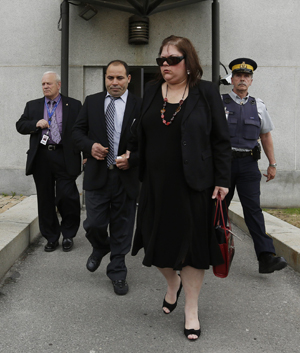
Harkat & wife Sophie leave Court
Justice Noel generously recognized that Harkat's actions represented a security threat to Canada, but that given the time that had since passed, that danger was vastly diminished and therefore the security investigation publicly exposing him as a target for removal. Justice Noel saw fit to order his release on stringent conditions along with the severing of his past alliances. A decision the government appealed to the Federal Court of Appeal and then on to the Supreme Court of Canada which in 2014 upheld the decision.
 
The result of which represented "conclusive proof that the person named in it is inadmissible"; that a deportation ('removal order') could theoretically be advanced without resorting to a further admissibility hearing. Then came the tripwire of immigration law preventing the deportation of anyone to  another country where they are likely to become a victim of persecution, face risk of torture, or cruel and unusual treatment, technically known as 'non-refoulement'. 
 
Canadian Border Services Agency officials and Mr. Harkat's legal team legally jousted for years arguing and making submissions in relation to the exceptions to refoulement; that should government believe it is justified on security grounds based on severity of the individual's behaviour, the process could be terminated. By 2018 the government decided that Harkat not be permitted to remain in Canada, non-refoulement risk aside "based on the nature and security of acts committed".
 
Arguing that the decision was unfair and unreasonable, Mr. Harkat applied for a judicial review. That decision on the application was released and Harkat's request for a judicial review was granted. Justice Norris stated that the federal government's focus on facts that failed to match the record in ordering Harkat's removal represented a "fundamental flaw". Representing yet another instance where elected lawmakers are brought up short by unelected judges who, rather than interpret existing law, manipulate it to suit their own biases.e
https://smartcdn.gprod.postmedia.digital/ottawacitizen/wp-content/uploads/2026/06/harkat-timeline_303545384.jpg?quality=90&strip=all&w=564&type=webp&sig=K1imF6wyVvOKQg8XI438EA
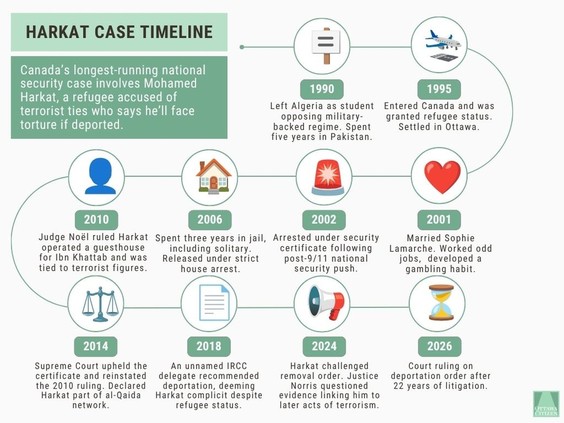
What happened in the Mohamed Harkat case? This chart traces every major development since 1990. (GRAPHIC: SOFIA MISENHEIMER / POSTMEDIA)
 
If you’re found inadmissible, you’ll be denied a visa or an Electronic Travel Authorization (eTA), refused entry to, or removed from Canada.

You could be found inadmissible for a number of reasons, such as:

  • security reasons, including
    • espionage
    • subversion (attempts to overthrow a government, etc.)
    • violence or terrorism
    • membership in an organization involved in any of these
  • human or international rights violations, including
    • war crimes
    • crimes against humanity
    • being a senior official in a government engaged in gross human rights violations or subject to international sanctions
  • committing a crime, including driving while under the influence of drugs or alcoholFootnote 1
  • organized crime, including membership in an organization that takes part in organized criminal activity, people smuggling or money laundering
  • medical reasons – this includes medical conditions that:
  • financial reasons – if you’re unable or unwilling to support yourself and your family members
  • misrepresentation, which includes providing false information or withholding information directly related to decisions made under the Immigration and Refugee Protection Act (IRPA)
  • failure to comply with any provision of IRPAFootnote 2 or
  • having an inadmissible family member.
Government of Canada 
 

Labels: , , , , , , , ,

Friday, January 24, 2025

Student Visa Entitlements : Breaking the Law in Canada

"[If I am deported, it will mean that] many in my generation will be further disillusioned with the possibility of having their voices heard in Canada."
"[My treatment by Canadian authorities has been] Kafkaesque." 
"[With deportation, separation from my Canadian wife would be] devastating."
Pakistani national Zain Haq, 24, Canada student visa holder 
https://smartcdn.gprod.postmedia.digital/vancouversun/wp-content/uploads/2025/01/png0120nclimate-05.jpg?quality=90&strip=all&w=1128&type=webp&sig=CnQempnEx5umQ_9yKMzqnQ
Climate activist Zain Haq who faces imminent deportation for nonviolent climate activism despite prior intervention by the minister of immigration, appears at a press conference in Vancouver, B.C. on January 20, 2025. Photo by NICK PROCAYLO /10106969A
"Haq is not a violent criminal, and his mischievous convictions do not meet the legal threshold for serious criminality."
"He has made a lawful application for permanent residence as the spouse of a Canadian citizen, and he has properly applied to extend the temporary status that was granted to him in April."
"This deportation is entirely avoidable, resulting from Immigration, Refugees and Citizenship Canada's [IRCC] inability to locate his application."
Haq lawyer Randall Cohn

"[Haq's environmental zeal was] laudable; [he is an] intelligent, motivated young person."
"[However, it is clear that Haq knew what he was doing]. He knowingly and deliberately broke the law and he did so fully aware of the consequences and the impact that his actions would have on innocent parties."
British Columbia Judge Reginald Harris
According to the terms of the student visa which enabled Pakistani national Zain Haq to enter Canada in 2019 he was expected to respect Canadian law. This he clearly did not do. And despite his student visa he failed to meet his academic requirements. As an international student he arrived in Canada with a pledge to abide by the law of the land. And once the terms of study were complete he was meant to leave the country. Standard visa privileges and obligations.

However, from 2021 forward Haq became, among other individuals, a central figure in disruptive illegal road blockades in the Vancouver area. In tallying up the damage from the blockades, Crown prosecutors spoke of tens of thousands of transit buses, delivery drivers and motorists snarled in traffic for hours while emergency vehicles were unable to access St. Paul's Hospital, and travellers missed their flights out of Vancouver International, the second-busiest airport in the country.

He had been barred as a result of earlier blockades from being present on the city's Cambie Street Bridge where he had earlier been arrested as well as having just been released from immigration detention just prior on condition he not organize any additional blockades. Nonetheless he violated those release conditions with yet another blockade. Finally facing a long-delayed deportation order he appealed the deportation at a press conference this week. His original deportation order was for April but a temporary stay came from someone in the Trudeau government.

Environmental groups with which he was allied in the blockades have come to his defence, as has the Green Party leader. The sentence meted out to Haq by B.C. judge Reginald Harris called for a light sentence in part because he is not a Canadian citizen, since judges are required to weigh the "potential immigration consequences" to foreign nationals, and to consider it as part of their overall punishment for a criminal conviction, explaining the 61-day house arrest.

The man was in the country on a prolonged basis through a temporary resident permit which he attempted to renew. His deportation order was reactivated when Immigration, Refugees and Citizenship Canada announced his renewal application had never been received by the department. He is now scheduled for removal on January 25.

https://smartcdn.gprod.postmedia.digital/vancouversun/wp-content/uploads/2025/01/png0120nclimate-04.jpg?quality=90&strip=all&w=1128&h=846&type=webp&sig=VmpoYRqEliJLYwigsrX6tA
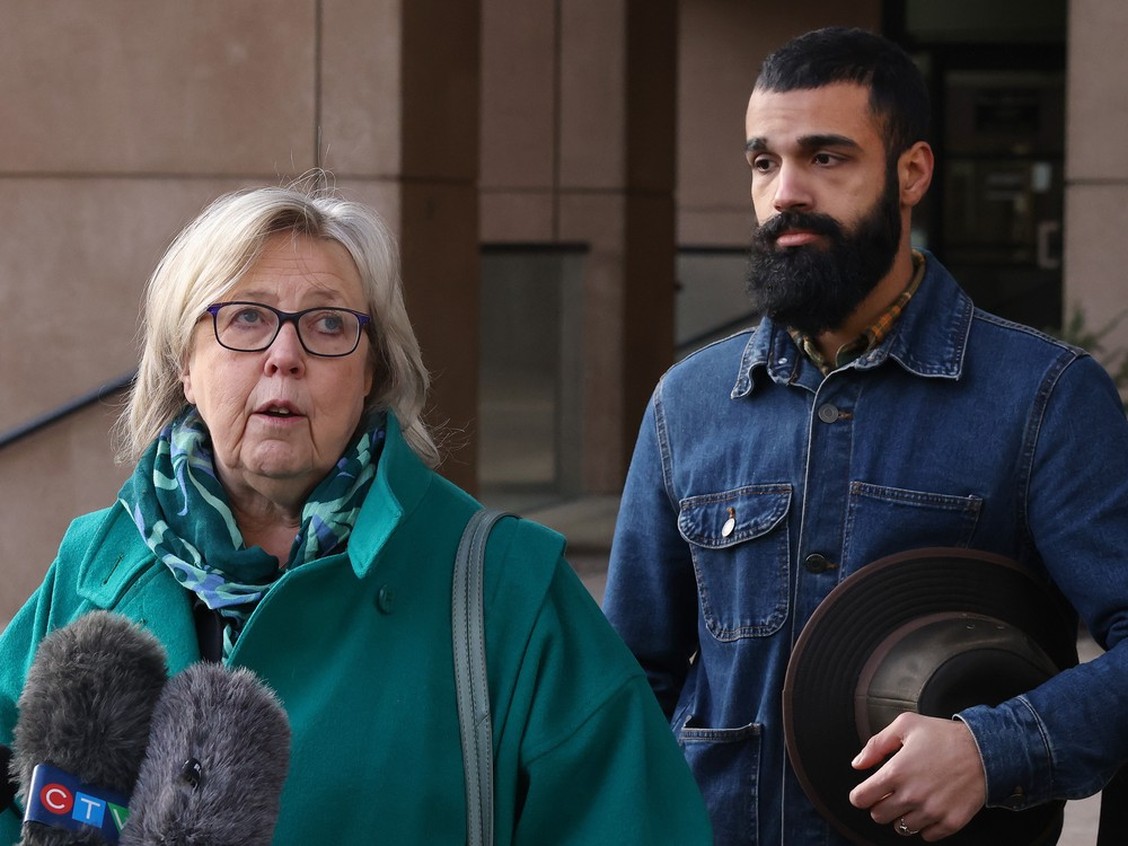
Green Leader Elizabeth May (left) and climate activist Zain Haq at a news conference on Monday. Haq faces imminent deportation. Photo by NICK PROCAYLO /PNG

"Enough with this nonsense."
"If you come to British Columbia to study -- you shouldn't be breaking the law here."
"Deport him back to Pakistan."
B.C. Conservative Leader John Rustad

Labels: , , ,

Tuesday, July 19, 2022

Exposure to Irreparable Harm

"In light of the evidence reviewed above, I have no difficulty finding that Mr. Chol's removal to South Sudan would expose him to irreparable harm." 
"[There is a] public interest in the timely removal of foreign nationals who have lost their right to remain in Canada, [but] that interest must be balanced by the need to ensure that foreign nationals not be removed to countries where they are at risk of inhumane treatment or death."
"The public interest is not served by short-circuiting the safeguards aimed at ensuring everyone's right to life, liberty and security of the person."
"The removal officer unreasonably failed to take into consideration evidence of a risk of death or inhumane treatment."
Justice Sebastien Grammand, Federal Court of Canada
Ottawa police say Vuyo Kashe was killed in a shooting on Clarence Street Friday night. (Colton Praill/CTV News Ottawa)
 
Yohanna David Chol, 36, born in South Sudan, arrived as a refugee to Canada in 2003. He amassed a lengthy criminal record of violence and criminality throughout his period of living in Canada. Records reflect his conviction of many offences, among them assault, drug trafficking and obstructing a peace officer. Now, he has also been charged with murder. This is a man who suffers from mental health problems, diagnosed with schizophrenia, anxiety and depression. Eleven medications have been prescribed for him.

Because of his criminal record, Mr. Chol was considered unsuitable material for Canadian citizenship. In situations such as his it is fairly routine that he be escorted from Canada, and returned to the country of his birth, and just such proceedings were initiated. Yet individuals in the position that Mr. Chol finds himself have resort to a number of appeals at various levels in the Canadian justice system.

He lost his status as a permanent resident, the cause directly related to his criminal convictions, which made him inadmissible to Canada, leading the Ministry of Citizenship and Immigration to order his removal to South Sudan once it was firmly established that he represented a danger to the Canadian public. In 2017 Chol argued that mental health care n South Sudan was non-existent, leaving him at risk of harm should he be forced to return.

Finally, in November 2021 he was notified that he was scheduled to be sent to South Sudan on December 13, 2021. Since his request for reconsideration was turned down, he took his case to Federal Court. Which led to his being granted a stay, permission to remain in Canada and for his case to be further analyzed. 

Evidence presented to Justice Grammond included reports from the International Medical Corps and Amnesty International detailing the miserable state of mental health care in South Sudan, a poor country that had broken away from Sudan to become an independent country. In a population of over ten million people, the reports pointed out, three psychiatrists were available to serve the entire population of individuals suffering from mental health conditions.

Authorities in South Sudan addressed the situation by detaining people with mental health conditions and keeping them incarcerated. The Juba Central Prison is an institution that is used to keep these potential threats to the larger society out of circulation. It is where the incarcerated have access to insufficient food and where treatable illnesses like malaria and diarrhea, left untreated, can lead to death.

Now, Chol has been charged with homicide and second degree murder for an episode on the weekend where Vuyo Kashe, 36, was shot to death on a residential street in an Ottawa neighbourhood. Chol's next court appearance is to take place the first week of August, and he remains in police custody. The man he shot to death was addicted to drugs, and to raise the funds to obtain his street drugs he was found guilty of robberies in Western Canada, armed with a knife. After which he served a prison sentence.

Two men representing the underbelly of society, where criminal activity is routine and lives can be readily lost when two such lost souls skirmish and one dies. The decision to empathize with the plight of a violent man whose mental equilibrium is flawed and who represents an obvious danger to anyone caught in the crossfire of his blighted life is obviously seen by the judge who sat on the appeal and found for the complainant as a humanitarian response.
 
He so very obviously failed to take into account the paramount need of the public to be spared the possibility of being confronted by someone like this man who uses deadly force in confrontations.

In protecting the future prospects of Mr. Chol, Justice Grammond gave  him the benefit of the doubt and decided he was worthy of protection under the law. On the other hand, that decision effectively meant that other people who are citizens or permanent residents of the country are not protected under the law from random acts of violence executed by a man who reacts violently and is not in full possession of his emotions due to mental illness.

A failing grade for Justice Grammond, and a boot out of the country for Mr. Chol appears a suitable remedy for a miscarriage of justice. Life, liberty and security of the person as interpreted by Justice Grammond, referred solely to the accused in the murder. It failed to include the victim, much less other members of the public all of them vulnerable to the injustice of saving a violent criminal from the possibility of harsh treatment, but not ordinary people who have no wish but to go about their business unmolested.

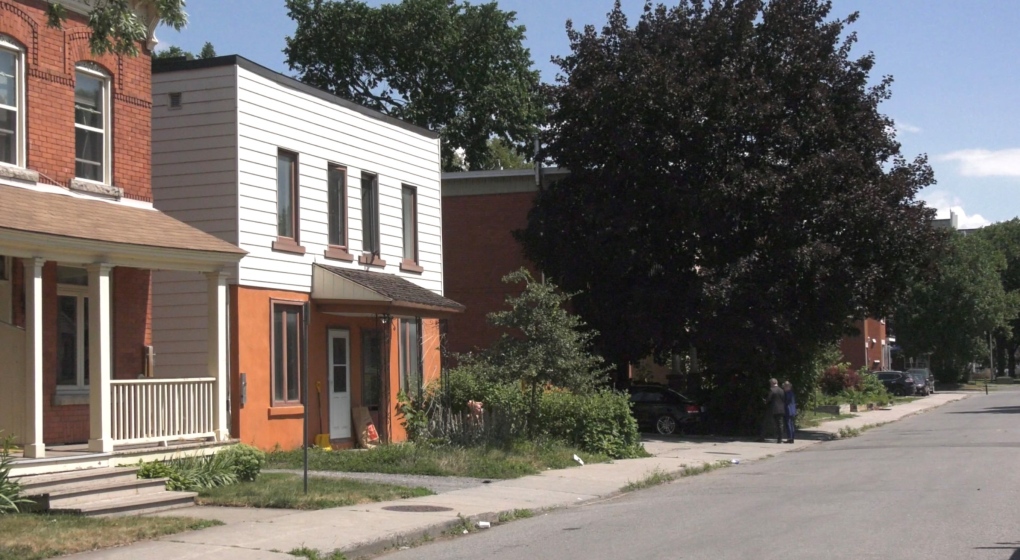
Police vehicles are stationed near Clarence Street in Ottawa's Lowertown neighbourhood Friday night. On Sunday, a 36-year-old was taken into custody and charged with second-degree murder in relation to the shooting death of Vuyo Kashe. (S.B./Radio-Canada)

Labels: , , , ,

 
()() Follow @rheytah Tweet