Ruminations

Blog dedicated primarily to randomly selected news items; comments reflecting personal perceptions

Thursday, August 27, 2026

Come One, Come All!

"Never use threat, force or pressure to make someone have sex."
"Women can ... choose who they marry."
"If you have sex with someone without their consent, this is called rape"
"Rape is a serious crime in the U.K. You could go to prison, lose your support and accommodation, and it will affect your asylum claim."
New U.K. orientation manual for migrants 
 
"All permanent residents and protected persons are eligible for IRCC-funded settlement services [to] help them integrate and build a successful life in Canada as quickly as possible and include information on rights and freedoms of individuals according to Canadian law, understanding of Canadian values, as well as their responsibilities and obligations."
Immigration, Refugees and Citizenship Canada spokesperson
600 Gaza refugees enter Canada in 2005  CBC News
 
The United Kingdom, overwhelmed by the presence of migrants, faces a long string of social/cultural problems related to different customs and values being transplanted alongside the migrants into Britain. An epidemic of violence has erupted for several years unlike what the United Kingdom has previously experienced, a stream of non-stop incidents that fall far outside the normal social contract of the Emerald Isle's traditional population. Rapes by migrants perpetrated against vulnerable men, women, teens, even children, taking place in wooded areas, parks, beach change-rooms and rental units.
 
https://www.centromachiavelli.com/wp-content/uploads/2025/01/grooming-gangs-regno-unito-1200x400.jpg
Grooming Gangs in the U.K. Machiavelli Foundation
 
It took long enough for the British Government to pay attention to the scandals that for years had stalked communities where Muslim men, mostly of Pakistani origins, whose sex culture was responsible for grooming gangs focused on raping and using young Caucasian girls as sex slaves, renting out their services for fun and profit. It wasn't that the situation was unknown to British authorities, but that it was quite simply too inconvenient for them to 'notice' much less act on the practise, given the large Muslim population and accusations of 'Islamophobic' racism to be avoided at all costs.
 
Canada too, as it happens, finds itself in inconvenient waters with the surge of the past decade of immigrants, refugees and migrants infiltrating Canadian society. And in Canada not-too-subtle incidents of migrants in the country bringing with them customs contradictory to Western human rights values where incestuous relations, stranger-rape, organized crime, underage marriages, polygamy, genital mutilation offend Canadian customs and laws.
 
In 2015, during the federal election Prime Minister Stephen Harper's election campaign was rife with outrage from civil rights groups and the growing Muslim community in Canada over his government's release of 'instructions for immigrants' booklet Discover Canada: The Rights and Responsibilities of Citizenship that advised foreigners entering Canada as landed immigrants and permanent residents on their way to achieving citizenship, that Canada's welcome did not include 'barbaric cultural practices' such as spousal abuse, 'honour killings', female genital mutilation, and forced polygamy.
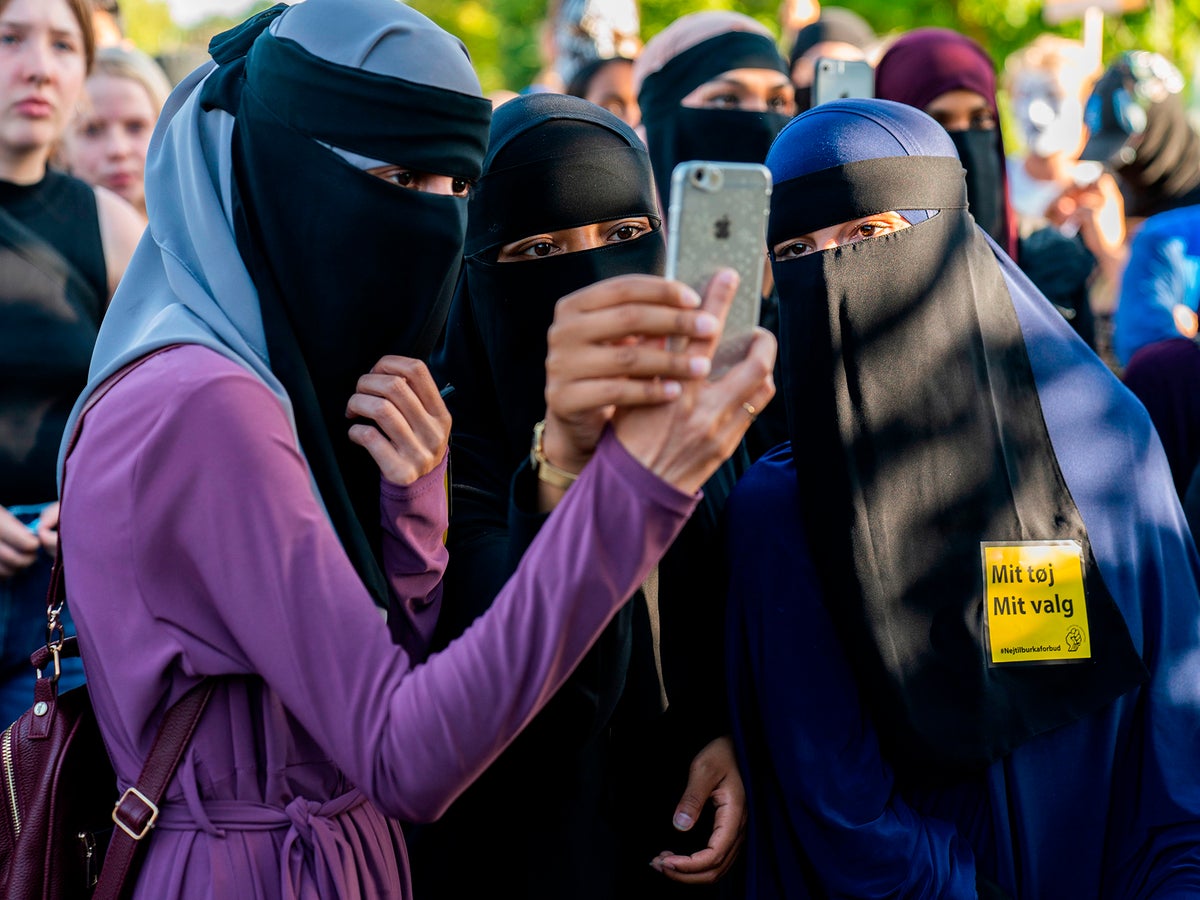
 
https://static.independent.co.uk/s3fs-public/thumbnails/image/2019/04/24/11/the-hijab.jpg?width=1200
Burqa ban in Great Britain?  Independent
 
How times have changed; the instructions of yesteryear rejected by the electorate have, by necessity since then been rejuvenated where marriage fraud warning is circulated by government auspices. In Canada too there are those requiring an explanation why it is frowned upon to rape children. A 'Pre-Departure Guide for Newcomers to Canada', published in 2025 focuses on newcomer rights rather than their responsibilities to the new country they will inhabit. 
 
Gently there are hints as to what is now of vital importance to this current progressive government; an acceptance of the presence of transgenderism, where readers are instructed that the LGBTQ-2 community in Canada is not only accepted, supported and valued, but so too is the right of the nation's children to question their from-birth designation as male or female. Issues such as 'lining up', 'making eye contact' and 'using underarm deodorant' are given their due place in the booklet.
 
Criminal activities are also addressed such as a jail term will come with carrying a firearm without a permit, and unwanted sexual touching or remarks may elicit a fine, or even prison. Bribery, polygamy, female genital mutilation and 'Making, sharing or owning photos of naked children', 'forcing others into marriage', and 'having sex with children', are similarly frowned upon and the letter of the law may be applied. Although truth to tell, the justice system goes easy on skin tones and ethnicity and cultures, with reduced sentences applied.
 
Family violence is frowned upon and "Killing a family member as a way to save a family's honour", is definitely unacceptable. Also addressed is the virtue of working for a living, rather than becoming wholly dependent on Canada Child Benefit payments which, when enough children in a family receive those generous benefits can sustain a family, without a breadwinner breaking a sweat. ($679.75 per month ($8,157 per year) for each child under 6, and $573.58 per month ($6,883 per year) for each child aged 6 to 17 for the 2026–2027 year.
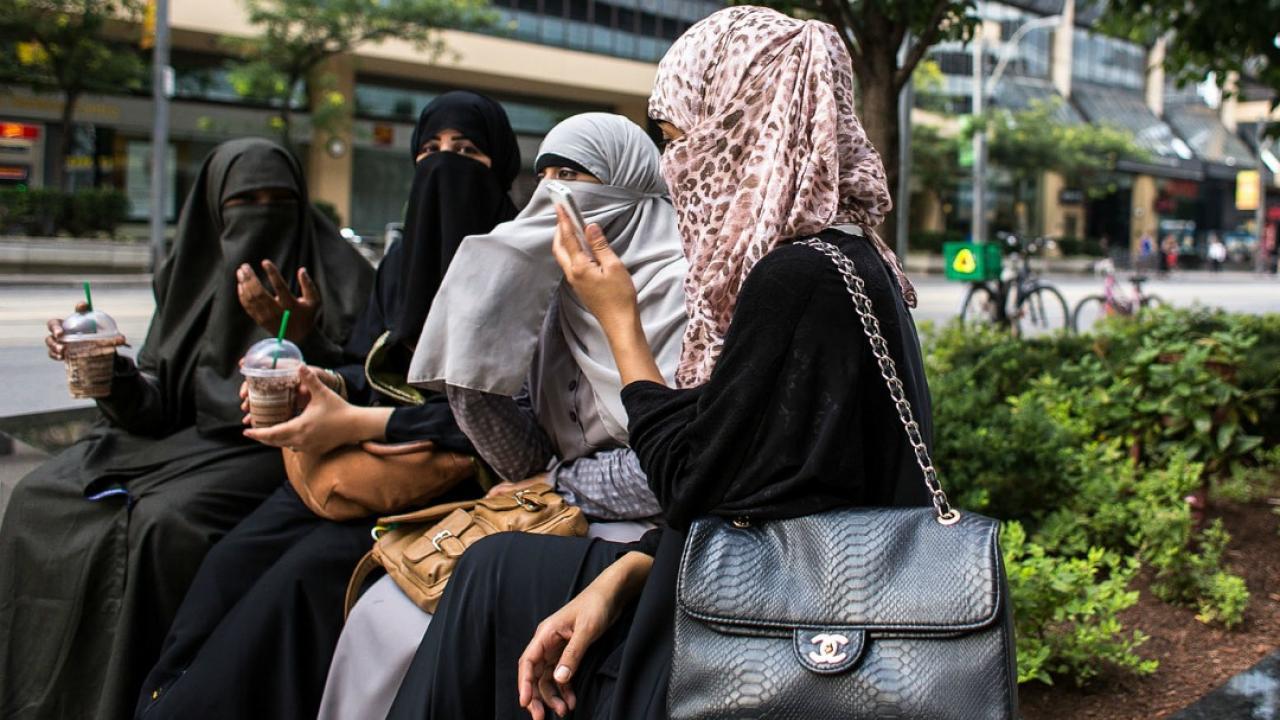
 
What Muslim female dress as a wedge issue means for Canada | TVO Today
What Muslim female dress means as a  wedge issue in Canada  TVO Today


Labels: , , , , , , , , ,

Wednesday, July 23, 2025

Canadian Immigration, Refugee and Migrant Intake

"While most observers attribute the persistent concern with the numbers of refugees to economic concerns and housing challenges, the survey looks at the extent to which Canadians trust immigrants and refugees and finds that amongst those Canadians who feel that there are too many immigrants, the level of trust in refugees is especially low."
"This may imply that concerns over domestic intergroup tensions may be a more important factor in concern with levels than has been previously acknowledged." 
Analysis of national Leger poll
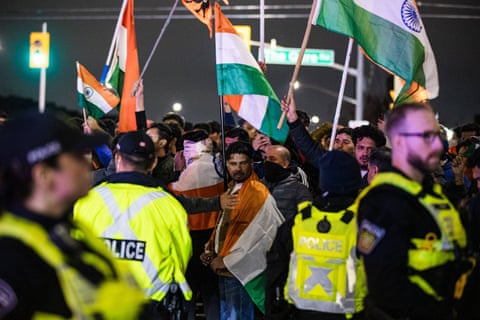
People gather and wave the Indian flag as police assemble in the foreground.
Protesters at the Hindu Sabha Mandir temple in Brampton, Ontario.  Photograph: Nick Lachance/Toronto Star/Getty Images
 
"Intergroup tensions", as for example Canadian Hindus versus Canadian Sikhs with their traditions of suspicion and distrust, acting out within Canada in viral events of dangerous dimensions, the two solitudes coming to blows, endangering the communities and bringing international attention to their divisions. It is, in fact, the communities' propensities to have among them cliques that also engage in illegal, criminal activities domestically in Canada. But above all, the ongoing agenda of the Khalistani Sikhs who agitate for a separate Sikh state to be divided from India's interior. Canada's worst terrorist assault was one committed by British Columbia Khalistanis who placed a bomb aboard Air India Flight 182 that killed all 329 people aboard, in 1982.
 
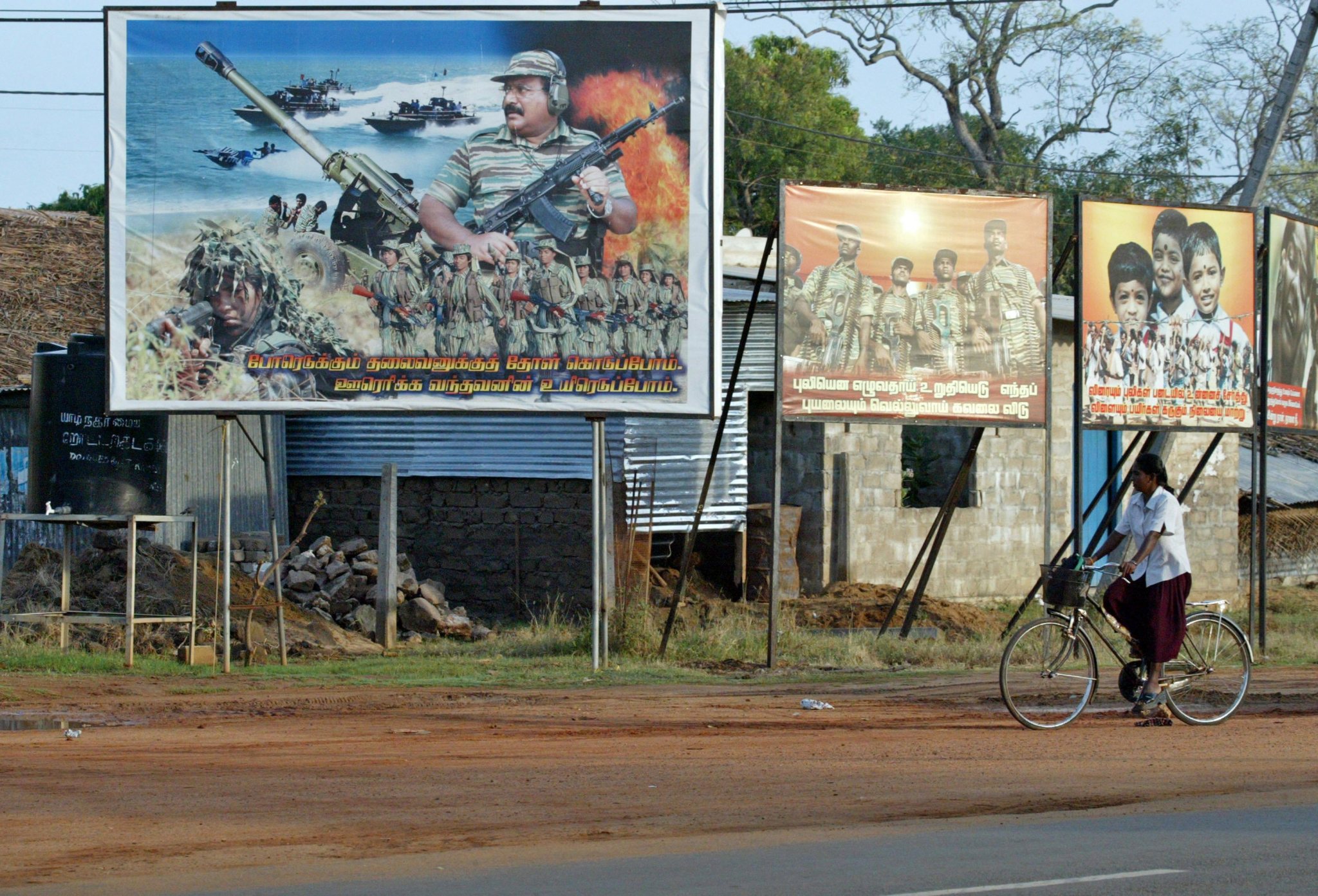
Canada has a population of Sri Lankans, among them members of the Tamil Tigers who in the past agitated for their own separatist state, committing violent crimes in Sri Lanka in support of their sovereign aspirations against the country's military and members of government. Canadian Sri Lankans belonging to the Tamil Tigers promulgated their violent terrorist propaganda, drawing Canada involuntarily into a debate roiling another country entirely, until the Tigers were delivered a crushing blow that devastated their numbers in Sri Lanka and put their designs to rest.
 
https://globalnews.ca/wp-content/uploads/2025/06/CP214269429.jpg?w=2048
Propaganda billboards in the region of Sri Lanka controlled by Liberation Tigers of Tamil Eelam, April 22, 2007. (AP Photo/Gemunu Amarasinghe)
 
But wait: the current Liberal government of prime minister Mark Carney elevated a former sympathizer of the Tigers, MP Gary Anandasangaree, to the important Cabinet post of Public Safety Minister. The Liberation Tigers of Tamil Eelam, along with the Tamil Tigers and World Tamil Movement, are listed terrorist groups in Canada. Minister Anandasangaree took the step of recusing  himself from anything to do with these two groups, as Public Safety Minister. But it was discovered, that as a Member of Parliament years previous, he had written a letter in support of a former Tamil Tiger facing deportation from Canada.
 
And nor to overlook the tens of thousands of Syrian refugees brought to Canada during Syria's 14-year sectarian civil war when former regime Shia-Alawite President Bashar al-Assad barrel- and chemical-bombed Syria's Sunni population killing an estimated third of a million Syrians; years that saw half the population of the country internally displaced, and millions more seeking haven abroad. These intake refugees along with a sizeable Palestinian-Canadian population and other Muslim groups in Canada totalling almost two million have made their presence known in ongoing street protests against Israel.
 
https://i.cbc.ca/1.7509131.1744564685!/cpImage/httpImage/image.jpg_gen/derivatives/16x9_1180/cda-israel-palestinians-20250412-ottawa-parliament-hill-april-2025.jpg?im=Resize%3D780
Pro-Palestinian protesters chant during a demonstration protesters are calling a "National March for Palestine" near Parliament Hill (Spencer Colby/The Canadian Press)
 
Since the 2023 October 7 incursion of thousands of Palestinian terrorists from Gaza into southern Israel who embarked on a sadistically savage rampage of rape, mutilation and mass murder, killing 1,200 Israelis and kidnapping another 250 children, women, elderly, foreign farm workers and a number of Israeli IDF members, leading to a military response by the IDF into Gaza to route out Hamas leaders and operatives, Muslim groups in Canada, led primarily by Palestinians living in Canada have harassed Canadian Jews, threatened their security, committed violent criminal acts and behaved in a manner inconsistent with Canadian values and justice. 
"We're trying o probe here whether Canadians do have security concerns that are also driving some of the reticence or hesitation about immigration right now. My conclusion is that that is the case."
"The point of the survey is, there is an issue that we need to pay attention to. If there is a security concern associated with migration right now, it requires some attention and a need to reassure Canadians that our government and the responsible departments are taking care of those issues, are paying attention to those issues if and when they arrive, or where and when they may arise."
"We're seeing the degree of trust expressed in refugees as especially low. And particularly amongst those people who think there are too may immigrants, the trust of refugees is low, lower than it is normally."
"Whether you're born in Canada or not born in Canada, or whether you're a minority or not, this issue around trust, and the perceptions around the global instability, is affecting our perspectives around migration." 
Jack Jedwab, president, chief executive, Association for Canadian Studies and the Metropolis Institute  
The new poll in question conducted nationally for the Association for Canadian Studies and the Metropolis Institute, found 62 percent of people polled feel Canada is accepting too many people, over double the number that expressed those sentiments  six year earlier. Only 20 percent disagreed, while 19 percent responded they  don't know. Canadians were asked if they think immigrants can be trusted, and the 52 percent of Canadians who said they can, saw 36 percent responding in the negative when the issue is that of refugees being trusted -- 20 percent adamant that immigrants cannot be trusted; 23 percent felt the same about refugees.
 
For the question whether there are too many people coming to Canada, among those who declare there are, 32 percent only, trust immigrants; 28 percent felt they cannot be trusted, and for refugees those numbers were 24 percent trusting; another 32 percent felt they cannot be trusted. And it is immigrants themselves that agree, by 57 percent, that too many immigrants are arriving to Canada, near matching the numbers of non-immigrant responders. Non-white people surveyed saw 61 percent agreeing there are too many immigrants in comparison to 58 percent of white people. 
"That polarization is not based on whether you are yourself an immigrant or you are a minority, it's not. It's transcending that. So the trust issue is a critical factor. It's just not defined by, as I said, your status as an immigrant or non-immigrant or as a minority. Those groups of people are making observations to the same extent across those markers of identity."
"It is important that we properly understand what the factors are underlying the reticence about immigration. So that's where the importance ... is in trying to establish what the concerns are, how significant those concerns are, where those concerns are coming from."
"And then, on that basis, to determine how best to address them rather than dismissing them."
Jack Jedwab 
https://i.ytimg.com/vi_webp/_BolmzWM9PE/maxresdefault.webp
The Canadian Citizenship Ceremony  -- Still from video
 

Labels: , , , , ,

Saturday, February 15, 2025

None So Holy As He

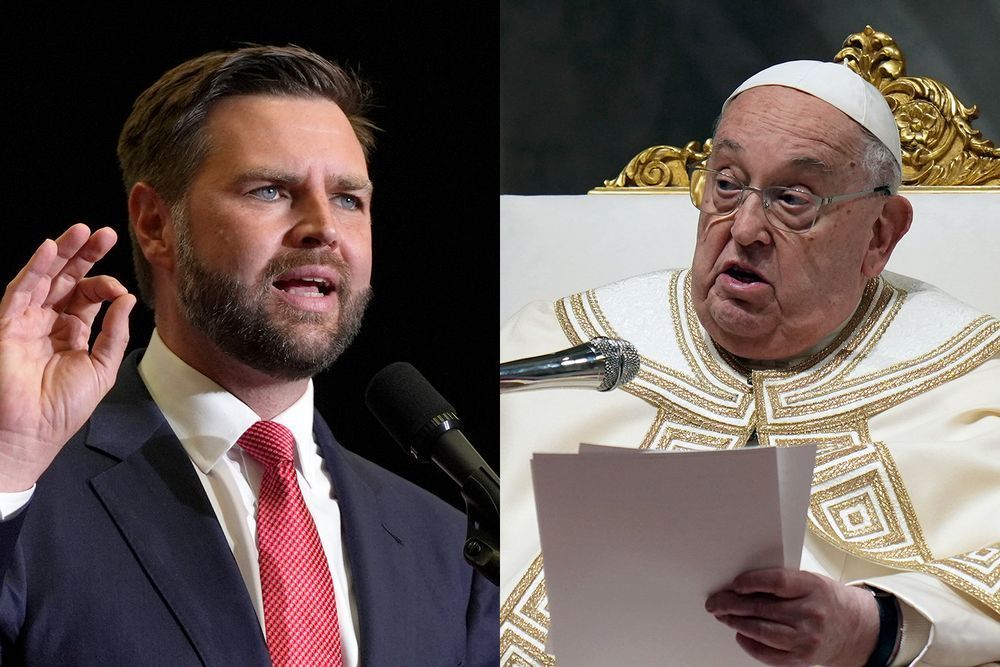
"There is a Christian concept that you love your family, and then you love your neighbor, and then you love your community, and then you love your fellow citizens in your own country."
"And then after that, you can focus and prioritize the rest of the world."
"[The] far left [got the order backward]."
U.S. Vice-President J.D. Vance (new convert to Catholicism)
 
"The true ordo amoris that must be promoted is that which we discover by meditating constantly on the parable of the ‘Good Samaritan’ (cf. Lk 10:25-37), that is, by meditating on the love that builds a fraternity open to all, without exception."
"But worrying about personal, community or national identity, apart from these considerations, easily introduces an ideological criterion that distorts social life and imposes the will of the strongest as the criterion of truth."
Pope Francis
https://cdn.bsky.app/img/feed_thumbnail/plain/did:plc:mjwatbcziskf47sa54xyo7oj/bafkreido57736s5tlvrxx3io52kxcjqqphcm3nera4vbx4v7by2vznxajy@jpeg
VATICAN CITY (RNS) — Vice President JD Vance used the old Catholic theology to defend the Trump administration's immigration policy. Pope Francis made clear that's not the church's interpretation. AP
 
"This morning, at the end of the audiences, Pope Francis will be admitted to the Agostino Gemelli Polyclinic for some necessary diagnostic tests and to continue in a hospital setting treatment for bronchitis that is still ongoing."
Vatican statement
In hospital for an indeterminate period of time to treat his latest ailments, the Pope will not be available for the Saturday Jubilee, a Sunday Mass and other engagements. A Vatican cardinal has been tasked with  presiding in Pope Francis' place over the Mass and other events were cancelled "due to the impossibility of the Pope to participate".
 
Pope Francis has found much to be displeased over, with the new U.S. administration in the White House. Specifically one item has raised his holy ire; the issue of floods of migrants from Africa, Central America and the Middle East churning their arduously determined way on foot and by sea to the wealthy countries of the world which also happen to be Western democrats. It is this man's opinion at the Holy See that any and all who declare themselves refugees are obliged by Europe and North America to be met with open arms.
 
Europe has had its fill of economic migrants and their illegal and unwanted entries, as has the United States, neither oblivious to the reality that the tide of humanity attempting to breach their shores is virtually unstoppable, but each is doing their utmost finally to put a stop to these unwanted entries. Furthermore, the populations of all these reluctantly receiving countries are themselves fed up with the presence of people who fail to respect the social culture and laws of countries they invade.
 
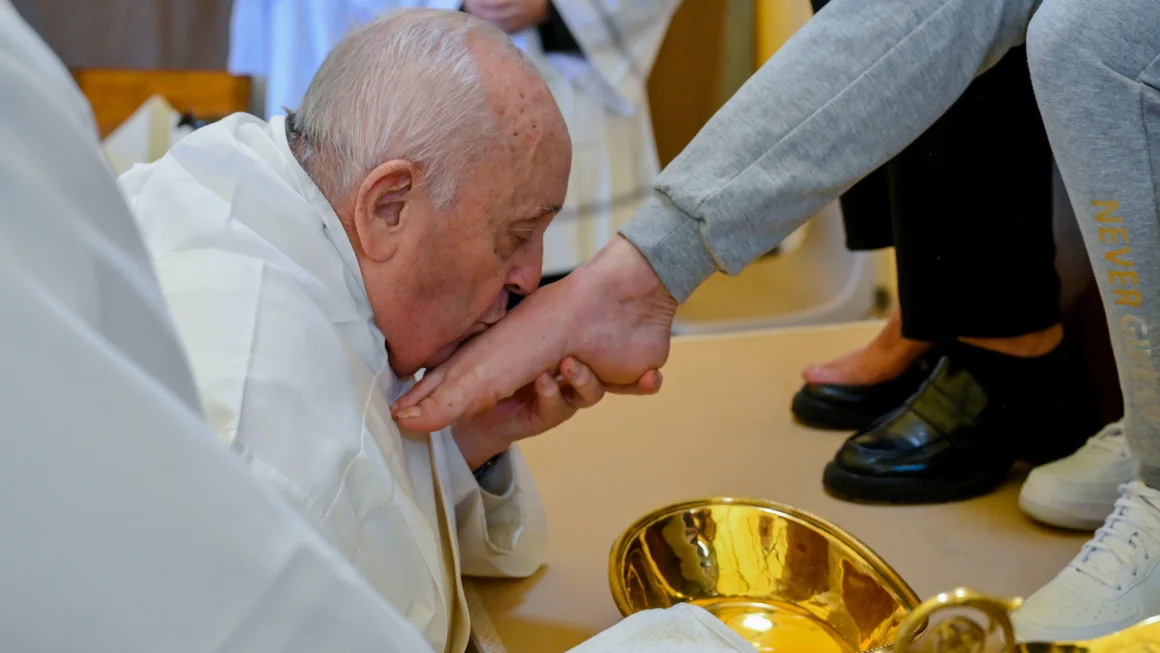
https://media.cnn.com/api/v1/images/stellar/prod/ap24088609358492.jpg?c=16x9&q=h_653,w_1160,c_fill/f_webp

The Pope is not a well man; his age for one thing has caught up with him, at 88, and his constitution can hardly be described as robust. He has been bedeviled with ill health for many years. Governments come and go regularly, and so, in fact, do popes. A week-long bout of bronchitis has seen to Pope Francis's hospitalization where he is  undergoing diagnostic tests. He had lately been experiencing breathing problems, rendering him functionally incapable of maintaining his rigorous audiences and public events schedules.
 
As a young man he had part of one of his lungs removed. He experiences regular bouts of acute bronchitis during the winter season. He now makes regular use of a wheelchair, a walker or cane even while moving around ordinarily in his apartment. He recently fell on two occasions, doing harm to his arm and his chin. He was last admitted to Rome's Gemelli  hospital in June of 2023 for surgery to remove intestinal scar tissue and repair a hernia in his abdominal wall.
 
Three days were spent prior to that in Gemelli receiving intravenous antibiotics for a respiratory infection. He had been rushed to the hospital after spiking a  high fever and feeling a sharp pain in his chest in March 2023, diagnosed with "an acute and strong pneumonia, in the lower part of the lungs". Popes have a private suite on the 10th floor of the Gemelli Hospital. 
 
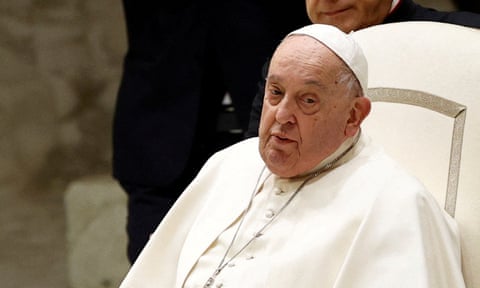
Pope Francis sitting in white chair
Pope Francis was also hospitalized in March 2023 to be treated for acute bronchitis. Photograph: Ciro De Luca/Reuters
 
In his 2023 hospitalization where pneumonia was diagnosed, he was placed on intravenous antibiotics and released on April 1, quipping he was "still alive. Thank God I can tell the story, because the organism, the body, responded well to the treatment", he later said. But 'the organism' cannot be expected to rally so well each time a new health crisis arrives. In the meanwhile, he performs his duties as he is inclined to do, sharply criticizing world leaders for their solutions to problems, running afoul of this pope's reading of Church doctrine.


Labels: , , , , , ,

Thursday, July 20, 2023

Resettling Special Refugees; Ukrainians in Canada

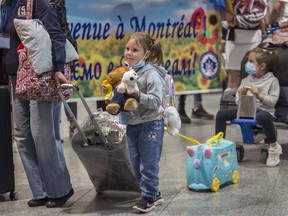
It was a long trip': Hope and tears as 305 Ukrainian refugees land in  Montreal | Montreal Gazette
"It's a good opportunity to remind people that the war is still on. People are still moving around, there is a lot of uncertainty. I don't think anybody knows where they will end up or what they're going back to."
"There isn't a city or a region that hasn't been touched. Every Ukrainian knows somebody who's fighting or who's been killed. Ultimately, we need Ukraine to win the war and establish a peace for people to have that context and make decisions."
"The government of Ukraine is going to do everything it can to encourage people to come back when they feel safe, and there are lots of people going back now. It's a family decision. It's an individual decision based on circumstances, based on what they see in their future."
Ihor Michalchyshyn, CEO, Ukrainian Canadian Congress

"Ukrainians are still able to come to Canada by applying through Immigration, Refugees and Citizenship Canada's existing temporary resident programs. In recognition of the continued danger while Russia's invasion continues, we're implementing these new measures to ensure continued support to Ukrainians in Canada."
"The Government of Canada continues to do everything possible to help those fleeing Russia's invasion, which includes providing a safe haven and peace of mind."
Mary Rose Sabater, spokesperson, Immigration, Refugees and Citizenship Canada
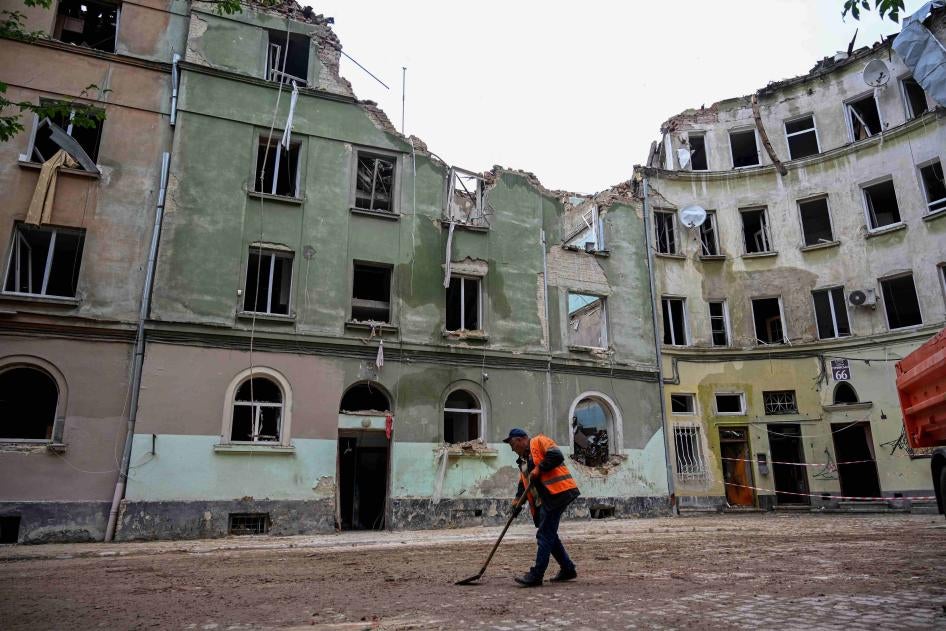
A communal worker sweeps outside an apartment building in Lviv, Ukraine, on July 7, 2023, a day after it was seriously damaged by a Russian missile strike.
A communal worker sweeps outside an apartment building in Lviv, Ukraine, on July 7, 2023, a day after it was seriously damaged by a Russian missile strike.  2023 YURIY DYACHYSHYN/AFP via Getty Images
Canada is second in line to boast the largest expatriate community in the world of Ukrainian-Canadians. Only Russia has a greater number of Ukrainian-Russian citizens. And because of a virtual news blackout from Russia amidst threats of imprisonment for any criticism of Russia's 'special military operation', which is not to be termed 'conflict' or 'war', it can be anyone's guess what the huge Ukrainian population living in Russia feels about their country of origin being invaded, its citizens being killed, and its former country's infrastructure being destroyed, much less annexed by the country now hosting them as citizens.

Canada has the further distinction of a Canadian of Ukrainian extraction serving as its deputy prime minister, in Chrystia Freeland. Canada's commitment to political, diplomatic and material support to Ukraine -- during the year-and-a-half that the country has been struggling to defend itself from its powerful neighbour bent on subjugating it once again to the Russian Federation and once again claiming its geography and its resources -- is unquestioned. As a member of NATO which has itself pledged aid and assistance to Ukraine, Canada has been sending financial assistance and machinery of war to Ukraine.

Canada opened its doors to Ukrainians fleeing the violence that Russia has brought to their nation, offering temporary refuge for as long as the war persists. However, over the weekend a special visa program labelled the Canada-Ukraine Authorization for Emergency Travel was allowed to expire. Ukrainians were enabled through the program to apply to come to Canada with limited barriers, permitting them to remain in the country for up to three years, to be able to legally work and to receive settlement supports.
 
170 Ukrainians met their host families and reunited with relatives, thanks to a new immigration program that's quite different from a refugee program. (CBC)
 
Calls to extend the program were rejected by the government and nor will new applications be accepted. Those who have already applied and their applications approved will continue to be able to come to Canada until March of 2024. After that period has elapsed, anyone can make application through the usual channels for immigration. Since the now-expired program was launched a month after the invasion, 1.1 million applications were received in total, about 800,000 processed and roughly 166,000 Ukrainians arrived in Canada.

With war still threatening civilians, points out Mr. Michalchyshyn, many holding one of the special visas, may yet decide to make use of them. There was a prewar population in Poland of just over 40 million people. Estimates are that up to ten million Ukrainians fled the country since the beginning of the invasion, while others have been internally displaced, in their millions. Canada's already large diaspora of Ukrainians may be further enlarged through the process of refugee haven.

https://www.ctvnews.ca/content/dam/ctvnews/en/images/2023/7/14/canada---ukraine-1-6479576-1689335089250.jpg
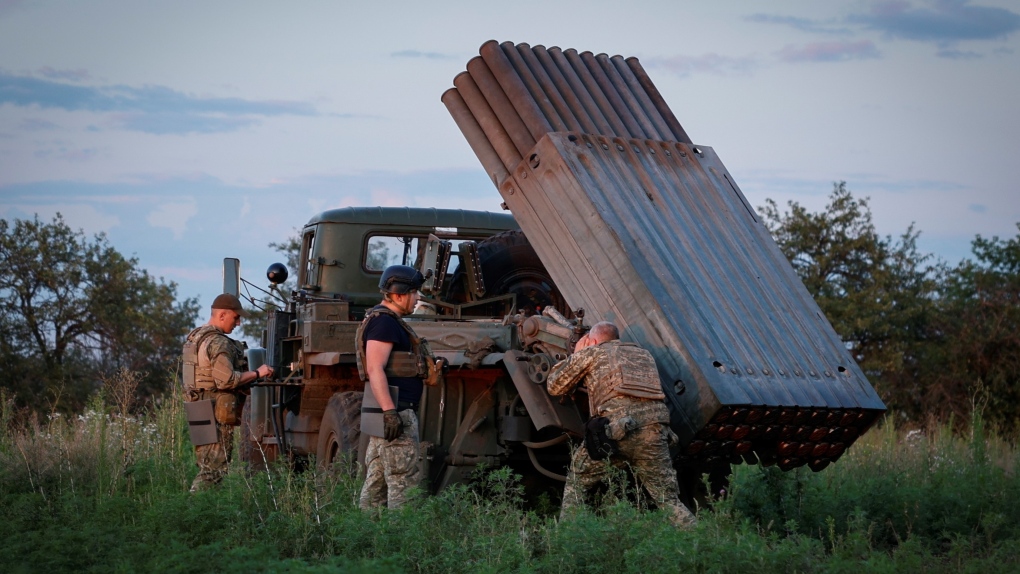
Ukrainian soldiers prepare a Grad multiple rocket launcher to fire rockets at the Russian positions in the frontline near Bakhmut, Donetsk region, Ukraine, Wednesday, July 12, 2023. (Roman Chop via AP)

Labels: , , ,

Tuesday, July 19, 2022

Exposure to Irreparable Harm

"In light of the evidence reviewed above, I have no difficulty finding that Mr. Chol's removal to South Sudan would expose him to irreparable harm." 
"[There is a] public interest in the timely removal of foreign nationals who have lost their right to remain in Canada, [but] that interest must be balanced by the need to ensure that foreign nationals not be removed to countries where they are at risk of inhumane treatment or death."
"The public interest is not served by short-circuiting the safeguards aimed at ensuring everyone's right to life, liberty and security of the person."
"The removal officer unreasonably failed to take into consideration evidence of a risk of death or inhumane treatment."
Justice Sebastien Grammand, Federal Court of Canada
Ottawa police say Vuyo Kashe was killed in a shooting on Clarence Street Friday night. (Colton Praill/CTV News Ottawa)
 
Yohanna David Chol, 36, born in South Sudan, arrived as a refugee to Canada in 2003. He amassed a lengthy criminal record of violence and criminality throughout his period of living in Canada. Records reflect his conviction of many offences, among them assault, drug trafficking and obstructing a peace officer. Now, he has also been charged with murder. This is a man who suffers from mental health problems, diagnosed with schizophrenia, anxiety and depression. Eleven medications have been prescribed for him.

Because of his criminal record, Mr. Chol was considered unsuitable material for Canadian citizenship. In situations such as his it is fairly routine that he be escorted from Canada, and returned to the country of his birth, and just such proceedings were initiated. Yet individuals in the position that Mr. Chol finds himself have resort to a number of appeals at various levels in the Canadian justice system.

He lost his status as a permanent resident, the cause directly related to his criminal convictions, which made him inadmissible to Canada, leading the Ministry of Citizenship and Immigration to order his removal to South Sudan once it was firmly established that he represented a danger to the Canadian public. In 2017 Chol argued that mental health care n South Sudan was non-existent, leaving him at risk of harm should he be forced to return.

Finally, in November 2021 he was notified that he was scheduled to be sent to South Sudan on December 13, 2021. Since his request for reconsideration was turned down, he took his case to Federal Court. Which led to his being granted a stay, permission to remain in Canada and for his case to be further analyzed. 

Evidence presented to Justice Grammond included reports from the International Medical Corps and Amnesty International detailing the miserable state of mental health care in South Sudan, a poor country that had broken away from Sudan to become an independent country. In a population of over ten million people, the reports pointed out, three psychiatrists were available to serve the entire population of individuals suffering from mental health conditions.

Authorities in South Sudan addressed the situation by detaining people with mental health conditions and keeping them incarcerated. The Juba Central Prison is an institution that is used to keep these potential threats to the larger society out of circulation. It is where the incarcerated have access to insufficient food and where treatable illnesses like malaria and diarrhea, left untreated, can lead to death.

Now, Chol has been charged with homicide and second degree murder for an episode on the weekend where Vuyo Kashe, 36, was shot to death on a residential street in an Ottawa neighbourhood. Chol's next court appearance is to take place the first week of August, and he remains in police custody. The man he shot to death was addicted to drugs, and to raise the funds to obtain his street drugs he was found guilty of robberies in Western Canada, armed with a knife. After which he served a prison sentence.

Two men representing the underbelly of society, where criminal activity is routine and lives can be readily lost when two such lost souls skirmish and one dies. The decision to empathize with the plight of a violent man whose mental equilibrium is flawed and who represents an obvious danger to anyone caught in the crossfire of his blighted life is obviously seen by the judge who sat on the appeal and found for the complainant as a humanitarian response.
 
He so very obviously failed to take into account the paramount need of the public to be spared the possibility of being confronted by someone like this man who uses deadly force in confrontations.

In protecting the future prospects of Mr. Chol, Justice Grammond gave  him the benefit of the doubt and decided he was worthy of protection under the law. On the other hand, that decision effectively meant that other people who are citizens or permanent residents of the country are not protected under the law from random acts of violence executed by a man who reacts violently and is not in full possession of his emotions due to mental illness.

A failing grade for Justice Grammond, and a boot out of the country for Mr. Chol appears a suitable remedy for a miscarriage of justice. Life, liberty and security of the person as interpreted by Justice Grammond, referred solely to the accused in the murder. It failed to include the victim, much less other members of the public all of them vulnerable to the injustice of saving a violent criminal from the possibility of harsh treatment, but not ordinary people who have no wish but to go about their business unmolested.

Police vehicles are stationed near Clarence Street in Ottawa's Lowertown neighbourhood Friday night. On Sunday, a 36-year-old was taken into custody and charged with second-degree murder in relation to the shooting death of Vuyo Kashe. (S.B./Radio-Canada)

Labels: , , , ,

Saturday, March 17, 2018

Unintended Consequences and its Victims

"It's unexplainable. Suddenly they said, 'Now you can't come'."
"Most of us cannot go back to Iran; we're in complete despair. We are afraid they will give us a sentence [the Iranian regime view them as traitors, sentence them accordingly]. They could put us in jail."
H. Avakian, 35, Armenian Christian, Iranian refugee, Austria

"[The government of the Islamic Republic of Iran engages in] systematic, ongoing and egregious violations of religious freedom, including prolonged detention, torture and executions based primarily or entirely upon the religion of the accused."
United States Commission on International Religious Freedom
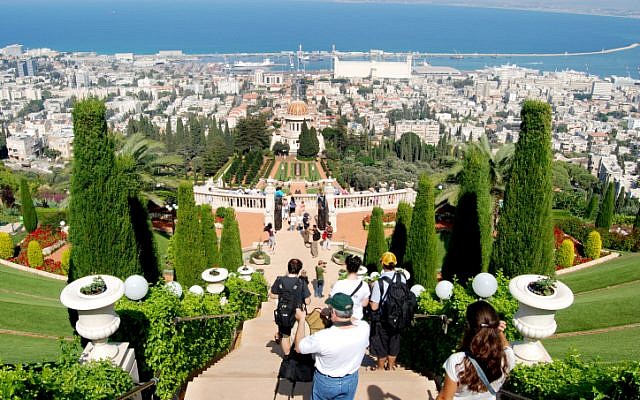
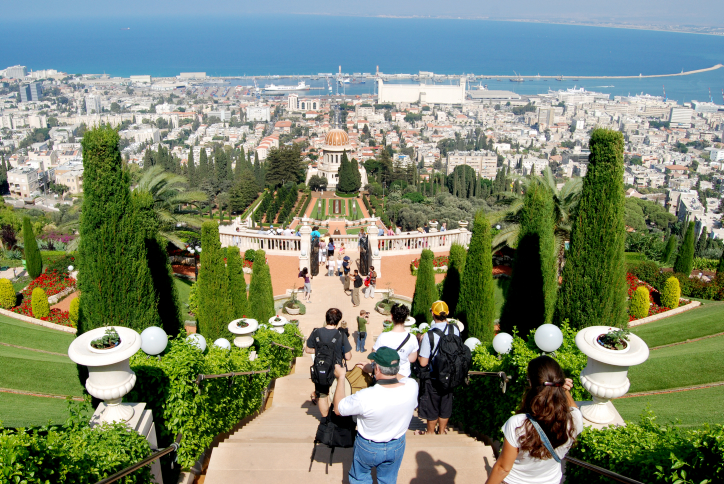
Terraces of the Baha'i Gardens in Haifa overlooking the Mediterranean Sea (Oren Fixler/Flash90)

Islam has a controversial and peculiarly polarized relationship with other religions. On one hand, it formally recognizes Judaism and Christianity as sharing some of Islam's precepts, even while reality is that Islam has lifted its sacred precepts from the religions it considers its predecessor 'try-outs' by a God dissatisfied with the earlier iterations, giving his final stamp of approval to the third, Islam, and on the other hand reserving the right to have a wholly negative view of their sacred legality, having spurned the Prophet's invitation to abandon Judaism and Christianity and submit to Islam as Allah has decreed.

So, even while Iran's Constitution proclaims Shiite Islam the official state religion, shunning Sunni Islam as an illegitimate version of true Islam, recognizing Christians, Jews and Zoroastrians as minority religions given Iranian protection, in point of fact the Republic goes out of its way to violate its own stated patronizing position on the protected status it so magnanimously offers religions with a connection to Islam, purporting to be separately quasi-divine, but in actual fact their presence an affront to Islam not taken lightly.
An Iranian woman prays as she attends Christmas Eve mass at the St Joseph Armenian Catholic church in Tehran on Dec. 24, 2016.        (Atta Kenare/AFP/Getty Images)
An Iranian woman prays as she attends Christmas Eve mass at the St Joseph Armenian Catholic church in Tehran on Dec. 24, 2016. (Atta Kenare/AFP/Getty Images)
According to the U.S. Commission, Iranian authorities have detained hundreds of Christians between the years 2010 and 2016. President Suhaib Nashi of the Mandaean Society of American states his fears for a number of Mandaean families who have temporarily established themselves as Iranians looking for asylum, hoping to be re-united with family members living in the United States. They have fled Iranian persecution in hopes of finding a place for themselves where their religion is treated with respect and equality among others.

And they felt so assured there would be a place for them in the United States that they liquidated all their holdings, left their professions and cut themselves away from their place of birth in Iran in a search for freedom for themselves and their families. They travelled to Austria as a safe transit site there to await the processing of their visas enabling them to arrive in the United States to begin their lives anew there. They are still waiting, some one hundred Iranian Christians a year later, their savings drained as they awaited applications for refugee status to be processed.

A return to Iran in recognition of U.S. failure to regard them as refugees, validating their requests and allowing them to emigrate to America, would result in their lives being endangered since the government of Iran regards them as enemies of the state. The 1989 U.S. law, the Lautenberg Amendment offers safe haven to persecuted religious minorities. Among those awaiting word from the U.S. that they may proceed as requested, are ethnic Armenian and Assyrian Christians, Mandaeans and Zoroastrians who have been mostly sponsored by relatives in the U.S.
Jewish Iranians casts their vote at a synagogue used as a polling station for the Jewish community in Tehran on February 26, 2016. AFP
Some 30,000 Iranians, members of the Jewish, Mandaean, Zoroastrian and Baha'i communities, all persecuted minorities in the Islamic Republic of Iran have received refugee status enabling them to settle in the United States since the Lautenberg Amendment saw expansion to include Iranians, in 2004. It is from among these families' relatives that those who see their futile applications being denied by U.S. authorities are being denied hope for the future.


One of the families already conditionally approved for refugee status later received a notice of ineligibility which stated their application "has been denied as a matter of discretion". Recent changes in the U.S. refugee admissions programs resulted, according to a State Department spokeswoman, in "a greater number of denials in the Vienna refugee program", leaving the U.S. Austria and others to work in tandem hoping to find alternatives for the anxiously waiting groups of Iranian Christians.

US Puts Scores of Iranian Christians at Risk of Persecution
Image: Omar Marques / Anadolu Agency / Getty Images
Asylum seekers join 2016 protests in Vienna, Austria.
 

Labels: , , , , ,

Saturday, September 10, 2016

Canada and the Ukraine-Russia Conflict

"I note that as the family has currently no status in Canada and is not eligible for health care coverage and has no funds to pay for their treatment, therefore it may be a better option for Vladyslav Zadorozhnyi to return to Ukraine and receive treatment, where he has a status and the treatment is available to him."
Inland Enforcement Officer D. Sliwka, Immigration and Refugee Board, Canada

"He was literally wailing, especially when he started to tell me about the persecution he experienced in Ukraine and his fear of being returned. In this case, he and his family are doomed. He has good reasons to expect that they will kill him."
"He needs support. I hope that he will be successful in seeking refugee status, which may give him some relief in terms of the very traumatic situation he was, and is, in."
Felix Yaroshevsky, psychiatrist

"[Mr. Zadorozhnyi was victim to a] swindle [in 2011, and an arson event in 2014 but the] allegation of a current conspiracy of criminals and government officials extorting him using a threat of death or harm to his family is not supported by credible evidence."
Immigration and Refugee Board Canada case worker
 Tyler Anderson / National Post
Tyler Anderson / National Post   Vladyslav Zadorozhnyi, 15, (left) with his younger brother Andriy Ryabinin (centre), 7, and mother Maryna Zadorozhna (right) in Toronto, Ontario, Wednesday, September 7, 2016.

Appealing to Canada for haven from political persecution and the danger of violence directed against them, the family of Andriy Ryabinin, step-father to Vladyslav Zadorozhnyi, 15, Maryna Zadorozhna, the boy's mother and wife of Mr. Ryabinin, and their 7-year-old son Andriy junior, were turned down, their application failing to convince the Border Services Agency that they were indeed in dire danger if they were to be returned to Ukraine.

The experience of this family in Ukraine's second-largest city, Kharkov, bordering Russia in East Ukraine, was rife with threats and danger, the family claiming that the 15-year-old was forced to cancel all his normal routines for danger of abduction and had to be driven by armed guard to attend school. The mother was harassed and warned of danger lurking behind them, and her husband felt himself in mortal danger.

Andriy Ryabinin, 45, owned a number of businesses in Kharkov; three clothing stores, two restaurants and the production of a magazine. Claiming extortion by gangsters and threats from corrupt police, they sought refugee status in Canada. Fears of kidnapping and violence caused such stress in the 15-year-old that he attempted suicide when the family was informed their claim had been rejected.

A deportation order had been issued, which led to Vladyslav Zadorozhnyi taking an overdose of prescription drugs. He was hospitalized until his heart normalized after a week, and lives in fear of being sent back to Ukraine. The Canada Border Services Agency refused to defer deportation on medical and compassionate grounds on the basis of "insufficient evidence" the family would suffer as they claimed: "undeserved or disproportionate hardship".

Canada is involved in the Russia-Ukraine dispute over Ukraine's sovereignty, in support of Ukraine against the bullying and threats that Russia represents, as it backs, arms and aids ethnic-Russian Ukrainians rebelling against being governed by Kyiv. Moscow's illegal seizure of the Crimean Peninsula, depriving Ukraine of its internationally-recognized, lawful territory, elicited sanctions against Russia.

It can be seen how this family's situation has been impacted by the conflict. But that Canadian authorities feel it to be appropriate to detain the family head in jail, as a flight risk, and that the rest of the family had also spent some time in jail cells for fear of their attempting to escape before being deported back to Ukraine, seems unwarranted.  The Public Safety Minister appears to have granted a stay of deportation for the family, in the interim.

Tellingly, Kharkov, despite its eastern Ukraine location bordering Russia, did not go the way of Luhansk and Donetsk which capitulated to the Ukrainian rebels and remain in their hands, bisecting Ukraine. Most Ukrainians living in Kharkov, whether or not they represent ethnic Russian stock or not, preferred to remain loyal to Ukraine, rejecting the rebels' call to join their violent separatist rebellion.

And the family of Vladyslav Zadorozhnyi was obviously caught up in this vortex of rival loyalties, making it feasible to imagine that they felt their Russian roots stirring to the refrain of Russian entitlement to Ukrainian heritage as their very own, since Russia always has felt that Ukraine was their very own.


A female newly graduate of the University of Military Air Forces marches in Kharkiv, Ukraine, during a graduation ceremony. Even as the region stays clear of the separatist war, the upheaval next door is forcing it to pivot westward. (Sergey Bobok/AFP/Getty Images)


Labels: , , , ,

Wednesday, July 27, 2016

Ottawa's Deadly Arrest Revisited

"Memory is one of the least reliable pieces of evidence in a court of law. That's where cameras come in."
"I tell my students in class: 'Videotape to your heart's content. It's legal."
"Anything that will facilitate the truth coming out should be welcome."
Darryl Davies, professor of criminology, Carleton University, Ottawa

"The post-mortem report is critically important. The police have a right to use force. The question is:
Was the force reasonable?"

"If they [police] had arrested him or detained him and the person went into medical distress, then they have a duty to make sure that this person receives medical care immediately."
Ian Scott, former Special Investigations Unit director
YouTube video screen grab of Abdirahman Abdi outside his front steps following arrest.

"Many members of the Ottawa Muslim and Somali communities have serious concerns about how this tragic incident unfolded, including whether prejudice had something to do with Mr. Abdi's treatment."
"A thorough investigation [is called for, into Abdirahman Abdi's arrest and subsequent death associated with that arrest]."
Ihsaan Gardee, executive director, National Council of Canadian Muslims

"It's not normal. The way [the police] acted was not reasonable."
"We easily fall to the trap of the emotions to say, 'Us against them'. Especially what's gone on now in America. We don't want that kind of thing to happen. We don't experience the same things as in America -- especially in Ottawa."
Abdourahman Kahin, founder, Muslim Presence, Ottawa

"We've lost a neighbour We're shocked, we don't know why this happened, but we wanted to come together."
"That's one of the most important things we can do as a community over the next several weeks -- talk to each other."
"You know, I am looking forward to finding out what happened from the investigation, but I do trust that this is a fairly isolated incident. [The police have been] fantastic community partners [in the neighbourhood."
Ottawa Municipal Hintonburg Councillor Jeff Leiper
Mourners arriving for a memorial pass flowers laid outside the apartment where Abdirahman Abdi lived and was fatally injured after being arrested by Ottawa Police officers.
THE CANADIAN PRESS/Justin Tang
There is a slightly clearer understanding of what occurred and the time elements involved in Sunday's tragedy that led to the death of 37-year-old Abdirahman Abdi, a man known to his neighbours as being on the autistic spectrum with a clear mental disorder and unable to verbalize his thoughts to communicate with others. While he was known to be intellectually fragile, he was also regarded as a peaceful man. On Monday he died in hospital, a situation resulting from rough treatment by police in the process of arresting him.

Police had responded to 911 calls which were reporting that the man was inside a Bridgehead coffee shop in Hintonburg -- very close to the family apartment where Mr. Abdi lived with his parents and siblings -- where he was behaving in a physically abusive manner. Evidently he had been grabbing at women's breasts. It wouldn't have taken long for police to respond, an administrative police building was situated nearby. And when police arrived on the scene, they ordered Mr. Abdi, whom they described as continuing to be "assaultive", to surrender himself.

Instead -- and it isn't known whether he would have understood what was being communicated to him, despite living in Canada for the past nine years -- the man fled the short distance (270 metres) to the street where his apartment building stood. He was captured, shot with pepper spray, hit with batons with some notable measure of physical force, according to witnesses. Finally he was arrested and handcuffed. By then he was face down on the ground, comatose, blood on his face and spreading on the pavement.

People witnessing the event saw a violent beating, and they recorded what they saw on cellphone video. Two experienced Ottawa Police Services officers have been identified and removed from active duty while the SIU investigates what precisely had taken place, to determine responsibility. The officers are well thought-of, neither having ever experienced disciplinary proceedings. One had been commended for extensive volunteerism helping a women's charity, the other received a commendation for skill, good judgement and dedication to a high standard of police conduct and humanitarianism.

One witness had recorded 27 minutes while Mr. Abdi lay on the ground, as police wiped blood from his face and performed chest compressions before and after the arrival of paramedics. It had previously been asserted it took 15 minutes before paramedics arrived, and another ten minutes before the victim was conveyed by ambulance to hospital. But actual records show that paramedics arrived five minutes and 24 seconds following their dispatch.

Moreover, complaints that police waited too long before radioing for paramedics appear to have misjudged the time element, since Police Chief Charles Bordeleau quotes record-keeping that indicates within 23 seconds of Mr. Abdi's requirement for medical assistance being noted, the call for paramedic assistance went out. At police headquarters the priority nature of the call was emphasized to paramedics.

The 26-minute time frame quoted appears to have taken in the time the first calls reporting Mr. Abdi groping women at the coffee shop began, to the time he was conveyed to hospital. Police are shown at various times in the bystander videos attempting to apply pressure to the fallen man's bleeding head. His death is in the category of a suspicious in-custody death. Only a post-mortem examination will reveal the cause of death.

That, and the results of the SIU investigation will determine whether or not the police officers involved will be cleared of wrong-doing in the use of excessive force.

Labels: , ,

Tuesday, July 26, 2016

A Family's Misfortune

"You can't go against five cops at once. It was unnecessary."
"[There was blood] all over the place He looked weird -- he looked dead. It was weird that they didn't [immediately] call paramedics. It took way too long. Everything was moving very slowly."
Asli Mohamed, 20, Hintonburg area, Ottawa 

"I told the police he's a crazy man. They hit, they hit, they hit, they hit everywhere. Then he was unconscious. Then I was scared. Then I'm shocked."
"It's the first time in my whole life I see a human being hit by another human being. He's usually fine [the victim']. I don't understand."
Zainab Abdallah, building resident, neighbour

"I think we're all just surprised because we live in Ottawa and we don't really encounter these kinds of problems."
"I wanted to give the benefit of the doubt, but the way that the situation played out it seemed like it was because we were like immigrants or we were black."
"[The Somali community were not being treated] the way we were supposed to [not] being cared for the way [they] were supposed to [that Sunday morning]."
Mariam Ali, 18, University of Ottawa student
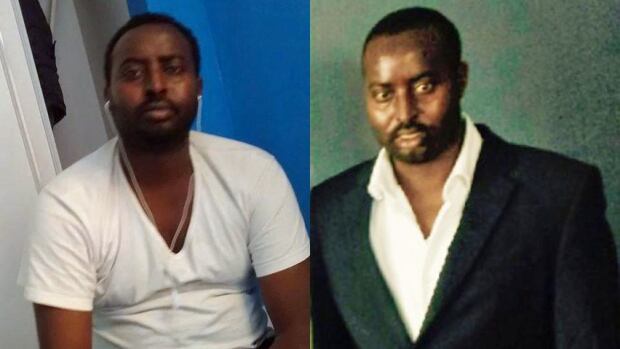
Abdirahman Abdi composite photos Abdirahman Abdi, 37, was a Somali-Canadian with mental health issues, whose family moved to Canada eight years ago. He was pronounced dead Monday afternoon after losing vital signs during a confrontation with police on Sunday morning. (Images supplied by family)
"Sometimes police have a perceived notion of what a person is doing, or what will happen. They don't always have all the facts. They have only seconds to make an assessment. They are operating on the best information they have at the time."
"You could get two or three psychiatrists to sit there, and they would disagree about the diagnosis [mental state of a suspect]. Then you have a young officer with three years' experience [on the job] with only seconds to react [to an ongoing situation]."
"Police have one main objective: compliance. Stop what you're doing, or come with me. People are shocked when police use force. But police have to do what the law compels them to do."
"There is such a range of possible situations. All situations are so complex [police training cannot possibly encompass all potential situations and the best-case reactions]. You can't give them recipes You can't give them formulas. It's really about observation and focusing on the risk of harm, not doing a diagnosis."
"We don't ask police to do a diagnosis on the scene. You don't want police to assess if someone is mentally ill -- are they delusional? Are they schizophrenic? Are they under the influence? You want police to focus on the behaviour."
Rick Parent, 30-year police officer, professor of criminology, Simon Fraser University
Const. Dave Weir, left, and Const. Daniel Montsion, centre, are seen kneeling by Abdirahman Abdi outside his apartment building on Hilda Street. CBC News has learned both officers are the subject of an SIU investigation into Abdi's death.
Const. Dave Weir, left, and Const. Daniel Montsion, centre, are seen kneeling by Abdirahman Abdi outside his apartment building on Hilda Street. CBC News has learned both officers are the subject of an SIU investigation into Abdi's death. (YouTube) 

Dr. Parent points out from his experience, his education and his observations and the study of statistics and crime literature that about a third of the 15 to 30 police shootings that take place in Canada annually, have a mental health component. And this incident that took place several days ago in Ottawa was one of those. Police had been called to a Bridgehead cafe on Wellington Street near the apartment building where many Somali community members live. Staff at the cafe complained that 37-year-old Abdirahman Abdi, who was non-verbal, was harassing a woman.

When police arrived the man fled, despite being told to stop, and a foot chase ensued. A relatively short one, given the short distance between the cafe and the apartment block. Witnesses described the fleeing man being tackled, brought to the ground by several police officers who proceeded, they said, to kick, punch and beat the subdued man with their batons. He was handcuffed, and lay there, bleeding on the sidewalk.

It took ten minutes, said the onlookers, before the injured man was taken in hand by paramedics and given medical attention. Someone had recorded a 27-minute video which clearly shows the man, wrists cuffed behind his back, trousers pulled down, lying face down for close to ten minutes before the arrival of paramedics and CPR was started. A later news report indicated that the two police officers had been instructed by whoever took their 911 call to initiate CPR; when paramedics arrived they took over.

Witnesses also said that police made an effort to seize cellphones held by bystanders, recording the event. Zainab Abdallah, a resident of the building where Abdirahman Abdi's family also lived watched him run toward the apartment door, the officers in close pursuit, shouting at him to stop. Failure to comply saw him tackled and taken to the ground. When the man was taken to hospital by paramedics, his condition was grave. There were rumours that air had been cut off to his brain.

Despite emergency application by medical personnel at the hospital the man did not survive the physical ordeal and trauma he had suffered. His family is devastated and desolate. They had arrived from Somalia as refugees to Canada in 2009. Both parents have steady jobs. Their oldest son was known to have mental incapacity. In most situations Canada will not permit immigrants to bring in family members who suffer chronic illness of any kind.

The cruel irony, of course, is that refugees who flee violence in their home countries to find haven in other countries, sometimes find instead of a peaceful future, a future cut short by a horrible misadventure of some kind, not necessarily of their own making. It might also be noted that young men from the Somali community are over-represented in proportion to their numbers, in incidents of criminal activity and violence.

The police officers involved in this unfortunate incident with its dreadful outcome are under suspension, while the oversight body that is brought in to investigate when incidents such as this occur, the Special Investigations Unit, is set to launch a probe. Whatever the probe comes up with, the details that have so far emerged do not look very complimentary to these members of the Ottawa Police Force.

Labels: , ,

Tuesday, March 29, 2016

Casualties of Conflict

"My wife and I [each] thought that Amal was with the other. Many children were lost that day [post-bombing in Nawa, Syria]."
"My wife starting crying [at news that their child was not with relatives]. She just wanted to go back."
"If a motorcycle passes by our home, she [8-year-old child] comes into the room crying."
"The people are nice here [Cyprus], but it's difficult. Life in Syria is a thousand times better. ... Hopefully the war will stop and we'll be able to go back."
Jaffar Ismail, Syrian refugee, Nicosia, Cyprus
Amal Ismail, 8, left, is seen with her older sister Alaa, right, 18-month-old Aryam, right rear, and mother Maha at the  International Organization for Migration office in Nicosia, Cyprus. Amal was finally reunited with her family after she was mistakenly left behind by her parents when her southern Syrian town of Nawa was bombed two years ago.
AP Photo/Petros Karadjias     Amal Ismail, 8, left, is seen with her older sister Alaa, right, 18-month-old Aryam, right rear, and mother Maha at the International Organization for Migration office in Nicosia, Cyprus. Amal was finally reunited with her family after she was mistakenly left behind by her parents when her southern Syrian town of Nawa was bombed two years ago.
 
A Syrian warplane had just bombed the southern Syrian town of Nawa in the neighbourhood where Jaffar and Maha Ismail lived with their two daughters, Alaa and Amal. Jaffar reacted to the falling bombs by running out in the street with his older daughter Alaa, unable to walk normally as a result of a congenital back problem. It seems that Maha was under the impression that six-year-old Amal was also with her husband, along with Alaa.

When they connected it became clear that little Maha was with neither of them. And somehow, in their panic, they reassured themselves that Maha was in all likelihood with one of their extended family members, so they fled with only Alaa. And the decision was made on the instant to vacate their town with the assumption that their youngest child was safe with Jaffar's parents or perhaps with one of his siblings who had sought haven in another village.

It's difficult to imagine, even in the panic of a bomb attack that parents would make such a decision; to move on without their intact family, leaving behind a vulnerable child of six on the assumption that she would be safe, that some one of their extended family who presumably with children of their own to take care of,  would have taken their younger daughter with them. But this is precisely what this father and mother did.

They crossed the border into Lebanon and in a several months' time-frame decided to go on to Turkey where they arranged passage on a boat to the northern coast of Cyprus. Once landed in Cyprus someone guided them to the south of the island. Eventually they contacted one of Jaffar's brothers back in Syria who informed him that the family was under the impression that Amal was with her parents.

Later calls to cousins led to the discovery that the wife of a relative had found Amal wandering in the street, and had taken her in. Eventually Mr. Ismail made contact with the International Organization for Migration and they put into motion the process of reuniting the little girl with her parents. Jaffar's brother brought Amal to the Syrian-Jordanian border to meet up with an IOM official who provided a Cypriot visa for the child.

In that two-year interim where Amal had been separated from her parents another baby was born to the parents. 
AP Photo/Petros Karadjias
AP Photo/Petros Karadjias    Amal Ismail with her 18-month-old younger sister Aryam.
 
An Arabic-speaking woman escorted Amal on a plane to Cyprus and reunited her with her family. Reuniting the family had been no simple affair. The family like other Syrians seeking haven from the brutal conflict being fought by the Syrian regime against its own people, are given subsidiary protection in Cyprus which means that though entitled to rights afforded asylum seekers they are unable to bring family members to the country to join them.

This is when IOM Cyprus chief officer Natasa Xenophontos Koudouna stepped in to see that an exemption was granted the Ismail family after reviewing the case, enabling the reunion to take place. Father Jaffar mourns the loss of his carpentry shop, his three properties, his spent savings, but he yearns to return to Syria where life was "a thousand times better", than how the family is living in Cyprus, on a 900-euro-a-month state allowance.

Little Amal who still asks her father and mother why they abandoned her however, thinks otherwise: "I don't want to go back home", she states with the conviction of one who knows better.

Labels: , ,

Friday, March 04, 2016

High Hopes in Defiance of Low Realities

"I cannot fight for my country. I will fight for the Olympics."
"I will fight for all refugees in the world, to defend all refugees in the world."
"If my family see me on television, I can give my number, everything [renewed contact]. Because I want one day to talk even with my dad and my brothers."
"If I participated in the Olympics, I think it would change my life."
Yolande Mabika, refugee from Democratic Republic of Congo, Brazil

"I wondered sometimes how to live when so many people were dying."
"We practise judo to forget everything we saw in the war. If you think about it, you lose."
"I represent everyone. I'll get a medal for all refugees."
Congolese athlete Popole Misenga, Brazil

"The point is that they stand for these million [outstanding athletes among the millions of the world's refugees]. They are one of the very popular chances to give face to the anonymity."
Michael Schirp, deputy head media relations and public affairs, German Olympic Sports Confederation

"Many times in my head I thought it would not happen because of politics, visa problems, lack of money and I could travel to ranking events."
"I do it for my dad and my family."
Raheleh Asemani, Iranian refugee, Belgium
You’re an Olympic-caliber athlete who has fled your home country. As the 2016 Olympic Games approach, you know you could qualify, but you’re not sure what team to call your own. You’re left in limbo, but you’re not alone. Countless migrants have sought refuge from situations of political unrest within the last year, 43 of whom have been identified as Olympic hopefuls. Fortunately, the International Olympic Committee (IOC) realized this, and officially created a team of Refugee Olympic Athletes (ROA) to cater to the needs of these talented men and women 

They have much in common, these outstanding athletes, in their dedication to the competitive sport they excel at, in their wish to compete on the world stage among the most talented, and to demonstrate that despite the disadvantage of immense proportions that fate has hobbled them with, their spirit and their capacity to endure, to use their extraordinary competence to advantage despite their burden motivates them to aspire toward world championship status.

Through the auspices of the International Olympic Committee's recognized obligation to aid these national orphans of huge athletic talent to realize their dreams despite having been exiled by conflict and fear, these recognized sport figures are being given the support and opportunity to participate on a team comprised of talented athletic refugees eager to compete at the Summer Olympics in Brazil.

Among them will be a young Syrian champion swimmer who, with her sister, managed to escape death in the Mediterranean on their way to reach Greek Lesbos. The inflatable dinghy Ysra and Sarah Mardini were on with other refugees was typically overloaded by the human smugglers they had paid to convey them to Europe. Mid-trip the overloaded vessel took on water, slipping into the Mediterranean. The Mardini sisters survived because they were able to swim for three hours to reach Lesbos.

In this photo taken Monday, Nov. 9, 2015, Ysra Mardini, left, and her sister Sarah, right, from Syria pose for a photo during a training session in Berlin, Germany. Two months ago the sisters, who were once among Syria's brightest swimming stars, were swimming for their lives, after jumping off an inflatable boat that began taking on water carrying refugees to Greece. (AP Photo/Michael Sohn) Ysra Mardini, left, and her sister Sarah, right (Michael Sohn/AP)

The IOC has supported the formation of a refugee team which will represent the IOC, not their countries of origin where their lives had been blighted by violent oppression bred of tribal, sectarian and clan hatreds, leading to homelessness and often death. The sisters now live in Germany. Ysra is able to practise her swimming style at a pool that was built for the 1930 Olympics, in the hopes of competing in Brazil.

Any medals any of the 43 selected refugee athletes may win, will be presented with the Olympic flag behind them, and the Olympic anthem resounding. Yolande Mabika and Popole Misenga describe how, in their war-torn country they would be locked up when they lost a competition and be deprived of food. The violence disrupting normalcy in the DRC, and the loss of their relatives to that violence persuaded them to voluntarily seek refuge elsewhere.

The estimated twenty million refugees currently on the world stage as testament to the sad dysfunction of far too many countries will be represented by this new, state-unaffiliated group of talented refugees under the banner of Team ROA [Refugee Olympic Athletes]. Some of these young people aspiring to international athletic fame hope this may aid them in once again making contact with their families back in the countries they had come from.

William Kopati, 22, was a high-jumper and long-jumper in Bangui before he was forced to flee in late March 2013, when militants attacked the house where he was living. Since 2006, he has competed several times in the national championships for high jump, long jump and 400-meter run – winning the gold medal for high-jump in 2009. This is the second time he has fled to the DRC, having been a refugee from 2001 to 2003. His dream is to continue his career in athletics, despite the challenges.  © UNHCR / Brian Sokol

Labels: , , ,

 
()() Follow @rheytah Tweet