Ruminations

Blog dedicated primarily to randomly selected news items; comments reflecting personal perceptions

Wednesday, November 12, 2025

Above All: For the Sake of the 'Common Good' Rejected

"I have determined that systemic and background factors have affected the degree of responsibility of this offender. Mr. Garlow is the personification of intergenerational trauma. I cannot imagine more sympathetic circumstances or mitigating factors that cry out for some compassion. Punishing him with a further period of incarceration for the sake of the common good would be unjust."
"This gun is obviously not intended for hunting anything other than human beings. It is designed to maim and/or kill in a spray of bullets. Simply brandishing it would cause sheer terror." 
"The Crown's cogent submissions accentuated the potential for death and destruction posed by the weapon that was in Mr. Garlow's possession. She urged the court to find that this gun was possessed for the purpose of committing crimes and was in contravention of an order intended to protect the public."
"There is an undeniable link between his criminal record and his experiences as an Indigenous person. In addition, the conditions of his detention at Central East Correctional Centre have been horrendous. He expressed understandable upset during previous appearances about the suffering he has endured while on remand." 
Justice Brenda Green, Ontario Court of Justice 
https://smartcdn.gprod.postmedia.digital/torontosun/wp-content/uploads/2025/10/Bans-skybox-scaled-e1689539073195-2-e1705591162244.jpg?quality=90&strip=all&w=564&h=423&type=webp&sig=mplENsFhH910b9xjwlVSKw
Justice Brenda Green cited "colonialism," "cultural genocide" in sentencing Jesse Garlow to time served.
 
"The Crown emphasized that Mr. Garlow was carrying a loaded firearm in a vehicle in public in suspicious circumstances along with a flame thrower and crow bars. This firearm was designed for one purpose, as a killing machine. Its possession is antithetical to the norms and values of Canadians."
"A strong message must be sent to deter like-minded individuals from carrying a loaded firearm by meeting out a significant punishment." 
Crown Prosecutor 
 
"Mr. Garlow's personal history is heartbreaking ... and that attenuates his moral responsibility for these crimes."
"[Garlow's] expressed remorse and his potential for rehabilitation especially with the support of resources for Indigenous people [should be considered in his sentencing]." 
Lawyer for the Defense
https://smartcdn.gprod.postmedia.digital/nationalpost/wp-content/uploads/2025/11/09y4475.ts_284331626.jpg?quality=90&strip=all&w=564&h=423&type=webp&sig=14S9vyQIR3z_epN3aTk1AQ
  
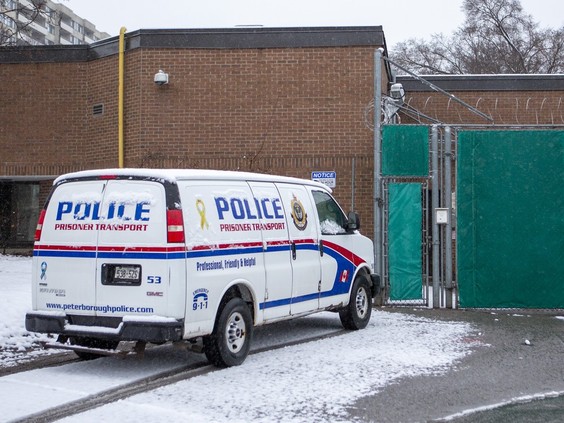
Aged 39 on his arrest, now 40, Jesse Garlow, a previously-convicted drug trafficker, under a firearms prohibition was placed in custody in June of 2024. The car he was driving was weaving in traffic, causing police to pull him over. The Mohawk man was caught driving with a crack pipe in his lap, a 'killing machine' of a rifle in his vehicle's back seat and a flame thrower in the trunk. He had spent over 500 days in pretrial custody in presumably less than ideal conditions. His lawyer recommended that his punishment go no further than time already served. Whereas the crown recommended 3-1/2 years' imprisonment.
 
Found to have been in possession of a loaded prohibited, modified firearm in contravention of court orders prohibiting him from possession weapons, Garlow pleaded guilty, as charged. He was found, in a search at the time of his arrest with nearly $5,000 in cash in his possession, as well as a small scale, although he swore the money was not from trafficking but rather the winning proceeds from gambling. Garlow "denied that he was trafficking in narcotics. He also vehemently denied that he intended to use the gun to commit a crime"
 
He had been interviewed for a Gladue report that would entitle him as an Indigenous offender, to background considerations that would have the effect of lightening sentences meted out to Aboriginals in the commission of crimes. Gladue principles were set in stone by a decision of the Supreme Court of Canada in a reflection that sentencing judges must take into consideration unique circumstances of Indigenous offenders; bearing in mind systemic social biases and the over-representation in Canada's prisons of Indigenous people. 
"[The] two positive role models in Jesse's life, his mother and grandmother, died when he was a boy. Both his grandfathers were murdered. His father suffered  cultural alienation in the residential school system. Jesse was separated from a supportive and welcoming community as a direct result. His father was often absent, emotionally unavailable, abusive and encouraged poor choices."
"His sister was killed by police while she was suffering a mental health crisis. His nephew died of an overdose. His father is missing."
"[I see a] clear, causal nexus between his father's brutalization in residential schools and the trail of damage and devastation that slammed like a wrecking ball through the next generation. I cannot imagine a case with a more shocking example of the detrimental impact of colonialism, intergenerational trauma and the attempted cultural genocide by seizing children from their communities only to be placed in horribly abusive environments."
"[The mitigation of Garlow's sentence] is not a 'break' for him. A sentence reduction is not a  reflection of a judge being 'soft on crime'. It is our obligation as the gatekeepers of justice to address, redress and hopefully ameliorate institutionalized abuse."
Justice Brenda Green 
And so, possession of a 'killing machine', a flame thrower, and the tools and profits of an illicit trade in recreational drugs bears reduced consequences for those whose aboriginal status entitles them to soft-peddling crime in the greater interests of society forced to do penance for historical wrongs whose consequences have been blown out of proportion by the hairshirt of a mass guilt complex. Yet another denizen of the dark art of crime commissioning is forgiven his threatening, predatory anti-social proclivities to crime in an exercise of 'social justice'. 
 
Ergo: Suspended sentence, credit for time served, three years' probation. 

39-year-old Jesse Garlow of Douro-Dummer Twp, ON, was arrested and charged with:

·      Possession of a loaded prohibited or restricted firearm

·      Possession of Firearm or Ammunition contrary to Prohibition Order

·      Transport firearm, weapon, prohibited device or ammunition in a careless manner

·      Careless storage of a Firearm, Weapon, Prohibited device or ammunition

·      Possession of Break in Instruments

·      Possession of proceeds of property obtained by crime under $5,000                             OPP Chargesheet June 2024

https://www.kawartha411.ca/wp-content/uploads/2022/03/IMG_2202-3-696x526.jpg
Courtesy Ontario Provincial Police


Labels: , , , , ,

Thursday, April 10, 2025

Behavioural Cultural Norms Incompatible with Western Society

"She wanted him to drive her home from a party she'd attended. Rather than take her home, the offender drove her to an empty parking lot."
"He told her they would have fun. He parked the car and got into the back seat. He moved closer to the victim and forcibly kissed her. He put his hand under her dress and touched her vaginal area over her underwear."
"After he tried again to kiss her and she did not respond, he moved away from her."
"She asked if he would still drive her home and he said no. She got out of the car, and he left her in the parking lot."
Justice Scott Pratt, Ontario courthouse
https://img-s-msn-com.akamaized.net/tenant/amp/entityid/AA1CykCS.img?w=768&h=576&m=6
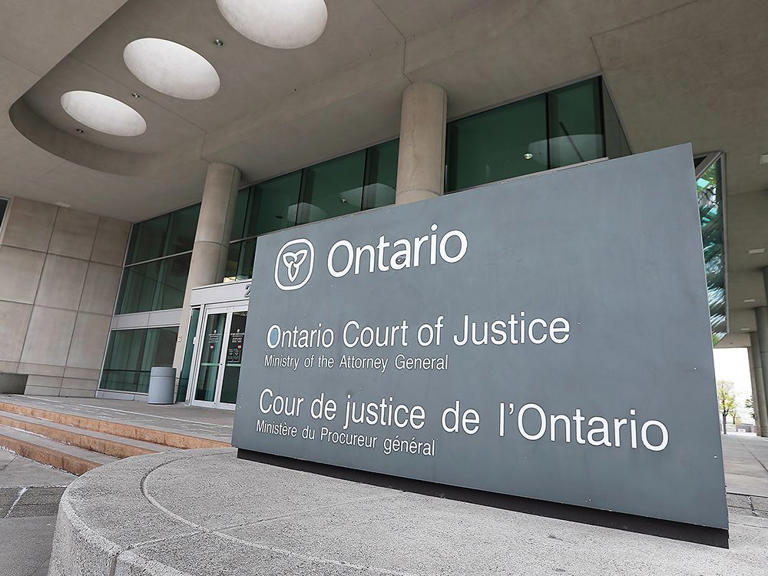
The Ontario Court of Justice in Windsor.

In an attempt to avoid being deemed 'inadmissible' to Canada for 'serious criminality' by the Immigration and Refugee Board, Uber driver Sevan Halabi of Windsor, Ontario, a permanent resident of Canada, hoped to receive a lighter sentence to avoid deportation. Permanent residents of Canada, if sentenced to over six months in prison, according to the Immigration and Refugee Protection Act, can be regarded as inadmissible to Canada. What Mr. Halabi, through his lawyer, sought to persuade the presiding judge was to sentence him to six months less a day plus probation. 

"It would require me to cut the sentence nearly in half, solely to assist him in avoiding future penalties. I cannot do that", responded Justice Pratt. A young woman had engaged Mr. Halabi, an Iraqi Uber driver, to drive her home from an event she had attended on October 9, 2022. Rather than take his passenger on the trip she expected, the Uber driver subjected her to a terrifying ordeal of sexual harassment, the threat of rape and violence by implication, and finally abandonment.
 
The woman's attacker was a married man with two sons, age 14 and 10. Presenting himself as a family man, Sevan Halabi's attempt at sympathy was linked to appealing for a sentence of six months less a day to avert any potential immigration consequences. The Crown had argued that Halabi merited a year in jail, and then three years of probation.
 
Born in Iraq, Halabi emigrated from his home country with his family in 2018 to Canada. Halabi is a permanent resident of Canada as a result of the criminal charge impeding an application for citizenship. His wife and children did achieve Canadian citizenship. As for the charges brought against him, Mr. Halabi maintained his innocence during an interview with the producer of a pre-sentence report.
 
Justice Pratt was informed "he regrets what happened, has learned a lesson, and that this will not happen again", the decision in the pre-sentence report conveyed too the Judge. In response, Justice Pratt said: "The offence has hindered her professional life as a teacher and her personal life as well. She is fearful and angry. She didn't know if she would be raped or killed [in Halabi's car that night], and that fear continues to impact her life", responded the Judge.
 
To further appeal for sympathy from the court, Mr. Halabi who had not been held in custody prior to his appearance at the court before the Judge, lived as he would normally with his family and decided to bring his children along for emotional impact. For the sentencing submissions he arranged for his children to be present in court. "On that point, both children were visibly upset and crying during the proceeding", observed Justice Pratt. "Respectfully, I question why they were here in the first place. It was not a case where their father was in custody and so this would have been a rare opportunity to see him in person."
 
"[Halabi] has been out of custody throughout this case and only appeared virtually from Iraq. I cannot find they were brought into the courtroom to engender sympathy from the court, but given the offender's focus on how my sentence could affect his family, that is certainly an inference available to be drawn", the Judge concluded. 
"It is troubling that sexual offences committed by professional drivers are sufficiently common that they have created their own body of case law. But that is what has happened."
"In my view ... a sentence of six months less a day for this conduct would be unfit. It would prioritize the offender's personal circumstances over the need to denounce and deter his conduct and would not be in line with relevant case law."
"It would be an inappropriate and artificial sentence imposed only to avoid legitimate consequences created by Parliament."
Justice Scott Pratt, Ontario Superior Court
https://smartcdn.gprod.postmedia.digital/nationalpost/wp-content/uploads/2025/04/Mohamed-Al-Ballouz.jpg?quality=90&strip=all&w=564&h=423&type=webp&sig=lxE6k6nGxJVTRv0suzp-uA
Mohamed Al Ballouz, who now goes by the name Levana, is serving a life sentence with no possibility of parole for 25 years for murdering a woman and two children. Photo by Court exhibit
 
This sexual assault case is but one of many where men from cultures where the place of women is subservient to that of men, religiously inspired and historically adapted into a culture of male privilege and female suffering, gravitate to another culture and system of law. Correctional Service of Canada recently completed an assessment of a convicted killer that decided against Mohamed Al Ballouz of Brossard, Quebec being admitted to a women's prison.
 
This man, convicted of murdering his wife Synthia Bussieres and their two sons -- five-year-old Eliam and two-year-old Zac in 2022, was sentenced to life in prison in December, with no possibility of parole for 25 years. While in custody, the man, also convicted of setting fire to the family condo, transitioned to a woman. With his new name of Levana, he asked that he be preferentially incarcerated at the Joliette Institution for Women, northeast of Montreal. Thankfully for the women at Joliette, the decision was that Al Ballouz remain in a men's prison. 

https://i.cbc.ca/1.7416410.1734718968!/fileImage/httpImage/image.png_gen/derivatives/original_1180/synthia-bussieres.png?im=Resize%3D1180
Synthia Bussières with her sons Éliam Al Ballouz, left, and Zac Al Ballouz. (Obituary)

Labels: , , , , ,

Tuesday, July 19, 2022

Exposure to Irreparable Harm

"In light of the evidence reviewed above, I have no difficulty finding that Mr. Chol's removal to South Sudan would expose him to irreparable harm." 
"[There is a] public interest in the timely removal of foreign nationals who have lost their right to remain in Canada, [but] that interest must be balanced by the need to ensure that foreign nationals not be removed to countries where they are at risk of inhumane treatment or death."
"The public interest is not served by short-circuiting the safeguards aimed at ensuring everyone's right to life, liberty and security of the person."
"The removal officer unreasonably failed to take into consideration evidence of a risk of death or inhumane treatment."
Justice Sebastien Grammand, Federal Court of Canada
Ottawa police say Vuyo Kashe was killed in a shooting on Clarence Street Friday night. (Colton Praill/CTV News Ottawa)
 
Yohanna David Chol, 36, born in South Sudan, arrived as a refugee to Canada in 2003. He amassed a lengthy criminal record of violence and criminality throughout his period of living in Canada. Records reflect his conviction of many offences, among them assault, drug trafficking and obstructing a peace officer. Now, he has also been charged with murder. This is a man who suffers from mental health problems, diagnosed with schizophrenia, anxiety and depression. Eleven medications have been prescribed for him.

Because of his criminal record, Mr. Chol was considered unsuitable material for Canadian citizenship. In situations such as his it is fairly routine that he be escorted from Canada, and returned to the country of his birth, and just such proceedings were initiated. Yet individuals in the position that Mr. Chol finds himself have resort to a number of appeals at various levels in the Canadian justice system.

He lost his status as a permanent resident, the cause directly related to his criminal convictions, which made him inadmissible to Canada, leading the Ministry of Citizenship and Immigration to order his removal to South Sudan once it was firmly established that he represented a danger to the Canadian public. In 2017 Chol argued that mental health care n South Sudan was non-existent, leaving him at risk of harm should he be forced to return.

Finally, in November 2021 he was notified that he was scheduled to be sent to South Sudan on December 13, 2021. Since his request for reconsideration was turned down, he took his case to Federal Court. Which led to his being granted a stay, permission to remain in Canada and for his case to be further analyzed. 

Evidence presented to Justice Grammond included reports from the International Medical Corps and Amnesty International detailing the miserable state of mental health care in South Sudan, a poor country that had broken away from Sudan to become an independent country. In a population of over ten million people, the reports pointed out, three psychiatrists were available to serve the entire population of individuals suffering from mental health conditions.

Authorities in South Sudan addressed the situation by detaining people with mental health conditions and keeping them incarcerated. The Juba Central Prison is an institution that is used to keep these potential threats to the larger society out of circulation. It is where the incarcerated have access to insufficient food and where treatable illnesses like malaria and diarrhea, left untreated, can lead to death.

Now, Chol has been charged with homicide and second degree murder for an episode on the weekend where Vuyo Kashe, 36, was shot to death on a residential street in an Ottawa neighbourhood. Chol's next court appearance is to take place the first week of August, and he remains in police custody. The man he shot to death was addicted to drugs, and to raise the funds to obtain his street drugs he was found guilty of robberies in Western Canada, armed with a knife. After which he served a prison sentence.

Two men representing the underbelly of society, where criminal activity is routine and lives can be readily lost when two such lost souls skirmish and one dies. The decision to empathize with the plight of a violent man whose mental equilibrium is flawed and who represents an obvious danger to anyone caught in the crossfire of his blighted life is obviously seen by the judge who sat on the appeal and found for the complainant as a humanitarian response.
 
He so very obviously failed to take into account the paramount need of the public to be spared the possibility of being confronted by someone like this man who uses deadly force in confrontations.

In protecting the future prospects of Mr. Chol, Justice Grammond gave  him the benefit of the doubt and decided he was worthy of protection under the law. On the other hand, that decision effectively meant that other people who are citizens or permanent residents of the country are not protected under the law from random acts of violence executed by a man who reacts violently and is not in full possession of his emotions due to mental illness.

A failing grade for Justice Grammond, and a boot out of the country for Mr. Chol appears a suitable remedy for a miscarriage of justice. Life, liberty and security of the person as interpreted by Justice Grammond, referred solely to the accused in the murder. It failed to include the victim, much less other members of the public all of them vulnerable to the injustice of saving a violent criminal from the possibility of harsh treatment, but not ordinary people who have no wish but to go about their business unmolested.

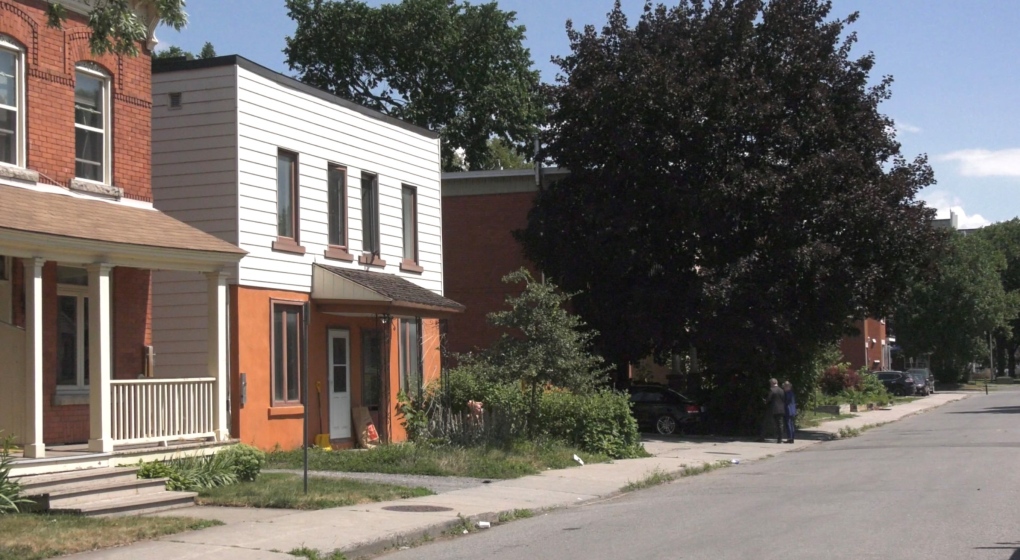
Police vehicles are stationed near Clarence Street in Ottawa's Lowertown neighbourhood Friday night. On Sunday, a 36-year-old was taken into custody and charged with second-degree murder in relation to the shooting death of Vuyo Kashe. (S.B./Radio-Canada)

Labels: , , , ,

 
()() Follow @rheytah Tweet