Ruminations

Blog dedicated primarily to randomly selected news items; comments reflecting personal perceptions

Tuesday, April 12, 2022

COVID-Control-Frenzied Chinese Authorities

"Many of us are very anxious. I spoke to friends, and many of them can't sleep at night."
"This concerns our very survival."
Nicole Tsai, Marketing manager, Shanghai 

"When I returned to China [after living in the U.S. for several years], I thought Shanghai was a relatively free city."
"But when I read the news online about children needing to be separated from their parents for quarantine, I find it very hard to understand."
"I'm worried to test positive [for COVID], not so much about the virus itself but about all the trouble that it will bring."
Ngo (surname withheld), IT specialist, mother of 3-year-old
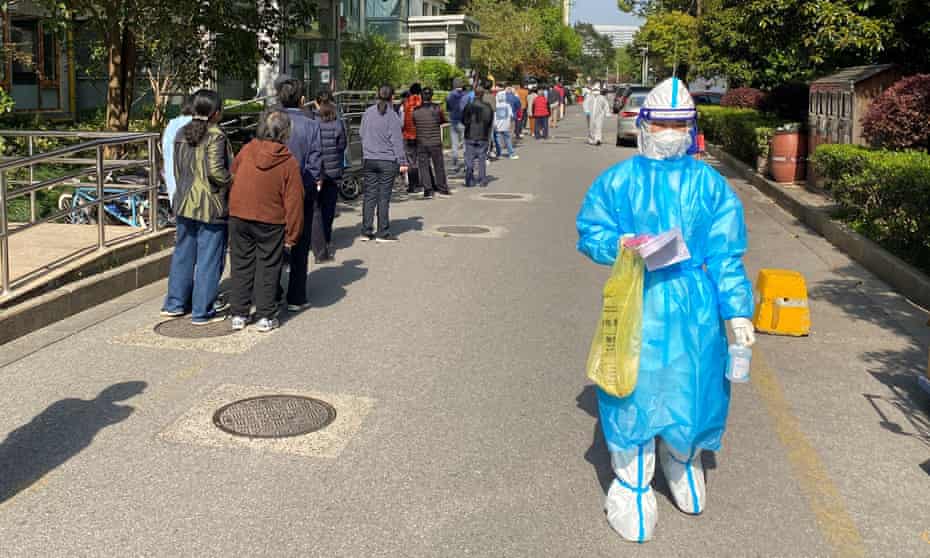
A medical worker in a protective suit walks past people queuing to take a nucleic acid test in a residential area
A medical worker in a protective suit walks past people queuing to take a nucleic acid test in a residential area. Photograph: David Stanway/Reuters
 
Ngo has reason to be fearful, and to want to avoid contracting COVID, living in Shanghai, a city of 25 million people, shut down for weeks in a concerted effort to 'control' the virus. Authorities in Shanghai have taken to separating families from their children if they've been confirmed with COVID. The plight of dog-loving dog owners is much the same.
 
When dog owners are sent into quarantine, testing positive for COVID, their dogs are 'culled'. Last week the city burst into outrage when a video of a corgi bludgeoned to death took place in the city street. Similar starkly unforgiving incidents take place all across China. This at a time when dog owners are unable to walk their dogs for weeks on end, the fear is should they contract COVID it would be a death knell for a beloved pet.
 
The Shanghai government, when it first instituted a citywide lockdown made it clear it would last for four days. No one was permitted to question that time-frame; anyone who spread rumours that this would be a longer lockdown was threatened with punishment. People went out to stock up for food to last them a week. That four days passed and so did a week and another week. It became clear the lockdown would remain, and people ran out of food. 

Apartment dwellers were shown on video screaming out their windows and from balconies in frustration and fear and hunger when a video went into circulation to emphasize the plight of the population. "I'm going to die because of the lockdown, not the infection", one resident of the city posted on China's version of Twitter, Weibo. While the government organized food deliveries through community volunteers, hundreds posted online of their days without food.

Videos appeared of the city residents fighting over bags of produce at food distribution areas set up in residential compounds. Nicole Tsai remarked on spending over four hours every day on delivery apps in the hope of finding a window where food might be available to order for delivery. Entering the third week of lockdown there was an announcement that government would ease restrictions in some areas.
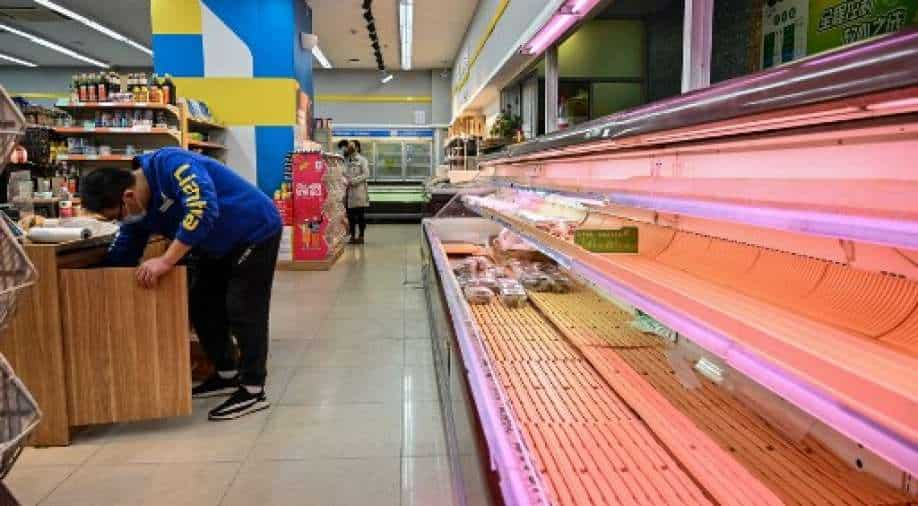
Food scarcity in China   Photograph AFP
 
The new plan by Shanghai officials would be a grouping of residential units into three risk categories to enable "appropriate activity" in neighbourhoods with no positive cases through a two-week stretch. A Shanghai city official explained the city was to be divided into 7,624 areas to remain sealed off, and 2,460 would become subjected to "controls" following a week of no new infections. After two weeks without a positive case, 7,565 "prevention areas" would be opened.

In the "prevention areas" people would be permitted to move throughout their neighbourhoods, practising social distancing. Should new infections arise, the areas would be sealed again. "The zones have been divided into government officials' zone, rich people's zone and poor people's zone" clarified one Weibo user.

A record 25,173 cases were reported Monday bringing the total number to over 200,000 since March 1st. The current outbreak constitutes the largest COVID crisis to arise since the first emergence of the virus in the city of Wuhan where the virus originated, in December of 2019. The most curious statistics is that rise in case numbers aside, there have been no reported deaths, and one serious illness only has surfaced. 
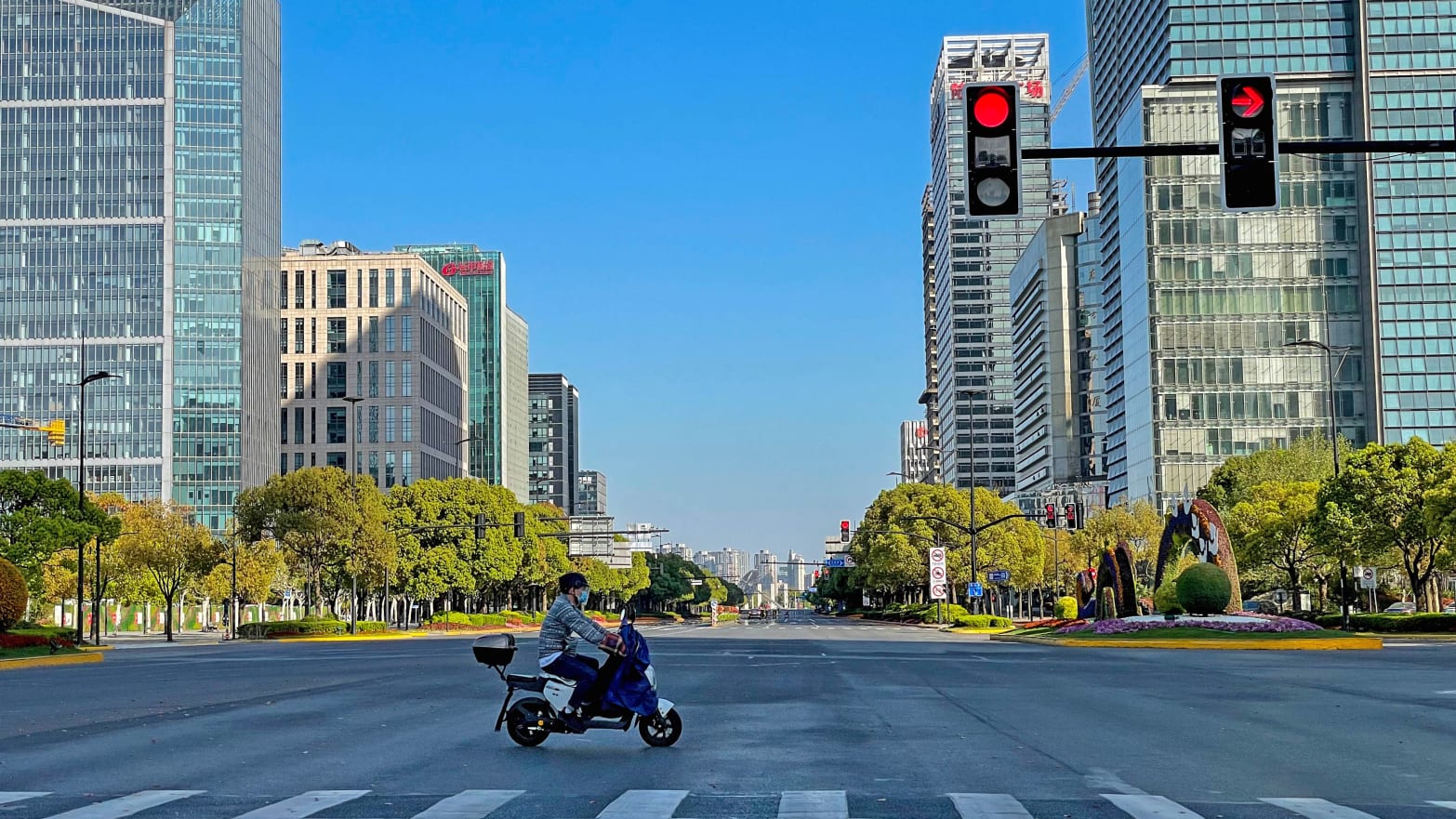
VCG
 
 
The solution, however is more permanent in that if a pet owner tests positive their pet is in line for elimination. Last week the city viewed with outrage a video of a corgi bludgeoned to death on t he streets after the dog's owners had been sent into quarantine at a government-operated centre. Across China, this is the fate of pets whose owners are diagnosed with COVID.

Labels: , , , , ,

Wednesday, May 06, 2020

COVID Vulnerabilities

"[Grocery store anxiety] is common across a lot of different people. Realizing that the anxiety is normal, to some degree, can help lower the intensity of it. You can remind yourself 'This is an unprecedented situation. It is normal to feel anxious in these situations. I'm not losing my mind. I'm going to be able to cope.' Normalizing that anxiety is an important thing."
"It's really hard to do other things while you're at the grocery store, but breathing [deep breathing to counteract intense feelings of fear] is one that can calm you down fairly quickly."
"If you feel more comfortable having a mask on, having gloves on, then do that. Equip yourself with what you need. And if you're in there and you feel dizzy, or you feel that you can't continue on, then just pay for  what you have and get out. And figure out another plan for next time."
"If you go to the grocery store and you're sweating, you can't sleep, you can't eat, and you're freezing upon walking in, then you know that it's impacting you. So look at how else you can do that. Can you do it online? Can you get someone else to do it? It's so important for people to know what their own realities are."
"It's all about knowing yourself, and really knowing what your limits are. And that's hard for people. We're in a different time, so it takes a little bit of different thinking and different creativity. Reach out. People always worry about the impact it's going to have on other people. But just by reaching out you can save yourself a lot of hurt and increased anxiety."
Suze Berkhout, assistant professor, psychiatry, University of Toronto
Grocery shopping
“If you feel more comfortable having a mask on, having gloves on, then do that. Equip yourself with what you need,” says Mercer. Getty Images

News of supply chain interruptions in the vital, integrated plan of moving food products and produce to market, and news of meat processing facilities having to shut down because of the number of their employees contracting COVID-19, of the agricultural industry facing problems being able to employ enough field workers to ensure they can seed crops and then harvest them, news of shortages of certain products, of export countries shutting their products from export to ensure adequate supplies are available to their own populations, all prey on people's minds during this strange and frightening time of SARS-CoV-2.

It can be difficult for most people to remain relaxed over the prospect of rationing food, of austerity measures undertaken in the face of food shortages. What could conceivably be more primary to human existence than the availability of food? Most people have experienced what it feels like to walk into a supermarket and see rows of empty shelves and it was not a pleasant sight, nor was that sinking feeling felt when viewing those empty shelves in knowing that you wouldn't be bringing home essential food that shopping expedition.

Concerns grow and become focal points for the mind to fasten itself, magnifying a problem that may or may not exist. Even while food producers and governments speaking on their behalf try to assure a worried public that there will be no food shortage, once the supply management and transportation sectors catch up with public hoarding responsible for those empty shelves. For some people the concerns are manageable. For others, even well-balanced people, the concerns only accelerate the more they read in the news media of one issue or another cropping up to complicate the new reality of a world settling in and trying to find balance in the face of a global pandemic.

Then there are those in the general population already suffering various stages of mental illness being exacerbated by worry over their ability to secure enough food to sustain life. A new survey conducted by Dalhousie University and Angus Reid, saw 64 percent of respondents saying they are buying more groceries than usual to avoid shopping as frequently as they have been accustomed to. Changing shopping habits from weekly to bi-weekly. Gauging how much food will be needed to take one over a two week period without running perilously short, in the interests of less exposure to the coronavirus.

For people already suffering the angst of insecurity, loneliness and depression, having to self-isolate leads to deeper feelings of loneliness that morph into depression. Depression raises existential fears. And the food shopping experience looms large as the battle to secure enough food while avoiding the potential of COVID infection, creating a burden of desperate fear. Fear of entering a store only to see empty shelves, crowded aisles where it's difficult to avoid contact, amid the caution required to avoid as much as possible, touching surfaces that may host the virus.

Hearts begin to race, and jaws clench. "If you're a senior or someone with an immune-compromised system, going to the grocery store is kind of like going into a war zone", observed Sue Mercer, a researcher and expert for the Mental Health Commission of Canada. People old enough or originally from other countries who immigrated to Canada with the background experience of food insecurity, or those living with conditions of disordered eating, react instinctively on the sight of empty grocery shelves. Those with limited incomes see stress from yet another perspective.

According to Suze Berkhout, a clinician-investigator at the University Health Network in Toronto, managing anxiety is paramount to managing life itself. To recognize anxiety when it occurs is critical; thoughts of fear, frustration, irritability, anger, overgeneralizing, imagining worst-case scenarios, emotional reasoning along with physical warnings such as increased heart rate, shallow and fast breathing, chest tension and weak muscles while feeling disconnected to your surroundings, are all common symptoms.

Grocery shopping
“You might be a bit nervous before you go to the grocery store,” Getty Images

That kind of reactivity needs to be dealt with to alleviate anxiety. When feelings of panic, stress or anxiety occur there are grounding techniques that can be used to halt the spiral of concerning thoughts and sensations. "They help you connect back into, 'OK. What is actually going on around me here, and how do I need to respond to it?" Inhaling over a four count, holding for a four count, exhaling and holding at the same pace, and repeating, a simple but effective grounding technique.

Imagine your brow furrowed and relax it, unclench your jaw or shoulders. "Then you can try to work with things like those worried thoughts to say, 'Is this realistic? Does this make sense?' Working with the thoughts comes once you've got more of that physical and emotional side of things a little bit more calm."
Grocery shopping
Grounding techniques “help you connect back into, ‘OK. What is actually going on around me here, and how do I need to respond to it?’” says Berkhout. Getty Images

Labels: , , ,

 
()() Follow @rheytah Tweet