Ruminations

Blog dedicated primarily to randomly selected news items; comments reflecting personal perceptions

Monday, January 30, 2023

Dealing With Stress and Anxiety

The determinants of our mental well-being go beyond our genes and brain chemistry to include inflammation, gut health, sleep, nutrition, hormones, chronic limbic hyperarousal due to  unresolved trauma, and even having our basic needs for community, nature, meaning and purpose going unmet. If we do have a chemical imbalance, it is probably a downstream effect of these other states of imbalance."
"In other words, anxiety is not all in your head; it's largely based in the body, and that's where it should first be addressed."
"While our cultural attitude toward mental health is to regard it as a genetic destiny and a matter of troubled brain chemistry, much of our anxiety is rooted in the body and is mostly avoidable. Eliminating unnecessary stress responses can make us more resilient in the face of unavoidable stressors."
Dr. Ellen Vora, holistic and board-certified psychiatrist, acupuncturist, and yoga teacher
What’s the Difference Between Stress and Anxiety?
 
An inventory of avoidable anxiety could include:
  • Hunger
  • Sleep deprivation
  • Being over-caffeinated
  • A Hangover (what is now spoken of as "hang-xiety")
  • Gut issues
  • Inflammation
  • Long stretches of being sedentary
  • Chemical fallout after consuming highly processed food
  • Late luteal phase (the days before the bleeding phase of the menstrual cycle)
  • Inter-dose withdrawal (the pharmacologic low-point when  you're due for your next dose of a psychiatric medication)
During the first year that the coronavirus pandemic struck the globe, according to the World Health Organization, global cases of anxiety and depression rose by 25 percent. Among mental health professionals the consensus appears to be that mental health struggles relate to chemical imbalance in our DNA implying that anxiety is chemical, determined by serotonin levels, leading to the belief that the issue reflects genetic destiny.  Applicable therapies and medications are prescribed accordingly.

There may, however be other available options, according to Dr. Ellen Vora. Therapy sessions are becoming more difficult to accommodate given the stressors and shortfalls of late on the health care system, and medications sometimes don't work for everyone. On the other  hand, much of what has an impact on our moods and body is another issue playing a critical role in mental  health. Dr. Vora speaks of two types of anxiety: true anxiety (or purposeful anxiety), and avoidable anxiety.

True anxiety symptoms, she points out, tell the individual that something is awry that should be paid attention to. Some introspection is required to analyze what certain symptoms may indicate as links to anxiety symptoms. Consultation with a health professional is a start. Avoidable anxiety, on the other hand, may represent the body reacting to a stress response. We live in a distracting world that presents us with issues that can be disturbing, both personally and in sympathy with occurrences elsewhere.

What occupies our minds and our thoughts can often bring on stress from information overload or constant exposure to events that are clearly upsetting on a macro level, but which we can do nothing about, ourselves. A solution can be found in focusing on the stress with a mind to addressing the locus of anxiety to  help lift the stress level of the body to eliminate unnecessary stress responses.

Identifying when anxiety has a physical basis can help in the recognition that life feels\somewhat overwhelmed than it is in actuality and that recognition alone can help lift the level of stress. Making it a practise to study how we react to external triggers arousing anxiety levels can help take steps to eliminate avoidable anxiety, as a heightened awareness helps to take charge of moods that stress, making us more resilient as we balance mood and anxiety.
"Experiencing occasional anxiety is a normal part of life. However, people with anxiety disorders frequently have intense, excessive and persistent worry and fear about everyday situations. Often, anxiety disorders involve repeated episodes of sudden feelings of intense anxiety and fear or terror that reach a peak within minutes (panic attacks)."
"These feelings of anxiety and panic interfere with daily activities, are difficult to control, are out of proportion to the actual danger and can last a long time. You may avoid places or situations to prevent these feelings."
"Examples of anxiety disorders include generalized anxiety disorder, social anxiety disorder (social phobia), specific phobias and separation anxiety disorder. You can have more than one anxiety disorder. Sometimes anxiety results from a medical condition that needs treatment."
"Whatever form of anxiety you have, treatment can help."
Mayo Clinic
img-banner - Betterhelp_mnt_fq_anxiety_imgbanner_39965

Labels: , , , , , ,

Tuesday, September 22, 2020

The Psychological Stress of Coping With COVID Avoidance

"Even in the 'average Joe', if you want to call them that, the pandemic has taken a really serious toll. Even for those without pre-existing mental disorders, half of them had major signs of depression and a third had signs of anxiety disorder. And those with pre-existing mental disorders, they're getting worse. And significantly worse. Anxiety is worse, depression is worse, suicidal ideations."
"It's a pretty concerning situation. What our results actually show is that regardless of where they started with a specific diagnosis, everyone seems to be getting worse in terms of their depression and anxiety. It affects nearly everyone."
Rebecca Robillard, director, clinical sleep research, The Royal Ottawa Mental Health Centre

"Treatment centres have had their capacity dramatically cut because of the need for physical distancing. Outpatient clinics have been reduced, capacity for withdrawal [treatment] has been reduced, and now even asking for help has become more problematic because there's a belief that there simply isn't any."
"I've had quite a few inquiries from people asking, 'Where do I go now?' And as much as the professional community has tried to address that, the message often doesn't get to the people who need the help."
Gord Garner, executive director, Community Addictions Peer Support Association

"This has really heightened my anxiety. Hunter [her son] is close to three years of sobriety, but I'm really watching to see that he's coping and managing, and that none of the red flags are going off."
"Luckily, most doctors have pivoted and gone virtual, so he's able to access his therapist and know that he's doing OK. But we see it at the centre; the anxiety is going through the roof."
Cindy Manor, senior director of philanthropy, Dave Smith Youth Treatment Centre
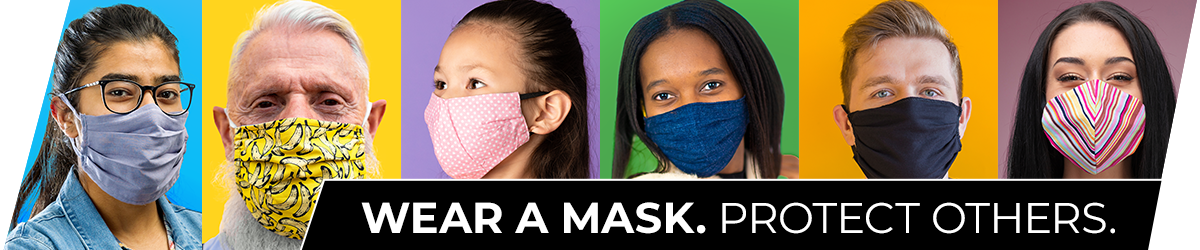
Wear a mask. Protect Others.
  
Matthew Young, senior research and policy analyst, Canadian Centre on Substance Use and Addiction
Since the SARS-CoV-2 virus roared onto the world stage and was soon declared a global pandemic public messages of self-isolation, mask-wearing, personal hygiene, no-touch surfaces and hand-washing have all conspired to create a fearful and troubled public, one unaccustomed to socially isolating and for whom the go-it-alone self-protection against a sometimes-deadly disease has extracted a heavy price in confidence and mood. The result has been a predictable rise in depression and anxiety.

Those conditions have been exacerbated in people already struggling with mental health issues, but those in the general public who had never previously been troubled with isolating depression and heightened anxiety have also felt its grievous numbing effect. Research carried out at the Royal Ottawa Mental Health Centre has underscored those issues. Dr.Robillard, who spearheaded the recently published study based her research on an online survey of six thousand Canadians.

The survey is incomplete in the sense that it covered the period between April 3 and June 23, quite early in the pandemic. Questions posed to survey respondents saw the youngest participant at age 16 and the oldest 99 years of age. The rise in anxiety and depression was largely spurred by fear of contracting COVID-19, but respondents feared as well becoming more ill from existing illnesses as a result of cancelled or delayed medical appointments.

Lost income resulting from the economic lockdown, along with troublesome family and personal relationships also played into the heightened anxiety. The pandemic resulted in fewer appointments for people in treatment for mental issues, with their doctors or counsellors. Online counselling eventually up and in operation filled the gap to a certain degree, almost reflecting the effectiveness of previous face-to-face interactions.
Mental Health Guide
Dr.Robillard assessed alcohol and cannabis use, finding it increased by up to 15 percent, but on the other hand, some respondents reported declining personal use, so "it's a bit of a mixed bag", she declared. While COVID spares none, young or old, healthy or health-impaired, wealthy or struggling to get by, women and younger people in particular appear to be most affected. Dr.Robillard points out that younger women mostly deal with child care stress during the pandemic, while young people are most likely to be stressed over front-line workplaces, dealing with the public.

"And we know that sometimes the general public isn't very compliant with social distancing measures. Also, even though you're working, you may not be sure you'll be working next month or that you'll have the hours you need to support yourself." Some of the participants in the study agreed to remain with the research longer term, to determine how their mental health would be impacted over time. 
 
Because of the time line of the study, the second wave of infections wasn't included. What was clear, however, was that more resources will be required to handle mental health needs as the pandemic progresses.

"As time goes along, we're seeing some decrease in the anxiety level. People are starting to get a tiny bit less anxious because they're starting to adapt to the situation, it's a bit less of a shock. But for a lot of people, that is still a prolonged period of anxiety and stress, and in the longer term, it can sustain some degree of depression. While anxiety was going down, the depression is going up", Dr.Robillard pointed out.
anxiety
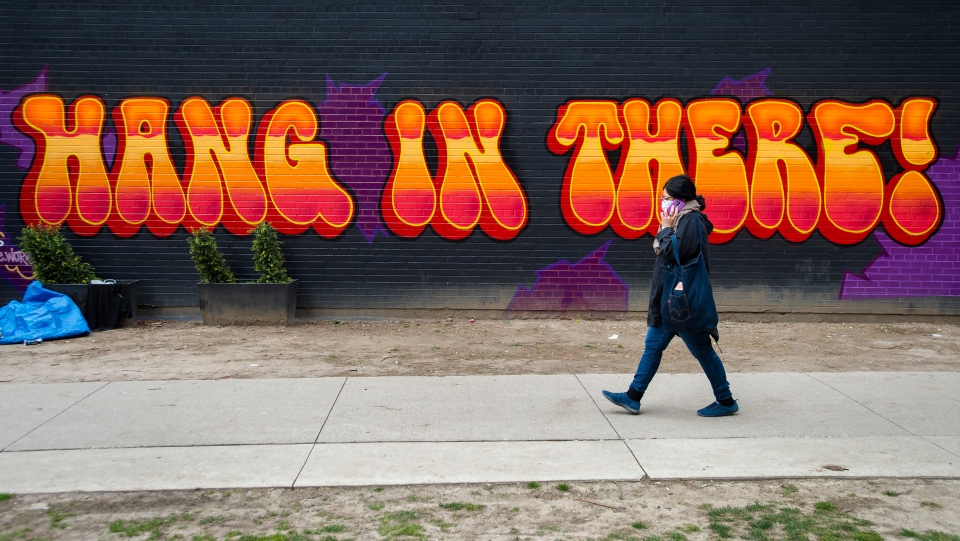
A woman wearing a mask talks on her phone during the COVID-19 pandemic in Toronto. THE CANADIAN PRESS/Nathan Denette

Labels: , , , ,

Monday, June 15, 2020

What Emergence From COVID Lockdown May Hold for Child Psychological Development

"To get child care back up and running, governments must find ways to bring employees back to the sector."
"This means addressing the problem of low wages and inadequate compensation, and putting in place special funding to make sure that child care facilities are safe for both children and staff."
Don Giesbrecht, chief executive officer, Canadian Child Care Federation

"Children who were isolated or quarantined during pandemic diseases were more likely to develop acute stress disorder, adjustment disorder and grief."
"Thirty percent of the children who were isolated or quarantined met the clinical criteria for post-traumatic stress disorder. Furthermore, separation from parents or parental loss during childhood also has long-term adverse effects on mental health, including a higher risk of developing mood disorders and psychosis, and 'death by suicide' in adulthood."
"Adults need to be vigilant that children are not inappropriately blaming themselves or feeling that the illness is a punishment for previous bad behaviour."
The Lancet Child & Adolescent Health 
Amparo Aguilera puts a protective face mask on her grandchild Kilian, 6, after restrictions were partially lifted for children, during the coronavirus disease (COVID-19) outbreak, in Igualada, Spain April 26, 2020. REUTERS/Nacho Doce - RC2GCG90NK6P
Amparo Aguilera puts a protective face mask on her grandchild Kilian in Igualada, Spain April 26, 2020
Image: REUTERS/Nacho Doce - RC2GCG90NK6P
There is no question that most children would have reacted initially to school closures with triumphant pleasure that their time would be their own to do with as they pleased. Until the realization set in that though they had ample time, they were unable to do as they pleased with it. All normal channels of pleasure, physical expression, entertainment were closed off. And it was explained to them by exasperated, fearful parents that the family had to remain indoors together to tough out the spread of a serious disease.

Children are sensitive to dangers impacting on their family, threatening their security with their guardian parents, and they can be sensitive to unspoken fears that communicate to their comprehension of a total turn-about in the way their world has operated to the present. All the old familiar routines were to be abandoned, and new ones take their place, more rigid, protective, alien to their familiar way of life; claustrophobic in type and character.

And if those children are within a family unit further stressed by a lack of employment, of tight physical living conditions, of food shortage, and short-tempered parents stressed to the limit, an overwhelming sense of insecurity and fear for the future tempers their discomfort with the new reality. Child anxiety, depression, loneliness and despair are the perfect breeding grounds for mental illness.

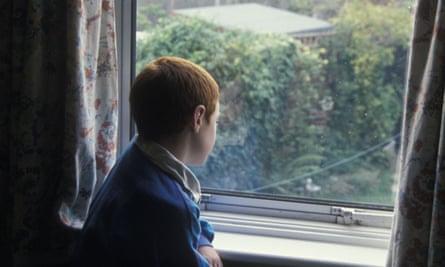
Boy looking out of the window (posed by model)
Photograph: Photofusion/REX/Shutterstock

Kids Help Phone reported that in the early lockdown period the service reported a 350 percent increase in calls received by the national help line geared toward responding to children's needs. Each day an average of 2,000 calls, texts and chats were anticipated from young people in the ongoing lockdown; children who were looking for explanations, for empathy, for reassurance that all would turn out well.

A Spanish survey reported that close to nine in ten parents had noticed alterations in their children's expressed emotions and behaviours, with many suffering concentration difficulties, irritability and profound anxiety. In Canada, 72 percent of child care centres closed, making living arrangements more acute for parents, unprepared to look after their children full-time.

Clinical psychologists in the United Kingdom published some useful advice for parents in The Lancet Child & Adolescent Health, urging parents to be aware their children needed appropriate, age-centric information about the pandemic; to consider that between the ages of four and seven, children develop a sense of conscience, at the same time they have a poor understanding of the science of disease.
"Loneliness that may result from disease containment measures in the COVID-19 context could be associated with subsequent mental health problems in young people."
"Children and adolescents are probably more likely to experience high rates of depression and probably anxiety during and after enforced isolation ends."
"This may increase as enforced isolation continues. Clinical services should offer preventative support and early intervention where possible and be prepared for an increase in mental health problems."
British researchers, large-scale meta-analysis
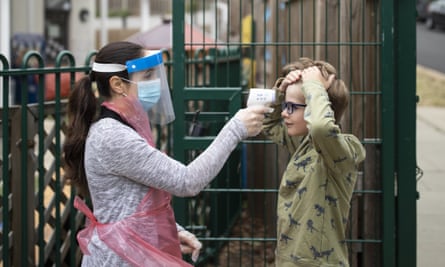
A member of staff takes a child’s temperature at the Harris primary academy Shortlands, London, on 4 June.
The truth is children’s lives are not really back to normal, and will not be for some time.’ A member of staff takes a child’s temperature at the Harris primary academy Shortlands, London, on 4 June. Photograph: Dan Kitwood/Getty Image

Labels: , , , , ,

Wednesday, May 06, 2020

COVID Vulnerabilities

"[Grocery store anxiety] is common across a lot of different people. Realizing that the anxiety is normal, to some degree, can help lower the intensity of it. You can remind yourself 'This is an unprecedented situation. It is normal to feel anxious in these situations. I'm not losing my mind. I'm going to be able to cope.' Normalizing that anxiety is an important thing."
"It's really hard to do other things while you're at the grocery store, but breathing [deep breathing to counteract intense feelings of fear] is one that can calm you down fairly quickly."
"If you feel more comfortable having a mask on, having gloves on, then do that. Equip yourself with what you need. And if you're in there and you feel dizzy, or you feel that you can't continue on, then just pay for  what you have and get out. And figure out another plan for next time."
"If you go to the grocery store and you're sweating, you can't sleep, you can't eat, and you're freezing upon walking in, then you know that it's impacting you. So look at how else you can do that. Can you do it online? Can you get someone else to do it? It's so important for people to know what their own realities are."
"It's all about knowing yourself, and really knowing what your limits are. And that's hard for people. We're in a different time, so it takes a little bit of different thinking and different creativity. Reach out. People always worry about the impact it's going to have on other people. But just by reaching out you can save yourself a lot of hurt and increased anxiety."
Suze Berkhout, assistant professor, psychiatry, University of Toronto
Grocery shopping
“If you feel more comfortable having a mask on, having gloves on, then do that. Equip yourself with what you need,” says Mercer. Getty Images

News of supply chain interruptions in the vital, integrated plan of moving food products and produce to market, and news of meat processing facilities having to shut down because of the number of their employees contracting COVID-19, of the agricultural industry facing problems being able to employ enough field workers to ensure they can seed crops and then harvest them, news of shortages of certain products, of export countries shutting their products from export to ensure adequate supplies are available to their own populations, all prey on people's minds during this strange and frightening time of SARS-CoV-2.

It can be difficult for most people to remain relaxed over the prospect of rationing food, of austerity measures undertaken in the face of food shortages. What could conceivably be more primary to human existence than the availability of food? Most people have experienced what it feels like to walk into a supermarket and see rows of empty shelves and it was not a pleasant sight, nor was that sinking feeling felt when viewing those empty shelves in knowing that you wouldn't be bringing home essential food that shopping expedition.

Concerns grow and become focal points for the mind to fasten itself, magnifying a problem that may or may not exist. Even while food producers and governments speaking on their behalf try to assure a worried public that there will be no food shortage, once the supply management and transportation sectors catch up with public hoarding responsible for those empty shelves. For some people the concerns are manageable. For others, even well-balanced people, the concerns only accelerate the more they read in the news media of one issue or another cropping up to complicate the new reality of a world settling in and trying to find balance in the face of a global pandemic.

Then there are those in the general population already suffering various stages of mental illness being exacerbated by worry over their ability to secure enough food to sustain life. A new survey conducted by Dalhousie University and Angus Reid, saw 64 percent of respondents saying they are buying more groceries than usual to avoid shopping as frequently as they have been accustomed to. Changing shopping habits from weekly to bi-weekly. Gauging how much food will be needed to take one over a two week period without running perilously short, in the interests of less exposure to the coronavirus.

For people already suffering the angst of insecurity, loneliness and depression, having to self-isolate leads to deeper feelings of loneliness that morph into depression. Depression raises existential fears. And the food shopping experience looms large as the battle to secure enough food while avoiding the potential of COVID infection, creating a burden of desperate fear. Fear of entering a store only to see empty shelves, crowded aisles where it's difficult to avoid contact, amid the caution required to avoid as much as possible, touching surfaces that may host the virus.

Hearts begin to race, and jaws clench. "If you're a senior or someone with an immune-compromised system, going to the grocery store is kind of like going into a war zone", observed Sue Mercer, a researcher and expert for the Mental Health Commission of Canada. People old enough or originally from other countries who immigrated to Canada with the background experience of food insecurity, or those living with conditions of disordered eating, react instinctively on the sight of empty grocery shelves. Those with limited incomes see stress from yet another perspective.

According to Suze Berkhout, a clinician-investigator at the University Health Network in Toronto, managing anxiety is paramount to managing life itself. To recognize anxiety when it occurs is critical; thoughts of fear, frustration, irritability, anger, overgeneralizing, imagining worst-case scenarios, emotional reasoning along with physical warnings such as increased heart rate, shallow and fast breathing, chest tension and weak muscles while feeling disconnected to your surroundings, are all common symptoms.

Grocery shopping
“You might be a bit nervous before you go to the grocery store,” Getty Images

That kind of reactivity needs to be dealt with to alleviate anxiety. When feelings of panic, stress or anxiety occur there are grounding techniques that can be used to halt the spiral of concerning thoughts and sensations. "They help you connect back into, 'OK. What is actually going on around me here, and how do I need to respond to it?" Inhaling over a four count, holding for a four count, exhaling and holding at the same pace, and repeating, a simple but effective grounding technique.

Imagine your brow furrowed and relax it, unclench your jaw or shoulders. "Then you can try to work with things like those worried thoughts to say, 'Is this realistic? Does this make sense?' Working with the thoughts comes once you've got more of that physical and emotional side of things a little bit more calm."
Grocery shopping
Grounding techniques “help you connect back into, ‘OK. What is actually going on around me here, and how do I need to respond to it?’” says Berkhout. Getty Images

Labels: , , ,

Monday, October 29, 2018

Life Over-Stimulating Anxiety

"There's no question in my mind anxiety levels are increasing."
"Life is about facing challenges, it's not only about being happy. But people are very pain-averse. People want to be comfortable and they want to be happy, but if you chase happiness by trying to push aside anything that's unpleasant and upsetting in your life, the irony is that it actually comes back with a vengeance."
"Everyone is sizing themselves up against somebody else. 'Why is everybody so happy and I' so miserable'?"
"Most of all, frankly, we don't have the level of adversity we used to [have]."
Dr. David H. Rosmarin, department of psychiatry, Harvard Medical School

"Although U.S. presidential elections occur every four years, the 2016 election was perhaps the most polarizing and emotionally evocative political event for young people in recent history."
2018 Study, Journal of American College Health
Almost 40% of Americans are more anxious than they were at this time last year, according to a new American Psychiatric Association (APA) poll.  Peechaya Burroughs for TIME

"[Up to 30 to 50 percent of anxiety disorders are heritable] and heritable disorders would not change their clinical picture substantially over decades or centuries."
"[More people are seeking treatment, thus anxiety appears more common]."
2015 Study, Dialogues in Clinical Neurosciences

"[In Canada], there is a widely held belief -- I personally don't think it has a strong basis in evidence -- that there has been a deterioration in mental health, that there's more depression or more anxiety afflicting people than has occurred in the past."
"As an epidemiologist, we just haven't been able to say that in Canada. In Canada, a lot of parents and grandparents are immigrants and they came in and were eating fried potato peels and trying to scrounge and make a buck and sell what they could."
"Now we have a lot of luxuries. We're not used to facing adversity."
Dr. Scott Patten, professor of psychiatry, University of Calgary
"We shouldn't expect an anxiety-free life. It's adaptive to feel anxious. People say, 'well, isn't this an unusually anxiety-provoking time?"
"I would invite those people to think about what it was like to be in Nazi Germany. Or what it's like today to be in Syria, or on the road from Africa to Europe because you don't have food to eat and you're afraid of being attacked by pirates."
"We live in an unusually privileged moment in time and place. We don't live in a period of stress anywhere near where people have lived in historically, or that people are suffering from around the world."
"That's not pathological. That's part of life [to be concerned about worrying things happening]."
Dr. Allen Frances, professor emeritus of psychiatry, Duke University
iStock Photo

None of these experts is blase about what worrying does to peoples' minds, none shrug off the phenomenon of anxiety and how it eats away at our individual and collective sense of security by mouthing the platitude "don't worry, be happy", that flippant, anodyne phrase that was so abrasively popular not that long ago. It's possible that since that very phrase first made its entrance on the media cycle of the time that the world in general and thus the world that people experience has become a more difficult place to struggle within.


But it is studies taking place in North America, in Canada and the United States, that point out that in those wealthy, regulated, peaceful and democratic nations people are becoming increasingly stressed by what they perceive as both world affairs and those of their own. In Canada a poll of 1,500 people recently found that 41 percent of those surveyed spoke of themselves as "someone who struggles with anxiety", while a third stated they had been diagnosed with anxiety and a similar number had anti-depressants prescribed for them.

In the United States another study was left with the impression that so many young people were psychologically traumatized after the election of Donald Trump to the U.S. presidency that fully one-quarter of American college students were seen to be at risk of PTSD. Perhaps, the Trump election to the presidency, as unexpected as it was owes its notoriety more to the social-political atmosphere prevailing in universities and colleges and popular news reportage for this outcome than the actual election results where partisan politics has swung out of hand, both sides acidly fulminating against the other.

After all, the United States was in an uproar when it elected its first Roman Catholic president in John F. Kennedy; a peanut farmer and born-again Christian in Jimmy Carter; and a grade-B actor in Ronald Reagan. Now they have an unabashed braggart and sometimes-bully, among his finer qualities, but the election was, after all, free and fair democracy at work. The votes swung with Trump against an equally incompetent Democrat, as the American electorate saw the situation.

The real question is, what drives anxiety levels so high in both countries? Can it all be put down to the prevalence of social media intruding on everyone's perceptions and life to that great a deleterious degree? Has the turmoil in the world been greater in its dysfunction and fallout abroad than what  usually pertains? Are we so obsessed as celebrity-admiring societies that we expect our lives to be as glamorous and free of stress as we imagine the lives of the wealthy and famous to be?

The Canadian survey commissioned by Yahoo Canada and conducted by Abacus Data saw 34 percent of adult men and 47 percent of women agreeing, "I consider myself someone who struggles with anxiety", and among those between the ages of 30 and under, 70 percent of women and 53 percent of men reported feelings of stressful anxiety, while among 18- to 29-year-olds 63 percent reported feelings of high anxiety. Had the survey asked of respondents the reason they feel anxious, we all might be the wiser for it.

Among anxiety disorders is a litany of subgroups including obsessive-compulsive disorder, panic disorder, agoraphobia, social phobia and generalized anxiety disorder (GAD) exemplified by individuals who worry excessively and uncontrollably in their everyday lives. Anxiety disorders represent the most common mental disorders, according to experts. Among women such disorders are more common, peaking in midlife, and for some the symptoms come and go, while in severe instances people can become seriously impaired.

Tellingly, it is the prevalence of anxiety that has led to a growing marketing of products meant to calm the anxiety-prone; with anxiety apps, magnetic bracelets, weighted blankets of glass beads and poly pellets -- and the final frontier of solutions-for-all, legal marijuana to still jumpy nerves. Some health professionals point out that in their expert opinion we've created a health-related scare where none really  exists in over-diagnosing anxiety, in so doing medicalizing normal anxiety that comes with life.

Objective: This study compared the prevalence of depression and the determinants of mental health service use in Canada and the United States.
Methods: The study used data from preliminary analyses of the 2003 Joint Canada/United States Survey of Health, which measured Canadian (N=3,505) and United States (N=5,183) resident ratings of health and health care services. Cross-national comparisons were made for the 12-month prevalence of DSM-IV major depression, 12-month service use for mental health reasons according to the type of professional seen, and determinants of service use.
Results: The rates of depression were similar in Canada (8.2%) and the United States (8.7%). However, U.S. respondents without medical insurance were twice as likely as Canadian respondents and U.S. respondents with medical insurance to meet the criteria for depression. Rates of mental health service use did not differ between Canada (10.1%) and the United States (10.6%). In the United States, medical insurance was not a determinant factor of service use. However, U.S. respondents with no medical insurance were more likely than the other two groups to report an unmet need. Also, among those with depression, U.S. respondents with no medical insurance were less likely to use any type of mental health service (36.5%) than U.S. respondents with medical insurance (55.7%) and Canadians (55.7%). Further, a positive correlation between a mental health need and service use was observed in Canada but not for those without medical insurance in the United States.
Conclusions: There was no difference in the prevalence of depression and mental health service use between Canada and the United States. Among those with depression, however, disparities in treatment seeking were found to be associated with medical insurance in the United States. Both Canada and the United States need to improve access to health services for those with mental disorders, and special attention is needed for those without medical insurance in the United States.
Do Canada and the United States differ in prevalence of depression and utilization of services?
Vasiliadis HM, Lesage A, Adair C, Wang PS, Kessler RC

Labels: , , ,

Saturday, August 18, 2018

Music To Calm The Sheltered Beasts

"If we're in a chaotic environment, we're drawn towards structure and order. So these songs, the lullabies, are very simply structured."
"And then I think not only the babies, but also the animals are drawn to the human compassion in the singer's voice, and the familiarity of the heartbeat."
"I hate to admit this, but I got emails and phone calls for 13 years about how people would play the Heartbeat Lullabies for their dog, and it would calm them and keep them from barking, and I just kind of said: 'Oh, come on. ...I mean, is this really real? Are you people reading things into this'?"
Composer Terry Woodford, Muscle Shoals, Alabama


Now 75, years ago Terry Woodford was tasked with creating lullabies to quiet crying babies, to give them audible comfort that would still their anxieties -- and he responded by writing music based on traditional lullabies with the additional device of adding an underlying heartbeat. The thought behind this was obvious enough; listening to that heartbeat and that soothing music would be familiar to babies from their memory of the heartbeat they heard in the womb, and later while being held by their mother or father.

The music proved a success, doing the work he hoped it would to comfort and to placate the anxiety that babies and infants can feel at hospital nurseries and at newborns' homes. That music was named Heartbeat Lullabies. Serving as a judge at an arts festival in 1984 in Huntsville Alabama, Mr. Woodford was approached by a woman who was a recreational therapist at daycare centres who wanted him to think about creating music "that's not so condescending for our kids". His immediate response? "I don't want to make music for kids!"

And then he thought better of it, viewing it as a challenge. Later on, he began hearing from people claiming that the Heartbreak Lullabies served to soothe their dogs' anxieties. And he could hardly credit it. But he learned that some shelters had started using the music, one of which was in Colorado Springs where he happened to be living at the time. He paid a visit there: "I'm walking down the aisle, and all the dogs are jumping and barking, and (the shelter employee) had an old boombox in the corner. She turned it on, and within 15 seconds every dog laid down in their kennel, and it freaked me out."
shutterstock_100193201
Shutterstock

This experience inspired him to go on to use the basic music he had designed for babies and to re-work it for dogs. He estimates that the music, renamed Canine Lullabies, is being used in some 2,500 canine shelters. He charges nothing for the CDs or downloads he provides to shelters, to rescues and to animal clinics. His is not the only music source being used to soothe the emotions of shelter dogs. There is iCalm for Dogs, Relax My Dog and Song for Daisy. Song for Daisy is a 15-minute track by singer-songwriter Gnash.

Gnash adopted a Maltese terrier named Daisy. Gnash took the step of consulting researchers of a 2017 study that found shelter dogs responded when exposed to reggae or soft rock, rather than Motown, pop or classical music, and he formulated his Song for Daisy with that information in mind. It was found through a study in 2002 that shelter dogs responded favourably to classical music to encourage quiet and relaxation, and a later 2012 study repeated those findings.

plenty.r. photo - Creative Content License
Source: plenty.r. photo 


"Since being in a dog rescue shelter is often a stressful time for dogs, having music which actually calms and relaxes them could certainly help to make the experience better."
"After all, Music Therapy is a recognized form of treating human beings with anxiety problems, and there is no reason to think that it would not work on dogs as well."
Stanley Coren, PhD, DSc, FRSC, Psychology Today

Labels: , , ,

 
()() Follow @rheytah Tweet