Ruminations

Blog dedicated primarily to randomly selected news items; comments reflecting personal perceptions

Saturday, August 15, 2020

Make That Dental Appointment!

"Every time people are in for their checkups, we do a thorough look around the mouth, face and neck. Screening for oral cancer is an important part of the overall screening that we do. Even if someone says they have a sore tooth, we do a thorough once-around because it's important to see the forest for the trees." "Medical history, such as cancer in the family, or habits such as smoking, drinking and spending time in the sun are important."                                                       "HPV is also on the rise, with warts possibly turning into cancer."                           "It's simple things that can make such a difference. Make sure you protect your lips from the sun, limit your drinking, don't smoke, and ensue you have a nutritious diet. Also, it's important to do checkups routinely and get X-rays because we have to see the bones to ensure nothing has developed. Of course, the sooner cancer is diagnosed, the better."                                                                                                     Mark McCullough, Capital Dentistry clinics, Ottawa-Gatineau 

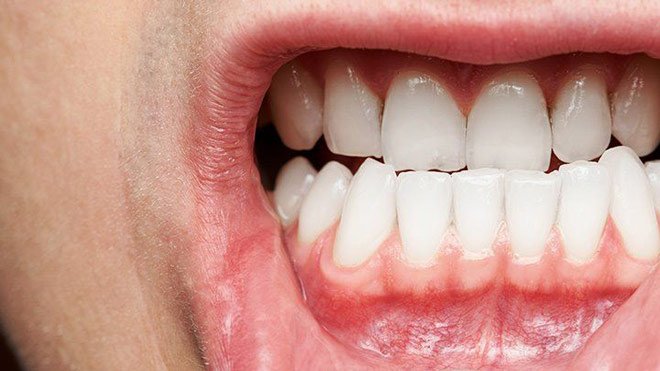
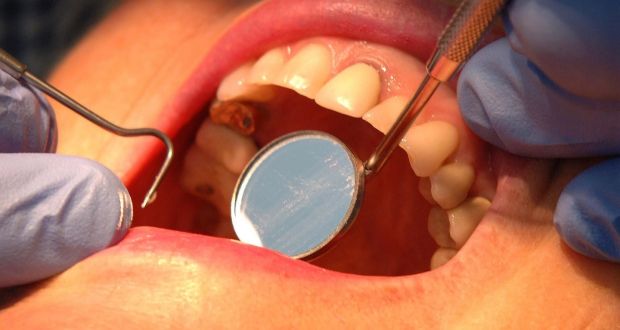
Dr. Dussault using VELscope to detect oral cancer during a dental exam.
Using a VELscope to detect oral cancer during a dental exam.

"Taking the patient's detailed history also includes asking about the duration of the presentation, whatever it may be, if any sort of symptoms, pain, swelling and loss of sensation."                                                                                                          "But it's important to note that oral cancer isn't common, so if I see a white lesion on the cheek, I'm more likely to think it's an autoimmune issue."                Dr.Timothy Winlow, Capital Dentistry, Gatineau, Quebec
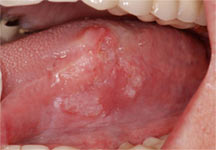
Oral Cancer
Oral cancer*

Signs and symptoms

  • White or dark red patches in your mouth, or on your lips or tongue.
  • Lumps or changes in the texture or colour of the mouth tissues.
  • Bleeding or numbness in the mouth; sores or patches that do not heal.
  • Difficulty swallowing; changes in taste or tongue sensation.

Risk factors

The actual cause of oral cancer is not known but risk factors include:

  • Consumption of tobacco products (cigarettes, chewing tobacco, cigars, etc).
  • Heavy alcohol consumption (It is especially dangerous to combine smoking and alcohol.)
  • Oral sex
  • Prolonged, repeated exposure of the lips to the sun.
  • Poor diet; genetics and gender (more men develop the disease than women.)
  • A history of leukoplakia - a thick, whitish-colour patch inside the mouth.

Diagnosis and treatment

Treatment depends on the severity and location of the disease, as well as the age and health of the patient. If oral cancer is suspected:

  • A biopsy (surgical removal and microscopic examination) of the suspicious area may be taken.
  • Imaging tests such as X-rays, ultra sounds, CT scans or MRIs may be taken.
  • Chemotherapy, radiation therapy or surgery may be necessary to remove tumor(s).

To help prevent oral cancer:

  • See your dentist regularly for dental exams and ask about oral cancer screenings.
  • Stop using tobacco products - ask your dentist about tools to help you quit.
  • Limit alcohol consumption.
  • Limit sun exposure and use U/V protective lip balms.
  • Eat a healthy diet with lots of fruits and vegetables.
  • Check your mouth regularly for signs or symptoms and report any changes in your mouth to your dentist right away.    Canadian Dental Association
Oral Cancer Screening

White or dark red patches in the mouth or on the lips or tongue, lumps or changes in the texture or colour of mouth tissue, bleeding or numbness in the mouth, sores or patches that fail to heal, swallowing difficulty, changes in taste or tongue sensation can all be symptoms of oral cancer. Along with diagnosing a disease such as cancer it is not only spotting these abnormalities, but taking note of personal medical history that helps to determine whether cancer may be present.

In 2020, an estimsted 5,400 Canadians will have been diagnosed with oral cavity cancer, according to the Canadian Cancer Society. Cancer cells, undetected, have the potential to spread from the mouth to other parts of the body. Metastasis can affect the muscle surrounding he mouth, lymph nodes in the neck, bone surrounding the mouth, the liver, lungs and the brain. Should a dentist suspect the presence of cancer, they can perform a biopsy, or alternately send the patient elsewhere for a biopsy and additional testing.

Preventive measures to take steps ensuring that all that could be done to prevent the onset of cancer through modified lifestyle choices represent the first line of defence; taking steps to reduce the potential  through proper diet, avoidance of tobacco, excess alcohol consumption, protection from too great sun exposure and regular dental appointments as recommended for good dental hygiene. Cancer detection is not the only disease that dental inspection of the mouth is capable of ferreting out, however.

Many people are unaware of the symptoms of diabetes and as a result are unable to treat this chronic condition that can have such a huge impact on their lives. Untreated diabetes is implicated in long-term harms such as affecting eyesight, neuropathy, kidney function, leading as well to heart conditions, along with other bodily systems including a propensity to developing periodontal disease, an infection of the gums and bones, weakening the structure that holds teeth in place. 

"If the diabetes is uncontrolled, people will end up with poor blood circulation, which includes reduced circulation in the oral environment, so there is more of a chance of the body not having a defense against bacteria."                                    "If bacteria from gum infections, enters the blood stream, it also has the potential to worsen or increase the risk of other health issues." Mark McCullough

The American Dental Association reports research suggesting that treating gum disease can aid in improving blood sugar control in people living with diabetes, thus helping to diminish the disease progression impacting the eyes, nerves and heart. Dentistry plays a detection role as well in recognizing other problematical health conditions like vitamin B12 deficiency, syphilis, herpes, HPV, and mental health disorders causing self-injury, bulimia and drug use.

 Oral Cancer Screening


Labels: , , ,

Tuesday, July 21, 2020

How Important is Good Dental Hygiene?

"The authors point to possible reasons for an association between oral bacteria (oral microbiota) and oesophageal and gastric cancer, with evidence from other studies suggesting that tannerella forsythia and porphyromonas gingivalis - members of the 'red complex' of periodontal pathogens - were associated with the presence or risk of oesophageal cancer."
"Another possible reason is that poor oral hygiene and periodontal disease could promote the formation of endogenous nitrosamines known to cause gastric cancer through nitrate-reducing bacteria."
"This was an observational study, so no firm conclusions can be drawn about cause and effect, and the researchers cannot rule out the possibility that some of the observed risk may be due to other unmeasured (confounding) factors."
"However, they conclude: "Together, these data support the importance of oral microbiome in oesophageal and gastric cancer. Further prospective studies that directly assess oral microbiome are warranted to identify specific oral bacteria responsible for this relationship. The additional findings may serve as readily accessible, non-invasive biomarkers and help identify individuals at high risk for these cancers."
EurekAlert
Image: © Glayan/Thinkstock
"The study authors who found the link between cancer and oral health came to their conclusions using self-reported information from questionnaires given to some 65,869 older women as part of the Women's Health Initiative Observational Study, which began collecting information in 1994. The women in the study were asked if a dentist or dental hygienist had ever told them they had gum disease."
"Study authors followed these women for an average of eight years to see who went on to develop cancer. More than 7,000 cancers occurred among the women during the study period, and researchers found that women with periodontal disease had a 14% higher overall cancer risk than women without gum disease — and a higher risk specifically of breast, lung, and esophageal cancers, and melanoma."
Harvard Health Publishing, Harvard Medical School

"The link between oral health and heart health may seem an unlikely one. But proper care for your teeth and gums may help lower your risk for developing heart disease.
Gum disease leads to inflammation, the immune system's response to infection and injury. The chemicals produced by inflammation of the gums get into the blood. When they reach the heart, those chemicals may increase inflammation inside plaques of atherosclerosis in the arteries of the heart, thereby increasing the risk of heart attacks and strokes."
"That association is controversial, however. 'That's because people with severe gum disease have many of the usual risk factors for coronary artery disease, such as age, diabetes, poor diet, and untreated diseases', says cardiologist Dr. Peter Zimetbaum, an associate professor at Harvard Medical School."
"While some studies have shown that cleaning and flossing result in lower levels of inflammatory markers and other improvements in known risk factors for heart disease, it's not yet clear if good oral care will prevent heart attacks, stroke, or death from heart disease, says Dr. Harvey White, a member of a Harvard affiliated academic research group that studies cardiovascular disease. Even so, it will certainly help protect your dental health."
Harvard Health Publishing, Harvard Medical School
Gum disease may up mouth, stomach cancer risk: Study
Representational Image (Source: Internet)

A new study published in the journal Gut, a specialist periodical by the British Medical Journal, suggests that gum disease has a part to play in risking throat and stomach cancer. The Harvard University study emphasized that the risk, calculated at 50 percent, was higher among people who had experienced tooth loss given that gum disease becomes an entry point for bacteria to proliferate through blood. On the good news side, mild instances of gum disease are readily treatable with practising good oral hygiene.

The research studied 98,459 women and 49,685 men over a period of more than twenty years for rates of throat and stomach cancer. The study assessed dental measures, demographics, lifestyle and diet. The link between bacteria commonly found in the mouth and esophageal cancer was validated in previous studies which results this more recent one confirms given its large sample size, long-term followup and "rigorous control" for lifestyle impacts.

Porphyromonas gingivalis bacteria, 3D illustration.  Image Credit: Kateryna Kon / Shutterstock
Porphyromonas gingivalis bacteria, Credit:Kateryna Kon / Shutterstock

During the 22 to 28 followup years 199 cases of esophageal cancer and 238 cases of gastric cancer occurred. A related history of gum disease was seen to be associated with a 43 percent and 52 percent increased risk of esophageal cancer and gastric cancer respectively.  Risk of esophageal and gastric cancer for people who lost two or more teeth were  higher as well, compared to people with no tooth loss experience; 42 percent and 33 percent respectively.

A history of gum disease and who may or may not have had tooth loss were linked with a 59 percent increased risk of esophageal cancer in comparison to people lacking a history of periodontal disease, and no loss of teeth. Periodontal disease results in abnormal gum conditions reflecting decreased health of gums which recede to expose the roots of teeth, resulting in vulnerability of tooth stability, and eventually tooth loss.

Finally, a history of gum disease resulting in no loss of teeth gave people a 50 percent increased risk of gastric cancer, rising to 68 percent when people have a history of both gum disease and tooth loss, in comparison to others with no history and no loss of teeth.

Mouth health often reflects general health, according to  Prof Leo Stassen, president of the Irish Dental Association. Photograph: John Giles/PA Wire
Mouth health often reflects general health, according to Prof Leo Stassen, president of the Irish Dental Association. Photograph: John Giles/PA Wire


Labels: , , , ,

 
()() Follow @rheytah Tweet