Ruminations

Blog dedicated primarily to randomly selected news items; comments reflecting personal perceptions

Tuesday, August 15, 2023

Exposure to Green Nature's Benefits

"Our study shows that being near green space caused some biological or molecular changes that can be detected in our blood."
"[Biological age] really depends on what we do daily [including what we eat and how physically active we are]."
Lifang Hou, preventive medicine professor, Feinberg School of Medicine, Northwestern University

"We know the benefits of green space in reducing premature mortality."
"This study explains how this could happen by describing how green spaces can modify how genes are expressed."
David Rojas-Rueda, epidemiology professor, Colorado State University

"This is one of the first studies that really kind of demonstrates how exposure to nature, living in greener areas, may get under our skin and lead to these kinds of fundamental changes to these biomarkers of aging."
"We have this vegetation data, but it tells us very little about what the active ingredients in nature are that influence health. It just tells you the quantity of vegetation in a given area around your home."
"We need to start changing our perspective on green space and really viewing it as an essential piece of infrastructure, just the same as sewer systems and garbage collection."
"This is something that we require as human beings to thrive, to be healthy."
Peter James, environmental epidemiologist, T.H. Chan School of Public Health, Harvard

According to a study published recently in the journal Science Advances, living near heavily green spaces could be a great aid in allowing us to live longer, healthier lives. The study suggests that long-term exposure to greenery where you live can led to adding 2.5 years to your life on average. The result of the paper's conclusions adds to existing knowledge of health benefits gained by living around greenery.

The study sheds increased light on how nature can affect our bodies. Long-term exposure to surrounding green spaces and how that affected biological aging among a group of over 900 people in four U.S. cities formed the basis of the research. The researchers compared age-related biological alterations in the study participants over a 20-year period against data on green spaces near where those participants live in their goal to explore the association between long-term green benefits exposure and aging.

With the use of blood DNA, the researchers were enabled to measure biological age at a molecular level through analyzing small changes in how genes related to the aging process work, explained Dr. Hou. Should an individual's biological age, sped up or slowed down depending on how they live, be seen as older than their chronological age, they could be at higher risk for developing age-related conditions like cancer, cardiovascular disease or Alzheimer's, explained Dr. Hou.
 

The study emphasized that not only is it about what each individual actively engages in for their own health, but as well their neighbourhoods and communities. Satellite imaging was used by the researchers to assess green spaces, applying a widely-accepted measure of quantifying vegetation, explained the study's lead author, Kyeez Kim, a post-doctoral researcher at the Feinberg School of Medicine, at Northwestern University. Major parks were also identified close to participants' homes.

That helped to identify the location and quantity of plant life; the approach however, fails to provide details regarding the type of vegetation -- whether an area is a golf course or a forested nature trail -- or quality of green space. Greater details of the green spaces under study and what people might be engaged in within those landscapes, is critical, according to Karen Seto, director of the Hixon Center for Urban Ecology at the Yale School of the Environment.

"Because we don't know what type of green space it is, I think for cities, they don't know is it sufficient just to plant a bunch of street trees?" Other questions were left unanswered by the study; as for example, why the rate of biological aging appeared different across race, gender and socioeconomic status. Black people, the researchers observed, who had more access to green space realized only an advance of a single year younger in biological age in comparison with the study's average of 2.5 years.

The results of the study even so, are meant to encourage people to think more about their surroundings, when making healthy living decisions, along with observance of a healthy diet, adequate sleep and daily exercise, urged Dr. Hou. And, added Dr. James, the study should also serve as motivation for policymakers to incorporate nature into people's daily lives. More parks and better access to community parks in dense neighbourhoods, for a start.


Labels: , , , , ,

Monday, February 22, 2021

Increasing Longevity and Fending off Chronic Disease ... Reasonable Exercise Protocols

"The key findings from this review are: (1) male and female elite athletes live longer than the general population; (2) male athletes have a lower incidence of cardiovascular disease and cancer mortality than the general population; (3) power sport athletes' all-cause and cardiovascular disease mortality were not significantly different to the general population; (4) endurance athletes' cancer mortality was not significantly different to the general population."
"Former athletes smoke less, drink less and engage in more long-term physical activity than the general population, all of which significantly contribute to cancer risk and mortality."
U.K. research team
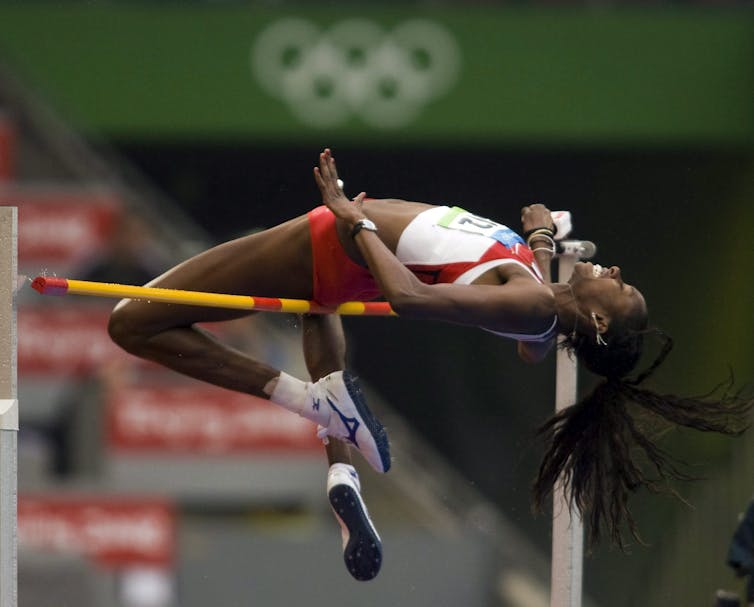
Nicole Forrester, seen here competing at the 2008 Summer Olympics in Beijing, didn’t start high jumping until she was 18 years old. THE CANADIAN PRESS/Ryan Remiorz
"Aging is a natural and complex physiological process influenced by many factors, some of which are modifiable. As the number of older individuals continues to increase, it is important to develop interventions that can be easily implemented and contribute to “successful aging”. In addition to a healthy diet and psychosocial well-being, the benefits of regular exercise on mortality, and the prevention and control of chronic disease affecting both life expectancy and quality of life are well established. We summarize the benefits of regular exercise on longevity, present the current knowledge regarding potential mechanisms, and outline the main recommendations. Exercise can partially reverse the effects of the aging process on physiological functions and preserve functional reserve in the elderly. Numerous studies have shown that maintaining a minimum quantity and quality of exercise decreases the risk of death, prevents the development of certain cancers, lowers the risk of osteoporosis and increases longevity. Training programs should include exercises aimed at improving cardiorespiratory fitness and muscle function, as well as flexibility and balance. Though the benefits of physical activity appear to be directly linked to the notion of training volume and intensity, further research is required in the elderly, in order to develop more precise recommendations, bearing in mind that the main aim is to foster long-term adherence to physical activity in this growing population".
Science Direct
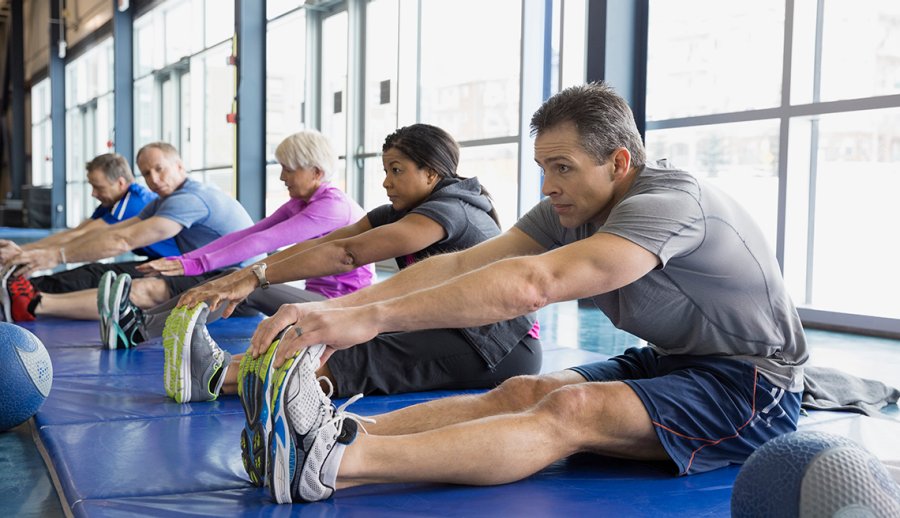
Group of mature adults stretching inside of an exercise studio.
Getty Images

There are studies that suggest a too-rigidly focused (extreme) attitude on exercising may compromise the protective effect of physical activity on heart health. Overdoing it, leading to an opposite health effect than that anticipated. Proving that old adage that moderation is the key to all things leading to success; known as the golden mean. It has an ancient lineage; well known for thousands of years that any type of extremes lead to malfunction of outcome. So how much exercise is too much exercise? No matter who you ask, the answer won't be forthcoming. 
 
It's a matter of knowing your limits; personal discretion.

As in: listen to your body, pay attention, be mindful of its messages. These are studies suggesting a decrease among endurance atheletes of health-protective benefits relating to overtraining of athletes, over-taxing the heart, depressing the immune system, increasing risk of injury and negatively impacting mood and sleep patterns. Long-term health of those overstretching their limits in physical exertion may lead to negative impacts.
 
A team of researchers fromt the United Kingdom set out to discover some truths about the relationship between chronic intense exercise and longevity; whether some physical activities or sports can offer protection and those that may not. They compared all-cause mortality and cardiovascular and cancer-related deaths of elite athletes as opposed to those issues linked to recreationally active counterparts.
 
Team running
24 studies with a data set totalling 154,033 athletes formed part of the review basis. The study group was divided into three groups: endurance (middle- and long-distance runners, . rowers, cross-country skiers, ice skaters and Tour de France cyclists); team sport (football, baseball, soccer, hockey and basketball); and power athletes (boxers, wrestlers, weightlifters, and track and field). The conclusion was that elite male and female athletes were linked with a 31 and 49 percent lower risk of all-cause mortality respectively, as compared to members of the population who are less physical active.

Not all sports and activities however, offer a similar level of long-term health benefits. The greatest boost in longevity fell to male endurance athletes; and in comparison to the general population, marathon runners, Tour de France cyclists and Olympians competing in endurance sports added four, eight and six years respectively to their life expectancy. To a lesser degree team sport athletes benefited as well from a bosft in life expectancy.

Superior cardiovascular fitness reflecting better heart health. Which explains why endurance athletes live longer than team sport and power athletes and was resposnsble for much of the added longevity. It was recognized by the researchers as well, that other lifestyle habits also render significant contributions to the longevity of elite athletes. The educated hypothesis that lifestyle is a powerful predictor of overall good health has a pedigree.
 
The review of elite athletes in this particular study reflects that recreational athletes and ordinary people alike benefit from the awareness that a healthy, active lifestyle has vital consequences in extending longevity and warding off chronic disease. A bit of a conundrum raises itself where researchers cannot quite point to lifestyle or training as having the superior advantage, leaning on the impression that it is a combination of both that confers the greatest rise in long-term health and overall wellness. 

Most people in any given population will never gravitate to the exercise habits of elite athletes, yet they can understand that a greater dedication to regular exercise will result in consequential benefit; ample reason to incorporate more than the recommended 150 minutes of physical activity weekly into a personal commitment. By the simple expedient of focusing on an activity that is personally appealing, commitment to exercise can be assured.
 
The basic goal being to reach the longevity-increasing benefits of exercise and that requires working at it until it becomes ingrained habit. 

nap


Labels: , , , , ,

 
()() Follow @rheytah Tweet