Ruminations

Blog dedicated primarily to randomly selected news items; comments reflecting personal perceptions

Sunday, May 07, 2023

Aging Healthfully, Cognitive Engagement

"Overall, this is important research. It identifies another potentially modifiable factor that might influence dementia risk."  
"But we wouldn’t want to read too much into this study in isolation. It doesn’t establish cause and effect."
"We need further evidence, not just from observational studies like this one but also interventional studies."
Dr. Claire Sexton, senior director of scientific programs and outreach, Alzheimer's Association
 
"Online engagement may help to develop and maintain cognitive reserve, which can in turn compensate for brain aging and reduce the risk of dementia."
Dr. Virginia W. Chang, associate professor of global public health, New York University School of Global Public Health
 
"There was sort of a sweet spot that if you were on the internet for a half hour to 2 hours a day, it was protective against dementia. Too much internet time was not protective, or potentially harming."
"If older people are 'doom-scrolling' or compulsively scrolling through social media feeds laden with bad news, they may be highly exposed to negative images of aging, and feeling lower self-worth, and feeling bad about getting older […] — that would be an example where [too much time] could potentially have a negative effect."
"We know that learning new things, staying cognitively engaged is critical for protecting our brains and reducing our dementia risk."
Dr. Scott Kaiser, specialist in geriatric family medicine, Pacific Neuroscience Institute
 
"Thus far, research on digital divide in cognitive health has been limited to cross-sectional or longitudinal examinations with short followups, and studies have only considered baseline internet usage."
"We fill these gaps by characterizing the relationship between the risk of dementia and baseline internet usage over a much longer period and also examining whether changes in usage are associated with subsequent cognitive performance."
New York University study researchers
Elderly couple together at the kitchen
Getty Images

A recently published study in the Journal of the American Geriatrics Society, the work of three researchers at New York University used a number of various methods to arrive at estimates respecting how much regular Internet use can lower the probability of developing dementia. Data gathered prospectively for the University of Michigan's ongoing Health and Retirement study enabling the administration of a telephone-contact cognitive test every two years was used by the NYU team.

Data gathered over a year of the cohort of 20,000 participating adults were responsible for allowing this paper to be viewed as more definitive than previously published studies focusing on dementia and Internet use. Earlier studies had reached roughly similar conclusions; mainly that regular use of the Internet among older adults is strongly associated with a delayed onset of dementia. There is also the issue of benefit reversal linked to extremely heavy Internet users.

Baseline cognitive scores were attained by respondents in their initial interview reliant on self-reporting physical health, age, income, marital status and geographic region. The effect was seen to be the same regardless of gender, among different ethno-racial groups and generations of agedness. Even without Internet use as a measure of cognitive enhancement, older people comfortable with technology already have an edge in cognitive awareness.

There are additional elements, needless to say, to be taken into consideration when attempting to reach an insight into mental acuity and longevity; namely lifestyle choices. Physical activity, mental outreach, general state of health, genetic endowments, and critically, diet. Alcohol consumption and tobacco use two other health-averse habits to be considered. But clearly the challenge of Internet use in expanding general interest advantages cognitive health.
"What are the reasons some older adults might be spending excessive amounts of time online? Are they lonely? Socially isolated?"
"What other potential cognitive/physical risks might they have? On the other hand, what is going on among those who don’t use the internet at all?"
"I think these are questions that could be explored further in future studies."
"These particular results merit further investigation."
"We might say that using the internet in later life might have direct cognitive benefits because learning and using new technology might stimulate the brain and thus positively impact people’s cognitive function."
Dr. Snorri Bjorn Rafnsson, University of West London, United Kingdom

A long-term study has found a link between older people's internet usage and dementia risk

Labels: , , , , ,

Monday, February 22, 2021

Increasing Longevity and Fending off Chronic Disease ... Reasonable Exercise Protocols

"The key findings from this review are: (1) male and female elite athletes live longer than the general population; (2) male athletes have a lower incidence of cardiovascular disease and cancer mortality than the general population; (3) power sport athletes' all-cause and cardiovascular disease mortality were not significantly different to the general population; (4) endurance athletes' cancer mortality was not significantly different to the general population."
"Former athletes smoke less, drink less and engage in more long-term physical activity than the general population, all of which significantly contribute to cancer risk and mortality."
U.K. research team
Nicole Forrester, seen here competing at the 2008 Summer Olympics in Beijing, didn’t start high jumping until she was 18 years old. THE CANADIAN PRESS/Ryan Remiorz
"Aging is a natural and complex physiological process influenced by many factors, some of which are modifiable. As the number of older individuals continues to increase, it is important to develop interventions that can be easily implemented and contribute to “successful aging”. In addition to a healthy diet and psychosocial well-being, the benefits of regular exercise on mortality, and the prevention and control of chronic disease affecting both life expectancy and quality of life are well established. We summarize the benefits of regular exercise on longevity, present the current knowledge regarding potential mechanisms, and outline the main recommendations. Exercise can partially reverse the effects of the aging process on physiological functions and preserve functional reserve in the elderly. Numerous studies have shown that maintaining a minimum quantity and quality of exercise decreases the risk of death, prevents the development of certain cancers, lowers the risk of osteoporosis and increases longevity. Training programs should include exercises aimed at improving cardiorespiratory fitness and muscle function, as well as flexibility and balance. Though the benefits of physical activity appear to be directly linked to the notion of training volume and intensity, further research is required in the elderly, in order to develop more precise recommendations, bearing in mind that the main aim is to foster long-term adherence to physical activity in this growing population".
Science Direct
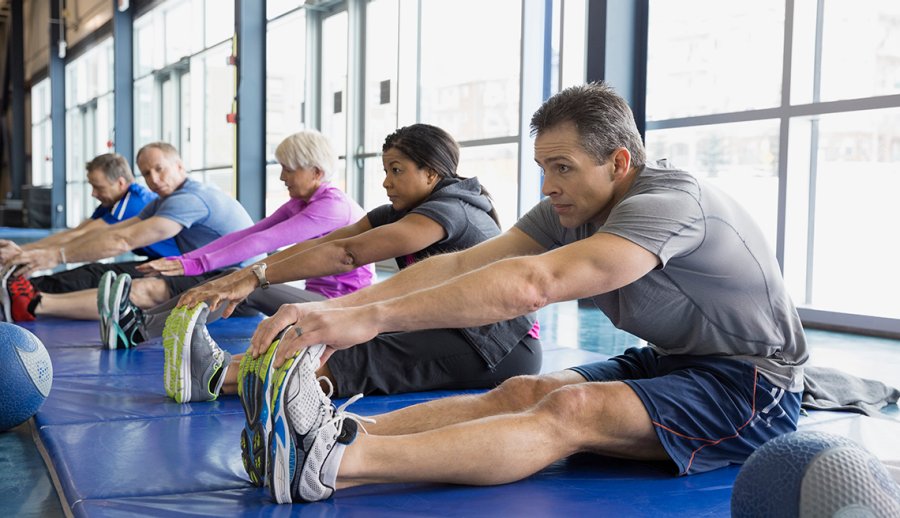
Group of mature adults stretching inside of an exercise studio.
Getty Images

There are studies that suggest a too-rigidly focused (extreme) attitude on exercising may compromise the protective effect of physical activity on heart health. Overdoing it, leading to an opposite health effect than that anticipated. Proving that old adage that moderation is the key to all things leading to success; known as the golden mean. It has an ancient lineage; well known for thousands of years that any type of extremes lead to malfunction of outcome. So how much exercise is too much exercise? No matter who you ask, the answer won't be forthcoming. 
 
It's a matter of knowing your limits; personal discretion.

As in: listen to your body, pay attention, be mindful of its messages. These are studies suggesting a decrease among endurance atheletes of health-protective benefits relating to overtraining of athletes, over-taxing the heart, depressing the immune system, increasing risk of injury and negatively impacting mood and sleep patterns. Long-term health of those overstretching their limits in physical exertion may lead to negative impacts.
 
A team of researchers fromt the United Kingdom set out to discover some truths about the relationship between chronic intense exercise and longevity; whether some physical activities or sports can offer protection and those that may not. They compared all-cause mortality and cardiovascular and cancer-related deaths of elite athletes as opposed to those issues linked to recreationally active counterparts.
 
Team running
24 studies with a data set totalling 154,033 athletes formed part of the review basis. The study group was divided into three groups: endurance (middle- and long-distance runners, . rowers, cross-country skiers, ice skaters and Tour de France cyclists); team sport (football, baseball, soccer, hockey and basketball); and power athletes (boxers, wrestlers, weightlifters, and track and field). The conclusion was that elite male and female athletes were linked with a 31 and 49 percent lower risk of all-cause mortality respectively, as compared to members of the population who are less physical active.

Not all sports and activities however, offer a similar level of long-term health benefits. The greatest boost in longevity fell to male endurance athletes; and in comparison to the general population, marathon runners, Tour de France cyclists and Olympians competing in endurance sports added four, eight and six years respectively to their life expectancy. To a lesser degree team sport athletes benefited as well from a bosft in life expectancy.

Superior cardiovascular fitness reflecting better heart health. Which explains why endurance athletes live longer than team sport and power athletes and was resposnsble for much of the added longevity. It was recognized by the researchers as well, that other lifestyle habits also render significant contributions to the longevity of elite athletes. The educated hypothesis that lifestyle is a powerful predictor of overall good health has a pedigree.
 
The review of elite athletes in this particular study reflects that recreational athletes and ordinary people alike benefit from the awareness that a healthy, active lifestyle has vital consequences in extending longevity and warding off chronic disease. A bit of a conundrum raises itself where researchers cannot quite point to lifestyle or training as having the superior advantage, leaning on the impression that it is a combination of both that confers the greatest rise in long-term health and overall wellness. 

Most people in any given population will never gravitate to the exercise habits of elite athletes, yet they can understand that a greater dedication to regular exercise will result in consequential benefit; ample reason to incorporate more than the recommended 150 minutes of physical activity weekly into a personal commitment. By the simple expedient of focusing on an activity that is personally appealing, commitment to exercise can be assured.
 
The basic goal being to reach the longevity-increasing benefits of exercise and that requires working at it until it becomes ingrained habit. 

nap


Labels: , , , , ,

Wednesday, November 06, 2019

Life Savers!

"Dog ownership was associated with a 24 percent risk reduction for all-cause mortality as compared to non-ownership."
"Dog ownership is associated with lower risk of death over the long term, which is possibly driven by a reduction in cardiovascular mortality."
Study authors published in Circulation, journal of the American Heart Association

"Dogs offer companionship, reduce anxiety and loneliness, increase self-esteem, and improve overall mood."
"Several studies have shown that acquiring a dog perforce increases physical exercise [as anyone who has unsuccessfully tried to sleep past the time of a dog's routine morning walk can attest]."
"Pet owners tend to be younger, wealthier, better educated, and more likely to be married, all of which improve cardiovascular outcomes."
"The association  between dog ownership and improved survival is real, and is likely at least partially causal."
The most salient benefits of dog ownership on cardiovascular outcomes are likely mediated through large and sustained improvements in mental health, including lower rates of depression, decreased loneliness, and increased self-esteem."
Dr.Dhruv Kazi, cardiologist, Beth Israel Deaconess Medical Center, Boston

A new study undertook to review several decades of evidence on the interdependent relations between dog ownership and mortality. The study focused on dogs as personal companion pets and made no effort to examine any potential longevity and health benefits accruing to cat ownership \. However, that connection was explored in at least one previously-published study, finding that like dog ownership, cat companions too are linked to a decrease in fatal cardiovascular events in their owners.

The study's authors were interested in reconciling differences in previously published literature based on the benefits of dog ownership. Of previous studies not all validated the understanding of companion dogs' beneficial effects on their human companions. Some of those studies indicated a benefit while there were others that came up empty. However, this new study linked to data that indicated among people who had already had cardiovascular issues such as a heart attack and stroke, even greater benefits resulted with dog ownership.

The study came with an accompanying editorial written by cardiologist Dhruv Kazi, who outlined a number of findings; for example well-documented mental health benefits accruing to dog companions adding quality to the lives of their owners. Those who own dogs tend to spend more time outdoors than people without dog companions. The very act of being outdoors, much less being physically active, as when taking a dog for a walk, or playing with it outdoors has beneficial health outcomes.

Even stroking a dog can have the effect of lowering an individual's blood pressure; communion of any kind between person and dog benefits both to the extent that physical and mental health are both impacted positively, the recognized pathway through which dog ownership creates a healthier dynamic allowing the person to live more healthily and with an increased life span. A failing in the research does exist in that randomized controlled trials of dog ownership benefiting mortality are few.

Direct studies have simply been overlooked, of the quality that would instruct a group of individuals to acquire a dog, while another group would be without the benefit of a dog present in their lives. Following which the individuals' health would be tracked over time. As the gold standard of evidence with such controlled randomized trials, should they present the solid evidence that is lacking, it would result in definitive assurances that owning a dog causes people to live longer lives.

Despite which, according to Dr. Kazi, the current balance of evidence is convincing enough. The study review controlled for a variety of socio-economic and demographic factors, finding the longevity effect of dog ownership to be assured. Several randomized, controlled studies on pet ownership generally indicated direct benefits of having a companion animal. One study saw a group of cardiac patients randomly instructed to acquire a dog or a cat; the end result being a reduced blood pressure response to stress.

Yet another saw researchers in Korea randomly assigning nursing home residents pet crickets with the direction that they care for the insects for an eight-week period. It was found that the cricket-caring group showed significant improvements on depression measurements and cognitive ability, relative to the control group

Labels: , , , ,

Monday, June 10, 2019

The Message on Steroids, the Response Disinterest

"The public should avoid these foods as much as they can."
"We need to go back to more basic diets."
MathildeTouvier, French NutriSanté study, University of Paris

"Ultra-processed foods already make up more than half of the total dietary energy consumed in high-income countries such as [the U.S.], Canada and the U.K."
"In the case of Spain consumption of ultra-processed food almost tripled between 1990 and 2010."
"Ultra-processed foods are made predominantly or entirely from industrial substances and contain little or no whole foods. They are ready to heat, drink, or eat."
Maira Bes-Rastrolio, lead author, Spanish study, University of Navarra

"[Policy makers] should shift their priorities away from food reformulation -- which risks positioning ultra-processed food as a solution to dietary problems -- towards a greater emphasis on promoting the availability, affordability, and accessibility of unprocessed or minimally processed foods."
Editorial, Australian researchers
A shopper in the ready meal aisle of a supermarket. Photograph: Alamy
"Governments must do more to comprehensively reduce the availability, affordability, and appeal of processed foods high in fats, sugars and salt."
"It is critical to pursue further research on the connection between food and health. There is a lot we do know but also a lot we have yet to learn. We need more and more studies to build up a bigger picture."
Prof Corinna Hawkes, director of food policy at City University London
They're the food stuff of an ultra-busy world, too preoccupied with other things to waste time preparing meals out of whole foods such as fresh fruits and vegetables, unprocessed meat, fish, eggs and other products that have not been transformed as far from their natural state as can be imagined. But they're inexpensive and they're convenient. Quick-and-easy is the formula. And it seems to work for a large segment of the population.

We've been hearing from nutritionists for years that consumption of processed foods can be injurious to one's health and longevity. A growing body of scientific evidence points out how and why ultra-processed foods are harmful to human health. And yet another two such studies have been published just weeks ago in The British Medical Journal. One by a French team which associated ultra-processed diets with a greater risk of cardiovascular disease, and a Spanish study that found an increased premature death risk associated with the steady consumption of ultra-processed foods.

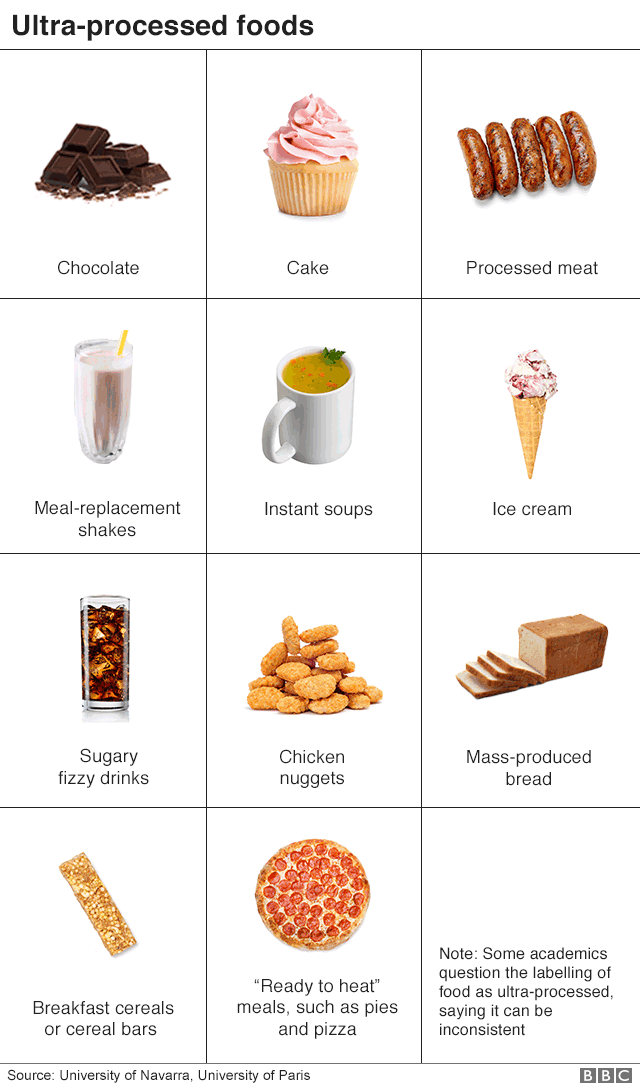
The health and lifestyle data of over 105,000 people analyzed in the French study concluded that those who ate the most ultra-processed food were at the highest risk of cardiovascular disease; heart attack and stroke. Each incremental ten percent increase correlated with a 12 percent rise in disease risk. Highlighted were packaged soups, TV dinners, chicken nuggets, fries, hotdogs, ice cream, sweetened breakfast cereals, candy and soft drinks.

That's just for starters, among the ubiquitous foods found everywhere that fall into the category of ultra-processed foods. They are called food but they are as far from whole foods as processing can possibly produce. And for most people who consume these foods they are simply accepted as their mainstay diet; quick, easy, convenient, available and cheap. What they all have in common, aside from the health risk associated with regularly consuming them, is their long ingredient list and their modified forms.
Food market
While the term ultra-processed food may be new, the health advice will be very familiar: adopt a Mediterranean-style diet.  Getty Images

The same food in basic form, unmodified, has no list of ingredients. But of course, as whole foods they require preparation if they're protein-based. The Spanish study led by professor of preventive medicine and public health at the Universidad de Navarra, Maira Bes-Rastrollo, examined food consumption patterns of an estimated 20,000 university graduates, aged 20 to 91. After factoring for smoking, age, body mass index and gender the heaviest consumers of ultra-processed foods (four servings daily) were found to be 62 percent likelier to die prematurely as opposed to the lightest (fewer than two servings daily).

Furthermore, mortality risk rose by 18 percent accounting for each additional daily eaten portion. How to recognize ultra-processed foods? A large list of industrial ingredients, with few or no whole foods, the product in ready-to-eat form. These are faux foods designed to taste palatable, and the advertising accompanying them meant to be persuasive, alluringly packaged. They are legion. And they are so ubiquitous their presence is taken for granted as completely normal fare.

That they have taken the place in most peoples' daily diets of the whole foods that are natural, nutritious and appealing, but require preparation and forethought, speaks volumes of the popularity of an alternative requiring no thought and no preparation and a lack of curiosity on the part of the consumer about what they're really eating and how it fails to benefit their health and longevity needs while fitting the bill for cheap availability; most of all, no fuss, no mess.
BBC graphic


Labels: , , , , ,

Monday, May 27, 2019

Golf as Exercise

"Walking the golf course certainly counts as exercise. Even riding in a golf cart is better than doing nothing. But to meet the recommended level for good health, you probably need to increase your activity. The American Heart Association recommends 150 minutes of moderate-intensity exercise per week to help reduce the risk for heart attack and stroke. This is equal to 30 minutes five days a week. One way to achieve this is with brisk walking (4 mph) for 10 miles per week, which burns a total of approximately 1,000 calories."
"Studies have found that walking 18 holes is about equal to brisk walking in terms of intensity (even though golf walking is stop-and-go). A golfer may walk four miles and burn 800 to 900 calories during an average round with help from swinging clubs. If you ride in a cart, the walking distance drops to about one mile and you burn half the calories. So playing two walking rounds per week is a good way to meet the minimum exercise requirement."
"However, in order to gain the maximum cardiovascular benefit from exercise, you may want to add a day or two of higher-intensity activities, such as running, tennis, or something similar that raises your heart rate. The good news: you do not need more than an hour per day. Research has found there is little additional benefit after that time period."
—William Kormos, MD
Editor in Chief, Harvard Men's Health Watch


Ryo Ishikawa, one of Japan's biggest golf stars, demonstrates his swing on the pro tour in February.
Donald Miralle/Getty Images

Winter's over, it's golf time. Everyone's anxious to get out on the green; watching golf tournaments on television can be packed away for the time being, and the golf bag dusted off. And if you're thinking health and fitness and exercise packed into a day of bracing fresh air and sunshine, what's not to like? On the other hand, if you're equating the game you play with the game that the named professionals play, it just isn't the same thing; not as 'physical'. And while a professional golfer has to be equipped with endurance, flexibility and strength for ultimate links success, the ordinary player doesn't.

Were you aware that a portable gym is part of the entourage of the PGA? That most professional golfers follow a year-round fitness regimen to ensure they keep in shape, and most do it with the help of a personal trainer? That's professional commitment. Walk the course or use a golf cart? Walking can be a challenge if it's a hilly terrain, not so much of it's flat, but as an exercise option is preferential. And of course age comes into the equation as well as how hefty the weight of the golfer is, embarking on that 18-hole adventure.

A number of studies report a positive link between regular golf activities and an extended life expectancy, so you practise the game you love and at the same time gift yourself with an improved lifestyle and presumably a longer life. Good formula. Golfers, it would appear, can appreciate that the studies appear to agree that golfers gain by having a 40 percent lower mortality rate than those who don't play golf. They don't know what they're missing.

walking while golfing
Image: Monkey Business Images/ Thinkstock

It isn't golf itself per se that gives golfers that advantage, however; it's the walking, and the added physical act of swinging a golf club. It also helps that golf is a very social game that can be shared with friends, family and business associates. That commitment to regularly playing golf, a game that is so much a passion for so many, has its advantages, burning three to eight calories a minute, which comes out to 264 or 450 calories each game. As for the energetic golfers who prefer to walk the course, they will cover 8 to 13 kilometres walking an 18-hole course.

Which will qualify as a moderate-intensity aerobic activity, taking into account that 8 to 13 kilometers represents 11,245 to 16,667 steps reflected on a step counter. But if you ride a cart, that step count is reduced to 6,280 steps, equating with 5 km over 18 holes. Activity fluctuates between light, moderate and high intensity activities throughout the course of the game, reflecting walking, standing or swinging a golf club.

A caution: too many hours where the same motion is repeated tends to be hard on joints, not to mention the effect of poor swing mechanics, the secondary cause of injury among non-pro golfers.
The elbow, wrist, hand and shoulder of golfers are prone to injury, and so too is the spine which must rotate with speed, power and full motion range, requiring a more than a modicum of strength and flexibility. Other sports, however, have a greater risk of injury than golf.

But there's another statistic of more than passing interest, where in the United States, golf comes with the highest incidence of lightning strikes -- resulting in death -- a penalty too dire to contemplate. In extreme weather situations, it's wise, no doubt about it, to clear the course, and speedily. And in good weather when the sun beams down, slather on sunscreen because golfers have a higher-than-average risk of skin cancer, given their long hours of exposure walking that salubrious course under sunny skies.

Even golfers using a motorized cart can burn about 1,300 calories and walk 2 miles when playing 18 holes.
Halfdark/fstop/Corbis

Labels: , , , ,

Sunday, September 02, 2018

Moderation Negates Compromise

"The most surprising finding was that even small amounts of alcohol use contribute to health loss globally," said. We're used to hearing that a drink or two a day is fine. But the evidence is the evidence." 
"Most deaths from alcohol come from cardiovascular disease and cancers when you look at average consumption by age and sex within countries."  
"We too found some protective effects for Type 2 diabetes and ischemic heart disease at low levels of alcohol consumption."
"But those benefits are outweighed by the overall adverse health impact of alcohol, even at moderate levels."
Emmanuela Gakidou, senior study author, professor, University of Washington's Institute for Health Metrics and Evaluation

"This study is a stark reminder of the real, and potentially lethal, dangers that too much alcohol can have on our health and that even the lowest levels of alcohol intake increase our risks."
Helen Stokes-Lampard, chair, Royal College of General Practitioners, UK
A bottle of beer
Getty Images
"There is no safe level of driving, but governments do not recommend that people avoid driving."
"Come to think of it, there is no safe level of living, but nobody would recommend abstention."
"Given the pleasure presumably associated with moderate drinking, claiming there is no 'safe' level does not seem an argument for abstention."
David Spiegelhalter, British statistician, Winton Professor for the Public Understanding of Risk, University of Cambridge

"I am sure that I could create a chart showing increasing risk for many diseases from zero to fifteen desserts."
"This could lead to assertions that 'there's no safe amount of dessert'. But it doesn't mean you should never, ever eat dessert."
Aaron Carroll, health researcher

"Based on these findings, at no point ... is there a level of consumption that appears to lower the overall risk of developing any of the wide array of diseases investigated in comparison to non-drinking."
"The take-home message being that people shouldn't drink under the belief that it will lower their risk of disease, and those of us who opt to drink should minimize our intake if we wish to prolong our life and well-being."
University of Cambridge epidemiologist Steven Bell
 Even one drink a day could be shortening your life expectancy
Pick your poison. And many people do. Moderately, to ensure they aren't, after all, poisoned, simply moderately lifting their spirits, so to speak. As a relaxation technique among congenial friends and acquaintances. In public. Rarely privately. But even in the privacy of one's own home, selectively and with a certain amount of caution. After all, a goblet of wine at dinnertime is simply a way to complement the pleasure of the meal. As any discerning oenophile can tell you. Medical science just recently was extolling the virtues of wine in moderation, as a way to avoid heart problems. The resveratrolin red wine and antioxidants held to protect against coronary heart disease.
 
And then along came a Lancet-published study claiming "the safest level of drinking is none". Glum, gloomy news for those who appreciate alcohol in any form. A study that chided government health boards advocating moderate drinking and its purported benefits, for not advising people to completely abstain from drinking at all. Well, they do in fact insist that women planning a pregnancy or women in pregnancy and nursing mothers avoid alcohol in any amounts, like the plague. No one really wants to confer fetal alcohol syndrome on their innocent child. But this, this is radical ... no.one.should.indulge.in.any.amount.period...
 
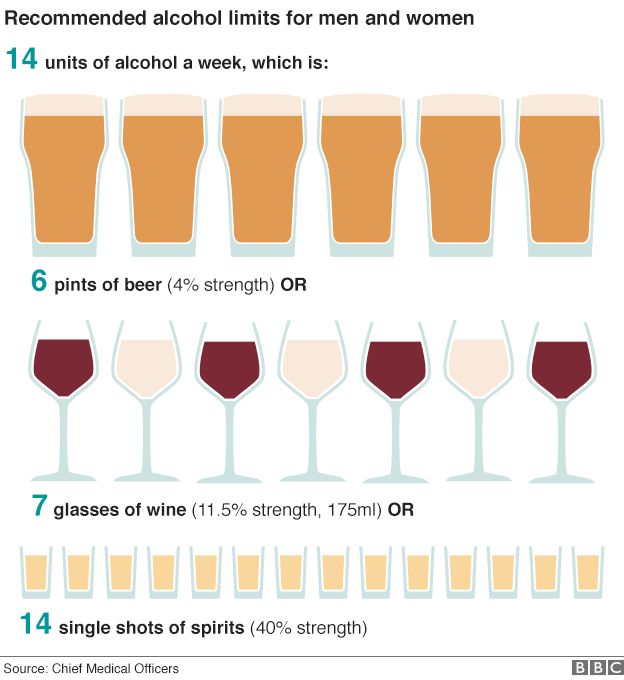
Evidently, the study posits that if 100,000 teetotalers were to be studied, in a single year 914 of that total would develop breast cancer, liver cancer or one of any number of the remaining 23 health conditions known to complicate people's lives. The same number of people who consume a drink once daily would see 918 of the total affected with those same health conditions. Consuming one drink daily causes four of every 100,000 people to contract a serious disease. As odds go, that kind of seems slight on the scale of possibility. But it does however slightly increase the potential of disease onset, however limited the number of those affected.
Woman drinking red wine
A glass of red wine a day is not healthy, say researchers   Getty Images

"Previous studies have found a protective effect of alcohol on some conditions, but we found that the combined health risks associated with alcohol increases with any amount of alcohol."
"The strong association between alcohol consumption and the risk of cancer, injuries, and infectious diseases offset the protective effects for heart disease in our study."
"Although the health risks associated with alcohol start off being small with one drink a day, they then rise rapidly as people drink more."
Dr Max Griswold, at the Institute for Health Metrics and Evaluation (IHME), University of Washington
The study represents a meta-analysis of close to 700 previously published international studies, an accurate measurement that those who imbibe on average, tend to be less healthy and suffer an earlier mortality rate than non-drinkers. One of the study's critics, health researcher Aaron Carroll, pointed out that the study fails to control for "unmeasured" factors such as the fact that some lifestyles and circumstances may underlie the alcohol determination, in that drinkers might be on the low-income spectrum, are unhealthy to begin with, perhaps due to chronic depression making them disproportionately more likely to become even more ill.

It takes no genius to understand that heavy drinking does not qualify as a sound choice for a healthy and long life. The longer people indulge in heavy drinking the shorter their lifespan becomes and in between there is the issue of declining health leading to death. Health researchers in the United States, noting that life expectancy has dropped in recent years, point to alcohol, suicide and drugs. World-wide in 2012, 3.3 million people died as a result of "harmful" consumption of alcohol, according the World Health Organization. Alcohol-related causes killed so many men in Russia from the 1980s on, what has resulted is a demographic of women for whom there are no men.

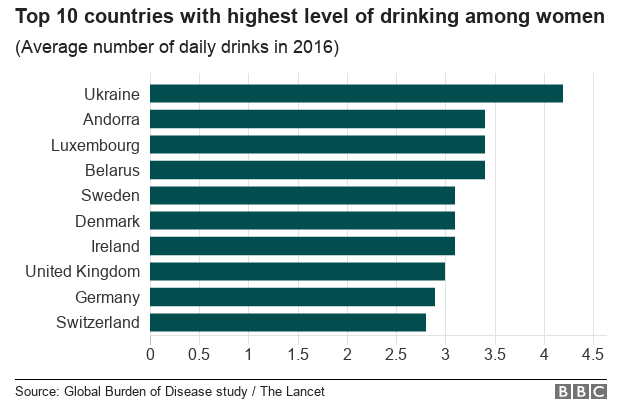
A chart on female drinkers around the world
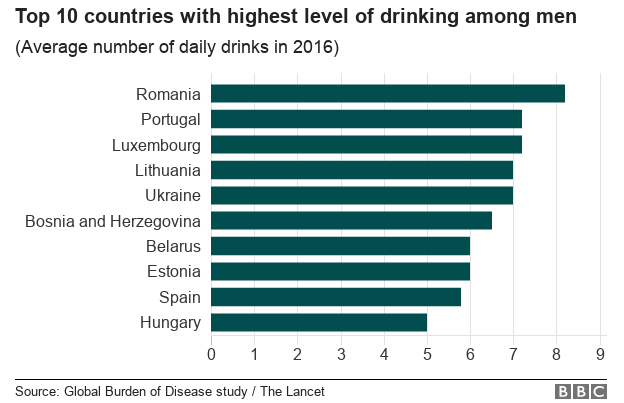
Table of British male drinkers around the world
 Alcohol graphic

Labels: , , , ,

Wednesday, May 02, 2018

Thinking Young, Extending Life

"Children as young as three or four have already taken in the age stereotypes of their culture."
"These age stereotypes are communicated to children through many sources, ranging from stories to social media. Individuals of all ages can benefit from bolstering their positive images of aging."
"We found those who expressed more positive age beliefs at baseline were less likely to develop dementia ... than those who expressed more negative age beliefs."
"We know ... that exposing older individuals to negative age stereotypes exacerbates stress, whereas exposing them to positive age stereotypes can act as a buffer against experiencing stress."
Becca Levy, professor of psychology, Yale University

"Sixty-year-olds felt like they were 46. Seventy-year-olds felt like they were 53. Eighty-year-olds felt like they were 65. It looks like this is pretty consistent across age groups."
"People know that they are aging, but they are evaluating themselves and their lives and reporting feeling about 20 percent younger than their current age."
"Negative views about aging are communicated to us early in life, through media, books and movies, and what our friends and family tell us. These attitudes are present and pervasive already in childhood, so naturally it's hard to enact meaningful change to these attitudes -- but that's what we're trying to do at the moment."
"Part of that [thinking younger by seniors] might arise from not wanting to be considered an older adult. As a result, people could be perpetually pushing what is considered an older adult into the future."
William Chopik, assistant professor of psychology, Michigan State University

"Aging well is not only escaping or delaying disease."
"Feeling good about your life is important and should be considered an important aspect of healthy aging."
Paola Sebastiani, professor of biostatistics, Boston University School of Public Health


One study on attitudes to aging concluded that as people become older they express the opinion that they find it strange to contemplate how old they actually are, because they feel much younger than their chronological age. And then there was the study that took to examining the attitudes of children of centenarians, making the discovery that those children, if they were healthy and long-lived like their parents share a sense of purpose, finding meaning in their lives, in comparison with the thoughts of the general population.


Evidence exists that positive attitudes about aging may even be the cause of a reduction in the risk of acquiring dementia, arguably among the most apprehensively-viewed consequences of aging. The elderly endowed with their own positive sense of time, place and person share a sense of serenity and pleasure in life. Balanced against the public onslaught of negative messaging about aging in the media, the workplace and pervasive throughout popular culture.

So what makes it fascinating for researchers to study is the elderly who firmly grasp their personal sense of confidence as opposed to the general public firmly entrenched in the belief that to be elderly is to be inconsequential generally. Those who can blithely rise about such widespread cultural views and in fact remain steadfastly oblivious to them, firm in their own beliefs of self-value are healthier both psychologically and physically.

Research shows that older people who have positive outlooks on aging eat healthier, exercise more and recover more quickly from illnesses. Credit Fred R. Conrad/The New York Times
Dr. Chopik's study incorporates a survey of over a half million Americans through the Internet, finding that irrespective of people aging, they continue to feel themselves younger than their true age. Subjects from the ages of ten to 89 were questioned to determine that as people grow older their views undergo a change in perception. Teens and young adults equate becoming 50 with old age, an attitude that persists into old age. The elderly on the other hand view 80 as old when they are just 70, and when they become 80, it is 90 that appears to them to be 'old'.


Data from the New England Centenarian Study was used in the study of centenarians' offspring, following close to four thousand centenarians, some of their siblings and children, since 1994. Healthy, long-lived children of centenarians with an average age of 82 were compared by researchers from the Boston University School of Public Health. The study subjects were separated into three groups; their 'birth cohort' (a group who lived only to their early 70s); the study subjects' spouses; and those included in the Health and Retirement Study, a U.S.-wide study of over 30,000 people older than 50.


Respondents were asked their opinion, whether to agree or disagree with statements such as: "I enjoy making plans for the future and working to make them a reality", and "My daily activities often seem trivial and unimportant to me", to measure psychological well-being. Children of centenarians were found to express greater purpose in life than any other of the three groups. For her part, Dr. Levy evaluated 4,765 older people with an average age of 72, free of dementia when the study began, and followed them for a succeeding four years. A series of questions were posed to the participants relating to their aging beliefs.

A protective effect was found for all participants inclusive of those carrying the E4 variant of the gene APOE known to raise the risk of dementia and carried by about a quarter of all Americans, though dementia develops in only 47 percent of this group. It is unknown why the remaining 53 percent never develop dementia, but the APOE E4 carriers with positive beliefs on aging had a 2.7 percent risk of developing dementia while carriers with negative beliefs had a 6.1 percent risk of acquiring dementia.

Positive-aging

Labels: , , , , ,

Tuesday, April 17, 2018

"Subjective Expectations of Survival" Survey

  • Survival pessimism may mean that individuals save less during working life, and spend more in the earlier years of retirement, than they would, given their actual survival chances.
  • The risk of this faster-than-optimal spending down of wealth, combined with optimism about survival at the very oldest ages, means that if individuals survive through their 80s and into their 90s, they may not only have relatively low levels of wealth, but may then be reluctant to spend this, with negative consequences for their living standards.
Cormac O'Dea and David Sturrock, Institute for Fiscal Studies, ELSA Survey

This recent survey and its conclusions from Britain's Institute for Fiscal Studies, which focuses on economics, set out to study how the elderly prepare for their retirement years, setting aside finances and depending on state-provided subsidies for the elderly retired, by seeking to judge how it is that individuals as they age contemplate how long they may live, and with that figure in their heads, then calculate what they will need in financial support to enable them to live with a semblance of comfort and grace until they reach their expiration date.

What the study authors -- Cormac O'Dea and David Sturrock -- used for the data they acquired was an unimpeachable source; the statistics gathered by the U.K.'s Office for National Statistics, picking through its long-term surveys to assess "subjective expectations of survival" linked to economic plans for a feasible lifestyle in old age. Since people do realistically have to plan to ensure whatever funding they do have will take them through to that time when they no longer need it, the topic is fairly universal.

Individuals from age fifty upward in the English Longitudinal Study of Aging (ELSA), with its base of some 16,000 respondents were queried and asked to respond by estimating what they felt to be their personal chances of surviving to set ages. An age marker held to be between 11 and 15 years ahead of their current age saw younger respondents doubtful about chances of living to age 85. Following on the initial questionnaire repeats were taken biennially.

Information relating to personal medical and family history, along with socioeconomic background all constituted part of the survey questions. To which people surveyed appeared to respond with individual biases, so that for example people whose parents failed to live to a ripe old age were less optimistic that they themselves could aspire to do so. Those who smoked gave themselves between six to eight years of diminished longevity. With repeated surveys the opportunity arose for 'corrections'; should a diagnosis of adverse health have intervened, life expectancy figures went downward.

Very realistic self-diagnoses, in other words. On the other hand this study verified what others before it discovered; that a general pattern exists in people's estimates of their own mortality. So that when in their 50s and 60s when the initial intimations of gradually failing sight, hearing, physical endurance and strength begin to emerge, doubts creep in, along with a tendency to underestimate chances of acquiring the benefits of advanced age.

As example, for 65-year-old men born in the 1940s, the collective belief becomes that a mere two-thirds will reach age 75, whereas national life tables give the real figure for that generation as 83 percent -- and women tend to render a similar collective response, even though women live longer with the real-world survival rate for that generation being 89 percent.

This is termed "survival pessimism", common to people under age 70. Then again, as people grow into their 80s the opposite occurs with a significant overestimation as to how long they will then expect to live. The key to the group's interest in the study results resided in the economic element; just how well financial planning decisions are being made, to match longevity expectations.


  • Relative to life tables, individuals from a range of ages and birth cohorts underestimate their chances of survival to ages 75, 80 and 85, on average. Those in their 50s and 60s underestimate their chances of survival to age 75 by around 20 percentage points and to 85 by around 5 to 10 percentage For example, men born in the 1940s who were interviewed at age 65 reported a 65% chance of making it to age 75, whereas the official estimate was 83%. For women, the equivalent figures were 65% and 89%.
  • Individuals in their late 70s and 80s are, on average, optimistic about surviving to ages 90, 95 and above. This optimism becomes larger at older ages (10–15 percentage points when looking at age 95) and is larger for men than for women, amongst those born in the 1920s and 1930 For example, men born in the 1930s who were interviewed at age 80 reported a 32% chance of making it to age 95, whereas the official estimate was 17%. For women, the equivalent figures were 37% and 24%.
Cormac O'Dea and David Sturrock, Institute for Fiscal Studies

Labels: , , , ,

Saturday, April 07, 2018

Millennia-Extending Longevity, Science or Fiction? 

"I doubt there are many people in Ethiopia or Bangladesh who are clapping their hands at the idea that some rich guy in Silicon Valley is trying to live another hundred years if their kids are dying from malnutrition or some easily handled health problem."
Arthur Caplan, bioethicist, Langone Medical Centre, New York University

"If all of them [family generations] are still alive that's more than 200 people I have some relationship and responsibility to. What if they all have some sense of expectation of me?"
"Many [people] believe that it is precisely our knowledge of our imminent mortality that makes us most human."
"Look, I want to live to 150 too. I mean, don't misunderstand me. I want to see my great-grandchildren. I want to see the first people on Mars. I want to see all that Aubrey wants to see. I just don't pretend that it's not a narcissistic desire because I can't think of a single good that would give society."
Paul Root Wolpe, chief bioethicist, NASA

"Over the past two years we've had a slew of breakthrough publications in journals such as Science, Nature Communications and Nucleic Acids Research that reported key advances against the most intractable components of aging. It's no exaggeration to say that in at least a couple of cases we have broken through logjams that have stalled key areas for over 15 years."
"You may feel that eight years is a long time to be only making such preliminary, step-one breakthroughs, but you'd be wrong - step one is always the hardest, and that is why nearly all research, whether in academia or in industry, is immensely biased towards the low-hanging fruit and against the high-risk high-reward work that is so essential for long-term progress."
"We exist as an independent foundation for precisely that reason. But, saying that, I must also stress that we are already showing great success in taking enough steps so that our programs become investable. The atherosclerosis one was the first of, at this point, five start-ups that have emerged from our projects - covering conditions as diverse as macular degeneration, senescent cells, amyloid in the heart, and organ transplantation."
"Think back to the first time you got laid. Were you thinking 'omigod I totally have to get this person into bed right now because I only have another 60 years to live? I don't think so."
"Once we've got to the point where this [rejuvenation] therapy is sufficiently comprehensive, then of course one can do it as often as one likes."
"One can choose to be biologically 50, or biologically 20 depending on how frequently and how thoroughly one applies these therapies [of biological renewal]."
Aubrey de Grey, biomedical gerontologist, co-founder, chief science officer, SENS Research Foundation
SENS.org

Aubrey de Grey's aspiration is beyond ambitious in his determination to prolong the human life span up to, as he promises, one thousand years. He doesn't appear to be a fundamentalist Biblical scholar citing that organ of antiquity as one source of authority for a millenium-human, but he is convinced that biological science can and will in the very near future -- around five years, he has ventured -- begin to reverse the aging effects that send humans into the inevitable trajectory to death.

For at least 100,000 years human life has been defined by its time in history. No one could know when the inevitability of death, whatever its cause, would strike. And, according to medical surgeon Atul Gawande, "It didn't matter if you were five or 50. Every day was a roll of the dice". It still is, in the modern era. Sudden onset of a deadly disease, or the progress of a chronic, debilitating disease, or an accident, a ladder-fall, a vehicle collision, a fall while hiking in the mountains, a victim of a demented killer, a statistic of an earthquake, a firestorm, a tsunami, you name it, it happens. And then longevity potential becomes moot.

But life expectancy was been on a steady increase, particularly in the West, with the rest of the world catching up more or less as civilizational norms trickle down to less socially advanced countries. Of course we would also have to discount natural disasters and their impact on human life, and the human penchant of initiating conflicts and their impact on life. But at the present time fewer children throughout the world are dying before reaching age five. And death from malnutrition's effects has been diminished.

And, as Dr. Gawande stated in his book Being Mortal, modern medicine has most certainly done its part for the "bottom to drop out later and later". So we see longevity struggling in various parts of the world to reach past 60, past 80, past 100. For the first time in history in Canada, those in the over-65 demographic outnumber those under 15 years of age. As for centenarians, their numbers swelled by 41 percent from 2011 to 2016. Who would have imagined?

When we age, the process leading us to death is predictable as our body declines often taking our mind with it and everything fails catastrophically. Lungs begin to fail, reflexes are diminished, vision becomes compromised. Or, as Dr. Gawande puts it, from the perspective of a seasoned surgeon: "The aorta and other major vessels can feel crunchy under your fingers", inside the body of an aged human during surgery. And, rather unhelpfully, by age 85 three or more major chronic diseases will have afflicted half that age group.

What SENS-funded researchers are working toward is rejuvenation therapies enabling the repair or elimination of seven types of biological castoffs accumulating as humans age from cell loss to mutations in chromosomes, death-resistant cells and other types of barriers to continuing life. The goal is to allow people to continue to grow in years, but not toward imminently oncoming death. De Grey forecasts that the first edition of SENS has a 50-50 chance of becoming reality within five years.

Although there are some unknowns; whether with each reset button prolonging our lives as we grow hundreds and hundreds of years old, would our experiences and memories of the previous 100 years be lost to us? And should these wondrous biotechnologies favour positive results in some people and not others, would there be a remedy for two classifications of humans, the responsive and non-responsive to elongating lifespans? And costs relating to rejuvenating therapies, who picks it up; available then only to the wealthy?

De Grey envisions that at age 40 typically, the first rejuvenation therapy would apply and from that point forward a series of "rejuvenation" episodes would return us to the chosen biological fitness of whichever age group we might wish to stabilize at. Repeated decade after decade, the ancient search for the secret and frustratingly elusive fountain of youth would have been discovered, at long last. Reaching a point that de Grey names "longevity escape velocity"; renewal outpacing aging.

There is a vast number of experts in the field of human biology who remain skeptical. Particularly that human life whose span has remained fairly constant for so many tens of thousands of years can be shifted toward a new trajectory with biological intervention, to see people aging toward a thousand years of life. Our lifespans, according to Dr. Yves Joanette, scientific director of the Canadian Institutes of Health Research Centre on Aging, remain fixed and what is normal in longevity cannot be overridden.

"We may push it forward a bit. But I don't think it's going to be doubled, or tripled, or made eternal", he stated. Even if diabetes, cardiovascular diseases and all cancers were finally eradicated life expectancy at birth in the United States, as example could rise to 90, according to a 2004 report by the Bush presidential council on the bioethics of "ageless bodies". As for de Grey himself, he states he has no fear of death, but nor does he court it. Wearing a seatbelt in a moving vehicle and avoiding danger is just common sense. "But that's not being scared. That's just being careful. I don't have time to be scared."
"We all believe in postponing deaths. We all want our own deaths postponed and we invest vast amounts as individuals and societies in methodologies for achieving that."
"To withdraw from that is to say that postponing death is not a good thing."
University of Manchester philosopher John Harris, director of the Institute for Science, Ethics and Innovation


Labels: , ,

Sunday, December 24, 2017

Improved Vision = Enhance Longevity

"Not only can cataract surgery give people a better life while they're living it, they can also live more of it."
"[When people can see better] they can also move more and get more exercise. They can see their pills better and may be more likely to take them and take the right ones."
"The surgery [cataract removal] also improves visual contrast, which decreases the risk of accidental deaths from falls or driving. It's important to get the best vision a person can have."
"It's probably the most successful surgery we have -- it has a 98 percent success rate."
Dr. Anne L. Coleman, University of California, Los Angeles

"[The surgery] was quick and easy -- maybe five minutes -- and it was like a miracle."
"I couldn't believe how well I could see right after the first eye was done."
Jane Quinn, 72, Brooklyn, New York
optometrist looking at eye
Older women who undergo cataract surgery may live longer.  Medical News Today
At one time surgery to remove cataracts was performed under general anesthesia. Patients, post-surgery spent nights in the hospital and it took weeks in bed to fully recover. Medical and surgical techniques have since advanced to the point where the procedure is performed with a local anesthetic, incisions are infinitely slighter and often require no stitches. "First one eye is operated upon, then the second one undergoes surgery roughly two weeks later. Recuperation is swift.

The formation of cataracts is linked to age, an almost inevitable consequence of aging. In those over 40 they represent the most frequent cause of vision loss. Exposure to ultraviolet radiation (sunlight), smoking, obesity, high blood pressure, diabetes, prolonged use of corticosteroids, extreme nearsightedness and family history all represent risk factors in the development of cataracts.

The use of 100 percent UV ray-blocking sunglasses and a hat are considered useful preventives. Foods rich in vitamin E (spinach, almonds, sweet potatoes); carotenoids, lutein and zeaxanthin (derived from dark green leafy vegetables), and omega-3 fatty acids (found in spinach and oily fish such as salmon, mackerel and sardines) may help in reducing the risk of cataracts developing.

A 20-year study of 74,044 women between the ages of 65 and up revealed that of the total, all of whom had cataracts, 41735 having had their cataracts removed experienced a 60 percent lower risk of death. Published on line in JAMA Ophthalmology in October by Dr. Coleman and her colleagues, the results have indicated just how vital attention to cataracts can be in promoting quality of life, if not longevity.

The normally clear structure behind the iris and pupil becomes distorted so that incoming visual images fail to clearly focus on the retina at the back of the eye. Cataracts cloud and discolour the lens of the eye. As cataracts form, images become increasingly fuzzy, glare tends to bother the eyes, there is impairment of night vision, and colour shades can be lost.

In the United States, cataract surgery represents the most frequently performed of all surgeries reflecting the fact that over three million Americans undergo cataract removal annually. Tiny surgical instruments are used to suck out the cloudy lens of the eye, to be replaced by an artificial lens. For most people, a half-hour recovery after surgery is all that is required before discharge from hospital and returning home.

Interestingly, the women in the study who had undergone cataract surgery were more ill than others -- having had more heart attacks, chronic pulmonary disease, peptic ulcers and glaucoma than those who didn't undergo cataract surgery, yet they lived longer. A lower mortality risk is also associated with men following cataract surgery, confirmed by previous studies.

The conclusion of the study was that while confirming earlier studies relating to fewer deaths in women having cataract surgery, data showed that those who had cataract surgery had reduced risks of death from cardiovascular, pulmonary, neurological and infectious diseases, as well as from accidents, and cancer, following surgery.

Image: Cataract Surgery May Lengthen Women's Lives
(Copyright DPC)

Labels: , , , , ,

Monday, December 11, 2017

Sport Performance is Finite

"These traits [the athletic motto: 'faster, higher, stronger'] no longer increase, despite further continuous nutritional, medical and scientific progress."
"This suggests that modern societies have allowed our species to reach its limits. We are the first generation to become aware of this."
"The current declines in human capacities we can see today are a sign that environmental changes, including climate, are already contributing to the increasing constraints we now have to consider." 
"Now that we know the limits of the human species, this can act as a clear goal for nations to ensure that human capacities reach their highest possible values for most of the population. With escalating environmental constraints, this may cost increasingly more energy and investment in order to balance the rising ecosystem pressures. However, if successful, we then should observe an incremental rise in mean values of height, lifespan and most human biomarkers."
Professor Jean-Francois Toussaint, Paris Descartes University
There appears to be a plateau in the maximum biological limits for humans' height, age and physical abilities, and we seem to have reached it. Credit: © ChiccoDodiFC / Fotolia

"[The advances by superior athletes in running, swimming, jumping, cycling, weight-lifting, skiing and skating performances] considerably progressed, until the end of the 20th Century."
"[However, more recent data suggest] a trend toward a plateau during the last three decades for both sexes."
"Raising false hopes without taking into account that human beings are already extremely 'optimized' for lifespan seems inappropriate."
"The utmost challenge is now to maintain these indices at high levels."
French research team study
A study of 120 years worth of historical data suggest we've reached the biological limits of...
A study of 120 years worth of historical data suggest we've reached the biological limits of height, life expectancy and sporting performance     (Credit: vverve/Depositphotos)

Climate change, according to a recently published study, may be recognized as a factor leading to limitations of greater benefits in human health as well as in advancing athletic performances. The authors point to the fact that in some countries on the African continent there has been over the last decade a height decline in children, leaving the impression these countries have been incapable of providing sufficient nourishment to children. It would be interesting to determine whether those countries correlate with the African countries mired in endless conflict.

The 20th Century, point out the study's authors, life expectancy was seen to steadily rise by about 30 years in most high-income countries, attributable for the most part to a reduction in child mortality rates resulting from improved nutrition, hygiene, vaccination and related medical advances. However, according to the authors, improvements in medical outcomes may have reached their zenith, and they predict that additional increased expectations now have no basis in likely outcomes for the foreseeable future.

Organizers of sport events such as the Olympics might have to resort to other means to continue the impression that supreme athletes still break barriers in faster, higher, stronger -- in the creation of new record categories or the alteration of rules relating to various events. The plateau in impressive human endeavours in sport may in fact have already peaked without being realized because doping and technological improvements succeeded in leaving the impression that forward momentum was continuing, while it was really attributable to artificially advanced improvements.

As for increasing longevity, that too appears to have stalled, and has been addressed in other, earlier research results, though it remains a topic that many feel they have cause to disagree with. Yet it is a fact that the oldest person ever on record was France's Jeanne Calment who lived to 122. Since her death in 1977, no other person has lived beyond 120 years of age. The report's authors conclude that the effort to run faster and live longer may of practical necessity have to be abandoned and humankind will have to be satisfied with maintaining current levels of achievement and longevity.

There will, then, be no more events where outsized athletic performances will be enabled, to smash existing records.The study authors are firm in their conviction that their research which examined athletic performance, height and life expectancy throughout the past century (one hundred and twenty years) confirms the conclusion they reached through perusing historical records. Humans, it seems now confirmed, have reached their maximum horizon for height, age and physical capabilities.

Published in the journal Frontiers in Physiology, where the advances seen by Olympic athletes in various sports were judged against the findings that critical indices are now static, the study will no doubt dismay many who believe otherwise; no less the ambitious among high-achieving athletes hoping by their extreme prowess in athletic excellence, to lend their names to achieving astonishing new records. It is, evidently, not to be.

Only way is down: Man has reached his physical peak, says French study
Weightlifters working out. / Reuters

Labels: , , ,

 
()() Follow @rheytah Tweet